
Each morning I rise early from my slumbers at a time when my home is still dark and quiet. I proceed with a routine mostly without lights that involves making my morning cup of tea… More
A Woman’s Tale
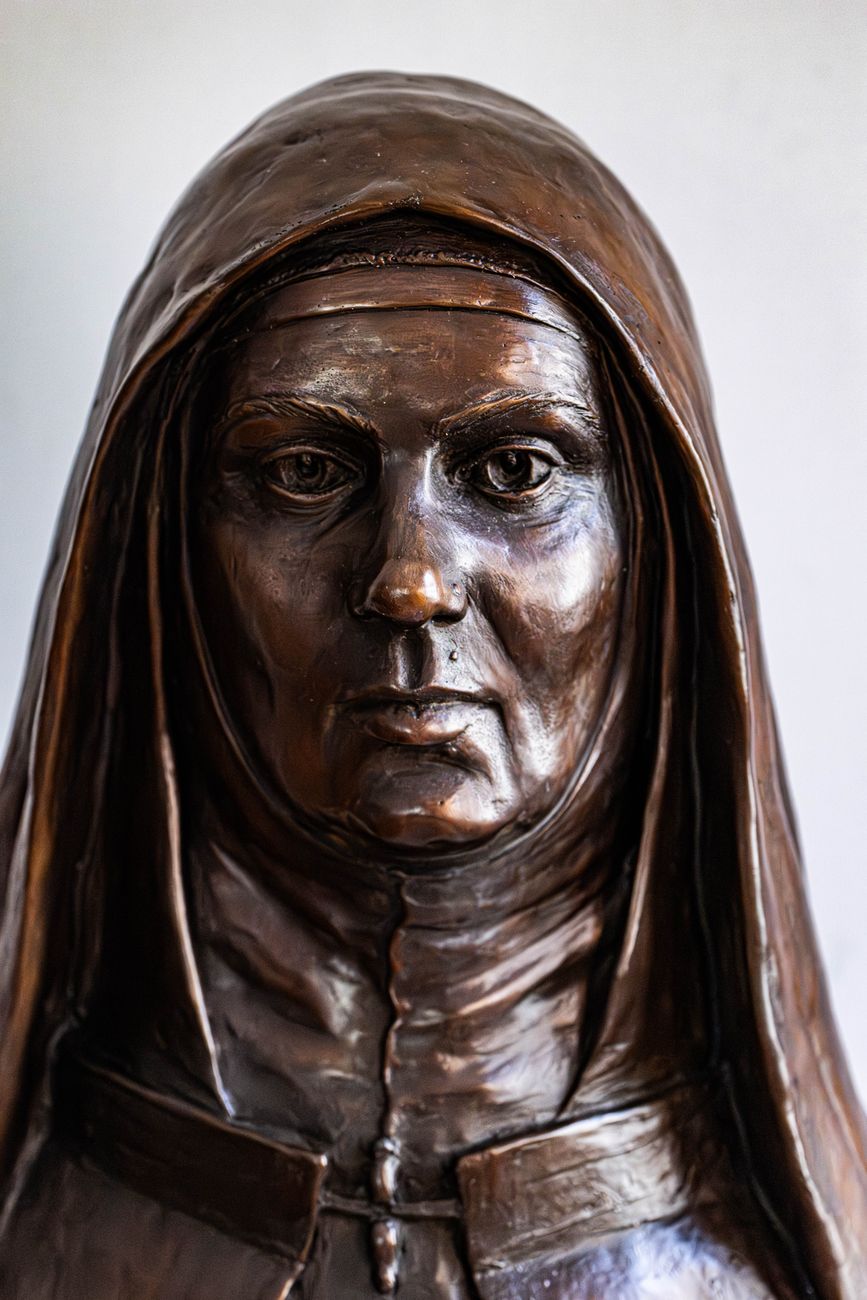
During the early days of the worldwide Covid epidemic I became close friends with a woman who had attended my high school who was a year behind me. I had known of her because she was an outstanding debater and speaker who constantly won prizes at competitive tournaments. She also managed to outsell everyone in the school during our yearly fundraising efforts that involved peddling World’s Finest Chocolate. Back then I admired her persuasive abilities but never had the opportunity to get to know her better.
Then came Covid and with it a rather chaotic and uncertain episode for our nation. I spent more and more time checking on people that I knew on Facebook and writing blogs. Along the way I found Bren Ortega Murphy and recognized her as the girl I had noticed in the long ago. We began exchanging comments and posts and messages and then one day she asked for my phone number and wondered if she might call me to converse.
I was incredibly excited that she had thought of doing this and so I typed out my phone number immediately and told her that I was ready for her call anytime she wanted to reach out. A few minutes later the phone rang and we talked for well over an hour. I learned that she had gone to Chicago after high school graduation to attend Northwestern University where she earned her bachelor’s, master’s and doctoral degrees.. By the time that I connected with her she was a renowned professor in the Department of Communications and Women’s Studies at Loyola University in Chicago. She had stayed in Chicago for the entirety of her adult life, marrying and living in Evanston where she delightfully decorated her home for every occasion.
Dr. Bren Ortega Murphy influenced me from the start. She sent me cards and magazines and before long had me reading The New York Times and subscribing to The New Yorker and The Atlantic. We would discuss certain articles that had captured her attention and she would guide me to a higher level of thinking than I had enjoyed since I sat with my mother-in-law sipping tea after Sunday dinners.
Bren described a documentary that she had written, produced and directed called A Question of Habit: The Image of Women Religious In U.S. Popular Culture. She wondered if I had ever heard of it or seen it. I had to confess that I was totally ignorant of it. She suggested that I might enjoy viewing it as it traced the often stereotyping of religious women, particularly those who were nuns. In the film Bren contrasted the tropes of nuns versus the important history of their contributions in the United States. It outlined the incredible work of women like Mother Frances Cabrini and Sister Helen Prejean.
Of course I immediately searched for the documentary and was amazed at how easy it was to find. The film was narrated by Susan Sarandon and it focused on the impact of nuns whose work all too often went unnoticed. Among the women that she chose to feature was Mother Cabrini whom I knew of because I had worked for a time as a director of religious education at St.Frances Cabrini Catholic Church in Houston. I was stunned to learn of the grit, intelligence and managerial genius of Mother Cabrini as she worked with immigrants in both New York City and Chicago where shhe built schools and hospitals that served Italian children in particular.
I found myself being impressed with the genius of both Bree and that of Mother Cabrini. I realized that even I had tended to view Mother Cabrini as a kind of saintly woman quietly ministering the poor. I had never realized the depth of the work that she had done. My admiration for her soared and I immediately gushed with enthusiasm as I related my feelings to Bree.
I never got to visit Bree in Chicago. We had agreed that I would travel to see her when the pandemic was over. Suddenly a post appeared on her Facebook page announcing that she had died. I was stunned and heartbroken and have never quite adjusted to the fact that she is gone.
What made me happy was later learning that the citizens of Little Italy in Chicago had taken down a statue of Christopher Columbus and had voted to erect a statue of Mother Cabrini instead. I imagined Bren beaming from ear to ear at the news. I knew that somehow the message of her life’s work and her documentary had indeed impacted people in the same ways that they had impacted me. It was as though two very great women had somehow been recognized.
The stories of Dr. Bren Ortega Murphy and and St. Frances Cabrini are parallel. Both women overcame the challenges that women still endure and rose to the heights of their potential. They impacted so many souls along the way and I quite humbly became one of their fans.
Grace

I suppose that I have been a stoic for most of my life. As a child who lost her father at the age of eight I am certain that I struggled for many years before finally coming to grips with what had happened. I threw myself into studying and following a schedule that kept my mind busy from the time I woke each morning until I fell into bed at night. It was a routine that I tended to follow for most of my life whenever troubles or losses occurred.
Life is filled with difficulties. Nobody is immune to them. I felt that I had conquered the fears and feelings that seem to appear during difficult moments. I was able to find ways of coping with even the most distressing challenges that came my way even as those who knew me well often counseled me to take a break from being the strong person in the room.
In May of 2011, my mother died the day after I officially retired from teaching in Texas public schools. I knew that she had cancer and that tough days were ahead but it had never dawned on me that she would leave this earth so quickly after the diagnosis that had led me to leave the work that was so entangled with my ability to manage my own emotions.
The years following my mother’s death were riddled with one challenge after another that I somehow overcame again and again. I expressed my bereavement in the face of losing her by writing a book that told her story. it is finished but somehow I have never quite figured out how to publish it for the public. In many ways writing it was the therapy that I used to express the deep feelings roiling inside of me.
So much more happened between 2011 and the present. There were many more deaths of people who played an intricate role in my story. I have the scars on my heart from the loss of them but also treasure the impact that they had in making me the person that I am today. I used tutoring and teaching homeschooled children to ease the sorrow that I felt with each loss of the world that I had always known.
The roll call of friends and relatives leaving this earth has continued unabated. In the meantime life kept throwing curveballs my way. I knew with each occurrence that I was no more and no less impacted by such things than every other person that I know. We all have to face difficulties and for some they are even worse than anything that I have ever had to endure. I kept myself busy doing whatever needed to be done with a determined stoicism. With my inner strength I got through a devastating flood in my city, two heart surgeries performed on my husband, my own injuries and surgeries, the Covid pandemic that left me isolated and worried, the diagnosis of Parkinson’s disease with both of my brothers, and eventually a five year project of caring for my aging father-in-law.
I thought that I was tough enough to keep it all together no matter what happened and for the most part I was right. Then my father-in-law died. I had to cancel my tutoring and teaching sessions to make arrangements for his funeral and burial. I told myself that I was ready for his passing because he had been severely ill for ten months. He was suffering and I did not want that for him so I truly believed that I would be ready to carry on without interruption as soon as the formalities of his dying were over.
A sweet and wise man whose daughter I tutor suggested to me that I take time to find grace before returning to work. He insisted on giving me extra time off. I assured him that if he changed his mind I would be ready because for the seventy years after my father’s death I have always been ready. It surprised me to know that he was right and I was wrong.
On the afternoon of the burial ceremony my husband and I came home and I felt weary. I decided to give myself the gift of doing nothing for the rest of the day. By the afternoon I needed to nap, something that I rarely do. I fell asleep quickly and somehow during that time the last fifteen years streamed through my mind like a movie. I relived every challenging moment and realized that I had stifled my feelings far too long. Tears came and with them the understanding that the grace that I needed was to admit to my own humanity and acknowledge that each of the stresses had taken something important out of me. I felt a relief in being truthful with myself in a way that I had attempted to cover in the past.
I spent the evening grieving not just for my father-in-law but for all of the people that I had lost or watched as they dealt with horrific situations. I understood the human need to process sorrow and finally indulged in allowing myself to feel weak and exhausted.
We all need moments to find the grace to admit to being frail and uncertain about the slings and arrows that overtake each and every one of us. There is a time for being brave and a time for admitting how broken we may feel. Grace helps us to begin the process of healing.
I suspect that I will be forever grateful to that man who seemed to understand what I would need after my most recent loss. I want to share his wisdom to everyone that I know. As we walk through life there will be an ebb and flow of good and bad times. We don’t always have to be in control of our feelings. Sometimes the very best thing we might do is to let our emotions guide us through the perils of life. Stoicism only delays the inevitable. Sooner or later we have to be honest with ourselves. Life can be trying and each challenge or loss deserves the grace to endure it properly.
A Brave New World?

I live in a smart home. It is not something that I would have done on my own but it is in keeping with my husband’s fascination with technology. In the long ago he proudly came home with a Radio Shack computer that did very little other than providing him with some silly games. Nonetheless he insisted that such machines would change our world and in that regard he was so right.
Eventually he upgraded to an Apple computer with two disc drives. He used that machine to create a gradebook for me that made my old paper one obsolete. He tied it to a weekly letter that I sent home to each parent outlining the up to date status of each student that even included a listing of missing assignments. It was revolutionary for the time and I had to get permission from the principal to use it.
Computers made my world so much nicer. I sailed through a Master’s degree using the Internet and writing papers with ease. I was able to communicate with my professors’ and they with me. I found myself wondering how we humans had been able to operate without the amazing machines that only seemed to get better and better over time.
I now drive a hybrid plug in car. Most of the time I am able to complete my errands without using a drop of gasoline. For longer trips the car uses the charged battery before kicking into gasoline mode. I am averaging eighty miles per gallon of gas. Even better are the features that use cameras and radar to keep me aware of the traffic all around me. It is an amazing work of engineering that makes me feel quite comfortable as I drive from one place to another.
I have a robot that vacuums the rooms in my home. I can request music to be played instantly wherever I am inside the house. Lights go on and off at certain times of day. A timer waters my lawn even when I am away from home. All of these features have made life easier for me so that I have more time to read and write my blogs.
I sometimes imagine a time when elderly people will be able to live longer inside their homes with the aid of robotics and computer programming. Such ideas are exciting but the rush to artificial intelligence has me concerned. Perhaps the anxiety that I feel stems from the dystopian novels I have read in which humans are made slaves of a single way of thinking and living.
I watched an interview with twenty eight year old man who has been working on artificial intelligence since his early twenties. He is quite obviously a very bright individual and he seems to believe that artificial intelligence will revolutionize how we behave and live as humans. He notes that there have been dramatic changes over time and AI is just one more shift.
I know that we humans began as hunters and gatherers moving from place to place. Eventually we settled down to plant crops and domesticate animals. People learned how to provide trades and societies thrived. Then came the Industrial Revolution when we began to use of machines run by humans. From the end of the nineteenth century into the present time the inventions and innovations came more and more rapidly until we in many ways became one world communicating instantly with each other.
The new question is what the purpose of AI will ultimately be. The young man that I saw in that interview describes a kind of utopian world in which the computers are doing all of the work and the people of the world are provided with universal incomes and healthcare and housing. The machines and their makers will be theoretically making life better for everyone. Of course those modern day inventors will become wealthy in the process and will also determine how to delineate the information and the support for the rest of mankind. Work will no longer provide meaning for individuals. The machines will work for us and dole out our safety and security.
Such an idea is frightening to me. While we humans have a history of fighting for power and security, we also demonstrate over and over the glorious ascent of our humanity. The very idea that equalizing everything for people without their efforts or consent is not tempting. I find myself wondering whose version of utopia will win the race and force us to live in ways that do not work given the incredible diversity of humans. What differentiates us from animals is our creativity, our ability to think. There can never be a one size fits all way of doing things. It is anathema to our very instincts.
Right now people are mainly complaining about the horrific misuse of land for data centers. They are loud and lit up twenty four hours a day. They gobble up resources like water and electricity. Once they are built the jobs that they create are minimal and worse than any of these things is the fact that they threaten to take aways jobs from humans.
Who wants a machine teaching our children? Who thinks that replacing counselors with programming is a good idea? Who actually wants to surrender to machines and societies that treat us like pets rather than the glorious and mindful individuals that we are?
I may be simplifying the promises of AI but right now I see it as a vehicle for enriching the already rich while quietly overtaking the work of humans. I believe that we need to slow down and determine exactly what to expect from the current rush to be first in the world to create this brave new world. If we do not do this properly we may find ourselves in a new kind of hell.
Finding Our Way Back
I grew up in Texas. I was born not long after the end of World War II. I lived in Houston, Texas in a kind of bubble until I was in high school. I knew that Black people lived in my city but I had little or no contact with them. I saw them sitting quietly in the back of the bus that I rode to downtown Houston with my mother. I saw the separate water fountains and bathrooms designated for Whites only. Even as a child I understood that the accepted ways of life were wrong and I expressed my concerns to my parents who were unable to provide me with an acceptable explanation for why such things existed.
When I was growing up I only heard about members of the LGBTQ population in slurs that demeaned their very existence. I assumed that I would never know such people even as I later learned that it was not so. Some of my all time favorite people were hiding in plain sight, no doubt suffering from the anxiety of having to be secretive about who they really were.
Things would eventually change for both of these groups with laws passed to protect them and to allow them to become visible in society but the ugliness of my youthful years would never really go away for them. Racists still exist all over the United States and there are still people who somehow believe that members of the LGBTQ population are pariahs who should be scrubbed from society.
The truth is that here in the United States we still have individuals and groups who believe that only white Anglo Saxon Christian men should be running things. They operate from a belief that humans should be ranked according to race, gender, religion and sexuality. Anyone who is not a straight WASP is deemed less than. It is a kind of sick way of viewing the world that has infected our relationships with each other for most of history. It is a way of keeping certain groups of people in line with a kind of cruelty that is unwarranted.
Sadly the president of the United States has nursed and encouraged such beliefs to maintain his own power. He has little or no respect for women who dare to question him. He makes outrageous claims that create fear of people of color, immigrants, and even the tiny group of trans people who mostly live quietly in the United States hoping that they will be accepted and loved just as they are.
Surely we have advanced enough as humans to see that the most dangerous people are the ones who attempt to make us hate and fear certain groups of people. Right now that person is the personification of hate and his name is Donald J. Trump. In the guise of a great protector he is using all of the sordid tools of a vicious dictator to line his pockets and maintain his power. We should be wary of his attempts to poison our minds with outrageous and baseless fears of certain groups of people who only want the same respect and acceptance that most of us have just because of the luck of our births.
Many in our present day society demean women and then warn them to beware of less than a handful of trans athletes while their biggest threat is being used as sex objects by straight men who all too often get away with their depravity. Our president rallies his supporters with lies about Muslims and immigrants and trans citizens even as he has a long history of sexually abusing women. He claims to be our protector when he is often the source of many of our most egregious problems. He started a war. He ripped apart our economy. He has made good honest people afraid of the members of the groups that he claims will destroy us.
Trump’s communist ranting are older than I am. It too is based on a fear that we will lose our rights and have to share with lazy people who do not deserve our help. The truth is that communism is not the same as someone who supports the idea of caring for all people in a democracy. Somehow the richest people in our nation have sold much of the populace a big lie that if they are exempt from sharing a fair burden of taxation they will insure that the rest of us have jobs. Even if we taxed them in a fair way they would still have more money than they would ever be able to spend in a lifetime. Their contributions would help us to feed every American and provide healthcare for all. Those are not communist ideas. Those are the ideas that Jesus taught us way back when he walked on the earth.
I don’t want to return to a time when only the wealthiest people ran things in this nation. I want every person to have a fair share of our bounty. I want our leaders to respect and protect our differences. We were never meant to be a white, straight, male, Christian nation. Our ancestors came here from all over the world seeking freedom and respect. We were heading more and more in that direction but have somehow lost our way. We are better than that and it is time to turn the tide and to remember the command to love our neighbors just as we love ourselves with no restrictions on who they are or how they choose to live. We can find our way back.
The Travesty
My mother fought mental illness from the time I was eighteen years old. I was stunned when she first became so ill that she was unable to leave her bedroom for days on end. I had no prior experience with anything like her symptoms which included a level of paranoia. My brilliant, loving, steady mother became unrecognizable and it would be up to me to find her the help that she needed. Little did I realize in that horrific moment that she would struggle with bipolar disorder for the rest of her life.
I did not handle the situation very well in the beginning. I was too unfamiliar with the concept of mental illness. I made many mistakes but I learned on the job and eventually settled into decades of helping my mother through relapses and times when medications stopped working properly for her. For a very long time I kept her illness under wraps. I made up excuses for missing work rather than being honest about my caretaker role for someone with a mental illness. Society had taught me that people with such difficulties are all too often considered weak, somehow subpar.
It was not until over twenty years later that I tearfully blurted out the truth about my mother to a colleague from work. He immediately counseled me with all the right words. He understood the situation because he had once cared for an aunt whose depression was so deep that she had even attempted suicide. He listened to me without judging either me or my mother and then we prayed together. I felt as though a heavy weight had been lifted. I had needed to talk about my mother’s strength in navigating the demands of life while dealing with a chronic disease. Instead I had bottled up my feelings out of fear that somehow both me and my mother would be misjudged.
Once I had spoken honestly I found myself telling more and more people what was going on in my life. I found not just sympathy but also great wisdom from others. I also found that far more people than I had ever imagined were dealing with similar situations. I suddenly became a kind of spokesperson in defense of the mentally ill. I learned that by being open I was not just helping others but was also learning more and more about the commonality of people afflicted with mental challenges like PTSD, depression, bipolar disorder, and a host of other forms of mental distress. I realized that the human experience all too often leads to breakdowns that must be addressed.
I became an expert in the language of mental illness and how to express the challenges in words that did not demean the individual who was striving to become well. I began to view mental illnesses in the same way that I looked at heart disease or cancer. Having a mental illness did not make a person somehow weird or defective. It was simply a medical condition in need of the same kind of care and understanding as a broken bone.
What often made me the most angry about how people treated my mother once she was diagnosed with bipolar disorder was the way so many of her former friends shunned her. I realized that it was difficult to be around her when she was having a dark day or a bout of mania but there were good people who never left her side. She worked in an office full of people who beautifully understood when she needed time to regain her footing. They even went so far as to create a quiet place for her to rest when her medications made her drowsy. They were cheerleaders on her team who saw her has a brilliant and unflaggingly kind person who now and again became ill. I loved that for her.
I was sick when I saw that Ken Paxton and Donald Trump were poking fun at James Talarico when he was sick with the flu needing to leave behind the campaign trail or a time. They joked that they wanted proof of life, unwilling to accept that he had done the right thing by resting and taking care not to spread his illness while he was contagious. Because of their outrageous taunting a total lie took hold that Talarico had actually checked into a mental facility in Ohio. What enraged me the most was the insinuation that Talarico was somehow tainted if he needed help for a mental problem. It was the old trope that anyone who becomes overwhelmed or sad or anxious is broken and not to be trusted. It was the same kind of ignorance that left my mother wondering what happened to some of her former friends.
As it is, Talarico was not in need of medical assistance for a mental illness. The lie was dirty because it indicated a total lack of understanding and kindness for anyone who actually seeks help for mental distresses. It was more of the garbage being hurled at Talarico that has nothing to do with his ability to hold down the job of a Senator. The only thing that Paxton and his minions have is throwing mud at Talarico by questioning his manhood and religious beliefs. The irony of it is that if there is indeed one of the candidates with a sordid resume it is Ken Paxton. He is a man who has no idea how to be a true Christian or how to be loyal to his wife. Paxton is the one who steals and cheats and lies.
I know how mental illness can destroy a life if it is misunderstood. Fortunately my mother only lost the friends who were never truly friends. Instead she learned who loved her enough to help her through the hardest times. They knew her strength and her goodness and not even those moments when bipolar disorder threatened to take her down did they treat her like a freak. Truly good people never act that way and neither should Paxton, the president or those who want to drag Talarico through the mud. Evil exists in our midst but it is not coming from James Talarico.

