Love Differences

51Jt6-9T24L._SL500_AC_SS350_Being a parent is a task that is super charged with emotions. I recall one of the principals with whom I worked always telling us to remember that in most cases the parents of our students were sending us the best children that they had. What he meant by that statement was that they were working hard to do the right thing even if they sometimes made mistakes. He wanted us to be gentle and understanding with them because as a dad himself he understood how difficult parenting can be. Through the long days and nights of nurturing our offspring from infancy to adulthood we display our human frailties to them again and again. We pray that our moments of weakness will not harm their development, but rather that the strength of our love and good intentions will be the things that mold them into strong and confident individuals of  good character.

Our children are a puzzling combination of nature and nurture. Even members of the same family who have essentially been raised with identical routines and beliefs will turn out just a bit differently from one another. We sense that our little babies are born with particular traits and personalities that we attempt to cultivate to bring out their best. Some parents are masterful at helping their little ones to become happy and healthy and hard working adults. Others find themselves puzzled that their efforts sometimes seem to be riddled with problems and frustrations. The art of parenting is complicated when genetics leave our little ones with health problems and learning challenges. It’s so much easier when they appear to be little geniuses with pleasing personalities and incredible athletic abilities. We have all known such children and wondered what their parents may have done to create those incredible kids.

The truth is that many times even the moms and dads of seemingly perfect little babies have no idea why those children are so innately wonderful. I remember asking the mother of a particularly remarkable little girl to give me some parenting tips. Her surprising response was that she had six children and all but the sweet child that I knew had taxed her patience. Her conclusion was that her daughter was simply born the way she was. She insisted that she had done very little to produce such a lovey person. I have since seen a great deal of evidence that supports her theory, but I also realize that even the most potentially wonderful baby needs proper guidance to fully develop into an amazing adult.

Over time I have come to believe that there are certain keys to good parenting that may not appear to be particularly difficult to enact, but in fact require a full time commitment. Foremost is the need to love a child for the person that he or she is, a willingness to be supportive rather than directive that is sometimes easier said than done. We each have preconceived notions about how we want our offspring to be based on our own preferences and dreams. If we have been studious and mathematical we may be disappointed when one of our children struggles with numbers. If our background includes success in athletics a child who is mediocre in such pursuits may baffle us. If we are outgoing we will be confused by a shy and awkward youngster. Our job as good parents is to patiently love our children and help them to develop the interests and traits that are most natural for them while also demonstrating how to cope with their struggles in other areas. We need to provide them with opportunities to explore, and when they stumble we need to be there to help them understand how to deal with mistakes. In other words we must allow them to find their own purposes in life and demonstrate that we are behind them all the way as long as what they are doing is not illegal or harmful.

I once worked with a woman whose children were identical twins insofar as appearance and DNA, but they were polar opposites in almost every other way. One was quiet, studious and talented in science and mathematics. He wanted to attend Rice University or MIT and spent his weekends closeted inside the house with close friends who bonded over experiments and research projects. His twin eschewed advanced classes in the STEM subjects and even had pronounced difficulties with mathematics. Nonetheless he was the class president, editor of the newspaper and a star athlete. He was popular and social. His weekends were spent performing community service and partying with friends. He was a bit unsure of where he wanted to attend college and what he wanted to choose as a major.

The boys’ mom was utterly delighted with both of her sons. She never compared them nor did she allow anyone else to do so. She bragged about her gifted sons even though their talents and academic successes were so very different. Eventually one of them became an engineer and the other works as a communications specialist at a nonprofit organization. They are still her two peas in a pod who are as different as night and day. She fairly beams when she speaks of them and continues to be their number one fan as they follow two very different paths in life.

My friend’s insistence on allowing her boys to become the adults that they were meant to be was not nearly as easy as just deciding to be there for them. She often spoke of teachers and even family members who would criticize her methods. She was told that the quiet twin needed to develop more social skills. She was warned that the twin who favored the arts and leadership roles might have difficulty earning a degree from a reputable university. She was thought by some to be too permissive and easygoing. She worried and sought counsel from those of us that she trusted while still maintaining her insistence that each young man would always know that her love was not predicated on pleasing her. She realized the importance of being an encourager and not a tyrant. She was a wonderfully understanding parent and when all was said and done her efforts resulted in helping two very fine young men to find both happiness and success.

It saddens me whenever I witness parents who literally inflict cruelty on their children by refusing to respect their choices. I recall a parent conference in which a father hurled insults at his son simply because the young man was quiet and awkward in his eyes. He called the boy “weird” and even said that he sometimes wondered if the two of them were actually related. He did all of this in front of the child, inflicting deep scars that would have a damaging effect. I have known gays whose families ostracized them. I have listened to them describe the pain of such rejection. I have sat with adults who recounted how inept they felt around parents who questioned their intelligence and viewed them as losers simply because they chose to pursue careers or life choices that family members considered to be inferior. I have observed emotionally abusive parents who demanded the right to be in charge even long after a son or daughter was living independently. I suspect that some of these adults have good intentions but their unwillingness to accept the differences in their children and see them as being flawed ruptures relationships and creates needless emotional distress for everyone.

Our children are delicate while also being strong. It is in our love and acceptance and support that we help them to become happy and productive adults. The rules and routines that we use as they are growing provide the structures within which they may safely grow and bloom in many different directions. As parents we have to know when to directly intercede and when to let them range freely. If we truly and unselfishly love them our instincts will tell us how to know the difference. We will learn to fully enjoy the beauty of their individuality and will watch as they take on the world in their own unique ways. It’s a rewarding process fraught with so many pitfalls. Just as we should be kind to them as they stumble and fall and succeed, so too must we feel good about our own efforts, knowing that we too will now and again falter. We’re all only human and there is nothing wrong with that. In fact it is a truly beautiful aspect of who we are.

Save a Place at the Table

19399646_10214121200690836_1603070636057683650_nI have been fortunate in sharing friendships with some incredible individuals in my lifetime. Among them is Bill Weimer. Bill was born and raised in Detroit and lived there during the city’s glory days. His boyhood was spent in a dynamic atmosphere when his hometown seemed unstoppable. He reveled in the history of his neck of the woods and was a kind of Renaissance man with a sharp mind that eventually led him to the University of Michigan where he earned a degree in engineering. He became one of the young lions who pioneered advances in computing and ultimately was tapped to join the team of the world’s brightest minds at NASA in Houston.
Bill loved to travel and had an adventurous spirit that helped him to accept the challenge of leaving Detroit to travel south to face the unknown in a place about which he knew little. He packed his things into his car and drove the miles alone, learning a bit about all of the places through which he drove and filing away stories that would delight his listeners for years to come. He found a group of single young men wanting to save money by sharing expenses and moved into an apartment with the crew. They would become lifelong friends who walked together through good times and bad over the ensuing years, including going out together for weekend entertainment. On one of their ventures Bill met Patricia, a nurse and the woman that he would eventually marry.

Bill and Pat were a great couple. He was somewhat quiet and she was outgoing, but he always had a mischievous twinkle in his eyes. He charmed her with his intellect and his gentlemanly wisdom. He was a storyteller who always seemed to have an interesting tale to tell. Pat who was outstanding in her own right knew that she had found the man with whom she would enjoy the realization of all of her hopes and dreams. Together they settled down in Houston where they purchased a lovely home and began to build a family. Theirs was a wonderful life with a bright little boy and a beautiful daughter who shared the family intelligence. They opened their home to everyone and never seemed to forget a friend. Wherever they were was a happy place to be.

I met Bill Weimer through his wife Pat. It wasn’t long before my own husband Mike and I were spending long evenings with the two of them laughing and making pronouncements on the workings of the world. Bill had a profound way of approaching any subject and I often joked that he should host a talk show. It definitely would have been a cut above anything that has ever been seen, and I suspect that it would have been quite popular as well. He and Mike soon became great pals, enjoying each other’s company in every possible way.

I always looked forward to the times when Pat and Bill came to our home or we went to theirs. For a time we even had a tradition of spending New Years Eve together and those years became the best in all of my memories. We watched our children grow and shared milestone after milestone. We traveled to New Braunfels and New Orleans and felt as comfortable with each other as we might have been with siblings. Somehow we were the perfect fit together and I imagined how much fun we would have once we were all retired and able to do anything we wished with our time.

Pat and Bill eventually decided to move from the home that had been the scene of so much of their married life. They bought a new place in Pearland and urged us to follow suit. It wasn’t long before we were enticed to relocate and it was great fun to be only about five minutes away from them. By then we were quite comfortable with dropping in on each other without an invitation or an announcement. We had the best of times doing next to nothing other than being together.

Sadly Pat had a relapse of cancer and died not long after we had moved near them. Bill was devastated and lonely and sad. He often came to our house just to sit and talk. We never knew when the doorbell would ring and he would be standing there. At first he brought books and magazines for Mike as though he needed an excuse, but soon enough he understood that we loved his visits and he dropped all pretenses. He simply came and we welcomed him enthusiastically. After all he was not just a great friend who seemed like family, he was one of the best storytellers ever and conversations with him were always enchanting.

One day Bill showed up with a great big RV. His pride was apparent as he demonstrated every feature and boasted about the journeys that surely lay ahead. In the early days he invited us to tag along and I truly enjoyed our trips to Texas state parks. Mostly though it was good to see him feeling happy again and to detect that sly grin and mischievousness that was one of his most endearing traits. After a time he was going all over the country by himself save for the company of his cat, Miss Kitty. With each return he came to see us to report on the mishaps and fun that he had experienced. He made it all sound so wonderful that we eventually purchased a trailer of our own.

Mike and Bill exchanged stories and jokes via email and we also saw Bill at his daughter’s home when she invited us to birthday parties, Christmas celebrations and football afternoons. He was always a welcome sight whenever we saw him and as always he had so much to say. He’d tell us about a book he had read or a program he had watched and offer insights that were interesting. He was that strange combination of optimism and cynicism that made him a bit of an enigma but one certain thing is that he was always a very good man of integrity and honor. He was of the noble age when character was more important than money or possessions, and he was brimming with all of the right stuff.

During the big Houston area floods Bill and Mike kept in constant contact. We worried needlessly about each other because both of us did well, but it was still good to know that Bill was nearby if either of us had an emergency. Over the years he and Mike had often helped one another with this problem or that. They shared a mutual admiration for one another because in many ways they were so similar, both very bright men with hearts of gold. They both enjoyed a good joke and rolled their eyes at the state of politics.

Bill quietly did so many wonderful things. He worked for years at the convent at Villa de Matal helping the nuns to upgrade their information systems and histories on the computer. He traveled there once a week to provide them with his expertise and took great pride in being able to help them even though he was not a Catholic. He constantly checked on friends who were sick and took the time to visit them as often as possible. He kept himself busy with a routine that brought him new acquaintances and a sense of orderliness in his life. He had a standing breakfast order at McDonalds and walked each day at the local recreation center. He was a weekly visitor to the library and explored every side road in the area finding shortcuts to virtually any place. He loved his children and was rightfully proud of them.

Bill had grown a bit weary of late. He was plagued by a number of medical problems and many of his friends were either very sick or had died. He was facing the prospect of having to constrict his traveling days and maybe even give up his beloved RV. There was a resignation in him that we had not seen before. He often remarked that he had lived longer than anyone in his family ever had, something that seemed to both worry him and make him proud. Nonetheless he had seemed to be in fairly good shape and I imagined having many more fun filled years with him. Sadly and shockingly that was not to be. Bill Weimer died and joined his wife and many of his friends in heaven, leaving so many behind to mourn the loss of a truly great man.

There really are no words adequate to describe Bill Weimer. He was a tall lanky guy who was brilliant and funny and loving. He bettered the lives of every single person that he encountered. He had a way of making people feel special and he was always ready to stop whatever he might have been doing to sit down and just enjoy a few minutes together. His absence will indeed be felt most dearly.

Last spring Bill and his grandson Sean traveled to Michigan together. None of us thought that it would be his last hurrah but the signs were there. He became ill during the trip and had to go to an emergency room. Sean who is only a sixth grader had to speak for him and take on a role far beyond his years. He did not mind at all because he and his grandfather had bonded in a way as beautiful as the story in the movie A Trip to Bountiful. That adventure has left Sean with treasured memories that no doubt will sustain him for a lifetime. Like the rest of us he knows that his grandfather was an extraordinary man and a role model for the ages.

I’ve cried ugly tears and grieved for days now, not just for my loss but mostly for his children and grandchildren who really hoped to have more time with him. I know that there is now an emptiness that will be so hard for any of us to fill. It’s always that way with someone as wonderful as Bill Weimer. I can only hope that I will be able to comfort his family and that he is now celebrating a life well lived in heaven. He earned a saintly crown for certain and taught all of us how to grab for all the best that life has to offer. May he now rest in eternal peace and know that we truly and deeply loved him as the finest friend we might ever have hoped to have. Good night, Bill. You and Pat have lots of fun and save a place for us at thetable until we meet again.

A Matter of the Heart

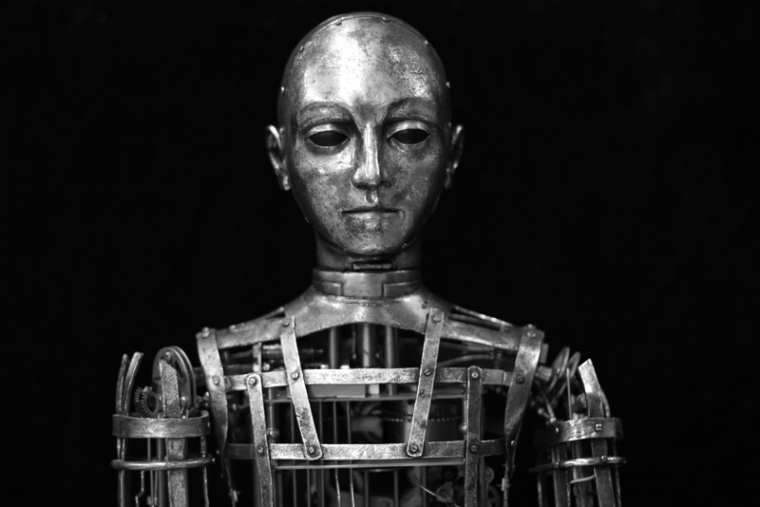
automaton.jpg.pngWhen I entered high school placing students in particular tracks had become all the rage. Based on grades and an entrance exam I ended up in what was known as the Honors group. Things were a bit nerve racking for me because the principal inserted a caveat to my designation in a face to face meeting in which he indicated that I would only be part of that cadre on a probationary status. In fact he suspected that I would be removed within the first grading period because I was barely qualified for the academic rigors to which I would be subjected. Through sheer determination I hung on for four years and graduated with an Honors designation. It would not be until I was an adult that one of my former teachers would reveal that my peers and I had been part of a grand experiment that did not work as well as the adults had hoped.

Educators have a tendency to be constantly searching for what I call a magic bullet, a way of doing things that will transform the way we teach our children and result in dramatic advances in knowledge and critical thinking. Sadly as such attempts take place there is always a risk that they will not bring the hoped for advantages and may actually do damage to the students who become living guinea pigs. Thus it was with me and many of the other people in my class. Each of us became known more by our labels and less as the individuals that we were. We tended to believe that sets of numbers defined us, and in my own case I worried that everyone would learn that I was a fraud. Because the principal had so clearly indicated that I did not have the intellectual acumen to be a member of the elite Honors class, I was constantly stressed and uncertain of my abilities. Little did I know until that fateful reunion with my teacher that I was not alone in the emotional trauma that the untested methodology unleashed. The fact that the plan that had driven the daily routines of my class was eventually changed to address its blatant problems was of little comfort. The damage had already been done and it bothered me even though most of us had managed to overcome the difficulties perpetrated by faulty methodology.

As a teacher I understand the need to find the best practices for reaching students. Still I have watched a parade of bandwagon theories that have ultimately been rejected long after they have had an ill effect on the youngsters who were used to determine effectiveness. I don’t suppose that we are able to tell whether or not something will be successful until we try it, but for the group that is subjected to massive changes it can be disastrous. We watched the new math of the seventies be rejected because it never really clicked with either the teachers or their pupils. We worry about that the constant standardized testing and the thirst for hard data has somehow ignored the heart and soul of each individual. We sense that numbers alone are incapable of measuring the content of a mind. We try different styles of note taking, tutoring and delivery of lessons, only to realize that there is no one size fits all way that works for everyone. We labor to individualize learning and teaching but then insist on scripting lessons. We’ve tried cooperative learning, behavioral modifications, and on and on. All are noble and well intentioned efforts but instead of taking an entire group and radically changing the way they are taught, why can’t we try such interventions in small doses until we are certain that they are effective?

There is a trend in many schools today to modernize teaching by using technology with a nod to B.F. Skinner. Students watch educational videos or read lessons at their own paces. If they fully understand the concept they are free to keep moving forward. If they are confused they ask questions of the teacher who becomes more of an interventionist and less of a direct instructor. Interactions between teachers and their pupils are thought to be more targeted and thus more effective, but for many it has become a frustrating venture leading them to confusion and a loss of self esteem. As someone who has always understood that there is never one best way, I have to wonder what proponents of such radically different systems were thinking when they decided to abandon all of the traditional ways in favor of a grand experiment. Why not instead insert such changes in small doses and then measure their effect on each student? It would make much more sense to see what happens in a trial run rather than simply accepting that all of the old ways should be left behind. It really is possible to teach in a number of different ways and still get phenomenal results.

I would like to propose that teachers select the methods that work best with a particular set of students rather than tossing out the baby with the bath water in favor of new ideas that are still untested. We should instead tread lightly with innovations, use them sparingly until it is evident that they truly are effective. It’s never a good idea to overuse any practices. They can become too routine and boring to students. Variety truly works well and provides opportunities to try the latest educational ideas. The most important thing is for teachers to still be teachers, not just conduits of information. In other words the goal is to help every student to attain mastery of concepts. That takes patience and creativity because sometimes the secret to unlocking a mind lies not in how information is presented but in how an educator touches a heart and turns on the magic that lives inside everyone. There are truly some aspects of learning that have little to do with data points.

We have rubrics and measurements for literally everything today, neglecting to take our differences into account. Students who don’t quite fit the mold often feel that something is wrong with them. Only a talented and sensitive teacher knows how to help them to find themselves in a world that seems so intent on judging their worth based on numbers. We really do have to move beyond the test scores and grades to encourage our youth to see learning as a magical and exciting experience rather than one that places daily stresses on them. If a student does all of the steps correctly to find the equation of a line when given two points but then accidentally multiplies wrong to reach an incorrect answer, we need to be willing to give that person credit for what they did right and use the mistake as a learning tool. All too often we instead slash a big red mark over the entire effort and leave the child feeling inept. That borders on educational malpractice.

There are those who speak of today’s students as snowflakes, kids who can’t handle conflict or difficulties. Nothing is farther from the truth. Today’s children are busy checking off boxes that indicate that they are moving steadily toward success. It is an almost robotic atmosphere in which they must complete so many requirements just to move from one phase of education to another. Square pegs have to fit into round holes no matter how painful the process of doing that may be. Universities make it more and more difficult to land an acceptance letter. Students must have resumes that include rigorous courses, leadership roles, extracurricular activities and even community service. They work from before dawn until well into the late hours of night attempting to accomplish all of the expectations. Many of them are enduring mental distress in the process and questioning their worth when they falter. It is as though we have embarked on a nationwide experiment with their very lives and souls. We have become Tiger Adults who push and push and push without thought of where all of this will lead. It is little wonder that so many young adults are pushing back on the system once they come of age to make their own decisions. Perhaps it’s time for all of us to demand that schools take a long hard look at the effects of what they are doing.

I made it through my high school and graduated as the Valedictorian in spite of the negativity and pressures that were placed on me by well meaning adults. Not everyone is so fortunate in such highly charged situations, and we have to take every person’s needs into account. There are indeed great teachers who have found the keys to reaching students without destroying their confidence and we should observe them and learn from them. Isaac Owoyemi teaches mathematics for mastery, providing students with multiple opportunities for learning concepts in an encouraging environment. Seng Dao Keo understands the necessity of starting from the point where students are on the learning curve rather than failing them for not being ready for a particular idea. Chrystal Hunter deconstructs the most difficult aspects of mathematics and simplifies them so that her students will comprehend and feel accomplished. Dickie Written reaches the imagination of his pupils by making literature relevant and exciting. Lisa Sandifer understands that many students need the arts to reach their full potential. Jenny Brunsell brings the heart of an angel to her kids and they always respond. Such educators realize that while there is an element of science in teaching it is in the execution of its art that the true miracles happen. They do not rely on scripts or preplanned lessons or the latest fads, but instead select what is needed in a specific time and place. This is the trend that we need to follow. Until our children feel the joy of learning all of our efforts will have been in vain. We reach them first through the heart and then the mind follows.

We Believed

houston-astros

I sometimes wonder why anyone from some place else would choose to move to Houston, Texas. My father-in-law came to my hometown accidentally. He and a buddy were supposed to meet up at “U of H.” He forget to ask what the “H” stood for and a search of universities led him to believe that he needed to enroll at the University of Houston. After he had traveled here he went looking for his friend only to eventually find out at his pal was at the University of Hawaii. Things worked out well for him when he met my mother-in-law in the Cougar Den and they fell in love. He’s been here ever since.

My maternal grandfather came over as an immigrant from Austria-Hungary just before the outbreak of World War I. Houston was advertising all over Europe back then in an effort to entice workers who were needed for the growing community. Sometimes the flyers that they posted stretched the truth just a bit with photographs of beautiful mountains in the background that may have caught the interest of those thinking about relocating. Unfortunately they would soon enough learn that Houston was as flat as a pancake, but there were indeed jobs here which was probably more important to my grandfather than lovely landscapes. He too set down permanent roots. Eight of his children would be born in Houston and grow up on the east side of town. None of them ever left other than to fight a war. They purchased homes and raised families and grew old, always feeling great pride in a town that is not always understood by the rest of the world.

I first met Houston, Texas on the day of my birth in November, 1948. Not long after that my parents purchased a brand new home in the southeast part of town. My little world revolved around my town that did not yet have a population of even a million people. As I grew, so did the city and about the time that I was entering my teen years a professional baseball team that would play in the the National League came to town calling themselves the Colt .45s. They played in an outdoor stadium that attracted mosquitoes and tropical heat. None of that deterred those of us who were fans of baseball from buying cheap seats in the outfield for great entertainment on summer evenings. I suppose that it was way back then when I developed my love of the hometown boys of summer. Those were halcyon days that made us believe that we had our own field of dreams.

Eventually a local promoter named Judge Roy Hoffeinz came up with the seemingly ridiculous idea of building an indoor stadium that would keep us cool on even the hottest days with air conditioning and cushy seats. In the meantime as with most things related to guns the name of the team became controversial to some and in the end a compromise was made to change the name of the team to the Houston Astros. It seemed an apt title given that Houston was the center of the space exploration universe at about that time, and we had grown and grown as a city.

At first the big domed stadium that Hoffeinz built appeared to have been a boondoggle because the grass would not grow in the insulated environment. Not to be discouraged by a little problem, efforts were made to create an artificial turf that would become known as Astroturf. It worked and yet again Houston rose above it’s doubters, a trend that seems to be part of the city’s DNA.

Another major hiccup occurred when the glare of the sun on the roof made it almost impossible for the players to catch fly balls. They would look up and be blinded, a situation that was untenable in baseball. The laughing began anew but would not last for long as creative minds engineered ideas that eventually solved the problem. The Astrodome became known as the Eighth Wonder of the World, but the team itself was not quite as lauded. Still we loved our Houston Astros and attending a game was always a great treat. We watched the uniforms and the roster change as the owners and managers did their best to bring the city a winning season. We got close now and again, but much like the city itself there always seemed to be a bump in the road that brought us back to the reality that nobody in the world loved Houston and our Astros as much as those of us who lived here did.

I grew older and Houston grew bigger, while the Astrodome became a shadow of its former glorious self. We needed a new stadium to reflect the grandeur of our city and so we built a park on the site of the old train station where so many had first encountered Houston in their quest for a better life. Somehow it seemed a fitting place, especially to me because in the long ago my grandfather had lived in a rented room not far from where the stadium now stands. The team itself would flux and flow, sometimes seeming to be in reach of glory and at other times playing to near empty crowds while losing more games than any other team. Nonetheless there were those who kept the faith even in the leanest of times. It’s what we tend to do in Houston, a city built on impossibilities that somehow always became possible. After all, who would have thought that an inland city would one day boast one of the busiest ports in the country?

My mother led our clan in cheering the Astros through one season after another. She eventually became too old and weary to navigate the ramps and stairs at the ballpark but she never missed a game on the radio. Lying in the dark she let her imagination take her out to the ballgame. and her love for the Astros remained loyal and unabated. She knew every player’s name and stats. She offered armchair advice, and she taught us to be as true to our team as she was, something that was not always easy as we watched our shining moments come and go.

The colors of the uniforms changed as often as the roster of players. We went to the American League and had to become accustomed to a whole new group of opponents. We sometimes sat in the magnificent park with so my empty seats that I wondered how the owners were going to be able to pay to keep the lights operating. History plodded onward and we remembered our favorite players of old like Jose Cruz, Nolan Ryan and those wonderful “Killer Bs” who took us all the way to the World Series only to go down in flames in four games. Still, nothing could deter us from loving our Astros.

This season our beloved team showed sparks of brilliance again and again. We dared not hope that maybe, just maybe this would be Houston’s year as they took one victory after another. By August it was clear that they had a shot at history, but then a hurricane came to town leaving many of our citizens devastated by floodwaters. For a moment our attention was diverted from baseball and concentrated on saving and helping our neighbors. We wondered how we would ever move beyond the destruction and what would become of our city. We were as low as we have ever collectively been, but in the spirit of who we are we came together just as we always do. We demonstrated to the world what Houston is about. It became clear as we saw everyone pitching in to help why we truly want to live here.

Once we had gone back to school and work and the tasks of solving the problems made apparent by the storms, we looked up and noticed that the Astros were still on a trajectory to success. We watched as they moved forward and became the living symbol of all of our own hopes and dreams and beliefs about our town and its people. They drew us together just as the floods had done, only this time we felt happy. We loved them even more deeply for giving us this wonderful gift at the very time when we most needed it. Our city became intoxicated with Astros fever. We knew that we had all earned this moment in time. It somehow seemed inevitable that our team would win it all, and of course they did.

I’ve thought all the way back to those early days when everyone thought that the very idea of Houston was ridiculous. Nobody ever imagined that it would become the fourth largest metropolitan area in the country. Nobody believed that the baseball team in the crazy rainbow uniforms would ever amount to much. Nobody thought that we would be able to recover from the utter devastation that befell us only weeks ago. Most of the experts thought that once the Astros met with a team of the Dodgers’ caliber they would fold. Those of us who love Houston believed and believed and believed again and again and this time our team understood what they had to do. They won the World Series stunning those who just don’t understand how we Houstonians are. For those of us who live here, there was no mystery at all. Houston just might be the greatest place to live on planet earth and it has nothing to do with beauty or lack of problems and everything to do with its people. Thank you Astros for demonstrating the spirit of this grand city. We will never forget how wonderful you made us feel.

What Would Jesus Do?

15245699_GHer name is Rosa Maria. She is ten years old and has cerebral palsy. She’s just had gallbladder surgery and is being released from the hospital with her aunt by her side. She wears a pair of pink fuzzy slippers and a balloon waves over the hospital bed on which she is being transported. She is confused and frightened because an armed man walks behind her. He is a member of ICE and is taking the little girl to a detention center because she is an undocumented immigrant who came to the United States when she was only three months old. Her mother brought her across the border so that she might get the medical care that she will need for all of her life. Her grandfather and her aunt are legal and they take her to her appointments just as she was brought to San Antonio for her recent surgery. She will go to the detention center without her aunt or her mom. She will be kept there, alone and wondering what is happening. It can’t be easy for her. She is young and innocent but she is being treated like a criminal.

Maritza lives in northeast Houston. She attends Furr High School and is one of the top students. Her modest home flooded when hurricane Harvey dumped fifty one inches of rain on Houston. The rooms are now empty and life is difficult for her family, but Maritza’s mom urges her to make the most of each day in spite of the family’s problems. Maritza is also an undocumented immigrant. She was planning to enroll with the government to extend her grace period for being here. Because of the rains Maritza was unable to meet the deadline for submitting the paperwork. She had been waiting for information from her school, but it was so damaged that it did not open in time for her request to be honored. Now Maritza worries that she will be deported and all of her hopes and dreams will evaporate. She had been on track to attend a Texas university and earn a degree, the first in her family to do so. She is a good girl who had nothing to do with her illegal entry into the country. She has studied hard and worked to be a model citizen even though that distinction is not offered to her. She had hoped that Congress would offer an extension to the young undocumented students of Houston, but they have refused.

Attorney General Jeff Sessions has said that it is not compassionate to offer amnesty to those who have broken the immigration laws. He and the President and many members of Congress concur that those who flaunted the rules must pay for their crimes. So Rosa Maria and Maritza and others who have known no other home than the United States presently live in fear of being sent to countries of which they have little or no familiarity. Their lives have been upended and they continually live in fear of the moment when someone will knock on their doors and take them to a detention center just as was done with Rosa Maria. Their ultimate fates are uncertain, dependent on a Congress that has shown little inclination to work together to accomplish anything, much less pass a permanent law that will protect them. They worry that they will become victims of the current anti-immigrant ardor that has taken hold of so many citizens, most of whom care little about the personal stories of those affected.

There is a kind of coldness of heart, a meanness that is sweeping the land in a so-called effort to make America great again. Many citizens view the immigrant situation through a narrow lens that does not allow for exceptions. Surprisingly a fair number of those who are so adamant that the undocumented should be sent to their original homes have never even met any so called illegals. They have little idea of the human cost of decisions that do not consider the unexpected consequences of their thinking. They suggest that they might be willing to offer a DACA like law for the young people, but only if it includes the building of a wall between the United States and Mexico and if there are strict penalties for those who came here without documentation as adults. Sadly it appears that none of those things will garner enough votes to pass, and so the fates of Maritza and Rosa Maria and others like them hang in the political balance.

I live in the Houston, Texas metropolitan area. It is estimated that that ten percent of the students in the Houston Independent School District are undocumented and were brought here by their parents at a time when they wee too young to have any idea of what was happening. They have lived here for the entirety of their lives and know no other ways. They speak English and have adopted many of our customs in addition to those of their parents. They cheer for the Astros, the Texans, the Rockets and the Dynamos. They wear western gear when the rodeo comes to town. They enjoy going to movies and shopping at the mall. They have friends at school and teachers who care deeply about them. They like to eat Whataburgers and buy groceries at HEB. They feel as American as any of their peers and yet they hide the secrets of their situations. For a time after President Obama signed DACA through an executive order they felt safe. They began to dream. Many of them went to college and earned degrees. They have been working and living decent and productive lives. Now a shadow hovers over them. They have no idea what they will become of them. President Trump gave Congress six months to pass legislation to fix the problem. The clock is ticking and no solution appears to be on the horizon. Nobody seems willing to budge from their ideologies to help them. They can only wait and hope but their fears grow with each passing day.

Rosa Maria still sits alone in a detention center without her mother or the love and protection of her family. It is heartbreaking to attempt to imagine what a nightmare this all must be for her. It is difficult to understand how uncaring the adults who have done this to her appear to be. Sometimes we need to remember that forgiveness is not a sign of weakness. One of the last acts of Jesus before He died on the cross was to forgive the thief who expressed his sorrow. I have always believed that this was a very purposeful act designed to show us that how we also should behave and to help us understand that nobody should be forever doomed for actions done in the past, particularly when they had no control over what happened. If we ask ourselves, “What would Jesus do?” I have little doubt that the answer is couched in mercy.

It’s past time for all of us to demonstrate enough compassion and trust in our fellow man to grant people like Rosa Maria and Maritza the peace of mind that they so need. We must urge our Congresspersons to think beyond their own prejudices and find it in their hearts to model kindness for all of us. I have grown weary of the fighting and ugliness that so permeates our world. It’s time for a change and this is a good place to start.