
Success

successSuccess is defined in the dictionary as the completion of a task or assignment. On the face of it the word has a very direct and easily measured meaning, but over time we have attributed many different and personal ideas to the nature of what serves as the definitive explanation of success. More often than not, we rarely think of the achievement of ordinary goals as constituting anything worthy of being considered a success. Instead we tend to attribute a great deal more splendor to the concept, and we save it for descriptions of grand deeds or tremendous financial gains. In our minds the successful person is more often the one who wins the race, rather than those who merely participated and made it to the finish line. I suspect that in our adoration of those who reach heights that are less attainable to the vast majority, we have often overlooked and undervalued the day to day efforts of an army of nameless and faceless people who keep our world functioning.

Our competitive natures are such that we have a tendency to rank individuals as winners and losers. Someone who manages to earn vast amounts of money is sometimes viewed with more reverence than those who toil for little compensation. We suggest to our children that pursuing certain more profitable careers is somehow more laudable than doing something about which they are passionate. We are in awe of titles and degrees more so than dedication and altruism. We begin quite early to identify and reward children who learn more easily than their peers, making them appear to be a bit more worthy of our praise. By the time that our kids become adults they have been subliminally taught that survival of the fittest means scrambling for the top rather than taking care to reach a personal goal.

It is little wonder that our general focus on success as a contest to determine who ends up with the most medals, or marbles or toys or titles has so confused and even depressed our young. The quest for merit begins at younger and younger ages. Now we want our toddlers to begin the rudiments of reading. There are toys that teach them pre-Algebra skills. We enroll them in music lessons and sports and get them accustomed to competing for positions on teams. We continually send the message that their interests and efforts should be aimed toward end goals that will supply them with prestige and wealth. Rarely would any of us consider counseling our children to rejoice in the pursuit of dreams that are ordinary. We want them aiming for the stars, which means that if one of them wants to work on a job that seems homely and ordinary we will discourage them from pursuing it. All too often we make our youth feel as though they are failures simply because they choose different paths than the ones that we desire for them.

I spent a weekend with my nephew and his family and marveled at the evidence of his quite obvious success. He and his wife came from humble backgrounds and through study and hard work have achieved even beyond their own dreams. Both of them are devoted doctors who are  considered among the best in their respective fields. Their efforts have brought them both tangible and personal rewards. They enjoy the fruits of their labors and share them generously. They have managed to raise their children to be as unspoiled as they are. Virtually anyone who might meet them would readily assign the label of success and admiration to them, as it most assuredly should be, but the true extent of their achievements lies not so much in their collection of the trappings, but in the content of their character. They are truly successful because they chose to follow their own personal passions, and did so by pushing themselves to have a purpose in all that they have done.

There is a great deal of talk these days regarding who makes the best kind of leader for our country. We’ve tried scholars such as Woodrow Wilson and engineers like Herbert Hoover and Jimmy Carter. We’ve had lawyers in the embodiment of Abraham Lincoln and Barrack Obama. We’ve tried businessmen, farmers, military generals, and even actors. It was not so much those who had scaled the heights of their respective professions who proved to be the greatest among our presidents, but individuals who brought both intellect and honor to the job. The best among them somehow understood that success was defined not by praise for themselves but wins for the people for whom they worked. So it should be for each of us who choose how we desire to live our lives. It is in focusing on the greater good that we find the sense of accomplishment that we desire, rather than in the awards that we receive.

I’ve often counseled my students to find what interests them, and then apply dedication and imagination to doing the necessary tasks of their lines of work with great love. Digging a draianage ditch to the most exacting specifications is as noble as inventing a cure for cancer. When the rains come and that hole in the ground does its intended job of preventing floods, something quite grand has been accomplished. Think of how glorious our world would be if each individual so valued his/her contribution to society that all efforts were done with great care. That is the true definition of success, and the one that we should be teaching our children.

I also have a relative who is a minister. He earns very little money and has few worldly goods, but he is as devoted to his work as the good doctors that I described earlier. He believes in the importance of his vocation and he gives his all to being a guiding light and source of comfort to his congregation. I am in awe of him because I know that he has sacrificed greatly to follow his calling. He has done so with a heart so big that he is touching the very souls of his flock.

I suspect that much of the angst that we are imposing on our children might be alleviated if we were to stress the importance of doing whatever we choose with great pride. In turn those of us watching young people make their way into life must always value their choices and provide them with the encouragement that they need. We seriously have to take care not to send messages that make them feel that what they are doing is somehow less worthy than what others do.

As an educator I have longed to find a way to develop each human at his or her own pace and without all of the numerical data that attempts to squeeze individuals into one size fits all definitions of success and failure. I love the idea that life is a continuum connected by an infinite number of points through which we flow as we accomplish tasks in a manner that takes our unique talents and difficulties into consideration. Whenever we do something well it feels glorious and serves to encourage us to keep moving forward. Sadly we all to often look up to notice that the rest of the society is focused mostly on those whose efforts appear to be more significant than our own. We become discouraged and question ourselves. We feel undervalued and lose focus.

I have seen success on a grand level and in the smallest of ways. It is something to always celebrate. I am that child who wowed my teachers academically but who frustrated them athletically. When I finally learned how to connect a baseball bat with a ball and send that orb flying over an open field I felt as accomplished as I did when I earned a college degree. Because I had teachers, mentors and guides to encourage me no matter how many failures I endured I felt the surge of success in my heart and it was so good. My hope as I travel through the twilight years of my life is that somehow I might send the message to our youth and the people who are guiding them that success is exactly as the definition describes, the completion of a task. There are no parameters of time. There are no rankings of the value of the work. Success implies a willingness to get back up even after failure to get a job done. When the ending produces something accomplished with great care, it is indeed a beautiful thing, and we all need to learn how to celebrate success as it was meant to be.


Finding Inspiration

inspiration-cover

I  was having a difficult time finding inspiration for writing my blog today. I’ve been enjoying doing this task five days a week for almost five years now, and there really are very few days when I search desperately for a topic. When that happens I usually serf the Internet hoping to find something that sends a sudden burst of ideas to my brain. Today was one of those times when nothing was coming to mind, so I spent some time reading posts on my Facebook wall hoping desperately that something would jump from the page to tickle my fancy.

I read about a friend who had run a half marathon and ended up exhausted and hurting. I was intrigued by what she had done, but since it would never even cross my mind to think of doing such a thing I didn’t exactly come up with fertile ideas for writing when I read about her adventure. How far would I get reiterating the idea that my knees no longer allow me to run, and that I have little or no desire to push myself into a state of pain doing anything. It became obvious to me that I would have to keep reading if I was to find any kind of material for creating an essay. That’s when I saw  a post from a high school friend that sent me into gales of laughter.

He was asking if anyone had an extra set of feet for an artificial Christmas tree because he was unable to locate his. He had searched closets and attics and all sort of places all to no avail. Friends in his age group razzed him about getting old and the inevitability of becoming forgetful. I identified completely because I had decided on a great blog topic only an hour or so before, but couldn’t recall what it had been for the life of me. Lately I’ve had to learn to write things down as soon as they come to mind or the slightest interruption may erase them forever. My husband had asked me a question and in the short space of time that it took me to respond I literally forgot what I had intended to write about for today. So there I was wondering what to put on a page.

That’s when I saw yet another post from a former teacher friend who was asking for advice on what to do to find inspiration when it eludes us. There were some great ideas like gazing up at the sky, but it was very dark and rainy where I was, so that didn’t seem to be an option. I’d already tried looking for interesting quotes and perusing the news, none of which jostled even an iota of creativity. That’s when I thought of the many times when I had a deadline for an essay, and I drew a blank regarding what to compose.

Writer’s block is the stuff of legend. After creating the masterpiece The Great Gatsby, F. Scott Fitzgerald struggled to regain his footing. Somehow he was not able to repeat his performance as a writer and it lead to depression and alcoholism, so I know I shouldn’t feel too bad if I find myself without ideas now and again. Still it is so frustrating, and I remember one occasion in particular when I stared at a page with the same painful realization that I was as stumped as Jack in The Shining. I didn’t even have the wherewithal to write the same sentence over and over again. I was unable to even string together a nonsensical group of words, and it threw me into a panic because I was taking a class at the time, and my assignment was due the following day.

I was willing to admit that procrastination had created my dilemma, but that was little comfort as the clock ticked away. It seemed that the harder I tried, the more locked up my brain seemed to be. Taking a walk did little to help. Lying down and attempting to quiet my mind did not work. Screaming my frustration only felt worse, because I knew that I must have sounded ridiculous. I was on the verge of panic and tears when my husband brought me a cold beer.

I looked at him as though he had two heads. I argued that drinking a brew might only make me sleepy and then I would really be in a pickle. I thought of poor Fitzgerald and how not even a prolonged bender alleviated his problems. I failed to see how pausing for a sip of suds was going to change the situation, but I had almost reached a breaking point, so I surrendered to the idea.

I relaxed a bit while enjoying the amber liquid, and as I did I became quite mellow, so much so that I wondered if I would just drift off into slumber and end up having to attend class without completing the assignment. I was certain that I was totally in trouble, when I slowly found myself considering a number of out of the box ideas. The more gulps I took of the beer, the more fertile my thoughts became, and before long I was banging out a paper that in that moment made me feel as though I was writing the next great educational document. My fingers were barely able to keep up with the flood of ideas that filled the once blank paper with a sea of characters forming words, sentences, paragraphs and entire pages. Not more than an hour later I was proof reading my manuscript and creating the final copy for submission.

I went to bed that night feeling relaxed and accomplished. My alcohol soothed brain was bristling with greatness, or at least it felt that way. Sadly by morning I wasn’t as sure of myself, but I had to work all day and understood that I was stuck with the essay that I had written with a muddled mind and no time to change it in any way. Rather than torture myself I decided not to even read it again, and I began to feel a dark sense of foreboding. Somehow I believed that any chance of getting a decent grade was doomed. I chastised myself for allowing such a situation to exist in the first place, but it was too late.

As it happened, I had somehow unlocked the creative juices of my brain with my drinking binge and my paper proved to be more than satisfactory. When I saw the grade I was amused that I had pulled off my smoke and mirrors magic trick. The professor wrote dazzling comments about my brilliance, but I could only laugh at the fact that I was unable to remember what I had written. (Bear in mind that it takes very little for me to become the victim of a drunken state, so that beer had rendered me rather incoherent, but apparently still somehow in control of my faculties. I now fully understood why so many writers turn to drink as a muse.)

My latest episode of writer’s block and the search for inspiration lead me into a discussion of over imbibing with a group of relatives. My brother who is almost a tee totaler spoke of a time when he enjoyed himself a bit too much and engaged in a match of chess with a graduate of MIT after running a foot race with his buddies. Surprisingly he recalls the incident as the best game that he has ever played, and he was so relaxed that he won handily in both the race and the chess game. Others told of amazing feats like being able to do pushups on a countertop, or dancing like Fred Astaire. It seems that rather than inspiration, what we all found was a way to eliminate our inhibitions.

I certainly would never recommend my inebriated writing method as a regular means of expressing my thoughts. It might have ended quite badly, but for a bit of luck. I suspect that the secret was that I was able to relax, and I might have accomplished the same thing with a brisk walk or a few minutes of meditation. It may well have been my brother’s exercise before the chess match that was the source of his winning ways, and not the vodka. It didn’t seem to work for F. Scott Fitzgerald, so it may be a mistake to think that it worked for us.

Anyway, I’ve somehow managed to fill a blog with a bit of nostalgia and nonsense and maybe even some hidden ideas for finding inspiration. In the future, however it is no doubt best to write down the ideas that I have before I lose those thoughts. It is a lot less frustrating than tackling an empty page.

The Things We Own

Internet-of-things-data-digitalWe are not defined by our possessions. At least we shouldn’t be, and yet when someone dies we find ourselves remembering moments shared with them when we see the artifacts that belonged to them. A ring, a book, a plate, a tool, a painting, an article of clothing may spark recollections that bring a person back to life in the mind of the beholder.

When my father died I found comfort in seeing his clothes and shoes lying in the closet where he had left them when he went out on a summer evening drive. Somehow as long as they were there I felt as though a part of him was still with us. When my mother finally had one of my aunts remove his things the reality of his death sank into my brain. From then on my memories of him were found in the books that he had so treasured. They spoke to me of his love of reading and told me that he had been a man of many different interests and talents.

Since my mother had lived with me in the last year of her life the duty of disposing of her clothing became my responsibility. My daughters helped me and each of them chose one item to remember her by. One of them decided to take Mama’s warm fuzzy robe. She wears it to this very day and says that it makes her feel as though she is getting a hug from her grandmother. She swears that even with multiple cleanings it still has my mother’s scent locked in the fibers. In a strange way it is like having a tiny bit of her essence still intact,

Last week my husband and I helped the daughter of a very dear friend drive his RV to a consignment lot where it will eventually be sold. He had died quite suddenly last month to the shock of all of us. Driving my truck behind the RV as we rode in a caravan reminded me of the camping trips that we had taken with him. They always took place in the fall and we had great fun talking and hiking and visiting museums. Just as had happened with my father’s things the reality of Bill’s death struck me full force during that drive. He loved the big meals that I cooked and we laughed and told stories while we broke bread at the tiny table that seemed so bountiful on those wonderful occasions. I felt a deep sadness because I knew how much joy that RV had brought him. In fact, he had once told us that it had saved his life after the death of his beloved wife. The trips that he took provided him with a reawakening of his sense of adventure and a reason to arise each day. It appeared from the interior of the RV that he had been in the process of planning another excursion just before he died. I suppose that I feel some comfort in knowing that he was probably happy as he contemplated the fun that he was going to have.

After our friend died his daughter gave me some of the things from his house. I have a stained glass butterfly and a set of wind chimes that had been chosen by his wife, my very good friend as well. The blue glass figurine was so much like her. She loved butterflies and the the indigo and turquoise colors that decorated so many corners of her home. I smile now when I see the lovely items that speak of her whimsy and remind me of her laughter. She enjoyed having what she called rainbow days and as the sun shines through the colored glass I see little rainbows dancing on my ceiling as though she is actually urging me to embrace life and have fun.

When I opened the boxes that hold my Christmas decorations I found a Viking nutcracker. It once belonged to our friend, Egon, a German fellow whose ancestry included a Norwegian mother. He loved Norway and its people and spent most of his summers at a family hut in the mountains. He often told us tales of those halcyon days with his parents and aunts and uncles. He made the place that they called Hovden sound as though it was a slice of heaven. We had always planned to one day go there with him but it was not to be. I can almost hear the strains of Finlandia and see the little red house at the top of a hill where so much of Egon’s spirit had been forged on those vacations with his kin when I look at the stalwart Viking with the funny mouth strong enough to crack nuts. Egon was so much like the delightful little character.

I purchase nuts and apples and tangerines for Christmas every year because my Grandma Ulrich always set out huge enamel bowls of such treats for her holiday celebrations. I have one of the enamelware containers that she used. Each year I fill it with the fruits and the nuts that we all so enjoyed when we were children at her house. I almost feel as though I am back in her crowded living room with my aunts and uncles and cousins when I release the aroma of citrus as I peel one of the juicy tangerines. Recreating the festivities in a bowl that once belonged to her has become one of my most cherished traditions.

Like my father, both of my grandfathers loved to read, and they accumulated books like some people collect stamps or coins. I was able to gather a couple of them and add them to my own collection, and from one of my uncles I have a number of old 45 rpm records with selections from jazz greats like Louie Armstrong. I have to admit that I never realized what great taste in music my uncle had until I was grown. His recordings make me think of the nineteen forties when the world was at war and the future seemed so uncertain. The music provided a ray of hope in a world that seemed overrun by evil. I like to listen to the crackling of the needle on the vinyl and imagine my uncle as a young man.

My house is filled with the items that I use for living and those that I have gathered in travels and from my hobbies and interests. I can’t help wondering what among them might one day remind my friends and relations of me. Will it be my books or my dishes or the art work that I so cherish? What will spark a feeling or a memory? If I knew I would set those things aside for them, but I’m not so sure that anything that I own represents me in any particular way. I have never been attached to things as much as to people, and so there are few items that I would be so important to me that I would feel sad if they were lost or destroyed.

I have a special book that my grandfather gave me when I graduated from junior high. I cherish an antique pitcher that belonged to my great grandmother. I guard the discharge documents that terminated my great grandfather’s enlistment in the Union Army at the end of the Civil War. I have several books of poems and fairytales from which my father read to me when I was a little girl. I would want to save the lamp that my mother used on her dressing table and the china that my brothers bought for me as a wedding gift. Of course there is also my wedding ring that I have worn on my left hand for almost fifty years.

I suppose that I might be able to pack all of that into a small carrying case. I did in fact move those items to the second floor of my home when the waters were rising in my city last August. As it happened they were never in danger, but I would not have wanted to lose them. Still I wonder if they will mean anything to my children and grandchildren. Sometimes I suspect that only my brothers and I understand their importance in my history. One day they may sit forlornly in a box destined for the Salvation Army or some other donation center. I guess that by then it won’t really matter anymore because as I said before, none of the things that we have define us, and yet I wonder if that it really true. Somehow the little trinkets that we bring into our lives tell small stories of who we are. They are clues about what we think is important. They are little biographies that only those who know us will understand. They are the things we carry in our souls.

Finding Destiny

Ziplineweb

Each of us has a destiny, a purpose in life. Finding it is the trick, because there are so many distractions and demands that lead us astray. The challenge of discovering our inner core and the life’s work that will bring meaning to our souls is one that we all face. Often we find ourselves on circuitous and unsatisfactory paths in our search for the feeling, the passion that will assure us that we have finally found the right fit for our personalities and talents. We question our very worth as we struggle to become the best of ourselves, and we grow jealous of those who appear to so easily find their way.

I was in my early thirties before I felt as though I had found the key to a happy life. Even then I would sometimes allow the inevitable bumps in the road to discourage me and question whether or not I had been successful in choosing a lifestyle and career that suited me. My brothers always seemed to know exactly what they wanted to accomplish in life. One of them boasted at the age of five that he wanted to be a mathematician and just as promised in his toddler days he carved out a highly satisfying career in the world of numbers. His was a straight road, a shortcut to being exactly what he wanted to be. I envied his clarity and determination because I was muddled and confused for all of my teenage years and most of my twenties. It took me so much time to construct a life that made me both happy and proud.

My years as an educator allowed me to be more gentle on myself, because I realized through watching my students that I was the norm and my brother was an outlier. Most people tend to stumble upon satisfaction through trial and error. Sometimes failures actually provide the answers that we seek. In the calculus of life we achieve closer and closer approximations of meaning as we try this and then that. With each new experience we learn what we dislike and what excites us.

I had thousands of students during my career. I no longer remember most of their names., but I see the faces looking to me for guidance. Certain individuals stood out from that crowd of countenances. There was something about them that told me that they were special and would make a significant mark on the world. Some of them were exemplary and well behaved students. Others were less than stunning academically and maybe even frustrating trouble makers. For whatever reason I always remembered them vividly, and quite often learned that they had indeed been incredibly successful. I suppose that I have always had an eye for talent. I have found it in the homeliest of places, and been challenged by my fellow teachers in proclaiming it’s existence in some of the most questionable cases.

Early in my career there was a young man who captured my attention. He was in what were then called Honors classes. He was not the most outstanding of the lot, but his intellect was nonetheless advanced. He had an unending sense of humor and often distracted me with jokes that invariably made me laugh. He was a very likable soul with a bounty of charisma, but he struggled a bit with Algebra I. He took longer to master concepts than some of his peers in the class. He persisted nonetheless and always eventually figured things out. What was most remarkable about him was his wit and a spark of mischief that revealed his natural creativity. I somehow always knew that he would be a remarkable adult, even when I learned that one of his pranks in high school had resulted in great trouble for him.

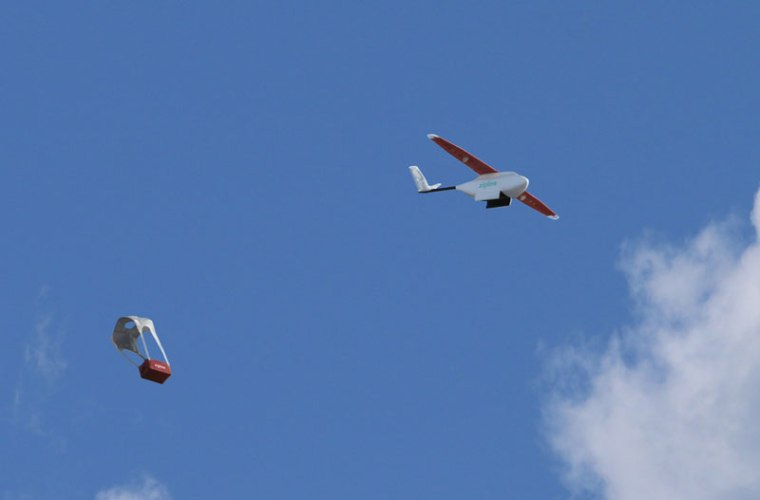
I eventually lost track of him and then one day read his name in the newspaper. I immediately recognized him as one of my favorite former students. He was working as a publicist for the Secretary of Education, a position that fit his personality to a tee. I located him on Facebook and have followed his journey with pride ever since. When his boss left Washington D.C so did my student. He now works in New York City with some of the most incredibly altruistic and cutting edge companies. His work and theirs is literally changing the world for the better. His talents and his big heart have made him into the person that I envisioned back when he was just a young boy. By following his inner voice and taking risks he has found not just success but more importantly fulfillment. His most current work is with an organization that brings much needed medical care to remote areas of the world. Specially designed drones are delivering blood, medications and equipment to people in emergency situations who formerly would have died for lack of resources. My student is proud of his work, and I am bursting with joy for him.

There are so many different ways to approach life, and it is often difficult to see the way ahead in our one size fits all society. We have people and situations demoralizing us all of the time. We compare ourselves to those who possess abilities that we don’t have and seem to have it all together. We listen to naysayers who discourage us from seeking the dreams that fill our hearts. We are pulled down by competitions and meaningless tasks. We lose sight of who we are and what provides us with a feeling of accomplishment. Because we sometimes have to work harder than others to achieve the same results we question our abilities. When we make mistakes we become our own worst critics. We are lead to believe that we should follow a blueprint that was designed by experts who think that they have insights into our hearts, even when it makes us feel uncomfortable. We listen to the noise of the crowd. We fall for the propaganda and find that we are lost.

It is only when we quiet our minds enough to hear the tiny voice that is inside every single one of us that we begin to realize what direction we must take. It is the guide that we need in order to find our own personal destiny. It helps us to understand what values are personally most important.  It taps into the totality of our talents, our beliefs, and our desires. It soothes our very souls, and only each person knows if he/she has found it.

I have always told my students to list the things that make them happy. I encourage them to take note of the moments when they feel a surge of passion. Those are the clues that will lead them to choose the right trajectory for their lives. I caution them to think for themselves and to use their failures as lessons that are perhaps more important than the ones that bring them success. Most importantly I urge them to discover the moments that fill them with a sense of excitement, meaning and pride. That is when they will know what they must do.

No Tongue Can Tell

1328-Ball-3.jpg

Imagine living in an island city filled with beautifully colorful buildings that look almost like doll houses. The streets are filled with smiling happy people who bask in the sunny days and enjoy the ocean breezes. Along the shore on a pier out in the ocean there is a huge ferris wheel that citizens reach on a train that transports them over the water. There is a port that brings goods and money into the area from all over the world. It provides jobs that make the citizens some of the wealthiest in the nation. This is surely a place that must be paradise, a dream come true for all who dwell here.

Now consider that news arrives of a coming storm. Reports differ as to its potential strength. The local meteorologist does not believe that it will be particularly harmful. The signs from the ocean appear to be mild. There is no reason to panic or leave. It’s simply time to batten down the hatches, get together indoors with neighbors and celebrate good fortune. You watch as the ocean asserts its power and the sky grows dark. The streets of your town begin to fill with water, but nobody is particularly worried. They’ve seen this kind of thing before. It will blow over and the sun will return. Maybe the wind will create the need for a few repairs, but nothing more.

By nightfall you become a bit more concerned and invite frightened friends to your more substantial house. Things should be just fine, but as the squalls come ashore something is very different about this hurricane. It is more frightening. Too many things are blowing past the windows. The water is inching rapidly toward the front door. You and those with you climb to the second floor to wait it out. The tension in the group becomes more palatable. Your heart begins to race and you have thoughts that you want to wish away.

Something slams into the side of the house. Suddenly there is an open hole the size of an entire room. The place is breaking apart and everyone becomes hysterical. You see water raging past filled with flotsam and jetsam and people who do not appear to be alive. The floor on which you are standing begins to crumble. You grab at a portion of your once fine home that has suddenly become the foundation of a makeshift raft. You carefully place your children on the flimsy lifeboat and search for your spouse who has suddenly disappeared under the water. You are in a panic, not knowing what to do. Should you dive under the darkness in an attempt to find her, or is it best to look after your children? You pray to God for strength and protection. You want this horrifying night to be done.

You float aimlessly for hours. As far as you can see  there is unspeakable destruction. Little do you know that it is far worse than you imagine. Perhaps it is best that you are ignorant of the true extent of the terror, because you might lose all hope if you know what has really happened. You calm your children and wait for the sun to rise. You want to cry, but know that now is not the time.

When the day dawns the winds have ceased and the waters have begun to recede. The vision before your eyes is unimaginable. You want to shield your children from the truth, but the death that surrounds you is so massive that there is no possible way to keep them from knowing what has happened. Your once majestic city by the sea is gone, never again to be one of the most important places in the country. A later accounting reveals that more than six thousand of your friends and neighbors and fellow citizens have died in the hurricane, a count that will not be equaled even a hundred years later.

The task before you and other survivors is daunting. Some have already decided to just leave, but you want to stay in this place. It has burrowed into your heart, and even with all of the pain that it has created you can’t bear to go somewhere else. You join the building process and silently hope that you will find your relatives and friends who are missing, but you never do.

Your city will become a small town, no longer destined to be as glorious as it once was. You help to build a seawall designed to keep the raging waters at bay. You work to raise the entire island, a modern marvel of engineering. You are proud of those who work to bring things back to a semblance of normalcy. You are a survivor of something so terrible that you will never be able to adequately speak of its horror. You don’t want to talk about what you lost. You try not to think about the orphanage that no longer exists, or the tiny souls from there who were eventually found buried under the sand with their caretakers next to them. Yours is a story for the ages that you will never want to repeat.

This is a true account of the great storm of 1900, a category four hurricane that moved right over Galveston Island in Texas. To this day there has never been another natural disaster in the United States that claimed so many lives. In the course of only a few hours the once thriving city was decimated, and would ultimately be reduced to a sleepy place that mostly attracts tourists and brave souls who find themselves in love with the tropical atmosphere. Many of the homes of 1900 still stand, reminders of a time when some of the most powerful and wealthy individuals in America lived and worked in the once bustling city. On a sunny day it is easy to imagine how wonderful life must have been before the true danger of being there was revealed.

The ghosts of a magnificent time and place lurk along with those who died so tragically in a single night. There is something indeed special about Galveston that can’t be described until someone has spent time there in the changing seasons. It is easy to fall in love with this town, but those who choose to make this island home must understand that danger is always possible.

After 1900, the improbable happened. A swampy little place called Houston became the titan that Galveston had been. The people there dredged a channel from Galveston Bay inland to create one of the busiest ports in the world. Houston would grow to become the fourth largest city in the United States, and until just this year would not experience anything resembling the tragedy that befell Galveston in 1900. Hurricane Harvey flooded the streets and homes of Houston, but thankfully did not even come close to killing the number of people who died long ago in the place just fifty miles south. Still those of us who have lived in Houston and visited Galveston understand better than ever the need to respect the storms that form in the Atlantic from June to November each year.

Now that hurricane season is over we have some time to relax before considering what we must do to make this area less likely to crumble under the brunt of a killer storm. The potential for disaster will roll around again just as it does each year. It’s important that we try to imagine the possibilities so that we will plan wisely and take precautions when danger becomes imminent. We more than most know what it is like when Mother Nature grows surly, and we understand the we can never be complacent about her power to change our world in an instant. Ours are the kind of stories that no tongue can tell.