An Encyclopedia of Knowledge

books education knowledge encyclopedias
Photo by Pixabay on Pexels.com

Discovering something brand new is quite exhilarating, and with the Internet it is far easier to do ever before. There was a time when a family set of encyclopedias often formed the basis of new learning, and many a curious person spent large amounts of time scanning the pages of those glorious collections of facts and ideas. Even the old volumes that were somewhat outdated still offered a cornucopia of information about the world in a time when the only other alternative for vicarious exploring was the library. Many a child lucky enough to live in a house with a set of Encyclopedia Brittanica held a world of excitement from “A to Z” at the fingertips.

Of course those old collections of Wikipedia like information have gone the way of the dinosaurs making it less and less necessary for young children to learn how to spell “encyclopedia” from Disney character, Jiminy Cricket. The Internet has taken the place of those rows of volumes that grandly announced that certain homes were purveyors and supporters of knowledge, and the extravagant investment in companies like Britannica or Compton or World Book was physical proof of dedication to learning.

There were often installment plans for encyclopedias back in the day. Patrons would purchase one volume at a time on a monthly payment plan. Each beautifully bound book would arrive along with a bill. My own father being consumed with a devotion to knowledge, books, and libraries had signed on for a set of Compton encyclopedias that were of dubious age by the time my brothers and I had learned to read. Nonetheless, most of the historical information was sound, and they became a kind of centerpiece in our family library that was lovingly stored in bookcases that lined our hallway. When my dad died, purchasing books became a luxury replaced by regular visits to the library. The encyclopedias became cracked and the pages began to rot. At some point my mother must have decided to divest herself of them because I don’t know what eventually happened to them.

Now the Worldwide Web is my go to source of quick research. As with the old books that I used, I have to be a bit wary of what I see, and I must check data against multiple sites. I find that there is always at least one address that contains quite accurate and up to date facts. It’s like living inside the great library that once graced Alexandria. I can lounge in my pajamas and munch on my breakfast while traveling through a virtual universe. Nothing is beyond my scope, and I revel in the excitement of it all.

I often think of my father and how intrigued he might have been by the technology that makes it so easy and affordable to discover faraway worlds and cultures. A good laptop provides more data at a far lower price than even the best encyclopedia. I can almost picture my dad surfing from one topic to another and enjoying all of the latest innovations with the same glee that he demonstrated for his prized books. He was a futurist who enjoyed reading about travels to the moon in an era in which such thoughts seemed to be the purview of dreamers. He had a wanderlust that he satisfied with his vacations and subscriptions to The National Geographic Society. He devoured literature and history, and never seemed to be able to find enough reading material to satisfy his voracious appetite. Having so much available with a few strokes of his fingers on a keyboard would have no doubt made him as giddy as a child on Christmas day.

Like my father I am perennially searching for interesting new ideas, and my trusty laptop is one of my most valued possessions. It takes me to places both sought out and unexpected. Each day I find that I am surprised by the new learning that it brings my way. I am admittedly as addicted to its power to transport me as my dad was to the books and the libraries that satisfied his academic thirst.

A good example of how the Internet sates my curiosity occurred recently when I was reading an article and an image popped up in a corner of my screen that distracted me for its color. As soon as I had finished the essay I clicked on the photo. It was the first in a series of slides about human towers. It seems that each year in Catalonia thousands of people converge to enjoy the tradition of watching organized groups take turns building a “castell.” These castles  are formed by creating a foundational base called a “pinya” upon which two additional bases are built before people then climb as high as nine to twelve feet into the air to form a tower of humans. Each group wears white pants and a solid colored shirt of a single color. Around their waists are sashes that also serve as a means of climbing. The process involves arranging the strongest and sturdiest of the members on the bottom level and then slowly moving upward until the lightest and most acrobatic form the summit. Then the process is reversed, all in a smooth flowing and systematic manner.

The photos that I saw were stunning in their beauty and so tickled my curiosity that I did additional research and learned about the history and terminology of this traditional event. I became quite intrigued by the difficulty of creating this human work of art, and wondered why I had never before heard of it. I suppose that next I will find some videos that show the process from start to finish.

We often complain that all of the technology that surrounds us is taking too much of our time or invading our privacy. We don’t stop to realize just how wonderful it has been in helping us to quickly and conveniently learn about the world in which we live. While the Internet has the power to drive us apart, it also might be the very thing that ultimately brings us together. We now have the capacity to see how true it is that we humans are amazing and to understand how much alike in our dreams we really are. Those dusty encyclopedias were once our bridges to understanding, but the new peddlers of information found at the stroke of a few keys are far more glorious.   

A Young Entrepreneur

girls on desk looking at notebook
Photo by Pixabay on Pexels.com

Young people make me smile, give me hope. They are doing incredible things that we don’t often hear about. Instead we are fed a constant diet of bad news about kids who are shooters, youngsters who do drugs, kids who have problems with laziness and a lack of concern about anything. The fact is that those stories are the exception rather than the rule. Today’s youngsters are as amazing as they ever were, maybe even more so.

I recently had a fabulous conversation with a boy who is still in middle school. He is writing a book and he keeps his story is a little writing desk that he carries around in case he has a burst of inspiration. He’s ready to pull out a sheet of paper and a pen at a moment’s notice. He’s also learning French and gets a kick out of responding to me with the lovely kind of phrases and pronunciations that make that language so beautiful to hear. Recently he revealed that he is already an entrepreneur and has been since about the age of six.

He started by saving money from gifts, little jobs and so forth so that he might purchase a used vending machine from one of his relatives. He cleaned and refurbished the used machine with his parents and got permission to place it in a children’s gym. He spoke of the process of filling it each week with candies that he purchases from a local grocery store. He told me rather happily that he was so successful in that initial venture that he was able to purchase an additional machine and find a home for it in a dance studio. He’s close to having enough profit to get another one as well, and he hopes to one day have a fleet of machines, but explained that keeping them filled and in working order takes time and focus. He’s quite earnest when he speaks of his business and his future plans.

We talked about the importance of mathematics in keeping his machines profitable. He has to figure the unit costs of the items that he purchases and price his candy so that he continues to accrue both customers and profits. One of his most successful ventures has been placing boxes of pencils inside a school office that he sells for fifty cents each. Not only do the students now have a source of writing instruments, but he also does exceedingly well in terms of making money with very little effort. Still he must keep records and a careful accounting of each transaction. As we spoke of each aspect of being an entrepreneur I found myself conversing with him as an equal rather than someone who is still quite young. He is already learning about the responsibilities that come with being an adult.

Children never cease to inspire me. Most of them are truly working as hard as anyone with a job. They rise from sleep early and often stay busy with studies and other activities until late at night. Even their weekends are rarely their own. One of my grandsons told me about an English project that he completed on a Saturday that took him over six hours. The need to work so long did not arise from procrastinating for the assignment was given only the day before and was due the very next Monday morning. Of course he had homework in all of his other classes as well, so on a typical weekend he will spend twelve hour days engaged in school related assignments and activities. During the academic year it is rare for him to have anything even remotely resembling a holiday. The same is true of most of the young folk that I know. They are constantly blowing and going and preparing for the future.

Another young man with whom I am acquainted has designed a treehouse that he hopes to one day build in his yard. He does odd jobs for people so that he to fund the cost of all of the materials that he will need. He’s only in the sixth grade, but his blueprint is thought out very well, and he has loads of ideas as to how to earn the cash that he will need in order to make his dream come true. He has partnered with a friend in the hopes of speeding the process through a joint effort.

One of the cardinal sins of our society today is to generalize the flaws of a few to the many. We have groups ranting about privileged white men as though every male with pale skin is a horrid creature. We all too often hear the word “immigrant” being voiced to impugn anyone from a foreign country. There is a currently bad habit of implying that all democrats or republicans are of a certain disposition. So too do some seem to believe that anyone under the age of forty is probably highly sensitive, lacking in knowledge or common sense, inclined toward laziness. My experience has taught me that none of these caricatures is universally true, and to proclaim them as though they are settled science is absurd.

Sadly there are even persons who should know better who have fallen for stereotyping various groups. Sometimes those people are even teachers who complain to their students about laziness even though they well know that most of their pupils are genuinely working quite hard. There is nothing more deflating that being accused or ridiculed or lectured about some perceived sin that is not true.

I’m sure that every adult has at one time or another been submitted to a generalized complaint that had no basis in reality. It is frustrating and maddening to have to endure such treatment, and mostly it is unfair. I recall numerous times as a student when I sat in a group and received a generic tongue lashing about something of which I had absolutely no guilt. The teacher found it easier to fuss at everyone rather than taking the time to quietly address the actual perpetrators of the crimes. Their ridiculous treatment literally backfired as I found ways to tune them out, and since I was one of the good ones I can only imagine what the kids who had caused the problems were actually thinking.

We would do well as a society to spend more time recognizing the majority of young people who are striving to be their very best. They need to hear our praise for their efforts. Continual negativity that assumes that they are all alike just because they belong to a particular group is destructive to all of us. It’s time that we insist that anyone who does such things be challenged to change. It’s a tactic that neither inspires nor fixes problems. Celebrating our uniqueness and our positive efforts, on the other hand, has been proven time and again to enrich our world.

Inventing a New Way

selective focus photography of left hand on top of right hand on white pants
Photo by rawpixel.com on Pexels.com

When I was growing up I knew a number of elderly people who lived with their children who cared for them until the day they died. It wasn’t all that unusual to see households composed of extended family members. My own maternal grandmother lived with her two bachelor sons and the rest of her children often took turns sitting with her whenever she became too sick to leave her bed. She died peacefully in her home with her loved ones hovering over her.

My husband often speaks of his grandmother and mother caring for his great grandmother who had been struck down by a stroke. It was an exceedingly difficult task because the woman was unable to move on her own and she had become chronically irritable because of her afflictions. He often heard her screaming at the ladies who attempted to tend to her every need. They understood that she was the victim of her circumstances, but that knowledge didn’t make their task any easier.

By the time I became an adult the idea of having several generations living under one roof seemingly went out of style. I only knew of a couple of people who opened their homes to elderly relatives. One was a very compassionate neighbor who lovingly cared for her invalid mother-in-law. It was hard work because the woman could never be left alone. One time I went to help out by sitting with the sickly lady, and I was physically and mentally worn out by the end of the session. 

I had one other friend whose mother lived with her, but the older woman in this case was healthy and energetic and helped greatly with duties around the house. I used to love visiting their home because the two women laughed and joked with one another constantly and always offered me fresh cookies that they had baked together. They made their somewhat unique situation seem almost idyllic.

Eventually my own mother spent a little more than two years living either with me or my brother. She was in relatively good health, but her mental difficulties required more and more monitoring as she aged. She and I both struggled with the enforcement of her daily medication intake. She felt that I was overstepping my bounds, and I felt beset upon by the battles that ensued each day. If it had not been for the clash of wills, I would have viewed her time in my home with great joy. I liked having her at our dinner table each evening and talking with her about my work day. She possessed a kind of folk wisdom that helped me, and I valued her opinion. She appeared to be doing very well while in my care, so it was shocking to learn that she had lung cancer. In fact, I was reluctant to believe that she was as sick as she was. I’m still happy that I was able to provide a safe and loving place for her until the very last few days of her life when she had to go to the hospital. 

The number of elderly individuals no longer able to take care of themselves without some supervision will continue to grow as the “Baby Boomers” enter their seventies and eighties. The question becomes how our society will be able to adequately care for those who require assistance in their daily routines. There are already a number of companies that are creating technologies that may support the younger generation in dealing with the coming surge.

Of course there are some people whose illnesses require twenty four hour care. Nursing homes will no doubt become crowded, but what I know from friends is that they are not the only answer. I know many people who realized that their parents needed to be in a more professional facility than their homes, and then found that they had to monitor the care they were receiving on a daily basis to insure that it was being carried out properly. It was an exhausting experience that required energy, patience and joint efforts by siblings.

The idea behind many of the new devices being invented and used is to provide caretakers with systems to monitor all of the necessary activities of older adults. There is technology that will detect heart problems, recognize when someone falls, note when a person has not moved for an inordinate amount of time. check blood sugar, send alarms when daily medications have not been taken, and alert caretakers and first responders in the event of an accident or health emergency. The Echo Dot is capable of turning lights on and off, playing music, setting clocks and even running microwaves and ovens. The Roomba will vacuum a house on a schedule and then return to recharge after doing the work. There are devices that help people to get out of their beds and into wheelchairs without human assistance. Cameras can run a feed to caretakers even when they are offsite.  Doors can be locked and unlocked without from afar. The cell phone has already changed the ways in which we communicate. Before long there will be self driving cars that will allow the elderly to just key in a destination and then sit back until arrival. Uber and other such forms of transportation are already taking people places with little or no trouble. Because all of these inventions will no doubt be profitable, I expect inventors to come up with even more new and better ideas at a rapid pace. 

Best Buy is banking on this kind of revolution happening to the extent that they are going whole hog into to the business of providing their older customers will all sorts of ways of taking care of themselves and keeping their children less anxious about what may be happening to them. While such a focus from major retailers won’t solve every problem, it will go a long way to encourage those with great ideas to monetize them and make them available to the public. It’s going to be exciting to watch our society change in the ways that we deal with our aging population.

Of course there is no substitute for the loving concern of family members. Even in the present it’s a bad idea to put an older individual in a facility and then just walk away. There has to be a routine of visiting and checking to be certain that all is going well. What we do know is that most people wish to stay at home as long as they can, but sometimes that just won’t work for a multitude of reasons. When we manage to find the right environment for them so much worry is lifted from everyone’s shoulders. The coming world may make our choices more plentiful and easier than they have ever been. I will enjoy watching the progress unfold.

Sharing

abandoned aged architecture black and white
Photo by Pixabay on Pexels.com

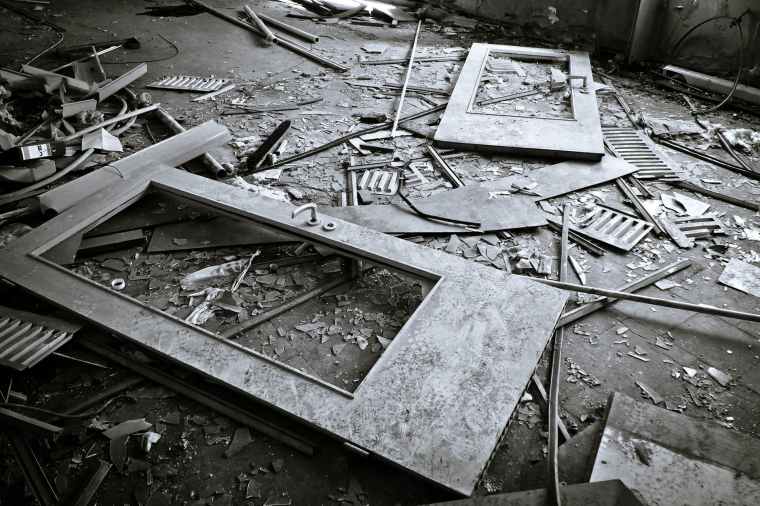
We just paid off our truck. It was exciting to know that we’d have one less expense each month. Then, of course, the air conditioner on it went out. It seems that we needed a new condenser. “Ka-ching, Ka-ching!” There goes a nice chunk of change, but air conditioning is a must in my part of the world. Speaking of which it’s time to replace one of our almost twenty year old air conditioning units in our house. It’s actually had a great run all things being equal. I can’t complain too much about finally having to give in to replace it because we’ve gotten by rather nicely for a long time. Things really do fall apart,  and the twenty year mark seems to be the point as which all of the problems begin to show.

I laugh went I see the repair trucks in my neighborhood. It’s as though everyone is experiencing the same problems all at once. We’ve all had to replace our roofs, paint the exteriors, and call in the air conditioning crews. The people next door had foundation problems which scares the bejabbers out of the rest of us. Their repair was rather quick, but I don’t even want to imagine the cost. We just replaced a whole houseful of leaky faucets, and the jacuzzi on our bathtub decided to quit running. In the spring we got a new hot water heater and a whole lot of new carpet because the hot water heater leaked all over the house. By the time we get everything repaired we may be able to settle down for a very long time because most of the moving parts in our home are once again brand new.

I have to admit that I despise having to spend the money on such things, but I feel blessed that I am able to do so. I often think about a tour that I took in Chicago to see homes built by Frank Lloyd Wright. I remember that one of the ones that we saw was in a dreadful state. The guide explained that it was owned by an old man whose teacher retirement income did not allow him to fix things. He spent most of what he had on exorbitant taxes and the rest on food and medical bills. Our tour host mentioned that there were people who were infuriated that the once majestic home was falling apart, and they had tried unsuccessfully to purchase it from the owner. He was unwilling to sell because a member of his family had lived there since it was built by Mr. Wright. It was a matter of honor to the old guy not to just give it away, no matter how much pressure was being exerted to compel him to do so. I could not help but wonder why some generous group interested in the architectural history of Chicago did not simply volunteer to make the needed repairs in the name of conservation. I also realized how difficult it may sometimes be for the elderly to keep their beloved homes.

My grandfather had to sell his house after my grandmother died. He had exhausted his savings on her medical care. He survived by renting a room from a widow who decided to get a roomer so that she might be able to keep her own home. Together the lady and my grandfather kept her tiny place in good condition. They had found a way of feeling safe and happy by combining talents and resources, but not without sacrifice.

My own mother struggled mightily in her later years as well. She had quite proudly paid for her home and about the time that she thought that she would have some extra cash in her monthly budget all hell broke lose in her house. The oven quit heating. The dishwasher broke down. Her plumbing went haywire. She needed a new roof. Her house required a coat of paint inside and out. The carpet became threadbare. She was so overwhelmed that she essentially gave up. We did our best to help her with things by having painting parties and such, but there was so much to do that she became embarrassed to ask for help and often just hid the problems.

Every city and town has homes that have not been kept up to standard. It’s easy to complain about them as eyesores, but we often miss the point that they have become so because the people who live in them do not have the money or the skills to repair them. I suppose that’s why I so love the Habitat for Humanity program started by former President Jimmy Carter. Really good people volunteer time to help those who can’t help themselves. Often the recipients of the goodwill are older people who simply live with what they have regardless of how inconvenient things become. Providing them with a secure place to live is the least that we can all do as a community.

I recently saw a news story about an elderly woman whose home was inundated during hurricane Harvey. Over a year after the event she is still living with a shell of a home. She has no walls and walks on concrete floors. Even her plumbing is not working properly. She did not understand how to get help from FEMA and has passed the deadline for assistance from them. She plans to make one very small repair at a time until one day everything is back to normal, but it is obviously a very slow and overwhelming process. Hopefully someone who knows how to do such things may offer time or materials to hurry the process. It’s incredibly sad to know that people in our midst are struggling so.

I try to remember not to complain when I’m feeling angered by the continual parade repairs. Sure I have to spent disgustingly enormous amounts of money, but I always find a way of doing so. I do not have the worries of so many who work hard all of their lives only to find themselves struggling in their later years. Not only should I be grateful, but I think I should give regularly to organizations that actually help those who can’t. We have to share our good fortune so that others may live more decently.

Mastering Our Machines

apps blur button close up
Photo by Pixabay on Pexels.com


Our high tech world is glorious until it is not. We are surrounded by machines that are designed to make our lives easier, and most of the time they do. When something goes awry, however, we go into a tizzy. Our links with the world suddenly create chaos and frustration. We’ve perhaps taught Alexa to turn the lights in homes off and on at particular times, but when the Internet goes down we have to scurry again to do things by hand. Our phones keep us linked to the world wherever we go, but in a power failure they are as useless as bricks once they lose their charges. Without all systems working in tandem our computers and cameras and irrigation systems go awry. We are reduced to doing things by hand in the old fashioned ways. We get frustrated and because of that the tasks become more difficult than they need to be. The beauty of our mechanized world is glorious, but when it fails to deliver it adds to our angst.

We now take much of our progress for granted. In just a little more than a century the world has changed so much that our ancestors would not recognize the earth that they once inhabited. My own grandparents had no electricity or even indoor plumbing in the homes of their youth. They rode from place to place in horse drawn buggies. Their homes were heated by fireplaces and cooled by open windows. They communicated with far away friends and relatives with letters that often took weeks to arrive. They witnessed radical changes in their adult lives that transformed their daily routines. By the middle of the twentieth century they were literally in awe of all that they had witnessed, and spoke of seeing the first lights and hearing of the first planes with a kind of reverence.

My own lifetime has been dominated by a kind of inventiveness that was almost unimaginable. I am from the first generation that grew up with daily doses of television. I watched mankind venture into space when such feats seemed to be the stuff of science fiction. I worked in a building that headquartered IBM in my city and I recall entire floors of computer equipment that was less powerful than the laptop that I own today. The phone that I used as a child was tethered to the wall by a cord. Now I carry my means of communication inside my purse, and wear a watch on my wrist with powers that would have made comic book heroes of old green with envy The advances in science and technology came so quickly and regularly that we almost take them for granted, so much so that we become discombobulated when something causes them to fail.

The old ways seem ancient and yet it was not that long ago that we were hanging clothes on lines to dry in the sun. Television was limited to three or four channels that often went off the air at midnight. Student research required long hours culling through books in libraries and writing notes on index cards. Calculations were done with paper and pencil or maybe gigantic adding machines with a hand cranks. Somehow we managed without our current raft of devices that have become commonplace, and we’re not quite sure how we did that.

My father-in-law uses a computer that is somewhat out of date. He owns a big screen television and subscribes to a cable provider. His cell phone is quaint because it is not of the smart variety. He has accepted the newer technology only reluctantly, and usually has to rely on his son when problems with his devices occur. He admits that sometimes the new fangled machines frustrate him more than they help. He marvels at what they do, but wonders if it is worth it to try them given that he has done without most of them for ninety years.

I suppose that I might be more inclined to my father-in-law’s way of thinking were it not for my husband. He likes to be a pioneer in the use of all that is bright and shiny and new. He seems to think that he inherited that trait from his grandfather who was always the first on the block to try the latest inventions. He reads Wirecutter regularly and watches the Apple announcements with regularity. His computer reminds him of events and keeps track of business. He’s souped up our home with devices that automatically do all kinds of tasks. He enjoys discussing and installing innovations with my brother and one of my nephews. It all works quite nicely, and admittedly makes life easier, but when it goes amiss he grows frustrated.

I suppose that I most enjoy being able to write with a word processor. I recall all too well the pain of attempting to type on an electric typewriter. One slip of the finger on the wrong key required an application of a white liquid to hide the error. My printed copies were always filled with little polka dots that shouted out my incompetence with a keyboard. I much prefer the forgiveness of my laptop that gives my papers the appearance of perfection.

Once my essay is done I load it onto a website that schedules my work to appear at a certain time on a particular date. It is a lovely process that allows me to enjoy my favorite hobby of writing. Nonetheless, things do regularly go wrong, and then, like my husband I become anxious and irritable. Glitches steal my time and my joy. I bemoan the horrors of things that do not work, forgetting about how hard the same tasks actually used to be.

Our technology is grand, but I suppose we have to be careful not to allow it to overwhelm us. It’s okay to spend a day without cable television. We can wash our dishes by hand if the dishwasher breaks. We don’t really need our phones every minute of every day. Sometimes it’s actually good to take a moment to just enjoy the world without the artificial sounds and workings of machines. Putting them aside for a time stills the soul and puts us back in touch with our connections to nature and the universe. We need to now and again remind ourselves that we should be the masters of our machines, and not the other way around.