
Our Crazy Christmas Eve

Christmas-Candy

It’s Christmas Eve and I feel as giddy as a child because this evening my big extended family will gather together at my niece’s home to celebrate together. It’s quite a shindig with people traveling from the north, the east and the west to be together as one great big crazy family. It may quite possibly be my most favorite evening of the entire year.

Time was when we gathered at my Grandma Ulrich’s house with all of my aunts, uncles and cousins. I still can’t believe that all of us fit into her tiny home but we somehow managed to cram inside where the noise and laughter was so loud that it must have been heard in downtown Houston. We feasted on apples and oranges and mixed nuts and old fashioned hard candy while my grandmother reveled in having her whole family around her. I always thought it was the most magical place on earth.

Eventually my grandmother died and one of my bachelor uncles did his best to keep the tradition alive but it was never quite the same and when he too left this earth nobody had the will to host such a party each year. That’s when my brother stepped up to have a celebration at his house for our branch of the clan. On the first occasion he made Rueben sandwiches for everyone and a new way of partying was born. Eventually his daughter took over the reigns as the family grew and grew.

It has long been said that only the bravest of souls dare to attend one of our Christmas Eve parties. It’s a way to determine whether or not prospective brides or grooms will be able to adjust to our wild group. Only the strong survive the noise and the chaos that we think of as great fun. It can be an unnerving experience but once someone proves to have what it takes, they tend to embrace the fun and long to be part of it each year.

We are a very open and loving group. We like anyone and it shows in the diversity of ethnicities, political persuasions, religious convictions, and personalities of the people that we embrace unconditionally. Nobody has to be a certain way for us to love them, but they will have to have a bit of patience with the roar of conversations and laughter.

Our gift exchange can get rather competitive and certain members of the family are particularly good at knowing how to walk away with the best possible gifts. They possess strategies that win year after year while the rest of us resolve to figure them out in the next round of the game. We take our rules for the sport quite seriously and each year there is someone who wants to change them at the eleventh hour. So far we have prevented such a travesty.

I spend an entire year searching for something that will garner the fancy of the crowd. Some years I have done well. Others I have sensed the disappointment of someone who chooses the Echo Dot that I brought and doesn’t know how to use it. Everyone likes gift cards but there doesn’t seem to be much thought or fun in that so I strive for the unique.

Sometimes I just sit quietly on the couch observing all of the fun. I’ve watched my children and nieces and nephews grow from children to adults with families of their own. We always seem to have a new crop of children to delight us with their Christmas time innocence Our own heads are greying or balding and our skin shows wrinkles of age but somehow we don’t feel old at all on Christmas Eve. We become like kids again.

I keep reading that the family unit is being threatened and that time with extended family is becoming less and less common. I truly hate to hear that because it has been the crazy crew of relatives who have sustained me through all of the uncertainties of my life. On that first Christmas after my father died it was at my grandmother’s house on Christmas Eve that I knew I was going to be alright. I felt the outpouring of love all around me and understood that I was part of a group that would never let me and my brothers down. Somehow they never did.

Now my brothers and I are hopefully sending the same message to our children and grandchildren. They are part of a loving group that will always be ready to embrace them. There is no more important knowledge to give our young.

I suppose that I have been very lucky to have a yearly reminder of my good fortune. Not everyone has experienced the joy of being loved by so many. I hope with all of my heart that our tradition continues through the coming years. It is a living example of what the Christmas spirit should be.

Each New Day

new day

I have reveled in my retirement from work, but I still have the urge and the energy to keep myself busy. I try to stay active because I’ve witnessed the times when people that I know became unable to get around like they once did. Admittedly I find it difficult to stay still due to a personality that is always pushing me to continue making a difference in the world. I still operate from a general routine which I swore I would never do once I dropped out of the daily rat race. Some habits are difficult to eliminate.

Nonetheless I enjoy my mornings the most. I used to hate the sound of the alarm clock announcing that I had to get a move on lest I be late for work. Now it is my internal clock and my bladder that push me out of bed in the early morning hours. If I try to catch a few more Zs I end up with a headache and dreams so goofy that they are disturbing, so I just rise and enjoy the quiet when the silence is only broken by the sounds of the birds and people beginning their daily treks. I brew some tea and sit in my front room reading about what happened while I slumbered.

I write five days each week as a kind of meditation. I challenge myself to put the random thoughts that run through my head on paper in a cohesive and meaningful form. It’s an exercise that I so enjoy and one for which I rarely had time in my teaching days. Back then I had to be out of the house by six thirty and then I would spend as much as an hour or more commuting to the campus where I worked. My mind was never ready for such a hurried and raucous start to the day and so I despised every aspect of the early hours. Being forced out of my home without time to sit quietly was horrific. Now I luxuriate in the moments that I have with my thoughts.

I’ve never been able to completely get away from working with young people. I still tutor seven students from nearby and I glory in being able to do so. They delight me with their optimism and honesty. I gain as much from them as they get from me. I find children to be a delightful diversion from the seriousness of the world. They keep me hopeful and challenge my brain to continue working. I look forward to my weekly visits with them and fill in my academic longings with tutoring sessions with my grandchildren.

As I have become older I have found more and more solace in attending church each Sunday. I look forward to my weekly pilgrimage when my heart and soul are filled with a sense of calm simply from being in the house of the Lord along with other people who have become so special to me. I never fail to leave feeling refreshed and somehow a bit more at peace.

I don’t need much to be happy these days. I have begun to take great delight in the most ordinary aspects of life. I now have the time to be more available for the people that I love. I enjoy a wave from a neighbor, a cute photo of someone’s child, a joke that makes me laugh from my belly. I get to read more and watch ridiculous television programs without feeling guilty. I do silly things like dressing up in costume for a party or festival. I don’t want excitement anymore. Serenity is the companion that I cultivate.

I have become more in tune with myself and with the people that I know. I enjoy celebrating their victories, milestones, and happiness. At the same time I don’t shy away from helping them through challenges and losses. I’ve finally learned how to really listen and hear the individuals who mean so much to me. I now have all the time that they may need. It feels wonderful to be able to embrace friendships without the obligations of work pulling me away.

I explore new ideas and challenge myself to remain open minded even when people’s beliefs differ greatly from my own. I have become a defender of the individual right to think about the world from differing points of view. I have lowered my blood pressure considerably by understanding that I don’t need to argue or judge or turn my back on someone just because he/she disagrees with me on matters of politics or religion. To each his own has become the gold standard of my reaction to such things.

My life is quiet, routine, relaxed. I know who I am and I really like myself. I have a group of wonderful friends, a loving spouse and an incredible family. None of us are without our flaws but I love all of us just the same. What more might I want? I go with whatever flux and flow enters my life and find ways to stay content. I look forward to each new day and the possibilities that it brings.

The Voices We Need To Hear

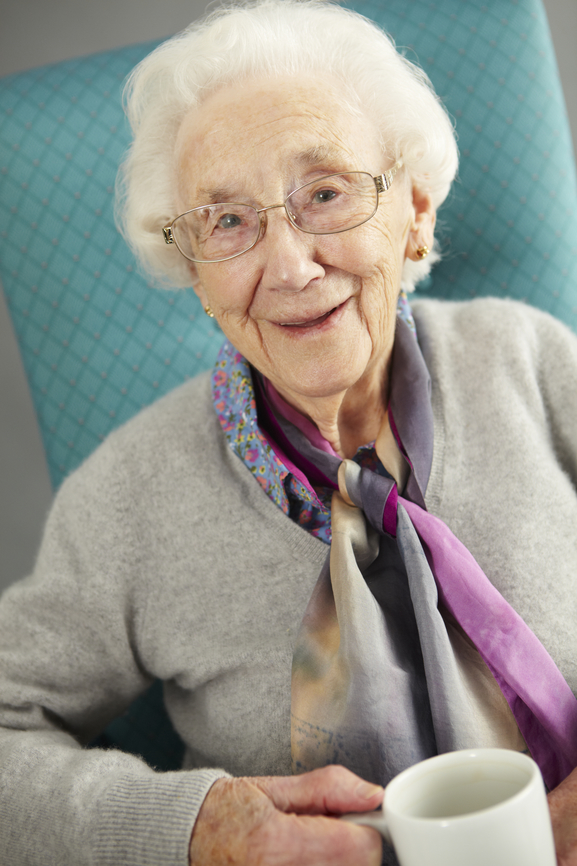
Senior Woman Relaxing In Chair With Hot Drink

As I grow older I have more and more appreciation for history and the times in which my parents and grandparents lived. As we head toward a new year and new decade I find myself thinking of my grandparents as young men and women who had endured World War I and seen the influenza epidemic that killed millions worldwide. Somehow they managed to find enough optimism to carry on with their lives and their work. They began their families with hopefulness and hard working attitudes that they passed down to their children. They wanted little more than to have a home and food on the table at night. At the dawn of the 1920’s there was a feeling that the world had finally set itself aright and there was much rejoicing. They had no idea that by the end of the decade a gut wrenching economic depression would threaten the very security that they so longed to have but they were not to be defeated. Instead they took all means necessary to keep going.

Both of my parents were born in the roaring twenties of the last century. They would feel the effects of the cataclysms that were to come. The rising storm in Europe of the nineteen thirties would punctuate their youth and the attack on Pearl Harbor in the nineteen forties would send them to war. They had inherited a can do spirit from their parents that would define their lives and cause them to wonder again and again about the complaints of the generations to come. They knew how to sacrifice and save and endure hardship with a stoic determination.

The grandparents of my era have long been gone and the parents are slowly leaving this earth as they struggle with the diseases of the very old with the same kind of dignity and courage that has defined their entire lives. As one of my high school classmates pointed out about her recently deceased mother they would expect us their children to “dust off our boots and keep on.” This is the way they were and so too were their parents.

I don’t recall hearing many complaints from my elders. They took it for granted that life would sometimes be quite hard. They tackled difficulties silently and with a sense that all things both good and bad end soon enough, They seemed to have the patience of Job and the wisdom of Solomon. They needed very little to be happy, finding contentment in meaningful relationships rather than things. They never seemed to dwell on the negative, instead they set to work each day rejoicing in the simple fact of having a roof over their heads and dinner on the table. For the most part they were a happy lot who understood the ebb and flow of life and accepted both their tribulations and their trials with great dignity.

We have so much more bounty today than our elders ever did and yet we seem to be stuck in a rut of discontent. We do a great deal more complaining than they ever did. Perhaps a critique now and again is a good thing, but constant whining seems to be counterproductive and a bit ridiculous given how much progress we have enjoyed. We seem to take our luxuries for granted in ways that my generation’s parents and grandparents never would have. Our wants seem at times to be unquenchable.

As children my grandparents had no electricity or indoor plumbing. They were lucky to get seven or eight years of education before being sent to work. Both of my grandmothers were illiterate. My mother and father were the first in their families to graduate from high school and then continue on to college. They were frugal even as their prospects for success rose. They vividly recalled the depression years and the lengths to which their parents went to keep them housed and fed. When my father died and my mother assumed the role of a single parent she already possessed the survival skills that she would need to lead me and my brothers into adulthood.

I learned so much from my elders but I often wish that I had listened to them even more. They had a remarkable approach to living that is sometimes missing in today’s world. They were the generations that kept calm and carried on even in the face of challenges that should have broken their spirits. They attempted to pass on their wisdom to me but my mind was always in a hurry to be its own master. Their stories and advice were all too often like the incomprehensible babble of Charlie Brown’s teachers. Now that they are gone I find myself wishing that I had spent more time recording their voices, asking them questions and taking their experiences to heart. I suppose that the curse of our youth is our tendency to disregard the common sense of the adults who raised us. By the time we realize our mistake it is often too late.

In my own family only my father-in-law and two of my aunts remain to provide me with guidance. I find myself valuing their sagacity more and more. They all possess a kind of contentment that comes from a clear understanding that life can at times be quite hard but there is always joy to be found in the smallest of things. They have learned the value of family and laughter and seeing the sun rise in a new dawn. They have known economic hardship, war, loss, bad health and yet they still smile and feel gratitude. They know better than to sweat the small stuff because they understand that there is always small stuff that matters little. I hope I can continue to learn from them and listen with a rapt attention when they speak that I should have adopted long ago. Theirs are the voices that all of us need to hear.

Risky Business

Business challenge

I have twin grandsons who have confounded their teachers and sometimes even family members with their almost identical looks. When they were babies my daughter had to always dress one of them in blue just to be able to quickly tell them apart. Over time their individuality became more and more apparent, particularly in their personalities. One of them is daring to the point of taking risks that might cause most of us to pause while the other is far more cautious. Life can be a rather risky business and each of us chooses different degrees and ways of taking chances. Being courageous does not always mean flirting with danger. Sometimes it simply requires a willingness to push ourselves to do things that frighten us or seem impossibly difficult. In that regard both of the twins are willing to engage in the risky business of failing while pursuing a goal.

Our society today is marked by competitiveness. We rank people beginning in their childhood. We place tiny babies into quartiles based on size. We note dates when they achieve certain physical and mental milestones. We begin testing them for this or that from their early years. Our efforts are intended to derive useful data that may assist in keeping them healthy but all too often our rankings have the unintended consequence of unfavorable comparison. We ferret out the gifted and the special needs children from the general population and begin the process of sending the message that we are often defined by our perceived level of intelligence. We may not mean to do so but we subconsciously tell our young that comparisons with others are important.

Over time our ways of doing things create more and more problems. Our children become acutely aware of who learns the most easily and who struggles. Everything evolves into a kind of contest to determine who is the biggest, fastest, smartest, prettiest, most likable. As humans we all too often strive not so much for the joy of learning or achieving some new skill but in a kind of perennial competition to prove our worth. It can be maddening to the point of causing us to feel insecure and at worst even unworthy. Many shut by dropping out of the race, refusing to take risks of any kind lest they be deemed losers. They quietly hide away, often unhappy with themselves and  angry at the world.

It would be wonderful if we were able to begin the process of development by focusing on self growth. The message we might send to our young is that if there is to be any form of competition it should be in that of continually improving by attempting to become our very best. Contrary to the wisdom of Yoda we might all aspire to a credo of trying many things without fear of failure. The best performances and innovations the world has ever seen often began with mistakes. Those willing to take the risk of  rejection again and again are likely to eventually overcome the challenges that befall them.

The most important message that we should give to all people is that the process of growing better should be couched in self care and improvement, not rankings with others. In this life we will always find someone who does things better than we do. If our measure of happiness and success is based on how we compare to others we are doomed to a life of frustration in which someone will always manage to best us. Contentment comes instead from a willingness to work hard to be just a tiny bit better than we may have been before. It means learning for the joy of discovering new ideas or developing new skills. It means walking a few more steps or lifting a bit more weight. Mostly it means understanding that each of us has unique talents and purposes that should be cultivated at our own individual paces. 

As adults it is important that we not unconsciously teach our young to fear taking risks because they know that we are continually judging and ranking them. We need to help them focus on opportunities to relearn, redo, retry until they reach a point of feeling confident of their mastery of knowledge and skills. It should not matter that one child completes a task quickly and another takes longer to achieve. The goal is the same but instead we sometimes leave so many youngsters behind to wonder about their worth. We reward and adore those with natural talents but rarely stop to consider that with a bit of time and effort we might help develop those who require just a bit more encouragement. Think of the power that we might unleash if we were willing to reconsider our rankings and our systems of scoring and comparing and instead kept a personal growth chart for each person detailing their success in increments great or small.

I suspect that we humans might become more and more likely to take risks if we were certain that nobody would laugh at us or think ill of us if our efforts proved disastrous. How glorious it would be to have a worldwide willingness to see our attempts as ways of learning and making slight adjustments that slowly lead us to success. Imagine our world cheering on each person willing to try things instead of making fun of them when they fail. How great might it be to be told what we did right in our efforts and then shown how to fix the things that were not quite how they needed to be. I suspect that we would discover so much untapped talent and most certainly would eliminate some of the unhappiness that so dominates societies today. Best of all risky behavior might not be so risky at all.

A Change In Course

change

Life is rarely simple for humans. Sometimes the most horrific moments when we are at our lowest emotionally lead us to the changes that make us better people. When I think of myself before my father died versus the person that I eventually became I wonder If I would have been as compassionate if I had continued to behave as I had before his death. I suppose that I will never know for certain what might have been but I am convinced that the loss of my father resulted in my becoming far more focused on the value of life.

At the age of eight I was rocking along in a rather self centered bubble which is rather normal. I was quite aware that my father was better educated than my uncles and that as a result our family lived and moved in a higher socio-economic world than the rest of the extended clan. Our house was newer and larger than theirs were and we travelled around in more luxurious autos. I saw those differences even as a child and felt a sense of pride even though I had done nothing personally to earn such perks. It would not be much of a stretch to guess that I was somewhat spoiled, taking my good fortune for granted.

I learned somewhat easily but never really pushed myself to improve academically. Just before my father’s tragic accident he openly worried that I did not seem to care about learning the way he had hoped I would. I was somewhat silly, even lazy, and used only a small portion of my abilities. He worried that I was more focused on being a social butterfly and that I was stereotyping myself as a giddy girlie girl. Of course I was still quite young and in the process of finding myself but I also had little concern for anything beyond my own perceived needs.

On the day of my father’s death something snapped inside my juvenile brain. I literally felt a strong sense of obligation to be an example for my little brothers and to ease the burdens that I  believed my mother was feeling. I found myself noticing people other than myself and considering the impact of my actions. It was as though I had taken a quantum leap into maturity that had not existed before. As I grieved I had a strong desire to better appreciate every aspect of my existence because I had suddenly seen how much I had taken for granted and how much I had lost in an instant.

I began to look outward and realize the fragility of everything and everyone. The ruins of our family car and the loss of my father were eternal reminders that I must cherish each moment and fulfill the purposes for which I was placed on this earth. I floundered a bit as I attempted to be a better person in my childlike way. It would take years for me to become more adept in my attempts to lead a good life, but I embraced my new role with gusto.

I saw with clarity how wonderful every single person is, even those who seemed lost and confused. I somehow realized that the human potential is only constrained by our own fears and unwillingness to work hard. I often heard my father’s voice in my head reminding me to rise to the challenges of responsibility that I would most assuredly face. I saw that the marks of a person do not lie in educational level or economic status but in the heart. I remembered my father’s lessons and the frustration that he had felt when I seemed not to care about them.

My mother was an enigma much like the bipolar disorder that lurked inside her brain. She was a tower of strength who nonetheless seemed on the verge of falling apart at any moment. I did not want her to endure any more burdens than necessary so I was very conscious of staying out of trouble and helping her in any way possible. My motives were not born because I was some sort of angelic person, but because I did not want to see her hurt more than she already was. I shunned the risky behaviors of adolescents so that she would have one less thing about which to worry. I earned the reputation of a very good girl only because I was keenly aware of the impact that my actions might have on my mom.

In honor of my father I took my studies seriously and found that I actually enjoyed reading and writing and learning about new ideas. Whenever possible I pushed myself to do just a bit more than I believed was possible. My efforts soon became a kind of routine way of living for me and would ultimately help me through the difficult days of caring for my mother whenever her mental illness overtook her ability to be the rock of the family. It also allowed me to see the hurt and pain of the people around me. I developed a sixth sense for knowing when someone was hurting, a skill that guided me to the teaching profession. I wanted to share both my joys and sorrows so that I might help those struggling to find themselves.

I still miss my father and wish that he had never died. I suppose that I might have eventually developed into a better person without having to endure the tragedy of such great loss but it may have taken me longer to come to the same conclusions inside the bubble of privilege that shielded me when he was alive. When my world burst so suddenly I was forced to face realities that I had never before even noticed. Something quite extraordinary clicked in my mind that changed everything and I suppose that this is so for many who endure the pain of loss. After the sorrow there is a glorious moment of clarity that illuminates the pathway to a purpose filled and happy life. All any of us need do is find the courage to follow it. Therein lies the glorious difference that creates great good from something so profoundly bad.