Silent Heroes

39324-teacher-apple-thinkstock-creditJackHollingsworth-200309830-001.1200w.tn

We love our children. Parents dream of helping their offspring to live glorious lives filled with joy, success, and love. Teachers play a huge role in the journey of a youngster into adulthood. We put our educators under a microscope, judging their every interaction with our youth. Each day in classrooms across the globe men and women accept the awesome challenge of educating the adults of the future. The work is both daunting and rewarding. Teachers quietly and tirelessly perform their duties without a great deal of encouragement. In fact we are more often likely to hear criticisms of their mistakes than compliments of their dedication. Nonetheless teachers carry on with their vocations even when the conditions are difficult, the pay is subpar to other professions, and the evaluations of their worth in society are not indicative of the enormous sacrifices and contributions that they make.

Teachers are often told that theirs is a last resort occupation that is the solution for those who cannot find anything better to do. They hear snide comments about their short work weeks and three months of vacation. In conversations about improving education they are generally the last persons whose opinions are considered. Instead lawmakers, business people, and an assortment of souls with no experience managing a classroom decide how to run the educational system. Nonetheless our teachers return for insult time and again simply because they have a beautiful secret. They love their profession and they adore their students. No amount of indignation can chase them away. They have a mission that drives their enthusiasm more than money or status.

A tiny virus came along this spring to upend the educational process without warning and along with the chaos that ensued came a pleasant surprise for everyone except those who are teachers. With amazing speed all across the globe educators went into action to create remote classrooms and lessons. They transformed bedrooms and dining rooms into spaces where they might continue to demonstrate their magic. They spent untold hours learning how to manipulate technology. They found ways to bring the needed equipment and conferences to each of their students. They worried over their flocks until they were certain that everyone was present and accounted for. They grieved at the loss of being with their students in person and wondered if their pupils had enough to eat or if they were being abused. They even went on parades inside the neighborhoods that they serve and made efforts to personally congratulate the top graduates in the Class of 2020. Not for one single minute did they forget their students in fact they spent sleepless nights worrying about them.

As moms and dads contended with having their children under foot all day long they began to marvel at the patience of teachers who shepherd whole classrooms of kids and somehow remain calm. The parents realized how complex the concepts and lessons actually are and realized that one would have to be rather bright to explain such things. They began to reconsider the value of teachers in ways that had not before occurred to them. As the long weeks in isolation went by they learned of the many skills and talents that good teachers so humbly provide to society.

In spite of the newfound estimation of the educators of the world many old habits are slow to die. In planning for the reopening of schools at some future date few teachers have been consulted even though they are very people who may have the best answers for the logistical questions. When grateful citizens provide food and gifts for first responders and essential workers they tend to forget the teachers with such rewards. There are even those who wonder why teachers are still being paid since they are just sitting around at home. Some suggest beginning the new school year in July but without any extra pay even though the salary that teachers will receive in that month is part of contracted pay for this past year.

I am and always will be a teacher at heart. I think that mine has been a noble profession that ranks alongside the most needed work in all of society. We have learned during our lockdowns and stay at home orders what is most important in this world. We can live in our pajamas and walk around the house in our bare feet. We can cook for ourselves and find entertainment in very simple things. Slowing our pace has brought us new found joys and realizations of what and who we most need. Our world has become a quieter and less congested and polluted place. We see an opportunity to change some of our habits which may not have been good for us individually or for the world collectively. We stand at a moment of possibilities and among them is a new way of viewing our educational system and our teachers. Perhaps it is time that we acknowledge the wonderful men and women who care for our children as the heroes that they have always been.

Most teachers will tell you that the joy that they feel for their work is not about the money. They will admit that they don’t even need the respect that other occupations provide because there is something innately glorious about having a career that provides so much purpose. Each day for a teacher is a meaningful experience and teachers never forget the students who have passed under their watchful eyes. They think of them and dream of them and worry about them and hope for them. Their ultimate reward is knowing that their efforts have made the world a better place.

May is traditionally the month for acknowledging teachers. Find a way to reach out to the valiant and selfless people who have influenced either you or your children. Try to understand how much love was poured into their work. Let them know how much you value them. They are already planning the future and it will no doubt be very good. Let’s acknowledge them as the silent heroes that they have always been.
Revealing a Truth

clean-and-maintain-usb-microscope

Before my father died visits to our family doctor were a regular thing. Because one of my brothers had asthma and allergies he was often sick and the doctor would even make house calls to check on him. I remember helping my mother to prepare our formica topped kitchen table to serve as an examination area. The doctor would come with his black bag and carefully check my brother’s temperature, ears, nasal passages and then listen for abnormalities in his lungs. I got to know our doctor rather well from those times and years later I would work as a summer receptionist in his clinic.

After my father died our visits to the doctor became almost nonexistent. Our only encounter with anything medical came when we spent what seemed like entire days at a Harris County clinic on Canal Street waiting to get our school inoculations for free. It never occurred to me back then that my mom could not afford to use the doctor’s office anymore unless someone had a major emergency or injury. I just assumed that we were a generally healthy bunch which may or may not have been true. It was only as an adult that I realized that my mother’s financial situation may have been the real reason that we only visited the doctor once in a blue moon. I doubt she had health insurance and I know that her income was ridiculously low, so she probably cut corners anyway possible, and that meant keeping medical expenses to a minimum.

When I was well into my fifties and one of my doctors began testing me for osteoporosis he wondered why my quite distinct scoliosis was never treated when I was a child. I suspect that the reason was that I never went to the doctor often enough for anyone to pick up on the fact that my spine was curving as I grew. My mother would not have known about such things and because I have had few other health problems in my life we were not alerted to treatments that might otherwise have straightened my back. Thus is the reality of those who have economic hardships.

I have been saddened to read reports that indicate that all across the United States it is the poor who are most likely to contract and suffer grave consequences from Covid-19. Due to the nature of their work which requires them to show up or lose pay they have been on the front lines of essential work duties often without proper protective face masks or gloves. In addition I suspect that, like my family, they do not often visit doctors for preventive care that might uncover health problems early enough to either fix or control them. They do not enjoy the luxuries of healthy diets either. Fresh fruit and vegetables tend to be more expensive than these individuals have the income to purchase. In totality their economic status limits what they can do to stay safe and healthy in normal conditions. That factor is only exacerbated by a worldwide pandemic.

Throughout history it has been the poor among us who have suffered most in difficult times. Right now the zip codes outlining the areas with the most Covid-19 cases in Houston are all in places that we know to be inhabited by our most economically vulnerable. We might argue that they in all probability have welfare, Medicaid, CHIPS and other programs that should be enough to help them but I know from my own mother that it is easy to slip through the cracks and become ineligible for such programs. On the day of her death my mom had a total income of $1100 a month which meant that she missed being able to get state or federal benefits by $100 a month. With her stunning abilities to budget with whatever she had and a bit of help from me and my brothers she was able to make it, but many people in a situation like hers do not have a source of additional assistance.

I almost cried when I looked at the zip codes where the most cases of Covid-19 are occurring because they represented the neighborhoods of so many of the students that I have taught in the past. I knew the parents of my pupils to be upstanding individuals who worked hard mostly in low paying jobs making just enough to get from one paycheck to the next. Medical care was a luxury for them just as it was for my mother. I was thrilled when a nurse at one of the schools where I worked spearheaded an effort to build a clinic on campus property where members of the community were able to come for vaccinations, tests, general health exams, and such. Donors and volunteers created a welcoming place where nobody had to feel belittled or concerned about how to pay. I have often wondered why there are not more such efforts being made all over town, and Covid-19 has made me feel the need for such homegrown medical centers more than ever.

If we were to take anything seriously starting with the health of our citizens should be right at the top of our priorities. The reality is that we will always have unfortunate souls among us whose incomes are too low to prioritize preventive care. They often can’t even afford to take the time off for such visits because every hour of their work days are devoted to being on the job. If they are not present, they do not get paid. We should find creative ways to fix that.

Covid-19 has shone a light on problems that the vast majority of us rarely experience. I suspect that I might never have noticed the inequities were it not for my own history as the child of a single parent whose circumstances caused her to lived on the edge of poverty for most of her life. It’s time we all became more aware and then like that nurse at my school lead meaningful drives to help fix the problems. 

Lord Have Mercy

Great Plague of 1665

In 1665, a terrible plague began in London. By the end of the epidemic an estimated 100,000 of the 460,000 living there had died. Sadly the vast majority of them were the poor. The wealthier citizens like lawyers, businessmen and even doctors fled from the contagion into country homes much like King Charles II who left London for Hampton Court. Even Parliament suspended meetings within the city, choosing to only gather one time in Oxford.

Once an individual became sick all members of the family were quarantined by law in their home. The doors of such houses were marked with a foot long red cross with the words, “Lord, have mercy upon us” written above or below the marking. Armed watchmen then patrolled outside the home twenty four hours a day with orders to kill anyone who attempted to force his/her way either inside or outside. Burials in mass graves took place in the early morning and late afternoon hours as the disease raged through the late spring, summer and fall of 1665 and then burned itself out in the spring of 1666.

It is believed that the illness was carried by fleas on rats and dogs so efforts were made to eradicate any stray creatures. Unfortunately the crowded and unsanitary conditions in the poorer sections of town made the people in those areas more susceptible to becoming ill. The incubation period once an individual was infected was only a matter of days and the likelihood of it spreading to anyone who had been in close contact was great.

I have been reading accounts of this plague by Daniel Defoe who is better known for his story of Robinson Crusoe. In the flowery English of the era A Journal of the Plague Year provides a vivid account of the horror and fears of the people, the attempts to limit the spread of the illness by authorities, and the civil disruptions that occurred as more and more unfortunate souls became ill. In another time I might have found his memories to be quaintly interesting but given our present situation I instead find myself identifying with the concerns and confusion that the epidemic produced. It was as though the world of the citizens of London had been turned upside down as they watched death and privation overwhelm them.

I thought of my own grandfather’s accounts of a smallpox outbreak in his town at the end of the nineteenth century when he was in his teens. His father and stepmother both became ill and he was charged with their care. Guards patrolled the property to insure that nobody save the local doctor went inside the house or came out. The incident had such a profound effect on my grandfather that he told the story of his time in quarantine over and over again. In his usual style he added a bit of dark humor to his recitation that demonstrated his preferred way of coping with the isolation and concerns for his family.

Humankind has been here before. People have faced pandemics that were ultimately quite terrible and they did so without the resources that we enjoy. Nobody was driving for take out dinners but my grandfather did admit that he ordered some moonshine to be delivered for his dad. He figured that the poor man was going to die anyway so a bit of whiskey might make his father more comfortable. Other than that it was just a lonely time for my grandpa and one in which he might possibly have contracted the disease himself. Somehow that never happened but as my grandfather noted it did not mean that the contagion was not as bad as people thought.

We have a far better understanding of infectious diseases than ever before in history. We are able to unlock the DNA and RNA of the viruses and bacteria that live invisibly around us. We have modern hospitals and sanitation methods that we heretofore believed would protect us in ways that our ancestors did not have. I suppose that we have in many ways assumed that we might never be touched by the kinds of epidemics that have historically rocked civilizations We have had a kind of false pride in our modernity and accomplishments, believing that we were somehow immune from the kind of disruptions that have occurred in the past. Now we see that in many ways we were wrong.

Covid-19 has shown us the cracks in the foundations of our public health services, our economy and even our relationships with one another. If we are to find a positive take- away from this horrific situation we will need to learn from our mistakes. That will require a level of honesty that has been slowly eroding in our politically charged world. We don’t want to hide difficulties but rather find ways to expose and attack them.

We are better educated and more knowledgeable than the unfortunate souls who suffered in the past but if our hubris prevents us from taking the necessary steps to prevent pandemics from happening on such a scale again there will most definitely be consequences. The eventual outcomes should not be about who is best or first. This should not be a competition but a convening of the best minds and ideas from all over the world. We can’t afford to turn our backs like they did in the past and leave the most vulnerable alone to deal with the problems.


We Laugh/We Cry

laugh:cry

There are certain historical moments from my seventy one years of living on this earth that will never be erased from my mind. Thinking of them is so visceral that it feels as though I am literally back in a time of long ago. I can still recall exactly where I was sitting in my English class when I learned that John Kennedy had been assassinated. I see the images of the Twin Towers of the World Trade Center collapsing to the ground with clarity. As impactful as these events were they do not hold a candle to the magnitude of the Covid-19 pandemic that has been sweeping across the globe. I never imagined experiencing something like this even though I have harbored a fascination for such life-changing moments for most of my life.

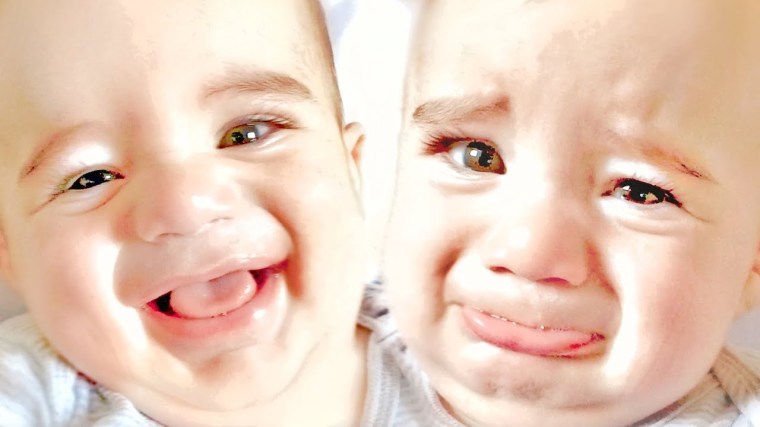
As my days in isolation continue to find myself having a jumble of conflicting emotions and thoughts. One moment I’m laughing at the antics of people doing their best to remain positive and light-hearted, and the next I am sobbing over the many losses that I have witnessed. I marvel at the selflessness of those who sacrifice to help us all and grow angry when I see people who appear to only care about themselves. I enjoy exploring the scientific data and research surrounding the virus while questioning those who seem to be guided by conspiracy theories and unfounded beliefs. When a single day brings so many contradictions it’s easy for me to wonder if I am being led astray or shown the best route to survival. 

We are presently engaged in what I believe to be a paradox, or as a German doctor called it, a preventive paradox. Since we took measures to flatten the curve of illness and death the contagion has been far less than some early predictions indicated. Now there are those who sincerely believe that we were all led astray with regard to the potential magnitude of Covid-19. These same people furthermore believe that in the process of hiding in our homes we have ruined the world economy for naught. The truth is instead no doubt far more complex.

We will never know what would have happened if we had all simply ignored the march of Covid-19 across the globe. It is theoretically possible that millions would now be dead. Because we were somewhat proactive once we saw what was happening in places like Italy we were spared a “Pearl Harbor” moment in many parts of the United States. We managed to put out the fire before it became uncontrollable, but since the cause of our good fortune is in some ways invisible many among us are not linking it to the positive effect. In other words instead of seeing our safety measures as the reason for the lack of death on an unimaginable scale there are those who think that we are seeing fewer deaths because the whole scenario was a hoax from the beginning. Since we cannot  go backward and try the experiment without safety protocols we will never be able to prove to the doubters that the measures that we took to control the virus are the reason for it’s lesser overall impact. That  is indeed a paradox.

As we begin to reopen the world we will be engaged in yet another experiment in which the stakes are high. If we are cavalier it is possible that the virus will circle back on us. If we get it right we will slowly be able to return to a more normal lifestyle. In truth we may never be able to completely verify our results without a control group as is the core of the scientific method. Sadly creating a control group that literally does nothing more than live life as always would be a dangerous game in this instance. While it might verify that certain measures taken did prevent monumental tragedy that is obviously not an approach that we would want to use.

Instead we have historical precedents to guide us. We know for example that cities that reopened too soon and too vigorously after the initial wave of the Spanish flu endured far more deaths from the recurrence of the epidemic than those that proceeded with caution. While no two viruses are exactly the same we can still draw important conclusions from studying the various pandemics that have rocked human history. Rational thinking demands that we accurately link causes to their logical effects as well as being willing to accept the possibility of multiple explanations for the same outcome. Therein lies the confusion that we all face. It is as though we have a gun pointed at our collective heads with one bullet in the chamber. Will we be lucky or will we forever regret our decisions? Little wonder that we at times feel as though we are going crazy and that the world may never again be quite the same.

I find comfort in thinking of the entirety of history. The world has experienced the cataclysm of erupting volcanoes and black plagues, wars and revolutions and somehow humankind has found a way to rise up from the rubble again and again. Regardless of what the coming weeks and months may bring I am confident that we will ultimately triumph. It’s what we humans do. 

A Legacy From My Mother

clothes line

It’s a dreary rainy day as I write this. Nature has provided me with a platitudinous kind of feeling and an opening statement that is devoid of originality. The situation in which I find myself is confusing. I keep track of the time and the passage of each day by attempting to create a kind of routine that reminds me of my five year old self when my mother was a stay at home mom and my father was a young man with a promising future.

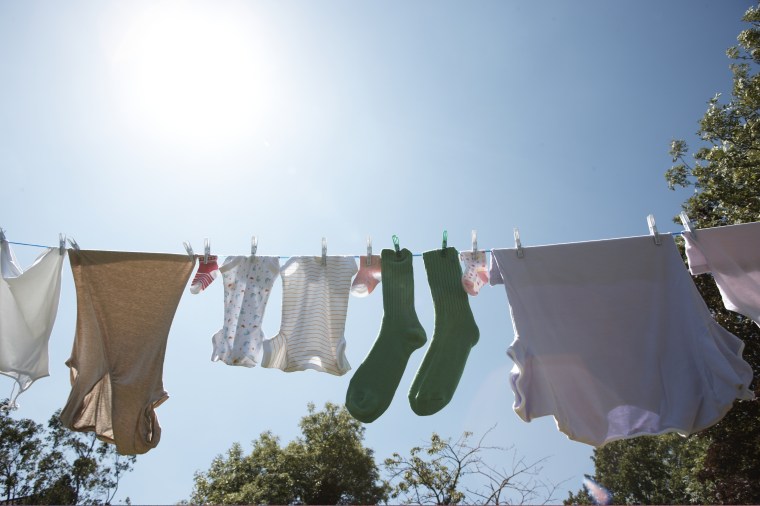
Back then my mama created a repetitive schedule for herself that I too used to mark the rising and setting of the sun. If I put on my “Monday” underwear in the morning I knew that my mother would be spending the day washing clothes and I would get to help her hang them on the clothesline to dry in the sun. When our things had been warmed by gentle breezes and solar rays we would take them from the wire lines and place them in a wicker basket. Then Mama would show me how to fold each of the clean pieces and together we would put all of them away save for those that required ironing. They were set aside for the Tuesday duties, a task that she demonstrated to me but never allowed me to undertake until I was many years older.

To this day I derive pleasure from a clean load of clothes and I use the methods of ironing that my mom taught me as I watched her deftly sprinkling water from a bottle and then using the heat to remove all of the wrinkles. Of course during this current time of pandemic neither I nor my husband wear clothing that needs to be ironed. We are more likely to don jeans and whichever t-shirts happen to catch our eyes. We don’t even worry about losing socks from the monsters inside the washing machine and dryer that eat such items. Our feet are mostly bare and as free as they were on summer days when we were children. Our freedom nonetheless is constrained by an invisible virus that keeps us at home and causes me to remember each day of my mother’s seemingly confining routine. 

After the laundry chores of Monday and Tuesday my mother allocated Wednesday to sewing and mending, a task that was more creative and interesting to her. She was quite clever with cloth and made most of the dresses that I wore along with those for herself. I always enjoyed accompanying her to choose the fabric and look at the pattern books from Simplicity and McCalls. Mama was quite meticulous with her measuring and if a seam was not perfect she would rip out the threads and begin again. Everything had to lie just so. Her finished products were worthy of the tailors on Savile Row and if I was lucky she would design lovely clothing for my dolls with the extra fabric.

My mom worked in the yard on Thursdays even in the winter. There was always a flowerbed to be weeded, a plant to be fed, or a tree to be trimmed. She was not quite as gifted with a green thumb as my Grandma Little, but her yard was always stunning. She liked climbing vines that flowered in spring and old fashioned shrubs like gardenias. She grew fig trees and pear trees and then used the fruit to make jams and other delights. I loved those Thursdays when we spent whole days outside putting our hands in dirt and delighting at the sounds of the birds.

Friday was house cleaning day, a time when Mama prepared for the weekend. She was as particular with cleaning a toilet as she was with her sewing. The process had to be done just right and as I watched she would demonstrate the proper manner of reaching every nook and cranny in which germs might lurk.

Fridays were quite busy because we changed the sheets, dusted the furniture, swept and mopped all of the floors. I had a job even though I was only five. I was very serious about dusting the wooden surfaces of everything in our home. I dared not miss a single inch because I felt so wonderful when my mother complimented my efforts.

Fridays also meant an evening at my Grandma Ulrich’s house. All of my aunts and uncles and cousins would gather there as well. We had a raucous time with the adults playing poker and the kids inventing games of every sort. I treasured those times then and to this day they remain one of the most wonderful aspects of my life.

On Saturday we would go shopping with my father. It was a day filled with fun and surprises. My father often wanted to buy new records for his collection and so we would visit a music store where they allowed us to preview the recordings before purchasing them. I so enjoyed putting on the headsets and listening to my father’s selections while sitting in between my mom and dad.

We’d always end our adventures with a visit to the grocery store that was filled with the aroma of baking bread and coffee being ground by machines. My father always convinced my mother to add some cookies or ice cream to the cart and he would smile knowingly at me as though we were co-conspirators in some plot.

Sunday somehow felt more like the end of the week to me than the beginning. We attended mass at St. Peter’s Church and then visited my father’s parents. My grandmother almost always took me and my mother on a tour of her yard which was as glorious as a photo spread in Southern Living magazine. Then Grandma would finish up cooking a spectacular meal while I had the privilege of setting the dining table with her china and silver. We’d end up sitting on the front porch talking of life and watching the neighbors parade down the sidewalk on their afternoon walks.

I suppose that I have kept my sanity during this time of isolation by emulating my mother’s habits. I keep track of each day by creating a kind of schedule. I give myself regular chores to do and routine tasks to perform. I make certain that I set aside a time for reading, and even more for writing. I have a washing day and a cleaning day, a lesson planning day and a teaching day. I insist on exercising and walking on my treadmill even though doing so only reminds me of the sameness of quarantine. I call people that I know each day to see how they are doing and to let them know that I am thinking of them. I have devised a sense of order out of a confusing and often chaotic time and it calms me.


These days I often find myself thinking of my mother who so happily and pleasantly performed her household chores while teaching me how to derive pleasure from simple tasks. I don’t recall her ever complaining that she was stuck at home doing jobs that might have seemed meaningless and unimportant had she not tackled them with so much joy and pride. How could I have known way back then that her example would sustain me in a time when I might otherwise have been filled with bitterness at the losses that we have all experienced? This woman who seemed so simple in those times would eventually become a warrior in my eyes as she battled untold tragedies and challenges always with that same gratitude for life that she conveyed to me on those routine days when I was still an adoring child of five.

I know I will endure this COViD-19 experience regardless of where it takes me. I’ve learned from the best how to take each day as it comes and make meaning out of even small endeavors. Regardless of where this all goes my mother’s legacy of  joy will guide me.