Small Sacrifices

Photo by Any Lane on Pexels.com

I am convinced that children and teens are super spreaders of disease. When I was still teaching I came down with a horrific cold every November or December. I would be so congested that it was difficult to swallow and I’d go through multiple boxes of tissue. Generally it all devolved into a croupy cough that hurt when I tried to expel air from my lungs. I almost always had a slight fever with my colds and ended up nursing my symptoms in bed for days. I found Nyquil to be a godsend, allowing me to sleep without waking up from my nasal passages becoming stuffed with a rapid drip from my sinuses. To say that my head hurt is an understatement because even my teeth were affected. Sometimes it felt as though every single one of my pearly whites were going to fall from my mouth. Only rest and lots of chicken soup seemed capable of bringing me back to life. 

Once I retired from teaching I rarely had those annual bouts with a cold. I still get allergies each fall but they are nothing compared to the symptoms I experienced from the disease I no doubt picked up from my students. It was a welcome relief to no longer wait for my winter illness to arrive. I felt almost bullet proof without exposure to young ones. 

The sickest I ever felt was when I contracted the swine flu from my students. I am not exaggerating when I say that there were moments when I literally wondered if I was going to die from the virus. I reached a temperature of one hundred three degrees, something I do not recall happening at any other time in my life. I slept for hours and lost track of day and night and even time itself. Only when I had hepatitis and measles did I even come close to the kind of symptoms brought on by that horrific flu. 

For these reasons I honestly feel unimaginable empathy for those who contract Covid-19. This virus has the potential to become more deadly than anything I have ever experienced and can lead to unimaginable symptoms. I’ve read accounts from survivors who said that they actually felt as though they were drowning as they fought to catch a breath of air. As someone who has a real phobia of confined spaces that make it difficult to get enough oxygen there may be no greater fear. In fact my worst nightmare is to either drown in a car that has gone off of a bridge or to be inside a burning building gasping for air. 

I realize that the vast majority of people who get Covid-19 are sick for a time and then recover nicely without having the most serious complications or dying, but to dismiss the virus and flaunt its impact is incredibly unfeeling and disrespectful towards the millions across the globe who have suffered and even died from this horrific disease. Those fortunate enough to have few negative outcomes should be thankful, not boastful. Our humanity demands that we never forget those for whom this pandemic has been an indescribable tragedy. It would be outrageous for any of us to simply scoff at the impact of the virus on society. 

As far as I can see we are one world in the battle to get Covid-19 under control. It matters not who started the chain of events nor where someone who dies is living. We are all brothers and sisters right now, or at least we should be. Our efforts should not focus on only ourselves and our personal needs but on the good of all humankind. Each of us should be willing to do whatever is deemed necessary to bring a halt to the destruction, death and disruption that the pandemic has caused. If that means staying and home and foregoing an old fashioned family Christmas, then so be it. If it means wearing masks wherever we go, then we should consider it our patriotic and religious duty to comply. If it means thinking of those in need and sacrificing some of our own wants to help, then we should all be happy to do our parts.

If Covid 19 has not affected your family or friends count your blessings, but do not deny that it exists. If you have been able to carry on as though there is no danger, think of how lucky you have been and start being more cautious today. I keep hearing people insisting that we just need to live life and let God take care of us, and yet the leader of the Catholic Church, Pope Francis, is urging us to demonstrate compassion and understanding for all of those who are suffering from the effects of Covid-19. He tells us that it is our Christian duty to do whatever is necessary to help our fellow men and women. This, he says, must be our top religious priority right now. 

Maybe we want to keep that nice restaurant down the street in business. We don’t have to go sit inside and run the risk of catching and then spreading the virus. We can regularly pick up food instead. Maybe we feel the importance of religion right now, but we can pray in our homes and watch services online so that we do not risk the health of ourselves, our families, or those around us. Maybe we miss those Christmas parties that we have always enjoyed, but we can settle instead for a Zoom conference just for one year. 

Let us get out of ourselves and into the hearts and minds of others. Keeping Christ in Christmas this year may actually mean following his example of unconditional love and sacrifice. He was willing to die to save us. Perhaps He now expects us to demonstrate our love and a willingness to make small, sacrifices for the good of all. Maybe this is what Christmas was always supposed to be.

The Red Plaid Jacket

Photo by Anete Lusina on Pexels.com

I was excited about going into fifth grade and more than happy to be free from my fourth grade teacher who had traumatized me to the point of giving me nightmares to this very day. I hoped that I would end up with a teacher like the sweet and fun educator that most of my friends had enjoyed in grade four while I had spent every day of the previous school year with the most notoriously strict and unforgiving nun that ever commanded a classroom. As I anxiously scanned the class rosters to determine who would be instructing me for the next many months I was stunned to find that I had been assigned to Mrs. Powers whose name said all I needed to know about her classroom management style. I was terrified at the prospect of spending yet another school year with a woman whose reputation for no nonsense preceded her. In my childlike brain I believed that all of us who had only recently endured the scariest teacher ever should have been delivered to the hands of an angel, but there it was in black on white. I was somehow a chosen one who would no doubt live once again in a state of constant terror. 

Mrs. Powers was a commanding figure with a no nonsense way of doing things. Everything was orderly in her classroom even on the first day of school when chaos was often the rule of the day. She showed us quickly to our assigned seats and once the bell rang began a recitation of her hard and fast rules even before beginning the ritual of introductions and stories of what we had done all summer. She had a steady voice that seemed worthy of a drill sergeant save for the fact that she did not yell. In fact she spoke rather softly but in a manner that told us that she meant every word that she said. While I was nervous I believed her when she insisted that she would always be fair and that her only demand was that we comport ourselves like ladies and gentlemen.

Like Charlie Brown I soon found myself relaxing enough to drift off into my own mind as Mrs. Powers continued her speech. I was distracted by the very formal read plaid jacket that she wore over her dress. It was a lovely piece that seemed out of place in the warm Houston September weather, especially given that there was no air conditioning in the school. I imagined how hot she must have been and yet she did not so much as break a sweat. In my mind she appeared to be a woman who had absolute control over her environment and instead of scaring me it inspired confidence. 

I would learn over the ensuing days and weeks and months that Mrs. Powers was an orderly woman whose classroom was structured but always calm. It became a place where I enjoyed being because her routines were unfailing and I knew exactly what to expect from her each day. She doled out a kind of measured warmth and approval to those of us who followed her dictates which in the end felt logical and just and kept the troublemakers from spoiling the good vibrations of our learning. I began to like her more and more. 

There was nonetheless one very odd thing about Mrs. Powers. She wore that red plaid jacket virtually every single day. It was as much of a fixture on her body as our school uniforms were on ours. I wondered if it was an article of clothing that she especially liked or if she was just too poor to afford alternative pieces. There were moments when I imagined all sorts of silly reasons why she was so attached to that jacket. 

I learned over time that Mrs. Powers had a very large family and that one of her children was my age although our paths had not yet passed. I went to a Catholic school at the height of the baby boom when most Catholic women had children numbered in the half dozens and beyond. I knew that my own family was small mostly because my father had died and my mother remained single. I once saw Mrs. Powers loading her crew into her car after school and they all looked like male and female clones of one another. Watching her with the large group made me realize why she had to keep her world organized at all costs. Losing control would have brought chaos raining down on her. 

By the second semester of my fifth grade year I was reveling in the environment of Mrs. Power’s teaching. I felt more comfortable with mathematics than ever before and she made American History fascinating to me. I still had been afraid to exchange more than answers to questions with her but I ranked her in my mind as the very best teacher I had encountered since first grade. I had to admit that I had also grown quite fond of her red plaid jacket as well. Seeing her in it each day provided me with a sense that the world was proceeding as it was meant to be. 

Then one day Mrs. Powers was not school, an occurrence so unusual that I became alarmed. I went into a kind of fog until she returned in what had felt like more time than it should have been. I worried that she must have had some horrid disease She looked beautiful and rested but her red plaid jacket was missing. I felt as though everything that I had loved about fifth grade was being upended. I did not understand at all what had happened. 

I finally confessed my concerns to my mother in a tearful moment when she was tucking me into bed for the night and bussing my forehead with a goodnight kiss. She listened intently and respectfully as I spoke of my worry that the missing red plaid jacket must be a sign of something terrible happening to Mrs. Powers. Then she gently smiled and explained that Mrs. Powers had worn the jacket to hide the fact that she was pregnant with yet another child. She had been absent to give birth to a healthy baby. All was well according to my mom and Mrs. Powers no longer needed to wear her jacket each day so I would probably not see it again. 

Things soon enough went back to normal under Mrs. Powers’ guidance. I became relaxed once again but I never quite got over the absence of her red plaid jacket. I missed seeing her in the uniform that seemed so fitting for her. The fitted cotton dresses that she now wore each day felt out of sync with her military bearing even as she carried on as though nothing had changed. 

I would always remember Mrs. Powers and the excellence in teaching that she provided us. Mostly though I would think about that red plaid jacket and how it had come to represent consistency and fairness and calm to me. It was symbolic of gentle order and respect. Just thinking about it makes me smile.  

So Many Questions I Should Have Asked

Photo by Felix Mittermeier on Pexels.com

I suppose I was always a bit too busy to be interested in my ancestry. It was not until my mother-in-law began tirelessly working to fill in the blanks of her family tree that I even thought about who might have come before my parents and grandparents in the long line of history before my birth. I was so busy living in the present and looking toward the future that I never looked back in time. It was not until I had to conduct an oral history interview for a class that I was taking that I finally began to ask my grandfather questions about the family. By then both of my grandmothers and my maternal grandfather had all died so Grandpa was my only source for finding my roots.

What I found from my grandfather is that even he knew very little about his background. His mother died from complications within days of his birth and he ended up being raised by a woman that he called his grandmother. At the time I took down the information I was more interested in his treasure trove of stories about characters he had known than nailing down the exact information about those who were supposedly his relatives. I learned that his father’s name was James Mack and his mother was Marion Rourk. The grandmother who took care of him from infancy until he was thirteen was Sarah Reynolds. When she died my grandfather had to choose a guardian and he picked Lieutenant John Little who was supposedly an uncle and from whom Grandpa took his last name, officially becoming William Mack Little. 

When I really became interested in hardcore genealogy I found out quickly that my grandfather was virtually untraceable. After over ten years of serious sleuthing I have been unable to find any records on his parents, his grandmother or his connections with John Little. His story stops with those names and it is as though he actually just appeared in a cabbage patch one day. I have reached out to descendants of John Little hoping to find the missing link through them but they know nothing about my grandfather and nobody on Lt. Little’s family tree leads to any of the people who were part of Grandpa’s life.

My maternal grandmother, on the other hand, has a history that I have traced all the way back to Vikings like the infamous Rollo. Her ancestors roamed, and no doubt pillaged, areas along the North Sea including Normandy and what eventually became England. My lineage includes the Dukes of Normandy and minor members of royalty in England. Eventually Grandma’s people came to the new world and became some of the first settlers in Virginia. When the American Revolution broke out they served on the front lines of the battles and then quietly carved out lives in the new nation. My great grandfather, John William Seth Smith, fought with the Union army and settled in Arkansas after the war in an area that is now a national forest. There he had a large family that included my grandmother, Minnie Bell.

Since I was never able to find out anything about my Grandpa Little’s family history I assumed that learning about my mother’s parents would be impossible. Her mom and dad were immigrants from what is now Slovakia. Grandma Ulrich spoke no English by the time I came along and my grandfather had died shortly before I was born. The stories that my mother and aunts and uncles told about their lineage were contradictory and confusing. One version said the my grandfather, Paul D. Ulrich, was born in Cleveland, Ohio and sent for my grandmother, Maria Bartakovich, who was living in the Slovakian region of Austria-Hungary. Another version insisted that they were both immigrants. Unraveling the mystery took years and a few excellent hints from one of my cousins.

After a bit of detective work I learned that my grandfather had indeed been born in Austria-Hungary. His birth name was Pavel Uhrik and he came to the United States on a steamship that departed from Bremen, Germany. His port of entry was Galveston, Texas and he arrived in 1912. I have actually seen a copy of the ship’s manifest with his name and information. A year later my grandmother arrived and the two of them began their story in America. Obviously my grandfather changed his name to one that he must have thought sounded less foreign and my grandmother became known as Mary.

I was eventually able to find my grandfather’s naturalization papers in which he swore allegiance to the United States and denounced all loyalty to Austria-Hungary thus proving that he was indeed an immigrant and had not been born in Cleveland, Ohio. In an interesting twist my mother’s eldest brother kept his father’s original last name but spelled it a bit differently. He was William Uhrick while all of his siblings went by Ulrich.

A couple of years ago I was going through some family paperwork that had been stored in a dusty old cardboard box for who knows how many years. I learned a great deal about my Slovakian grandparents from the documents and receipts. Hidden among the piles of paper was a single slip of paper on which one of my uncles had named his great grandparents. I excitedly recorded that tip on my Ancestry family tree and got a few more hints almost immediately, but I was still tentative regarding the accuracy of my discovery so I posted something to that effect on Facebook. Within minutes my phone rang and it was another of my cousins informing me that she had hired a genealogy detective in Slovakia to track down our family. He had sent her information on our paternal and maternal great grandparents and great great grandparents but she too had been worried that he was just a charlatan peddling false information that we would never be able to verify. The information that I had found in that old box was the key to learning that she indeed had the names and birth information of two more generations of our family. She even had baptismal dates for my grandparents and the names of the churches where they had been christened. It was a stunning revelation. 

I spend hours from time to time attempting to unlock the mystery of my paternal grandfather. He was an only child who grew up in an isolated part of Virginia. It is possible that nobody ever bothered to travel into the hills to gather a census from his people. It is also possible that those that he called “Grandma” and “Uncle” were not even related to him. His life was so informal that his birth does not even seem to have been recorded. The first official record of his existence does not appear until he was well into his thirties. The story of his family may begin with him unless I get very lucky or pay an expert to do some real digging into his past. 

For now I am happy to know as much as I do. I have a row of Jim Shore Santas on a shelf that represent the many lands of my ancestors. From my DNA I now know that my lineage has deep roots in both western and eastern Europe and that the story of how I came to be is far more interesting that I ever imagined. I only wish that I had become more interested in finding my roots when my grandparents were all still alive. There are so many questions that I should have asked.

Those Awkward Years

Photo by Pixabay on Pexels.com

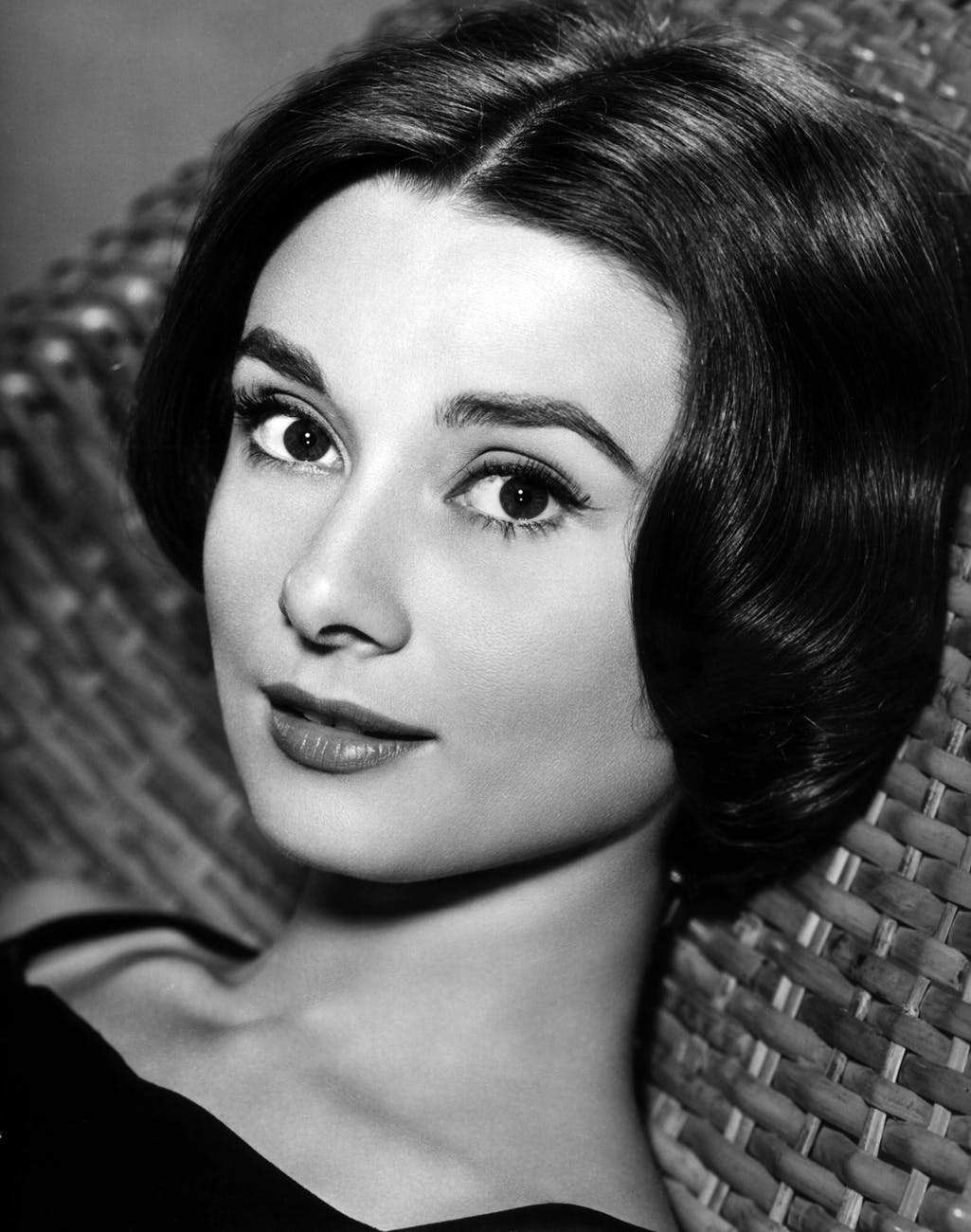
Who knew that even the most beautiful women in the world sometimes perceived of themselves as awkward and even a bit homely? I once read an article in which Audrey Hepburn admitted to often feeling like an ugly duckling. She laughed about being too thin and devoid of curves and commented that she really had a quirky face. Likewise Kate Winslet cackled hysterically at the thought of being considered beautiful. She confessed to always thinking of herself as the fat girl in class with facial features that would never qualify her as a model. When I was a high school teacher I learned that was was often the loveliest young women in the class who body shamed themselves for one reason or another and saw reflections in the mirror that displeased them. 

Learning all of this as a mature individual who had moved beyond an obsession over appearance was nonetheless a revelation. As a young woman I had sometimes loathed the way I looked. I was Twiggy thin rather than curvy like Annette Funicello which made me want to hide my boyish figure under baggy clothing. Wearing a uniform at school was a face saving wardrobe benefit for me. My baby fine hair would not hold the big bouffant styles of my era even with an application of an entire jar of Dippity Do. I suppose that I felt as self conscious as any human ever had so I generally gave up on attempts to be attractive and focused on preparing for the single life that I was certain would be my fate. 

Luckily it did not take me long to finally reach the point of liking myself just as I was. I actually vividly remember the moment when it happened. I was attempting to do something with my unforgiving hair and I laughed at the face in the mirror and exclaimed, “I like you. Don’t ever change.” I realized the age old truism that my imperfections made me more interesting. I didn’t need to be a Barbie doll. I became comfortable in my own skin because I quit thinking about myself and became more concerned with the people around me. Selflessness, empathy and compassion became my beauty tools and the more I really cared about others the more confident I felt. I also eventually understood that every single person has moments of insecurity.

We humans have a tendency to compare ourselves, especially in a society that sells us on the ideals of what real beauty or success actually is. We are both overtly and subliminally told over and over again how we should look, feel, act to be accepted. Today that pressure is way stronger than it was when I was young and feeling so gawky. Social media and the vast array of movies, magazines and television programs set up a kind of continual barrage of imagery that dictates who and what is in and who and what is out. Self esteem is boosted or destroyed by a single post on Facebook, Instagram or Twitter. Likes and followers are measures of popularity. There is a not so subtle bullying that is terrifying for those who are still in the process of finding and appreciating themselves. Because of the new challenges some never reach the point that I did when I knew how undoubtedly okay I was.

I recently had a conversation man with whom I had attended high school in which he admitted that he had wanted to get to know me back then and maybe even take me out but I had intimidated him. He explained that he saw me as one of the more popular persons of our class and that he believed that I was also one of the prettiest girls. I laughed so hysterically at his confession that I almost hurt his feelings, so I had to admit to my own teenage angst and speak of my almost paralyzing shyness and feeling of being just north of being ugly. We then talked about the ridiculousness of those years when we were so frightened and unsure of ourselves. 

It’s quite sad that teens do not have the confidence that comes with adulting. As we grow and experience the world and its people we develop our talents and find our purposes in life. All of that makes us less inclined to worry over appearances but it takes time to reach that wonderful point of feeling good in our own skin. I suppose that the act of becoming a swan or a butterfly is simply a matter of time but in the supercharged environment of the present getting there can be like gingerly walking through a minefield. 

The mental health of our teens and very young adults is being threatened not because they are “snowflakes” who are unable to take a little heat but because there is an ugliness through which they must navigate that is unlike anything any former generation has ever seen. The old saw of not saying anything unless it is nice is passe. It has been replaced with an anonymity that encourages ugly insults that would have been unacceptable in an earlier time. Kids today are being scarred in hideous ways by words that are difficult to forget. We have somehow given people the idea that denigrating others is a form of strength and honesty rather than the abuse that it really is. We are often more forgiving of cruelty than we are victims who break under the brutality of words.  

I honestly do not know if I would have managed to become a well adjusted adult if I had been subjected to the kind of viciousness that is so rampant today. I can now handle a comment that accuses me of being an idiot because I am confident enough to know that I am not. As a sixteen year old or even a twenty year old I might have tragically believed such words if they had been directed at me. Young people today are all too often the target of such attacks from their peers just as twitter has become a domain for undercutting and even firing individuals with whom we disagree. Being or feeling awkward today is tough. It’s well best time for those of us who have made it past those trying years to call out anyone who belittles others and the toadies who follow them. If we do not return to kindness and decorum in the way we treat one another I truly fear for the mental health of our young. It is up to us to help because growing up is awkward enough.

Purveyors of Joy

Photo by Charlotte May on Pexels.com

Reading has been a natural part of my world from the time I was born. I cannot recall a single day when my father did not spend many hours combing the pages of the newspaper and his vast collection of books. He often read to me as though I were a miniature adult and explained what the stories meant if I was too young to fully understand them. Likewise my grandfather was a devotee to reading who thought that there was no grander gift for any occasion than a book. After my father died our family had less funding for purchasing volumes to be kept for all time so my mother took us on weekly excursions to a library near the old Palms Center Mall. Holidays, summertime and car trips meant enjoying the luxury of reading for hours, a pastime that I adored. 

I saw a recent article about an Icelandic Christmas tradition that sounds quite lovely to me. Family members exchange books with one another on Christmas Eve and then spend the evening reading and sipping on hot chocolate. No other place on earth has a higher per capita consumption of books than Iceland because of this custom and book stores there sell countless volumes from September to December in anticipation of the event. 

I think I might enjoy living among people who garner such pleasure from reading. I find books to be the perfect gift and like my father and grandfather I can’t seem to get enough of them. Such is not the case with everyone. There are children whose families are economically challenged who are lucky to even see a book before they begin their formal educations. Such little ones are already behind their peers whose parents have been reading to them from infancy. It is often difficult for them to ever catch up, resulting in continuation of a cycle of poverty and lack of education from one generation to another. 

When I was teaching underserved students I realized that few of them had access to newspapers, magazines or family libraries. They rarely saw their parents reading and so it did not become an enjoyable habit for them. Often when I brought nice books for them to borrow I would never see them again and in my mind I hoped that they were being treasured by the students who had slipped away with them. If I had been blessed with wealth I would have regularly purchased volumes for them to keep.

I recently read a story about Dolly Parton and her efforts to encourage children from underprivileged homes to read and further their educations. When she realized that little ones from the area where she grew up had mostly never seen a book before arriving to kindergarten she began a process of sending each child a new book each month from the time of birth until they enrolled in school. The program was so successful that Dolly has expanded it to places all over the world and has even written several children’s books of her own to tell youngsters how valuable reading is for everyone. 

Former First Lady Barbara Bush became a lifelong literacy advocate, chairing a foundation dedicated to getting books to children. Her important work has made a difference in the lives of countless little ones and continues even after her death. 

I know how much difference reading has made in my own life. Rarely a day goes by that I do not take time to read about the news, contemplate editorials or turn the pages of a new bestseller or an old classic. The written word is magical for me and it keeps my mind active even as I age. Books and articles are like friends that I can invite into my world any time I wish and with the pandemic they have kept me feeling connected even as I spend my days and weeks and months anchored to my home. 

I have a Kindle that my daughters purchased for me several years ago. It is first generation ebook technology that works just fine for me. I am able to instantly bring a new work into my home without ever leaving or waiting for a delivery. My Kindle even saves my place when my eyes become weary and I stop my reading for the day. It’s compact for travel and works well on a plane as long as I have already downloaded my choices. It has brought me great joy time and again but I have to admit that some books are so good that I end up purchasing them in hard copy just because I want to have them forever. 

A real book appeals to all of my senses. I like the feel of the paper and the binding on the fingertips. My eyes delight in the colors and I am able to flip back and forth to particular passages or images. I feel free to write little notes to myself in the margins or underline words and phrases that appeal to me. There is even a smell of paper and ink that spins magic in my head, so I suppose that I will always favor a real book or an electronic one, especially if was a gift from a friend and holds a special inscription that forever reminds me of that special person. 

In so many ways books are living breathing bearers of knowledge and delight. They are the gifts that keep on giving again and again. They bring the world into our minds no matter whether they are leather bound first editions, paperbacks or electronic. They are purveyors of joy that never disappoint us or leave us feeling alone.