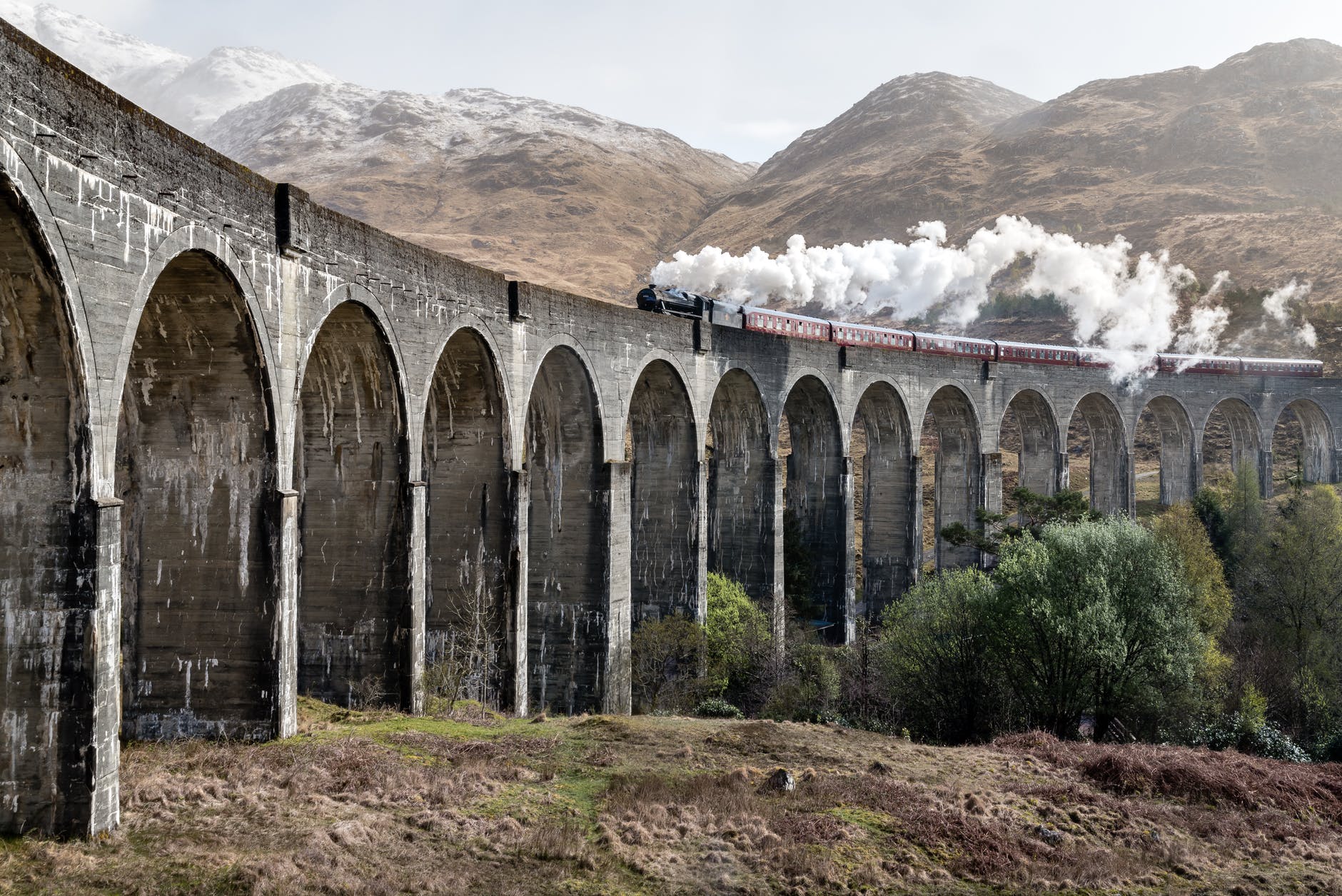
Step On the Train

Photo by Gabriela Palai on Pexels.com

I read a post from Heather Cox Richardson this morning in which she told the story of Frederick Douglass’ escape to freedom. She described how Mr. Douglass had been bought and sold by a number of slave owners, sometimes somewhat kind and sometimes almost murderously brutal. At the time of his attempt to head north to a life of his own choosing he had a job that was perhaps easier than those of most slaves but he was still the property of someone and subject to the whims of his master. At any moment he might have been sold down the river to a life of working in the fields or worse. He fully understood the consequences of attempting to run away in pursuit of freedom but the lure of being his own man outweighed his fears. He stepped on a train with forged papers and headed north. The rest, of course, is history. 

In some ways each of us face moments of truth in which we must decide to take enormous risks. Most of our decisions are not nearly as serious as the possibilities that Douglass faced nor are the consequences of failure. Nonetheless we find ourselves hesitant to change the direction of our lives rather than continue to follow familiar routines that are crushing our souls. It is a normal reaction to stay with the status quo rather than wander into the unknown. 

My own journey through life, even though often difficult, was never once as horrific as that of Frederick Douglass who was born a slave. My crossroads were never life threatening but they were life changing. I had to decide who I wanted to be, what I thought my true purpose was. Many well meaning people had ideas of how they thought my life should unfold but I sometimes felt sick at the thought of following their advice. I understood that I had the capability of being a doctor or an engineer but those careers did not hold interest for me even as those who loved me insisted that I should consider them. I instead wanted to be a teacher, a role that I had played even as a child. When I thought of educating others I felt excited even as I realized that such a job would not bring me the kind of status or income that being a lawyer or business woman would. I knew that I might be anything that I wished, but I only wished in my heart to be a teacher and the people around me saw that as settling for something less than I had the potential to be. I became so confused that I dropped out of college and took time to think things through. I disappointed many who had worked hard to provide me with opportunities that I appeared to be throwing away.

While I was deciding which direction to pursue I had to work and the jobs I accepted should have told me what I really wanted to do. I accepted a position in a daycare center watching over little ones in an after school program. I landed a spot as a pre-school teacher that made me so happy that I still smile when I think of my time there. The leaders at my church asked me to be a director of religious education for children from age three through age five and I pioneered the transition from nuns to lay people. I watched five children in my home while their mothers worked. The hints of what I really wanted to do were loud and clear but I continued to worry that those urging me to do something more exciting and lucrative were right and so I was thirty years old before I re-enrolled in college and chose education as my major. 

By then I was no longer afraid. I let the advice and concerns that I was throwing away my abilities and talents whoosh right over my head. I threw myself into my classes with abandon and joy. I stepped on my own train and never once looked back at what might have been. I found my own personal freedom in being the person that I felt I had been destined to be and never have I regretted my decision to follow my own heart and not the good intentions of others. Even as I knew I had disappointed them, I was true to myself. 

I can honestly say that I went to work happy almost every single day of my career. Of course there were tense times when a new principal came into my world and I knew I had to find a different school because our philosophies did not mesh. I sometimes had students that I struggled to reach and grave feelings of failure when I knew I had not managed to help them. I was almost always exhausted as I worked sixty plus hours a week while also raising a family. When my salary was stagnant and I watched my peers in other fields rising to levels of great economic comfort I sometimes worried that I would never enjoy their status or monetary comforts. Still, no challenge tempted me to step away from being an educator. It was baked into my DNA. 

In the last few years of my career a former principal recruited me to follow him to a public charter school, a place with longer hours, no protective contract, and a work ethic that was demanding. My final risk would be to accept his offer little knowing how much my choice would change my life. It was at KIPP Houston High School that I found my stride and truly realized the impact and importance of my lifetime of work with young students. I knew there that the true joy of my work was to be found in having a meaningful purpose, not a title or an impressive salary. I realized that one student at a time for decades I had made my mark on this world, sometimes in very small ways and sometimes in a manner that changed lives. 

Our hearts tell us what we need to do. They cry out to us to be free to be ourselves. Sometimes they ask us to risk everything in pursuit of a way of life that nobody else will understand. There may be hardships and even danger in following our instincts but it is almost always worth the effort. It is freeing to be able to show the world who we really are. For Frederick Douglass it was a matter of life and death. For me it was of lesser consequence but still a life changing evolution of my soul. Each of us must find the courage to determine how we wish to live and then step on the train that takes us to where we were meant to be.

Weathering the Storm

Photo by Frank Cone on Pexels.com

It had rained all week and she had grown weary of the dark skies and dampness in the air. Even the plants were beginning to yellow from too much water. She had wondered why everything was so extreme, floods in her part of the world and drought in others. Even politics had left the middle of the road and divided everyone into abnormally divisive camps. There seemed no halfway and she was exhausted from the stress of it all. 

She had tried to cope, diplomatically explain why it was important to cooperate, develop ideas together but few had seemed interested in an amicable approach. The Palestinians had fought with the Israelis as though there was no viable solution for their ongoing battles. The people had argued over how to deal with the spread of the virus, whether to wear masks or become vaccinated. Warring divisions, continual disasters, lies and propaganda is how it had begun and it had seemed as though there would be no end to the dreariness that dominated her thoughts each day. “Is this how it will forevermore be?” she had asked herself, hoping that the answer that she so negatively felt in her heart was wrong.

Then she had stumbled upon a conversation with a group of young people. They had seemed so innocent, so likely to be naive and filled with the kind of silly impractical ideas that will never solve a single problem, but she decided to listen anyway. They were passionate in their assessments of what was happening and what we must do to save our planet, our democratic republic and ourselves. They had a grasp of facts, statistics, research. These were not people touting hoaxes as reality. They did not echo the soundbites that dominated most political discourse. They were reasoned, honest, willing to sacrifice at whatever cost to do what needed to happen even if it was difficult. As she listened she felt a smile creeping into her heart and across her face. This was as hopeful as she had felt in a very long time. 

She left the group feeling a tinge of optimism from their energy. She saw that they were far wiser than their ages might have indicated they would be. She realized that those who had criticized such youth as spoiled and unconcerned were wrong. They were looking to the future, creating a plan to forestall problems, not just deal with them as they arose. They did not long for the past but they used lessons from former times to draw conclusions, see patterns, create solutions. She was inspired by the level of critical thinking she had heard from them. It had been so long since anyone had sounded logical or free of bias. 

The rain had fallen in buckets as she drove home but her thoughts had become brighter. She heaved a contented sigh even as she wondered how to transmit the good news of her discovery to the people who had warned her to beware of the younger generation. She wanted to report what she had learned but worried that she would not be able to convince anyone of her pleasant discovery.

She wrote an essay and posted it on Facebook and Twitter. The usual suspects had either liked or argued with her thesis. She wondered if she had changed anybody’s mind and she felt disappointment and a kind of darkening of her spirit as the rain continued unabated. Her cynical mood only felt reinforced as she read that the lawmakers in her state were bickering as usual rather than having conciliatory discussions like the young people who had so fascinated her. The lights in her house had flickered then gone out leaving her once again in the shadows, wondering why so few could see what those young folks had seen. 

The streets had flooded once again. Homes had filled with murky waters while neighbors to the west were fleeing from fires that consumed their homes, their lifetimes. It had been a horrible era that lasted until she was very old and endlessly sad. Then came new leaders who looked so familiar to her. She wondered where she had seen them before and then it came to her. Their hair may have been tinged with gray but they were all those “kids” who had inspired her so many years before. It was their turn to try to clean the mess that had lingered far too long. She knew they had an almost impossible task but somehow she believed in them and once again hope sprung alive in her heart. 

The day had arrived when the future became the present, the present became the past. Now everyone had become as weary as she had always been. They were so tired of the tragedies and disasters and mostly the fighting. They were ready to finally listen and even get something done. Those young people were now in charge and their ideas sounded not just feasible but grand. The sun came out and her face happily glowed with a huge grin. She realized that hope had finally arrived. 

On Making Me A Citizen of the World

Photo by cottonbro on Pexels.com

He introduced me to the wider world, taught me how to write and gave me a lifetime of joy with the skills that he developed in me. He was my high school English teacher for all four years, a man of culture who also happened to be a priest. His name as I knew him was Father Shane and he so inspired me that my life totally changed under his guidance. Without him I might have been trapped in an unchanging parochial loop of sameness and unwillingness to embrace change. In the four years that I sat in his classroom I thoroughly accepted his message that we explore ideas and make learning a lifetime proposition. 

I had began this journey with my father but when he died there was a void. His collection of books was a start but in never grew and he was not there to discuss the meanings and insights that he had drawn from them. His music told a story but it too remained forever abridged. It would be Father Shane who would complete the arc of exploration into the great ideas and accomplishments of humankind upon the foundation that my father had laid. 

Father Shane’s first commandment was to read, read, read. He required us to complete one book a week and then write a review of the text. He demanded that we encounter the full spectrum of genres, titles that included the great works as well as more modern texts. He did not want us to write a summary of the book but rather discuss the thematic importance of its words, structures, ideas. Completing such a task on a weekly basis was grueling at first but then it became a delightful habit that led me down avenues that I did not know even existed.

Father Shane also introduced us to newspapers, journals, periodicals that enhanced our understanding of the wider world beyond our little neighborhoods. He read to us from the New York Times and The New Yorker magazine. He took us to see plays at the Alley Theater and to listen to symphony concerts. He even filled the classroom with artwork and encouraged us to visit visual art museums.

Father Shane was a stickler for grammar and usage. Every week of instruction included forays into the structure of our language. Through practice, diagramming and instruction I became a kind of linguistic expert. When I later took a notoriously difficult grammar class in college I stunned the professor with my knowledge so greatly that she wanted to know where I had learned so much. I was proud to provide her with Father Shane’s name. 

Every Monday for four years Father Shane wrote a single word or phrase on the blackboard that became the prompt for the two hundred word theme that we had to write. I stewed over that assignment many a time, often scribbling a last ditch effort to complete the task in the late hours of the of the evening before it was due. The exercise taught me how to dig deeply into my experiences and creativity to find my voice. It made me capable of extemporaneously responding with a degree of coherency and depth. It eventually became a joy rather than an onerous job and it served me well in college when professors buried my in seemingly undoable writing assignments that I always managed to complete on time.

Perhaps the best lesson that Father Shane taught me came from the total disaster of my senior research paper. By then he had made me aware that I was one of his top students. I wanted to please him even more with a paper that would stun him with its depth of information. I chose George Bernard Shaw as my topic, just the man and his entire life. If I had been writing a book I might have impressed my teacher but instead I attempted to squeeze so much into the paper that it had no theme, no main idea. 

I literally read everything that Shaw ever wrote and then attempted to discuss his works in two or three sentence reviews. I devoured multiple biographies and retold the story of his life. My paper ended up being like a Reader’s Digest or Wikipedia review with little or no analysis. It took me over a week just to type it and properly cite all of my sources. I thought it was a masterpiece but in truth it was dry and lifeless, the kind of thing that begins to bore after a couple of pages and I had at least thirty of them. I had made the mistake of attempting to accomplish too much. If I had linked his politics to his writing or discussed his views on women as shown in his female characters I might have had something great. Unfortunately there was nothing tying all of the many parts together.

I was about to graduate and major in English literature in college. I wanted to be a writer, a journalist. I wanted to be just like my favorite teacher, Father Shane. He had never given me a grade lower than an A on any assignment I had completed. He had asked me to help grade the weekly themes of the freshmen that he taught. I thought I was his superstar and then he returned my research paper with a big red C scrawled across the cover sheet and a scathing review written on the back page. 

I was in tears and hardly able to look at the teacher who had seemingly betrayed me. I thought that I should have at least received some credit for doing so much work. Some of my peers who had hardly given thought to the project fared much better than I did. I was crushed and angry at the same time, unable to even confront Father Shane to argue my case. I put the paper away in a drawer in my bedroom and forgot about it as I engaged in the end of high school ceremonies. 

It was not until the summer that I found the courage to read Father Shane’s critique of my master work with calm and an intent to learn from it. I realized that his remarks were an effort to help me, not tear me down. He was a great teacher to the very end. If not for his honesty I might never have understood how to improve my craft. The dozens and dozens of papers that I had to write in college may have been just as lacking as my senior thesis. Instead he outlined every single misstep I had taken and told me how to correct those errors in the future. He cared enough to get my attention and then to rationally guide me in a better direction. 

In college I had to write and write and write. I often had professors ask me where I had learned how to so beautifully bring my voice to my work. I always had the same answer. It had been Father Shane who was the teacher who changed my perspectives, widened my horizons, and showed me how to use the power of words. Few people beyond my parents have ever had such an enormous impact on shaping the person I ultimately became. He was a master teacher who achieved his goal with me. He made me a citizen of the world.  

How I Got Where I Did

Photo by Pixabay on Pexels.com

I come from adventurous stock. My maternal grandparents traveled across the ocean from Slovakia just before the outbreak of World War II. They came one by one with my grandfather being the first to land in Galveston, Texas as an immigrant with a plan for improving his lot and that of his future family. My paternal grandparents moved all over the United States wherever my grandfather found work as a finishing carpenter. My father grew to love the idea of traveling, not just on vacations but in life. Just before he died we had taken a journey to California in the area that eventually would become Silicon Valley in the hopes of living in what he considered to be one of the most beautiful parts of the United States. 

None of that was to be for me. The job that lured my father a thousand miles away from my birthplace of Houston, Texas was a bust. Before long he left it and took us all on an odyssey through Los Angeles and points along the way to Corpus Christi, Texas and finally back to Houston as he attempted to find new employment. It was obvious that he longed to be someplace other than Houston but he had no luck in any of the towns where we stopped just long enough for him to realize that there were no opportunities matching his skills. When the family savings ran out he grabbed an offer to work again in Houston and resignedly returned. The adventurous streak that had so defined my ancestors would come to an abrupt end. 

I was actually happy to be back with my extended family of aunts and uncles and cousins and grandparents and friends. I had even secretly prayed to God to return us to the simplicity and security of my birthplace. I had little idea that within weeks my father would be dead from a car accident and life for me and my brothers would take a far different turn than I had expected. My mother took us back to the neighborhood from which we had initially moved and there we settled into a simple life until each of us struck out on our own as adults. 

None of us ever moved too far away from the house where we grew up. We had walked to school and church and built a foundation for life in a place where our mother made us feel safe. Staying in one place became a symbol of security for me as I remembered the trauma of all of our moves that ended in such unexpected tragedy. My focus in life seemed to always be on sameness, routine. A routine way of living felt good and I had no desire to disrupt it. Thus I find myself at the age of seventy two in the same part of the world where I was born with no desire to move the way those who came before me did. From a psychological standpoint I think that leaving what I had known and loved only to return and see my father die scarred me and buried all of my risk taking inclinations. 

I am quite content with living a long life never too far from the hospital where I was born. Remarkably it’s still there but the house where my parents lived was razed many moons ago in true Houston fashion. Nothing seems to last for very long in this bustling city that probably should never even have existed in the first place. Houston is still all about real estate just as it was when the Allen brothers advertised in the late nineteenth century. It was a strange place to build a city with its ribbons of bayous and mosquito infested swampy areas. Neighboring Galveston located on a bay that feeds into the Gulf of Mexico was the economic dynamo of the eras but the citizens of Houston were dreamers with a plan that somehow did not seem so crazy when a massive hurricane virtually wiped out Galveston.

Houston pioneers dug a big channel that allowed huge ships to come from the Gulf to the shores of a landlocked city. Over time that port grew to be one of the busiest in the country in spite of the fact that it was not adjacent to a natural inlet. The city began to thrive as far sighted leaders brokered the convergence of railroad lines, built a world class university that would become known as the Harvard of the south, and planned for a medical center that would rival the best in the world. Texas oil and gas ended up in refineries near the ship channel and when World War II prompted the need for fuel the city began to grow by leaps and bounds. 

When I came along Houston did not yet have a million people but today the city and its surrounding suburbs is home to around four million souls of such diversity that there is no one dominant group in the area, at least when there is no gerrymandering to make it so for purposes of voting. It is a friendly place where everybody mostly gets along as we proved when hurricane Harvey flooded neighborhoods with equal opportunity. 

I still love Houston and while I have sometimes thought of living in a more beautiful place I always end up wanting to stay. Houston can be beautiful or ugly depending where you go. It is brutally hot and humid for most of the year. There really are no seasons here, no fall colors or snowy days, but spring and fall are spectacular in their own Houston ways. The threat of hurricanes and floods loom large and we tend to become anxious when it rains but we have some of the best food in all of the United States. Getting from one place to another can be trying and when we say that something is close by it may mean that we only have to drive for an hour. We have anything that a person might want except beautiful scenery but we can drive to Galveston for ocean views or to the hill country for rolling vistas. That medical center that enterprising civic leaders advocated long ago provides top notch healthcare and now there are multiple universities in the city educating students from all over the world. We are even the center of the human universe with NASA headquarters planning a stunning future in space.

Some might say that my brothers and I got stuck in Houston and surroundings but over time it became a wonderful choice. We’ve been able to travel the world for fun and then return to the easy going feel of a home town that has provided for all of our needs. Houston has its flaws like any other place. Nothing is ever really perfect. Overall though Houston is a great place to live with a kind of can do spirit even in the face of enormous challenges that keeps it moving forward in an adventurous kind of spirit. It’s my birthplace, my home and I love it. 

Let’s All Graduate To Better Thinking

Photo by Anete Lusina on Pexels.com

I attended a graduation at Texas A&M University recently. It was an abbreviated ceremony which actually worked out quite well, no long speeches from the Association of Former Students or politically leaning entities. The students were separated into groups of about 200 with eight guests each and the entire affair only lasted a tinge more than an hour. It was wonderful!

The interim president of the university was the main speaker and he walked a fine line down the middle road in his address. Of course he spoke of the bright future that each of the students will have in the world of computing but also alluded to the ethics needed for their work. Then he mentioned the divisiveness in our country today and expressed his hope that a unifying leader will one day emerge to bring us back together. He used the examples of John F, Kennedy and Ronald Reagan as models of the kind of electrifying individual who might unite us in the name of our country and one another. He hinted that such a person might even emerge from the ranks of the graduates. Sadly he remarked that our past year of unprecedented events should have been the catalyst for a national effort to work together and instead our differences seem to be more pronounced than ever. 

I found myself nodding away as he spoke and feeling the hint of sadness and disappointment in his words. He admitted to being seventy seven years old and hopeful that things will get better before he is no longer of this earth. He suggested that we start by setting aside our anger with members of our family with whom we differ and then reaching out to friends whose views deviate from our own. Perhaps if we can begin to have thoughtful conversations with one another a chain reaction cooperation will take hold even in Washington D.C.

I’d like to think that such a thing will eventually happen but I worry that it is still a long time coming. We seem unwilling to even listen to each other much less attempt to understand what those around us have to say. I suspect that only when “we the people” begin a process of legitimate healing, not by covering up problems but by admitting to their existence and working to solve them, will our nation be whole again. Our stubborn refusal to really hear the whys and wherefores of many views is a roadblock to progress forward. Continuing obstinance will only lead to more situations like people in Texas literally freezing in the dark and minorities feeling like outsiders in their own country. We have to be honest and know that it will not hurt us, but will make us stronger and more just. 

I sometimes think that right now one side is too generous with our taxes and the other is too cruelly stingy. We don’t want to disincentivize Americans from working but we also do not want to assume that those who need a helping hand are by nature lazy. The truth is that some people will unfairly take advantage of overly kind hearts while others are quietly suffering in a society that often looks away from problems rather than constructively addressing them. We have begun to debate too many issues with soundbites and platitudes rather than thinking outside of the box. We do not have to do things the way we always have. It is possible to make positive change without losing the essence of our democratic republic. 

Many thought that the introduction of Social Security was a first step toward communism. While the program is terribly imperfect, it along with Medicare have improved the lives of elderly in myriad ways. So too has the Affordable Care Act made it possible for more Americans to get the medical help that they and their families need. Both were positive steps to a more humane nation but perhaps with some tweaking here and there we can make the programs even more productive and worthy of our taxes. 

As the Texas A&M interim president suggested we can all do better and our efforts should begin with an unwillingness to spread false information. An educated electorate needs to check sources and seek truth no matter where it may lead. This is what we learn in our schooling and this is how we should be approaching the decision making that affects us all. If something sounds too much like a slogan then it would behoove us to do some honest research before we just fall in line with any group or individual. 

I like that our young people are being challenged to think critically and to seek truth. Too many today are behaving like lemmings rather than individuals. There is something wrong when entire swaths of a party sound exactly the same. We need to be able to discuss hypothetical ideas without getting personal or feeling angry or insulted. That is the way forward. We should all graduate to a higher level of thinking.