Forget Me Not

Photo by Ithalu Dominguez on Pexels.com

I am fascinated by old cemeteries. I see the tombstones and wonder who the people buried beneath them were and what they were like. Occasionally I encounter one with the name of a famous person and I get excited, but most of the time they are unknown souls. Often their gravesites are overgrown and neglected because the people who knew and cared about them are long gone as well. 

It is said that most people will be forgotten somewhere between eighty and one hundred years after death. A time comes when even the descendants of an individual can identify a relation only on the branches of a family tree, if one happens to exist. We are born, we live for a time and then we die. Those who loved us will mourn us and maybe even tell their children and grandchildren about us and then it is likely that we will fade away from memory. 

We do not often consider the reality of living and dying. We rush around in our daily lives just attempting to make a living and make a difference at the same time. Occasionally someone creates something that becomes a family heirloom or enters the realm of family stories. Mostly we never quite have enough hours in our days to make a permanent mark somewhere. 

I often think beyond my own parents and grandparents to my great grandparents. I only have concrete mementoes of my paternal great grandmother Christena Rowsie Smith. Once of my cousins sent me a photo of her and my grandmother, Minnie Bell, gave me a ceramic pitcher that belonged to her. I know that she had many children and lived the last days of her live in Scott County, Arkansas. I have even found her grave. Standing before it helped me to feel her spirit and make her more real. 

I’ve attempted to tell my children and grandchildren about her, but it is difficult for them to think of her as someone who actually existed and should mean something to them based only on a photo and an old pitcher. I worry that once I am gone, she will be forever forgotten unless someone else takes an interest in genealogy like I have. It is sad to think of how forgotten most of the people who once walked the earth become. 

I often hope that my writings will somehow be handed down from generation to generation making me more tangible, easier to know and understand because of my words. In today’s world even the most average and ordinary person has photos and videos of themselves. My father was heavily featured in old films that belonged to one of my aunts. They were the kind with no sound, but it was easy to glean a great deal about him by noting his smile and the easy way that he laughed. Sadly all of those memories were lost when my aunt’s home burned down. Since my children and grandchildren never met him he only stays alive through the stories that I tell them, stories that are based on the memories of an eight year old child. They call him great Grandpa Jack and wish that they might have met him, but in some ways he is only a name.

I suppose that it is a dreary thing to think about one day being dust. We’d like to think that we have contributed enough to the betterment of the world that we will somehow be remembered, but we know deep down that at some point we will be only a name on a long ago census. That’s why we each should do our best to live our lives well. 

I suppose that the idea of a good life will be somewhat different for everyone. For me it means using my talents to help others in some way. I think it is important to enjoy the small but special moments of life. I believe in doing my part to preserve and protect the environment so that future generations will have a world as lovely as the one I have found. I hope to spread love and be remembered for kindness. While I would like to achieve some level of success in my endeavors, fame and fortune have never been driving forces for me. 

I reach back into the past and I know that I have agrarian roots. My people worked the land in the United States, Ireland, Scotland, England and what is now Slovakia. My ancient ancestors had Viking names and they sailed across the North Sea from Norway to set down roots in England. They laid claim to political power in Normandy and then in England. They had funny monikers, some of the unpronounceable. Their stories can only be implied. I imagine them toiling from day to day, falling in love, creating families. Some like my great grandmother, Marion died giving birth to my grandfather. No records exist to even prove that she once walked on this earth. How many other souls are there who lived and breathed and had wishes and dreams but will forever remain unknown to us? Who loved them? Who celebrated when they were born? Who grieved when they died? We will never know. 

Embrace life while you can. Leave an imprint on someone’s heart. Be so good that you become a vividly pleasant memory for another person. Stand for something. Be respected for your honor. Life is short but we each have an opportunity to do something special with the talents and skills that we have. Get started writing a forget me not with your life.

The Evolution

Evolution by kevin dooley is licensed under CC-BY 2.0

I suppose that I am somewhat of an enigma to most people. I tend to be quiet and unassuming, the kind of person who prefers to blend in with the crowd rather than steal the limelight. I am mostly easy going and easy to please. It doesn’t take much to make me happy. I generally follow rules without complaint. My favorite way of behaving is like a fly on the wall. I want to observe the world and the people in it without too much notice so that I might mull over what I have seen and heard. Nonetheless, there are moments when events or situations fire up my rebellious streak. In those times I become fearless, able to take on a raging bear with a fierceness that seems to come from nowhere. I say and do whatever I think needs to happen without caring what people may think of my sudden shift in demeanor. Most of the time this sort of thing occurs when I believe that someone is in need of help or justice. I can’t seem to stop myself from becoming involved.

I suppose that I first realized this aspect of my personality when I was twenty years old and my mother became seriously ill with depression, mania and psychosis. At first I felt totally helpless and attempted to garner the assistance of one of my aunts or uncles. Sadly they were as confused about what to do as I was. They backed away from actively becoming participants in a process of getting her the medical care that she so obviously needed and instead seemed to just hope that her condition would pass and all would be well. I realized that if my mother was going to get better I would have to be the one to step up and be assertive. Somehow I found the courage that I needed and the voice that had been meek and silent until that moment roared to life. 

That was a turning point for me. I learned how to speak for my mom and that led me to devote most of the rest of my life to being an advocate for the many children and teens that I taught. Eventually my fervor evolved into representing the teachers on my campus. Time and again I have stood against opposition in efforts to make things right for individuals and groups who needed someone to help them overcome challenges and inequities. I became the bold version of myself because I truly believe that the one and only bit of advice that we need in this world is to love our neighbors just as we love ourselves. To do that we must be willing to sacrifice and be unafraid.

I’ve crossed swords with ignorance, neglect, illogical thinking, bigotry, suffering, abuse and other negative traits of humanity many many times. I sometimes feel like Batman changing into a suit that is so unlike the person that I generally am. I somehow find superpowers within me to fight for causes that sometimes make me an outcast, but that I feel are too important to ignore. I’ve lost friends or had to leave jobs after taking a stance for the benefit of what I believed to be right and just. 

Most of the time I don’t worry much about things like the cost of gasoline or supply chain issues that make it difficult to find cream cheese. I concentrate on the health and well-being of people, injustices that crop up more often than they should. That’s when I can’t seem to control my instinct to speak out loudly, to do something to help. I suppose that behavior that began with my mother only became stronger when I worked with vulnerable children and saw the many horrific things that they had to endure. 

There really is such a thing as privilege and I know I have much of it for no reason other than being born under just the right circumstances. First was my birth in a free democratic republic, then came my white skin that shielded me from most instances of bigotry. While my childhood was tinged with trauma from my father’s death I was fortunate to have a very wise and loving mother who devoted herself to me and my brothers. Eventually I would translate her lessons into caring for her when she became ill. I had opportunities for enriching my life with education. I met and married a very good man who was an equal partner and supporter in everything I attempted to do. My seemingly ideal life was fairly close to being as perfect as such a thing might be, and while I did work hard to get where I am I understand that I began my adult journey with advantages that so many others do not have. I learned this all too well from the thousands of students that I encountered over a span of forty plus years. 

I suppose that I first learned from my mother and from my father before he died. Eventually my teachers would have a profound impact on who I am as a person. I have had magnificent friends who furthered my education. Finally, my students may have taught me more than I ever taught them. They widened my horizons and made me aware of the struggles that so many silently bear. I did not need a history course to realize that we have a long way to go before everyone is treated with the same level of respect that came to me without much effort. I saw suffering of a kind that is too terrible too describe. It still pains my heart.

So it is true that I sometimes get animated and preachy when it comes to certain causes. I can’t seem to help myself. I cannot look the other way or just hope for the best when I see someone hurting and without anyone to help. I have to step up and attempt to make things happen. It’s the person I have become for better or worse. I’d like to believe that somehow my small kindnesses have made a difference for the people I have encountered. I know that they have humbled me and helped me to see the world with more clarity and hopefulness. I hope that knowing that someone cared enough to fight for them helped them to a better place. I just wanted them to know that someone really loved them.  

Folk Medicine and Medical Deserts

Photo by Chase Yaws on Pexels.com

I seem to have descended from common folk who had to turn to folksy medical remedies rather than seeking out doctors. It was not so much because of any distrust of physicians, but due to living in remote areas where the amenities of medical care were not available or because of lack of money to pay professionals. Even my maternal grandmother who lived in Houston, Texas gave birth to all of her children inside her home with the aid of another woman who knew how to deliver babies. When two of those babies become quite ill, my grandfather leafed through books to determine how to make them healthy again. Sadly his research did not help and they both ended up dying. When I learned of their symptoms I was reminded of my one of my daughters whose allergies were so severe that she was often unable to consume food without regurgitating. The wise counsel of her doctor brought easy, but somewhat expensive relief. I doubt that my grandparents had the good fortune of insurance to cover the costs of making their babies well like I did, so they did their best with what little funding they had.

My paternal grandfather’s mother died in childbirth and he ended up being raised by his grandmother who lived in an unnamed area of western Virginia. She had a knack for creating medicines and poultices, and according to my grandfather, people came from all around to consult with her regarding various medical problems that they incurred. They often called her “Doc Reynolds” because of her knowledge of how to use plants to create medicines. Of course when small pox infected the place where my grandfather lived the people in the village found a bonafide doctor to care for them until they had either become well or died.

My paternal grandmother often spoke of members of her family having “gut trouble.” They obviously had terrible bouts of heartburn and used vinegar and pickle juice to ease the gnawing pain of their affliction. Eventually many of them died from intestinal disorders, just as my grandmother eventually did. As someone who regularly has to visit a gastroenterologist I am grateful that my own “gut trouble” is aided by a professional who guides me through the ups and downs of my ailments. 

I have to think that perhaps my folksy ancestors might have become educated medical professionals themselves if given the opportunity because there are rather large number of doctors and nurses and scientists on the branches of the family tree descending from them. I like to imagine that they learned in the school of experience and by dent of their observational powers. Now their kin is using similar talents to make a difference for their patients. I suspect that they would be particularly proud to see how far we have all come from the days when they had little more than their wits to keep them safe. 

Sadly my paternal grandmother ignored her symptoms of colon cancer for too long, believing that they were simply par for the course in her family. By the time her disease became so unbearable that she sought the advice of a doctor there was little that he was able to do to save her. She and my grandfather moved from their farm back to the big city where care was only a short drive away. She spent her last weeks in horrible pain while my grandfather attempted to keep the two of them from going bankrupt in a time when there was still no Medicare. In the end she was gone and he was destitute. 

We have come a long way even from the middle of the twentieth century when my grandmother died. Medical care is more advanced than ever and elderly citizens have the advantage of Medicare or Medicaid. Still, there are medical deserts in rural areas where citizens have to travel long distances for care. In spite of our efforts to create affordable care for all Americans there are still those who do not have medical insurance. Additionally, there are far too many people who seem to prefer to find remedies for their ailments from the Internet rather than deferring to the expertise of doctors. Many of these souls needlessly die because the availability of help from our healthcare system is still in need of repair. 

I am quite proud to know a remarkable woman who is leading efforts to bring medical care to even the most remote corners of our country. It is her holy grail to reach those who are in dire health situations with no place to go. While her work has caught the attention of important supporters, there is still so much to be done that I wonder if she sometimes feels overwhelmed. Vast swaths of the United States are devoid of even the most basic staffs of doctors and nurses.

Generally those of us who have adequate medical care tend not to think much about those who do not. Often we find it difficult to relate to someone who lives on the razors edge without health insurance or savings to cover medical emergencies. We make assumptions about such people that are not always true. We point to different government programs and insist that nobody ever goes without the necessary treatments that they may need. In truth, that is simply not the case. There are still far too many people in our country who rarely frequent doctors because they simply do not have the funds to do so. They ignore symptoms or self treat them until they become seriously ill. This is especially true in rural parts of the country and among workers whose jobs do not include benefits. 

I don’t know the answers to this problem, but I do know that we should not pretend that it does not exist. We send medical missions to poor countries, but not so often to places to people and places in America where the most basic care is difficult to find. Perhaps we need to be more honest about the tragedies that occur in our midst because we are unwilling to consider measures that would help.

When I hear people complaining about Medicare I think of my grandmother and grandfather whose lives were upended because she got terminally ill before the passage of that landmark bill. I wonder how many people’s lives have improved because of the Affordable Care Act. I understand that we have still not perfected the ways of getting care equitably to everyone. I realize the fears that providing universal medical care to all may endanger the good plans that people already have. Surely we are an intelligent enough nation that we can design a system that works for everyone without degrading the quality of our healthcare system. Nobody should have to rely on folk medicine in the twenty first century and there should be no medical deserts anywhere. Investing time in making our system even better should be a crusade for everyone. Better health will lead to a better, more productive nation.

My Grandfather’s Dream

Photo by Nita on Pexels.com

My maternal grandparents came from what is now known as Slovakia. I never had the pleasure of meeting my grandfather, Pavel Dusan Uhrik, who had changed his name to Paul D. Ulrich after arriving in America. Grandpa Ulrich died only months before I was born, but my mother often told me stories about him. What I gleaned from her memories was that he was a hard working man who was proud of his Slovakian heritage and the freedom that he had found in America.

My grandfather arrived at the port of Galveston, Texas shortly before the beginning of World War I. At that time Slovakia was not yet an independent country. The people there lived under the thumb of Hungary which was part of a vast empire known as Austria-Hungary. The Hungarian government believed that unifying all of the diverse regions would only occur if everyone officially spoke the same language and learned the same histories. That meant that my grandparents’ native language of Slovak was not allowed in schools or the public square. There was a determined effort to eliminate differences and even cultures. 

My grandfather was fiercely opposed to such measures and he worked hard to earn passage to the United States and the freedoms for which he longed. Back then he only needed to show up in the USA and he was allowed to stay. He came first, without my grandmother, to find work and plan for her arrival as well. He quickly found employment doing hard labor on farms, in lumber forests, and wherever else there was work. A year after he came to America he had enough saved to send for my grandmother. 

The two of them settled in Houston, Texas. They first lived in rented rooms, but my grandfather saved judiciously until he was able to purchase property just east of downtown. On that site he paid cash to build a home room by room until he and Grandma were able to move in with their rapidly growing family. Grandpa would find work at the Houston Packing Company, cleaning up the room where meat was butchered. He would work there for the remainder of his life, riding a bus each day wearing a suit with great dignity. Upon arrival at work he would change into overalls more suited for the back breaking labor that he performed. 

Each Friday my grandfather stopped at a book store where he purchased books of all kinds written in English. He also visited a bakery to purchase bread for the family. He built a library filled with titles that spoke of his dreams of one day owning a farm in the country. Until then he purchased a cow and grew vegetables in his backyard. 

On Sundays Grandpa required his children to listen to news programs and speeches from the President of the United States on the radio. Afterward he would instruct them on the challenges of remaining free and insist that they demonstrate gratitude for the lives they were able to have in America. They were poor, but they had opportunities that would have been denied to them in my grandfather’s homeland. Nonetheless, he loved the land of his birth and hoped that one day the people there would be independent and free to determine their own destinies and celebrate their unique culture. He made it clear that his children should always be proud to be Slovakians. He felt that joining his people with Czechs to form Czechoslovakia after World War was a mistake drawn from the belief that there was no difference between the differing people or their languages. He often emphasized to his children to remember that they were not Czechs as so many called them.

My mother often spoke of how sad my grandfather became when Hitler invaded Czechoslovakia. He wondered if he would ever see his country free like America. When World War II ended with victory for the allies he saw a thin line of hope, but that was soon dashed when Russia intervened and made that country part of its Soviet regime. My mother always believed that the bitter disappointment of watching his homeland being conquered once again brought on the stroke that killed him before he was even able to retire and create his farm. 

I have often thought that my grandfather would have been quite happy had he lived to see the country of Slovakia eventually find its own identity and independence. In fact, he would have been pleased to see so many countries with a history of domination forming their own governments and celebrating their own languages and cultures. While he had totally devoted himself to being fully American, complete with insisting that his children speak English just as he did, he reveled in knowing that his way of living and believing had been his choice, not something forced on him by empire builders.  

Since the beginning of the invasion of Ukraine by Russia, I have thought constantly about my grandfather. I look at the map and I see Slovakia on the western border of Ukraine. I hear the voices of the Ukraine people insisting that they do not want to be a satellite of Russia. They boast of their freedom and their intent to protect it at all costs. In their voices I hear my grandfather’s voice. I viscerally understand how important it is to them to protect their country from ever again being nothing more than an annexation to another power. I realize how much it means to them to be free from a dictator who dreams of a glorious return of the USSR. 

I have been greatly involved in following the war between Ukraine and Russia. I search the news as soon as I arise each morning. I check for updates all day long. I pray constantly for the people there. I think of my grandfather and feel that through him I have an idea of how important it is to the people of Ukraine to save their identities as free people. My heart crumbles at the sight of destruction, death and separation that has been forced on them by Putin. I stand with them knowing that there is so little that I might do to help them. Contributing money for medical and food supplies and praying seem to be the best I can do, but I can also use my voice to keep their plight in the forefront of our thoughts. With the story of my grandfather perhaps I can make what is happening there seem more real, more human, more important. 

Pavel Dusan Uhrik sensed that he had to leave his country and the people that he loved. He spent decades hoping to see his motherland free from despots. He never got that chance but the dream of it never died. It lived on in my mother, his youngest child. She had seen his fervor, his love of freedom and she knew how much it meant to him and to all of the conquered people who labored under the yoke of the Soviet Union until the end of the twentieth century. She taught me those same lessons and I feel certain that none of those citizens who have been pawns for so much of history ever wish to be dominated again. It’s up to all good people across the globe to make whatever sacrifices needed to foster the cause of Ukraine and any place on our planet where people cry for freedom. It was my grandfather’s dream and now it is mine.

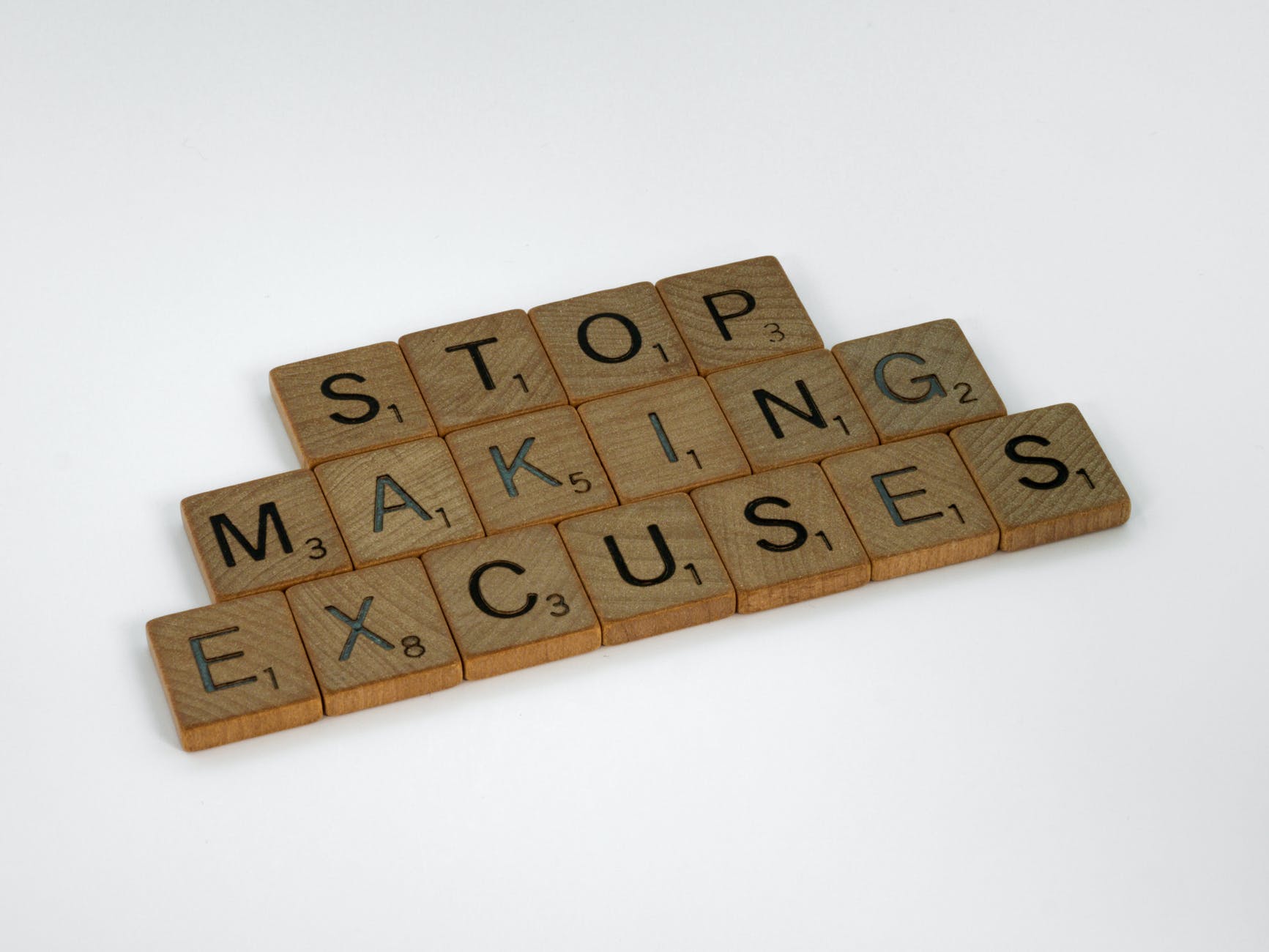
No Excuses

Photo by Brett Jordan on Pexels.com

I have had many students who foolishly engaged in bad behaviors that could not be overlooked. One of my favorite young men disappointed me greatly when I learned that he had been stealing from other students and from the school. The revelation of his crimes came just after Christmas one year when another student came to ask me for help in finding a phone that he had received as a gift during the holidays. It had been quite an expense for his parents so he was notably upset that he had lost it so soon. 

I addressed the other students about the issue and urged them to help find the missing phone. I tended to believe that the owner had simply left it somewhere. I was not quick to think that somebody had stolen it, but I would soon be proven wrong. The brother of the student whom I liked so very much, brought the phone to me asking that I not delve into determining where it had been. His nervous behavior made me suspicious, and as I pushed him to provide me with more details I learned that he had seen it in his sibling’s room. Further investigation revealed that the phone was only one item of many that had been stolen over time. I almost cried as I told the principal of the school what I had learned because I knew that the student in whom I had put so much faith had let us all down and would have to face the consequences. 

I vividly remember sitting with the student turned thief while we both waited for his mother to come to the school for an investigation into how deep his crimes had been. He was crying in fear of what was to come while I sat silently. Eventually he blurted out that he knew that I now hated him in a voice that sounded like a wounded animal. I was able to truthfully tell him that I would never hate him, but that I genuinely hated the actions he had chosen to take in stealing repeatedly. I was willing to forgive his transgressions, but not to excuse them. 

I fear that in our society we too often mix up the concepts of forgiveness versus making excuses for bad behaviors. We let people off the hook when they have been hurtful or dishonest by mouthing excuses for what they have done. If we love a sinner, we hold them responsible for their actions because of that love. 

For several years I worked in a school whose mantra was “No Excuses.” I learned that even that idea was somewhat flawed because the reality of life is that there are indeed situations that are not so clearly black and white. A student whose parent died certainly had a valid excuse for not being up to par. A teacher who had a wreck on the way to work needed to be excused for being late. In fact we have all had moments when we let someone down because of overwhelming circumstances in our daily lives. 

The idea of having no excuses actually applies to long term use of rationalizations of bad traits. An unwillingness to change or work hard or do penance simply because of bad breaks does not give someone a get out of jail free card. Sadly our society today sometimes gives the impression that with enough influence even egregious deeds are justified.

We have glorified bullying, violence, even treason and explained it away by twisting common sense in many, many cases. If we like someone we too often look away when they do wrong and explain away their misdeeds by insisting that everyone is doing such things or that the person was pushed into the situation by circumstances. We make too many weak excuses for behavior that everyone knows is bad. 

There is an unevenness in our sense of justice these days. Little wonder that young people are sometimes confused. They see a kind of hypocrisy in how we defend some and deride others. The inconsistency of our reactions to different people’s infractions makes it difficult to teach children the lessons of being responsible for their actions. They misinterpret our excuses for obviously egregious actions as permission to push the envelope of right and wrong. 

Our children are watching us support violence from one group of people but not another. They hear us excusing untrue or insulting comments as long as they align with our own desires. We seem to have tossed our metrics for accountability aside in favor of cult-like support regardless of the situation. No society can survive in such an environment. We have to be clear that there really are red lines that nobody should cross no matter how much we love them. 

I still love my student who stole from others. He paid a heavy price for his indiscretions. In the end he did not attempt to make excuses for what he had done. He learned the important lessons that he needed in order to find a place in the adult world. He is doing well today because the adults around him cared enough to insist that he understand the wrongness behavior. They crafted a fair punishment for him while also reminding him that forgiveness was part of the ultimate equation. We would all be better served if we quit making excuses and learned how to lovingly hold people accountable when they stumble and fall. It’s time that we demonstrate fairness rather than hypocrisy. Some actions and some people do not deserve our excuses. Some should have our honor and support because they are doing what is right. We must stop judging situations or people with our own prejudices. The children are watching what we do.