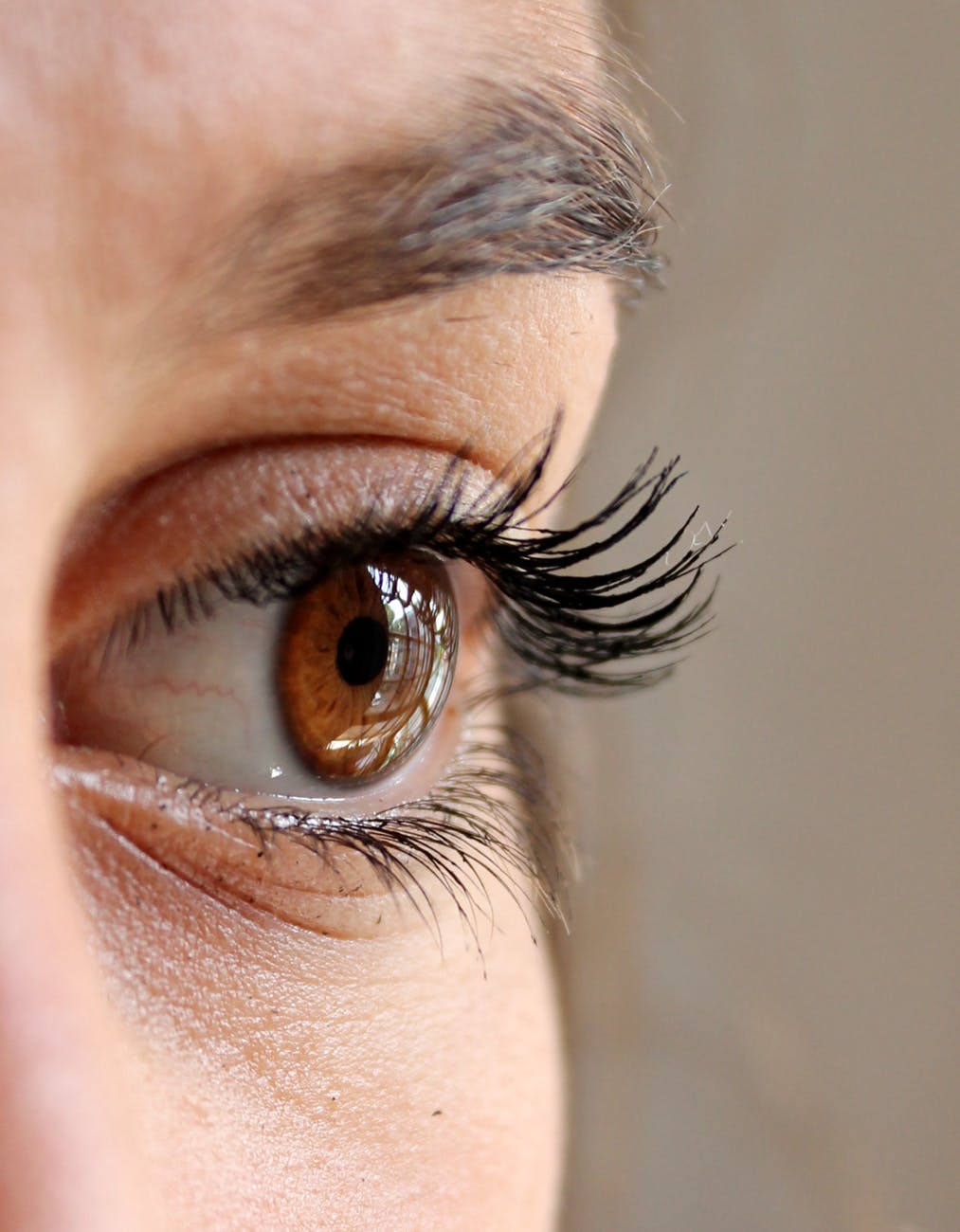
The Windows of Our Souls

Photo by Pixabay on Pexels.com

I always loved the first day of school. Everything was shiny and new and exciting in that moment. The students arrived with never before worn shoes and backpacks filled with sharp pencils and blank sheets of paper. The teachers mostly had rested looks on their faces as they modeled their outfits just purchased for the occasion and strutted their optimism about the coming academic year. It was a new beginning when everyone was hopeful  and determined to be the best versions of themselves. All of us were ready to begin anew. 

I usually gave my students assigned seats from the very start. The chart I had made allowed me to learn their names quickly and put faces on the souls who would be in my care for the next many months. As we did “get acquainted” activities I studied the body language and responses of the youngsters with whom I would share most of my daytime hours. In particular I looked at their faces and learned much about them from their eyes, the windows to how they were doing and what they were thinking. 

I saw shy and worried stares as well as the twinkle of mischievousness as I gazed at each student sitting before me. Sometimes I noted a detached and sorrowful look as though all of the joy had somehow been beaten out of a soul. I witnessed eager attentiveness and brilliant curiosity in those eyes. I worried about the angry and mistrusting eyes telling me that I would have to prove my mettle with my kindness and trust. In only a few minutes I already had some idea of the fears and hopes of my students just by watching their eyes. 

It’s difficult for someone to hide how he/she is feeling. Our eyes tell so many stories, especially when we are still young and have not perfected techniques of hiding truth. Our eyes tell all the world when we are tired or rested, happy or sad, honest or lying. They are windows into who we are and how our many moods unfold. If we become aware of the signals that a person’s eyes are sending us we begin to know when we have made them feel good and when we have hurt them. The cues from the eyes tell us what is happening inside a person’s heart moment by moment. 

Of course as we mature many among us learn how to be great actors. Some perfect the art of forcing their eyes to convey meanings that are not real. They become able to fool everyone by hiding how they are actually thinking or feeling. We don’t see that they are depressed or angry or even lying. We are surprised when we learn the truth about them, sometimes even disappointed. Most of us, on the other hand, are open books. We are so guileless that our eyes give away our thoughts and our feelings. 

There is nothing quite like the look of betrayal in the eyes. They seem almost dead as though the acts that surprised and wounded them temporarily snuffed out the very life in the eyes. When I saw such looks as an educator it was heartbreaking. It was the look of a young girl who had been impregnated by her uncle and then told by her parents to keep quiet. It was the look of a young man whose abusive father had convinced him that he was weird and unlovable. It was the expression of a colleague who had found out that her husband was involved in an illicit affair. Something dies inside people when they learn that they have been deceived or abused  by people who should have been loyal and loving. It is the worst expression that I have ever seen.

I should not judge people by the looks in their eyes but I find that a careful analysis of how they appear gives me clues as to what they are really thinking rather than what they are saying or doing. I’ve heard stories of doctors using the eyes to detect unseen diseases long before they become chronic or deadly. My ophthalmologist was able to note things about my health that were uncannily true just by examining my eyes. 

I cannot imagine life without eyesight. It is the one sense that means the most to me. Perhaps because I am a visual learner I more acutely feel the importance of my eyes in navigating through life. Maybe it is because I watched my grandmother become almost blind in her last years. It was difficult to see her being unable to cook without noticing that the milk she used was curdled or that she had somehow made food that contained shards of glass. Nothing made her happier than watching us devouring her delicious meals, so having to eat with great discretion was a sorrowful task for all of us. Her once brilliant and dancing blue eyes became clouded with sadness and worry but somehow they also conveyed her undying love for us. 

My mother used to chide me for staring at people. She did not understand that I was observing them and especially looking at their eyes. I suppose my lengthy studies of them may have seemed invasive, but my only intent was to get to know them and understand them. Their eyes were the windows through which I needed to peer. 

I love the eyes of infants. When they are healthy and loved they gleam with innocence and joy. They are utterly delightful. Sadly the world sometimes wears them down. By the time I would see them in my classroom many of them had experienced grievous atrocities. Theirs were the eyes I most needed to understand. They begged me to help them. I did my best to intercede but knew that I had not always been successful. Nonetheless when their eyes began to smile I knew I had done my job. 

I can still see those thousands of eyes. They both comfort and taunt me. I wish I might see them now to confirm that most of them are okay. All I would need is one look to know. Their eyes would tell their stories just as they always have.

A Wonderful Way of Being Beautiful

Photo by Andrea Piacquadio on Pexels.com

There was a time when, like many teens and young adults, I felt self-conscious about my appearance. One of my cousins had noted that many of us shared a family trait of having a weak chin. Another had pointed out my very fine hair hair that seemed never to hold a style. I was also likened to Popeye’s girlfriend, Olive Oil, for being starkly thin. I viewed physical defects as a mess and felt uncomfortable in public because of my hangups about my appearance. .

My mother encouraged me to forget about myself, noting that people rarely think about how someone looks, but always consider how one behaves. She insisted that I should be more concerned about treating people with interest and kindness than worrying incessantly about a few flaws that nobody would even notice. While I did my best to follow her advice I did not really understand how profoundly correct she had been until I was in my mid-twenties. That is when I finally began to develop confidence and to feel good about myself. 

Looking back at photos of teenage me, I see a quite pretty but very shy young girl. My features went together quite nicely and all I really needed was a bigger smile to light up my eyes and be a more inviting person. My thinness made it possible to wear virtually any style and look quite lovely. In fact, I would welcome a lithe frame like that now that I have added the pounds that come from living an enjoyable life. 

I still fret over my hair, but only because it is so difficult to maintain. I admit to envying anyone who can just pull their luxurious hair into a ponytail or a bun. Mine flies away like corn silk and refuses to do as I try to instruct it to do. Nonetheless, I have learned to work with it just as it is and move on to more important issues like caring for the people around me. 

My chin is indeed almost nonexistent. I’ve learned that full faced photos flatter me the most and I have one side that is definitely better that others. At this point I would probably look very strange if I were to suddenly purchase a better chin from a plastic surgeon. I find that very few people actually look better after going under a knife in the hopes of improving things. I mostly never even think about that tiny familial trait that one of my brothers hides nicely behind a lovely beard. It has become a matter of very little consequence to me. 

I’m one of those slow learners who realizes more clearly with each passing year just how wise my mother always was. She maintained that attractiveness had little or nothing to do with actual physical aspects. She noted that some of the most beautiful women in the world were acutely aware of flaws that nobody else ever noticed. She insisted that the rarest beauties were the ones who had the most loving hearts. 

We had a neighbor whom my mother almost revered. Her name was Rose Marie and she was the mother of five children. Her home was often chaotic and messy but the love inside was palpable. Rose Marie was a bit chubby after birthing five babies but somehow she did not come across as being overweight. It was her cherubic face that drew all of the attention. She had stunningly beautiful features, most especially because of her warm smile and her eyes that literally seemed to twinkle. She sported a think mane of dark black hair that she usually just wound into a knot at the back of her head. When she spoke it was as though her countenance was lit by an ethereal light. Her generosity was well known and admired by everyone who knew her. Her beauty was indeed enhanced by her personality. 

I suppose that we have all also known someone who might have been thought to be homely but for the loveliness of his/her generous spirit. I have met many women who had enough confidence to laugh off their flaws and approach the world stage with not just confidence but love and concern for the people around them. Few would instantly think of Mother Teresa as a beauty and yet hers is one of the loveliest faces I can imagine. Likewise, Eleanor Roosevelt was taunted as a child for her lack of feminine pulchritude, but her courageous spirit in pursuit of justice for all people radiated from her face hiding any flaws that may have been there. She was beloved by the American people because she had proven that she really cared for them, not because she was a gorgeous First Lady. 

As a young child I watched a television program called Father Knows Best. In my own case it was my mother who possessed the wisdom that I needed. She taught me to put myself together and then go out into the world without thinking about how I might look. Instead I followed her lead and worried more about how people were feeling. Most of the time it felt good to be that way. 

We live in an often superficial world that has a tendency to make young people feel self-conscious about themselves. We see individuals becoming successful with little more to offer than good looks. We learn soon enough that they often suffer because they never learned the importance of spending time just living and laughing rather than chasing after physical attractiveness. When the bloom of their beauty fades they feel as though they have nothing to offer. My mother showed me that real beauty is way more than skin deep. 

Princess Diana was beloved not as much because she was a beautiful woman, but because she exuded warmth for every person she met regardless of their social class or circumstances. Audrey Hepburn was gorgeous until the day she died, but it was her work as a benefactor that made even her wrinkles and greying hair disappear from our gaze. We all have flaws but the worst of these is a closed and selfish heart. Anyone can be beautiful simply by forgetting about themselves and concentrating on all of the people they encounter. It is a wonderful way of being beautiful.  

Do You Hear What I Hear?

Photo by Andrea Piacquadio on Pexels.com

My mother and I used to have conversations that only other women were able to understand. We left out words and whole sentences but knew exactly what the other was saying. My husband would scratch his head wondering if we were using some kind of code to communicate. It was difficult to explain to him that we were using woman speak from a language that we had perfected since I was a small child. In fact, my daughters and I have the same ability to talk to one another with a paucity of words. 

My husband and I have perfected a way of predicting the future utterances of each other. It is not unusual at all for us to complete sentences. It is as though each of us is living in the other’s head. After fifty years of marriage we really do understand the other’s thinking, but once in awhile I confound him with ideas that don’t make sense to him at all. 

It is often suggested that men and women have very different ways of communicating. In fact, there have been entire books written on the subject. In schools it is almost humorous to watch students in action. The girls tend to be attentive and focused while the boys seem to have trouble sitting still long enough to grasp concepts. All of these things affect the ways in which we speak to and respond to one another. 

I am totally a visual learner. I have to see things, read printed matter, take notes in order to comprehend a concept. My husband is an auditory learner. He can simply listen and be able to understand and remember what he has heard. Then there are those who need to touch and feel and interact to really grasp ideas. I suppose that I have a bit of that in me as well because I always studied while pacing back and forth. I was never able to just sit quietly in a library attempting to memorize facts. Without movement it was as though my brain was not working. Sometimes I even combined all three learning styles by walking back and forth in my room reading information out loud so that I might remember it for a test. I performed this ritual while preparing for exams on extremely difficult topics. 

I’ve learned the hard way that written communication can be totally misunderstood, regardless of how clearly I think my ideas are being expressed. Without the presence of vocal and facial cues people may misread a sentence or a comment . I have literally lost friends or angered family when I was not present to note their confusion and instantly clarify the intent of my remarks. Once feelings are hurt it is like picking up all of the feathers that have flown out of a down pillow. A kind of resentment remains and no apology seems to be sufficient. Our facial expressions and body language cues really do matter for the purpose of clarity. 

In today’s environment we would all do well to be more attuned to our communication skills because we seem to be talking over each other. Really understanding requires active listening. Our interactions should not be a debate in which we are constantly planning our next argument. Instead, it is always nice to attempt to understand why the other person is saying certain things. Suspending judgement can be difficult, but it is also the beginning of honest discourse. 

I hear a great deal of group speak these days. It’s lazy to categorize someone’s comments without finding out how they reached their conclusions. We’ve got some very bad habits of calling MAGA folk racists and fascists and Democrats communists and haters. The truth is that very few people fit into a neat mold. When we actually attempt to communicate with one another we begin to hear their voices and understand their histories and their needs. Using canned talking points de-legitimizes our individual personalities. 

We are products of our genetic structures, the environments in which we grew into adults, our educations, our experiences, our jobs. and so many other factors. Thinking and speaking and acting differently is a good thing that should be celebrated, but all too often divides us into camps. Really listening before talking is critical to the smooth functioning of our society. We seem to have lost the ability to appreciate the variety of our thoughts and dreams. 

The first step in reuniting should always be in finding our common ground for communicating. It requires practice to learn the ways in which people express themselves. If we take the time to understand who they are and where they are coming from we can lower our voices and sometimes even just sit together saying nothing. If we don’t make an effort to really hear the other person our conversations become little more than blathering. Take a deep breath and begin the process of really attempting to understand even the unfathomable conversations. It is a good step toward real communication. 

What Is This Thing Called Love?

Photo by Kampus Production on Pexels.com

I often think of one of my neighbors who spent years caring for her wheelchair bound mother-in-law. My friend was a model of patience and kindness, tied to her house unless someone came to relieve her of her duties of watching over her very ill guest. She once asked me to stay with her mother-in-law for a very short time. It was not an easy task. The old lady was anxious and angry and let it be known that she did not like the idea that I was substituting for her long-suffering daughter-in-law. I found myself glancing often at my watch and hoping that I would soon be free to leave. I felt quite guilty as I thought of my neighbor doing this every single day for years, always with a saintly smile. Not once did I ever hear her utter a complaint. She was a model of love. 

I have known many such souls who literally dedicated years to the care of a family member and did so with the most amazing calm. They certainly encountered frustrations and became weary, but somehow they were driven by a sense of great devotion. Regardless of how many years of their lives passed as they sacrificed the kind of freedoms that most of us enjoy, they shouldered their responsibilities with grace and inspiring determination. There really is no greater love than this. 

We bandy about phrases like “true love,” but all too often when real life rears its head the relationships built on fantasies fall apart. It is in the toughest of times that we find our real friends and soulmates. These are the persons who are willing to walk through fire with us and more often that not, they are rare. 

A friend from high school recently celebrated her wedding anniversary. She spoke of meeting her husband and falling in love with him. God was at the center of their relationship. Little did they know when they pledged their fealty to each other that she would encounter multiple health problems in the ensuing years. Their fun together was sorely tested in those times but her husband proved to be the real deal. He cared for her with great love and patience. They found joy in the small victories over her illnesses. They understood their calling to honor one another in both sickness and health. 

Love can certainly be passionate but it is so much more than just a physical attraction to someone. Its greatest moments are found in the times when life throws challenges our way. Things all too often fall apart if the connections between people are only skin deep. The man who lovingly watches over his brain injured wife for decades is the incarnation of love. The woman who patiently nurtures her husband with dementia is a treasure. Such people are rare angels in our midst who tirelessly give of themselves in the truest sense of love. 

Philosophers and theologians speak of love. The Christian faith looks to Jesus to demonstrate what love is. He showed us that love is sacrifice for the sake of others, no matter how painful that may be. Love is the greatest gift that we might give to the people we encounter and we are told that it is always patient, never jealous. Love is also forgiving, a trait that can be very difficult to muster when someone hurts us. 

I have observed that true love requires effort. There is a give and take, an up and down to the flow of love. We often find love in the most unexpected places. Over and over again I have seen powerful examples of love that may have seemed quiet and unremarkable, but were in fact profound. My grandfather adored my grandmother and they enjoyed a life filled with fun and laughter. They were rocking along enjoying their dream of owning a farm when my grandmother was diagnosed with terminal cancer. The next many months were crushing for my grandfather as my grandmother slowly slipped away. 

They were both in their late eighties and there was no Medicare at the time. My grandfather watched his life savings dwindle until the money evaporated in a pile of medical bills. She spent her final months at home because no hospital would take her. My grandfather dutifully nursed her and never once complained even though he was drowning in debts from her illness. He loved and cherished her until she took her last breath and then he sold everything he had ever owned to pay off his bills. He would spend the next twenty years of his very long life speaking of the joy that she had brought him and wishing that they had been able to squeeze out a bit more time together. He often boasted that she had been his best buddy, a title that told of the deep friendship.that brought had brought so much joy into their days. 

Love is all around us but we often misrepresent it. It is not just between a man and a woman or a married couple. It is a deep relationships between two people who are willing to walk with one another through life’s sometimes fiery journey. It is a parent’s love for children. It is the love exchanged between friends. It is an adventure that can be as smooth as a sail on a quiet lake or as rocky as a hike up a steep mountain. Love is human, often imperfect, but always concerned with the well being of others. We know it when we see it, and it is a beautiful thing even in its more ordinary forms. It is what we all seek and dream of finding even as we know it must begin with each of us. It need not be reciprocated to be real, but when it is, the world becomes a better place for everyone.

Let There Be Peace On Earth

Photo by u0410u043bu0435u043au043au0435 u0411u043bu0430u0436u0438u043d on Pexels.com

My favorite high school English teacher sought to make us citizens of the world. He challenged us to leave the protective bubbles of our childhood and learn about the vast collage of diversity and ideas that encompasses the globe. He wanted us to realize that there is more to life than just the tiny plot of real estate where we were born and spent our childhoods. He introduced us to literary tracts and world views that we had never before imagined. In the process he helped us to understand that we are all part of a vast interdependent network of people and ideas that transcend the narrow limits that we sometimes place on ourselves. He was the first to challenge me to explore and think beyond the barriers of time and place. 

I may not have travelled to every part of the globe like my sister-in-law from Taiwan, but because of that teacher I was open to understanding and appreciating the cultural differences that she introduced to our family. I learned from her about an ancient culture that had often seemed so different from my own. I realized that while the two of us had grown up under very different circumstances and customs, we were literally more alike than different because of our universal human needs. 

We are not alone on this planet. While it might feel comforting to isolate ourselves from the continuing problems of the world, it is a fools game to believe that we can close our borders and simply enjoy our good fortune while ignoring what is happening in faraway places. The days of using the oceans to protect us from concerns about foreign affairs are long gone, and thank goodness for that. We are a country of people from many nations and while our allegiance is to our own, our interdependence with the rest of humanity is a given that we cannot ignore. 

The world is a gooey mess right now. People continue to get sick and die from a virus that has left so many families and nations devastated. The inevitable chain reaction of events stemming from the long years of sickness, lockdowns, loss of income and production has fallen down on all of us like a heavy hammer. People are warring with one another both literally and figuratively. Crime and mass shooting are on the rise. The people of the world are hurting and worried and even angry. It’s important that we try to understand that we are all on the rollercoaster of this crazy time together. Our goals should be to work as a worldwide team to help all people get past the traumas of the last few years. It will no doubt be a difficult time wrought with privations for some and sacrifices for others, but if we remain aware of not just our own little corner of the planet, but the needs of the entire world we will all make it through this dark and daunting time.

We never quite know if what we are doing from one moment to the next is the correct way of solving the multitude of problems that are stalking us. All we can ever expect is that sometimes our efforts will work and sometimes they will fall apart. We just have to keep unselfishly trying and hoping that we will find the answers to our questions before too many people are hurt. This will require us to open our hearts to suffering wherever it lives. It will no doubt mean that our lives may not feel normal for a time or that everything will forever change. If we are willing to set aside our politics and prejudices we can make it to happier days once again.

There is so much to be done. Complaining about the cost of gasoline is the least of our worries. We have to help those who are being crushed by the economics of the pandemic and war. We have to move beyond our own desires and realize that it may be a long time before we feel settled and secure. We are in for a long haul of Covid repercussions in the entire world. The sooner we accept that fact, the better we will handle the continuing difficulties that crop up. It’s well past time to quit the blame game and work together with all of the members of the family of humankind. 

Each of us is a microcosm of the universe in which we live. Our bodies are very much alike under the skin. Our minds differ in cultures and beliefs but in the dark of night when we are honest with ourselves we must know that our desires are rarely that different from those of people in far away lands. We all need safety and love and belonging and self-esteem and self-actualization no matter where we were born or where we now live. Here in the United States many of us have opportunities and privileges that allow us to reach the peak of living as comfortably much like the lords of old. It is our duty to spread our good fortune to those who are in dire need both near us and far away. 

I recall a time when I was at a baseball game with friends. The stadium was packed with fans. it was a standing room only crowd. One of my companions commented that if we just asked each person who was present to contribute one dollar, and we did that at every such venue across the world, we would be able to fund so many important causes without people even noticing the difference in their pocket books. I often think of his idea when I am paying twenty dollars to park and drinking a five dollar soda at such events. I realize that if those who are able, were to set aside one dollar each day of the year for worthy causes, the coffers for aide would always be full.

Maybe for now we need to all consider our individual places in the world and ask ourselves what more we can do and how we might come together rather than throwing darts and jabs at those whose ideas and ways of living differ from our own. While we quibble over the small stuff, the pain on the planet only grows. It’s time we rise up with all that has always been best about humanity and let there be peace on earth beginning with ourselves.