Silence Is Deadly

When I first moved to my present home in 2005 I was eager to meet my new neighbors, but I was still working and I had a great deal of work to do just unpacking things whenever I had a free moment. It was a couple of weeks before I saw the woman next door in her yard, so I walked over to introduce myself. She was quite friendly and invited me inside her home. 

After offering me something to drink she gave me a brief history of the neighborhood and the people in it. Then she took me on a tour of her house. When we got upstairs I saw a teenager sitting on his bed literally caressing an AR-15 as though it was a beloved pet. I suppose his mother noticed my confused expression because she quickly laughed and explained that it was her son’s birthday and the gun was his present. She went on to tell me that he had wanted the weapon for some time, but she and her family had decided to wait until they felt he was old enough to use it properly. I stood mutely attempting to think of a way to leave quickly and feeling a strange sick sensation upon seeing the boy so enchanted with his new toy. 

Not long after that the people next door put a for sale sign in their front yard and I have to admit that I was elated that they were leaving. My teacher radar had gone into overdrive after seeing the young man so enchanted with his powerful gun. Somehow I felt less safe knowing he was so close to my home. 

My husband was a target shooter for a time. He has guns that he inherited from his grandfather and uncles, historical pieces that they once used for hunting. He has never taken to the sport of killing animals, but he liked target shooting and often went to a local range where he actually entered contests and won several awards for his precision. That’s about the extent of his relationship with guns. 

He told me that the rules at the range regarding AR-15s were quite strict. Anyone bringing one to practice had to keep it encased until actually at the stall and nobody could have more than one round of ammunition in the gun. It had to be loaded with a single bullet for each shot. The owners of the range were well known and highly respected for their adherence to safety and for the most part they discouraged customers with the high powered rifles from coming to their place of business. 

My husband knows a great deal about guns and he has often told me that the rationale for owning an AR-15 eludes him. He pointed out that it is generally a terrible weapon for hunters because of the severe damage that it does to the organs of the animals. He finds it ludicrous that anyone aside from soldiers and police officers would ever own one, especially a teenager. He has long insisted that these weapons should not be available to the general public. He points out that when the Founding Fathers inserted the second Amendment  as an addition to the Constitution there was still not a powerful army in the United States as there were in Great Britain. Every man was part of the nation’s defense as members of the militia, Their weapons were single shot muskets. He doubts seriously that the Founders envisioned a nation of three hundred million people owning four hundred million guns, some of which are so powerful that they can do irreparable harm in a matter of seconds. As a responsible and reasonable gun owner he believes that AR-15s should be banned. 

Those who own such weapons defend their right to own them insisting that the second amendment favors them. In surveys they provide reasons for owning such a weapon to include protecting themselves, for hunting, for target shooting, and because they are fun and easy to shoot. They assert their rights to any kind of gun in the context of the second  amendment. They are such a powerful lobbying group that even when law officers insist that there is danger in having such weapons in the hands of ordinary citizens, the common sense of such arguments is generally ignored. 

In our hearts we all know that there are many reasons that mass shooters continue to wreak terror in our country. Certainly mental illness is a huge factor, but we never really do much to improve the care of those who are sick. We can turn our schools into fortresses and arm ourselves to the teeth, but in the end we know that it is the easy availability of high powered guns that is at the heart of the problem. Other countries with stricter gun laws are not seeing the carnage at the same rate that we have in the United States. 

We claim to be concerned about our children, even those that are unborn, but we have yet to adequately protect them. Arming ourselves to the teeth is not the way to insure a more stable society. Our schools should not have to become armed fortresses. We should not be teaching our children that selfishly clinging to our guns is some kind of human right. Those of us who understand such things have to speak out, make our voices heard. Violence only creates more violence. 

We have lawmakers shielding our children from books about Ruby Bridges and segregation because reading them might make them feel bad. They go to great lengths to protect the unborn, but balk at strict measures to control the sale and use of dangerous weapons. In my state people don’t need a permit or any kind of training to walk around carrying a gun in public. How are we supposed to know the good guys from the bad ones if we see someone with a pistol in full view while we shop for groceries? The absurdity of the situation needs no words.

I don’t want to have to rant about the deaths of innocent people anymore, but I believe that silence from those of us who want gun reform is deadly. I am tired of platitudes and promises and more and more fortification of public spaces and homes. I find the American fetish for guns to be disturbing. When I see Christmas cards with little children holding guns while standing next to a holiday tree I literally want to cry and scream at the same time. I wonder when we became so selfish and uncaring that we have created such a dangerous situation. I do think of those who have been harmed and I pray for them and for our country all of the time. I know that I must do more. I will continue to speak out until we finally come to our senses. I don’t know when that will be. I hope I live to see that day.

Words Matter

Photo by Suzy Hazelwood on Pexels.com

I grew up in the south where addressing adults with “sir” and “ma’m” was the polite thing to do. I was an obedient child so I always followed that rule, but my feisty mother told us that she had never done so. Her father had told his children that he did not come to America to be compelled to defer to anyone with titles that made him feel subservient. He advised them to forgo what he saw as demeaning acquiescence to others. Mama left it to us to determine whether or not we would follow the local protocols, but insisted that she would support us no matter what we decided to do. I took the less complicated route of not bucking the system, but I understood why my grandfather had felt compelled to exercise his new freedoms.

I have talked about this with my husband who relayed a similar story about his grandfather. It seems that his grandpa had refused to respond to one of his teachers with the addition of the word “ma’m.” For his impertinence he received corporal punishment. When the young fellow’s mother heard what had happened she rushed to the school and gave the teacher a couple of licks with her buggy whip. The story of that moment became a legend in the family that spoke to the kind of negative response that supposedly polite words can engender. 

I’ve heard of immigrants from England who told their offspring that nobody was a servant anymore and therefore nobody had to use those kind of salutations. For many people “sir” and “ma’m” feel like holdovers from times of slavery, indentured servitude and demeaning occupations. Because I’ve had a good life I’ve never felt offended by having to use such language, but I have seen the hurt in the eyes of those who had at one time felt trapped by people with power over them who expected to be treated as superiors rather than equal humans. 

Recently I read an editorial considering the linguistic meaning of addressing someone as “ma’m.” I learned that in many regions of the United States it has become passé to use such titles and doing so is actually insulting. It reminded me of a friend’s son who was chastised by a teacher who thought that the boy was making fun of her by using that salutation. In truth he had only recently moved to California from Texas where such a way of addressing any woman was expected. He had no idea that he sounded insulting to the harried teacher. 

I studied linguistics in college and it is quite fascinating. We are all products of the places, the people and the events that we have encountered in life. Something as seemingly simple as a word can have multiple meanings depending on the experiences of those that we encounter. If I am a teacher in charge of a classroom I find no offense from a student calling me “Ma’m.” If someone close to may age uses the same word I feel a bit put off as I wonder if I actually look older to that person. Situational linguistics is quite fascinating. There really is a time and place for all forms of communication. We would do well to be careful in how we address people that we do not know. Without walking in their shoes we may not fully understand their reactions to what we have to say. 

While visiting London we of course used the Tube to get around town. Most of the time we easily found seats but one morning we left our hotel during rush hour. We were crammed into the car like sardines. Suddenly a man looked over and innocently said, “May I give you my seat, Mum?” 

For a split second I felt a bit angry. It crossed my mind that he somehow thought that I was so old and weak that I could not stand like everyone else. While I mused my expression must have been all too clear because he suddenly looked away with embarrassment. He somehow got the message that I had felt insulted by his offer of a seat. I realized then that he had only been attempting to be kind and that I had been the offender in the situation. Within a split second I smiled and thanked him profusely for the generous offer. We switched places and I enjoyed a comfortable ride to my destination. 

I would soon learn that being called “Mum” in London was a very respectful thing. I began to take the salutation as an honor., especially after I heard that the people called Queen Elizabeth, “Ma’m,” a way of addressing exclusive to her. “Mum” was for all other women who had reached a time of honor and reverence. In the smiles and warmth of the people who called me “Mum” I saw that they wanted to be kind to me.

Language is important. When we offend someone with how we address them it is most often because of something in their background that felt hurtful. We should be willing to accommodate them with the freedom to avoid certain words that make them feel unseen or misunderstood. We also need to be willing to realize that words that offend us may not be spoken in the ways we think they are. Sometimes it’s just a matter of taking the time to analyze the situation. Our words matter and so do our responses to them. 

Never Again

Two people marry and probably do indeed believe that their union will be until death parts them. Along the way things change. The two people themselves change. They become divided in ways that are painful. Living together becomes a continuing battle that makes them miserable. They realize that the only way of keeping peace is to end the union, to file for divorce. 

Such happens all of the time. Often it is not really anyone’s fault that things fell apart. At other times one of the partners in the marriage contract has abused the good graces of the other too many times. The lying, cheating or abusing becomes too much to bear and the divisions splinter all hope of reconciliation. 

It has been suggested that the precious union of fifty states in our United States of America is not longer working. Our political relationships seem to be as toxic as a marriage gone bad. The polarization of red states and blue states appears to be in a deadlock, a battle for ascendency of one over the other. Using a toxic marriage as an analogy a Congresswoman has suggested that it is time for a divorce, a split between the differing political ideologies. It’s a solution that has crossed the minds of many Americans even from the earliest beginnings of the United States. 

The Continental Congress charged with writing our nation’s first Constitution haggled over how to balance the role of government and the individual states. It argued over how to provide fair representation. Ultimately the compromise was to create a House of Representatives based on population inside a state and a Senate in which all states had an equal voice regardless of how many people lived in them. The quest to adequately represent the unique needs of a particular state was as controversial then as it is now. 

James Madison argued that attempting to label a region, a state, a city or even a family as being of a single philosophical bent was absurd. Human nature defies the idea that everyone in Texas, for example, is a proponent of Republican views. In fact an analysis of voting patterns in Texas indicates that most of its cities lean toward Democrats. Deeper data analysis shows that even neighborhoods are home to people with an astounding variety of political leanings. The very idea that any place is all in for a certain way of governing is absurd. 

Therein lies the reason that my southern born great grandfather joined the Union army during the infamous Civil War. He no doubt fought some of his neighbors and relatives in that unfortunate and misguided conflict. If such a dissolution of the Union were to occur today there would be countless people displaced from their homes because of the assumption that everyone within the borders of a particular state represents a single way of thinking. 

When I consider my own extended family I have to laugh. We can sit around a dinner table discussing our discordant political ideas and still love each other. We seem to represent a divergence of thought that is actually exciting to hear. I can’t think of anything more horrific than being trapped in a echo chamber of like-minded thoughts. Instead of stubbornly choosing sides and threatening to abandon each other, we actually enjoy the exercise of considering new points of view. We try to hear arguments with respect even when they are quite far from the ways that we think are right. We ask questions, listen carefully and in the end draw our own conclusions without rancor. We understand that there has never been a time in history when every single individual was of the same mind. Being so would indicate a lack of thinking, a cult like allegiance to an unchanging way of doing things. Progress would be at a standstill in an environment like that. 

While those men who wrote our Constitution sometimes threatened to leave the decision making body, they ultimately compromised in an effort to keep the Union intact. They understood that breaking it in to tiny parts would only lead to bigger disagreements and maybe even wars later. Instead of dissolving their relationships as tenuous as they sometimes were, they sought to keep the Union for which they had fought so hard in the American Revolution. They understood the importance of recognizing differences as legitimate and necessary components of a democracy. Disagreements will always be present in the human landscape. We will rarely reach of point of one hundred percent agreement on any topic. Thus we have used the idea of majority rule within our various states for over two centuries. 

I may live in Texas, but I am free to be as blue as I wish to be. It is frustrating that my vote often ends up being negated by majority rule and the assignment of Congressional districts, but I have much vested interest in living here. I’m too old to consider trekking to a blue state where I might actually end up living next to neighbors more red than the ones I now have. I aim to stay and keep voting my way in the hopes to one day make the changes that I desire. I won’t be running away from the place and the people that I love even if they totally disagree with me. That is not what relationships inside the various states should be about. Instead we should be thinking about how to come together as the good people that we know we are. 

My great grandfather ended up fighting for the winning side in the ill fated Civil War, but according to my grandmother he never got over the horrors and privations of that terrible conflict. It should never have happened then and it would behoove all of us to understand that it should never to happen again.

A Good and A Bad Day All At Once

Photo by Pixabay on Pexels.com

A broken machine lead me to spend a day of people watching. I had accompanied my husband to the Methodist Hospital Outpatient Clinic where he was scheduled to undergo a one hour screening to determine what, if any, changes have occurred in his heart since his surgery three years ago.

 I had settled into the waiting area with my laptop and my phone ready to entertain myself. I was already thinking about where we might go for lunch and what we might do for a bit of fun afterward. Then came a text from my husband indicating that there might be a brief delay because the PET scanner was not functioning properly. I purchased a cup of chai tea from the Starbucks in the lobby and wrote a first birthday letter to one of my newest nephews to fill the extended time. 

After I had finished that rather delightful task of writing to my nephew I found myself looking around the cavernous room at all of the people coming and going. I wavered between feelings of sadness and joy as the parade of people of every possible age and race passed before me. On the one had it was distressing to realize how many individuals were dealing with health issues. On the other hand I thought of how wonderful it was that they had a great place like Methodist Hospital to come to for help. 

All but a small minority of those walking back and forth wore masks, a holdover from the pandemic. Signs indicated that the face coverings were mandatory but some rebels boldly disobeyed. I had mixed feelings about their recalcitrance as well since so many of the people who were there appeared to be elderly or suffering from severe health problems. I wondered how it was possible to ignore the needs of others.

The passing parade featured couples walking together, one with a worried look and the other appearing to be quite frail. Again a mixture of thoughts and emotions overtook me. I witnessed love but also a tinge of sorrow in each tiny group that I saw. On such a beautiful day it seemed quite sad for anyone to be cooped up inside and yet there we all were. We shared both the hopes and the concerns that such places engender. 

There was a kind of bipolar feel to the experience as the strains of a lovely pianist and vocalist wafted over our senses in an effort to tame any nervousness that we might be feeling. My fascination with the humanity of it all made me want to linger, but my empathy was leading me into sorrowful places. I soon enough hoped that I would be leaving shortly, a dream that was dashed when my husband told me that the technicians had not been able to get the machine working again. He would have to wait for a screening in another part of the hospital. His test would be delayed about three hours. 

My husband came to meet me in the waiting area looking annoyed and frazzled. He had fasted during the morning but the technicians told him that he would have time to get some lunch so off we went in search of sustenance. We became one of those couples like the ones I had been watching. I was hovering and he was mostly silent. I suspected that a lack of caffeine that was mandated by the test was the major source of his irritation. His back hurt and the thought of just sitting around in anticipation was not making the day go better. We decided to take a walk outside to grab at least a bit of the splendor of the day. Unfortunately being aimless for a time did not go very well for either of us, so we gave up and went back inside. It had become apparent that it was going to be a long day of waiting, so we attempted to make the best of our situation. 

By the time my husband finally began the screening it was quite late in the day. To the credit of Methodist Hospital everyone was bending over backwards to accommodate both of us. The crowds had thinned out so much that people watching was not a particularly fascinating option anymore. I now sat in a tiny room with only one other woman who quietly and without expression just stared at the wall across from her. I settled on surfing the Internet on my laptop but my thoughts about all of the activity within the walls of that huge hospital kept returning. I sensed that miracles were happening even as I sat doing nothing. I also understood that perhaps somewhere on another floor someone might be taking a last breath. Some families were hearing good news while others were saying goodbye to someone they loved. The irony of such a place crowded the thoughts in my brain. 

There was a time when I believed that I wanted to follow a career in medicine. I suppose that I might have been good at such an occupation but I am not so certain that I would have been able to endure the ups and downs associated with healthcare. At least as a teacher my focus was mostly linear, a progression of growth that was positive. The downside of being an educator was rare. My life in a classroom was generally happy and meaningful. Nurses and doctors seem to be on more of a rollercoaster. It takes a special person to experience that kind of changing emotions that can occur in a single day. 

As of this writing I don’t know what my husband’s scan will tell us, but I am grateful that he was able to get it done in the top hospital in our state. I wonder if during my long day someone was also watching me, wondering why I was there. Ours was an interesting gathering of diverse people with the common bond of hoping to find healing. Perhaps when all is said and done that is what the whole of life is all about, our sameness and not our differences. We walk through this life hoping with each day that the news will be good, the miracles will happen. If we are lucky we will find people willing to help us try to make those things happen. We would do well to remember to thank them more often than we criticize them. They seem to be in a world of good days and bad days all at once.

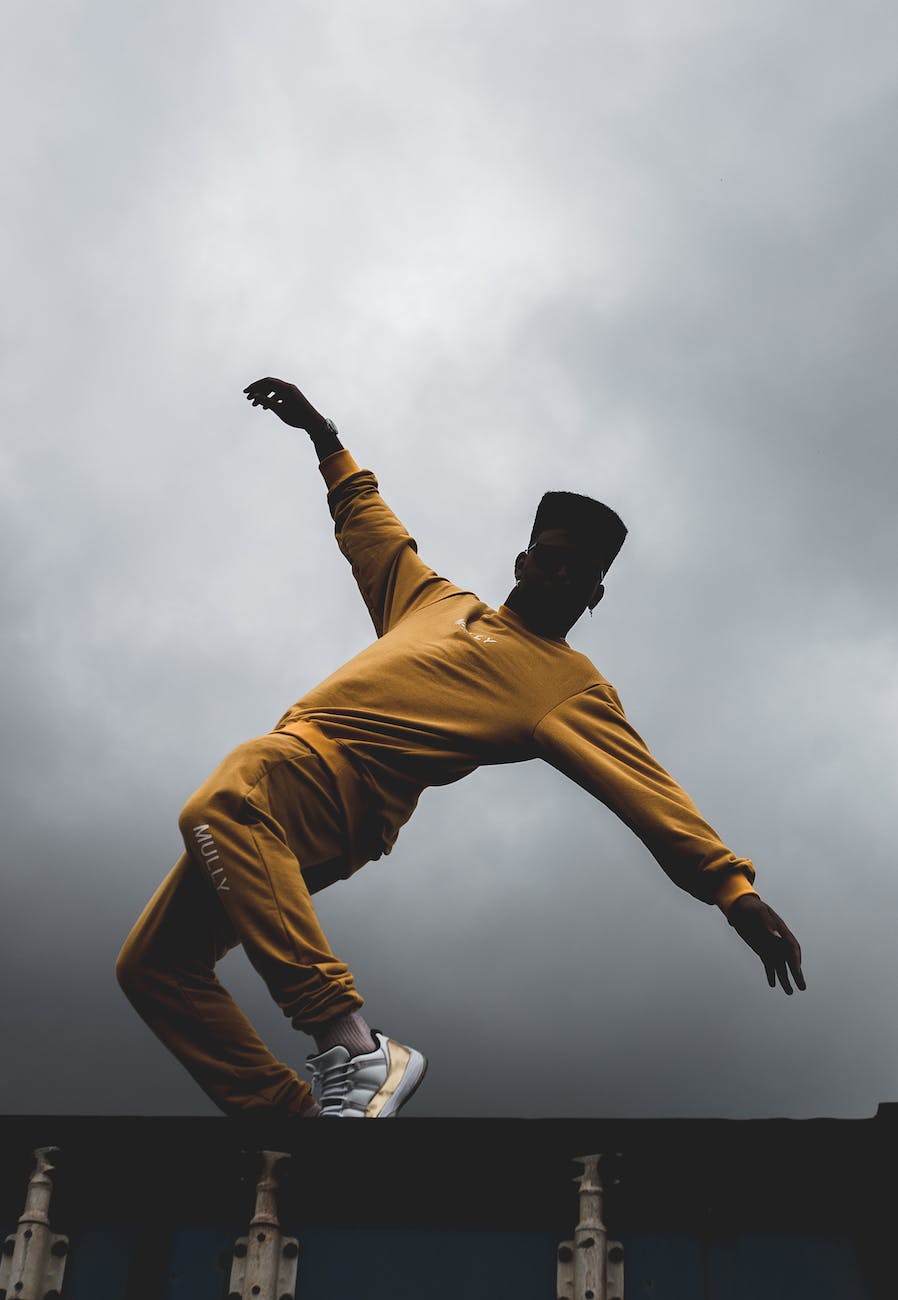
Just Keep Dancing

Photo by Wesley Davi on Pexels.com

A have a Facebook friend who entertains us daily with stories of her recent move to a farm. She particularly enjoys thrilling us with tales of the exploits of her chickens and their rooster, Batman. I get a kick out of reading her posts because they are so well written and upbeat. I truly believe that her daily updates on “Cluckingham Palace” are the stuff of a best selling book. She has a way of creating joy out of life’s ordinary irritations that sometimes make us fret. Today she posted a meme that spoke to me in a most personal way, “If you stumble, make it part of the dance.” That little quote sent me back to a memory that has stuck with me for decades. 

I had enrolled my five year old daughter in a dance class and she seemed to enjoy the experience of learning different steps and routines. She was an exceedingly shy little girl, but somehow when the music started she forgot her inhibitions. It delighted me to see her so happy and excited about an upcoming recital. She and her fellow dancers were learning to sing and dance to a song called “Tattletale Duck.” I had the task of putting together her costume by fashioning a little skirt out of yellow toile. Both of us worked hard in the days before the big show.

On the night of the recital my daughter looked adorable all decked out in yellow, complete with a feathery tuft pinned to her hair. The sweet little troupe of girls did indeed look like a flock of ducklings as they walked on stage and waited for the music to begin. After the first note they were as precious as can possibly be with their tiny voices chanting the little tune and their feet shuffling and turning out of unison more often than not. All eyes were on whichever little girl they had come to see. 

My daughter was perfection. A smile lit up her face as she danced with the precision of a Rockette. Then, just as the routine drew to a close, disaster struck. The fastener on her yellow tutu came apart and the skirt fell around her ankles. I was mortified that my seamstress skills had failed so miserably in the height of the moment. Nonetheless, without changing her enchanting expression or missing a beat, my girl gracefully stepped out of the circle of netting and completed the routine. When the music stopped and the girls began to exit the stage she bent down as though continuing the dance, picked up the fallen garment and then raised it into the air with a flourish and then a bow. The whole audience went wild with applause. 

That moment seemed to define the grit that my daughter would continue to exhibit in difficult times. Behind her quiet exterior was a strength that would come out whenever life hurled hardships her way. She continued to dance and charm audiences all the way through her high school years. She accepted challenges again and again, always finding ways to make her most difficult moments part of the dance. Even as she headed to college she was willing to stretch her mind with courses that pushed her beyond her comfort zone. Over the years she would face difficulties with the same determination and creative spirit that she demonstrated as a five year old dancer. 

Life is rarely easy for any of us, but some people appear to be more adept at creating joy out of even the most horrific circumstances. None among us have never stumbled and felt that horrible feeling of looking foolish. The greatest in our midst have a way of making those ghastly moments part of the dance. They smile through the hardships and gracefully keep in step. They understand that the choreography of life is not about a single moment but is instead an entire routine that continues right up to our final bows.

Happiness and sense of self confidence comes from somewhere deep inside our souls. Some of us can bring laughter from stories of chickens. Others dance their way through the ups and downs. None of us are immune to feeling as broken as the tutu that fell to my daughter’s ankles. Something snaps and we don’t feel that we have effectively done our jobs. That’s the moment when we choose whether to just lie on the ground defeated or become a flash of loveliness waving in the air, resurrected from the ashes. 

If you are feeling down or broken or defeated it may sound trite to suggest that you just keep dancing, but what else is there to do? Think of that little girl in her yellow leotard shuffling her way to the end of the routine. Sometimes it’s the best we can do.