Let Freedom Ring

Photo by Tima Miroshnichenko on Pexels.com

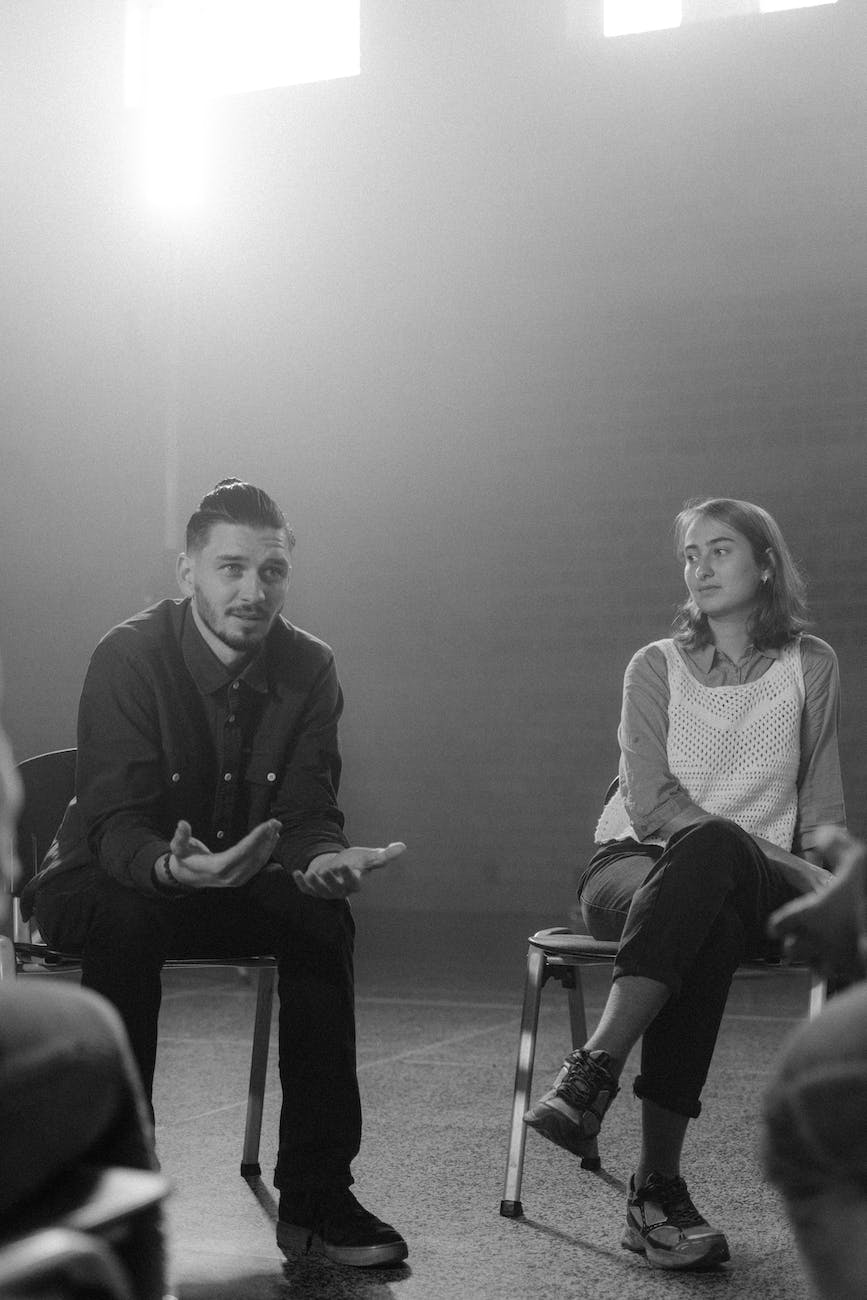
When my husband was in graduate school his professors often invited him and a select few of his classmates to discussions at their homes. He took me along as an observer and the experience was delightful. Sitting in a small circle among people with brilliant minds reminded me of the Parisian salons of great authors, artists, and philosophers who ultimately influenced the world with their creative inventions. 

I usually sat mutely listening to the parlay of ideas about society and history. I was like a child with a big bowl of delicious ice cream lapping up the collective knowledge that hurdled the conversations forward. Many times the more experienced professors served as foils for the graduate students, asking them difficult questions, challenging them to defend their positions with logic and facts. I reveled in being present for such a glorious confluence of ideas. 

I learned about the cultures of ancient societies and the ideologies of modern day political thinkers. The students and their professors debated the very structures of how we humans choose to live in different parts of the world. They discussed the good, the bad and ugly of society, often finding flaws in the most admired civilizations and glimmers of brilliance in those most feared. I began to realize from those intellectual soirées that we humans have been searching for the best way of living since the beginning of time. I saw that even my great American democracy was founded by colonial intellectuals who forged a Constitution based on their studies of other great thinkers about society. 

Like the students of those informal convocations that I attended there have always been groups of people focused on open dialogue about human efforts to forge a way of living that creates better opportunities. Because we are each individuals with differing needs and desires the odds are fairly certain that we will disagree on what an ideal way of living should be. Thus from Socrates to Jame Madison to Karl Marx humanity has debated the possibilities of  how best to live together. In all likelihood the discourse and disputes will continue until the end of time.

We should not fear controversial ideas. Nor should we want to study only a watered down propagandized form of history. The more truths that we know, the better we will be to make our own informed decisions about the issues that have plagued societies since the beginning of time.  Unraveling the red thread of civilization is sometimes smooth and sometimes knotty, but always essential. It may frustrate us to face ideas outside of our bubbles of comfort, but having an open mind actually makes us stronger. We don’t have to feel guilty about the transgressions of our ancestors, but we should all want to learn from them. If the founders of the United States of America had been unwilling to question the status quo we might still be members of the United Kingdom. 

I truly love the Advanced Placement courses that my grandchildren took while in high school. I enjoyed the lively conversations I had with them as they breathlessly told me about things they had learned. They widened their perspectives without being propagandized. They learned how to consider the pros and cons of a challenging situation. They had to see the world from many different perspectives. 

Now that they are in colleges in different parts of the country they are learning about new cultures, different American experiences. Their professors are challenging them the way my husband’s professors confronted his thinking and asked him to consider views beyond the narrow constrictions of his upbringing. They are growing and becoming the kind of citizens that the world needs for the future. They excite me with their evolution as they use their new found knowledge to parse ideas with deep analysis rather than emotion. 

We sometimes fear that if we or our young are exposed to philosophies contrary to our own that we will be filled with guilt and confusion. I have found the opposite to be true. We become better able to discern the difference between lies and truth. We develop confidence and trust in a society that allows us to see reality as it is, not just as we wish it to be. Nothing makes any of us more angry than learning that facts have been purposely hidden from us. While honesty might initially be painful, it ultimately makes us feel more self-assured. 

I wish I could find a group like the one I sat with so long ago. I always felt the essence of what it means to be free in those sessions. I cherished my citizenship most when I saw people saying shocking things and not being imprisoned or silenced. The mark of a great democracy never lies in hiding from our divergent ways of thinking. It is to be found when we are not afraid to speak our minds or even to walk away. I want our young to know that kind of freedom.

I Love Spring

Photo by Vural Yavas on Pexels.com

I’m seeing and hearing the signs of spring. There are more birds chirping in the trees and on rooftops than there have been for many weeks. Weeds are popping up in my garden to herald the coming season when my amaryllis bulbs will burst forth in glory. My azalea bushes that suffered greatly during the brief freezes of winter along the Gulf Coast have already begun to bloom, even as their branches have not yet filled out with leaves. Days are longer and the world seems ready to rise again from its winter slumbers. 

I enjoy spring where I live as much as I enjoy the fall. While northern climes are still encased in snow and ice I put away my coats in favor of lightweight sweaters. My years old fur lined boots return to the back of the closet where they will rest until a rare freeze comes our way many months from now. It’s time to prepare for the burst of nature’s glory that brings flowers in March, not May. It’s a grand time to be outside now because the summer will be hot and humid and sometimes unbearable. 

Spring is a metaphor for things both poetic and spiritual. In my old occupation as a teacher it meant rushing to complete the the required curriculum before the testing season measured my success and that of my students. It was such a flurry of activity that the time from the end of February to the end of May seemed to pass like the blink of an eye. I only had time to tend my garden on the weekends when I would work in tandem with my neighbors who were also pampering their plants and their grass. 

When I retired I had more time to devote to the tasks that bring me so much joy. I was able to spend an entire day feeling, seeing, hearing the glorious symphony of the earth coming back to life. It was a soul soothing project that reconstituted my optimism each year. It reminded my of my roots, my ancestors who labored on the land, my grandmother who was a wizard of botanical magic. Somehow the mere act of putting my hands into the dirt let loose enough serotonin inside my brain to keep my spirits high for months to come. 

This year’s prelude to spring feels different from any I have had before. I have not yet been able to balance all of my responsibilities well enough to carve out a time to spend communing with the tiny bit of nature in my yard. I have to work around the needs of my father-in-law who is now a member of our household. He is a man of routine who also thinks of things that must be accomplished at the last minute. I can no longer rush outside early in the morning to engage in my gardening, nor can I work past five in the evening the way I have always done. I have to stop and start rather than becoming totally engrossed in my work. The effect is somehow not as pleasant as it has always been. 

I suppose that I too am a creature of habit but as I grow old I realize more and more that nothing lasts forever, not even treasured routines. Change is as inevitable as the seasons or an unexpected mid March frost. Like the plants that I attempt to revive I too must be wiling to undergo the cycles of life like those that affect the living things around me. I suppose that is I why I love nature so much. It fights to stay alive and often surprises us just when we think that it has lost the battle. 

One year I neglected to cover one of my most cherished hibiscus plants during a freeze. It looked totally dead and even many weeks into spring showed no signs of life. Somehow I was not willing to give up on the little bush so I dug it up from the ground and replanted it in a pot that I moved to an isolated spot in the yard. I checked on it periodically all throughout the summer until around August a tiny green sprout seemed to pop out from the trunk. Slowly a couple of leaves formed but not much else. When winter came I stored the sickly plant in the garage where it stayed safe during the coldest months. That spring new growth came quickly, but no blooms. I literally wondered if I had only saved a weed when almost two years later a beautiful flower burst forth. 

Living a good life requires patience and time. We will face challenges that seem capable of killing our spirit. With persistence and care we sometimes find that growing is disruptive and difficult. We may not see our progress for a very long time and then suddenly we will realize that we have indeed adapted and flourished. We leave the doldrums and feel a profound sense of accomplishment.

I love spring. I’ve already had a head start on the season. I’m pruning and fertilizing and mulching and purchasing native plants to accent my roses. I’m also adjusting and adapting to all the newness that is perhaps the most exciting aspect of life. 

The Best of Intentions

Photo by Paris Lopez on Pexels.com

It was a lovely early morning. I was completing the Wordle puzzle of the day while the sun slowly began to rise. The house was quiet as my husband and father-in-law continued to sleep. Only the sound of our heater humming to keep us warm on a cold winter day echoed in softly in the background. I felt blissful as I sipped on my tea and enjoyed the slow start of a new day. 

Suddenly the annoying roar of a leaf blower assaulted my calm. The darkness had barely gone away and yet there was a horrible drone that made my stomach clench ruining the peacefulness that had only recently hovered over my early morning rituals. Nothing about the moment felt right at just past seven in the a.m. I arose from the comfort of my chair to see who and what was daring to destroy the calm. I saw a landscaper working just down the street happily doing his job unaware of the commotion he had created. 

Of course I understood that he no doubt had many lawns to manicure before the shortened winter day turned dark once again. He was no doubt a hardworking man eager to take advantage of the first light of day, but did he really have to wake the dead with his raucous noise before eight in the morning? Had he even thought about those who might still be trying to sleep? I’m guessing that he never even considered such things. He was awake, so he assumed everyone else was as well. Never mind that a slumbering baby might now be crying or that an old man would be startled awake sooner than usual. Does he even realize how the loud drone of his blower at such an early time sets a disturbing tempo for the start of the day?

I know I sound like a grumpy old woman. I used to roll my eyes when I read about townships that outlawed blowers entirely or crafted rules that only allowed them to be used during certain hours. I found such ideas to be invasive, the stuff of demanding people who were unable to adjust to the needs of workers whose livelihoods depend on being the early bird. Suddenly I too was grumbling and complaining about noise like a grouch. Had I become a curmudgeon without even realizing it? Was I really so tied to my morning routine that I would not even be willing to show compassion for someone with work to do while I reveled in my retirement?

Once I quelled my irritation I felt a bit of shame. The commotion of noise only lasted about fifteen minutes and then it was silent again. I was none the worse for the brief interruption. My heartbeat slowed again and my breathing became calm. Perhaps it was silly of me to overreact. Still, I wonder if maybe a compromise might be in order. Perhaps such noisy work should not begin until eight in the morning. Maybe we all need to bend a little the help each other. Perhaps neither my routine nor his have to be set in stone. 

Life is like my morning was on that day. Things often happen when we least expect them. We make our plans believing that they will be fulfilled only to be faced with the unforeseen. It jolts us, makes us anxious, but if we wait just a bit most of us adjust to whatever situation has come our way. We’ve had a lot of adapting to do in the last few years. Our world has seemed to be spinning out of control. We have been jolted. Our routines have been tested. We’ve disagreed on how to deal with the many issues that strain our patience. 

Our challenges have been way more significant that being annoyed by the sound of a loud blower early in the morning. Many of our issues have been a matter of life and death. We’re all reacting to the startling feelings that such things cause. We want to blame someone, become angry with someone, when we really need to first calm down, allow our hearts to beat slower, our breaths to come more easily. When we quell our anxieties we are much more likely to realize that we survive best on this earth when we are able to work together with all of the flexibility that such an idea implies. 

The simple truth is that our world has been pounded by a novel virus that did its best to overwhelm our hospitals and our medical communities. We had to react with so little knowledge. We had to make decisions quickly. There were bumps and misfires just as such situations always cause. Those leading had to move quickly with very little knowledge about what was right and what was wrong. Over time as they learned more and more about the virus they were able to change. Missteps were not nefarious. They were only the result of needing to respond to the emergency without hesitation and then adjust and readjust as new information became available. We all participated in the scientific method at its best.Now that we are moving into a quieter phase of the endemic version of the virus we can still our hearts, slow our breathing. Our goal should not be to punish anyone who attempted to help us, but to study the situation and craft plans for the future health crises that may come our way. Even as we do this, we need to understand that our best laid plans may often go awry.

I overcame my anger over the leaf blower. I eventually understood that the poor man doing his work had no ill intent even if he did create a furor. He eventually went his way to tackle the next job. In truth any harm he had done in so crassly awakening the neighborhood went away as quickly as the sound of his droning machine did. There was no need to accuse him of being inconsiderate because I don’t think that was his intent at all. I was fine once I thought things through. Everyone was fine. Our little cul-de-sac returned to it’s peaceful routine. Perhaps that is what we all need to do now that the biggest danger of the virus seems to be dwindling. Nobody intended to make things hard for us during the last few years. The intentions were to keep us safe. How can we complain about that?