Loosey Goosey or Righty Tighty?

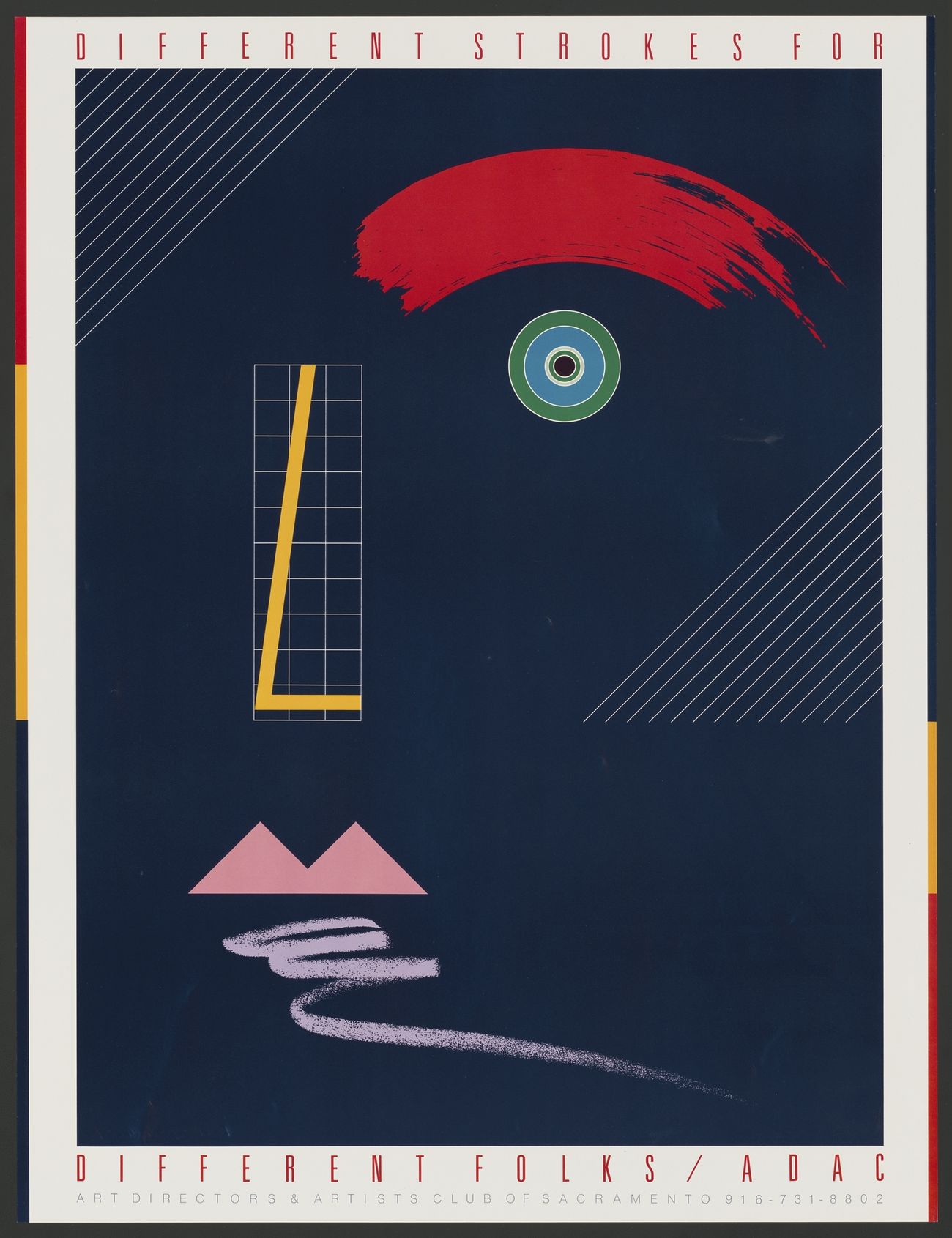
Different strokes for different folks by Library of Congress is licensed under CC-CC0 1.0

For a time during my career in education I was a Dean of Faculty. I approached my position more as a coach and facilitator for the teachers than an authority figure. I suppose that I viewed the members of the faculty as extraordinary souls who did far more than simply meet the requirements of a job. I realized their dedication and intense desire to reach their students. I witnessed their hard work along with their frustrations. I saw their tears and their triumphs. 

Just as with the many students I had once taught, the teachers were unique individuals with differing needs. Some demanded tight rules and regulations for themselves and their students. They wanted a clear outline of how things should be, a map for managing and inspiring their students. Others were loose and more apt to fly by the seat of their pants when it came to their teaching styles. Balancing the many personalities and needs of my charges was quite often like walking on a high wire between skyscrapers. 

As a cub teacher I had been trained to complete lesson plans and present them to my principal each Monday morning. I had to follow a fairly easy rubric that allowed me to include an outline of what I hoped to accomplish without exact details. I found this process to be quite strategic in keeping my progression through the required topics for my subject area on track for completion by the end of the school year. It helped me to prepare materials and have a feel for where I was going and where I had been. It was loose enough to allow me to be flexible. All in all it worked for me.

When I asked my teachers to follow the lesson planning design that had served me so well I soon found that what had been life saving for me, was a pain for some. At the extremes were the teachers who literally turned in entire scripts for each day’s lesson and those who simply noted the topics they planned to cover without any further explanations. When I observed these widely varying educators I found that whether tight or loose in their methodologies, they tended to be excellent teachers. So I quietly allowed each of them to do their own things as long as I had evidence that they knew what they were doing. Therein came the rub.

Teachers’ lounges are chatty places and it did not take long for discussions of lesson planning to ensue. Along the way a kind of chasm developed between the “playwrights” and the “impromptu advocates.” Those heavily dedicated to rules and regulations wanted me to require those who only presented outlines to conform to a more rigorous description of their lessons. Of course such suggestions were directed at having a fairer system in which everyone was doing the same amount of work. 

I’ve found the division between those who want to go heavy on requirements versus those who want to be left to their own resources is true in most situations. I saw it in my students, some of whom wanted numbered step by step rubrics for everything, including how to behave ,versus those who quickly understood the ideas and wanted to be free to run with the information. I learned early on that we humans lie along a continuum of needs and desires. Some want a more authoritarian system for living and others balk at too many restrictions. 

I know for certain that it is never a good idea to assume that one size fits all. Each of us is unique. Some need that script to feel comfortable while others must be free to fly. I suppose that is why governments often take the road down the middle rather than being too conservative or too liberal. When working with such varied kinds of people finding the right ways of meeting each need can be daunting. 

I see the same thing happening all over the world. Some people want a tighter way of living. They want rules, rules and more rules. Others prefer a freer atmosphere that allows people to be themselves. Right now the culture wars are looming across the globe and the desire for stricter guidelines is raging in place after place. 

Psychologists have learned that we humans are mostly like Goldilocks. We need rules, but not too many. Our laws work best when they are just right, when they allow those who are tight to live peacefully with those who are loose. Of course we can’t get along without any kind of requirements, but we have to be careful that they are not so restrictive that they become a burden rather than a help. 

As the Dean of Faculty I knew my teachers well. The lesson planning that I asked them to do kept both me and them informed. I did not need tiny descriptions but I appreciated the dedication of those who felt the need to so carefully create the details of each lesson. I understood that we each do things differently and that is not a bad thing. It’s simply a human thing. The truth is that that I found mostly good things with each style and a few bad tendencies as well. Perhaps if we operated a bit more in our society to accommodate those along the continuum of tightness to looseness we might actually begin to get along better. Instead we seem to have the outliers at each end demanding that everyone be like them. We all know that such an idea is ludicrous. Be tight or loose if you will, but make rules that allow each the freedom to live and let live.


Just Listen and Love

Day of Remembrance (NHQ201801250011) by NASA HQ PHOTO is licensed under CC-BY-NC-ND 2.0

My mother was a beautiful soul. In normal circumstances she was happy, wise and generous, a kind of fairy sprite who traveled through life doing her best to help others. It seemed unfair that she also suffered from mental illness that she only minimally controlled with medication and therapy. When everything was working properly to steady her brain she showed flashes of her true self, but when the medications stopped working as they were designed to do, she fell into cycle after cycle of depression followed by mania and a psychosis that induced strange paranoia. 

Because her life was a roller coaster only her most staunch supporters were willing to continue to minister to her needs. It was difficult to be around her when she was very sick, which generally happened a few times each year for a span of over forty years. The woman who once had so many friends that they were too numerous to count found herself mostly alone save for her children, grandchildren and siblings. A few good neighbors watched over her from afar and reported her strange behaviors whenever they witnessed them.

Sadly Mama could not understand why her friends had abandoned her. In the darkest times of her illness she reasoned that her acquaintances had mostly left her because they were afraid of the imagined forces that were out to get her. Even in her most confused state of mind she still found the goodness to understand and forgive them. 

That is not to say that people did not try to maintain a relationship with my mother, but they generally did not understand how to just love her even when she frightened them. Most of the time their well intentioned responses to her cycles of depression, mania and paranoia were built upon platitudes that may work for those who are well, but not for anyone with a clearly defined diagnosis of mental illness. Telling her to just get a hold of herself and her fears was a useless idea because something in her brain was broken and not even her normally strong will and determination were able to overcome the feelings that had spun out of her control. 

My mother was one of the most spiritual people that I have ever known. In spite of the tragedies of her life she remained optimistic and close to God. Nonetheless, during her cycles of bipolar disorder suggestions that she just pray and depend on God fell on deaf ears. Her mind was far too rattled and out of control to tame it with her daily Bible readings or the prayers that were part and parcel of her routines. She mostly just needed someone to sit with her and listen to her meanderings without comment. 

Calming my mother with palpable love was difficult to do when she was most in need of medical care. Even the kindest gestures sometimes backfired and made her even more anxious. It was not easy seeing and hearing her confused reality, but some people clearly understood how to just be a loving friend. Her sisters called her every single day to let her know that they were thinking of her. Most of the time the conversations were delightful but brief. It did not take a great deal of time to show her know that somebody cared about her. When she was very sick she often hung up on her siblings in anger, but they always faithfully called once again the following day. She knew that she could count on them and their love. 

Mama had a neighbor named Helen who was a kind of confidante. Helen would stop by my mother’s house just to see how she was doing. She rarely went inside. Her purpose was to let my mom know that someone was thinking of her. Helen was like an angel who brought calm to even Mama’s most difficult days. She did not do so with advice, but rather just by being there. 

Thankfully few people endure full blown paranoia, psychosis or the cyclical pains of bipolar disorder. On the other hand anxiety and depression are far more common. Some of us have blue days in reaction to the weather or a physical illness or some tragedy in our lives, but we soon enough heal and move forward. Others are continually daunted by sadness that descends on them with great regularity. They may be anxious most of the time. There are treatments for such things that may or may not work, but having understanding relationships are just as important. Every one of us needs a Helen in our lives, someone who sees and hears us without trying to fix us unless we ask her to do so. 

When people are hurting and in a state of sorrow the best thing we might do is just allow them to speak of their pain without judgement or attempts to dissuade them from their thinking. The only time we need to intercede is when they are threatening self harm or indicating that they want to hurt others. Most of the time they simply need to get their poisonous feelings out in the the open and know that people will still love them. They need to believe that they have some value and that there are individuals who care about them. In fact, this is what all of us require. It is part of our humanity to want to be seen and heard and still loved. 

Helen always knew when my mother was in trouble. She would call me to be certain that I realized that Mama was in the middle of a psychotic episode. I in turn would take my mother to her doctor for the professional help that she required. Helen seemed to clearly understand that my mother needed her and Mama loved her just for being there. We might all learn how to be like Helen. When someone is crying out our best response might simply be to listen and love. 

The Greatest Gift

I can’t remember the exact moment when I knew how to read fluently. I am unable to point to some magical methodology that provided me with the fluency I needed to translate the letters strung together in a kind of code that would allow me to discover great thoughts. I only know for certain that I passionately desired to read because my father made that ability seem so delightful and necessary. I watched him captivated by his books, newspapers and magazines in a daily ritual that made him visibly happy. I accompanied him to libraries and bookstores and listened to him read poetry and fairytales and children’s stories aloud to me. I wanted to find out how to unlock the meaning of the symbols that made him laugh and smile, so I learned to read with joy. It was never a chore to decode the messages imprinted on the pages set before me. 

I recall first learning words that my teacher printed on little blocks of paper. I bound them together with a rubber band and took them home to practice with my mother who faithfully drilled me each evening. At first I only knew what they said in isolation inside those little blocks. Eventually I recognized them in the context of sentences that did not seem as interesting as my father had made me believe that reading would be. Eventually I expanded my trove of words enough to be able to complete a series of reading books featuring characters like David, Ann, and Bow Wow. 

I never connected the phonics that we also learned in the process of reading. In my child’s mind it was just another subject and one that I did not particularly like. I did well with phonics, but never understood its importance or connection to reading. It was an onerous task to complete the phonics lessons that seemed to have no purpose. It would be years before I realized that phonics was supposed to be an important key for decoding even words that I had never before seen. 

If I used my phonics skills it must have been by chance. I do not recall ever actively thinking that what I had learned about all of those long and short vowels and accent marks had anything whatsoever with the reading that I so loved to do. I only felt that those phonics lessons that routinely came around the same time of the school day as reading were the most onerous aspect of school. I cannot explain why I had no idea how I would ever use those lessons that somehow were embedded in my brain. I must have unconsciously made the connections between phonics and reading from a book without ever realizing the importance of both skills. 

Somehow reading came easily to me, but the process of learning the fundamentals of reading threatened to bore me out of my mind. I wanted to take the training wheels off and ride away on an adventure with my books. I hated the times when the teacher gave each student a turn reading aloud. I had to slow down my brain and follow the pace of the words with my finger or run the risk of being far ahead when the teacher called on me. I often felt that sitting around discussing the main idea of a paragraph took the joy out the stories that we read. The questions seemed so silly. Of course I knew what the author was trying to convey. I wondered why I had to prove my comprehension. I just wanted to be left alone. 

There is so much talk about how to teach reading these days. Discussions abound concerning the best way to help young children become literate. There are concerns that far too many students struggle to decode and comprehend the words strung together to create stories and provide information. I suspect that the real answer regarding how to improve the processes of learning to read begins long before students formally attend school. 

I have generally found that children who see their parents reading want to emulate them. Little ones whose parents routinely read to them associate reading with comfort and even love. As humans we want to do things that make us feel good. If reading is associated with closeness and joy from the time we are born, we are more likely to want to learn how to understand books on our own. Sadly far too many little ones do not encounter much reading until they are old enough to attend school. They begin their educational journey at a deficit.

A gifted teacher understands that his/her students come to class with widely varying experiences and even abilities. Attempting to teach reading with one size fits all methodology is unlikely to work to the satisfaction of everyone. Crafting individualized instructional plans for every single student can be daunting. A wise teacher nonetheless is able to create smaller groups of students who are learning at similar levels of understanding. It’s important to target the skill that each child needs, so those groups must be fluid as well. 

It’s also critically important for teachers to help students make connection between the skills that they are learning and their actual usefulness in the act of reading. When that is not clearly conveyed the students may see them as discrete concepts that have no meaningful purpose. That’s when students become bored and tune out. Engaging them in discussions and allowing them to ask questions and voice their frustrations is as important as making them produce one size fits all responses to what they have read. Showing them the power of phonics makes that kind of learning seem important.

I enjoy reading and writing so much that they are integral to my life. I truly believe that my love affair with reading began with my father and continued with my mother who patiently helped me practice my first attempts at deciphering words. I learned whole words and phonics without putting the two together, but I suppose that I unconsciously used both skills. What truly made me a better reader was being exposed to a cornucopia of fiction and nonfiction and being allowed to freely discuss what I had read. 

Teaching reading is a tougher gig than teaching math. I know because I have done both. It requires modeling and practicing and somehow making it all fun. It’s not an easy task, but perhaps one of the most important ones that anyone ever does. Showing someone how to read is like giving them the best gift ever. Those teach reading well are treasures in our midst. Thank a parent or a teacher if you know how to read. It was not that long ago when reading was the purview of only the rich. Now in our country we democratically and rightfully attempt give it to all. Let us hope we are doing it in a way that will create lifelong readers and learners, not frustration and boredom.

It Was Magical

Photo by Francis Seura on Pexels.com

There was a time when a local eatery in downtown Houston was the place to go. James’ Coney Island served hot dogs and chili in a tiny space on Walker St. just a block or so from the main areas for shopping and commerce. Lunchtime at the place was always a happening with a cross section of Houstonians dropping in for a couple of hotdogs nested in a bun with a hearty topping of chili and finely chopped onions. Purists ordered a side of Fritos, but I was always a fan of potato chips. A cold bottle of soda water topped off the feast.

Everyone sat at old school desks where there was no telling who might be mingling with the ordinary folk. Dan Rather might drop in after chasing a news story or the mayor might rub elbows with the citizenry. Women dressed to the nines in silk stockings, high heels and full length mink coats delighted in the food as much as little kids like me who gazed over the bun filled goodness to see who was there with me on any given day. 

The same guys worked the line for as long as I can remember. Since there was always a crowd waiting to get inside in a line that snaked down the sidewalk the process of ordering had to be done with great precision. My mama would warn me and my brothers not to hesitate for even a second when it came our time to tell the men what we wanted. I remember rehearsing my choices as I stood in line, reminding myself to speak with my loudest voice or suffer the consequences of being too meek. The original “soup Nazi” maintained a strict presence as the “hotdog Nazi” on that line. Even a second of confusion brought his gruffness to the forefront. I never wanted to raise his ire. 

That line of workers were so quick that we kept moving all the way down to the cash register where my mother would pay. I’m not exactly sure how much each of those hotdogs cost back then but I don’t think it was more than a quarter. I particularly marveled at a regular worker who prepared the hotdogs in a finely tuned machine like motion without a hand on one of his arms. He never so much as bobbled the food. It was a remarkable sight. 

Even after I had grown up and married I enjoyed those remarkable hot dogs. My husband worked the nightshift at one of the downtown banks and had the job of taking deposits to the Federal Repository at the end of his shift. If he was lucky it would not be too late to circle back to Walker St. and order some hotdogs from James Coney Island for the two of us to munch on when he got home. We spent so many wonderful nights enjoying our treats while watching old reruns of Star Trek on television. 

A cousin of mine recently recalled going with her family to have dinner at James’ Coney Island before attending Friday night football games. Like most families back then eating out was an infrequent activity so it was a really big deal to be there. She remembers sitting in one of those school desks munching on her hot dog and feeling as though the whole experience was magical. 

Eventually James’ Coney Island expanded to the suburbs. It remained a favorite eatery for me and my husband and for my mother as well. Our favorite location was located near Gulfgate Mall. It was often my mother’s restaurant of choice when I took her out for dinner each Friday night. My husband and I never failed to stop there on our way to visit the gravesites of relatives in Forest Park. Sometimes we went there on a whim and literally felt like kids again as we munched on our hot dogs that had only changed in size and price, becoming smaller and more expensive over time. 

My grandson, Jack, fell in love with James’ Coney Island as a little boy. We often accompanied him to the location near Sugar Land. He delighted in the trademark hotdogs so much that it brought back our own memories of sitting on Walker St. in the long ago. We told him stories of our own love affair with the food and the ambiance of the Houston tradition and he listened as if we had been speaking of a major historical event. 

The Gulfgate location was a victim of major construction that made getting to the place almost impossible. When the pandemic came along the dying restaurant drew its last breath. It was disappointing to learn that it was no more, so  we sought out the one that our grandson had so loved. It too was boarded up and being remodeled as something new. Perhaps the modern tastes and emphasis on health and good diets had also played a role in ending much of the popularity and novelty of James’ Coney Island. The only locations that still exist are in Meyerland, Webster, and Baytown. 

My husband and I have a new tradition of stopping at the James’ Coney Island in Meyerland on our way home from appointments with our doctors whose offices are near there. The downtown location on Walker St. is long gone, having closed in the early nineteen nineties. With it a big piece of Houston history has vanished but the company lives one albeit with many changes and attempts to modernize it for a new era.

This year marks the one hundredth anniversary of the storied eatery. So much has changed since the days of old when the ambiance was barebones and the menu provided only select items. James’ Coney Island continues to operate but not with the panache of its storied past. The few remaining restaurants are now called JCI and offerings are much more extensive than just hot dogs. The food is still good but some of the magic is gone. James’ Coney Island was so much more than just the food. As my cousin so aptly put it, the experience of eating there was magical.  

Our Beautiful International City

After the disaster of hurricane Harvey in 2017, I began to wonder if the population of the Houston metro area would begin to decrease. What happened here was unbearably horrific as virtually every part of town, every socio-economic group, was hit hard by the unrelenting rains. I knew so many people who had to flee from their homes as water gushed inside through the weep holes. Driving around in the aftermath was a harrowing experience as my husband and I witnessed block after block filled with the soggy debris from the storm that dropped a steady torrent of rain for three days. It was heartbreaking to witness, and the fact that my house had somehow been spared was little reason to rejoice in the midst of so much destruction. 

I suppose that there were some who saw the climate change handwriting on the wall and chose to move to higher, safer ground than the flat plane of Houston that is barely above sea level in most places. Those who could, departed. Most, like me, stayed hoping that the city and surrounding areas would rebuild and stay strong. It ends up that we did exactly that. There was too much to love in our hometown, especially the people who can trace their ancestry from all over the world. 

Houston has maintained its spot as the fourth largest city in the United States and the most diverse city of them all, including New York City. We are a place that celebrates and welcomes the international heritages of our citizens. Most neighborhoods are filled with a potpourri of races and ethnicities. Ours is a most interesting confluence of cultures that are apparent to anyone who travels here. 

We mostly live in peace with one another, but as with anything there are still dark sides to the conviviality. Some areas appear to be holdovers of segregation brought on mostly by economics. Those places are often devoid of the kind of services and stores that the rest of the city enjoys. Our homeless move around from one place to another as they are chased out when their presence openly detracts from the dynamic vibe of the city. Mostly though Houston is a friendly city where everyone can be whomever they wish to be. Our live and let live attitude is no doubt part of the attraction to our town in spite of its flaws. 

On a recent sunny day my husband and I rode around town just seeing the sights and sampling the diversity that is so abundant here. We started in the suburb of west Pearland which was once a farming area but has grown into the size of many small towns. Pearland is part of the metro Houston population and very much mirrors the diversity of the city as a whole. It is a narrow strip that runs east and west for miles. The original township was established in the eastern part of Pearland while the west remained mostly the domain of farmers. More recently the west has become home to hundreds of thousands of people with quick access to virtually every part of Houston by way of Highway 288 and Beltway 8. The residents often work in the Houston Medical Center or in the refineries of Freeport. Most of the people are well educated and have professional jobs. My cul de sac is a perfect example of just how international the citizenry is. On our tiny street we have Vietnamese, Blacks, Chinese, Whites and even recent immigrants from Slovakia. The entire neighborhood is home to an international group representing countries from all over the world. This kind of diversity is repeated over and over again in the greater Houston area. 

Houston still has sections that attract large blocks of people from certain places. Meyerland has historically been a mecca for those of the Jewish faith. Some parts of southwest Houston are home to a large Asian population. The near north side has attracted Hispanics from Mexico and Central and South America. South and east of downtown there are historic Black communities as well as Hispanic enclaves. For the most part though Houston is simply a happy mix of people much like my neighborhood and wherever we go, people love to smile and talk and let us know that we are welcomed. 

On the day that we were driving around we stopped for lunch at a barbecue restaurant that was filled with animal trophies and folks who appeared to be laborers stopping for lunch. We saw mostly white folks there but our waitress spoke with a distinct accent of some sort and a group of men who appeared to be descended from native Americans came in boasting long hair in the tradition of the braves of old. From there we travelled to the Houston Heights, one of the oldest neighborhoods of Houston and possibly the most eclectic. Later we travelled to an upscale grocery store where we encountered the real international flavor of the city. Finally we ate dinner in a Turkish restaurant near Rice University where the food and the language spoken was really Turkish. As we ate, couples of every possible ethnicity arrived to sample the lamb and hummus and coban salad. 

During hurricane Harvey the real spirit of Houston could be seen on every television report. A famous photograph showed our citizens rescuing people without even thinking about who they were or what country or race they represented. We are family here in Houston and I suppose that is the reason why none of us want to leave. We like how welcoming our city is and we hope that other places will begin to understand how wonderful it is to embrace everyone without conditions. We even like our humbugs who would rather go back to a time when everyone seemed to look and sound the same. We are so far past that era that there will be no turning back. We like it the way that it just the way it has become.