Those New Fangled Electric Cars

Electric car charging station located by U.S. Department of Agriculture is licensed under CC-CC0 1.0

I am an advocate for changing the ways that we live if that will help to slow down climate change. I know all of the arguments for and and against such a shift in my daily habits, so I have decided that it is simply time for me to do my part even if it only makes a tiny difference. With that in mind my husband and I have been discussing the idea of purchasing an electric car. It’s a small step, but one in which I would like to lead the way. For that reason my husband rented a Tesla recently so that we might learn what it is like to give up a gasoline driven auto.

We asked for the Tesla Model 3 since that would be our most likely choice if we were to buy an EV. Even with the government rebate it’s cost is still far higher than we have ever spent on an automobile. We wanted to test drive one for a couple of days to get a feel for the pros and the cons of owning such a car. I have to say that it was a fun experience.

The car was small but incredibly roomy. The seats were as comfortable as those in a luxury car. The view from the front and rear windows was better than I have ever experienced. I saw things as we travelled down the road that I have never noticed before. Much of that extra window space in a Tesla is afforded by a lowered dashboard without the clutter that is present in ordinary cars. A large computer screen holds the key to operating virtually every aspect of the Tesla and in most cases the features are easily accessible with voice commands. 

The ride was almost hauntingly quiet without the sound of a roaring engine. The fittings were tight enough that not even road noise seemed to intrude on the experience. The navigation system was easy to follow and track with a large map tracing every mile that we travelled. The screen instantly posted updated speed limits and constantly showed the positions of other vehicles on the road. When making turns a live camera provided images of oncoming cars in an effort to rid the driver of the kind of blind spots that have the potential of resulting in a collision. There were warnings for red lights and reminders for the change to green lights. The backup camera gave such a wide view that there was little danger of hitting some hidden object while moving backwards. With eight cameras it was easy to be aware of the entirety of the driving environment. 

The pickup in the Teslas was amazing. I had imagined that it would be sluggish compared to the more powerful cars I have driven in the past, but it easily went from thirty miles per hour to eighty in a matter of seconds. It’s turning radius was unbelievable as well. In fact, we were able to maneuver out of some fairly sought spots with ease. 

As someone who normally drives a pickup truck I think about hauling things. The Tesla Model 3 had an enormous amount of space in the trunk, and since the usual apparatus found under the hood of traditional cars is not needed, there was an added area for storage known as the “frunk.” Electric cars have no need of radiators or oil or mufflers or gas tanks. The biggest part is the battery which rides underneath the chassis. Larger Tesla models are even more roomy, but also more pricey and not eligible for federal rebates. 

If we were to purchase any kind of electric car we would need a way to charge it. We’d have an electrician install the needed electric outlet in our garage and as long as we were simply tooling around town we would have no need for concern. We’d simply plug the car into the charging station anytime we were not using it. The anxiety of owning an electric automobile comes from taking long trips too far away from home for a recharge. We learned with our test drive that finding available charging stations is not nearly as easy as pulling into a gas station. Our first foray was unsuccessful as we attempted to navigate the system for purchasing the charge. There was an app for the process that took a long time to install after requiring that we provide tons of information. It occurred to us that in a place without good cell phone power we might find ourselves in the lurch. Charging away from home seems to be the weakest link in the present. The infrastructure for EVs is sorely lacking. 

I’d like to think that more and more attention will be given to providing charging stations over time. The companies that do such things need to make the process as easy and intuitive as purchasing gasoline. Phone apps are fine but it would be best to also allow major credit cards and eventually specific credit cards for the different charging companies. Engineers also need to work on making the charging process quicker and quicker. Nobody wants to have to kill time for an hour waiting for a full charge.

I know that a Texas concern called Buccee’s is planning to enlarge many of their locations to include blocks of charging stations. Since the company also features the cleanest restrooms on the planet and stores filled with food, snacks and gifts, charging there will be a fun experience. Hopefully over time it will also become a fast one as well. 

For now I would be more likely to use an electric car for my in town driving which would be a considerable percentage of my total driving needs. For trips over two hundred miles one way I’d need a bit more assurance that I will be able to recharge my car when needed. I’d probably stick with my gasoline powered machine until the infrastructure for electric travel reaches equilibrium with the number of electric vehicles on the road. While I believe that the electric car will one day overtake the ones that most of us now drive, I can see the drawbacks for attempting to totally rely on them right now. Still, I hope to become an owner of an electric model of some kind very soon. Maybe one day I can even purchase an electric pickup truck. I’ve got my eye on the Rivian but it’s price is a bit above my paygrade. I think I’ll start a little smaller than that.
The Seasons of Life

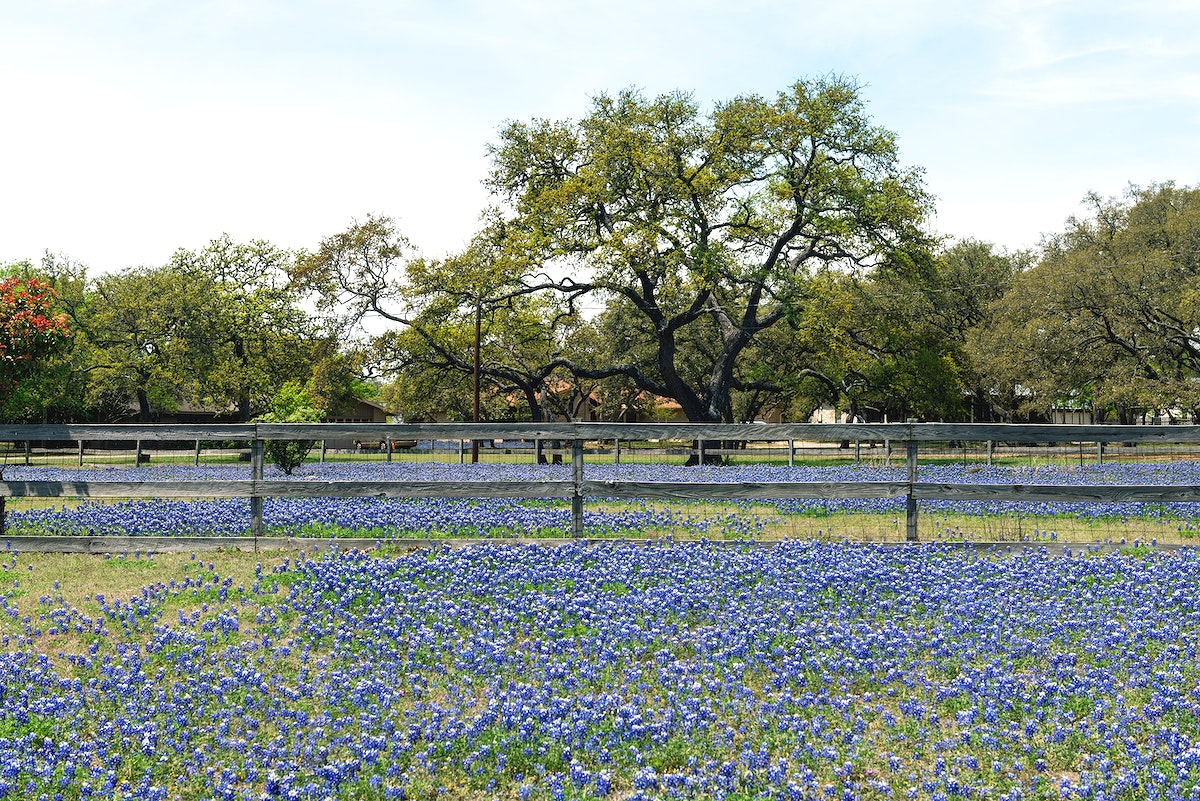
Profusion of the Texas State Flower — subtle bluebonnets — in a field in Boerne, Texas, west of San Antonio. Original image from Carol M. Highsmith’s America, Library of Congress collection. Digitally enhanced by rawpixel. by Carol M Highsmith is licensed under CC-CC0 1.0

I woke this morning thinking that I need to get out a bit more. it feels as though my writing is a bit stale. Lately I struggle to come up with a topic for my blog. I lay it off to that slow moving time of year between New Year’s Day and the arrival of spring. January, February and March have always been sluggish days and weeks for me, even when I was a child. If I had to use one word to describe the transition period from winter to spring it would be darkness. These are the seemingly most serious and work driven months of the year that threaten to send me into a state of burnout. Then April comes in with sunshine and promise of outdoor adventures, at least where I live. 

I’m rather certain that I am one of those people who needs to see the sun pouring through my windows. I don’t mind if it is cold. In fact I like bundling up in sweaters and coats, but I can’t endure too many grey days before I begin to withdraw from the world and maybe even feel a bit sorry for myself. I suppose that most of us are like that, and yet I have heard of places that stay mostly dark for weeks each year. I prefer balance in my life. Extremes of anything send me off kilter. 

I suppose the final throes of winter where I live have sent me into a kind of selfish funk every year of my life. Ironically, the almost never ending summer around here does the same thing to me along about September when I begin to long for cooler days and donning my sweaters as winter beckons. I enjoy the changing of the seasons such as they are along the Texas Gulf Coast. We don’t have colors in the fall and our spring comes so early that our flowers are often wilting from the heat by June. Nonetheless there is very little in the world as lovely as fields of bluebonnets along the Texas highways in March. It’s our version of cherry blossom time and it is a lovely reminder that the sun will come out again no matter how dreary the past has been. 

Most children in the United States today are lucky to have never had measles. The vaccines they routinely receive from birth shield them from diseases that were still infecting youngsters when I was still a kid. I remember coming down with the measles in the winter of my fourth grade school year. along about the end of February. I am not exaggerating when I say that I have never felt as sick as I did during that long bought with the measles. 

My mother kept me in a darkened room because she had heard or read that too much light while having the measles can induce blindness. Since I mostly slept it did not matter much to me that I was confined in a cavelike room. I had high fevers and headaches that left me feeling listless. I did not want to eat or do anything. It was actually somewhat frightening because I had never felt so weak and vulnerable. 

It snowed while I was ill, one of the very few times that Houston saw an accumulation of white powder on the ground. I could hear the excited chattering and laugher of everyone in the neighborhood from my sickbed. Mama had cautioned me not to look outside because the brightness of the snow might affect my eyes. I obediently deferred from taking a peek until I could no longer stand the thought of missing this once in a lifetime event. I went to the front room of the house and peeked through the slats of the blinds just long enough to imprint an indelible image of the splendor in my mind. Then I spent the next many days worrying that I might lose my sight for my sin of disobedience. 

Obviously I did not go blind and I soon got well, but I sometimes think that my dread of that bleak time of year began with my battle with the measles. I can still picture that darkened room and the vulnerable and almost frightening way that I felt. Ever since then I associate bleakness with February. I get anxious for the sun to dominate the days and for nature to burst forth in its glory. 

I remember traveling to a graduation for one of my former students at Syracuse University in upstate New York. It was the end of May but there was still a tiny chill in the air. Everywhere we went people were celebrating the end of winter. They told us that their spring rarely came before May where back home in Texas it already felt like summer. I loved the area but wondered if I would be able to handle an extended winter time without becoming morose. 

I suppose that we humans are all creatures of habit. Like Goldilocks we prefer that nothing is too much or too little. We want our world to be just right. That goes for the seasons of the year as well. Too much of a good thing can be as awful as too little. The best years are the ones that spread out the seasons in just the right doses. Our journeys around the sun play a part in making us who we are and how we see the world. The seasons of life assure us that the sun will always come in good time.  

A Century of Service

Her name was Madeline and she lived her one hundred one years with gusto. Born in 1921, she witnessed the dramatic events of the twentieth century and the changes that would escalate as the era came to a close and a new one arrived. This child of the Great Depression and young woman during World War II changed and adapted to the times with a smile on her face and the faith that God would walk with her on her journey. At the end of her life she was talking on a smartphone to stay in touch with the members of her family and her many friends. She used “Alexa” to provide music in her room. She remained modern and optimistic to through and century of living plus one. 

How does a person stay as vibrant and hopeful as Madeline? How was she able to look forward rather than dwelling on the past? What makes an elder as wise as she was? How did she understand how to enjoy life and the people around her rather than attempting to control the uncontrollable march of time. Perhaps the secret lies in her unwavering faith or maybe it was her love of people or maybe it was simply her positive outlook on life. 

Madeline certainly was never granted immunity from suffering or loss. Like each of us she had her share of tragedy that no doubt shook her world. Somehow she always found a way to rise above the feelings of sorrow. She was reliant and flexible. She found joy in each encounter. 

Madeline once helped run a family hardware store and gift shop. It was a gathering place for the community. She got to know the customers as friends. She respected them and took the time to learn who they really were. They in turn loved her. Her work was so much more than just a job. 

Madeline was a caretaker by heart. She freely gave her love to her family and to everyone she encountered in her work. Her generosity and compassion was legendary and she accomplished it with a wink and panache. She was known for her elegant style, her laugher and her generosity. Even in the final years of her life she arose early, showered and dressed as though she was going to work. She joked that she did not want to appear to be an old person, someone who had given up on themselves and the times. 

Madeline inspired the people that she knew. Joy radiated from her face. She always seemed to be thinking about someone other than herself. She really wanted to know people, not just in a superficial way. She brought out the best in those who surrounded her. She seemed to understand that her purpose in life was to serve others and she embraced that role with energy and determination. 

Sometimes when someone lives to a very old age there are few people around to mourn the loss. The march of time has removed them from most of society. Their peers are gone. Their final years tend to be lonely, but not with Madeline. She took it upon herself to reach out to people. She did not wait for someone to call her or visit her. She went to them, especially if she knew that they were having a tough time. Every minute of her life was filled with her calling to be a genuine source of happiness for the people around her. She was voted “queen” of her nursing home. She lined up rides to church each Sunday and greeted everyone there with a smile and a hug. 

We should all strive to be more like Madeline. It is when we move out of ourselves and consider the needs and longings of the people that we encounter that we feel more alive. When we take the time each day to let someone know that we are thinking of them, the energy of their joyful response is the panacea for the cares and woes that we may have. Reaching out to others is a simple but powerful idea, and if we do it because we truly appreciate that person regardless of who they are, the actualization we give them radiates back to us.

Madeline showed everyone how to grow old gracefully. She moved with the times and appreciated the changes that she witnessed. She did not enshrine a stubborn insistence to cling to the past. She instead saw the beauty in each season of her life and changed when it was time to do so. She saw the brilliance and innovativeness of the young and encouraged them to push us all forward. 

Madeline’s life should be an inspiration to us all. She transcended time and ignored the aging of her body by keeping her mind living vibrantly in the present moment. She made everyone feel as though they were precious to her because they were. She spent a lifetime helping people to be their best selves. Hers was one hundred one years of finding happiness wherever she went. She devoted a century to the service to others

We Do Our Best

Being a parent is like riding the freakiest roller coaster ride ever invented. It is exhilarating and terrifying at one and the same time. It is perhaps the most complex of all human relationships. It is a test of wisdom and emotions. It is a role that those of us lucky enough to experience it treasure, but also prompts us to question ourselves. Long after we have launched our children into adulthood we continue to think of them in the middle of the night, hoping that they are warm and happy. Being a parent is a lifelong contract that does not end until the very last breath. 

There is something magical about the first moment of holding a newborn baby. Describing the joy and love of that moment is almost impossible. We remember how it felt decades later. I can still aware of the spiritual connection of my little girls snuggling on my chest, our breaths coming in unison as though we were forever tied together by an invisible bond. The nights of being awakened from my slumbers by their cries were exhausting, but also vividly etched into my most pleasant memories. I remember the closeness that we shared and my determination to be a good and loving mom. 

It was easiest when my daughters were little and totally dependent on me. I seemed to know exactly what to do back then, but as time passed my role became more and more complex. I had to learn when to hover over them and and when to back away. I am certain that I did not always make the best decisions, but I hope that my mistakes did not harm them too much. As a mother I did my best while often feeling anxious that it was not enough. I pray that my girls always realized that my actions, good or bad, were grounded in love. 

The relativity of motherhood is understood by anyone who has raised a child. It is a long and angst filled time while also being as short as a blink and the most joyful time of life. When my daughters reached their teen years they began to push me away, a natural part of development that has happened since the beginning of time. They tested their wings knowing that one day they would have to fly away. It was a sign that I had truly helped them to prepare for the next stage of their lives, but watching them become independent was sometimes terrifying as I imagined all of the negative “what ifs?” I had to concentrate on the positive possibilities even as I knew that the world is filled with pitfalls that they might encounter. 

I recently heard the mother of a teen lament that her days as a mother were drawing to a close. I assured her that there is no such thing as an endpoint to being a parent. We may be watching our grown “babies” from afar but those instincts that helped us to bring them that far are never gone. We stand off stage ready to help and guide them if the occasion comes again. We still lie awake at night hoping and praying that they are doing well. The dynamic of our role in their lives changes only to the extent that we allow them the freedom to fully become themselves. We respect them as adults but we never forget the bond that forever ties our hearts to them. 

My little girls became strong women who have raised their own children. They fully gave of their love and talents in their efforts to be exceptional mothers. Like all of us who have accepted that role they too wonder if they did as well as they had intended to do. They facilitate between the certainty that their devotion to the task of building resilience and goodness in their offspring was enough or too much or too little. It is the fate of all mothers to second guess themselves. it is only with time that each of us learns that every child becomes an adult through a thousands of encounters with many people and random situations. The foundation of character and confidence that mothers build for their offspring cannot insure that they will never be hurt or led astray by others. We can only hope that they will have the fortitude to rebound from the ugliness that they encounter while knowing that we are still ready to stand with them when they need us. 

I am far enough along the journey of being a parent to know that the roles are sometime reversed. My brothers and I cared for our mom when she grew sick and weary. My husband now patiently honors his aging father who sometimes behaves like a surly teenager because he is frightened of relinquishing his position of authority even as he realize that that he can no longer be the independent head of the family that he once was. The concept of a circle of life is real. We care for our babies and one day they care for us. 

We learn from our parents and choose what we think are their most important lessons. In turn we pass down our revised knowledge to our own children hoping that we have made the right choices. If we have managed to send a clear message of our love they will generally turn out to be functioning adults who continue the process. It is the most important job we may have do and the one that will bring us happiness and heartache all at once. Such is life. We do our best and hopefully enjoy the ride.  

Now More Than Ever

I have a morning routine that rarely varies. I awake when I hear the children gathering on the corner to catch a bus for school. The sound of their chatting and laughing energizes me every single day. I tiptoe through the dark of the house to prepare my breakfast and then I play Wordle while sipping on my tea. Once I have successfully completed the word puzzle I visit Facebook to wish happiness for those who are celebrating a birthday and then I post my blog for the day. I surf through the posts on Facebook for a time to learn who is traveling, who is experiencing a life changing event, and who is struggling. Then I read articles from my favorite newspapers and magazines after catching up on the latest news. 

Of late I’ve heard a great deal about the astounding level of depression that seems to be affecting so many people, especially teens and young adults. Theories abound as to why there is almost an epidemic of sadness in a time when the world is reawakening from the challenges of the pandemic. Much of the focus centers on social media as a likely culprit and, while I think that the real answer is more complex, I can see how an the worlds of Facebook, Instagram, Snapchat, TikTok and Twitter might magnify the problems of those facing difficult situations. 

All of the venues for sharing tend to paint of a picture of perfect lives. I know that I have been guilty of giving the impression that every aspect of my life is a celebration. I have an online reputation of traveling and being infinitely optimistic and cheerful. It is quite rare for me to reveal the moments when I am frustrated or angry or dealing with challenges so enormous that I just want to give up and have an extended cry. Like everyone else I put on my happy face even when it feels as though everyone but me is having a grand old time. It’s easy to understand how the seemingly perfect lives of everyone else might drive a young person into the false belief the he/she is alone in struggling to feel a sense of belonging in a normal world. 

All of those lovely images of edited lives must feel overwhelming to anyone who is lonely or dealing with situations that that are more likely to be hidden than announced to the world. For a young person only beginning to navigate the world of adults emotions are already exaggerated and sometimes out of control. Viewing the bigger than life happiness of others has to be a daunting challenge that amplifies the anxieties of the youngsters whose concealed lives are pushing them to a breaking point. It’s difficult for them not to compare their shortcomings with the picture perfect images that bombard them daily. 

I have known well adjusted adults who had to take a break from social media just to maintain their sanity during very difficult times. They bid their followers adieu until they are able to sort out their troubles without the distraction of judging and comparisons that social media sometimes engenders. They understand how to regain control of their emotions and that the distractions of social media sometimes make doing so more difficult. 

I’m not an advocate of ridding ourselves of social media altogether. I look forward to keeping in touch with friends and family through the various platforms. I use them to post my blogs. I garner information from them and even enjoy a debate or two over important issues. I’ve learned how to handle my online presence and how to read between the lines of the posts. I can feel the pulse of society and individuals by regularly reading what they have to say. Even their absence for a time suggests to me that they may be suffering in some way. I use the media to keep track of people and issues that are important to me. Nonetheless, even I have lost friendships that were important to me and somehow have not managed to mend the rifts that I never intended to create.

I think that as adults we would do well to talk with those on the journey to adulthood about both the joys and dangers of social media. The importance of fitting in with peers looms large during the teen years and the early twenties. Nobody likes to feel different, unsuccessful or unloved, and that is especially true of the awkward years before we gain our footing and confidence to be ourselves. The false impressions of perfection that are so prevalent on social media can make that transition more difficult than it needs to be. 

So many young people had their lives disrupted during the past three years. Some of them lost family members and friends to the Covid virus. Many were isolated during the times when they most needed to be around their peers. Routines were often shattered. Opportunities were missed. The normal development process was delayed. They watched the adults around them arguing and battling at a time when there should have been compassion and cooperation. Competing forces turned our heroes into villains. Much of society now rails against the teachers, doctors, nurses who worked so valiantly during one of the most difficult times. Adults can’t even agree on how to keep our young safe from mass shootings. Little wonder that many of them are confused and morose, feeling as though nobody really cares about them. 

Instead of focusing on silly issues of culture we should be exemplifying resiliency and compassion. Our young are watching and learning from us. We would do well to demonstrate how to get back on track with cooperation, integrity, and concern for those who do not have the means to recover alone. We humans are at our very best when we are helping the tired, the poor, the huddled masses yearning to breathe free. It’s difficult to be depressed when we are busy working for the good of all people, when our children see that we care about what they are thinking and how they feel. We owe it to them to rise to the challenges that face us rather than dividing into angry groups. Little wonder that our kids are quietly turning to social media for answers and examples that often fall short of showing them that happiness and success have nothing to do with money or trips or constant parties. It is found in our connections and our willingness to make sure that everyone is valued no matter how different they may be. We need to do these things now more than ever.