Jack Little

Santa Fe NM 09-1950

So who was this man named Jack Little, a man with no middle name, a man who left such a lasting impact on those who knew him, a man who died at the age of thirty-three inside his car on a dark road? Perhaps clues to his life will be found in his all too short story. 

Jack was born on September 2, 1923, in Skiatook, Oklahoma, a small town just outside of Tulsa. He was the son of William Mack Little and Minnie Bell Smith Little, a mid life child born to them in their late forties. Jack had two older sisters named Opal and Marion who adored him. Opal’s father was Ollie Thompson who died in 1919. When the widowed Minnie married William, Opal was already an adult and ready to settle into marriage with Harold LaRoche. Upon the day of Jack’s birth Opal had sons of her own making Jack an uncle from his infancy.

From the beginning Jack was bright and funny and the apple of his mother’s eye. He learned quickly and kept pace with his classmates in spite of often moving from town to town while William searched for construction work to support the family. It seems that Jack was a bit of traveler for all of his life and even as a boy he had set a goal to visit all of the states and then to go abroad. His love of reading seemed to come from Willam who had a lifelong habit of devouring newspapers, magazines and books as a way of relaxing after a long day at work. Jack often joined his father in reading sessions in the evenings, often followed by discussions of what they had encountered on the pages of their books.

William and Minnie Bell encouraged their son’s curiosity, supplying him with reading material and opportunities to learn. Minnie was especially proud of her boy because she herself had never learned either the art or the science of reading and writing. Both parents marveled at Jack’s abilities to grab life by the tail and adapt quickly to new places and new schools as they moved from one construction job to another. Regardless of where the winds might blew them Jack seemed to flourish. Eventually they found themselves in Corpus Christi, Texas where Jack met the two men who would most influence him, Robert Janosky and Lloyd Krebs. 

The three young men completed each other with their talents and their personalities. Robert, better known as Bob, was an adventurer in his own way following his interest in geology from one mountain to another. Lloyd was a quiet thinker yearning to learn about how things work. Together they plotted a journey to Texas A&M University where they would each earn degrees, Bob in geology, Lloyd in electrical engineering and Jack in mechanical engineering. While they were all dedicated to being lifelong learners they always found time for fun. 

Jack met Ellen when he was working as a summer draftsman at an engineering firm on Navigation Street near the Houston Ship Channel. He had mastered the skill of creating schematics by hand which provided him with better than average income doing the off seasons of school. It was Ellen who took the initiative and introduced herself to Jack. She had noticed him while working as a secretary at the company and boldly decided on day to suggest that they sit with each other on the bus that they rode to their respective homes each day. 

Ellen Ulrich was beautiful, vivacious, and intelligent, a combination that instantly appealed to Jack. Before long they were dating and talking seriously about starting a life together. They married at the Harris County Courthouse in March of 1946, so that Ellen might join Jack at Texas A&M College where he was still working on completing his education. Because Ellen was a devout Catholic she insisted that they also be married in a church ceremony at St. Mary’s Church in College Station. Their simple ceremony took place that June. It would become the official date that Ellen and Jack would use for their anniversary because she believed that their union must first be blessed by God. Jack showered her with love and acceptance by humoring her sometimes quirky demands.

Jack opened the world to possibilities for Ellen. He read to her from his books. He took her to places she had never been. The two of them began their married life living in an upstairs rented bedroom of a professor at Texas A&M. They had to be home before the prof’s family retired for the evening or risk being locked out. Jack soon noticed that they might use the large oak tree that grew next to their window as a mean of entering and exiting their room on late nights out. Soon they had mastered the art of deftly climbing up and down the “stairway” provided by nature. 

They had great fun in those early days enjoying football games and all of the student activities on campus. Ellen landed a job with one of the professors while Jack worked hard to complete his coursework. They were quite the team and it was obvious to anyone who knew them how madly in love they were.

Jack was indeed a renaissance man. His knowledge of history was uncanny. He was an encyclopedia of information about literature, sports, science, politics, humor, poetry, art, geography and all forms of trivia. He never met a stranger and slid easily into conversations about fishing and hunting and life in general. He was as charming as Ellen and the two of them together seemed poised to take on the world. 

Jack was a dreamer and a bit of a drifter from one interest to another much like all gifted individuals. He sometimes had a difficult time deciding what road in life he wanted to travel. Unlike his buddy, Bob, who set a straight course to a PhD in geology or his wise friend Lloyd who went to work at Shell and stayed there to the end of his career, Jack always seemed to be searching for the perfect fit for his many interests. He would devote himself to one thing and then become bored and move to something completely new with Ellen encouraging him to be adventurous. 

Jack passionately loved his family and his friends. When Bob died, so did a part of Jack’s heart. He was adrift, analyzing his life and attempting to find his place and his true happiness. He had learned to move and adapt in his boyhood and assumed that everyone would enjoy the excitement of such a lifestyle. He was always in search of something bigger and more exciting, taking risks to climb the mountains of his dreams. While his life was cut short he had managed to pack so much into his brief time on this earth. He had touched the lives and the hearts of everyone who ever knew him. Jack Little was no ordinary man.   

May 31, 1957

There are days in our lives that are profoundly and indelibly imprinted in our minds. We miss some of the details but vividly recall others that play over and over in our heads even as decades pass. May 31, 1957, was such a day. What should have been a glorious reunion with my aunts and uncles and cousins at Clear Lake became instead an unimaginable horror that continues to feel unreal even decades later. 

My mother had spent all of the previous day preparing for the Memorial Day celebration that would mark a summer of joyful times with the people we loved. She made one of her famous chocolate cakes with buttercream frosting and let us run our fingers through the bowl to retrieve the icing that stuck to the sides so that we might get a taste of the delightful topping. She boiled potatoes and chopped onions and celery to make potato salad. She mixed her “secret” ingredients to prepare the barbecue sauce that Daddy would use to grill hamburgers. She chilled soft drinks in the refrigerator and made baked beans. Our house was abuzz as my father worked downtown at his new job to finish a project before the holiday. There was joy in the air once again. 

My brothers and I went to bed before our father arrived home. My head was filled with so much anticipation that I struggled to fall asleep, but soon I was snoozing away. I awoke to the sound of my mother’s voice. She was in the hallway talking on the phone that back then was tethered to the wall with a cord. Her voice sounded funny as she appeared to be answering questions. It seemed odd for her to be having a conversation at such an early hour, but I was too excited about the promise of the day to stay in bed, so I went from my room to the kitchen in search of something to eat or drink. She seemed not to notice that I passed through the opposite end of the hall. She was intently occupied with her puzzling commentary. 

I began to worry that something was amiss when I found my Aunt Valeria puttering away in the kitchen. She looked nervous as she sweetly asked if I wanted her to prepare some breakfast for me. I must have looked like I was thinking that she had grown three heads because she was suddenly stuttering as if confused about what to say next. She walked across the room and told me to sit down at the table with her. Then as we got settled she had the look of someone fishing for words as she finally managed to utter, “God called your father home to heaven last night.”

Somehow I instantly understood what she was trying to tell me, but I needed confirmation of my fears so I acted confused. Then she sweetly, but matter of factly, explained that Daddy had been in a car accident and had died. At that moment my head seemed to explode. I don’t know if I responded or not. The next many hours I felt as though I was watching everything that happened from a faraway removed position. I was there, but I wasn’t. I wanted to talk about it, but I did not. I simply moved in slow motion unable or maybe even unwilling to believe that my father was gone, deceased, passed away, dead. 

I saw little of Mama that day. Our house was soon filled with friends and family talking quietly in our living room while Mama lay prostrate in her bedroom. My aunts told me and my brothers to go outside to play with our cousins. I suppose there were games taking place and I may have even participated in them, but my only thoughts were that I was still asleep and encased in a nightmare that kept playing over and over. I worried about my mother and my brothers and so I found ways to sneak back into the house to spy on the adult conversations. I needed more information, more explanations that would never satisfy my need to know how this had possibly happened.

I learned that Daddy had worked late, at least that was the story they were telling each other. It was a hot and steamy night so after he got home he was unable to sleep, He decided to go for a ride to get cool. He evidently drove toward Galveston on what we called the Gulf Freeway, later Interstate 45. The highway was in its infancy, still very much under construction. In the dark of night it was difficult to tell the difference between the freeway and the feeder road. According the the story my father was barreling down the feeder when it ended in a big ditch. There were no warning signs, no lights, nothing to alert him to the danger. When the car crashed forward his chest slammed into the steering wheel crushing his heart. With no seatbelts or collapsable steering or air bags he felt the cruel impact of steel and glass, dying immediately upon impact. 

Houston was not the metropolis that it is now. The story became front page news with journalists making asking questions and hinting that somehow Daddy died because he was careless while others demanded to know why there was no warning, no illumination to warn him that he was in danger. The tale of a thirty three year old man with a beautiful widow and three young children surviving him was the headline for the holiday. For me it felt like the cruelest blow possible, as though my own heart had been torn from my chest and stomped into a million pieces. 

That day one of the children in the neighborhood asked me if I even cared that my father was dead. She remarked that I looked as though I had no feelings for him. She expected me to be crying, but instead I was frozen in a state of stoic shock and disbelief. I kept myself from falling apart by believing that nothing was real. I watched over my brothers, Michael and Patrick, as though I had become their eight year old mom. I felt that Daddy would expect me to protect everyone. Happy, lighthearted me went deep inside and serious, sad me emerged. That me would use the tools that my father had taught me to survive until I was one day able to feel joy again. 

It was my Uncle William, my mother’s oldest brother, who would sweetly show me the compassion that I needed on that day. As I stood like a tin soldier guarding my brothers he came outside to see how we were doing. He noticed that my brother, Pat, who was two years old was wandering among the other children with baggy pants. He tenderly took Pat in his arms and looked at me saying, “Oh, honey, Pat is all wet. Can you show me where his clean clothes are?” 

Together we took my little brother inside to clean and change him. Then Uncle Wille carried Pat while we searched for Michael. He loaded the three of us in his car and took us to an ice cream parlor. I ordered butter pecan because I knew it was the flavor that my father most loved. We sat quietly licking our cones while Uncle Willie promised that he was going to take care of us and that we would be alright. Then he drove us home and gave each of us a fifty cent piece to use the next time we went to the store. He asked me to keep our treasure in a safe place and told me that I was the oldest like he was. I assured me that I would know how to always be certain that my brothers were safe. Even as a small child I understood that Uncle Willie was our family’s angel just as Aunt Valeria had been that morning. Their show of love would sustain me in my unbounded grief. 

When night fell and all but one of my aunts had gone home I finally crept into my mother’s bedroom to be with her. I lay next to her on the bed and she hugged me as we both cried. Neither of us said a word. I felt safe with her and understood how much we both loved and already missed Daddy. Somehow we would find a way to carry on.

A Period of Adjustment

There is a void between the time that my family left Los Angles and the day when we drove up to our new home in San Jose. The neighborhood was quiet. Nobody rushed over to welcome us. We moved ourselves and our belongings inside without fanfare. If there were children on our street, I never saw them. It felt as though we were all alone in a strange place. 

The house itself was fairly nondescript, but it had two features that were somewhat exciting. In the living room there was a fireplace, something I had never before seen in anyone’s home. The kitchen boasted a built in dishwasher, another aspect that was still uncommon in the houses in Houston in 1956. I suspected that Mama would enjoy having a machine take over some of her chores and surely enough she gushed with excitement when she saw the modern appliance. There was little else to boast about other than the oddity of a walnut tree in the front yard. Mama hoped that it would bear fruit and she might be able to gather its treasures for baking and snacking.

The first order of business would be for my father to report to work and then my parents would enroll me in school. It had been a couple of weeks since I had last reported to class and my mother and father were concerned that I might lose the continuity of my learning. Without even allowing me to figure out where I was or learn the lay of the land, Mama, Daddy and I went to the nearby elementary school to get me back into classes. It was not a happy experience. 

The principal of the school questioned my age and suggested that I repeat second grade in spite of my good grades. She maintained that Texas schools were often behind those in California and felt that I would be better served if I were to continue my education with students my age. My father was just as adamant as she was that I was more than capable of keeping pace in the third grade. After much haggling the principal agreed to place me with the eight year olds on a probationary basis. Without anymore ado she walked me to a classroom and left me to fend for myself. 

California was booming in 1956. So many people were traveling there that the schools were overrun with students. In order to accommodate us all the school day was broken down into half day shifts. I would attend classes from eight in the morning until noon, when another groups of kids would arrive for the afternoon. It meant that I would have to take all of my textbooks home each day and bring them back with me the following day. Since I lived within walking distance of the school I would be toting a rather heavy load of gear back and forth. 

I can’t recall what my teacher’s name was or if she had even introduced herself. She was a harried soul who seemed annoyed by the interruption of my arrival. She quickly found a seat for me in the already crowded room and just as quickly went back to cramming as much teaching as possible into the four hours that she would have with us each day. I was relieved to find that I was not behind as the principal had asserted would be. In fact, the work we were doing was all familiar to me. I adapted to the routine quickly and continued to do well.

It was the emotional aspect of school that was difficult. The students had already made friends with one another and since we were only together for four hours a day there was no free time for getting to know each other. I mostly just performed the tasks of learning while pining for all of my friends back in Texas. At one point the teacher finally thought it might be nice to give me an opportunity to tell the rest of the class about my former life in Texas. In a question and answer format I had to defend myself against all of the stereotyping that everyone seemed to have about my hometown. They were annoyed that I had never owned or ridden a horse and that I was almost as unfamiliar with oil wells as they were. My only defense was that my father had indeed worked for oil companies and he had sometimes taken me with him when he went to check pumping stations far from the city. Aside from that I felt like an oddity and wished more than ever that I still lived across the street from my best friend Lynda. Besides, it was so darn foggy there that I had literally walked right past the school more times than I might have wished. If they thought I was weird then I would have to admit that the feeling was mutual.

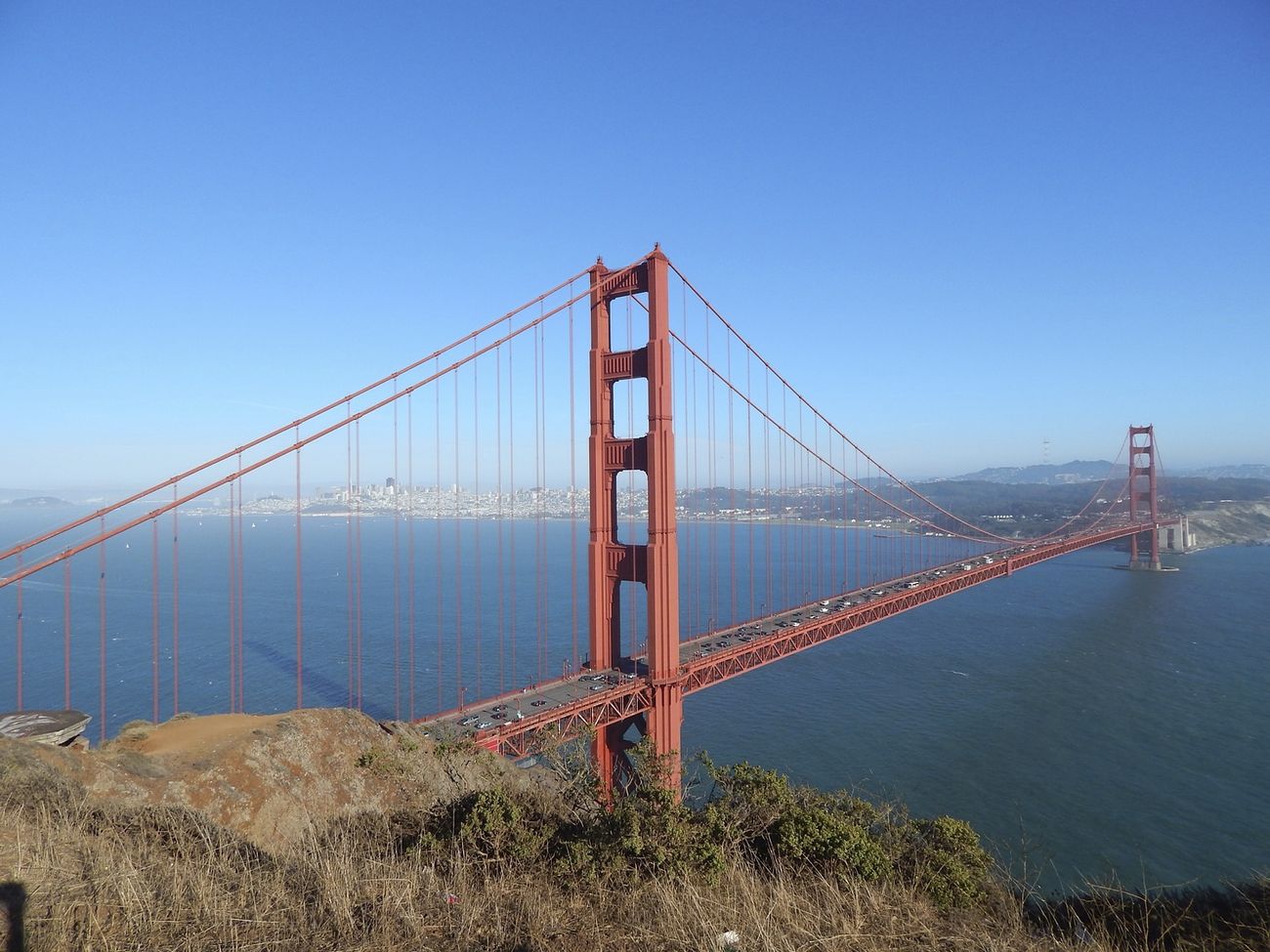
Ever the adventurer, my father turned every weekend into a mini-vacation in which we would acquaint ourselves to the area. We drove the short distance to San Francisco to see the Golden Gate Bridge and to drive on the steep streets. We ate seafood and went to elegant movie theaters. We drove along the coast and walked under the giant sequoias. Once we even went in search of an observatory but somehow we were not able to find it. 

I loved those weekends with my parents and my brothers. I had to admit that northern California was incredibly beautiful and interesting. I suppose that if I had found friends there I might have been happy, but my whole life revolved around those four hours of school and the tiny orbit of my family. I suppose I became closer to my brothers during those days because they were the only children that I encountered during my time away from school. The free range wildness of my old neighborhood in Houston was missing in that place in California and I never quite knew why. 

When the Christmas season came we went to a big party where my father worked. I never really understood what kind of job he had or what the name of his company was. It must have had something to do with the military because the place made tanks and we were allowed to ride inside them as part of the festivities. That was exciting, even as I realized what a rough and noisy ride it was. I was proud that my father was having fun with his work and doing something that seemed cool even if I was never quite sure of what that was. 

I became unbearably homesick when Christmas came. I knew that all of my aunts and uncles and cousins would be gathering on Christmas Eve at Grandma Ulrich’s house. I imagined them sitting on the chairs talking and laughing so loudly that the neighbors probably heard their joyful sounds. I could almost see my grandmother opening her gifts and passing around coffee. I imagined my cousins feasting on oranges and apples and a gigantic Whitman’s Sampler of chocolate candies. 

We had a lovely Christmas tree in our house and our walls were festooned with Christmas cards from everyone back home. Santa found us and left magical gifts but they did not make me as happy as I would have been in Houston. My grandparents called us long distance to wish us a Merry Christmas. It was good to hear their voices and know that they were thinking of us. My brothers and I danced and sang on the hearth of the fireplace and we did our best to make it feel merry, but nothing felt quite right. Perhaps in the New Year of 1957, we might finally adjust and find joy in California. In that moment it hardly seemed possible, but I had hope.

Westward Ho!

When school resumed in 1956, I was filled with confidence and joy. I had advanced to the outermost wing of the school which made me feel as grown up as a third grader might. I was a seven year old with lots of friends and a lovely life on Northdale Street. I had spent a glorious summer traveling, sunning at the beach, going to movies, and just running and playing in my bare feet with Lynda. She and I made plans for a future that would take us into adulthood, forever mates whose little brothers and sisters might even marry and make us officially relatives. I even considered marrying her brother, Mike, when we were old enough. We had the rest of our lives as besties all figured out.

My new teacher was a sweet lady with a talent for telling extremely funny stories. She had the whole class relaxed and laughing on the first day of school. I was convinced that this would be my best year of education ever. I had settled into what seemed to be a quite satisfactory routine.

Just as I felt assured that I had somehow found perfection, my parents excitedly announced that we would soon be moving to California. It was one of those moments when I felt as though I was having an out of body experience. I heard what they were saying but it felt so unbelievable that I was not sure that I had understood them. It was as though I was watching them from afar as they chattered and smiled as thinking that they had just revealed that our life was going to be Christmas every day of the year. In my head I wondered if they had any idea whatsoever of how cruel their decision to upend my perfect world felt to me. Nonetheless, I said nothing, only nodding as though I agreed with their frightful plan. 

There is a blank spot in my memory from the time that I learned that we were moving until we were actually on the road to California with our belongings following us in a big moving van. I was walking through a fog, creating an alternate plan in which I would go live with Lynda and visit my parents and brothers in California in the summer. I obediently participated in the ruse of excitement that seemed to have overtaken my mother and father. I quietly complied with their joy while wanting to scream that their idea was terrible. 

Michael and Pat and I were stuffed into the backseat of the Pontiac for the long drive. Mama had attempted to make our accommodations comfortable by putting pillows and blankets on the floorboard in case we needed to sleep along the way. Two of us would share the seat and one would lie down on the contrived floor bed. It was incredibly uncomfortable no matter how we attempted to make the best of it. It felt as we were traveling to the end of the earth in a box as my father pushed forward for hours each day. It was not until we reached Phoenix, Arizona that I felt a glimmer of hope. There we found a fancy hotel with features I had never before experienced like air conditioning and a television that actually worked properly in the room. We enjoyed an evening playing in the swimming pool and Mama excitedly gave away the surprise that when we got to Los Angeles we were going to visit Disneyland. 

Soon we were in LA staying with relatives of my father that I had never known to exist. They were an older couple who seemed thrilled to finally meet us. I was still in such a stupor that I can’t recall ever hearing their names. I simply remember smiling politely at them and wishing I was at Grandma Ulrich’s house with my cousins instead. 

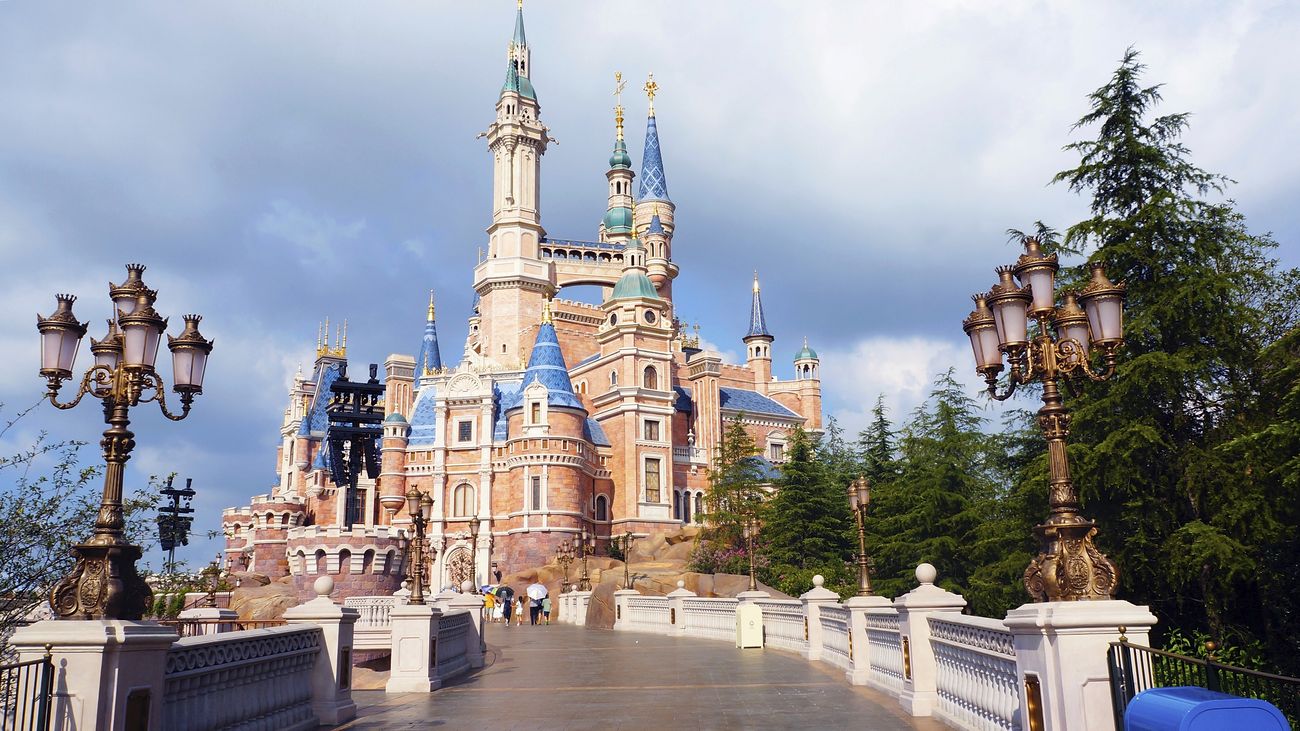
We did indeed go to Disneyland before heading north to our ultimate destination in San Jose. The theme park was quite literally a child’s dream. I have vivid recollections of Main Street, Cinderella’s Castle, fireworks, parades, and so many rides. We were there from the moment the park opened until it closed at night. The last thing we did was ride around the periphery in a train modeled after those of the old west. It all seemed to be a fitting introduction to California where everything felt bigger than life and there was a story for everyone living there. Our family had headed west in our modern day covered wagon in search of a dream that belonged to my parents. I don’t know what they expected to find, but I decided it was time for me to play along.

We spent a few more days with our relatives. To this day I wish I had paid more attention to them and found out who they were. I’d love to know their connection to my family. I’d like to know their names, but that was never to be. They were kind and hospitable and I should have been more appreciative of their attention. Mostly I should have been happier for my father who seemed to be a bit more overjoyed each day. 

Just before departing Los Angeles we spent a day touring the walk of the stars and visiting Grauman’s Chinese Theater on Hollywood Drive. It was fun seeing the footprints and handprints of famous movie stars on the sidewalk, but my father’s real quest was to find a most remarkable bookstore. Pickwick Books was a multi-floor structure with volumes of every kind. Being there with my family was almost as good as our time at Disneyland. Best of all my parents told us that each of us could purchase any book that we fancied. 

Michael was already well on his way to being curious about how things work. He had walked around the the house with our father’s books about future travel to the moon and other texts that illustrated engineering designs. Even though he was not yet old enough for school he was good with numbers. It did not surprise me when he chose a book that had photos of how to tie different kinds of knots. I was still dreaming of Cinderella’s castle in Disneyland, so I found a beautifully illustrated version of the classic fairytale. Patrick was still a little fellow so Mama chose a storybook for him. 

We spent hours walking up and down the aisles of that bookstore. It felt like sharing a spiritual journey with our father who was enamored with the place. It seemed so right there that part of me wished that we could just stay there forever, devouring one book after another until we had read them all. San Jose was calling so we had to say our goodbyes to the sweet relatives who remain a mystery to me and head north to our new home. 

The Awakening

I’ve traveled all over the world, but one of my most memorable trips was with my family in the summer of 1956, when my parents decided to visit my grandparents on their farm in Caddo Gap Arkansas. My brothers and I shared the long bench seat in the back of our Pontiac as we excitedly drove through east Texas and into Arkansas for our first ever peek at Grandpa and Grandma’s place. It was a long ride and we got more and more anxious as we crossed the state line. Before we knew it Daddy was driving across the Caddo River and onto a narrow rocky road with many twists and turns. We glanced at an old suspended bridge that spanned the river high in the sky as we advanced into what seemed like a wilderness. Each time my father rounded another outcropping he had to honk the car’s horn to warn anyone who might be on the other side that he was advancing on the one lane road. That part of the drive was an adventure in itself.

Soon we were turning into the driveway leading to Grandpa and Grandma’s house which looked surprisingly much like their former home in the Houston Heights. Their border collie, Lady, greeted us with a wagging tail and a welcoming bark. She was soon followed by my grandparents waving on the front steps with big grins on their faces. I was so excited that I could hardly wait for Daddy to park the car and turn off the engine.

The landscape was beautiful with a profusion of flowers and fields of crops growing in the summer sun. Near the house was a big barn and a chicken coup where a cow and chickens bellowed and chirped their own hellos. A huge peach tree shaded the driveway with branches bearing luscious fruit. It was a truly idyllic scene that insured us that we were going to have much fun.

Daddy and Grandpa brought our luggage inside while Grandma showed us the rooms where we would be sleeping. The boys and I had three twin beds in a sunny room with rows of open windows bringing a cool breeze. Our parents would be in the room next door. After taking us on a tour of the house, including the basement which was something I had never before seen, Grandma announced that she had prepared dinner for us, We gathered eagerly around the familiar dining table to enjoy her famous cooking made even better with all of the fresh vegetables grown on the farm. Over the coming days we would feast on homemade biscuits, milk and butter from the cow in the barn, fresh eggs gathered each morning, fish caught in local lakes and streams and mouth watering meats and vegetables. 

My grandmother warned us that we might have a visitor for dinner each evening. She laughed while explaining that a nearby family had a strange habit of sending one of their members around at dinner time with various requests. When Grandma politely asked whomever came if they like to eat dinner that person always eagerly accepted her invitation. Sure enough there was soon a knock at the door. 

While we ate my grandparents told us about a diamond mine where folks had been known to find precious stones. They also related how they had found many beautiful quartz crystals on their property and urged us to be sure to take some home when we left. They talked about how much work and fun and they had experienced since they came, almost laughing with joy as they described planting and harvesting and canning the fruit and vegetables that they had grown. They promised that they would take us to visit with some of their neighbors and show us the scenic areas nearby. 

We spent that first evening on their front porch that was screened in to keep all of the bugs buzzing through the air from annoying us. We were enthralled by the brilliance of the lightning bugs that filled the air with their little lights. Grandpa told us his tales the way only he always did. Grandma worked on crocheting, embroidering and sewing while promising to make me some new dresses out of the flour sacks that she had saved. It amazed me how quickly her hands moved to create the most beautiful things at the same time I could not hear enough of my grandfathers fanciful stories. I could think of no other place I would rather be. 

In the following days we would accompany Grandpa to a country store where he picked up his mail each day. He would dress up for the occasion after working in the fields before we even awakened. He always brought along his pipe from which smoke filled the car with a delightful aroma. At the store he gathered his posts and discussed the local news while we sipped on sodas. It was fascinating for a little girl from a city to be in such an old fashioned place. The locals told us how the Caddo Indians had once lived in the area and that for a time there had actually been a tiny town with a one room schoolhouse.

When we returned Grandma would lead us on excursions into the hills behind their home. She instructed us in the rules of safety that meant being careful not to step anywhere without first probing for snakes with a long walking stick and checking for ticks after the journey. She demonstrated how to talk to the local birds with chirps and songs that mimicked the creatures of the sky. She made butterfly nets out of coat hangers and old cloth and showed us how to carefully catch the beautiful monarchs that were in profusion. We’d store them in jars whose lids had holes to allow the lovely insects to breathe and always we would free them after we had observed them for a time. 

One day we helped pick peaches. Grandma and Grandpa wore long pants and flannel shirts with sleeves that covered their arms even though it was exceedingly hot. They tried to convince us to cover ourselves but we did not want to get too warm. Before long we learned that getting the peach fuzz on our skin was a painful experience and we took their advice to cover ourselves. 

We visited the family that had a habit of coming to dinner. Even as a Catholic girl whose friends came from very large families, I had to admit that I had never before seen such a large number of children from on mother. It seemed like Mrs. Weehunt had been perennially pregnant for about twenty five years. Their house was so small that I found it difficult to imagine where everyone slept. The yard was filled with old abandoned cars that did not appear to have any reason for being there, but my grandmother had warned me not to stare. In fact, she insisted that Mrs. Weehunt was a gracious and refined woman who deserved our total respect. 

Another day we drove even higher up the mountain to sit with a lady that my grandparents called the woman on the hill. She held court from a rocking chair under a tree., chewing on tobacco as she spoke and periodically spit into a tin can. Grandma had warned us to use the bathroom before going there because the lady did not have indoor plumbing. In fact, we learned that very few of their neighbors had graduated to modern facilities. That was the first time I learned about an outhouse and my grandparents embellished the experience by telling about the outhouses of their youth and the hilarious things that had happened inside them. 

Each morning Grandma took us to gather the eggs in the hen house. Then she turned us over to Grandpa who taught us how to milk the cow. At first it felt strange and even a bit icky to pull on the teat, but soon my brothers and I became experts and would not have missed an opportunity to show our skills. We were becoming addicted to farming and living off of the land. 

Grandma used all kinds of creatures for dinner. Her specialty was creamed squirrel, a dish that I declined to even try. My brother Michael, however, told me that it was delicious. On anther occasion Grandma decided to have fried chicken and I was quite excited for that. Little did I know that she was going to go outside and wring the neck of one of the fowls. I watched that tiny women who was not even five feet tall and never weighed over a hundred pounds chase down a chicken, grab it by the head, and break its neck with one twist of her wrist. Then she chopped off the head, plucked the feathers and cleaned it for cooking. I was fascinated, in awe and disgusted at the same time. The fried chicken was incredible!

One day we went to my grandparent’s favorite fishing hole. They told us to stay in the car until they felt that it was safe for us to follow them. We waited and waited but they never came back so I screwed up my courage and went down a path that appeared to go to the lake. Suddenly I was screaming as I saw water moccasins poking their heads out of the water in a profusion that seemed endless. I have often believed that my aversion to snakes of any kind began on that day. Grandma chided me and then rushed me back to the car and I never again disobeyed her. 

We were quite sad to leave knowing that we might not see our grandparents again for at least a year. My father had wanted to visit Chicago and Wisconsin as long as we had come that far. It was time to go. On the last night the two men spoke of something they called desegregation that would soon affect the lives of school children in the south as black children would little by little be allowed to attend school with white children. Somehow it did not sound like something that would be bad, but I could tell that they worried that there would be trouble. 

We finished our trip up north in the Midwest. I became curious about all of the talk about integration. I already knew that black people had to ride in the back of the bus when we rode to downtown Houston. I never really understood why that was so, or they there were different water fountains and bathrooms for whites and “coloreds.” I had never really noticed that there were no black children at my school but I didn’t think it would be a bad thing at all to let them come be with us. Kids were kids as far as I knew. Then in Chicago I saw that black people were eating in restaurants with us and riding on the trains as well. It puzzled me that it was different from the rules where I lived. I had yet to learn about slavery and the Civil War, but even in my very young mind something felt amiss about it all. 

When we went to Wisconsin my father wanted to purchase some of their famous cheese. We stopped at a tiny store in the countryside. We waited in the car with our mother and suddenly I noticed a sign over the door of the place that read, “No Dogs or Indians Allowed!” I thought of those incredible native Americans that I had seen in Oklahoma and I became very sad that anyone would treat them so badly. I still had a great deal to learn about history but somehow my naivety was gone. I had become painfully aware that some people were not treated as fairly as my family and I were. I thought about how poor my grandparents’ neighbors were and I think it was the very first time that I felt a sense of gratitude for the luxuriance of my own life. The vacation was not only fun, it was an awakening.