Grandpa’s Challenge

Photo by Pixabay on Pexels.com

My Grandpa William Mack Little was generally a happy man even though he might have had many reasons to be miserable, sad, depressed. He spoke little about the deprivations of his life unless someone prompted him. I knew that his mother died at the time of his birth and that his father immediately took him to grow up with his grandmother. He was quite content with life in rural Virginia with the grandmother who raised him. He frequently told stories of that time, all of which focused on his admiration for his grandmother. Sadly she was already quite advanced in age when she lovingly accepted the job of being his mother. He only enjoyed his time with her until he was thirteen years old when she died. An uncle would become his guardian, but William was mostly on his own by then. He was thrown into the responsibilities of being an adult before he had celebrated his sixteenth year on this earth. 

My grandfather understood the limitations of his father’s ability to care for him. The two of them were never able to establish much more than a formal relationship with each other. Instead Grandpa mostly made his own way in the world, moving from one construction job to another wherever there was work to be found. His was a lonely life lived in temporary housing supported by incredibly long days of physical labor. It was not until he was in his forties that he found the love of his life, Minnie Bell. By his account he adored her from the first time he met her until he died at the age of one hundred eight long after she was gone. 

Grandpa never accumulated wealth but he was rich in his ability to find happiness in the mundane. Instead of bemoaning the trials of his existence he focused on the tribulations. He spent his last years in a rented room in a tiny house but celebrated his good fortune in finding a landlord who would become like a daughter to him. He was satisfied just to have a comfortable recliner in which to sit while he read his newspapers and magazines and books. He looked back on his life with a smile and only became a bit melancholy when he spoke of living so long that he had lost so many of the people that he had loved including his wife, his children, many grandchildren and all of his friends. Still he reveled in those who took the time to visit with him and to enjoy his stories and his wisdom. 

I was in my forties when my grandfather died. It was one of the greatest losses that I have experienced. From the time I was a little girl he had served as a kind of surrogate for my father, his son who died tragically when he was only thirty three. As I matured and launched my own life I began to realize more and more how magnificently Grandpa had lived his life. He would never be lauded for his business acumen or his possessions but he was perhaps the greatest man I would ever know. I admired him for his ability to survive and celebrate his “good fortune” in always landing squarely on his feet. He was a man who lived well because he decided to do so.

Grandpa was the quintessential optimist. His mantra was that “these are the good old days.” He believed in progress and had great faith that humans would always manage to find their way beyond tragedies, wars, disasters. He had seen the progressive march into the future for all of his lifetime and he believed that overall it was very good. He celebrated the inventiveness of humankind as well as the kindness that invariably finds its way into even the most difficult times and situations. He saw his grandmother, his uncle, and his wife as living proof of the decency of people. He spoke of examples he had encountered again and again. He saw that our human instinct of being kind always ultimately outweighed our darker inclinations. He was certain that good would win over evil in the long run. 

Grandpa seemed to bear no ill will or jealousies toward others. He admired people who achieved greatness. He did not see life as a competition with others. He believed in sharing whatever he had with others much as he had witnessed his grandmother and his wife doing. He saw people as being equal to one another regardless of their actual status as sometimes judged by others. He was a champion of the underdog as well as the person who had reached the heights of achievement. He literally did not see one as more worthy of respect than the other. 

Grandpa did not fret and worry. Experience had taught him that things have a way of working out over time. He was content with each day as it came. He was wise enough to know when it was time to work hard and when it was time to just sit back and relax. He liked to talk and listen and laugh. He found great joy in a bowl of ice cream or a hug. He often cautioned me not to be as anxious as he sensed that I was. He explained that over thinking about problems or what may happen next week or next year did nothing but make us unhappy. Carpe diem was his mantra even when the only thing to seize was waking up in the morning. 

I see so much sorrow and fear and complaining all around me. I wish that I had the power to convey the contentment and joy that my Grandpa Little radiated. I know that I am all too often guilty of feeling a sense of doom as I experience the effects of climate change and observe the suffering in the world. I know that my grandfather would tell me to look for the heroes because they are always there even when they appear to be silenced by evil. He would urge me to have hope and patience and most of all not to let anyone steal my joy. In remembering him I restore my footing and accept his challenge to be happy. 

Journalism Is Not A Crime

Photo by Suzy Hazelwood on Pexels.com

Back in September I watched the live stream of a panel discussion of the imprisonment of The Wall Street Journal reporter Evan Gershkovich. The event advertised as Journalism Is Not A Crime took place at Bowdoin College in Brunswick Maine where Evan was a graduate in 2014. The panelists included an editor of The Wall Street Journal, a professor who taught Evan creative writing at Bowdoin, and the former editor of the Bowdoin student newspaper who became good friends with Evan when they were both students. 

Evan Gershkovich is the son of parents who immigrated to the United States from Russia. He grew up in a new Jersey household where both English and Russian were spoken, so he was bilingual and fascinated with the culture of his family. A gifted writer, he majored in journalism at Bowdoin and graduated in 2014. He quickly had job offers to work as a reporter for a newspaper in Pittsburgh, Pennsylvania but The Moscow Times also tempted him with a position. He weighed the two possibilities and chose The Moscow Times, an independent English and Russian language online newspaper that was mainly targeted at English speaking tourists visiting Russia. It gave Evan an opportunity to learn more about the customs, culture and people of Russia while honing his skills a a reporter. Eventually his writing caught the eye of The New York Times. When The Wall Street Journal took notice of his work and offered him a position as the reporter in Russia he jumped at the opportunity to immerse himself in learning more about the country that so fascinated him. He went to work for the journal shortly before the outbreak of the war in Ukraine, sometimes living in Russia and other time staying in London for weeks as a time where he became an avid Arsenal fan. When the war with Ukraine made working in Russia more dangerous he nonetheless insisted on returning. His belief was that the world needed to know the truth of what was happening there. Last March he was suddenly arrested and charged with espionage. After several appeals he remains incarcerated.

The purpose of the panel at Bowdoin was mostly to raise awareness and support for his cause. an editor from The Wall Street Journal insists that Evan is not a spy as do those who know him best. They spoke of his sense of humor, love of people, and incredible ability to put just the right words together to tell a story. They are in contact with him and noted his optimism and their desire to keep Evan hopeful while the United States government works toward brokering his release. They all insisted that Evan was determined to write about the human side of living in Russia with honesty and compassion and nothing more. They are certain that he was not a spy, but simply a writer intent on telling truths. They suspect that his arrest was aimed more at punishing the United States for its support of Ukraine than because of any rules that Evan had broken. 

I suppose what struck me most about the panel discussion was the realization that Evan graduated from Bowdoin at about the same time that the KIPP Houston High School Class of 2010 did from the many colleges that they chose to attend after they left my guidance. I was designated as the leader of their class and I watched over them as though I was their mother. From the time they were freshman until their final day as seniors I monitored each individual’s progress, counseling those who were having difficulties, working with their teachers, writing countless letters of recommendation as they applied to colleges and universities across the nation. I knew and loved each and every one of them, so when many of them graduated from college in 2014 like Evan did I was there to witness their accomplishments. I watched them continue to grow and mature and chart their journeys into adulthood.

While all of my former students have mostly entered their thirties, I still remember them as wide eyed high school students full of so many dreams. In my mind a college graduate of 2014, are still very young persons attempting to build exciting and pleasurable live even as they have accepted very adult challenges much as Evan Gershkovich has done. It would pain me deeply to learn that any of them were in harm’s way. I feel a particular affinity for Evan’s plight and want to join in the attempt to raise awareness about the injustice of his imprisonment.

The members of the panel at Bowdoin are already working hard to keep Evan’s story in the public mind. They have mounted letter writing campaigns for him and held rallies to increase awareness of Evan’s situation. They have been working with our government to find ways to broker Evan’s release. Their concern lies in the reality that another American accused of espionage, Paul Whelan, has been imprisoned for five years. Their hope is that Evan will not face the same fate, but a kind of darkness has descended on Russia that is reminiscent of the Cold War in the days of the Soviet Union. It is more and more difficult to learn the truth of what is actually happening in the country. There is worry that he will be used as an example, a warning not only for other journalists but for the citizens of Russia as well.

Evan spent the summer before his arrest reporting honestly about how the Russian people were reacting to the war with Ukraine. He had commented that reporting on Russia meant watching people get locked away for life simply because of their views. In beautifully written articles he spoke of Russians attempting to live with the realities of war while trying to lead normal lives. He drank with them and watched them doing yoga. He saw them behaving as though nothing was happening in Ukraine even as they were cautious and unwilling to be totally open about their fears. Evan insisted on staying in Russia even after the war broke out because he believed it was important for the world to know what was happening there. Now his future is uncertain.

I will personally do what I can to keep Evan’s story alive. I understand his passion for writing what he believes to be true. I can relate to his interest in learning about the country from which his parents came. I too have longed to know more about Slovakia, the birth place of my maternal grandparents. I feel great sorrow that he has been caught up in a struggle that is bigger than his need to know and understand. I hope that we as Americans will rally to make him free as soon as possible. It has been six months since Evan was arrested. Keep his cause alive. Spread the word. #Free Evan! Journalism is not a crime.

I Feel Different

Photo by Leeloo Thefirst on Pexels.com

The last few weeks have felt so different to me. It is as though I am undergoing yet another awakening as I approach a celebration of my life this month. Perhaps the differences lie in my own choices and world view or just maybe the universe is speaking to me. All I know is that I am sensing a new challenge of gazing at life without wearing the kind of rose colored glasses that might otherwise influence the way I usually see things.

In a short span of time I have grieved over the loss of two incredible humans who spent their ninety plus years on this planet living well and honestly. I learned from them in both life and death. I have been delving into the definition of what is ethical in a philosophy class dedicated to studying the thoughts of great thinkers. I have viewed a masterful movie revealing the dark side of humanity in Killers of the Flower Moon and then I read the book of the same title. I have watched with horror the conflict in Israel and Gaza. I have held my breath for days while police searched for a madman who murdered and injured countless people in Maine. I have listened to the last recording of the Beatles. I have attended a baby shower for one of my former students, celebrating new life with so much joy. 

Somehow I gaze on the world with fresh eyes, a new perspective. I see people as both beautiful and imperfect. In their beauty lies the kind of goodness and hope that heightens my optimism for the future. In their imperfection there is anger and a stubborn refusal to view each other as equal and wonderful. The base feelings that I see make me weep and wonder how we will ever learn how to live together without preconceived notions, jealousies, greed, and violence. Is there no way to rise above the basest features of human nature? Why can’t we talk about this without rancor? 

I was teaching an Algebra class and a sweet young man shared a book that he was reading for his history class. He asked for my views on topics like enslavement of innocents, dropping bombs on civilian spaces. I generally avoid such topics with my students. I am there to teach them how to solve equations, not the problems of the world. Somehow this young man’s sincerity made me stop for and moment and allow him to express his beliefs. From this very young fellow I found great wisdom and soon another student chimed in with equal fervor. They were thinking and questioning and searching for answers much as Aristotle and Aquinas and all of the other geniuses of the past have done. They sincerely wanted to know why we glorify power, wealth, ownership over kindness, understanding and peace. It was important to them to voice their views and to politely differ from the worldviews that seem to be most popular. I let them speak without rebuttal. I complimented them on taking the time to ask questions and consider new ideas in a rational manner. 

Perhaps we need more safe spaces where we allow each other to sincerely reveal their points of view without attempting to change their minds, to shut them down. Just listening rather than arguing can be enlightening. As Kant has told us there are indeed universal natural laws on which we all seem to agree and yet our problems with each other revolve around the things that may or may not actually define virtue or goodness. We walk around attempting to mold the world to our individual or group points of view rather than considering that we may not have all the answers and that in truth we are more alike than different. At the end of the day we all want freedom, safety, food, shelter and love. The sound and fury around us all too often threatens the very things that we most desire and our ability to see each other as equal. 

Yes, there is evil in the world. There is sickness both of the body and the mind. There is crime and violence. We instinctively know these things are bad and wonder what we must do to eliminate or control them. How do we determine how to make the world safe? Do we take an eye for an eye or do we broker peace? These are the kind of questions my young students have. Perhaps finding the best answers begin in allowing them to think out loud and feel comfortable doing so. The same might be said for those who launch peaceful protests to suggest that there might be alternative points of view. Perhaps instead of shouting them down and shaming them we would be better served to learn what is fueling their anger. Would acts of violence be curbed if we could go back in time to sincerely listen to the perpetrators? Is severe punishment the only way of dealing with ideas with which we do not concur? What leads to the most egregious acts of human depravity? Who is weaker the peacemaker or the person with a gun? 

I do not pretend to know the answers to my own questions or the students who confronted me with theirs. I only admit to believing that we set the stage for the evils of the world when we look the other way when people show us that they are suffering. We put blinders over our eyes and stuff our ears with cotton so that we can pretend that all is well. We view people in generalities all too often. We quibble over the insignificant, dividing ourselves in ways that should not be important. We forget that over two thousand years ago a baby was born who would change the world with a command to love that we still have difficulty doing with everyone we meet. We forget to judge not. We refuse to forgive. Then we wonder why our world is so chaotic. 

Events have pushed me to meditate and challenge myself. I feel different and that difference is good. I am thinking. I am considering that I don’t know all the answers and none of us do. I am loving and forgiving more deeply than ever.  

The Future Is Happening Now

Photo by fauxels on Pexels.com

My husband is a techie aficionado. He religiously fellows a number of experts online who constantly expand his knowledge of electric cars. computers, smart phones, watches and smart homes. He knows what’s in, what’s out and what is coming down the pike. He has our home and our truck humming with devices that automatically insure that we will have lighting, music, maps or whatever we may need right at our fingertips. He’s one of those guys who would have been trading in his horse and buggy for a new fangled machine called a car in times of old. 

I still laugh at the memory of him brining home a computer known as the TRS80 from Radio Shack back in the late nineteen seventies. It was the first home computer I had ever seen and I was a bit peeved that he had spent so much money on a device that seemed to be little more than a curiosity. Nonetheless I was loathe to nag and burst his bubble as he proudly set up the components and boasted that the strange looking contraption was going to change our lives. I was dubious about its worth but humored him with silence and a weak smile. 

He spent hours unlocking the power of that machine, which at the time was not particularly impressive to me. I mostly fretted over the expense of what I then considered to be little more than a toy, but with a tape deck drive and a great deal of patience he was discovering how to prompt it to do more and more until finally reaching the conclusion that he needed an upgrade which ended up being a shiny new Apple computer with a floppy disk drive. That machine cost even more than the “trash 80” that we had begun to lovingly call the first computer, but it was capable of far more functions. 

I soon learned that the Apple computer was quite useful in my educational work. I was able to create beautiful informational documents for my students and before long I was creating a monthly newsletter. Our daughter took a summer class offered by the school district and learned how to do a bit of programming as well. Suddenly I was willing to admit that computers were not really so bad at all. When Mike created an electronic grade book for me that automatically computed student averages I was sold on the importance of the machines that would indeed transform us. 

Along the way cell phones entered the picture and once again Mike was out front in purchasing one for each of us. We never had the originals that looked like bricks but we were using our second state model fairly early in the evolution of that technology. I particularly enjoyed the comfort of knowing that if I had an emergency while driving that phone would quickly get me help. I thought of a time when my mother’s car broke down while she and I were exploring the backroads. We had to walk several miles before finding a phone to contact my husband to come to our rescue. Armed with my new contraption I realized that I would never again be forced to walk for hours in order to be saved. It was an incredibly comforting feeling. 

Of course we all know about the explosion of ingenuity that burst forth from those early days. The laptop that I use to write my blogs is more powerful than the bank of computers used to put the first man on the moon. The new iPhone that I recently purchased not only allows me to instantly  call people all over the world, but it provides me with directions when I drive, access to news, music, texts from friends and family and even a means to teach my math lessons from afar. I can snap photos anywhere I go, keep shopping lists at my fingertips, store recipes and order virtually anything I may need from groceries to auto parts. It still amazes me how far we have come. I have yet to take the amazing technology for granted and I know as well as anyone how much it has changed my life. 

Now the appliances that whir around me would make George Jetson proud. I smile at the sound of my robotic vacuum cleaner tidying up my floors each day. I have access to hundreds of programs on the television that never flips and stutters like the old black and white screens that seemed so wondrous but imperfect in my youth. I can request recipes for my cooking with the sound of my voice. I learn about the latest news wherever I am. I feel ever more connected to the world at large. It used to take days or weeks or months to learn about events happening across the globe. Now I get alerts on the watch I wear on my wrist. I am instantly informed of roadblocks or impending weather emergencies. I’ve spent a time or two in the closet under the stairs after getting a warning that a tornado was nearby. I can text members of my family to quickly determine if they are okay when the streets are flooding in my city or to let them know about a loved one who is ill. 

Recently I read that all of these machines that have become so much a part of our lives require new forms of etiquette. Young people in particular are unlikely to answer a phone call without first screening it. Gone are the days of having to lift the receiver of a landline to determine who is on the other side. Today’s smart phones let the person on the other end decide if they want or need to pick up right away. New rules suggest that unless it is an emergency it is best to precede a phone call with a text to find out when it will be a good time to call. According to the article how well one follows the current trends depends greatly on age. Those of us who grew up in “the old days” are more likely to still call without warning while the young folk have no idea what it was like to have a phone that was like a black box unwilling to provide details about who was behind that ringing. 

According to my husband, who is still a technology guru, we have not even come close to the changes in technology that await us. His focus these days is on ways that we will make our human needs more in harmony with the natural world. He studies alternative forms of energy and the evolution of electric cars. He believes that we are nearing a tipping point in a revolution that will dramatically change the way we live from day to day. He expects to be one of the pioneers in that process but knows that he may not live to see the glorious changes that will one day come. He has great faith in the wheels of ingenuity and the brilliance of humans who are constantly pushing the envelope of innovation. I have embraced his optimism because I have seen the fruits of inventiveness first hand. The future is happening now and hopefully we will know how to embrace and use it for the benefit of all of mankind. 

The Amazing Harry Waldheim

I have been quite fortunate in meeting some exceptionally wonderful people as I journey from one rotation of the sun to another. One of the most joyful souls encountered in the last few years was Harry Waldheim, an interesting fellow for sure. Sadly he died on October 20, 2023 and will be remembered at a memorial service today. 

Harry was born into a Jewish family in Germany in 1931. Of course if you think about history you realize that Harry must have been a Holocaust survivor. In fact, his name is indeed engraved on a wall at the Houston Holocaust Museum, where he will forever be remembered and honored but Harry’s interesting story did not end there. In 1941, he escaped the horror of Germany and came to the United States where he eventually became a citizen, proudly serving in the military during the Korean War with honor and distinction. He was an American patriot through and through whose love for country became apparent in every conversation I ever had with him. 

As an adult Harry began to study Christianity and ultimately became a convert while still having great regard his Jewish tradition. As a Messianic Jew he believed that Jesus was the Messiah the Son of God. He was never without a gold chain around his neck that held a star of David overlayed with a cross. It told the story of his faith journey and the thoughtful faith filled man that he was. He was as genuinely loving in the spirit of Jesus as anyone I have ever known.  

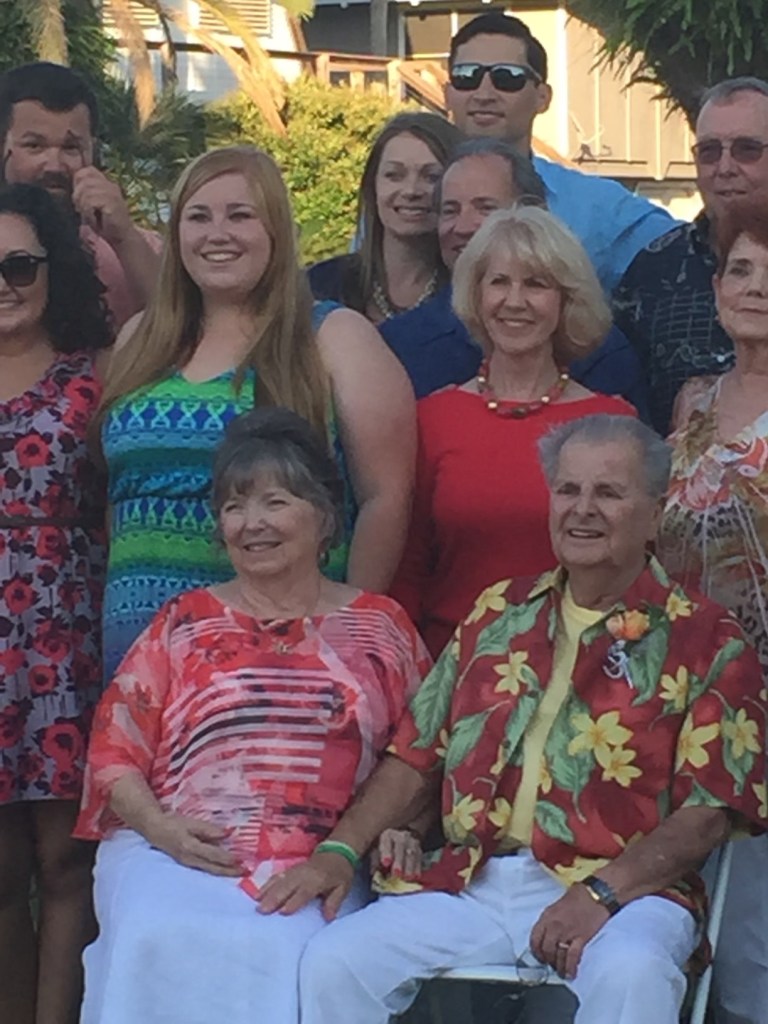
Harry Waldheim was a good man, a humble man who devoted himself to the people he loved and to his church. For years he was a regular member of Sagemont Baptist church where he met my sister-in-law’s mother, Barbara who became a dear friend of Harry’s first wife. When that wife became ill Harry faithfully cared for her through many weeks until she died. Not long after that, Barbara’s husband unexpectedly became ill and also died. Harry and Barbara found comfort in each other as the both grieved for the spouses they had lost. Eventually their friendship turned to love and while in their eighties they decided to marry in a beautiful ceremony in Galveston wearing Hawaiian gear and brilliant smiles, surrounded by their two families that would ultimately become one.

I was lucky to get to know Harry at family celebrations. He was always kind and pleasant and funny. He embraced life with every breath and made me and everyone around him feel so comfortable and loved. He brought an almost ethereal optimism to our gatherings and we all knew that we were in the presence of a very special person. 

Barbara and Harry never slowed down. They loved to travel, especially on cruises. One trip that they both had dreamed of making was a visit to the Holy Land in Israel. It was a spiritual time for both of them blending their histories and their love together in a culminating baptism in the Jordan River. It would become a kind of consecration of their beliefs in loving their fellow humans unconditionally and praising the glory of God. 

Harry loved a good joke and a good laugh almost as much as he loved family and friends. After he and Barbara moved from Houston to be closer to Galveston they joined Galveston County Church where they studied the Bible, attended services and volunteered whenever the community needed a helping hand. Harry found great solace with the members of that church and was in turn beloved. 

Harry was quite excited when he qualified for an Honor Flight to Washington D.C. to view the memorial for the Korean War. There he joined fellow servicemen to be honored for his service and sacrifice. That event was one of the highlights of his life. He was an American patriot through and through who showed his gratitude for his freedoms with a love of country that was exceptional.

In spite of some illnesses here and there Harry seemed to always find his way back to good health and his jovial ways. Not too long ago his doctor was proclaiming how fit he was for a ninety two year old man. He was already planning another cruise with Barbara and was the life of a recent party with his never ending sense of humor and appreciation for life.  He joked about his health but otherwise seemed to be feeling fit. His death took his family by surprise. Somehow they could not imagine a world without him. 

Harry Waldheim was a very good man who never allowed the suffering and sorrow of his life to alter his love, compassion or joy. He made people feel the generosity of his heart. He will be missed, but those of us who knew him realize that he is now rejoicing with God. We’ll don our Hawaiian shirts to honor and remember him today. Mostly we will celebrate the glory of his new home with the angels and saints and the God that he so loved.