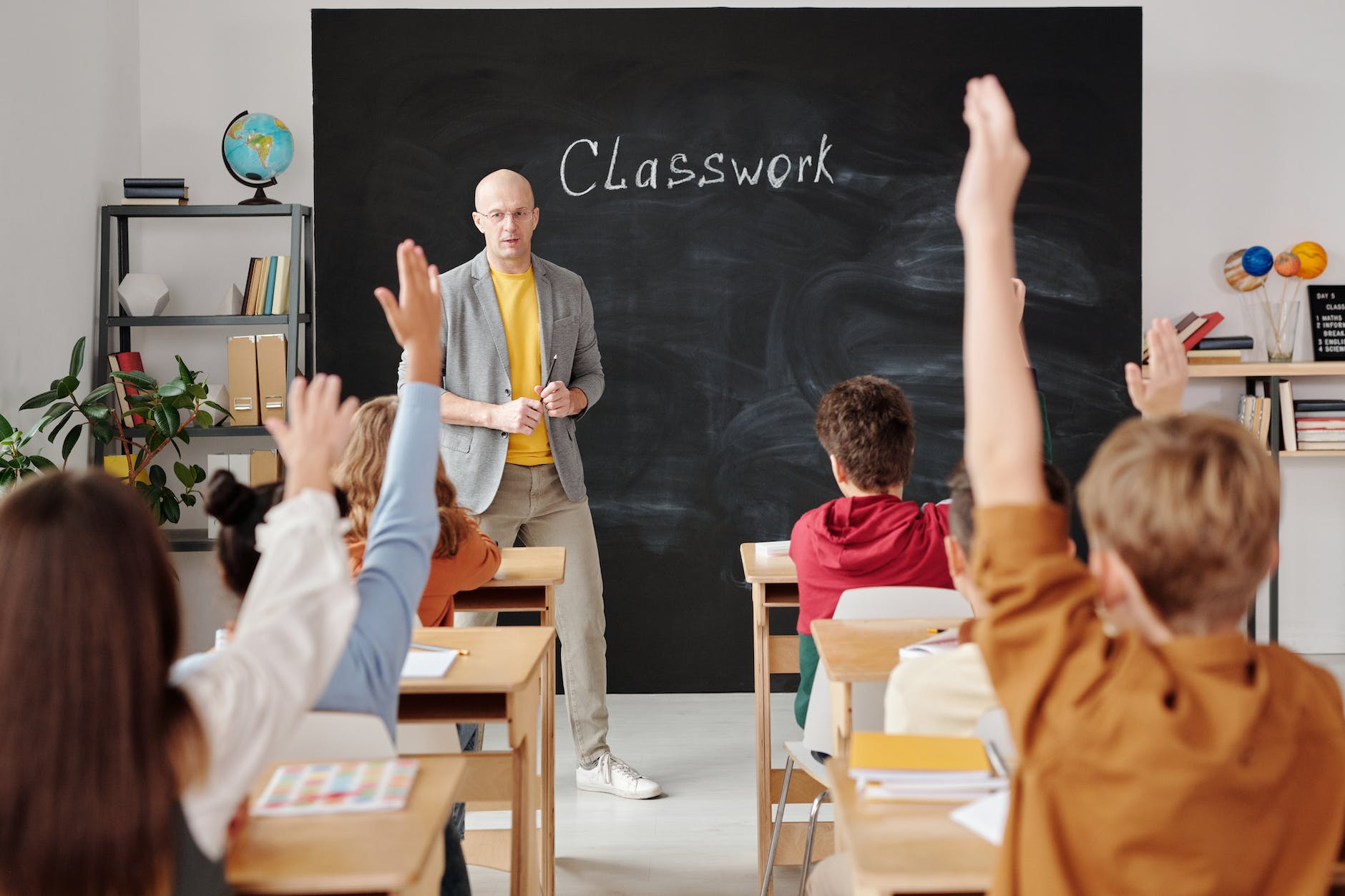
Where Have All The Teachers Gone?

Photo by Max Fischer on Pexels.com

There is a teacher shortage all over the United States. The question becomes, “What should we do to attract and keep great educators?” As someone who worked as a teacher for decades, hired and mentored teachers, served as Dean of Faculty and interacted with my daughters’ teachers as a parent, I have many ideas. First and foremost we as a nation need to begin to show our teachers the respect that the vast majority of them have earned. It is time that we no longer consider choosing education for a career as a fallback move. We should be proud of individuals in our families and neighborhoods who decide to devote their intellects and talents to building the educational foundation of the nation just as we are of doctors, engineers, business persons, professional athletes and movie stars. 

Right now we still joke that teachers are people who can’t do anything else. We pay individuals a pittance for their efforts when they do choose the educational profession. In fact, there are people working on assembly lines who earn more than a teacher ever will. We ask our teachers to work long hours, take work home, and enroll in continuing education classes that take place on weekends and after school all while wondering if the day will come when they will become victims of a mass shooting. When teachers earn graduate degrees they may get an additional five hundred or one hundred dollar boost in their salaries. 

Insinuating that teachers need a script to teach is demeaning and yet it is happening right here in Houston. Telling them to use stop watches to time themselves reeks of counting how long it takes for them to make something in a sweatshop. Teachers need time to really know and understand their students and the needs of their students. They should have smaller classes to do this, not bigger groups. We should trust their judgement unless there are indications that they may require some assistance or advice. We would do well to find out what supplies they need so that they don’t have to use their own money or sponsor fundraisers just to create exciting lessons. 

More importantly than anything our teachers should be part of the groups that find solutions for problems in our schools. They know better than anyone what is going right and what is going wrong. Our job should be to listen to them and to try some of their ideas rather than bringing in so called experts with canned methodologies that may or may not suit specific situations or students. Teachers should be our primary source of determining what will stop the flow of educators out of the profession. We have to allow them to honestly state the reasons that so many have grown so unhappy. 

Our school leaders must work collaboratively with teachers rather than grading them. A good start for teacher/principal conversations should be “How do you feel about the lesson you just gave?” “Is there anything I might have done to help you make it better?” “What do you need?” “What would you change about your classroom/our school?”Once real non-judgemental dialog takes place change and improvement is more likely. Nobody wants to fail. Coaching does not have to be brutal or abusive. 

I suspect that there are politicians whose goal is to downgrade public schools as an excuse for creating vouchers that can be used in private schools. What few parents realize is that even with a check from the state, most private schools will still be out of reach for the average family. At twenty thousand dollars plus, the state allotment would not even cover half of the cost. Furthermore students would have to pass entrance requirements and sometimes find their own transportation to school. I tend to believe that pushing privates schools also a way for some, not all, parents to shield their children from students of other races, ethnicities, and income levels. That was certainly the case when the United States enforced integration laws in places like Mississippi. The result was a spate of quickly built private schools that became havens for whites who did not want their children to have to integrate. Overnight the public schools became majority black schools while all white private schools became a popular choice for those who wanted their children to continue living in a bubble. 

We should treasure and nurture our public school system and the teachers who staff them. It’s time that the facts about teaching become crystal clear to everyone. Teachers do not work from nine to three. It is more like seven to four with lots of additional homework for the evening and weekends. Teachers do not get three months vacation. Teachers have to pass certification exams that most adults would have great difficulty mastering. Teachers have very little free time during the school day and none inside the classroom. They are on their feet moving from student to student, assuming responsibility for classroom management, instruction, planning, counseling, nursing minor injuries, monitoring, grading and so much more. The average teacher literally works more hours per year than most professionals and yet our society tends to treat them as babysitters instead of honoring them for all that they have done for the children of this nation.

It’s time to start holding discussions with teachers and hearing them out then acting on what they have to say. If we let the brain drain continue we will find ourselves in a last minute crisis. We owe it to our educators to trust that they will advise us wisely. In the beginning there may be some grumbling, but once they believe that we are sincere in wanting to elevate them to the role that they deserve, they will give us their best. Teachers are altruistic by nature, but even saints grumble now and then. We would do well to save our schools by starting with saving our teachers. We don’t want to one day have to ask, “Where have all the teachers gone?”

It Really Does Take A Village

Photo by Polina Tankilevitch on Pexels.com

I am an advocate for public education. I think it is the bulwark against ignorance in our society. That being said, I was a product of Catholic school education where I spent twelve years learning both academically and religiously. When it came time for college I wanted to be part of a large public institution to offset what I had experienced during my development as a child. I found the balance to be rather remarkable in moulding me as a person. I became an adult formed by different perspectives that ultimately made me more aware of both our universal and individual human characteristics. 

When I had children of my own the cost of a private school education like I experienced had become financially unreachable. I supplemented my daughters’ public school education with regular attendance at Sunday mass and continuing Christian education classes. This provided them with enough knowledge from differing arenas to make their own decisions about how to view and live in the world. 

Emmanuel Kant famously argued that each of us sees the world from our own perspectives. Reality for a human is affected by what we think we see, which for most people is relatively limited. Education has the power to open our eyes to different perspectives, to widen our view of the world and its people. It should be the goal of schools to present ideas and skills and knowledge to the young people who come to them that make them more aware, but that is not always how it works. Each of us is limited by our particular backgrounds and points of view that either purposely or unwittingly color how we teach the young. For that reason one the best things schools might do is demonstrate to our children how to think critically and even how to think about their own thinking. 

Of late I have been teaching a group of youngsters who are homeschooled. I began with the eldest sons of two sisters. From there my reach expanded to include other members of the family as well as to friends who were in search of a math teacher. I have learned that homeschooling is far more complex than I had once imagined. The students rarely sit at home learning only from a mom or dad. Instead they attend classes in small groups called coops that are akin to private school without the high tuition and days long attendance. There is a great deal of flexibility and choice in homeschooling that can even include online classes offered by community classes and universities. What homeschooling is not about is just allowing kids to sit around the house all day doing little or nothing. It can take a great deal of work for parents of homeschoolers to keep up with the schedules. 

The two boys with whom I began were ready to begin classes at San Jacinto Junior College by the time they were sixteen years old. Within two years they had earned associates’ degrees. One of them is now working towards certification as an electrician and the other has been attending flight school in the hopes of becoming a pilot. They are thriving.  

Another of my students will complete his associate’s degree this semester and will begin classes at the University of Houston in January. He began taking online classes at Alvin Junior College before he was sixteen years old. He had attended a homeschool pod focused on a classical education in his younger years. I was his mathematics teacher from the time he was doing fifth grade work. He too has flourished in the home school environment but his parents have worked hard for years in their efforts to drive him from one class or group to another. It was hard work that has served their son well. 

From working in public schools and watching my daughters and grandchildren in public schools I have been mostly impressed by the level of excellence that I have witnessed. As with any large organization there is room for improvement, but overall our nation’s public schools are steadily working hard to educate an incredibly diverse population. Most young people today graduate with knowledge and abilities that few of our ancestors possessed. They have differing skills based on their individual interests and abilities but they are indeed ready to take the next steps in becoming adults. 

Differing ways of educating the young have differing results. Some children become superstars in public schools while others flounder for various reasons including difficulties at home, learning disabilities, and the level of effort they are willing to give to the process of learning. The same is true of those who attend private school or learn in a homeschool environment. It takes more than just good teachers or interested parents to get the most out of an educational experience. Our individual traits affect our learning perhaps more than any other variable. Grit and a growth mindset enable students to maintain determined efforts even in the face of challenges. The best thing we can do for our young learners is to encourage them to work hard and be willing to be unafraid to admit their difficulties. Honest efforts lead to success in the educational journey wherever it takes place. 

I am still a huge proponent of public education. I believe that for the vast majority of people it produces the best and most consistent results. I have now worked in the public, private, and homeschool sectors of the educational community. Overall the most consistently excellent, democratic and affordable learning takes place in our nation’s public schools. Not all private schools offer a quality program taught by qualified teachers. The best private schools of the lot are often beyond the means of even middle class families. Homeschooling can be exceptional with enough effort from the parents but without a high level of focused attention it can literally turn into a long play day for the kids. Everyone should think carefully about the many sacrifices that parents must make during the learning years of their children. For good results everyone has a job to do. It really does take a village to make it all work regardless of where the learning takes place.

A Model For Happiness

Photo by Maria Orlova on Pexels.com

I see so many people striving to be happy without much success. There is of course legitimate clinical depression which is a health issue, but many folks seem to be on unfulfilled journeys of discovery. They never quite find the magic situation that will keep them happy and satisfied. They are drowning in perceived imperfections about themselves and the people around them. They deal with challenges that would be daunting to any of us, but never seem to find a way out of their anger or doldrums. They finds themselves continually believing that somehow they are doomed to feeling sad most of the time. They ask what they need to do to grasp that beautiful feeling that life is truly good. 

My mother had to be one of the most tragic figures I have ever known, Her story was one of loss, challenges and struggles with health. In spite of the almost unremitting tragedies that seemed to follow her, she was in fact the most optimistic person I have ever known. 

Mama was the youngest of eight children who lived in a household that struggled to survive and yet she describes her childhood as magical. Growing up in the heart of the Great Depression meant that times were hard for most people, and so it was for my mother. She recalls getting hand me down shoes to wear to school that had been worn out by her older sisters. Instead of complaining she often smiled and boasted about her mother’s ingenuity in placing cardboard inside the shoes to cover the holes that grew ever larger on the soles. 

Mama spoke of hearing taunts from neighborhood kids about herself and her immigrant parents. They would throw rocks at my mother and her siblings. While Mama admitted that it initially hurt her feelings, she tried to ignore them because she felt sorrow for their ignorance. She often told us how she held her temper and walked with her head held high. She knew that her father was an avid reader, a man who worked so hard that he never lost his job. She was proud of herself and her entire family. She felt blessed to be in this country enjoying the opportunities that it held. Nobody was going to steal her joy.

When my mother was a young woman she became engaged to a young man who was sent to fight in the war in the Pacific during World War II. He was ultimately killed on Saipan and my mother admitted that she was quite devastated for a time. Nonetheless she knew that other people had also endured such losses and had managed to grieve and then get back into the game of life. So she concentrated on improving her skills and going to work. She purposely focused on the many good things that came her way each day. Soon her soul was healed.

Mama’s life was transformed when she married my father. For the first time since she was born she was part of the middle class. She had a beautiful home, a new car, nice furniture, vacations each year. When he suddenly died all of that changed. Since his death came from a car accident she had to purchase a very basic car without even the luxury of an automatic transmission or carpet on the floorboards. She moved to a small house and struggled to make ends meet from month to month. All the while she focused on her good fortune in finding a car that ran so well, a home surrounded by lovely neighbors. She boasted with a spectacular grin that we never missed a meal. She thanked God daily for the roof over her head, the warmth that we had in cold winters. 

If Mama heard of anyone who was in need she always seemed to find someway to help them. She would stretch her budget to include monetary donations to people that she did not even know. She was the first to cook a meal for a sick friend or bake a cake just to help someone feel better about themselves. 

Our home was always filled with people who dropped in just to be with Mama. They fed on her optimism. They always felt better just being with her. She had a way of making everyone feel important and loved. She overlooked people’s flaws and instead only saw the beauty of their souls. She never felt that relationships had to be balanced. If she gave of herself and the other person did not, she was okay with that. The important thing for her was validating people just as they were.

Perhaps the biggest challenge of my mother’s life came when her symptoms of bipolar disorder became full blown. It became difficult for her to maintain her household and she often had long absences from work when her illness was roaring out of control. She lost most of her acquaintances who suddenly did not feel comfortable around her. Her economic situation became more and more tenuous, but amazingly she remained positive about people and life in general. She found joy in the most mundane places and situations. A ride to a nearby beach was as good in her mind as a European vacation. An ice cream cone on a hot Friday night was an incredible luxury. Listening to the Houston Astros on the radio was five star entertainment. 

When my mother died from lung cancer people came out of the woodwork to tell me how inspiring she had always been. There were students who remembered her as the most wonderful teacher they had ever had. There were strangers who told me of her random acts of kindness. I read letters from people that she had helped through hard times. I heard about her cheerful phone calls that brought sunshine to those whose days were often dreary. I learned that her secret had been always making people feel that they were the most wonderful and important individuals in the world. I found out that my mother never asked for anything in return for her compassionately caring ways. 

My mother taught me to do one good thing everyday and I would suddenly realize that happiness is not elusive after all. Instead of dwelling on what I don’t have, she showed me how to treasure what I do have. Most of all she demonstrated how to love people without a need to see that love returned. Likewise she loved people unconditionally.

I wish that all of the lonely and sad people who are struggling in darkness had known my mother and seen how easy it was for her to find happiness wherever she went and whatever her actual circumstances might have been. She made it seem as simple as just smiling. Her one optimistic thought or action always begot many many more. She was a model for happiness.

The Feeling

Photo by Bastian Riccardi on Pexels.com

There is a feeling that I get each year when November rolls around. I find myself wondering how we are already rolling into the Thanksgiving/Christmas season. Wasn’t it just yesterday that it was January? Did I somehow fall asleep like Rip Van Winkle and miss the ten months leading to this moment? In fact, wasn’t it 2020 a few seconds ago? How can we be suddenly moving toward 2024? 

These days I feel as though I am moving on a speeding train. Even the length of a single day seems shorter than ever before. It feels as though I am running from one moment to the next barely keeping up. I am mostly retired or was supposed to be, but somehow I find myself frantically filling every hour of every day with tasks commanded by my to do list. I feel the need to keep apace with my duties because the unexpected comes along with more and more frequency. I have to be as prepared for whatever happens as I was when I’d rise before the sun came up to prepare for my job and return after dark for an hours long marathon of juggling family responsibilities with the demands of my career. As strange as it may sound those days felt longer and more generous in providing me with the time to get things done than I am now experiencing. Is there some magic that shortens the number of hours in the day as we age? That is certainly how it seems to be.

Yesterday I was a senior in high school like my youngest grandson and a godson. Did I somehow time travel to my future without ever realizing that I was on the fast track of life? I blinked and the wide eyed young version of me was transformed into an old woman with droopy eyelids. Sure I am wiser than I once was, but the sad part is that there are no do overs. The mistakes that I have made cannot be undone. I can only forgive myself for my ignorance and thoughtlessness rather than living in a haze of regret. Nonetheless I feel pressured to engage in a marathon of fulfilling my bucket list before I reach a point of being unable to do so. I still have so many dreams and so little time. Somehow I am racing from one day to the next to get this done. 

I suppose that my Baby Boomer generation is a bit more loathe to hang up our spurs and just sit back to enjoy the quiet of growing older. I remember my mother and grandmothers embracing a slower pace of life with gratitude. They reveled in sleeping late in the morning, taking little naps in the afternoon, letting dishes pile up in the sink, making as few appointments as possible. They let chores and duties slide to make time for sitting in their gardens just watching the birds and observing the bursting of blooms. They were always open for surprise visits from family and friends. They’d keep coffee and tea on hand for anyone who knocked on their doors. They did not worry about answering with bare feet, messy hair, and styleless clothing. They were simply happy to see someone that they loved any day, any time. 

My generation of women was on the front line of change from a patriarchy to shared power with men. We don’t need someone to hold open doors for us. We were challenged to do it all and we learned how to balance a thousand different tasks in a single day. Turning off the energy that it took to achieve that level of productivity is not easy, especially for a Type A personality like me. To be successful in both the old world and the new I had to toughen up, to have the resiliency of an Olympic athlete. I learned to survive on six hours of sleep at night. I had to become a planner down to the minute. I was able to pace myself by never stopping. It was the price I fully accepted in order to change the status of women from stay at home housewives and moms to human dynamos able of wearing dozens of hats. It was not easy, but a whole generation of us did it and now that we are retired we do not know how to just relax. We have to keep ourselves busy or we may fall apart. 

I suppose the day will come when I am forced to accept my age, embrace the fact that I am old in the eyes of the young. Still, I am not yet ready to surrender until I have to do so. I presume that the old men running for President of the United States see themselves as I see myself. We all still believe that we must keep working, accomplishing, doing. I wonder if that is good thing or if maybe it is bad. 

My husband is content with his retirement years. He does not feel a pressing need to keep pushing. He has learned how to relax. He smells the roses when they bloom. He is ready for random adventures that serve no purpose other than to make him smile. I suppose that he has found the key to aging gracefully while I am still trying to learn how to do so. 

Some of us have personalities that push us to make every day purposeful or we feel somehow unfulfilled and maybe even a bit guilty. We have a very hard time doing absolutely nothing or skipping routines for a day just because. Perhaps I would do well to begin practicing those things so that it will not be as traumatic when I have to let things go. I probably need to leave the laundry in a pile and take a drive to the ocean. Maybe I can skip one task each day just to prove to myself that I won’t be less than for doing so. Anyway, I am going to try to relax.

Caretakers

Photo by Matthias Zomer on Pexels.com

I’m a caretaker. It’s what I do. I suppose that I wasn’t always that way, but my father’s death changed everything. It was the first time that I saw my mother unable to even get out of bed. It frightened me, but I remembered my father telling me that I was not using all of the talents that I possessed. He urged me to work harder, be nicer. Somehow in that moment I felt as though I had found my purpose in life. I needed to help my mother. I felt compelled to watch over my brothers. I began to notice people who were hurting or frightened or feeling lost. I learned to listen to them and understand their pain because there were times when my own anxieties threatened to overcome me. I channeled my fears into my studies and learned more and more about our very human natures and the difficulties that have plagued people from the beginning of time. It was almost inevitable that I would want to become a teacher. When my mother had her first mental breakdown I was terrified, but also understood that it was up to me to care for her. Thus it has been for most of my lifetime. 

It seems that there is always someone who needs to talk or just simply wants to unload the sorrows that are suffocating them. I understand the hardships associated with living and I do not judge how people are coping with them. Sometimes what I see or hear is so devastating that I have to harden my personal armor to keep from feeling crushed by the cruelty that lurks in the world. I’ve had to find ways to protect myself from taking on too many causes, too many worries. I work in my garden or solve word puzzles or write blogs to calm the anxieties that arise when I begin to question what kind of world would be so unkind to so many innocent people. I escape from being responsible long enough to energize myself. I become ready to be a caretaker again. 

When I recently read about Gisele Fetterman, the wife of Senator John Fetterman, I found myself understanding her even though I have never met her. I learned that she has traveled on an uncertain journey for much of her life. She had to learn how to adapt to whatever happened from day to day, sometimes from hour to hour. She understands how quickly life can change and how difficult it can become. She is a courageous survivor, but also a generous caretaker. Since her husband’s struggles with depression have been publicized she has become a voice for families dealing with the mental health issues of their loved ones. She welcomes and comforts strangers who simply need to share their stories. 

As I read about the realities of her life and the love she seems to spread wherever she goes I saw a flicker of myself, although my little contributions to helping others are minuscule in comparison to hers. Still, I felt as though I instantly knew and understood her. There is an uncertainty about what will come next when tackling the needs of others. Some days can be overwhelming and lead to an urge to eschew responsibility and just run away. Those of us who take on a caretaker role know all too well that we are not saints. Sometimes we even feel selfish and ugly with our momentary desires to just tell everyone to go away. We have to learn how to cope from moment to moment. Gisele Fetterman calls it adapting. We do what we can do in the moment without building our expectations for tomorrow. We learn when it is time to give ourselves the gift of taking our own mental health days. We steal away to pamper ourselves with a day at the beach, a shopping spree, or a meal at a fancy restaurant. We let our sense of responsibility rest for a moment and then we are energized once again. We learn these things as we go along.

People who are sick, mentally ill, or aging are not always reasonable. We may think that we know what they need, but they have different ideas. They push back when we try too hard to do things that we believe will help them. Being a good caretaker means learning when to compromise or even when to let them learn on their own. It’s difficult to watch someone denying their problems or placing themselves in dangerous situations. In some cases we have to force them or trick them into doing what seems best for them. It takes patience and love to convince them that the intention is not to hurt them but to protect them. So it is with all caretaker roles like parenting, teaching, nursing, doctoring, ministering, being a loving spouse or child. 

It is incredibly gratifying to help others, but doing so can also take it’s toll. We often forget the person who is holding down the fort while showering the individual that they are helping with praise and attention. Caretakers are all too often unsung heroes who quietly do the hard lifting without complaint. We might briefly commend them for their efforts but we are just as likely to forget about them and the hard work that has become their daily realities. We would do well to treasure such people and to take the time now and again to ask them how they are doing. 

It was lovely to see someone heaping so much praise on Gisele Fetterman. She is the rock for her husband and her children who quietly keeps all of the moving parts well oiled and repaired. There are many Gisele Fettermans among us. Seek them out. They are generous people but also human. They would enjoy acknowledgement for what they do so naturally. They may be quite happy people because doing for others is a gift in itself, but even they appreciate a pat on the back now and then. Find those people and give them a shoutout. It just may keep them going one more day.