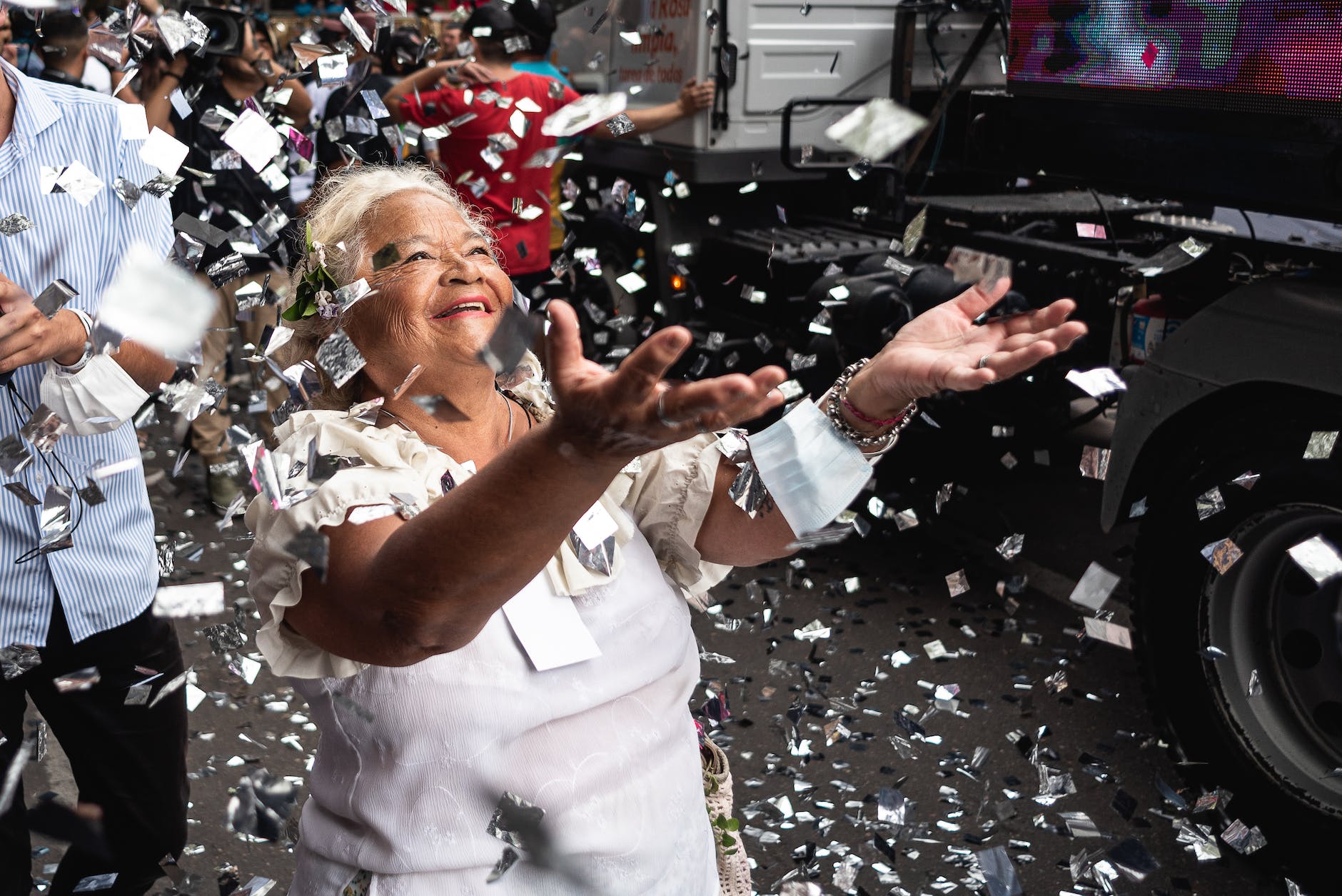
Getting the Most Out of Each Breath We Take

Photo by Alejandro Sanchez on Pexels.com

I admittedly fear death, not my own, but the death of people that I love. I have no doubt that this obsession comes from the unexpected death of my father during my childhood. I tend to dwell on thoughts of losing someone, especially as I myself grow older. No matter the circumstances it is always tough to say goodbye to someone who has been part of our own lives, but now and again we hear of an instance when death was a beautiful and spiritual experience. 

Everyone of us knows that death is inevitable. Nobody gets out of this world alive. We are reminded again and again that each of us have a limited lifespan, some more so than others. We watch a loved one suffering at the end of life and our grief is punctuated in knowing how difficult the last moments were for them. Sometimes individuals take charge of the situation much like a lovely woman who quite recently died. 

She was a lively individual who was sassy and joyful. She was the kind of person who made everyone in a room feel welcomed and loved. Somehow this lady made an indelible impression on me even though I had only been around her a few times. Her charisma and energy drew me to her and when we talked it felt as though we had been the best of friends for years. Time and distance kept us apart but I often thought about her with great pleasure. We exchanged Christmas cards and I heard stories about her from those who had first introduced me to her. 

This incredible woman was as lively as can be while reaching her mid nineties. Without warning she found herself in need of gallbladder surgery. The surgery was a success but the anesthetic left its mark on her kidneys. She could have undertaken months and even years of medical treatments but instead she chose to let nature take its course. She had been blessed in life and saw no need to extend it any more than necessary. As she grew nearer to death she was able to visit with all of her loved ones and she remained as wonderfully delightful as ever. They gathered around her and witnessed the peacefulness of her heart and her faith that God had been with her all along her journey. There was no suffering, only the happy expectation of joining her husband and her daughter in heaven. 

I think that this is the way most of us would like to spend our final days. We don’t always get that kind of choice but when we do it is a kind of blessing. Many among us choose to accept the inevitable on our own terms rather than attempting to elongate our lives with endless treatments and visits to doctors who are telling us that all it will buy is weeks or months. 

My mother chose to forego treatments that would have extended her life only a matter of weeks. She too passed from the world surrounded by family and in a state of elation. There was literally a glow about her when she smiled. She had made peace with her destiny and gave each of us the gift of knowing that she was happy in those final moments. 

I read a rather controversial editorial in a past issue of The Atlantic after hearing about it from my primary care physician. It was written by Ezekiel Emanuel, a doctor and the brother of Rahm Emanuel. In the essay he said that once he reached a certain age he would no longer take extreme measures to extend his life. As a physician he had noted that those who do so tend to suffer more in a quest to keep living than those who face the inevitable truth that their bodies are slowly shutting down. He did not suggest that younger people avoid such treatments or even older folks whose diagnoses of better health are fairly certain. He was talking about last ditch efforts with very limited promises. 

I have a friend who agrees with Dr. Emanuel. She is in her late seventies and is refusing all but the most basic medical services. A cousin of mine did the same after his diagnosis of heart failure had exhausted every possible surgery and treatment that might have given him years rather than weeks or months. Not long ago an uncle turned down surgery for the same reasons. These people chose to die naturally rather than attached to tubes and wires. 

I’m not sure how I will feel if and when such a day comes. For now I have few health issues other than arthritis and osteoporosis. I take medication for heartburn but my actual heart is working like a champ. I may live a very long time with or without extra efforts like my grandfather did. It’s not something that I worry about unless it involves someone I love. Then I find myself wanting to try anything to keep them alive just a bit longer. I suppose that maybe I should just let them decide how they want it to be. Instead of worry about their deaths I should spend more time enjoying their lives. None of us know when that last breath will come. Being afraid of it is not the answer, but getting the most out of each breath we take is.   
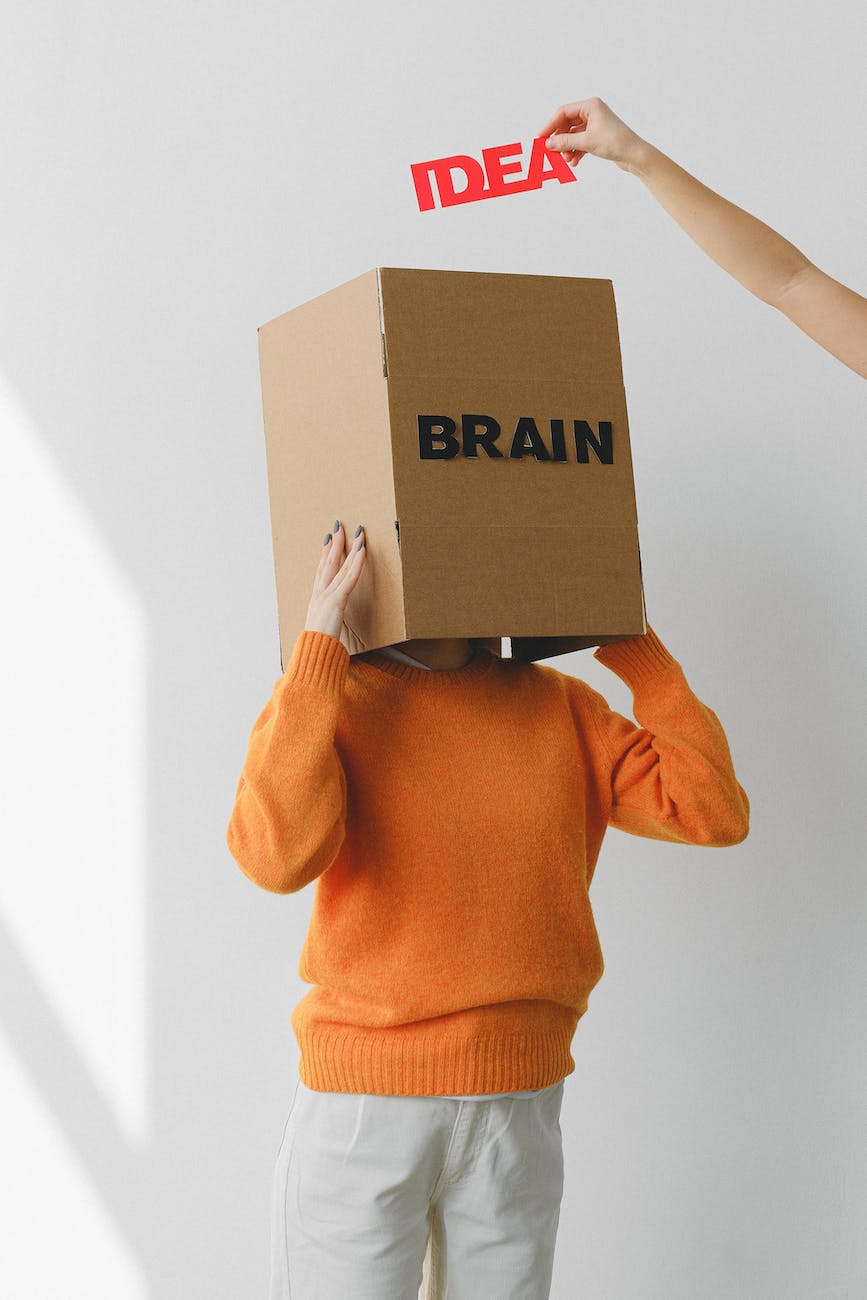
Someone Is Already Working On It

Photo by SHVETS production on Pexels.com

I have always been utterly fascinated by the creativity of humans. I suppose my interest began when I tagged along with my father. He enjoyed explaining things to me and I soaked up his information like a sponge. When he created a model of our home I spent hours quietly watching him work at his drafting table creating the three dimensional scaled down replica. Even though I was still a toddler he showed me how to use ratios and proportions to change actual measurements into miniature images. I remember being fascinated with his drawings and his patience in making studs and shingles and planks out of balsa wood while explaining his every move to me as though I was old enough to fully understand what he was saying. 

When I was a bit older and we were living in another house he tutored me on the steps for creating a sidewalk. Once again I watched him meticulously measuring and planning for the concrete structure that would lead us from the driveway to our front door without ever walking on the grass. To this very day I do not take the sidewalks around my neighborhood for granted but I sometimes wonder if there had been enough care in constructing them because I know they are cracked and tilted while the one my father built is still as straight and strong as ever. 

The world is filled with individuals whose minds are so brilliant that they somehow seem to transcend the limitations that most of us feel. I recently thought about the two graduate students who met at Stanford University and turned an idea for a doctoral dissertation into what we now know as Google. As students they became the talk of the Computer Science department as they begged and borrowed equipment to test the mathematical algorithms that they had created to bring order the the worldwide web. The work that started in their dorm eventually continued in the rented garage of a woman who was struggling to make the payments on her home. With seed money from interested investors the rest of their story became history. 

My father taught me to watch for such innovators. He dreamed of the future and often spoke of the concepts that he believed would eventually become reality. One of his prized books was an early depiction of the rockets that would one day carry humans to the moon and into the outer reaches of the universe. That illustrated tome became the impetus for my brother to study engineering and later work with NASA to send astronauts to the International Space Station. 

I always regretted how much my father missed with his early death. He would have been incredibly excited about the space program. I feel certain that he would have wanted to be part of the work happening just down the road from where we lived at the time he died. I knew that he had been searching for a job that would be meaningful and the exploration of space was just the kind of thing that motivated him and captured his creative spirit. 

My father also understood the fragility of the earth’s ecosystem. He spoke of our need for water and how the oceans might surely become a source for our human needs if only we found a way to remove the salt. At dinner time he would regale us with ideas for making the earth a better and healthier place. He took delight in sharing his knowledge with us even as we sometimes barely managed to understand what he was saying even when he used the simplest of terms. 

Now I watch a younger generation that shares my father’s fascination with implementing new ideas for transforming our world. I get as excited when I hear them as I did when my father expounded on the creative natures of humans and the possibilities of the future. I can see my dad driving an electric car and telling me how solar and wind power will save us from our our hubris which had the audacity to believe that we do not need to keep learning and inventing and adapting and caring about doing things right. 

We can’t afford to stand still or lapse back into old habits. I learned this from my father. It is up to each of us to stay abreast of innovation and to encourage the bright minds among us to take chances in the quest for knowledge and the betterment of how we live. My father would tell me to have an open mind and to appreciate the process of discovery. These are lessons that have influenced me for all of my life because I remember him embracing the evolution of ideas in mathematics and engineering and even in the arts. He understood history as a driver of progress, not as a stationary exemplar of how to cling to the past. He taught me to appreciate the great minds who always seem to rise up to save civilization even in its darkest hours. 

My father taught me to believe in the best nature of humans. He showed me over and over again how noble we can and should be. Thinking of his lessons fuels my optimism. Watching the world through his lens tells me that we may face some rocky times but we will eventually be better than okay. Right now someone is already working on an idea that will elevate us all. I can’t wait to hear about it and bring it into my life.  

The Springtime Sprint

Photo by RUN 4 FFWPU on Pexels.com

I still celebrate spring break even though I retired from public education thirteen years ago and have no children left at home. I’ve continuously kept my hand in the education game during all of that time that I have been away from a formal job. Somehow I have been unable to just let go and be totally retired so each week I spend two days and three evenings either being the mathematics teacher of a number of home-schooled students or tutoring those who are in public school. My familiarity with mathematics has kept me busy from the moment that I walked away from a full time job and provided me with some “fun” money to spend on my home and my grandchildren. Somehow I simply can’t break the habit of scheduling my routines according the the school year calendar. 

Spring break always comes just in the nick of time when students have lost focus and teachers are tired and wondering if they have made any progress at all. The short days of winter are behind us and the children enjoy more opportunities for using channelling their pent up energy into the natural pursuits of running, playing and exploring the world. Learning is not just about books and formalized lessons. There is so much that our youngsters must do beyond the classroom in order to fully understand themselves and the world. Spring break heralds a time of more balance for youngsters and their educators. We all need a bit of independent fun and relaxation now and then to keep us feeling fully whole. Coming back refreshed gives us the will to make the final push before the end of the school year which is only weeks away. 

The coming days will feature a frenzy of activity in which those of us who are teachers push to bring our planned curriculum to fruition in every student. We’ll have to fight a number of traditional student “illnesses” like spring fever and “senioritis. “ Another educational journey with our students is coming to a close but hopefully the knowledge that each person takes into the future will represent important building blocks in helping them to become confident and capable adults. Knowing that our students are ready for the next phase in their lives is one of the greatest challenges in school year after school year, often with little notice beyond the confines of the thousands of classrooms across the nation. 

As is often the case with humans we tend to focus more on our failures in getting each and every student successfully past the goals that we set at the beginning of the school year. We beat ourselves up when we realize that some of our charges are still struggling at the end of our artificially imposed deadlines. We forget the reality that each of us grow at our own individual paces. When we push a template for the timing of success on everyone we are bound to feel as though we have failed. Instead we might consider breaking down the education of an individual into a series of goals that we measure according to each person’s needs rather than a generic deadline. 

Spring break and the changing of the seasons always reminds me of the folly that we impress on our children when we expect them to progress in lockstep. Little in life works that way. Even the trees of the same variety in my yard burst into buds at differing times. I have learned to be patient and confident that the ones that are the last to demonstrate their awakening are often the ones that will be the most beautiful. 

If I am willing to allow the natural rhythm of my plants to demonstrate their glory then I wonder why we feel so compelled to constantly rank our youngsters according to the speed with which they learn and perfect skills. We already know that humans do not develop along a preset schedule and yet we ask our children and their educators to push hard to insure that everyone reaches the finish line of a school year by a predetermined date. Our insistence on such rigidity is holding back those who grasp the concepts more rapidly and injuring the confidence of those who require more time. 

We make our teachers and many of our students feel inadequate because we insist on a one size fits all way of educating the masses. We treat individuals as though they are all the same which works nicely when discussing rights but misses the mark when applied to the process of learning. We do our children a disservice by forcing lots of square pegs into round holes. Sometimes we actually damage the psyches of those who learn in different ways and at different times. 

Perhaps spring time should not beckon an ending of a particular school year but simply a time to realign our efforts to match the progress of each individual child without stamping him or her with the labels of winner or loser. Instead we should list what we know each student has mastered, celebrating individual efforts wherever they fall on the continuum of what they need to learn. Think of how wonderful it would be if we were to focus on the process rather than racing to an endpoint. We might begin to create lifelong learners rather than a nation of people who see schooling as something punitive. 

One of my grandsons is a runner. I have watched many of his races and inevitably there are gifted athletes who are far ahead of the pack. Then a tight mob of good but average runners come along and finally there will be a few who cross the finish line noticeably later than their peers. In every case the crowd cheers everyone on, clapping for their willingness to keep going. We congratulate them for their efforts and for the fact that they are trying while we are only sitting in the stands.

Maybe one day spring break in schools will be followed by celebrations of what each person has learned rather than a competition in which some students and teachers earn accolades and others only feel like losers simply because they have accomplished or learned a bit less than their peers. Instead we should be congratulating them for what they have successfully completed by showing them the progress they have made. If we build on each personal outcome in appropriate ways everyone will keep running in the springtime sprint knowing that it is actually a marathon in which everyone has a chance to get to the finish line.

Ignoring the Lessons of History

Photo by Karolina Grabowska on Pexels.com

Does history repeat itself? If so, why don’t we humans learn from mistakes and follow processes that were successful. It sometimes feels as though humans keep stumbling into the same kind of messes over and over again, like children needing to get burned by a hot stove before they comply with parental warnings meant to keep them free from harm. 

I suppose that our diverse ways of thinking can create brilliant responses to problems or drive  us into states of war. Neither philosophers nor historians have been able to keep us from arguing with each other over how best to live in harmony. Our darker natures seem to get us into trouble over and over again and as our inventiveness improves so do the horrors that we are capable of inflicting on one another. 

We all have an innate sense of what is morally right and what is very wrong and yet we find ways to wriggle around even our strongest beliefs. Most of us would agree that killing another human is immoral but we allow ourselves to kill in self defense. That seems to be a logical way of thinking and yet we have those who would die rather than take up arms against another person. We condone wars as a sometimes necessary evil while some among us conscientiously object. The lines begin to blur and the differing opinions about what actually constitutes murder multiply creating rancor between us. Our social contracts become strained as we attempt to sort out what should be acceptable and what should be only a matter of personal beliefs. 

Compromise in our political gatherings has become a dirty word of late. Those who attempt to find common ground are sometimes seen as being wishy washy flip floppers. The trend today is to stand firmly intrenched in our respective philosophies about what is right and what is wrong. There is no patience with those who suggest that we approach societal problems incrementally with small wins for as many people as possible. We live in an all or nothing political era that feels toxic and hateful while nothing is ever resolved. The two sides argue back and forth instead of settling for small victories and progress rather than none. 

The result of the obstinance is stagnation with a growing list of unsolved problems that only become worse as groups fight for dominance hoping to gain enough power to shove their ideas down everyone else’s throats. So many of our governmental systems are more concerned with winning the next election than doing their jobs in the intervening times. Only a few brave souls are willing to walk across the aisle to bridge differences and move forward rather than creating stagnation. The person who attempts to bridge the differences is all too often the pariah rather than the hero and so the tension between the groups grows and grows. 

We humans have found ourselves in the same kind of situations over and over again. Our obstinance leads to making poor choices in selecting those who lead us. We eschew the peace makers and cling to so called strong men who attract us by inflaming our anger and our fears. If we allow such people to gain too much power we risk becoming intrenched in a long cycle of bickering and sometimes of engaging in war. Nobody really comes out ahead in such environments. Everyone loses in one way or another. 

We need only look across the globe and across the years of history to witness the kind of behaviors that lead to horrific situations for innocent people who were tempted by bad actors to engage in tribal vengeance on perceived or imagined enemies. We become impatient and make bad decisions that may sate our own desires for a time but harm others in the process. We equate bravado and bullying with strength, believing that a quiet and rational option for solving our problems takes too long and requires us to give too much. 

Our present situation is not unique. Humankind has been here before. It is a sad and frightening time when we hold our breaths wondering if we will ever again feel safe and comfortable. We can’t even get along with each other within our own families and neighborhoods. We wonder why it has to be this way without realizing that we are wittingly or unwittingly creating the monsters that frighten us. We do so when we accept behaviors that we know are wrong rather than rejecting the people who display them. We are to blame for not having the will to stop the grumbling and the finger pointing so that we might sit down to discuss our worries without insulting or harming each other. Somehow that brand of cooperation seems to be totally out of style. 

I hear the voices of the suffering and I know that we are a world of many needs. Sometimes we gloriously rally in a spirit of kindness and unity and sometimes we bicker while harm continues to inflict innocent people. Surely we know that destroying each other has never led to good outcomes. Until we put ourselves into each other’s shoes how can we know what we need to do for the common good? Until we can accept that we do not have all of the answers how can we search for the solutions that lead to peace and good lives for most of us? 

I know that there is no pie in the sky, but surely there are ways to understand and even appreciate our common humanity. Life is short and we should all be working to make it as free of brutishness for everyone as possible. We need to at least attempt to understand different cultures, different ways of thinking without foisting a single way of living on the entire world. Governing is like parenting. We all know that too much permissiveness with children leads to bad behavior while guidance that is too strict and punishing leads to anger. We have to spend time communicating with each other without coming undone when our beliefs diverge. We might begin in small groups in which we find out what we have in common and why we feel the way that we do. 

The demonizing can be stopped if we refuse to support those who would have us engaged in a constant loop of fighting. We need to use our thinking rather than allow ourselves to be emotionally manipulated by men and women whose only accomplishments are raising our ire. Look behind the curtain to see how the rabble rousers treat people when nobody is looking. It will become very clear who is actually concerned about our society and who is only interested in stroking their own egos. These are the people who lead us to war with each other. Do not let them fool you. Look for the peacemakers and people of integrity. They are the true heroes and always have been. 

Cabrini

Photo by Skitterphoto on Pexels.com

I was a Catholic school student for twelve years of my life. I enjoyed checking out books on the lives of the saints from our library but soon felt overwhelmed by the seeming perfection of most the people portrayed in those stories. Somehow they did not seem at all like the real people that I knew and loved. I recall once hearing that Mother Frances Xavier Cabrini was the first American saint but I knew little about her and had lost my interest in following up on her story. I had discovered the Nancy Drew mysteries by then and had abandoned my curiosity about the saints. 

Years later I would attend a church in Houston, Texas named for St. Frances Cabrini and eventually ran the religious education program for the children of the parish along with my friends Shirley, and two women named Judy. I remember seeing a photo of Mother Cabrini when I worked each day and she looked like a kindly person whom I assumed was another one of those perfect individuals who I would never be able to emulate with my many human flaws. It would be long after I had eventually become a teacher of mathematics and then a school administrator and finally a retiree that I would learn more about the patron saint of immigrants from a friend. 

During the height of the Covid 19 pandemic I sheltered in place like so many. I found ways of making the best of the situation by teaching home schooled students remotely and tutoring public school students who wanted a little extra push to better understand the concepts that they were learning via Zoom. I also spent more hours “connecting” with people on Facebook and writing blogs while checking on my husband’s ninety year old father and his wife. I made a game of being somewhat sequestered and somehow managed to make it through the times relatively unscathed. 

One day I received a message from a woman who had been in the class behind me in high school. She had been reading my posts on Facebook as well as my blogs and felt that there was a certain kinship between us. She wanted my phone number so that we might actually talk with each other and thus an amazing friendship began to bloom.

Dr. Bren Ortega Murphy was a tenured professor at Loyola University in Chicago and our conversations focused on the issues of the time and her work as a professor. We were both serious thinkers but we also had our impish sides and enjoyed decorating our homes for each of the seasons and holidays. Bren began sending me little cards and packages with items that she thought I might enjoy. She insisted that I must come stay with her for a visit when we were all free to travel again. We began to plot an extended friendship in between our more academic discussions. 

One day Bren asked me if I had seen her documentary about nuns in America. Of course I had no idea that she had created such a thing so I politely admitted my ignorance. She sent me a link to her film and I watched it as soon as we had ended our conversation. 

I new that Bren had a collection of photos, cartoons and porcelain renderings of nuns but I had not understood the extent to which she had studied their impact on society. Admittedly I wasn’t expecting much from the documentary. After all how interesting could stories about nuns actually be? Nonetheless I wanted to see Bren’s take on the ladies who had been so much a part of my own upbringing and history. 

Bren’s documentary was narrated by Susan Sarandon and it proved to be exceptional. It focused on the courage and gutsiness of several nuns who had impacted the lives of downtrodden groups and individuals. Among them was Mother Frances Cabrini, the namesake of my old parish church. From the film I learned that she had come to America from Italy to help Italian immigrants in New York City who were struggling in poverty, neglect and outright prejudice. With an iron will Mother Cabrini overcame one challenge after another to first create an orphanage for the many Italian children whose parents had died under the dire conditions of the Five Points slums in which they lived. Eventually she built a hospital as well and went on to repeat her work in Chicago and other parts of the United States and the world. She was my kind of saint, a tough and compassionate women determined to nurture the underserved and often invisible people of the world. 

My respect and awe for Bren soared after I watched the professional documentary that she had written and produced. I was quite excited about the future of our friendship but sadly that was not to be. With heartbreaking suddenness Dr. Bren Ortega Murphy died and I was devastated. I thought about our conversations and our correspondence over and over again and realized how she had accompanied me during the pandemic and the uncertain times. I knew that I would forever cherish our brief moments together. 

A few weeks ago an advertisement for a movie called Cabrini appeared on my Facebook feed. I wondered why it had so randomly come there and so I investigated reviews of the film only to read a critique from a Jesuit priest who marveled at how beautifully human the story portrayed the now St. Frances Cabrini. He assured his readers that she was not portrayed as a cloying model of perfection but instead a very real person whose sense of kindness propelled her to fight for her Italian brothers and sisters who were living in squalor in a place where rats were treated better. I knew that I had to go see the movie, so last week my husband and I made the film the centerpiece of our Thursday date night. 

I am happy to proclaim that Cabrini is a beautifully rendered film that tells the story of an amazing woman who travelled into uncertainty from her native country of Italy and took on prejudice with courage and determination. Nothing about her mission was easy and yet she found the inner strength to fight for what she believed she needed to do. The movie captures both her gentle nature and her steel hard convictions. It is a worthy offering that resonates even in our modern times. I wholeheartedly recommend it to anyone. it is not so much a religious film as a commentary on our responsibilities as humans living in a sometimes uncertain and cruel world. It reminded of my friend, Bren, and somehow I knew that she would have loved it. 

Our nation still struggles to know how to deal with immigrants who come to our country hoping to find better lives for themselves and their families. Many among us continue to stereotype and even shun them. They are all too often viewed as a horde that will destroy the fabric of our nation. Some forget that once the Irish and the Poles and the Jews and the Italians and the Slovakians like my grandparents were feared and mistreated as much as those who come to us today. Cabrini asks us to see the immigrants as people just like us. It tells us the story of a woman who set aside politics and helped them when they were in need. It challenges us to view immigrants from a different perspective just as Bren often challenged me to be my best self.