
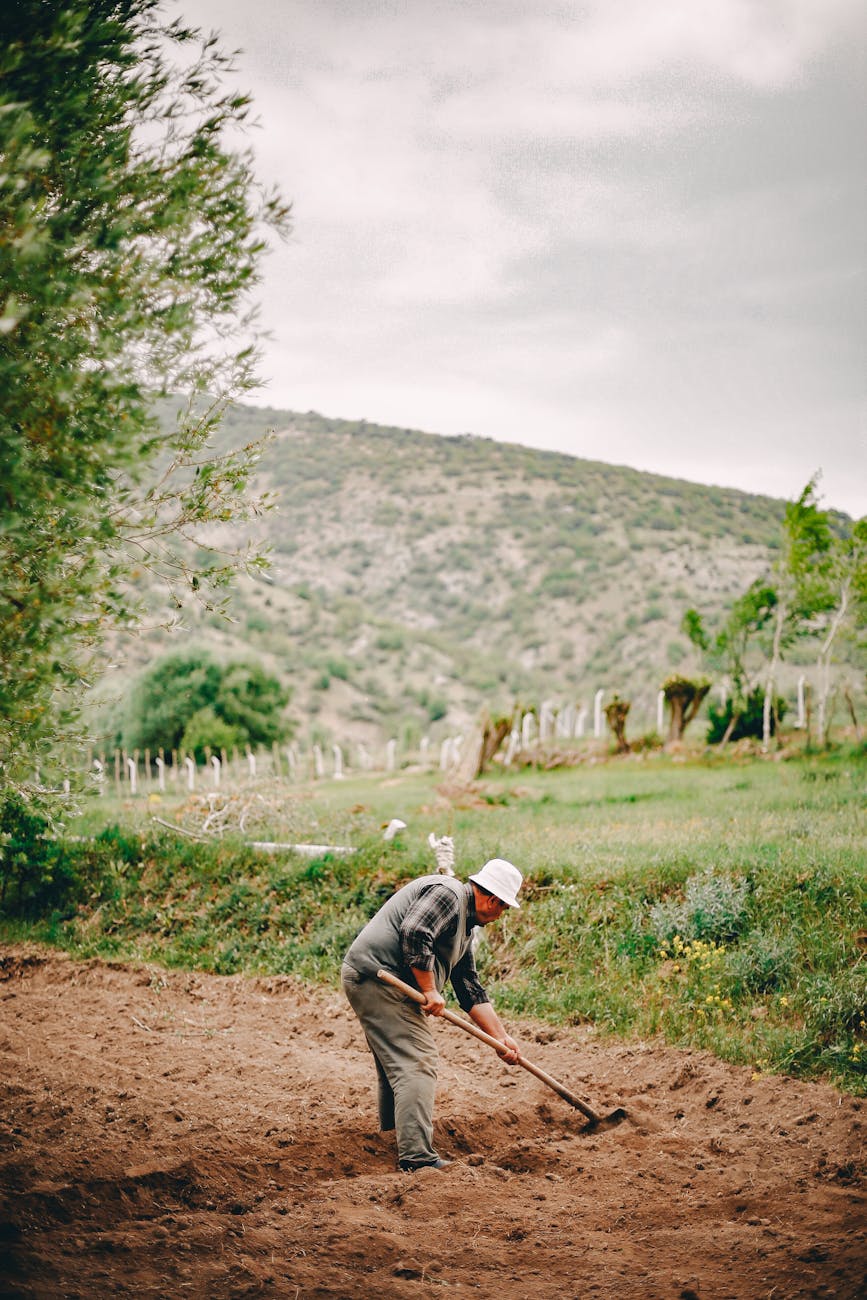
We humans have depended on nature to provide us with food, materials for shelter, comfort and pleasure from the beginning of our time here on this earth. It is easy to understand why early humans saw gods in the elements of their environments. Even to this day I feel the presence of a higher being and a higher purpose when I commune with nature. I have a deep connection with the plants and trees, the sun and rain, the elements that have lived on the earth far longer than I have. When I am tending my garden I think of my roots and the long line of people who came before me. I almost sense a genetic connection with the work that they did as farmers and laborers as they worked to survive from one day to the next.
My brothers and cousins and I are probably the most highly educated people in the long line of ancestors who labored at jobs that demanded sweat and energy. As far as I can tell none of them lived on estates in fine houses with servants and hired workers to fulfill their needs. Their hands were dirtied and their backs were bowed. Their bodies ached at the end of a hard day’s labor. They were among the mostly faceless generations of humans who lived seemingly unremarkable lives remembered only by a few comments scrawled by a census taker.
It was in the twentieth century that things began to change for those of us who descended from them. We learned to read and write and to consider futures far more comfortable than the ones of our forebears. Our homes are bigger and our larders are filled with plenty that they only dreamed of having. Because we understand genetics we know that the people who came before us had to be bright and inventive and capable of learning as much as we are. They simply did not have the opportunities that guided us into work and lifestyles that are comfortable and that do not require us to hunt or till the soil for our survival. Still, there is something that lures us into the labor of digging in the dirt as though our brains are hardwired to know enjoy making things grow.
It is spring and I have been working for weeks to make my garden lovely. My hands bear the scrapes and ragged nails of a farmer. My back feels the weight of stooping over plants and lugging dirt and mulch around my yard. I might pay someone to do these things, but I don’t want to surrender the joy that overtakes me when I am outside doing the work of my ancestors. I feel my roots and somehow understand who they were far more deeply than when I read an abstract that names them and tells me where they lived. There is a kind of nobility in touching and tending the earth. My brain fills with a rush of happiness when the sun kisses my arms and the dirt leaves a reminder of who I am under my nails.
I once traveled to a school where the teachers were having a difficult time understanding their students who were the sons and daughters of migrant workers. They complained that these children brought down the average of the scores on end of year standardized tests. In many ways they resented the parents whom they called “the tree diggers” because they came with the spring season to help the local farmers and ranchers and then disappeared when nature went into its yearly hibernation. I was sent to advise them on how to work with students who were behind in their learning because their parents moved around from job to job, place to place.
I began my presentation by allowing the teachers to give their assessments of these students and their parents. It quickly became apparent that they felt morally superior to the people who seemed like the hunters and gatherers of old. The faculty wondered why the workers did not simply settle down for the sake of their children. They used their own life experiences to judge people whose realities were far different from theirs.
I suggested that first the teachers must set aside their preconceived notions and let both the parents and the students know how much respect they had for them. The work the migrants were doing was necessary and important to the town and it was up to the teachers to praise the people willing to provide the labor that nobody else wanted to tackle. I sensed that the children of those workers understood that they were viewed as somehow less than their peers who lived in one place all of the time. I mentioned to the teachers that perhaps their negative mindset had the effect of making their migrant students feel hopeless. I told them that we all want to feel valued. Then I taught the teachers strategies for helping those students fill in the gaps in their education.
All too often we rank humans according to our notions of how important or impressive their work may be. Of course we are in awe of our doctors and engineers but the people who do the labor intensive work that fuels the engine of our economy are just as necessary. The folks who keep our hospitals clean and our offices in good condition should be just as important to us as the richest person in town. Our world was built on the labor of millions of nameless people just like “the tree diggers.” Workers whomever they may be or whatever they may do should always be honored.
When I leave my books and the steady temperature of my house to work outside doing back breaking work I hear the voices of the workers of the world. I see their hopes and their dreams. I feel the long roots of my own existence. The sun reminds me of my own good fortune. The dirt on my hands and the sweat on my brow remind me to honor all the labors of humanity and to celebrate those who got me to this time and place. My roots are deep and strong thanks to the determination of thousands of people who did whatever they needed to do to thrive. I am here with all of my degrees and skills because of them. I feel them when the dirt is on my hands.
 All It Takes Is A Little Love