Why Are We So Unhappy?

Photo by Elu012bna Aru0101ja on Pexels.com

This spring my husband and I enrolled in a continuing education class at Rice University. It was an all too short look at political philosophy that was packed with people searching for explanations for the behaviors and beliefs that have so divided the United States. Of course there were no hardcore answers. Humans have been searching for universal and viable definitions of justice in governance for thousands of years with Aristotle being perhaps the most famous individual of old to tackle this knotty topic. 

As the arc of the class discussions reached the halfway point a kind of frustration emerged as one member of the group asked why we were so unhappy at this point in history and wondered when we might track back to a time in which we were content and more in agreement and willing to work together with one another. His was a plaintiff cry that spoke to all of us and left me stewing over his question for days. 

I began to track back through my own experiences and those that my parents and grandparents had shared with me. I thought of the lessons in history that I had learned in school and as I mentally moved back and back in time I realized that at any given moment there always seemed to be dissatisfaction of one kind or another that was sometimes simply grudgingly endured or other times loudly protested. In particular, I remembered my grandfather’s descriptions of political issues at the end of the nineteenth century when he was emerging as a young man. 

Grandpa often related the hardships and prejudices of the era insisting that the times were far more difficult than anything that later happened in the twentieth century. He described Coxey’s  Army of disgruntled, unemployed and starving Americans who marched through his town on their way to Washington D.C. to demand help. He spoke of people in his community struggling to the point of desperation. He described his own travels in search of work that took him all over the United States where he witnessed extreme prejudice and greed hurled at Native Americans. He was an eye witness to both the glory and the underside of our nation and somehow remained optimistic in spite of it all. He always believed that we were progressing even when we appeared to be moving backward in ugly ways. His stories provided strong evidence that the good almost always outweighed the bad. 

Grandpa was an orphan and eventually a ward of the court. He was the kind of person who might have complained that if it were not for bad luck he would have had no luck at all and yet he always managed to find human kindness even in his darkest times. He was a survivor who marveled at what we humans had accomplished while accepting the reality that we have often messed up quite badly. He included himself in that judgement but pointed out that all we can do is just keep trying to set things right. 

I suppose that the fact that so many people paid to fill a university classroom in the hopes of learning how to repair the damage that seems to plague our country and so much of the world at the present time is testament to Grandpa’s belief that good people are always on a mission to repair the rifts and damages that our humanity seems to create over and over again. it seems apparent to me that we might look back hundreds and even thousands of years without finding a time in which everyone felt happy with the situations in which they found themselves. At any given time there are prejudices and disagreements and wars that rupture our relationships. Sometimes those negative responses to life grow louder and more destructive but on a more personal level we can learn from them and overcome them like my grandfather so often had to do. He understood that he could cry and bemoan his fate or find ways to work around his difficulties which is what most of us do. 

Fear and distrust often tear apart our relationships on both personal and community levels. There have always been winners and losers in the political landscape. Some have historically suffered more than others. At the present time we seem to be torn asunder but history tells us that we can indeed find our way back to a more inclusive state of compromise for the sake of the health of our democracy and each other. We can only accomplish such a thing if we stop talking over each other and take a breath to hear each other rather than judge each other. The destructive rhetoric and tribal behavior gets us nowhere and the real question is how long we intend to continue this way. It will only be when we reject those who would actively divide us that we will be able to come to a reasonable consent about how to repair the rifts that have grown so ugly. At least here in the United States we still have the right to vote unlike places like Russia where elections are foregone conclusions devoid of real choices. Our best bet for changing the things we do not like is to become involved in our nation’s political life. We need to understand that our vote is our voice and if we do not use it we have nobody to blame but ourselves when things go awry. We must be active citizens who make our concerns known. 

When my grandfather was over a hundred years old he was still voting at every opportunity. On one occasion he walked to the polling place because he was unable to find a ride. He understood the remarkable gift that democracy had been for him even when the outcomes were not aligned with his views. He never gave up on this nation and taught me that as long as we retain the right to vote we have hope.

I suppose that Aristotle was right when he said that each of us has a duty to be involved in the life of the community in which we live. The power that we weld when we vote is our hope and never should we take it for granted. We will win a little and lose a little and maybe sometimes mostly agree that protecting our incredible gift for everyone just might be the way bring us back together.  

A Welcome Change For Everyone

Photo by Artem Zhukov on Pexels.com

Last summer husband Mike and I drove to Maine on a last minute mission to help our granddaughter move from one place to another. She had worked as an intern for the city of Topsham and lived in an apartment provided by Bowdoin College where she is a student. With no car she was planning to move from the summer housing into her residence for the school year using a borrowed bicycle. Somehow that sounded like a rather difficult situation so we decided to quickly plan a little trip to help her manage things more easily. 

We enjoyed a lovely drive through the south and then headed north toward Maine, a two thousand mile journey that gave us a sense of how vast and interesting our nation is. Once we arrived in Brunswick Maine we enjoyed several days of getting our granddaughter settled into her new digs while also learning about the work she had done during her summer job. 

She told us that she had been tasked by the city government of Topsham to survey businesses to determine how the mostly older population of Maine was affecting them. It seems that the state of Maine needs more young people than presently live there. Once our granddaughter alerted us to the over abundance of older residents we realized that wherever we went there were few young people and very little diversity. While that might not sound like such a terrible thing, the imbalance in the population is creating problems for the economy in Maine. The state is in need of a young workforce to work in and run its businesses and industries. 

I was fascinated by our granddaughter’s study of the area and the evidence of an aging demographic that I encountered everywhere. I went into social scientist mode and realized that the motel where we were staying was filled with young workers driving trucks with Texas license plates. I watched them leaving each morning wearing work boots and returning late in the evening after quite obviously laboring all day long. Most of them spoke Spanish and only nodded at us as we passed each other. I guessed that they were migrants or immigrants who had somehow learned of the need for able bodied workers in a state where the young are outnumbered by the old. 

Last week I encountered an article in the New York Times addressing the problem of an aging population in Maine. It spoke of the same issues that my granddaughter had uncovered during her internship. The state is struggling to fill jobs with workers willing to tackle difficult tasks in industries like harvesting and processing lobsters. Even at a rate of sixteen dollars an hour there are not enough native residents to maintain the economy so they have happily turned to immigrants from places like Cambodia, the Congo and Venezuela to do work that keeps the economic forces of Maine operating. 

The article pointed out the need for workers all across the United States that can potentially be met with immigrants willing to learn new skills and work at jobs that are often being ignored by American citizens. There are tasks in farming and industry that require more and more people at the same time that there are immigrants eagerly awaiting a chance to earn wages to care for their families. Maine is a kind of microcosm of the needs across the nation that might potentially be relieved by ready and willing groups of people coming to the United States. 

As more and more Baby Boomers leave the workforce there is an imbalance in those working and paying into the programs that support the retirees and those using the programs. With a reliable and fair supply of young workers everyone benefits. Sadly our current system is not using the potential labor force in the most effective ways. Governors should be helping each other to find places where immigrants are actually needed rather than vindictively busing them to large cities with no plan. Our Congress should enact immigration reform that moves immigrants more quickly from detention centers into productive lives. Instead of only seeing immigrants in a negative light all of us should be urging our leaders to create systems that align them with opportunities to work and educate their children. It can be done if we quit arguing and finally decide to cooperate in creating constructive and humane blueprints for success. 

I have taught recent immigrants from Central and South America for most of my career as a teacher. More often than not the parents of my students have struggled with English but have always wanted the very best for their children. Many worked multiple jobs to provide for their families. They worked at back breaking jobs to insure that a son or daughter would be the first in the family to graduate from high school and attend college. They sacrificed with great courage and pride so that the next generation would enjoy lives that they had only imagined. They continually inspired me with their devotion to the American dream and to their families. 

We would do well to step back from the political rhetoric and consider that immigrants are a gift to our nation rather than only a problem. The glass is truly half full. If we maintain our optimism whether than constantly carping with pessimism we may soon unraveled the knotty mess that we have made by refusing to work together to solve the problem. It would be a welcome change for everyone.

The Greatest Night In Pop

Photo by Pixabay on Pexels.com

It was nineteen eighty four and life was almost perfect for me. I was in my thirties, passionate about my teaching job, raising a wonderful family of two young girls with an always supportive husband. I lived in a cute little house with the best neighbors that anyone might wish for and I enjoyed the most wonderful friendships and times spent with my extended family. On top of it all, the music in that era was wonderful and I was still young enough to rock with it when driving my car or cutting loose in my home. 

I admittedly focused mostly on my own little world at the time, totally unaware of the state of other places in the world. I did not yet pay attention to the unfolding of news the way I now do. I was busy with the mundane but gloriously beautiful tasks of raising a family, earning a living and finding moments to enjoy life. I was ignorant of issues like famine and starvation in Africa but I was about to learn what was happening there all because of the efforts of a group of singers who would come together to change the world. 

Harry Belafonte was already well known for his melodic voice and even some acting chops but mostly he had become synonymous with the Civil Rights movement of the nineteen sixties. His work to end segregation and to find justice and equality for all humans had changed the course of his life. By the nineteen eighties his continued work to bring light into the world was legendary, so when he came up with an idea for raising funds for the starving people of Africa, the powers that be listened. A group quickly formed to create a song and then gather the best and most famous voices of the era to record it. Quincy Jones would orchestrate the effort but first he needed both a song and some performers. 

In the beginning Quincy chose Lionel Richie to manage the project which would require getting a diverse group of entertainers together for one moment in time to make the recording. First Lionel was tasked with coming up with a song, so he left calls for Stevie Wonder and Michael Jackson. Stevie never returned those calls but Michael Jackson instantly met with Richie and the two began to write the music and the words for the project. 

Meanwhile Quincy Jones and others involved with the planning had to decide how to bring so many famous singers together in a single moment. They decided that many of them would be coming to Los Angeles for the American Music awards in January, so that event would provide the best possible likelihood of getting the most big names for the project. The race was on to finish the song, invite the singers, and organize the logistics all in a matter of weeks.

The Netflix documentary, The Greatest Night in Pop, uses film from the era to recount the gathering of the best music stars of the era. It shows how complex it was to pull the event together and then provides an intimate portrait of the night long process of recording the the chorus and the individual parts of the music. It is a walk down memory lane with singers in the prime of their years forgetting their egos to work together on an important project designed to save lives. It seems as though anybody who was anybody was there and at times the tension and time constraints made each singer so very human. 

The telling of that evening is as taut and wonderful as the song they finally made. We Are The World was played around the world at exactly the some moment in time and became a mega hit in the first week of sales, garnering over eight million dollars that purchased food for the parts of Africa where people were enduring devastating hunger. It also became to model for other rescue efforts that were yet to come. 

The documentary was mesmerizing for me as I watched Bob Dylan struggling to own his part in the song. I witnessed a young Willie Nelson offering his unique voice which was at its very best. Michael Jackson sounded like an angel. Bruce Springsteen offered a rough hewn plea. Stevie Wonder’s genius overcame problems and Lionel Richie was a masterful manager of all of the egos. By the end of the long evening when everyone was exhausted love and joy filled the room as the singers exchanged autographs to commemorate the moment. Somehow they all understood that they had just done something extraordinary. 

The Greatest Night In Pop is a wonderful documentary that will leave you smiling and proud. It reminded me of kindness and an America focused on love and trust and compassion. It will surely make you feel the hope that comes from people working together for a common cause while putting their own foibles aside. It’s the kind of story that we all need to see in these times of division and anger. Maybe we might decide to quit quibbling with each other and do something important and impactful once again. 

The Majesty of the Heavens and Our Good Fortune

Photo by Eclipse Chasers on Pexels.com

I have been fascinated by the sun, the moon, the planets and the stars since I was a young girl. I got my first taste of enthusiasm from my middle school science teacher, Mrs. Colby, who elevated my curiosity for learning about such things with her joyful presentations that stirred by mind. In high school my physical science teacher, Father Bernard, further commanded my interest when he set up a telescope on the football field one evening and I saw the craters on the moon and the rings of Saturn. Those moments along with the exploration of space emanating from NASA in my own hometown made me acutely aware and excited about every new development in knowledge about how our universe works. 

It was natural for me to want to see the major eclipse in the summer of 2017 so I made plans for me and my husband to attend that event with my brother and sister-in-law who had spent their careers working at NASA. Sadly I missed that moment when my husband had a stroke only weeks before we were scheduled to meet up in Wyoming. He recovered from all symptoms quickly but we decided to stay home and join others at the Houston Museum of National Science for a less spectacular partial eclipse in our area. Nonetheless I was enchanted by what I witnessed on that day and determined not to miss any other opportunities to view the wondrous unfolding of how the heavens work. 

About a year ago I came across a map showing the pathway of the April 8, 2024 total eclipse and instantly saw that the route went right over my daughter’s home. I began making plans immediately to be in place when the event unfolded. I purchased proper glasses for viewing and set them aside. As the day neared I read article after article and marveled that we humans had the capability of predicting the timing of the event down to the second. The preview alone was enough to excite me and intensify my desire to see the glory of the heavens working in an almost magical way.

Last week we left on a Thursday for my daughter’s home hoping to avoid most of the expected crowds because we were bringing my ninety-five year old father-in-law along for the journey. Much like the workings of the sun, moon and earth our plans worked like clockwork. The day of our arrival was gloriously beautiful and all we had to do is wait for the appointed time.

We visited with a dear friend on Friday and my husband and father-in-law explored the Texas hill country on Saturday. By Sunday we our excitement had built to a fever pitch even though the weather predictions were not in our favor. Most of Texas was going to be under a cloud cover that might hinder our viewing. I simply prayed and wished for a break that would show us the heavens. 

The morning of Monday, April 8, began with patches of blue in the sky that convinced me that we would be okay. As the day progressed, however, the entire area was overcast. Still I was hopeful that the heavens would surrender and give us a view. We along with all of the people in the area donned our protective glasses and sat in lawn chairs with our heads looking upward in hopes of seeing something, anything that might allow us to witness this once in a lifetime event. Now and again the clouds did part and we watched the march of the moon covering more and more of the sun. It was a beautiful sight that brought me to tears and filled my heart with a kind of reverence for the incredible workings of our solar systems. 

As the afternoon became dark like night so did the clouds. We attempted to wish them away for even a short glance of the totality that we knew was happening but our view never became unobstructed like it would do for those farther north of us. We had to be content with what we had already seen and then watch the rest of the eclipse pathway from a NASA live stream inside the house. I saw the glorious totality over and over again as the shadow moved to the north where my granddaughter and grandson were eagerly awaiting in Indiana and Maine. Meanwhile I received a photo from another grandson who had traveled to Mexico with friends he has known since kindergarten. The picture gloriously showed the totality and I was so overjoyed for him that I burst into happy tears. 

We spent most of the rest of the afternoon breathlessly watching the totality unfold in American city after city. We smiled with the cheers from the crowds and felt a kind of unity with our fellow citizens that has been somehow lacking in recent times. The glory of our sun and our moon and our own dependence on them seemed so much more important than our sometimes petty differences. The intelligence of people who were able to instantly film the event both on the earth and from outer space was as moving as the workings of the universe itself. I thought of Mrs. Colby and Father Bernard and how happy it would have made them to witness how far we have come in our knowledge and how predictable the physics and mathematics of it all actually is. I felt a kind of awe and reverence and sense of responsibility for treasuring the earth and its people. 

I’m still on an emotional high from watching the eclipse unfold even if I was not able to view the climax with my own eyes. Somehow I felt a sense of perspective in the hours that I watched us all connected by the beauty of the design of the universe. I realized more than ever how interconnected we are in spite of our many differences of language and culture and political leanings. In the end we are all part of a vast system that operates around us even when we are hardly noticing it. Our planet is a treasure and it is up to all of us to care for it for all of the people who share the earth and the inner workings that allow us to breath and thrive. There is a glory to it all and I saw that on Monday, April 8, 2024 when for a few hours we Americans stopped our bickering and celebrated the majesty of the heavens of our good fortune. 

Following The Example Of Learned Men

Photo by Lavdrim Mustafi on Pexels.com

One of the most fascinating aspects of the men who declared their independence from the monarchy of England back in 1776 was how well read and learned they were. They did not base the Constitution that they ultimately created on only their own thoughts, but on the many books and essays over which they had pondered. They were men who were well versed in philosophy and political thought, not just rebels who had grown tired of the tyrannical hold that held sway over them. They were willing to debate with one another over the proper ways of creating and living in a democracy. They were modern thinkers of the time who also seemed to understand and appreciate the changing nature of the world and its societies. They realized all too well that rules had to be flexible enough to adapt to the changes that are inevitable in the evolution of progress. They anticipated the future and used past history to anticipate human tendencies that might one day threaten the grand dream of life and liberty that they were literally risking their lives to create. They did not view the world around them as a static place in which a rule once made should last even as circumstances changed. 

I always imagine those founding fathers being quite excited about the modern world and in awe that the flexibility of their system has lasted for so long. At the same time I suspect that many of them would not be surprised by the convulsions of civil war and strife that have happened along the way to the present. In fact, many of them predicted such things just as they believed that or country would ultimately eliminate slavery and allow women a larger role in governing the nation. They realized that most people are wary of throwing out long held views overnight, so they envisioned an incremental approach to change even as they themselves were willing to overthrow monarchical domination of the colonies. In a sense they understood that some ideas take time and others demand immediate attention. 

So much of our political landscape these days in based more on feelings than study. We have some representatives who are well versed in the deepest understanding of history, laws, philosophies, and critical thinking but far too many are sadly lacking in even fundamental knowledge. We see lawmakers advocating for changes based more on personal preferences than the truth of situations. There is often a staggering indifference to facts and the process of discussing the best methods for adapting to an ever changing reality. Instead we hear a constant clanging of meaningless slogans aimed at our feelings and targeting our biases. Some of our leaders seem to be unfamiliar with even the most rudimentary understanding of our Constitution, our history, and the scientific information that is critical to our survival. Instead of seeking truths from all over the world, they would isolate us as though our safety has nothing to do with our place in a planet of such grand diversity. 

Our founders were worldly and innovative men. They were willing to explore new ideas and look forward rather than backward. They also understood that our nation could not be an island in which we ignored the rest of the world. When their revolution was won they immediately sent representatives to European nations to emphasize the legitimacy of their government. They understood the need to cultivate allies from abroad and they often imported good ideas from other countries as well. They did not isolated themselves or pretend that only they had all the answers. That is what kings and dictators do.

Writings and commentaries from the times demonstrate that those men never believed that the work of building a nation dedicated to life, liberty and the pursuit of happiness was ever going to be complete. It was designed to be a work in progress, taking into account the inevitable changes of the human experience. They were the innovators of their times, not staid conservatives defending the status quo. The war that they created with their declaration of independence from the British monarchy was indeed revolutionary. They were not looking backward but forward as I believe they would have wanted all of us to one day do. 

They left work for us to complete. They expected that we would be willing to send representatives to Washington DC to keep their dream alive. They envisioned an active rather than a static government. They were also bright enough to predict where future problems might lie. In fact, their essays often echoed their concerns. It’s all there in writings from James Madison, John Adams and his wife, Abigail, Alexander Hamilton and George Washington. They understood the human temptations and prejudices that might unravel democracy. They realized that life is not static and that the generations to come would have to adapt and change as needed. Some even hoped that issues like slavery would be adequately addressed sooner rather than later. They worried about devotion to political parties and the negative effects that such tribal thinking might create. They were men of science who saw the future in our willingness to embrace inventiveness. 

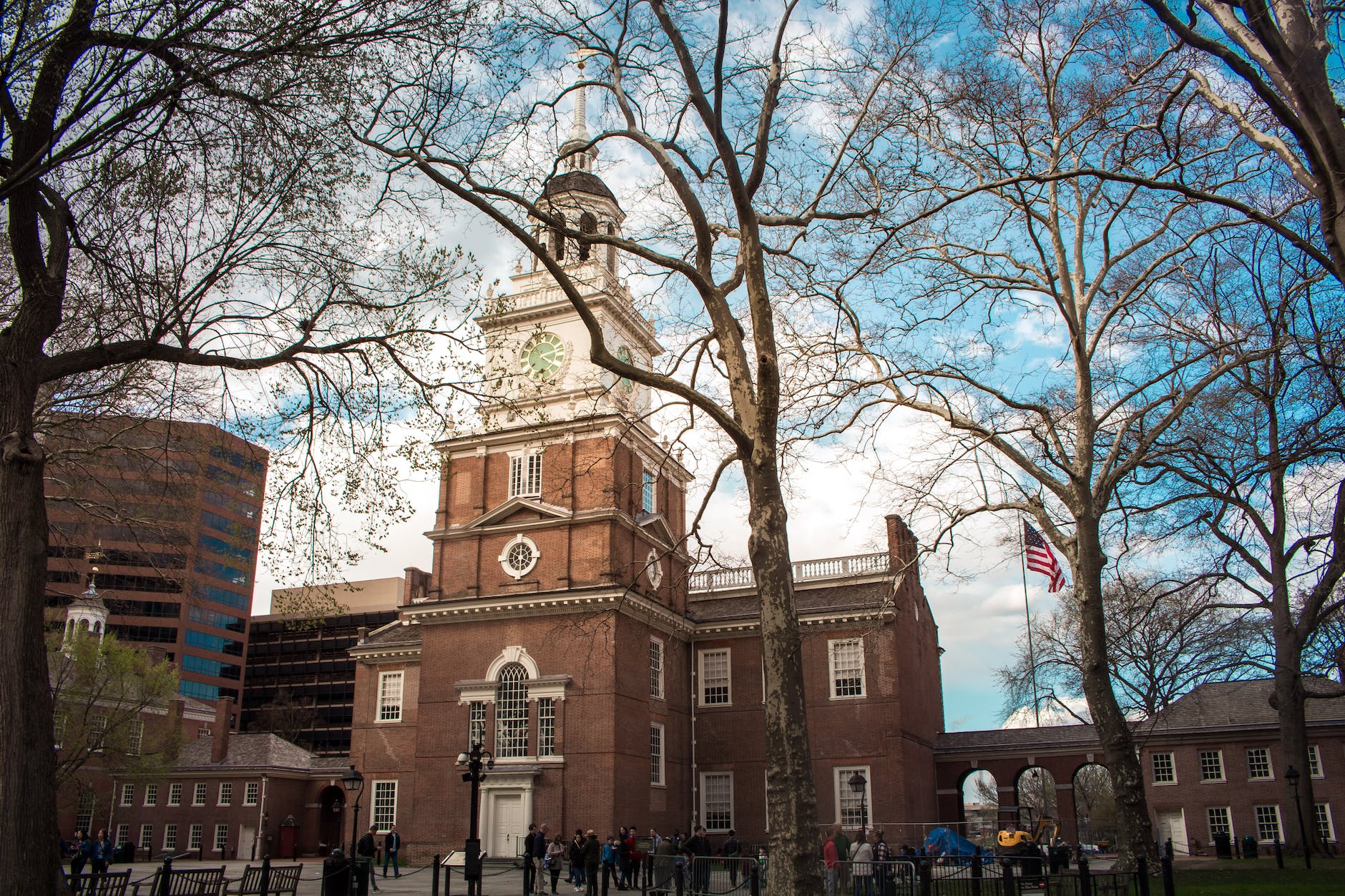
I often imagine the men who sat in that hot room in Philadelphia attempting to find common ground for building a democratic foundation feeling both a sense of wonder in how far our nation has come. At the same time, however, I wonder if they would be appalled at the dire divisions that have made a kind of mockery out of the branches of government that they created. I wonder if they would lecture us on what they had intended when they set a new government in motion. Would they be proud of us or disappointed? 

I suspect that they would be overwhelmed by the sheer magnitude of our nation’s growth and the expansion of information that is at our fingertips. They would need time to take in the complications of the modern world but eventually they might feel compelled to school us on what they meant when they wrote the Constitution and added the Bill of Rights. Theirs might be an unbiased observation intended only to preserve the essence of democracy while adapting it to the changing world. I’d like to think that they would bring us back together to tackle the tough questions in the same spirit that prodded them to break from the old and move forward to the new. 

We the people have the power to send a loud message to those who would represent us. We do not want a king as President. We want our Congress to work on important legislations, not waste time on endless investigations just to create meaningless media frenzies. How members vote should be based on what is best for the nation, not how it will affect an election or their personal power. Members of our Supreme Court should not have even a taint of political preference. They should judge each case on its merits, not their individual beliefs. We can return our country to the a working administrative, legislative and judicial focus with our votes. Those who only want to preen and pander need to go. I believe it is what our learned founders would advise us to do. They risked their lives to give us a gift. We should cherish it by becoming educated citizens like they were instead of being lured by ignorance and lies that prey on our emotions.