Media

Photo by Mike Bird on Pexels.com

When my husband and I visited London along with my brothers and their wives we did all of the touristy things. We planned our trip down to the hour before leaving so that we would have reservations for museums and scenic areas. As we were deciding how to spend our time my sister-in-law suggested that we invest in a Jack the Ripper tour. Being a mystery buff since my childhood I was all in for traveling through the east end of London in search of the sites where the infamous serial killer stalked his victims. Given how difficult it was to secure tickets even months ahead of time it became clear that a great many people still possess a fascination with the macabre murderer. 

The tour itself proved to be quite interesting even though most of the landmarks where the murders occurred are long gone. The guide was informative and the rainy darkness of the night lent a frightening mood to the story of women down on their luck who became victims of the Ripper’s cruel vendetta against them. 

I have since learned more and more about that horrific time in Victorian England including the fact that the London press was somewhat complicit in turning the tragic violence into money making stories. The lurid descriptions of what happened along with wild theories about the killer ruined many lives as guilt was aimed at Jews and foreigners. All the while the humanity of the victims was virtually ignored. The newspapers could not print their stories fast enough for the public consumption and so a kind of cult like presentation of the murderer began to emerge, including the printing of a lurid letter that appeared to be authored by the killer. Thus we have the name Jack the Ripper reaching all the way into the modern day. 

I bring this up because journalism can be honorable and honest or it can be filled with innuendo, untruths and propaganda with only the aim of selling the product. Headlines can be written in a variety of ways. The catchiest ones attract attention and even change the thinking of readers. Often they are more sensational than true. 

We have to be careful about what we see and hear from supposedly reputable news outlets. History is replete with stories of so called journalists using the pulpit of their writing or interviews for pontificating vehicles for lies and deceit. We should always be watching for manipulation of our thinking by checking sources and getting our information from multiple places. If we allow ourselves to live in an echo chamber that only reinforces what we want to believe rather than what we need to know, we run the risk of falling for untruths. We would be wise to fact check rather than becoming manipulated puppets. 

I make it a point to watch for signs of propaganda. I was taught how to do that in the seventh grade. There are definite techniques that are designed to confuse our thinking. If we are aware that such things occur we will check any information that appears to be false or out of the ordinary. Grand generalizations are usually an indicator of lies just like the Victorian assumption that the Ripper had to belong to a despised group like the poor, the immigrants, the Jews. Sadly it is often a trick of tyrants to use our fears to their benefit by blaming innocents for our troubles. The powerful sometimes become that way with lies and deceit that make us believe that they are the only sources of safety and security. 

We have learned from factual evidence that many influencers supporting Donald Trump were on a payroll from Russia. They made money by spreading toxic ideas and insisting that only Trump was strong enough to save us from the perils of immigrants, particular groups, a deteriorating economy. Ironically these people ranted about the problems, took the money from Russia and then claimed that most if not all Democrats were Communists. In truth they themselves were little more than foreign agents paid to destroy our nation from within just as Nikita Khrushchev once predicted would happen. Those who have believed the bile from such people have been the pawns that Russia hoped they would be. 

Watch for hyperbole and sweeping generalizations about people or incidents or problems. They are often the first clue that someone is attempting to sway us with falsehoods. We indeed need to address immigration in this country but we can do that logically and without demonizing every person who comes across our borders. Everyone knows that our economy and those of every country in the world is still adjusting from the Covid epidemic. Where we are now is complex and so too will our solutions need to be. Setting things right will take cooperation, not blaming. 

The only way to progress is by electing individuals who are willing to discuss the issues in a spirit of empathy and respect for all of humanity. We also need news sources that will report the facts, not the hysteria or the wild theories that only sensationalize and garner money. Ask yourself if you are only hearing one side over and over. Ask if a source seems to be doing everything possible to make you afraid. Then start fact checking on your own. You may find a new way of looking at the world that frees you from the influence of Russians or oligarchs. It is a wonderful place to be.  

When Someone Seems To Care

Photo by Hannah Nelson on Pexels.com

Peace begins with a smile. —Mother Teresa

I have become a rather tough skinned woman but I was not always so. As a child I was quite delicate, someone who overreacted to ridicule or criticism. The teachers that I loved the most sent messages of love in everything that they did. The ones who terrorized me were those who spoke angrily to my classmates. They may have believed that they were simply managing their classrooms by punishing those who violated the rules, but I viewed them as being cruel and uncaring even when they only had praise for me. 

I was literally never spanked by my mother. My father only once gave me a light and painless swat on the backside. When it happened I knew all too well that I had purposely poked the bear thinking that I would get by with my disobedience because my father was alway so gentle with me. I had been tap dancing on the hood of his brand new car, with real metal taps on my shoes. All the while I was singing the song most associated with the University of Texas and laughing at my father who was a die hard supporter of Texas A&M. I knew the whole time that I was asking for it, especially when he sweetly requested that I stop my little act and get down. Instead I just kept going, confident that I had enough favor with him that he would not even give me a slap on the wrist. When he pulled me off and gave pop with his hand I was more embarrassed that hurt. I hated that I had purposely done something so terrible to him. I knew in every part of my soul that I had brought his anger on myself and I felt so sorrowful. It was one of the first things that I ever confessed once I was ready for the Sacrament of what was then called Penance. 

All too often in this world we turn to anger and hurtful behaviors in both personal and international relationships when a more upbeat approach would bring better results. Those angry teachers left a bad taste in my mouth. Those who gently worked with even the trouble making kids became heroes to me. I generally find that people will respond more positively to smiles and kindness than humiliation and punishment. I tend to be quite wary of those who are always insulting others even in jest. It says more bad things about them than the people that they are putting down. 

I took Spanish in college to go along with the Latin and German that I had learned in high school. I had a kind of natural facility with the language and even won an award at the end of my first year of study. I returned for a second year with a professor who had impressed me with his knowledge. It was quite early in the semester, perhaps after only two classes, when he one day went off on a tirade against two students of Hispanic heritage. He made fun of their grammar and pronunciations, eventually shaking his head and commenting that he did not know what language they were attempting to speak but it certainly was not Spanish. They were so humiliated by his harangue that they rushed out of the classroom. In a bold reaction to what I had seen I gathered my belongings and quietly followed them, going immediately to drop the class. It was my way of protesting what seemed to be horrible behavior on the part of the professor. 

All of us encounter situations that frustrate us. it is human nature to even become angry and impatient. We take out our displeasure on whoever happens to be present in the moment rather than attempting to discern why that person is struggling to satisfactorily respond to our expectations. We ask for perfection in imperfect beings and lose our cool when they don’t measure up to our standards. The wiser person knows that a gentle but determined touch works best most of the time. 

I’m a goofball when it comes to sports. While at the University of Houston I had to take physical education classes. One semester I enrolled in a golf class thinking that it might be a bit like putt putt which I really enjoyed. The teacher was a golf coach and seemed to have no time for a klutz like me. He constantly reminded me that but for the kindness of his heart he should fail me. Needless to say I became a nervous wreck every time he assessed me. In the next athletic course a new teacher saw that I was struggling and took time to work with me, explaining patiently what I was doing wrong and even working with me after class to help me improve. My confidence soared and I was suddenly feeling like an athletic champion. I even got a well earned A for the final grade. 

As we go about our work and our interactions with people we would do well to consider Mother Teresa’s little bit of advice. Peace really does begin with a smile. Anger and insult most often have a negative effect. It’s better to take a deep breath, remain calm and let a warm grin show how much we respect the person who may be frustrating us. We all do better even at things that are daunting to us when someone seems to care.   

The Best Among Us

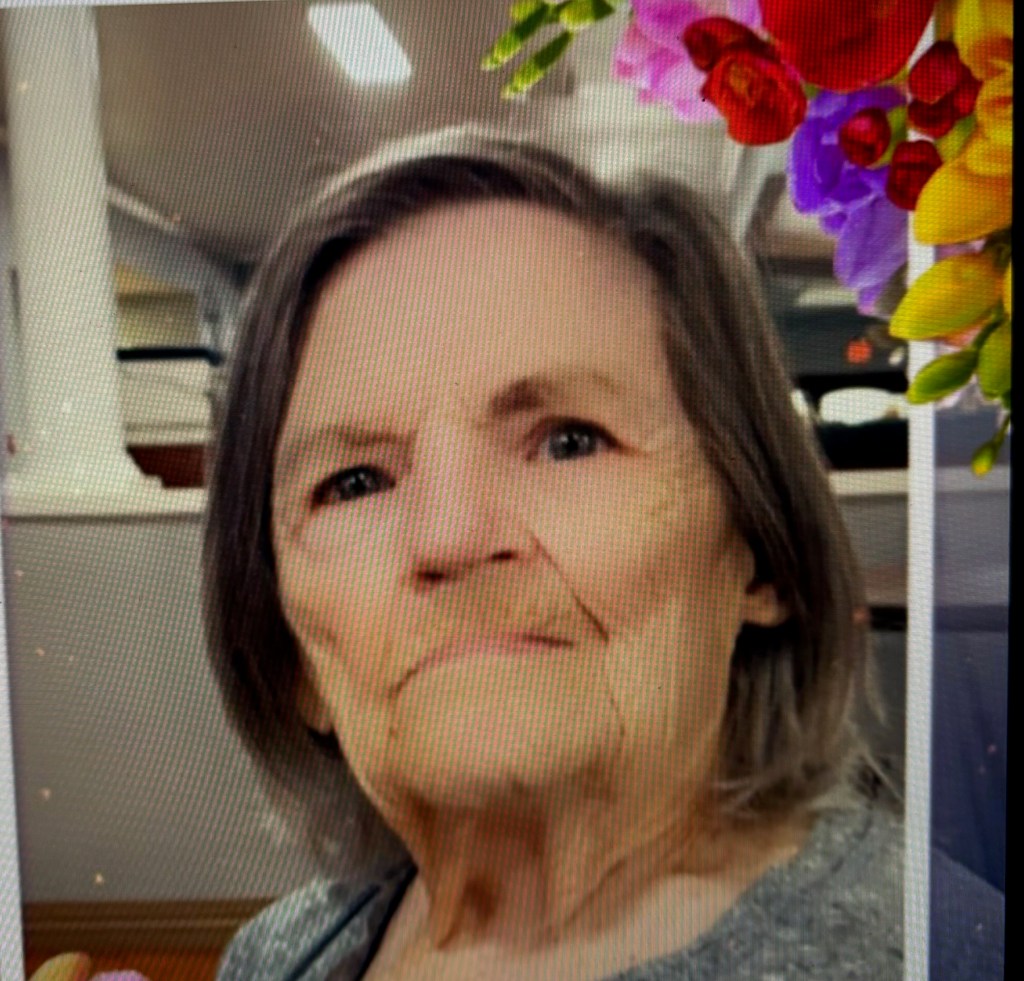
I met Shirley Hines in the early nineteen eighties. She was like the big sister that I never had but always wanted. It’s funny how we instantly clicked, but that would have been because of Shirley’s bigger than life personality and generosity. I knew that I had encountered an extraordinary women from the first time that we were brought together. We had been selected to be the first ever lay women to head the religious education program at St. Frances Cabrini Catholic Church and I had little idea how fun that would be with Shirley by my side.

Shirley was born in Missouri eleven years before I was and she possessed a Midwest charm that I would eventually come to know and love. She was an energetic woman, what most would call “a real go-getter.” She seemed unafraid of any challenges that life threw her way and she was on the forefront of independent women who knew how to make their own way in life. Thus she was an iconic role model for me and I reveled in all that I would learn from her in the forty odd years that we would be friends. 

Shirley had worked for the Federal Bureau of Investigation and travelled the world before I met her. She exuded confidence and knowledge but also a kind of openness that I admired and wanted to emulate. Through her travels she had learned how to cook exotic dishes that she enjoyed sharing with others. She also excelled at creating homespun goodies like strawberry jam and home baked banana bread. She was the Martha Stewart of my world who often invited me to family celebrations where I was treated royally to her hospitality and joy.

I like to talk and sometimes I have been accused of being a bit competitive in conversations, but when I was around Shirley I only wanted to listen. Her knowledge and wisdom and wit always left me almost breathless with admiration. She was a woman who overcame the difficult challenges that life throws at each of us with courage and ingenuity. She never seemed to falter and while she was dealing with issues that might have crushed mere mortals she never lost her giving nature. She was the kind of person who would offer her last dime to someone in need and then figure out how to take care of herself later. 

Shirley dubbed our working partnership at the church as “The Laverne and Shirley Show” and together we were indeed filled with laughter and closeness. I was difficult to leave my working relationship with Shirley to become a full time teacher. We pledged to keep our friendship alive and somehow we managed to do just that.

Over the years Shirley and I made it a habit of meeting during the Christmas season without fail. We gathered with a group of women with whom we had worked at the church in the long ago. Each woman was quite amazing but in many ways Shirley was our north star, the woman who demonstrated all of the best qualities that each of us hoped to cultivate in ourselves. She was fearless, funny, optimistic, determined, creative, kind, loving and always ready to tell a story about life that enchanted us and brought smiles to our faces. 

In the wake of the pandemic that so changed the world Shirley had a stroke that left her unable to talk, an unimaginable tragedy given how outgoing she was. She ended up spending the last many years in a nursing home where she received the daily care that she needed. Her devoted daughter, Cristel, visited as often as she was allowed and kept us updated on Shirley’s progress by way of posts on Facebook. It was apparent that Shirley’s stroke had stolen her vitality but we also saw the love and gratitude that she had for Cristel in the many photos that chronicled her journey in the final years of her life. 

Recently Shirley experienced a fall that led to a rapid decline in her health. Rather quickly she went to hospice care and died. For those of us who knew and loved her it was like a punch in the gut to know that the world the delightful sprite who never failed to put smiles on our faces. It was as though a bright light had suddenly away. 

Shirley was a faith filled woman who no doubt has an exalted place among the angels and saints. Her entire life was one of giving, helping, loving with all of her heart. Her pain is gone now. She overcame all of the tragedies and challenges that befell her with wisdom and grace. Shirley Hines is home and no doubt making everyone who is already there feel just a bit better than they were before they encountered her. 

I will miss Shirley. Her memory is truly a blessing to me. I have cried tears of loss but also tears of happiness that she has found her reward for a life well lived. She is still my icon, a role model who demonstrated through every day of her life an unselfish love and acceptance of every person she met. One of the best moments of my own life was the day when I was lucky enough to become Shirley’s friend. I will forever treasure our moments together and hope that I can be the kind of person that she showed me how to be. May Shirley Hines rest in peace and may her family feel the comfort of knowing that she is now resting in the arms of heaven. She was the best among us.

Be the Ancestors Your Descendants Need You To Be

Photo by Jeremy Bishop on Pexels.com

I saw a post on X that spoke to me so viscerally that I have not been able to think of much else.  It was from a woman who simply asked those of us who are older to “be the ancestors your descendants need you to be.” I suppose that this simple phrase in many ways encapsulates the kind of life that I have always attempted to follow. I learned a long time ago how important the good influences from my ancestors have been in guiding my own life. Somehow I learned from the best of them even when I never had the pleasure of actually meeting some of them. 

My great grandfather John William Seth Smith was long dead even before I was born. My grandmother, his daughter, never spoke of him so it was not until i joined ancestry.com and began to build my family tree that I was able to put together pieces of a puzzle to form an image of what kind of man he may have been. My efforts painted a portrait of a man who was unafraid to follow his own conscience, to be the person he wanted to be, not a follower. A citizen of the south, he nonetheless enlisted in the union army and served as a lieutenant in battles at Shiloh among others. It was a bold and patriotic move for someone who lived his entire life south of the Mason Dixon line. I have come to admire him for his courage in following his heart, something that has also been important to me. 

My paternal grandfather was a survivor and an optimist who never served in the military but fought many battles of his own. His mother died in childbirth and his father gave him up to a grandmother who seems to have been the source of his unwillingness to give in to self pity even in the face of countless tragedies. He was a man who looked to the future rather than focusing on the past. He believed in moving forward, adapting, enjoying life however it came to him. He learned from his many challenges and believed in the resourcefulness and kindness of humans. He looked forward to the possibilities of tomorrow which probably played a key role in his living a full life for one hundred eight years. 

My paternal grandmother was a bit of a worrier but that was only because people were more important to her than things, riches or power. She was devoted to making people comfortable and happy. She was resourceful in making do with whatever she had. She had little or no formal schooling but she nonetheless had skills that were astounding. She was always learning from observations and experiences. She was able to identify birds by the sounds they made. She understood how to grow things even in rocky soil. She had hundreds of recipes stored in her head because she was unable to read. Still, she was an independent woman with ideas of her own and an incredibly creative mind. 

My maternal grandfather, whom I also never met, grew weary of being under the thumb of the Austro-Hungarian empire where his country of birth was little more than a source of labor and food for the wealthy of Austria and Hungary. He braved a trip across the ocean to an unknown place called Galveston, Texas hoping to build a life of freedom and opportunity for himself and his children. He was a dedicated employee who never missed a day of work. He bought and read a book each week. He purchased land and built a home one room at a time. When the Great Depression came he owned his house, a garden, a cow and some chickens. He provided for his many children even in the most difficult times. Most of all he taught them to love this country and to always appreciate its many blessings. 

My maternal grandmother was a bit of an enigma to me. She spoke no English but she welcomed anyone who came into her home with a greeting and a warm cup of coffee. She openly loved her eight living children and they in turn adored her. They often spoke lovingly of her devotion to them and in return they would shower her with their attention, providing her with anything that she might need as she grew old. She must have been an exceptional mother to have earned the total admiration of her wildly diverse offspring.

My father was a Renaissance man who was an expert at anything he tried to do. He was a mathematician, scientist, engineer, poet, artist, architect, builder, sports enthusiast, historian, traveler. He seized life and rejoiced in the inventiveness of humans. He was able to converse with anyone on virtually any topic. The world was his wheelhouse and he challenged me to seize it just as he had done

Then there was my precious mother whose life was so filled with one tragedy after another that she might have become bitter and nobody would have blamed her. Instead she focused on the needs of other people rather than her own. She found joy in every single day even when the depression of her bipolar disorder tried to overtake her. She found comfort in her Bible and her prayers. She listened to the Astros games on her radio and celebrated their victories in spite of her own darkness. She pushed outside of herself and got well again and again by giving succur to others. 

I suppose that the common theme that I have garnered from studying all of my ancestors is that they found joy in living authentic lives that were not so much measured by titles or possessions or money but by truly being themselves, using the talents that came so naturally to them. Each of them looked forward into the future rather than focusing on on past grievances. Each honored the dignity of their fellow humans and taught their children to do the same. Each focused on hope rather than doom. It is a path that they built for me and my brothers. It is now my turn to do the same for my children and grandchildren and all of the others yet to come. I try each day to joyfully be the ancestor that I believe my descendants need me to be. This life was never just about me. It was always about them. This I learned from the wonderful people who came before me. 

The Power Of Love

Photo by Andrea Piacquadio on Pexels.com

When the power of love overcomes the love of power, the world will know peace. 

—Jimi Hendrix

I’ve been accused of being naive a time or two because I continue to hope that love will mostly be our answer to the world’s problems rather that power or force. I am not silly enough to think that we are even remotely close to such a worldwide state of mind, but I refuse to give up hope that most of humankind will choose love over power in everyday situations. If we get even a modicum of people thinking that way we will indeed see the kind of changes that are more likely to lead to peace than using force.

I once spoke with a man who believed that there is never a good reason for war. His arguments were sincere and well conceived but we all know that sometimes in spite of all of our efforts to be neutral we have to take a stand and engage in war. I would not expect the people of Ukraine to simply sit back and lovingly embrace the Russians who have invaded their country with plans to lay claim to their lands. It is right and just that they are fighting to win their freedom from tyrants and we should help with our support.

As I explained to the man so intent on being a pacifist sometimes the loving thing to do is to defend ourselves and the people around us. We learned that in World War II. it became impossible not to take sides in that conflict. The Japanese made our decision to join forces with our European allies when they attacked Pearl Harbor and when Hitler declared war on the United States as well. It was a terrible time filled with so much death. I can’t imagine why it did not become the perfect example for avoiding war at all costs and yet here we are almost a hundred years later with conflicts all over the globe and even some of our own citizens advocating for civil war in the United States if they don’t get their political wishes fulfilled. There seems to be some bizarre trait in the human psyche that keeps fueling warlike attitudes.

We are in a dangerous place right now because we have lots of people stirring an already bubbling pot. Some would say that our efforts to go high when some have gone low have been totally unsuccessful. Somehow the divisions between people both here and abroad are as serious as they have ever been. Some even almost gleefully predict that we are on the verge of all out war across the globe. The war to end all wars that ended in 1918, obviously did little to quell the quest for power that seems to linger in the darkest souls among us. Too often we overlook the power of love and align with those who would turn us against each other, people who take joy in riling us up. 

I think that Jimi Hendrix understood that we don’t have to rally around strongmen seeking to overcome those that they despise. We can accomplish so much more with love if enough of us are willing to rebuff the ideas that we are somehow enemies of one another simply because we have differing ideas about how to make the world a better place. 

I have reached a point in my life where I have had so many wonderful experiences. I found a loving husband and have a beautiful family. I had the privilege of earning two college degrees and working at a job that provided me with joy and a nice income. I was able to purchase a nice home in a secure neighborhood. I have traveled and had the care of outstanding doctors. I have many friends and an extended family that have always supported me in reaching all of my goals and dreams. I will turn seventy six in November and I have a different outlook on the importance of my votes than I did when I was young and just beginning my journey. 

The focus of the world should no longer be on me and people like me. The future belongs to my children and grandchildren, not me. I am ready to assume the role of someone who votes for the future, not a return to the past. I am not interested in power. I am only concerned about insuring the kind of opportunities that have been mine will be passed down to the next generations. I am willing to sacrifice and compromise to provide them with peace. My love for them supersedes my possessions and my power. I want to vote for what they need because long after I am gone they will still be dealing with the world that I and those in my generation have left them. It is time for me to share the power with them. It is time for me to share the wealth with them. It is time for me to help them to secure a peaceful future, not one marred by wars in which they will have to be the foot soldiers

I am not naive at all. I know that what I describe will not come easily. I understand that in spite of all the loving efforts peace will be elusive. What I also know is that if we don’t even try our world will be an ugly place. That does not work for me, so I will keep trying to spread love and generosity one person at a time with the hope that we will one day turn away from those who only seek power in favor of those who seek love. So be it if that makes me naive.