What Could Possibly Be More Important?

Photo by Recep u00c7ELu0130K on Pexels.com

I remember my mother-in-law lamenting that her calendar was regularly filling up with funerals for people that she knew. She noted that it was becoming rather depressing to realize that she had more friends and family who had already left this world than new acquaintances to replace them. She herself died when she was only a year older than I now am. She seemed so young and vital that losing her was shocking, especially coming just before Christmas. I still miss her along with all of the other departed souls who once made me laugh or think or just feel good. 

Death is as much part of the life experience as birth. We know it is inevitable for everyone but somehow the timing of it never feels right even if the person is very old. My grandfather died at the age of one hundred eight. He was very aware that his time to die might come at any moment once he turned ninety years old. He purchased a new suit to use in the event that he might pass. He often laughed that the clothing had become faded and threadbare in the eighteen years that ensued before he finally took his last breath. 

I had begun to take for granted that my grandfather would be around anytime that I wanted to see him. Our visits always left me feeling energized and calm. He had a way of speaking almost magical words of wisdom that went straight to my heart and soul. I was shocked when he drew his final breath. I was not ready for him to be gone even though I had reveled in his presence far longer than I had ever dared to believe was possible. 

There are people who seem to “get” us. They transcend superficialities in knowing exactly what we need from them. In an unspoken pact we feel as though we can let down our guard with them and just be ourselves even when we feel angry and grinchy. We love them and they love us. We somehow feel their presence even years after they have gone. They are so irreplaceable that even when we forge new relationships they are still in the center of our hearts. 

I don’t dwell on the people I have lost on most days. I get busy living life and seeming as though I may even have forgotten about them. Then from out of nowhere something will jog a precious memory that makes me smile or tugs at my heart with a sense of wonder. Somehow I see my loved ones more clearly after they are gone. I remember the goodness of them, easily forgetting times when they may have annoyed me. I am not building up a false picture of them in my mind, but rather getting to the essence of who they were and how they so positively impacted my life. 

I suppose that we all get so busy with the minutia of life that we quite often take the special people who are still with us for granted. We intend to tell them how much they mean to us but we have laundry to wash, bills to pay, tasks to perform that seem more demanding than stopping to make a phone call or write a note expressing our love. 

I often ask myself if my mother-in-law knew how much I enjoyed soaking in her knowledge and wisdom and encouragement over cups of tea. Did she understand how much I admired her and hung on her every word? Did my grandfather realize that he was a central source of security and comfort for me. Should I have told him that I often sought him out just to assuage my anxieties. He had such a calming effect on me and I never specifically thanked him for that. 

Life can feel listless and boring at times. We long for adventure, a change of pace from the mundane of day to day. Instead of using that time to tell people how much they impact us we pout over the slowness of routine. Then suddenly we get the news that a special person has died and the opportunity for sharing our feelings is gone. We can shout out how much we loved them with a tinge of regret that we did not utter those words sooner. 

Yes, I am pensive these days because with greater regularity people that I have known and loved are dying. Sometimes they experience long periods of pain and suffering before the end. I become afraid of seeing them in a reduced condition. I worry about what I should say, how I should act. How silly and even selfish of me it is to put off going to see them with excuses that I might be in the way if I make an effort to be with them. I need do little more that hug them, sit with them, speak to them of the happiness that they have given me. How difficult is that? Why am I so reticent and fearful?

None of us mean to ignore the very people who are most important to us. We just make reasonable excuses for our busy lives even when they are not really all that busy. We don’t use the conveniences that are available to us. We can sent a quick text, make a two minute call, send a card or letter, schedule a visit or make a plan to get together. Such should regularly be part of our routines. What can possibly be more important than telling someone how wonderful he or she has made our life?


Given The Room To Grow

Photo by AS Photography on Pexels.com

I attended a private high school from 1962-1966. Back then it was common for students to be grouped according to their perceived intellectual abilities. Ironically I ended up in the top level class called “Honors” after my former teachers insisted that I not be grouped based on the entrance exam for the school. It seems that my score would have landed me in either the 1-1 or 1-2 ranking rather than Honors. The administrators decided to give me a trial opportunity to demonstrate my learning chops before moving me down to a grouping that they believed would be more appropriate for me. 

I ended up staying with the Honors group for all four years and graduated as the valedictorian. I admittedly received a fine classical education, but after becoming an educator myself I began to identify the numerous problems associated with such a strict system of classifying students in a very public way. For one thing, I had no opportunities to actually meet and interact with many of the students who would graduate in the same year as I did. They were literally cut off from me and those of us who were in the Honors classes unless we happened to play sports or join the drill team. 

It would be fifty years later before I got to know many of members of the Class of 1966 when we came together for a reunion. By that time my shyness had given way to an openness that had been missing when I was a student and had been reinforced by keeping me tightly associated with a small group of people day in and day out for four years. I would reach out to almost everyone on that evening and continue our conversations at future gatherings and on Facebook. What I found in the process was quite lovely.

I learned that there were people in my class who were much more in sync with the person that I was back then and the person that I am today. I connected with them almost intuitively and found soulmates whom I suspect I would have enjoyed as a teenager if I there had been opportunities to meet them rather than simply know of them and passing them in the hallways of the school. 

I have come to see that the distinctions between our intellectual abilities were always miniscule. They are highly intelligent and vibrant individuals who might have done as well in the Honors classes as I did if they had enjoyed the gift of the advocates who insisted on placing me there. All of which makes me question the reliability of the system that the powers that be used in very publicly assigning us to certain tracks of learning. 

My own experience as an educator has shown me again and again that when students choose to challenge themselves academically they generally rise to the occasion. I have grown to despise systems that create roadblocks for students based on single tests or opinions about them. One of my favorite experiences involved a student who had been relegated to special education status but worked side by side with his classmates in regular classes.

I had received notification from San Jacinto Junior College that they were offering a six week long daily summer camp for deserving students who were interested in science and mathematics. They requested that I inform my students about the program and provide them with the information they would need to vie for a place. 

Many teachers quietly gave the application packets to only their top students but I described the opportunity to all one hundred fifty of my pupils. I was disappointed that only a small number of the most advanced students showed interest in spending much of their summer in a college classroom. Then one of my special education students excitedly asked for the information he would need to apply. I gave them all the deadline date that they would need to follow so that I might send a packet of applications to the school in a timely manner.

Some of the students decided that the application was too complex since it even required an essay telling why they wanted to attend. Only a little more than half who had asked for the instructions turned in their paperwork. Among them was the special education student. 

When I took the time to read through their forms and essays I had a feeling that it would not be the young men and women who were making the best grades in my class who would be chosen. Instead it was the special education student whose information stood out like a twinkling star. It was apparent how badly he wanted to prove himself and as expected he won the coveted spot. 

Some of my fellow teachers were appalled that we would be sending the “inferior” student to represent our school. They pointed out that he had anger issues and might cause a ruckus or worse. They noted that his study skills were lacking and that he often missed deadlines or just ignored assignments. I nonetheless stood my ground and insisted that the young man had won fair and square. I told him immediately that he was the chosen finalist. 

He was beside himself with joy but he came to me the following school day to sadly admit that he had no transportation to the college. He said that his mother took a city bus to her job as a janitor in a hospital and he did not know how he would be able to get there. I took a deep breath and offered to be his driver even though I new it would change all of the plans I had made for my summer vacation. For six weeks I picked him up at six in the morning and brought him home at three. As each day and week went by I witnessed a miraculous transformation in him as we talked to and from the school. 

He told me that nobody knew his reputation at the college. They assumed that he was smart and so he acted smart and as he did so he began to believe that he was smart because he was able to keep up with all of the other students. It was a watershed moment for him that he knew would change the direction of his life and his destiny.

I have thought of this young man so many times over the years. He would be in his late forties by now. I lost track of him but he was already doing so much better after his summer experience. He got to meet with the group once a week from that time until he graduated from high school. He found confidence and talents that nobody ever knew he had, much like I did when I got a shot at being an Honors student.  

Ironically so many from the Class of 1966 whom I really did not know back in the day have proven to be as intellectually brilliant as those with whom I was grouped. In some cases these people are actually more brilliant and discerning than my Honors class friends. I wish I had known them sooner because they have enlivened my world with their knowledge and intellect. We are so alike and I love that I now have them in my sphere. I hope they know who they are and how much I have enjoyed knowing them. The whole idea of classifying people in any way is dangerously silly. Each of us has talents and goals that should not be hampered. We humans thrive when given the room to grow. 

The Things That We Cherish

Photo by Wendelin Jacober on Pexels.com

Years ago a teacher friend told me the story of going to help a woman whose home had been destroyed by hurricane Katrina. With tears in her eyes she spoke of the sorrow of realizing that nothing was left to retrieve in the once beautiful home. She related that as the two of them walked despondently and silently to the car her companion suddenly darted toward an ancient oak tree that had once provided shade to the home that was a shambles. Without explanation the woman began climbing the tree as though she was a ten year old child rather than a woman in her fifties. With a gleefulness that seemed impossible given the circumstances she moved higher and higher through the branches. 

At this point my friend believed that the woman had somehow lost her mind over witnessing the tremendous damage of her family home. She had no idea how to react to the outrageous behavior but was worried about how she was going to talk the woman down from her dangerous perch. Then she heard a joyous squeal as the woman waved a china plate and exclaimed, “The family china is not all gone. This plate found a safe place in the tree,”

Disasters destroy precious memories. Floods turn diplomas to pulp and render photos unrecognizable. Winds bring down hundred year old trees while fires turn everything to ashes. Those affected by such things are always grateful when nobody is injured or killed, but there is something so personally difficult about losing a lifetime of objects that represent our heritage, our milestones, our travels and our happiest times. We can rationalize that they are worth far less than the people who owned them but knowing that they are gone forever only compounds the sorrow we are feeling.

Time and again the aftermath of destruction whether it be from wars or nature remind us of the life events that we experienced in our homes and neighborhoods. When favorite things or places are gone forever we feel as though a part of who we uniquely are has been stripped away. Of course we can rebuild, buy new things, but somehow the end result is never quite the same. I suppose that the resurrection of Notre Dame Cathedral exactly as it had once been is one of the few times that such a project turned out to make a structure better than it had been before. Most of the time it is impossible to recreate an exact replica of what is gone. 

When I was growing up my family belonged to Our Lady of Mt. Carmel Catholic Church in Houston, Texas. It was a dynamic parish that began in a makeshift church but over time built a beautiful gathering place. I was married in the church that my family helped build and the photos of my wedding speak to the magnificence of the altar and the vaulted ceiling. 

During hurricane Harvey everything changed. The roof collapsed and the parishioners did not have the funds to repair the church much less return it to its former glory. They scraped together enough just enough to fix the roof and to clean the mess that five days of rain falling into the vestibule had done. The glorious architecture of the original nave was too expensive to recreate so a simpler plan evolved. While the new interior is practical and nice enough it will never be quite as wonderful as the original church. All too often this is what happens when people have to rebuild their lives and their homes from scratch. The reconstruction is not quite as beautiful as the original.

I always feel both a sense of sadness and responsibility whenever a disaster destroys homes or churches or buildings. I experience a kind of empathetic connection to those who have borne the brunt of misfortunate. I have dodged the wrath of storms so many times while people around me have endured massive losses. I feel that is important to volunteer to help with the clean up projects for friends, relatives and even strangers. I donate to organizations that will provide them with a new start. When such sad times occur I watch the people who have been affected wander among us as though they are in a state of disbelief. I have felt their pain and understood how it takes them years to psychologically recover. Sometimes they never really get better but only pretend that all is well with them. 

My aunt’s home burned to the ground several years ago. In the aftermath she seemed to suddenly turn old and riddled with health problems. The spark that had made her energetic and fun to be around was dimmed. It was not long after the incident that she died even as we had always imagined her living to a very ripe old age. 

We are witnessing nations destroyed by bombs and homes obliterated by fire. Mud slides on mountains are taking out homes that are in the way. Hurricane winds bring trees down on buildings and tornadoes blow structures apart. Nature is continually challenging us and setting us back. If we are lucky enough to be unaffected by such things we should be willing to help in whatever way we can. We never know when it might be our turn to learn how it feels to lose the precious reminders of our lives. I’d like to think that someone will be there to cry with us or watch us celebrating in a tree as we begin the process of beginning again. Hearts will feel less broken when we know that others care.

Books and Dreams

Photo by Vladimir Srajber on Pexels.com

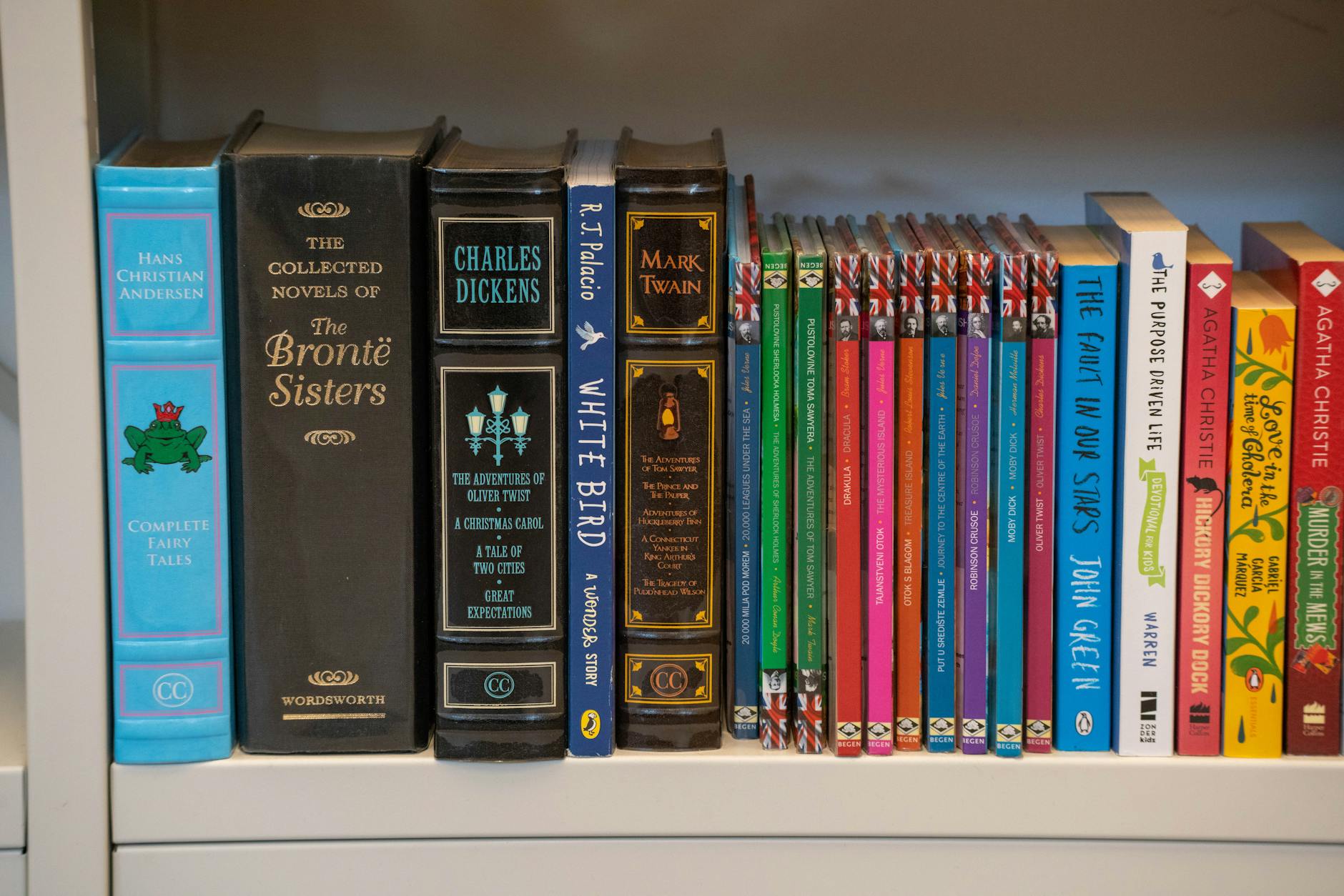
When I was a teen my favorite books were mysteries and the stories of Agatha Christie were among the best in my estimation. It’s been a long while since I have read any of her stories but a visit to a Barnes and Noble bookstore just before Christmas changed all of that for me. That’s when I wandered over to a display of lovely classics with delightful covers. As I almost squealed with delight at the sight of some of my all time favorite authors and titles my husband snapped away with his camera. 

I thought that perhaps he just got a kick out of my enthusiasm and wanted to keep a visual record of my childlike excitement. Lo and behold on Christmas Day I opened book after lovely book that for which he had recorded my joy. Among them was a volume of Hercule Poirot mysteries. I already knew the stories so well so very well. They entertained me once again not with an intent to solve a case before reaching the ending, but because of the delightful prose of Agatha Christie. 

I had forgotten how truly lovely Ms. Christie’s descriptions are. The pages literally came alive with characters that seemed to be in the same room with me because her words were so vivid. I had become of fan of Agatha Christie mysteries on television and in films but not even the best acting and cinematography can compare to her ability to create a situation so lifelike that it feels as though I am peering over her shoulder. 

I realized why I had been such a fan of her writing as I read story after story. It took me back to a time in the mid nineteen sixties when I was a skinny young girl filled with dreams. Reading was my favorite pastime then and it still is today. Luckily I found incredible writers to introduce me to worlds and ideas that I would not have otherwise known. 

It was only later that I learned about Agatha Christie’s most unlikely and extraordinary life. She herself was the subject of mystery when she disappeared for a time without notice and had the world looking for her. She was one of the most popular authors of her time, vying Arthur Conan Doyle for fans. A play based on one of her stories, The Mousetrap, is the longest running theater production on London’s West end. 

I found my reintroduction to Agatha Christie to not only be delightful but also to be a kind of lure back to London and the English countryside. If I were better at choosing words like Ms. Christie I might be able to explain my love affair with that country. Perhaps the secret is locked somewhere in my DNA because fifty percent of who I am was made up of people whose ancestors came form that locale. In fact, in spite of my Texas drawl I have more than once had people insist that I look very much like people that they have known from England. 

I fell in love with London when I visited in 2017 and I have spent the last eight years fantasizing a return visit that would allow me to see all of the things that I missed on my first journey there like hearing Big Ben chime and attending a play or musical. I’d also like to take a train to the north and perhaps spend some time in Scotland. Then I would chunnel over to France and spend some time in Paris. From there maybe I would make my way to Rome. 

I’m not getting any younger and if I don’t go on such excursions now I might miss my chance. Agatha Christie was an inveterate traveller to exotic places where her characters had such grand adventures. I long to be like them especially after following the journeys of a friend who has spent the last few years visiting every place on earth that she has ever wanted to see. Her travelogues are fascinating and in them she urges all of us to get up and get out into a world which is waiting for us. 

I don’t know if it will be possible for me to fulfill my wish but I know it won’t happen if I only dream about it or read about it. Those books I received have ignited a torch inside my soul that keeps telling me it’s time to go. isn’t it funny how books have the ability to pull us out of our ruts and into other worlds?

I’ve got an itch to enjoy other cultures, maybe even Poirot’s Belgium. I’d like to find out if I might be able to reserve a trip on the Orient Express. It all sounds so deliciously fun. Who knows, if I go I might even stumble onto a mystery. 

Moving Fast And Breaking Things

Photo by cottonbro studio on Pexels.com

When I attended the University of Houston there were certain core classes that everyone had to take regardless of what they had chosen as a major. One of the required studies was Political Science, a tough course that delved deeply into the inner workings of our federal, state and local governments. To say it was enlightening would be an understatement. 

The deep dive into the origins and evolution of our government was not just exciting, but so informative that I found myself thinking it should be a requirement for every single American citizen. I realized that my studies helped me to understand what kind of legislators and leaders our nation needs. I began to do extensive research into candidates for office with an eye to looking beyond their platitudes and political propaganda and instead attempted to choose those who seemed the most capable of guiding our democratic republic with an eye for representing all of us, not single issues. 

A word that still sticks in my mind from the six hours of coursework in Political Science is “incrementalism.” It was a new concept to me and at the age of eighteen I had to be convinced that it was wise to slowly make changes to our laws and ways of operating rather that taking an axe to whatever seemed to need an overhaul. I soon learned that the concept of incrementalism was important in assuring that politicians would not have the power to be constantly redesigning our government according to their personal whims. It was actually a bulwark against authoritarians and dictators. The idea was a brilliant check and balance feature created by our founders who had experienced the whims of kings that kept life unbalanced and chaotic. They purposely wanted the process of change to be a bit sluggish so that no one person would ever be able to break our Constitution apart. 

Then along came Donald Trump with his assurance from the Supreme Court that seemed to find that he could not be held accountable for wrongdoings done in the name of leading our nation as president. The immunity ruling gave him the green light that he needed to upend the many agencies that he believed were infected by “woke” thinking and disloyal employees wasting our nation’s treasures. With the help of Elon Musk and the magical Department of Government Efficiency a new mantra has pushed aside the belief in the good of incrementalism. Instead the plan is to “move fast and break things,” the motto of Mark Zuckerberg, the founder of META. The idea is to disrupt the normal administration of the government by changing it as quickly as possible without any real merit for the decisions being made. 

The methodology catches the public off guard so that the changes are complete before anyone has sufficient time to analyze what has happened. It does not take into account unintended consequences or safeguards against potential harms. Acting fast is revolutionary. The aspects that don’t quite work well can always be fixed later according to the theory. The important thing is to take a torch to the old ways to make room for the new.

Sadly there is a great deal of difference between introducing new technologies and taking down human systems. For example redesigning schools should be done with care because simply throwing everything out all at once is likely to hurt people in multiple ways. The attempts to improve should be well thought out and must include input from all of the stakeholders. 

I once landed a position in a school that was low performing on the state tests. Rather than taking an axe to what we were already doing a wise group of leaders took a much more humane and elegant approach to improving our school. They sat us down with statistics showing us exactly where each of our students were falling behind. With that data analysis we were able to change how we taught specific concepts. The district provided us with intensive training and gave us time away from the classroom to work with experts to redesign the sequencing of how and when we taught the skills and knowledge for each of our subject areas. Then they gave us the time to find what worked and what still had glitches. By the end of two years our test scores were on the rise and by the end of three years we had become exemplars of how to educate underserved students. People came from all over the state to confer with us and we in turn visited schools who had problems similar to the ones that had once seemed to define us. 

The point I am making is that randomly firing people or shutting down entire agencies the way DOGE is doing is haphazard and does not address the actual problems that may exist. It is not just an economic problem. Simply saving money will not result in better performance. What will help is to send experts to retrain the employees using actual data that points to problem areas. Young lions with computing power do not even know what they are breaking or why they should do so. It will not result in a more efficient government. 

I think that every American can agree that there is some waste in government and that some agencies are not as efficient as they should be. We can find the problems but they can’t be solved in a matter of days. Right now the morale among government workers is so low that it is doubtful that good results with come. Instead it is wiser to take a deep breath, admit that Rome was not built in a day, and take a strategic and analytical approach to improvement. Any changes that have to come so quickly that nobody has time to realize what is happening are certain to be a mess. Slow down. Change incrementally. Find the best of each agency and keep that while letting go of the worst habits that have impeded success. That has always been the best way of doing things and it actually works. 

DOGE is the epitome of inefficiency. The people destroying agencies have no idea what they are doing. Get rid of this approach and try something like the example of improving the school where I worked. It may take more time but it’s results will be exactly what is needed.