We Are All Worthy

Photo by Diva Plavalaguna on Pexels.com

Your feelings will fluctuate, Your well being will fluctuate Your performance will fluctuate. Your worth should not.

I saw this comment on Facebook and it made me think about the times that I have seen people of great courage dealing with horrific tragedies without the kind of emotional support that they should have received. All too often we expect people going through difficult experiences to be automatons when it comes to their everyday lives and their jobs. We don’t always give them the assistance and exceptions that they may actually need. 

I once worked with a woman who had breast cancer. She was so devoted to her students that she scheduled her treatments after the school day so that she would not have to send substitutes into her classroom. Of course she was not as energetic as she had always been but she was doing her very best to complete all of her duties. Sometimes she gave her students quiet work to do so that she might rest behind her desk and there were moments when she took longer than normal to grade their work because she came home from her treatments feeling nauseated and exhausted. Still, most of us marveled at her courage, optimism and determination to be with her students in spite of the challenging circumstances. 

Sadly the principal did not hold our view of this teacher. Instead she criticized her efforts and even threatened her with a bad evaluation if she continued to demonstrate lethargy. Ironically the administrator insisted that an active substitute would be a better alternative than a sickly teacher. Of course those of us on the faculty were stunned to hear about the teacher’s treatment by our boss. Somehow the principal had set aside the worth of a fellow human and focused instead the performance that she viewed as lacking. The administrator was blind to the incredible dedication and efforts of the teacher, seeing only superficial flaws that did little to blemish the herculean efforts that the educator was making. 

There will be times when each of us do not show our best selves. If we are worried about a loved one or carrying the pains of ill health we tend to be less like ourselves. It does not mean that we are slouching or trying to get by with shirking our responsibilities. It is only a sign that our challenges are bearing down on us and possibly even becoming overbearing. In such moments we would do well to find ways to support the person who is struggling. 

In the best job situations that I had everyone worked together. If someone was facing an emotional crisis the entire faculty found ways to ease the pressures of the job that the person had to do. We became available to step in and teach in tandem or even to watch the students while the teacher took a break. We showed the students how to be helpful as well. It was a community effort that paid off with a work environment that was forgiving and loving. It took into account the incredible worth of each person rather than constantly ranking and comparing us. 

I have known good people who donated some of their sick leave to other employees who were undergoing long term medical care. I have watched groups make plans to send food to the homes of ailing fellow workers. I have even participated in Saturday afternoon house cleaning for fellow teachers who were temporarily bed bound. Our gestures were small and took little effort on the part of each of us but they made a huge difference to the people who found themselves in precarious situations that might otherwise have left them feeling as though nobody really cared about what was happening to them. 

Our society is presently all too focused on stringent rules, bottom lines, scores and ratings. Employees are not always seen as humans but as numbers on balance sheets. We have people working multiple jobs and still struggling to pay for the basics of living. The imbalance of how we treat and value each other is growing ever more impersonal. We have all too often forgotten the importance of first seeing the worth of every single person. We speak of brilliance and power and wealth as things to pursue for a good life when in fact it is in working together and ensuring that everyone is okay that we are our best and feel our best. 

It is all too true that our feelings will fluctuate. We may be on top of the world one day and living in anguish another. Life has a way of sending unexpected tragedies our way. Just so, our well being will also fluctuate. A terrible storm may flood our home or a visit to a doctor may reveal a terrible illness. When such things happen to us it is only human that our performance will also fluctuate. We all hope that when we are not ourselves there will still be those who understand that our value has not changed and they will help us through our most horrific moments with kindness and love. 
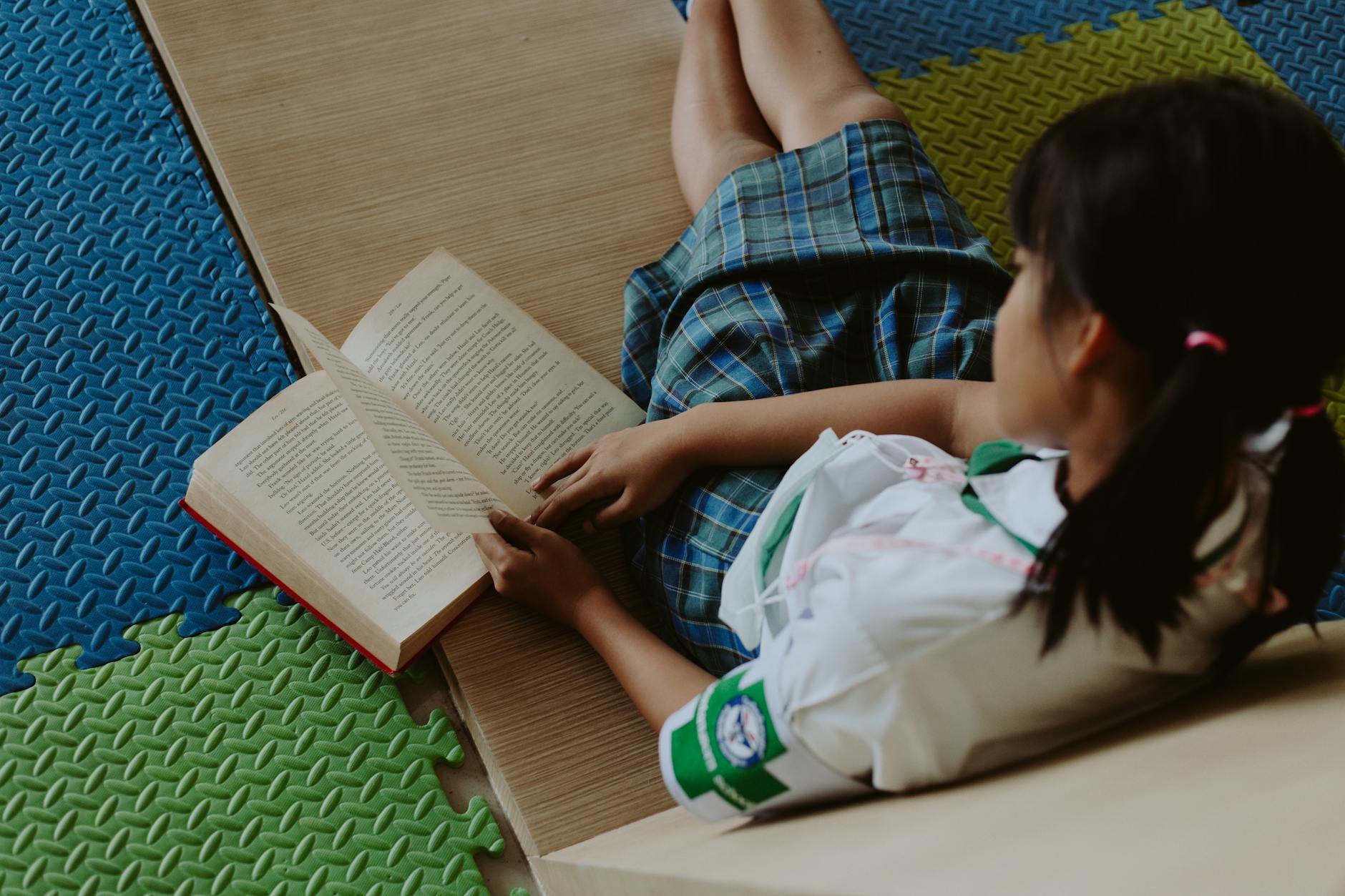
The Children Are All Ours

Photo by Ron Lach on Pexels.com

The children are ours, every single one of them all over the globe…James Baldwin

My entire life has been filled with children. Before I went to work as a teacher I had two daughters of my own and watched the five youngsters of others inside my home while their mothers took care of jobs and other business. While juggling classes at the University of Houston I landed a position as a preschool teacher that convinced me that my life’s work should be devoted to young people. After sending an editorial letter regarding some of the homilies being presented at my parish church the pastor visited my home and surprised me by agreeing with my complaints and convincing me to become a Sunday school teacher. Eventually the nuns directing the program tapped me to oversee the classes for preschoolers through the fifth grade as they exited to do community work. I somehow kept all the educational balls in my repertoire in the air while I finally obtained my degree and certification to be a teacher.

I bounced from school to school for a time, starting with an assignment at a Catholic school where I was the math teacher for all of the students in grades six through eight. I had six different classes to prepare each day but what might have been an onerous job for some became an exciting adventure that told me that I was doing what I was always meant to do. My enthusiasm for my students energized me in spite of the long hours of standing on my feet attempting to interest and challenge my charges while understanding the needs of each individual. Oh how I loved those young men and women!

More for a better income than any other reason, I next worked as a fourth grade teacher of every subject that the children needed with the exception of PE and music. I had even more preparations to make for three reading groups, social studies, science, math, art and a few other duties thrown in here and there. The students were much more diverse and economically disadvantaged than those at the private school but once again I adored them even as a little voice was telling me that I wanted to focus on the middle school aged pupils who are so often viewed as difficult. When a new opportunity arose I grabbed it in spite of the fact that I adored the principal of the elementary school and learned how to be a real teacher from her.

I enjoyed the growing pains of my middle school students with boundless joy. Somehow I got them and they got me. I taught wealthy young people from powerful families and youngsters who lived in poverty. It didn’t seem to matter whether they were altar boys or gang members, I loved them all and felt that they were part of my great big extended family.

Over the years I spent many a sleepless night worrying about my students and even when I retired there was never a day when I did not think of them. Most of them are in their thirties, forties, and fifties, now. I do my best to keep up with them, rejoice in their achievements and grieve when I hear of their difficulties. I also still teach and tutor a small group of young people a few hours each week. I no longer have the fortitude to spend eight to ten hours on my feet with little more than a few short breaks, but I miss the long days that began in the dark and rarely ended before ten at night. It was then that I knew true happiness in my vocation.

I have felt an almost spiritual devotion to the children and young adults who came my way. I did my best to nurture them, guide them, love them. I enjoyed being a Dean of Faculty and providing assistance to the teachers. I understood the enormity and importance of their tasks. I learned from them and became as close to them as I had always been to my students.

I truly believe that those children, even the more grown up ones, are ours and that we have a duty to make sure that they will be okay. There should be no strings attached to what we might do for them, no budgetary restraints that do not allow us to provide them with whatever they need to fulfill their talents and dreams. We should be focused on and dedicated to providing them with every opportunity to reach the potential that is inside each and every one of them. There is no investment that a society might make that is more wonderful than insuring that no child in ever afraid, hungry, sick, or uneducated. Every one of them is unique and longing to become the best of themselves. It matters not what language they speak, where they live, what appearance they may have. The children should always be our number one priority. We should minister to them without prejudice or avarice. If we have to sacrifice to make their lives comfortable and meaningful, so be it.

It has been a great honor to work with children over many decades. There is no job, that compares. The satisfaction that I have felt in knowing that thousands of souls are now productive and able to care for themselves and their loved ones because I played a part in educating them is immeasurable. I truly cannot understand why anyone would become stingy with the resources and care that they all need. To deny even one child anywhere in the world a childhood filled with wonder and discovery seems almost to be a sin. If we were all to focus on the children with love most problems would disappear. We cannot reserve our opportunities for only those like us. Our largess for children must be given freely and happily to all.

Their Beauty Shines Forth

Photo by Mikhail Nilov on Pexels.com

I have been spending my mornings accompanying my husband to radiation treatments for his cancer. The process goes rather quickly as long as the machines are working properly and he has done the work to prepare himself. It’s been a long haul from start to finish but everything has mostly gone well and so as we near the end I find myself reflecting on the many people that we have encountered all along the way.

Of course the doctors, nurses and technicians have been incredible. Even the greeter at the front of the building and the receptionist behind the desk smile with encouragement. Frankly I don’t now how all of them they stay so calm and compassionate day after day. They are definitely angels among us who deserve nothing but praise for the long hours that they dedicate to returning their many patients to good health. 

I have seen a full spectrum of individuals and their families on the same journey that has filled days, weeks and months for my husband and me. We each have a role in the recovery process and we come from many places hoping for success. I have listened to the conversations and the stories and read the faces of those just beginning the treatments as well as those joyfully ringing the bell to mark the end of the process. We quietly become like family even as we represent the full spectrum of humanity. 

I have witnessed elderly folks in wheelchairs and young people who look too healthy to be stalked by cancer. I hear conversations in Spanish and smile each day at the joyful Black woman who fills the room with hope even as she herself is enduring the treatments. There is the man who drives miles from east Texas to be with the best doctors. He entertains us with his Texas twang and stories of hunting and cooking. There are people who sit quietly and those who tell us their life stories. Nobody in the place thinks that anyone does not belong. We are equals as people all anxious for news that the cancer will be gone. We celebrate the victories and listen to the worries. We are all in the same boat and feeling fortunate to even have a boat. 

The last many weeks have made me wonder why we humans so often have a difficult time just getting along with each other. There is unity and understanding in the room where we gather five times a week for eight weeks or more. We don’t judge each other or consider anyone to be either greater or less than. Why can’t such a spirit permeate over the entire planet? Why can’t we truly welcome each other with our differences and even our warts? What makes us judgmental and angry and so competitive? Why is power and money all too often more important that just loving each other? Don’t we know that in the long run of our lives none of those things will mean nearly as much as hearing the words, “You are cured. Go forth and have a good life!”

I have lost so many people for so many reasons and I never really get over missing them. I suppose that it is that way for each of us. We think about the friends and family members who have left us to navigate life on our own. We know that not one possession that we have can ever replace the important role that each of them played in our lives. Because we know this, how can we not know that this is not unique to our nation or any nation. Humans have the same feelings whether they are from Europe or Africa or the Middle East. Our differences are superficial. We make different choices about how to live and what to believe but when the rubber meets the road we all bleed and feel frightened when someone tells us that we have a disease. We also rejoice when the purveyors of medicine make us well. We cry when life ends for someone who has been part of our lives. These things are universal, beyond language and they should serve to unite us as humans. 

Life can be difficult for everyone so why do we so often decide to make it worse for some? What in our personalities makes us immune to the feelings and tragedies of people who only appear to be different. Why don’t we want to hear their stories, share their joys, help them through their difficulties. What makes us judgmental rather than understanding? 

These are questions that have become ever more important to me during the past many weeks. Somehow I have come to see even more clearly than ever how important it is for each of us to just accept each other. It is not up to us to demand how people should be or believe. Our only purpose should be to love, an idea preached long ago by a man named Jesus who inspired a religion that has done much good in the world but sometimes ends up doing harm when we lose the central message of his teaching.

I doubt that I will ever forget this experience. It has been difficult for me but even harder for my husband and the people who have the cancers growing in their bodies. It has humbled me and made me ever more determined to embrace my fellow humans. I have seen their beauty shining forth and hope that others will as well.

We Don’t Need Laws For Everything

Photo by Matthias Zomer on Pexels.com

The governor of Texas, Greg Abbott, has signed a bill restricting the use of cell phones,smart watches and some tablets at school. Campuses must ban such items outright or store them in secure places each day where students may not reach them. Reactions to the bill are mixed as might be expected. As usual the Texas legislature is placing more and more rules and restrictions on schools.

The genie is already out of the bottle but I would nonetheless like to make a few comments about this latest attempt to keep Texas children safe that might actually place them in more danger. But first I would like to suggest that someone made a problem out of something that need not have been a worry.

As a Dean of Faculty I learned that teachers are quite good at maintaining the proper balance of discipline inside their classrooms. Cell phones have been around for quite some time now and the vast majority of educators are able to curtail their use without the assistance of a law that does not take its unintended consequences into account. An adept teacher has eyes in the back of the head and is able to catch students who attempt to engage in phone use during a lesson. It’s rather easy to spot the offenders and in most cases simply seizing the phone for the remainder of class nips the habit in the bud. 

Preparing an engaging and interactive lesson does more to keep students involved and away from phones than a law. Too many restrictions on student behavior generally leads to lots of time spent and wasted on enforcement. Every teacher knows that there are not enough minutes in the school day to fall behind even a tiny bit. I can envision phones turning into a very big deal when they were not so before this bill. 

Sure, there are teachers who let students get away with less than attentive behavior, but with guidance from peer facilitators, mentors, and administrators they can be shown methods for reducing inappropriate phone time. It seems a bit much to install a statewide mandate to a so called problem that does not exist everywhere. It also does not take into account some very good reasons for allowing the students to keep their phones.

Let’s face it. Regardless of what the governor may proclaim our schools are potentially dangerous places. We have had school shootings only miles from my home and the one in Uvalde where teachers and children were killed was epically tragic. These days parents use the phones as a way of tracking their children so that they are always aware of their locations. In addition the phones become lifelines in the terrible event that a school shooter actually enters a campus. Students and parents have the right and quite often the need to stay in touch. The modern world has created a beautiful tool that need not be banned or locked away but simply used only in proper ways and times. 

Not long ago there was an occasion when an alert went out in one of my grandchildren’s school. My grandson was anxioud as he and his classmates were secured in a locked classroom wondering if there really was a danger on campus. He was able to let his mother know what was happening and that he was okay even though he admitted to feeling frightened. Talking with his mom kept him calm even though the talking was only via text.

The fact that smart watches were added to the mix is equally ridiculous. Some of those items are so advanced that they can track heartbeats, blood pressure and exercise. They too can serve as trackers for parents who worry about their children given the realities of today’s world. With heightened security warnings across the globe it hardly seems to be an appropriate time for taking what could be life saving technology away from our children and teens.

I rely on my phone and my smart watch but I am able to ignore them whenever I am tutoring or teaching and students are capable of that as well. It is understandable that they should be put away during tests but that is easy enough to accomplish without a statewide law. 

For some reason our Texas legislators have really gone overboard in rulings for schools. Children will find copies of the Ten Commandments posted in all classrooms, Phones, tablets and smart watches will no longer be allowed but prayers will be okay. Books will be banned and the teaching of history will be made more formulaic. In the meantime immigrants run the risk of being seized at school events. It is as though our lawmakers do not trust parents or teachers to show their children how to behave properly. Because of a few bad apples everyone is going to be punished and required to conform. Somehow it does not seem to be an effective way to teach young people to be moral and safe. Uniformity has won the day and my experience in classrooms tells me that it is not going to be the best way of doing things. 

Long ago we teachers had to learn how to best use computers and other technology. We fumbled a bit here and there but eventually got it right most of the time. We learned how to use them as a powerful learning tool. As such I suggest that we leave classroom management to the schools. It’s easy enough to find the outliers that don’t know what they are doing and then help them individually to improve their methods than to overhaul everyone for rather weak reasons. I sadly believe that the flaws in this law will soon become apparent to everyone. Our state should rethink this before it becomes the focus of schools rather than learning.