
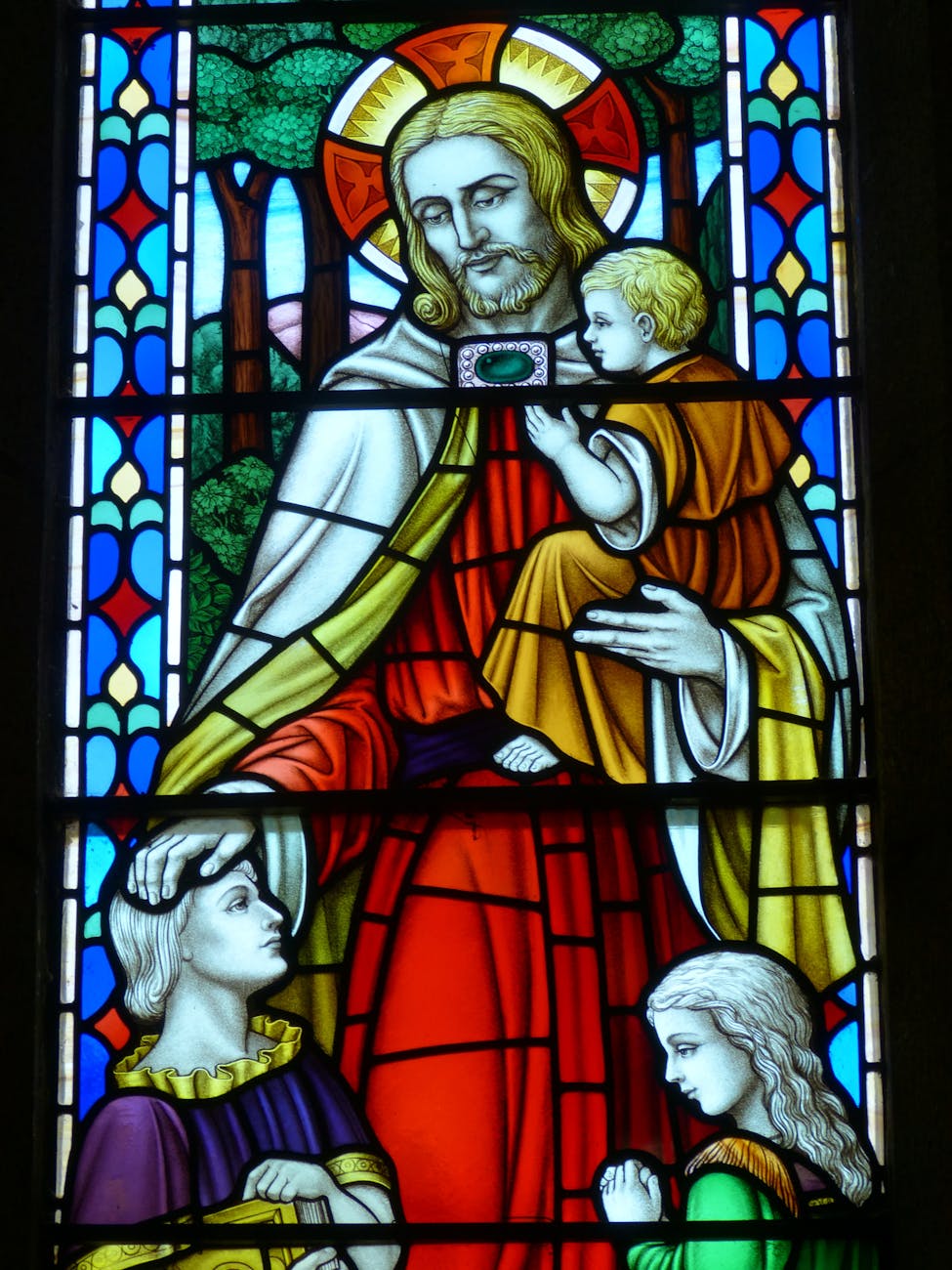
Who was this person named Jesus who walked on this earth over two thousand years ago? There is little historical evidence of his presence other than the stories in the Bible that were written after his death. How is it possible that the preaching and example of a man from so long ago has had such and impact on humanity?
The Old Testament of the Bible outlines the story of the Jewish people whose suffering was offset by their belief in a single God rather than the many gods of yore. They were promised a messiah who would at long last bring them the peace for which they longed. Many forerunners to Jesus of Nazareth foretold of the coming of the son of God but the wait for the Jewish people was long and often brutal. When Jesus was born with humble parents in a manger it is said that a star in the east signaled his arrival. Nonetheless for many Jews he was not the one on whom they had laid their hopes.
As the Bible tells us Jesus lived mostly in obscurity as he was growing into a man. We know that he learned about his Jewish faith from his parents and that he once frightened his parents when he went to the temple without informing them. He was quietly readying himself for the task that lay before him.
When Jesus finally began to teach his lessons they did not always fall in line with the rules and regulations being taught by the elders. His was a kinder, gentler and more inclusive message than the strictures imposed by the religion of his youth. He performed miracles on the Sabbath in defiance of a law that insisted that he ignore suffering in compliance of the long held rules. He was unafraid to mingle with people who were shunned by society and the religious leaders of his time. He told stories of good Samaritans that defied the general thinking of his time. He was a rebel and a trouble maker in the eyes of many who worried that his growing popularity might create troubles that had been tamped down by long held beliefs and rules. Some even saw him as a heretic who was defiling the laws of the Jewish faith.
Jesus nonetheless offered a new vision of how to treat each other that was based on what should have been a very simple message of love. He demonstrated his own humility and his willingness to minister to everyone, not just a select few who were deemed to be good by the society in which he lived. He preached a message of tolerance and forgiveness and a willingness to understand each other. His sermons insisted that even the outcasts of the time were loved and cherished by God.
Jesus was a threat to both the religious and political leaders of his time as his popularity grew among the common people. His triumphant arrival into Jerusalem attracted crowds of people wanting to see him and know him and touch him. They laid down a carpet of palms for his donkey to walk on as a sign of how much they respected him, but their adoration was short lived. They folded and hid once he was arrested and tried as a criminal. Even when given a chance to free him they chose a thief instead lest they too be harassed or even imprisoned for their belief in him.
The story Jesus of Nazareth is inspiring and hopeful but we humans have all too often distorted the beauty of his simple message by inserting rules and dictates that never seemed to be important to him. He wanted to keep his commandments as simple as possible so that even children would understand them. He wanted us to love each other above all other laws He made no exceptions. He did not tell us to turn our back on people that we humans call sinners. He did not ask us to judge others but rather to find love in our own hearts for even the outsiders of our society.
Jesus died an horrific death by suffocation as his ability to hold himself in a posture that allowed him to breathe became more and more difficult as he hung on a cross. Eventually his energy waned and his body sagged and he was painfully suffocated. It was a brutal death in which he was called a criminal and died next to other criminals whose transgressions he was ready to forgive. He died being jeered with the once admiring crowds abandoning him. His buddies the apostles were hiding in fear. Only his mother, Mary Madeline, his cousins John, and a stranger mourned at the foot of his cross.
I have always believed that the total essence of the message of Jesus is encapsulated in his final days on this earth. If we truly pay attention to the humanness of what happened to him we see that he was never concerned with condemning anyone who was different, unloved, misunderstood or an outcast from society. His message even when he was dying was one of love. He wanted us to see that even the son of God can be likened to a dangerous criminal whenever we become wrongly judgemental. He wanted us to understand that all people regardless of the story of their lives should be loved and cherished.
In 2026, we have many Christians seeming to be more like the Pharisee’s than Jesus. They preach hateful ideas that judge people that they do not understand. They build walls between us and turn us against each other, all things that Jesus never did.
I believe with all of my heart that if Jesus were here among us today he would urge us to love and care for the immigrants seeking asylum from horrific situations. He would want us to care for the homeless and treat them as equals to ourselves. He would embrace the members of the LGBTQ community and remind us that God does not make junk. I think he would want us to strive for peace and understanding. He would remind us that it is our duty to love without placing restrictions on who that might be.
Holy week is a time to reassess our understanding of Jesus and to try once again to truly embrace his message. When something we do feels hateful toward certain groups or people, we would do well to ask ourselves what Jesus would do. I believe that the message is so clear. He would smile and tell us to love.
 All It Takes Is A Little Love