The Fires Are Burning

Photo by Adonyi Gu00e1bor on Pexels.com

Back in the nineteen nineties, which seem like yesterday and decades ago all at once, a teacher friend warned me about climate change. She was a generally quiet and low key individual so her emotional description of what was coming if we did not change our ways caught my attention even as I silently felt that she was in the throes of an emotional outburst. Contemporaneously one of my sons-in-law began beating the drum of  impending danger with regard to climate as well. Because I was still quite busy with caring for my family and advancing in my career I found such information to be interesting but hardly life changing. Like most people I ignored the signs and kept moving forward with my life. Somehow I did not feel the least bit responsible for the strange weather patterns that seemed to be just another quirk of nature. 

A few years back one of my grandsons who is quite bright and earnest began informing us of his views on what was happening on the earth. He spent much time researching climate and the human impact on it, becoming more and more convinced that natural disasters would be more and more frequent and consequential. He worried that if we did not plan immediately we would one day be caught in a worldwide migration to places that were more comparable with human survival. He spoke of purchasing land in a part of the world that might suffer less than others when the worst began to happen. He felt that having members of of the family live near one another would provide a variety of skills that might become necessary as society broke down. It all sounded a bit like a dystopian science fiction thriller except for the fact that my grandson provided actual facts and showed us trends that were disturbing. Since then I have seen terrible incidents occurring all over the globe.

I have witnessed first hand the changing nature of the seasons. I remember February as a time that was cold day after day even in a southern place like Houston, Texas. As a young girl I walked to school in the proverbial days of freezing. We rarely had snow but winter meant bundling up in heavy coats, wearing hats that covered my ears and donning gloves to keep my hands from becoming too cold. We turned on the heater in our home in November and our Christmases were mostly cold. From January through February we knew that winter was a certainty that sometimes even included snow. 

These days I hardly ever have to use my winter gear beyond a few days here and there. This past February felt more like spring on most days rather than the traditionally coldest month of the year it had been in my youth. We had to cover our plants once this year but mostly spring arrived earlier than ever. The changes are more and more noticeable and I often think of the science minded people who were so insistent that we all had to do something to stem the tide of the damage that had already been done to our earth. 

Over fifty years ago Exxon enlisted the expertise of notable scientists to determine the effect of fossil fuels on our planet. The details that emerged from the research predicted with certainty much of what is happening today, but the mega company chose to fire the researchers and hide the report when they might have been pioneers in changing the way we all live. They literally chose instead to launch a campaign of disinformation that lied about the impact that we humans have on the natural world around us. Those who were like my friend, son-in-law and grandson were made to seem foolish and perhaps a bit hysterical. We all went on ignorantly unaware of the monster at the door.

As I watch millions of acres burning out of control in my home state of Texas I feel regret that I did not pay more attention to the warnings that should have been apparent to anyone with a willingness to consider the evidence. We humans were slowing making our beautiful earth more and more sick. It was so much easier to look away and assume that we would be able to fix any problems with our human ingenuity when the time came to finally react. Sadly, we may have gone too far in our profligate ways to prevent great loss and suffering as dangerous weather events become more and more of a reality. Perhaps we would have been better served to listen to those whose only interest in predicting what might happen had been to help us all. 

The evidence of climate change is all around us and yet it is not the big issue that it should be. If we are worried about human migrations now, we should be even more concerned about how they will look if vast areas of land become uninhabitable. We must understand that sources of water are drying up, making human life in the places they serve less and less likely to be sustained. It is possible that in the coming decades we humans will witness changing dynamics in where and how we are able to exist.

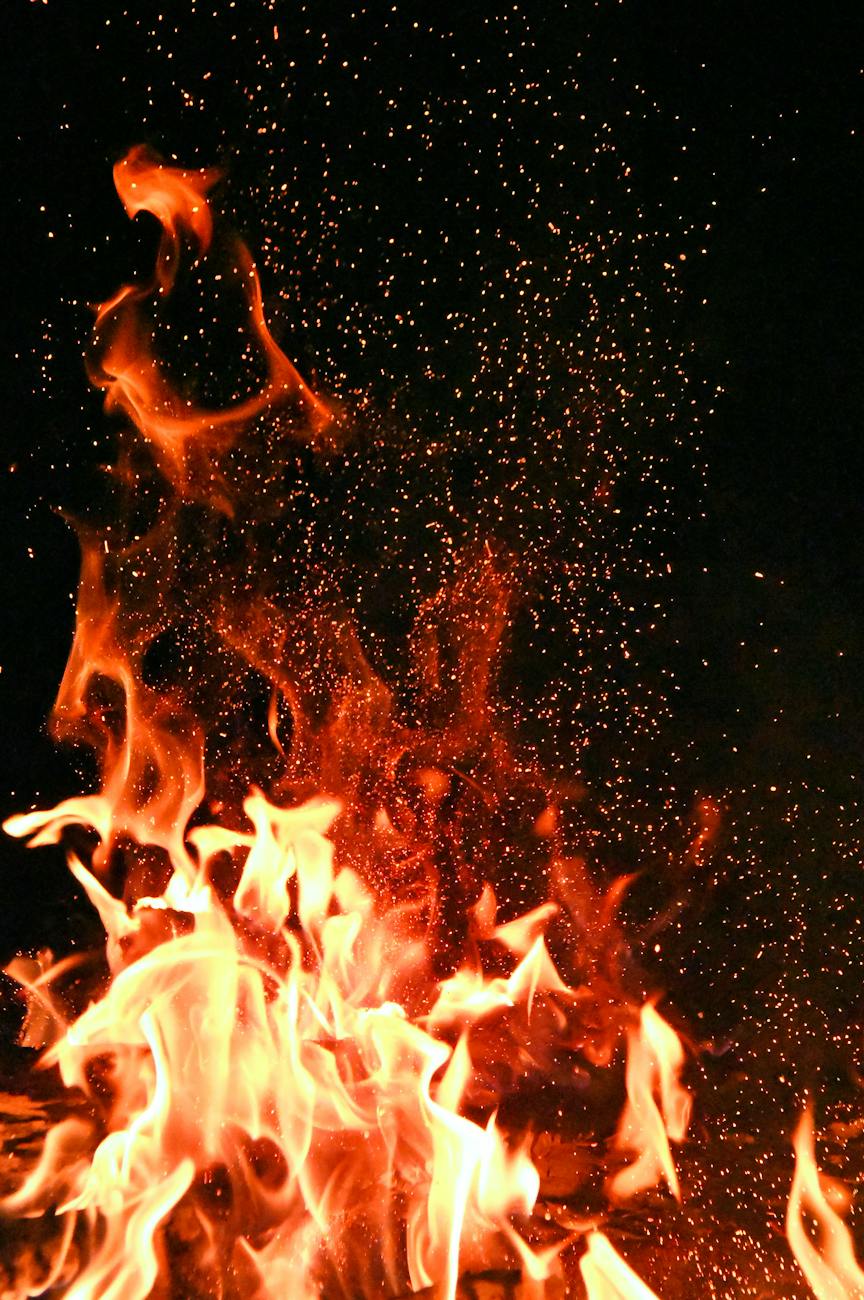
Surely the issues surrounding climate change should be paramount in determining how we live from day to day and whom we choose as our political leaders. Other countries are actively preparing for the difficulties to come while we Americans are mostly stagnant in our efforts. A wave of anti-scientific thinking will be our destruction if we do not join together now to protect our world from ignorance. We can no longer push away the scientific experts and hide the evidence in a vault pretending that all is well. We are in a race against time that should have begun more than fifty years ago. The question is whether or not we are willing to attempt to catch up to where we need to be or if we will wait until disaster is our everyday reality. The fires are burning and we have to do more than just put them out. Will we wake up before it is too late?
Grandma Knew

Photo by Maria Tsegelnik on Pexels.com

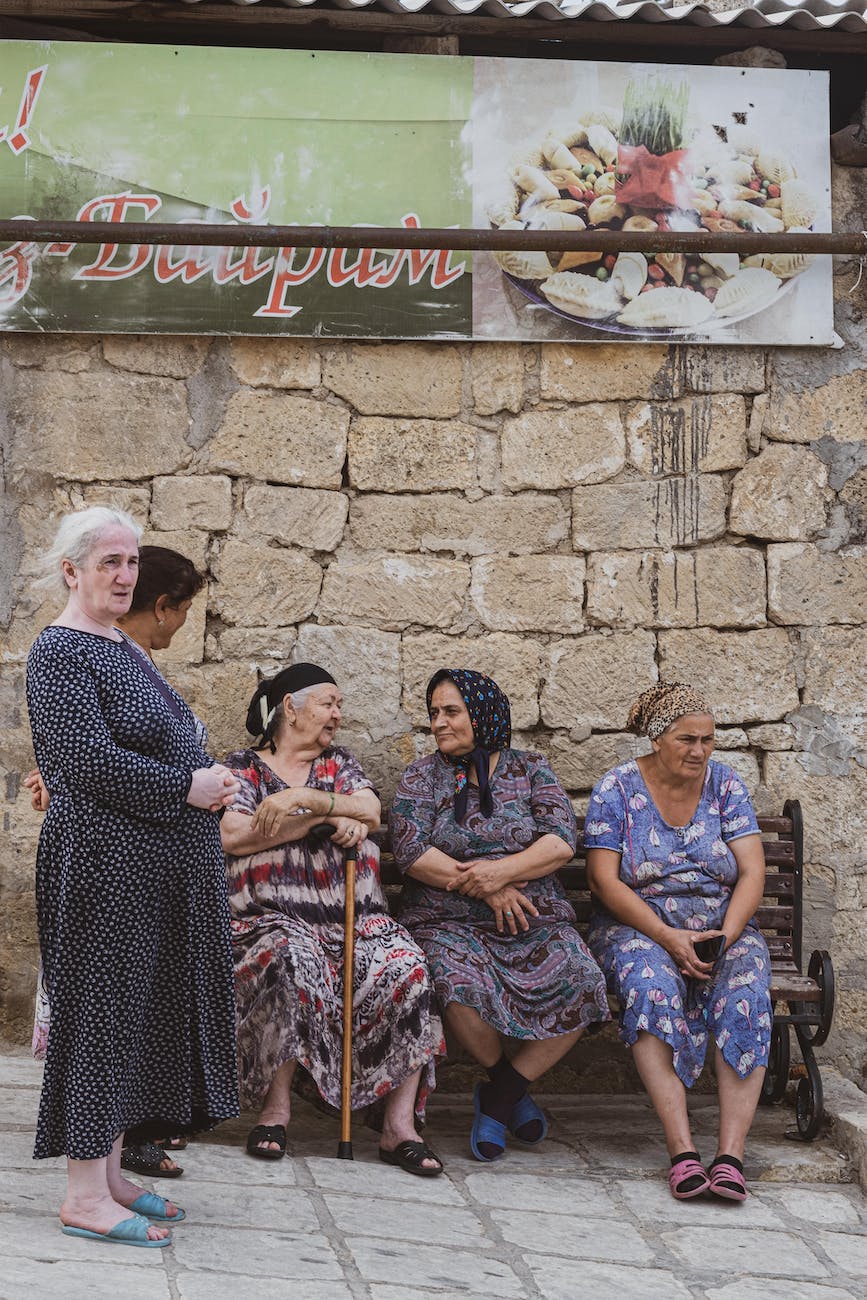
Both of my grandmothers always looked old to me. In truth they were only in their sixties when I first remember them but they seemed ancient with their nonchalance about appearances. I sometimes wonder of they were more comfortable with aging than most of us are today. They allowed all of the signs of growing old shine forth without any attempts to mask them with makeup or hair dye or injections of botox. They accepted that they were in the last phase of life with great dignity and little worry about how they might appear to the world. 

Both ladies mostly wore cotton dresses that were fitted at the waist revealing any bulges of extra weight that they might have had. The frocks were comfortable but without much style. The cloth was often patterned with flowers or plaids that did little to differentiate them from a thousand other older women. They were strictly utilitarian and often a bit faded and frayed after much use. Their closets generally held just enough dresses to get them from one wash day to the next. 

My grandmother Minnie Bell worked on a farm so her wardrobe also included overalls and work shirts which she donned to labor in the fields of vegetables that she tended. She nonetheless always changed back into one of her dresses once the outdoor work was done. She dressed as though she had been assigned a set of uniforms to wear each day of the week depending on what duties she was performing. Her shoes were sensible and comfortable. After all she would work in them from before sunrise to late in the night. 

My Grandma Ulrich rarely wore shoes. Instead she padded around her home in her bare feet unless it was a cold day in winter. Then she donned slippers lined with soft fabric to keep warm. I don’t think I ever once saw her wearing a regular pair of shoes. I’m not even sure that she owned a pair. 

Neither of my grandmothers wore makeup or spent much time styling their hair. One let her hair grow long so that she might braid it and allow it to trail down her back. The other grandmother kept her hair cut short and curled into a wavy bob. In my youth it seemed to me as though there was a kind of official agreement among women over sixty to spend little time primping and fussing over appearance. They enjoyed a kind of mutually agreed upon comfort that allowed them to focus on other things than the wrinkles on their faces or the widening of their waists. They let their graying hair be a kind of badge of glory that spoke of their wisdom and joy in being themselves. 

I always thought that both of my grandmothers were beautiful. I did not expect them to look younger than they actually were or to be fashion icons emulating current trends. They left styling to the younger generation and focused outwardly toward the people in their lives. Their daily routines were designed to make everyone around them feel safe, satisfied and loved. If they worried about their physical appearance they never gave any indication of their concerns. They reveled in being mature versions of themselves, sweet matriarchs striving to demonstrate how much their families meant to them. 

In today’s world there is so much pressure on women to continue looking as young as possible even as they age. Our society has an obsession with youthfulness that is so influential that even young girls take note of a stray gray hair or a tiny crease in the skin around the eyes. Women spend time slathering themselves with creams and and skin products designed to imitate the youthful glow of a teenager. They fuss over their clothes and shoes hoping to present an image of being eternally young. It is an exhausting and time consuming process that begins with peer pressure on teens and never seems to abate until they revolt and choose clothing and shoes for comfort rather than style. 

I suppose that there is no reason to appear dowdy or older than we actually are. Nonetheless there is an argument to be made that we should consider how much time and money it is taking to keep ourselves looking as young as possible. We might ask ourselves when it will be okay to simply relax like my grandmothers did. There should come a time when we just allow our inner beauty to be what people see instead of supporting the billion dollar businesses convincing us that it is important to improve ourselves with their products. I know that I am probably just as guilty of this as anyone else who attempts to artificially cover the signs of aging. 

The times of isolation during the pandemic were often difficult, but also freeing. I became like my grandmothers in so many ways. I had a repertoire of seven different iterations of jeans and t-shirts that I combined and repeated day after day. I let my hair grow and removed the polish on my fingers and toes. Like Grandma Ulrich I mostly operated in my bare feet and when I needed shoes my go to choice was usually to wear slippers. I washed and moisturized my face but let dust cover the cosmetics that I had always used to paint rosy cheeks on my face. I was comfortable and happy and more in tune with the rhythm of the world. All of the superficialities melted away because I did not need them. It was a gloriously liberating time that now allows me to feel comfortable being my natural self on most days. I only go into full fashion mode for special occasions now.

A friend recently spoke of how wonderful it is to grow old gracefully. It is extraordinary when we can look at ourselves in the mirror with nothing more that what nature has given us and feel content with what we see. Reaching that point frees us to look outward and discover that the best feelings come from spending most of our time embracing and comforting others. There is so much joy in seeing the world without efforts to change or conform to artificial pressures. Our grandmothers seemed to know that. Perhaps we should follow their example. After all when we remember them we see that they really were beautiful.

Warts and All

Photo by Atypeek Dgn on Pexels.com

It would be difficult to find a person on this earth who did not fail at doing something at least once in a lifetime. The truth is that most people suffer defeat multiple times. Because we are human each of us has endured moments when we were unable to achieve something that meant a great deal to us. This does not mean that we are flawed or inadequate, but simply that we are human. 

Failure comes in many forms, some of which are mostly benign and others which tear our lives apart. I did not pass my driving test on the first try. I did quite well until I attempted to parallel park in between two cones. I became so flustered that I put a bit too much pressure on the accelerator pedal and knocked over one of the orange barriers. The whole process stopped there and I had to go home and lick my wounds while I practiced for weeks never really mastering the art of guiding my vehicle to a nice fit between two immoveable objects. 

I went back for another try and once again the test was smooth sailing until I reached the defining moment of parallel parking. I literally began to shake with terror when I saw those cones seeming to mock me with their bilious color. I took a deep breath and concentrated on moving slowly, deliberately. When I thought I might hit the orange sentinel I pulled out and began my effort again. I was determined not to cause damage this time, but when I had tried multiple times I actually began to cry thinking that I would never in my lifetime be allowed to legally sit in the driver’s seat of a car. 

The proctor for the test asked me to just stop for a moment. He wanted to know how old I was and how many times I had tried and failed to master the art of parallel parking. With a shaky voice I admitted that I had failed the test once before and did not believe that I would ever be successful in my efforts. He calmly noted that I had at least mastered the ability to know when I was about to hit something. He wanted asked how often I engaged in activities which would require me to park my vehicle along a curb between two other vehicles. When I told him that I would probably never have to do such a thing he announced that he was going to give me a passing grade. I was thrilled but to this very day I have been afraid to even try to parallel park, which makes me feel a bit ridiculous.

If this minor failure had been the only thing that had daunted me in my lifetime I would be rather remarkable. Instead like everyone else my life is littered with failed attempts at mastering a technique or, even worse, sustaining an important relationship with someone who was very important to me. Somehow our inability to handle our interactions with other people with calm, respect and wisdom tends to be among our greatest failures as humans. The impact of interpersonal defeat leads to the worst problems in our human experiences. Sometimes they can even result in wars. We would do well to be as aware of the pitfalls of acting without considering the damage we might do to another person as I was about hitting one of those cones when trying to park. 

Our emotions trace through our minds twenty four seven. Our brains can be methodical and thoughtful when suddenly we flare up in anger or disappointment or fear. We say and do things that we never intended. Once the genie is out of the bottle it is so difficult to cram it back inside. We hurt each other and sometimes the damage is so bad that there are no excuses, no passes for good intentions. We fail and it hurts. 

If we constantly remembered that failure is a human trait perhaps we might stop our descent into the kind of frustration that tears us apart. We would think before we act. We would consider what might happen if we react too quickly. We would also be willing to forgive the small slights before they become bigger lethal problems that affect more and more people around us. The first step in curbing our destructive behaviors is in admitting that we are imperfect and that we sometimes need help. It does nothing positive to hide behind our imperfections and failures. Admitting them and working to control them is the first step to finding success. 

We are often hard on ourselves and even harder on others when things fall apart. We forget that we are not going to always get things right on the first try. The most successful individuals are those who are open to the idea of working hard to overcome problems with ourselves and in our relationships. There are no magic pills that make any of us perfect. We are bound to encounter difficult moments that make us question ourselves or the people around us. Understanding our individual limitations and working to improve our failings is not just admirable, but also necessary to maintain our well being. 

A friend posted a wonderful prayer today. It began with admitting that sometimes it feels as though we can’t. We may have a tremendous desire to be our better selves but something is inhibiting us from getting there. Just saying the words “I can’t” is admitting that we are in a state that all humans encounter. Asking for help in overcoming this feeling demonstrates a positive step forward. As my mother used to say true love is accepting someone, including ourselves “warts and all.”

Gratitude

Photo by Sami Aksu on Pexels.com

A winter storm blew through my town. The sky was dark in the middle of the day. Sheets of rain fell to the ground. There were tornado warnings and it seemed to be a time for staying inside, but we had appointments to keep so my husband and I were out and about during some of the most threatening times. As we drove towards the comfort of our home I found myself thinking of my mother just as I always seem to do when the weather takes a frightful turn I remember how she always smiled as she calmed me and my brothers on such days by pointing out how lucky we were to have a warm house with a strong roof to keep us safe. I suppose my lessons in gratitude began with her. 

My mother was a child during the Great Depression of the last century. She often recalled how her parents had kept their eight children safe and fed during the worst of times. Her father had paid for their home as each room was built so when the crash came the family was assured of having a place to live. He worked at a meat packing plant and got special deals on cuts of meat that might otherwise have been thrown out. Her mother then concocted recipes that used the scraps along with vegetables from the garden that she grew in her backyard. The fare was often meager, but my mother boasted that they never missed a meal. Through hard work and ingenuity my grandparents kept their children safe during a time when so many across the globe struggled to find a safe place to sleep at night. 

My mother’s childhood home was tiny. There were three bedrooms that were so small that it was difficult to imagine how a double bed fit inside each of the three bedrooms. Even harder to visualize was four children sharing each of the two beds that filled the spaces in the rooms designated for them. Mama laughed when she thought of how cramped the sleeping quarters had been. She described how the act of one person rolling to a new position prompted the whole crew to move in unison. 

The family had few luxuries. They owned a radio around which they found entertainment and news. Their father purchased books which he encouraged them to read. They road a bus or walked to get to school or downtown. Hand me downs kept them in shoes and clothing. My mother being the youngest was always the last to get the worn and threadbare items which more often than not had been cleverly patched by my grandmother. For birthdays and Christmas each child received a nickel which they could save or spend any way they wished. Somehow in spite of what sounded like privations to me, my mother’s face glowed whenever she described how fortunate they were. 

I suppose that the source of my mother’s ability to appreciate the simplest of pleasures grew from the bare bones existence of her childhood. It always took so little to make her happy. She was thankful for the smallest gestures of kindness and in turn her generosity if measured proportionately to her income was equal to the largesse of a billionaire. She considered herself a most fortunate woman even as her lifestyle remained quite simple for most of her life. Much like her parents she lived within her means even when that meant requiring her to be quite creative in stretching her tiny budget. When she died she owned her home and had no debts and no savings but she had been wise enough to secure an insurance policy that paid for her funeral. She left this world as simply and as happily as she had lived in it for eighty four years. 

I sometimes chide myself for buying into the pursuit of wealth that so often distracts humans from truly enjoying the small things in life. I am reminded of a woman I knew whose husband showered her with exquisite and expensive gifts each year wrapped in gloriously beautiful packages. Instead of being thankful for his largesse she invariably found something wrong with everything he had lovingly purchased for her and spent the days after the holiday returning his offerings for the things that she really wanted. Somehow that always struck me as being a terrible thing to do as I noted the disappointed looks on her husband’s face. I wondered how she herself could be so unappreciative.

I know people who find fault and complain about their good fortune constantly. Instead of being thankful like my mother always was they comment about the flaws that they seem to find with great regularity. It makes me uncomfortable to be around people who will complain about a gift of wine when they should instead be voicing the joy of having a friend who thought of them by bringing them a gift. Such folks pick at perceived faults in every generous effort that comes their way. I often wonder what makes them so unappreciative of what they have. They seem unable to grasp the simple joys of life. They do not appreciate that it is the sacrifice and love involved in their gifts that is the true value.

I’m glad that my mother’s generous and gracious joy still guides me. She showed me how to treasure even seemingly small treasures. I smile each Christmas when I decorate my tree with, the crocheted pink bell that a student made for me. So too it is with the paper ornament created from an old Christmas card that a friend gave me decades ago. The thoughtfulness that prompted people to think of me is better than gold. The warm bed where I sleep at night is one of my most appreciated possessions. The gratitude that I feel makes me happy over and over again no matter how difficult life becomes. When it rains I see my mother smiling and reminding me of my good fortune. The legacy she left for me is magnificent! 

Assume the Best

Photo by Kulbir on Pexels.com

I once attended a multi-day training that has stuck with me for all time. The instructor ended the course by telling us that if we left with only one idea from her three day marathon is should be to always assume the best about people. She noted that when we assume the best we are usually right. Only after getting proof that someone’s intentions were morally wrong do we need to confront them with our disappointment and perhaps even anger or punishment. When we rush to judgement and accuse someone of acts or feelings that they never had it is always difficult to put back the pieces of our relationship.

Her advice was to curb the emotions of a difficult moment before jumping to conclusions that may or may not be true, whatever the situation may be. Assuming the best about people provides a cooling off period and demonstrates respect for the person whose words or actions may have bothered us. Taking the time to find out what prompted the behaviors that seemed wrong may reveal that no bad intent was behind them. Instead it may have been simply the result of a badly phrased sentence or a misunderstanding. 

These days, perhaps because of social media or differing ways of expressing ourselves, it is not at all uncommon for the words someone writes down or says out loud to come across as completely different from what they meant. Nonetheless society often seems to be on the prowl to look for a slip of the tongue, a wrong word used in the wrong context. We all too often hold someone accountable for a single badly worded statement. People are banished from jobs, groups and friendships for a slip of the tongue when they should be allowed to explain that’s not what they meant at all. 

We’ve all had those moments when the process of searching for the right way to express what we were thinking suddenly sounded irreverent or ignorant or even vile. We may or may not have had thoughts that matched what came from our mouths. Instead we may have only misfired with the words we chose to use in the hurry of the moment. In retrospect if given the chance we might have been able to explain more clearly what we had been trying to say. It is quite sad when we are held to a moment of frustration or momentary inability to find the words that would have mediated our thoughts and feelings more appropriately. 

I watch famous people being roasted over hot coals for saying something too quickly that irritates people. As general rule we tend to expect such individuals to always maintain perfection in the statements that they make. I would argue that few of us are ever able to avoid missteps in our utterances, so why would we expect more from others just because they are constantly in the limelight? The truth is that always being in the public sphere makes it more likely to eventually end up saying things that trigger ridicule or anger. 

Society jumps on those gotcha moments especially when they already dislike a person’s lifestyle or beliefs. Even the smallest omission or slip of the tongue becomes fodder for headlines and sometimes even the destruction of careers. If only we began with the assumption that person was not purposely trying to raise our ire, we might get more reasoned explanations for what they have said. 

The other problem is that all too often attempts to derail individual speech is purposeful pursuit. Questions are directed at forcing someone to say something that with incite criticism. Interrogators pounce on even the smallest sign of weakness or even omission. Most of the time such situations result more from the pressures of having to speak quickly and without consideration of how best to express certain feelings or ideas. Off the cuff responses to trouble laden questions can be akin to walking through a field littered with landmines and it is generally unfair. 

Sadly it has become more common to assume the worst about people from the start rather than assuming the best and then probing to find out what the truth actually is. Little wonder that we have so few who wish to be public figures and leaders. In today’s toxic environment expressing ideas with which people disagree might lead to doxing, threats and even violence. Such an atmosphere is not conducive to freedom and democracy and well-being. It does not work in private life either. Thus the growth of counseling services in which trained therapists literally teach people how to get along. 

Not long ago I wrote a blog expressing my frustration with the current attitudes of so many people across the globe. Someone who reads my offerings commented that he still believes that most people are good and have nothing but the best intentions with what the say and do. I also believe that is true and for that reason I always try to assume the best whenever I witness someone seeming to struggle with words or actions. Our relationships with each other are so delicate and so important. it’s up to us to dedicate ourselves to keeping them strong. It begins by having faith that the people around us mostly have good intentions. We should always believe that until the evidence shows that real evil is in our midst. Assuming the best is an act of confidence that the offending person was just having a bad day. Who among us does not reach that point now and again? Hopefully others around us will assume the best.