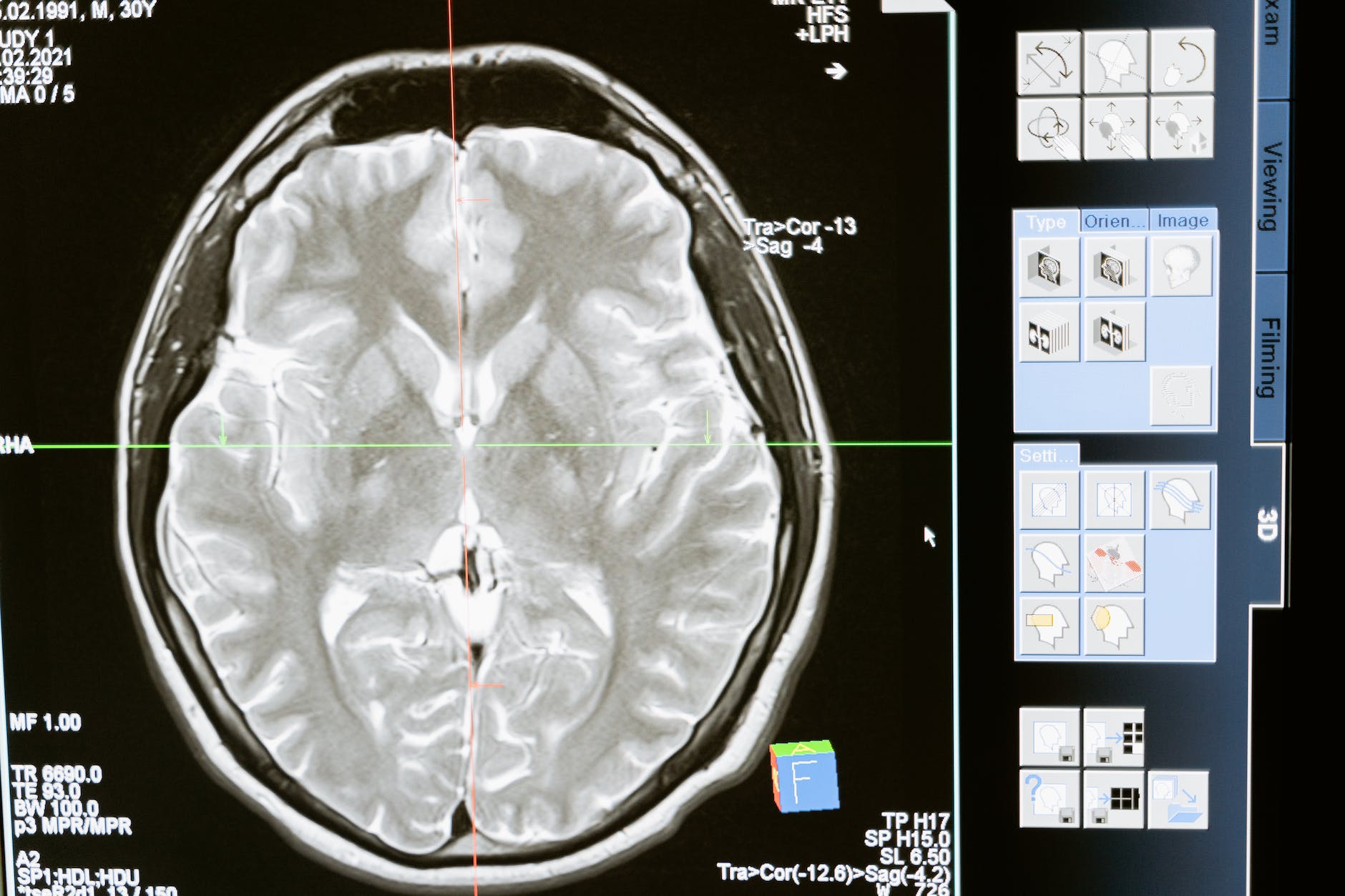
Make It Our New Frontier

Photo by MART PRODUCTION on Pexels.com

I can’t speak for every place in the nation or every incident when it comes to mental health, but I can tell my own story of a forty year challenge to find help for my mother’s bipolar disorder. We hear a great deal of talk about mental illness and now and again a legislative body tosses a few million dollars into the budget for care, but mostly very little real dedication to solving some of the problems ever takes place. I have known the enormous frustrations associated with keeping a loved one’s mind working properly. I can attest to the fact that it is more often than not a daunting task. 

My mother’s first frightening breakdown came when she was in her forties and I was twenty years old. Nothing had prepared me for the depression and paranoid ideation that she experienced. I had never before even heard of someone transforming from a healthy and happy person into one unable to grasp reality. The change in my mom came so quickly and unexpectedly. It seemed as though one moment we were going to see movies together and shopping at the annual Moonlight Madness sale at the mall and the next she was locked inside her home believing that forces were out to accuse and convict her of crimes she had not committed. 

I was thrown into the maelstrom associated with finding care for my mother without warning or any kind of knowledge of how broken the system actually was. I appealed to the adults that I knew to provide me with guidance but they were as confused about what to do as I was. I literally found myself diving headfirst into murky waters without a life jacket. With the suggestions of our family physician I procured a psychiatrist for my mother. Based solely on my description of her behavior he decided that Mama needed to be assessed in the hospital immediately. 

If not for the kindness of my mother’s best friend I’m not even sure how I would have convinced my mother to go the hospital. Instead the two of us convinced Mama to trust that we were doing the right thing for her. Somehow we managed to get her to sign herself into the hospital even as her eyes darted with fear and a sense that we had somehow betrayed her filled her mind. It would not turn out to be a good experience at all. In fact, it became a source of conflict between me and my mother for the rest of her days. Never again would she fully trust me. Sadly little did either of us understand at the time that her illness was chronic, not cured. The symptoms would return with stunning regularity again and again. 

The next time my mother became paranoid and psychotic I had mentally advanced in age and experience even thought I was still in my early twenties. I shopped around for doctors and found one who seemed to understand Mama’s unique needs far better than the first doctor. She would continually see him for many years but for the most part she tended to be noncompliant with his instructions for her care. Thus the worst of her symptoms would appear in an almost predictable cycle, with each new illness being more serious than the last. 

Much of the problem lay in the fact that my mother would deem herself well and stop visiting her psychiatrist or taking her medication. He had to glue her back together on an emergency basis again and again. Eventually as he grew older the frustration of her on again off again behavior became too time consuming and he told her that his practice was too full to allow her to come only when she was in a psychotic state. 

I had to once again search for a doctor and by this time my mother was a retired senior citizen with Medicare. I quickly learned that few doctors were willing to admit such a person into their practice. It literally took me two weeks of eight hour days talking to one psychiatrist after another and being rejected for one reason or another before I was successful. It was only when I finally broke down while talking with a kindly older doctor that I found the very best psychiatrist that she would ever have. He was a specialist in geriatric psychiatry and had built an impressive CV caring for elderly persons with mental illnesses. 

His scholarly and no nonsense approach set my mother on track with proper medications and a strict routine that seemed to help her long term, but just when I thought that we had finally found the keys to her treatment things changed. The doctor’s funding from the state of Texas was pulled and he was sent to work full time in a psychiatric hospital for criminals. He was as disappointed and angry as I was that the state thought so little of his remarkable work with senior citizens. 

The next years were tumultuous as Mama had to see one doctor after another, never really forming a trusting relationship with them. Ultimately she ended up back in a psychiatric hospital again that felt like a factory rather than a place of healing. It soon became apparent that she was not receiving the care she needed so when they released her after two weeks with no real change in her condition my brothers and I understood that we would have to monitor her daily going forward. She spent the next years alternating between year long stays with one and then another of us. We kept her from the worst aspects of her illness by monitoring her daily medication routine, a task that was often quite unpleasant. 

I learned over time that the resources for those with mental illness are stunningly limited. There are no months of the year when we all wear a certain color to support mental health. Funding for psychiatric care is ridiculously low and care tends to be based more on decisions made by insurance companies than by the doctors who know their patients. There is a shortage of virtually everything associated with mental illness and family members are often stymied by the system. People with psychiatric needs so often fall between the cracks. We lose them to their psychoses because our entire society seems to care so little about them. They and their families live in the shadows struggling to deal with the frightening diseases of the mind. 

Society speaks in platitudes when it comes to mental illness but rarely follows through with the care and understanding that mentally ill people need. We somehow lack the courage and determination to make them as well as we do with those who have diseases of the heart or cancer. We turn away from their frightening behaviors until they become incredibly sick. We seem to lack either the courage or the willingness to invest heavily in treatments and resources for those whose brains are sending them signals that are out of whack. We can talk all we want but until we make the investments in mental health we will continue to lose good people to toxic illnesses that turn their thinking inside out. Surely we see the problem, but somehow we are loathe to do what we need to do. Our understanding of mental illness is decades behind our ability to repair hearts, cure cancer, minister to infectious diseases. 

We must understand as a nation that studying and healing mental illnesses should become a top priority. The brain should be our new frontier. It’s long past time for dedicating time and funding to this critical branch of medicine. So many souls are longing for good mental health. Surely it will benefit us all to find ways of helping them to be healthy again.  

An Educational Travesty

Photo by Andrea Piacquadio on Pexels.com

I was a very good student. As long as nobody was pushing me to answer questions immediately I was always able to compose myself, reach into my store of knowledge and find the correct response. I was not good at contests in which I had to be the first to come up with an answer. My mind works wonderfully but its pace is slow and steady. If a clock is ticking I freeze. I won academic contests that allowed me to ponder over essays or prepare speeches in advance. I morph from being intelligent to stuttering as though I don’t have a brain when people put pressure on me to answer immediately. I was generally the last person to turn in a test, a fact that often annoyed my more quick witted classmates. I generally got high grades because I took the time to review and refine my responses. I suspect that many learners are like I am. There are those among us who can win Jeopardy. I am not among them. I will come up with the answer but not in the blazing timeframe needed to win a contest. 

I mention this because something is happening in the Houston Independent School District that troubles me greatly. After a state takeover of one of the largest districts in the United States a new superintendent is requiring some schools to use a pedagogic methodology that I believe will make learning more difficult for many students, especially those like me. From what I hear teachers are given scripted lessons with no time allowed for addressing individual learning needs. There is also a component that requires some segments of the lessons to be timed including moments when students are providing answers. From the standpoint of a long time educator I have a mountain of issues with what is happening.

First of all a script is far too impersonal for teaching much of anything. It ignores the reality that each group of students may require differing versions of the lesson depending upon their learning styles and how well they are comprehending the subject matter. It does not allow for reteaching with is critical to any good mathematics class. It also assumes that all students will respond positively to the exact same teaching method. Finally it forces students to race with a clock, an unfortunate situation for learners who need time to compile their thoughts before responding. 

I continue to teach mathematics even after officially retiring. Only the other day I had to backtrack with a group of students when I realized in grading their homework that most of them had struggled with a particular concept that I had presented in the previous class. It was important to clear up all of the misconceptions that I found before moving forward with the next topic. I new from experience that simply ignoring their trouble would only lead to bigger and bigger gaps in their understanding. Timed and scripted lessons would not have allowed me to have the luxury of reteaching and pointing out the common errors that I was seeing. The students were more attentive than ever because they had been stressed when they themselves realized that they had not quite mastered the concept. They were smiling by the time I had helped them to clear up their confusion.

A few years ago I was enjoying a wonderful opportunity to tutor underserved high school students after school. I had a working relationship with their mathematics teachers who sent samples of their work and alerted me to what kind of help they needed. It was gratifying to see the confidence grow among young people who were literally frightened by math. They beamed when their grades improved and their efforts made everyone happy. It was a truly gratifying time for me and then something terrible happened. 

The company that hired me to tutor in the school began issuing commands that I knew would not work with my high school students. They insisted that I never use the student textbooks or the teacher created work for the tutoring sessions. Instead they wanted me to give the kids a standardized test to determine what skills were weak. Then I was told to simply set them up with a computer program and monitor them as they worked independently. I did this one time and found that both students and teachers were upset because nothing matched what they were actually doing in class. When I told the company that I preferred to continue tutoring in the manner that had been so successful they threatened to make surprise visits and fire me if I was not using their pre-planned lessons on the computer. I beat them to the punch by resigning. 

It saddened me to abandon the students and teachers with whom I had built a strong and trusted relationship. I tried to explain how my hands were tied by people who seemed to have little idea how to work with high schoolers in mathematics. The ignorance of it all angered me. There were so many silly rules many of which were being made by individuals who had never taught mathematics or worked inside a high school. I was unable to reason with them because they were not really peddling a true tutoring service, but rather a computer package that had little or nothing to do with the realities of the situation. 

I find myself wondering of the prepackaged and strictly timed standardized lessons that are being echoed across classrooms are draining the joy and common sense out of the HISD schools required to use them. Students are first and foremost humans and by definition have different needs and ways of learning. I cannot help but believe that this system will fail and in the process put thousands of students behind in their knowledge and skills. Perhaps it will also have a very negative psychological impact on them. Somehow it does not seem as though true professional educators would design such a system. The system appears to be more of a product created by a business intent on selling its wares and using children to prove its worth. 

I hope that not too much damage is done to the young minds having to endure this experiment. I hope that the teachers do not become too discouraged. Mostly I hope that everyone will come to their senses sooner rather than later. What is happening is an educational travesty and needs to end as quickly as possible. There are many experts among teachers who know what to do. Someone needs to listen to them and to the students and their parents as well. 

Being Henry

Photo by Markus Spiske on Pexels.com

I should receive Henry Winkler’s autobiography Being Henry…The Fonz and Beyond from Amazon sometime today. I won’t have much time to read it because I have four hours of teaching to occupy me and this is Halloween. I’ll spend hours this evening enjoying the annual pilgrimage of little ones in costume seeking treats. Nonetheless I’m anxious to dig into Henry Winkler’s life story because I am a fan of his attempts to overcome the extreme difficulties of his childhood to become one of the most beloved actors and authors in the world. 

Like everyone, I first discovered Henry Winkler on the sitcom Happy Days. I loved the premise of the program and immediately fell in love with the character of the Fonz. Winkler played that role so well that it became an icon. At the time I was raising a family, teaching school, and doing my best to keep my mother mentally healthy so I was rather busy and often times a bit stressed. Laughing at the antics of Fonzie provided me with an outlet for my anxieties. Little did I know at the time that Henry Winkler had a whole lot of baggage of his own. 

After Happy Days had left the air and I was well into my career in education I enjoyed the pleasure of attending a National Convention that featured Henry Winkler as the guest speaker. I don’t remember much else about that gathering, but I will never forget how inspired I was with Henry who quite openly revealed the learning difficulties that had plagued him as a young man. It seems that he was severely dyslexic and as a result of that affliction reading was incredibly difficult for him. He viewed himself as a failure and the fact that most of the adults around him saw him in the same light only reinforced his feelings that something was innately wrong with him. 

It took great determination for Henry Winkler to progress in life, but somehow he had the grit that he needed to find a college that would accept him in spite of his dismal academic resume. He learned by listening and found out that he was quite capable as long as he did not have to read. He first created learning techniques for himself and much later learned why reading seemed almost impossible. With carefully designed aides he was able to memorize scripts and even write a number of books for children that focused on characters much like himself. 

I suppose I became more of a fan of Henry Winkler after hearing him speak than I had ever been. I realized that he was not just a shallow character, but a compassionate man who had overcome daunting challenges much like those I have witnessed in many of my students. I felt a kinship with Henry because I too have a tinge of dyslexia that rears its head now and again. It is why I sometimes switch letters and numbers. It is the reason that I drive people crazy with my daily rituals. Everything in my routines has to be linear or my brain begins to short circuit. If someone moves an item from the place where I expect it to be a kind of cyclone takes place in my mind leaving me in a fog of frustration. 

My opinion is that Henry Winkler is a great man. I know he loves to fish and he is always a champion of the underdog just as his character Fonzie was. He admits openly to his own insecurities and then worries that perhaps he will anger someone by being too honest. I suppose that anyone who publicly records his or her thoughts feels the same kind of worry that the true meaning of what they have said will be misunderstood. Still, Henry Winkler seems to understand that by sharing his story many others will be greatly inspired to overcome their own difficulties. He is a shining example that we do not have to be defined by our afflictions or our fears. 

Sometimes I feel as though we live in a world of shiny objects that deflect our attention from the challenges of living. Especially in a country like mine where there is so much freedom and plenty even for the most common among us it is easy to get lost in the mundane. I know that in spite of losses, privations and struggles I have enjoyed a very good life. I suppose that I was lucky to have a first grade teacher who saw the learning difficulties that I had. She showed me how to focus my eyes and create ways of learning that worked for me. She taught me not to panic when words on a page seemed to jump around. She assured me that taking my time was not an indication that my intelligence was less than those with quicker wits. 

I was not nearly as afflicted with learning difficulties as Henry Winkler was. I was also surrounded by adults who encouraged me when I faltered. My own difficulties helped me to become a patient educator. I emulated my first grade teacher and worked to bring out the brilliance in all of my students. Now Henry Winkler is putting his story on the line to reach an even wider audience. I have little doubt that his story will inspire souls all across the world. I can’t wait to start reading.

When No Place Feels Safe

Photo by Lisu00e1 Yakuru00edm on Pexels.com

Maine is a small state. It’s largest city has fewer people than the city of Pearland where I live. It’s a place filled with trees and quaint houses built in clearings in front of wooded areas. When I visited there this summer I felt a release of tensions that had been building up in me after a year of adjusting to family illnesses and losses. We stayed in Brunswick, Maine which is about thirty minutes from Portland and only a matter of a few miles from multiple small towns that run along the Androscoggin River. We reveled in the beauty of the area and spoke of how safe and peaceful we felt there. Since our granddaughter attends Bowdoin College there, we felt quite reassured that she would learn and thrive and be happy in such a tranquil place. 

In October Maine really shows its colors. The leaves begin to change with the season and there is a crisp coolness in the air. The sweaters come out and festivals crop up all over the landscape. At Bowdoin College the annual Family Weekend takes place at the end of the month. Parents and grandparents travel from all over the United States to visit with their young scholars and to participate in the activities that showcase their talent. 

On Wednesday last week everything was normal until gunshots rang out first at a bowling alley in Lewiston, Maine and then at a bar and grille in the same town. Eighteen innocent people just having a fun night out were dead and dozens more were insured. As the shooter fled word quickly spread to neighboring towns as law enforcement urged citizens to stay inside and lock their doors. Given that Bowdoin College is only about nineteen miles from Lewiston, students were immediately told to lockdown until further notice. 

Anxious citizens of Maine were glued fearfully to their televisions with shades and blinds drown as the tragedy unfolded. Only hours later the suspect’s car was found abandoned in Lisbon near the Androscoggin River. Lisbon is about eleven miles from where my granddaughter was locked inside a student house raising fears that the shooter might be heading south toward Brunswick. 

When law enforcement rushed to the suspect’s home in Bowdoin, which is only three miles from where our granddaughter now lives our fears grew even stronger. We had seen the area. It is dark at night. Wooded areas dominate the landscape. Someone who knows the landscape and has survival skills might be able to walk about unnoticed for weeks and may even find a way to escape entirely. The lockdown continued as towns looked as though they had been abandoned. Thursday was a long day for all of Maine. By then photos of the shooter were impressed in the minds of people all over the world. The clock was ticking and he had to be found before he hurt anyone else.

When the killer was still at large on Friday morning the concerns only heightened. The Mainers and the students at the many colleges like Bowdoin and Bates were still locked in their dorms and houses and apartments. Parents who had arrived for the Bowdoin Family weekend sat in hotel rooms waiting anxiously to be reunited with a son or daughter. News that police had found the shooters phone and a note that indicated that he might be dead was only mildly reassuring. By the evening his body was found at a recycling center that appeared to look vaguely familiar to me from our travels around the area. Everyone heaved a sigh of relief but the trauma was far from over. 

There are gentle people who were killed or physically hurt by yet another mass shooting. There are innocent people who endured two days of worry that they might somehow encounter this mad man and become victims of his paranoid anger. Individuals who had endured mass shootings in the past felt their feelings of terror and helplessness rise to the surface once again. Family members who had lost loved ones in shooting incidents were reminded of their grief that never really goes away. The whole nation wondered once again why such incidents happen so frequently in the United States. A feeling of hopelessness filled my own heart as I wondered why our nation has been so unable to agree that we have to get control of a gun fetish that is fueling divisions rather than common sense protections. 

I have made my suggestions regarding things that might help to stem the dangerous tide of bad guys with dangerous guns taking out their anger on innocent people. I know that I have a choir that harmonizes with me and a group that disagrees with every comment I make on the matter. I watch as we do nothing other than fortifying public spaces and adding stronger defenses to our homes. We talk about good guys with guns being our saviors and yet there have been few times when that worked. We say that it is mental illness that causes such incidents but we only throw pennies at the problems of mental illness in our nation, leaving the truly ill without the resources to get help. We are simply not serious enough yet even though we have reached point at which most of us know somebody who has endured gun violence or the horrific effects of it. 

At this point I worry that we are simply not willing to take difficult measures to ensure our own safety. Instead we simply continue to enrich the gun industry, deluding ourselves that if we are armed to hilt then surely we will be able to defend ourselves if a shooter shows up where we are. We have a culture in our midst that glorifies gun ownership as a sacred right that will keep us all safe. I wonder why that belief is failing to work out so well? As for myself, I am weary of learning that someone I love has endured the horrible effects of a mass shooting. I am tired of scanning parking lots, watching people inside stores, looking for exists and places to hide. Peace has been shattered far too many times. What kind of environment have we allowed to exist when no place feels totally safe anymore?

The Truth

Photo by Pixabay on Pexels.com

There are people who fear telling children difficult truths about history. I suppose that such intentions are well meaning and I can’t speak for everyone, but my own experience has been appreciating honesty from my elders. I suppose that is because my father and my grandfather were always quite open with me. They had a way of informing me of our nation’s troubles without making me feel personally responsible. I always appreciated that they did not hide the flaws from me, but discussed them in ways that even a child might understand. Their honesty actually made me feel more empathetic and determined to understand people who have suffered.

My grandfather in particular often spoke of the profound poverty of many American families during what he called the Cleveland Panic at the end of the nineteenth century. He related how an army of unemployed and impoverished people came through his town on their way to Washington to protest their situations. This group became known as “Coxey’s Army.” Grandpa spoke of their plight and reinforced the gravity of the situation by speaking of people that he knew who were starving. He often noted that this era of economic turmoil was even worse that what came to be known as the Great Depression in the twentieth century. 

My grandfather also recounted tales of his time in Oklahoma before and after it had become a state. A frequent theme of his stories involved the mistreatment of the members of the Osage Indian tribe that he witnessed. It was fascinating and disheartening to hear how white people had stolen from the Native Americans and treated them as though they were inferior and lacking in intelligence. Grandpa said that he saw white men trading car batteries for land among other egregious things. He related his disgust over and over again as though he wanted to be certain that I would be privy to truths about the mistreatment of the original inhabitants of this nation. 

When I heard that Martin Scorsese had directed a movie that featured a story about murder and theft against members of the Osage Indian tribe in Oklahoma I knew that I had to see the film. Killers of the Flower Moon is based on a book of the same name. Members of the Osage tribe were placed on a reservation in Oklahoma on land that was considered to be the worst part of the state. Then oil was discovered making the Osage people who lived there the wealthiest people in the nation per capita because the treaty agreement had promised them the mineral rights. Unfortunately the Osage people were under the jurisdiction of white guardians who doled out their income and often took cuts for themselves as fees for their services. Eventually there were a series of unexplained deaths among the newly wealthy Osage people. 

I won’t go into details about the story because I think that the film is a masterpiece that is a must see for everyone. Martin Scorsese has created a movie that will be viewed for the ages. His reverence for the Osage people is apparent in every minute of the over three hour story. The actors, Leonardo DiCaprio, Robert DiNero, and Lily Gladstone give Oscar worthy performances. The script is intense and heartbreaking. Every American should see this film so that they might realize the extent to which we all too often mistreated and misunderstood those whose ancestors roamed this land long before the first settlers came from Europe. It is an important and eye opening story even for someone like me who had already heard of such mistreatment of the Osage people from my Grandfather. 

What is most beautiful about the movie is that the Osage nation is treated with great respect by Martin Scorsese. He used only Native Americans for the roles of Osage people. He did not ask them to speak any differently that they actually do. He portrayed them as the beautiful, compassionate and intelligent people that they were and continue to be. 

The conclusion of the film included a ceremony of the Osage tribe that brought me to tears. As a child of five years old I lived in Oklahoma for a brief time while my father worked there. One evening he took us to see a similar ceremony telling us what a privilege it was to see such a thing. I have never forgotten the beauty of the ritual. It was absolutely stunning. Seeing it again on the big screen brought back the child in me who had been so enchanted by the sheer majesty of the ceremony. I found myself sobbing for the cruelty that these beautiful people have endured as I viewed their beauty in the theater. I understood why my father and grandfather had tried to educate me even when I was quite young. 

Learning difficult truths is indeed very sad, but I believe that it is necessary. The history of the world is littered with tragedies inflicted by one group of people on others. Knowing about such things helps us to recognize wrongs when we see them. Admitting that we humans or Americans do not always get things right makes us better people. We can evolve into more just behavior only if we are honest. Children are not harmed by truth.