Too Precious To Take For Granted

Photo by Tara Winstead on Pexels.com

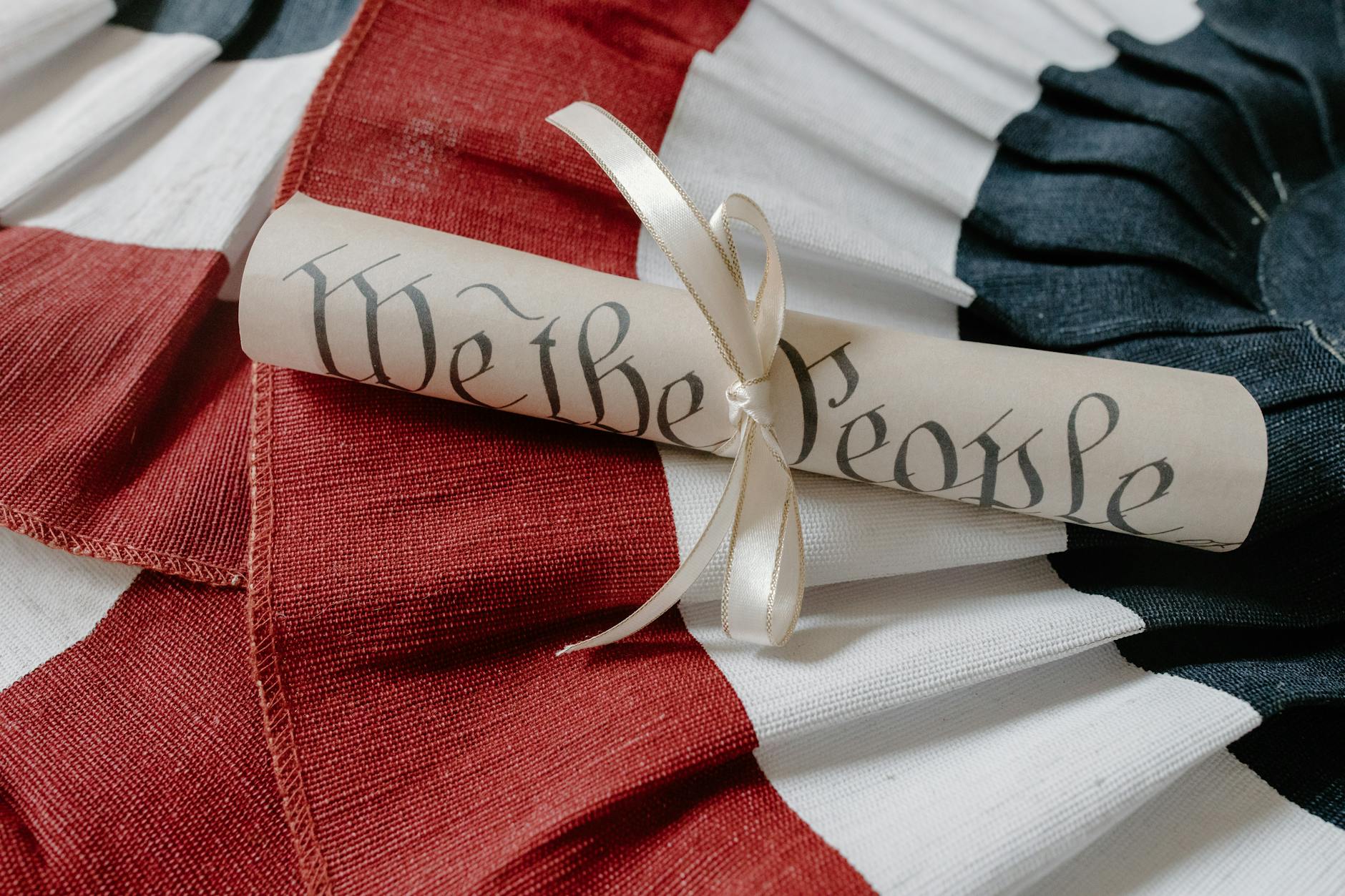
On April 19, two hundred fifty years ago, the American Revolution officially began when colonists fired on British soldiers at Lexington and Concord. The stories of who actually started the forays vary depending on what side of the disagreement the eye witnesses fell. Despite the uncertainty there seemed to be no turning back as members of the thirteen colonies felt they had enough of the erratic and often unfair behavior of the King of England. 

Not every colonist agreed with the idea of fighting for freedom. Some of my husband’s ancestors fled to Newfoundland for the duration of of the war that would ensue. My folks who were here took part in the battles. Captain Thomas Smith, my grandfather many times removed, represented the colony of Virginia along with his brother who ended up being a Colonel in George Washington’s army. The Rowsey family line also sent willing soldiers into battle. From those two lines would come my great grandfather and grandmother, John William Seth Smith and Cristina Rowsey, parents of my grandmother Minnie Bell. 

The shot heard round the world would end with a fledging nation defeating one of the greatest armies in the world to the awe of onlookers back in Europe. The creation of a democratic republic was a grand experiment that many people did not believe would last. The betting minds felt certain that the government of the people would be little more than a flash in the pan. 

Of course we know that things did not always go smoothly nor was the democracy open to every citizen of the new nation. It would not be until the late nineteen sixties that forced segregation would be a thing of the past and voting rights laws would protect all members of the United States. It had been a long road in that direction moving from only white men with property to Black men able to pay a poll tax to women finally being accepted as legitimate voters to finally outlawing practices that prevented all citizens eighteen years and older from registering their votes.

Of course there are still nasty tactics designed to suppress the votes of many Americans. We are yet to fulfill the ideal promises of our nation which is still in its infancy compared to many countries around the globe. The cracks and imperfections have become particularly visible of late with a president who seems to think that he can undo laws and create new rules with the stroke of a pen. In many ways he has resurrected the specter of a king complete with claims that he was sent by God to save us. 

I am truly worried about the future of our nation now that many of the expected duties of the three branches of government are being coopted by the current chief executive. There is a blurring of the separation of church and state that is concerning as well. In addition an entire political party seems intent on taxing the common man while exempting the richest people in our nation. Thoughts of taxation without representation are filling my mind and making me clearly understand what my ancestors of long ago believed was a cause worth fighting for. 

I have protested with my writing and sometimes even with organized groups. I still seem to have the freedom to do those things but it sometimes feels as though measures are being taken to silence those of us who are still speaking out. The threats and warnings are out there and many Americans have gone silent in response. I don’t blame them because they have families and jobs that they do not want to jeopardize. I am older like Benjamin Franklin was in 1775. I have far less to lose by taking chances. Still I worry that the time may come when compliance will be mandatory and I wonder if there will still be brave souls like the patriots of 1775 who ignore the threats to save our nation from authoritarians. 

There are good decent Americans bravely attempting to preserve our freedoms and our Constitution. Some of them are politicians, some are journalists, some are lawyers, some are ministers, some are everyday men and women who have decided to keep our right to speak and to protest alive even if it becomes dangerous. They are the modern day heroes whose love of our country is so intense that they refuse to allow one man or one group to tread on the liberty and sacrifice of the defenders of our nation from 1775 to the present.

I suppose that freedom is priceless but still demands that we work hard to keep it. Our nation has weathered a second war with England, a Civil War, World War I, World War II, and other battles and always comes together to keep the dream of our founders improving and becoming closer and closer to the ideal. I don’t want to think that we will only be able to keep it for two hundred fifty years. It is far too precious to give up now or ever. 
Understanding Juneteenth

Photo by Thomas Wilson on Pexels.com

I live just down the road from Galveston, Texas, a seaside town with a storied history. It’s the port where my maternal grandparents first stepped onto the soil of the United States. It is a place that was at one time one of the most prosperous cities in the country until a killer hurricane destroyed dreams and killed thousands of people. It is also the site where Juneteenth was first celebrated by former slaves in 1866. 

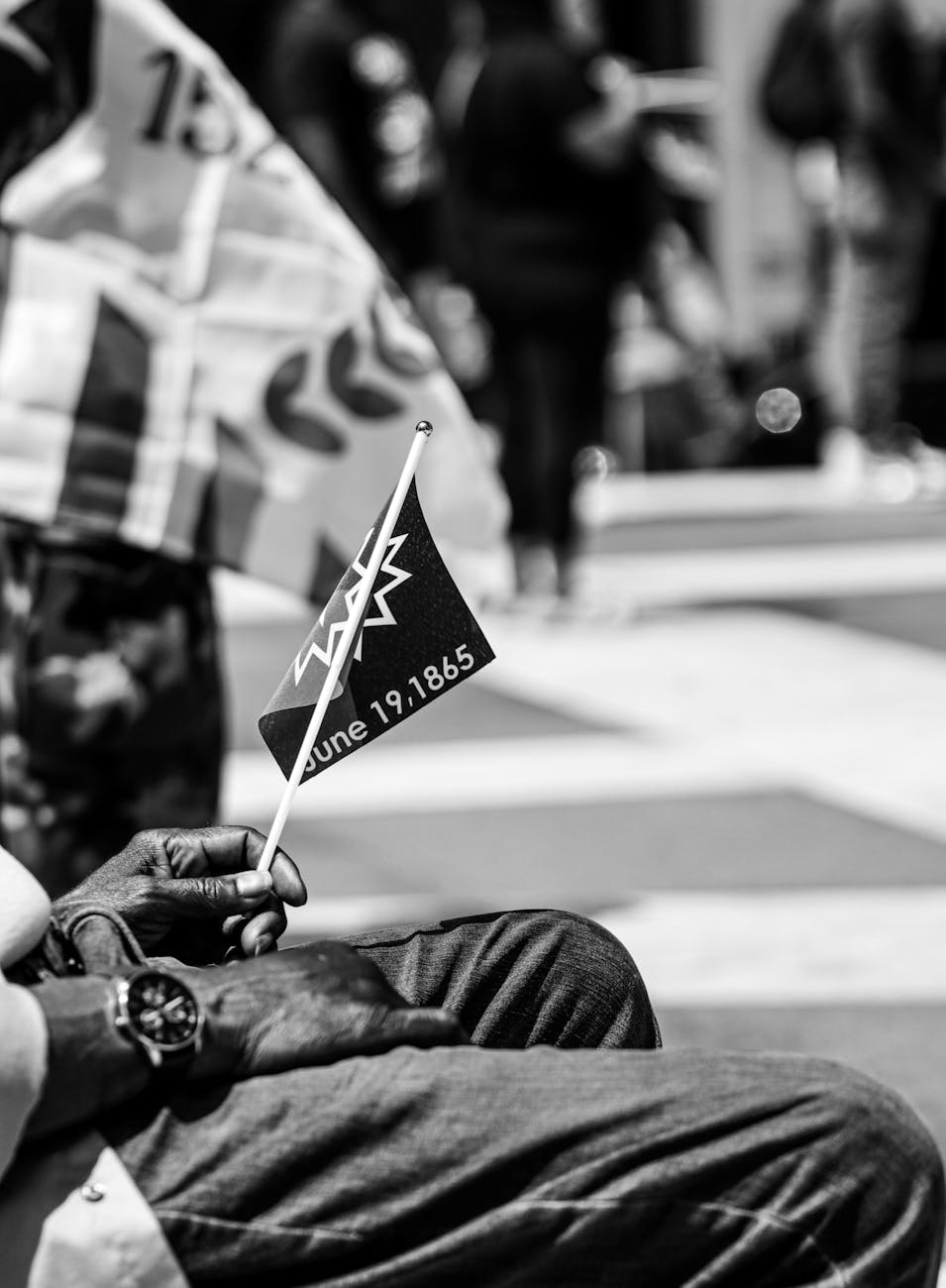
The Civil war officially ended on April 9, 1865 but fighting continued sporadically in a number of places, most notably in Texas where diehards took their time in laying down arms and announcing to the slaves that they had been freed by the Emancipation Proclamation on June 1, 1863. It was not until June 19, 1865 that General Gordon landed in Galveston and announced that the war was over and the slaves were freed. One year later on June 19, 1866 Black Texans began a tradition of celebrating their freedom and dubbed the day “Juneteenth” which was a combination of June and nineteenth. 

I have grown up hearing about Juneteenth and the yearly festivities surrounding that date. Galveston and nearby Houston have always featured special events and family celebrations on the nineteenth day of June. Some called it other names like Freedom Day, Jubilee Day, or Emancipation Day. Festivities have included picnics, rodeos, parades, street parties and even voter registration efforts. It is also a day of education and a rendering of the history of Black Americans from the days of slavery to the present. 

The summer menu for Juneteenth parties include strawberry cake, barbecue, watermelon and other red foods to symbolize the strength and courage of the former slaves and those who worked for the freedoms of Black Americans across the nation. The tradition even includs a red and blue Juneteenth flag with a single white star in the center. 

On June 21, 2021, President Joe Biden signed a bill passed by Congress to officially designate June 19, Juneteenth Day, as a national holiday. Since then more and more Americans have learned the story of the lengthy amount of time that it took for all slaves to know that they were free. On that date in 1865, slavery ended even for those who had not yet been told of their liberation. 

This year as in every year the citizens of Galveston planned many special events for Juneteenth including the presentation of a special symphony performance that included a choir of Black singers from the area. All across the country Black Americans rejoiced and honored the generations of their ancestors who were enslaved for two hundred forty six years. They also remembered those who were freed but still suffering under Jim Crow laws that kept them separated from white society for another one hundred years. Nonetheless many Americans have little or no idea why we should celebrate such a day. Even our current president seems inclined to suggest that it is a waste of time to take off from work for something that seems silly to him.

Today there are efforts to erase the history of Blacks in the United States and to insist that there is no longer a need to speak of the continuing acts of racism that they endure. Our president has insisted that DEI programs be eliminated and has even insinuated on the day of Juneteenth that there are too many national holidays. He boasted that people should go to work, not take advantage by staying at home on days like Martin Luther King Day. He has also registered his discomfort with Black History Month along with other celebrations of minorities. 

Sadly we still have people who make racist jokes about Black people eating watermelon and sipping on red soda water without bothering to understand that these are symbolic foods because the color red stands for the courage of Black Americans whose freedoms were nonexistent or cruelly curtailed for over three hundred fifty years. Juneteenth itself reminds us of the reluctance of slave owners to free and then respect the people who had toiled for generations in the economic building of our nation.

I would like to see all Americans joining in with the lovely celebrations of Juneteenth in future years. We all need to better understand why this holiday is so incredibly important. We owe understanding and gratitude to our fellow Black citizens. It is fitting and wonderful that we can now all share the joy and remembrance of Juneteenth with an official holiday for all.

This year former President Joe Biden went to Galveston to celebrate Juneteenth with the people there. I would like to think that all of our presidents, past, present and in the future will honor all Black Americans forevermore. Juneteenth is incredibly significant and beautiful. Taking time to understand its importance and its history should be a part of all historical curricula for our children. Facing the reality of racism makes us better. Ignoring or hiding what happened to people whose history reaches back longer that most American citizens only grows irrational hate. Juneteenth just may be the most important holiday of them all.  

Looking Forward, Not Backward

Photo by Gustavo Fring on Pexels.com

I grew from a child to an adult during an exciting time. The NASA space program was moving rapidly toward taking humans to the moon. President Johnson pushed through Civil Rights legislation that would upend the era of Jim Crow segregation. The women’s liberation movement was promising young women like me that I might be anything that that I wanted to be. Scientific research and discoveries were changing the world at a pace never before seen. We looked forward, not backward as we built safeguards like Medicare and Medicaid. Somehow the old rules of white male dominance seemed to be a thing of the past but if I had been wise I might have realized that not everyone was as excited about the changes as I was.

There have always been humans who envisioned a spherical world and those who insisted that the earth was flat. Even when we did successfully reach the moon and have photographs of our planet from space there would be people who thought that the whole thing was a hoax created in a Hollywood studio. Somehow there always seem to be skeptics who insist that pioneers in medicine and science belong in jail rather than in charge of our medical facilities and universities. They cannot envision the hard work and scientific methods that have pulled humans forward from the Dark Ages over time. 

Right now our government is being run by individuals more well versed in propaganda than knowledge, They question many of the advances that have led to longer healthier lives for humankind. Cancers that would have indicated a death sentence only a few years ago are now being treated successfully. Since World War II the United States has been at the forefront of scientific advancement and most of the work takes place in our world renowned universities. Sadly, the present administration is threatening much of the work that has been the mark of progress by removing funding at institutions with political ideas different from his own. 

I am very much a booster of progress forward. I am totally willing to pay more taxes to keep our discoveries happening. I remember children afflicted by polio. I saw my grandmother die of colon cancer in the most painful way. There was even a time when medications came without tamper proof packaging that led to a nationwide scare as Tylenol capsules were tainted with cyanide. 

So much that we now take for granted only came about because our government was willing to invest in laws, time, and funding for important programs that moved us into the future. Of late we have become more and more attuned to the idea of reducing the taxes of even the wealthiest among us rather than attempting to pay for stronger programs that we already know are providing better lives for most Americans. Somehow the fable of the tough individual who does not need the help of anyone else is very much alive and well even as it should be obvious that such a way of thinking might work for a few but rarely works for all. 

It saddens me to know that NASA’s budget has been cut to the lowest point since it came to be. All too often we think of space travel as a luxury that we might do without. We forget how much we have learned about our planet and others because of NASA. We don’t think about the many inventions that we use daily in our homes that came from the necessity of creating things that would work well in outer space. We have learned more about our geography and weather because of NASA. We now use satellites for worldwide communication. The list goes on and on, reminding me of the old adage that sometimes we are pennywise and pound foolish whenever we move to take away funding for one of the most important programs in our nation.

I find myself thinking of my favorite science teachers like Mrs. Colby and Father Bernard who opened my eyes to the possibilities of the world that scientific research has improved. I remember the excitement that they created in me by teaching me about the incredible inventiveness of humans and the power of the scientific method. I find myself wondering what brilliance will be overlooked if we continue to dismantle the genius of the past seventy five years. 

I worry about what will happen when we lose our best researchers to other nations because we destroy the programs that pay them to do their magic. I am anxious that in our quest to cut this and cut that we will create a society that seems not to care whether or not we can all receive a decent measure of care. How many cures will not be discovered? How many people will die because they do not have the means to pay for even minimal health services? Will people go hungry while the richest people in the world count their ever increasing piles of gold? Why have we decided that this is how we wish our nation to be? Why have we abandoned the progress that has defined our nation as one of the greatest places on earth?  Why are we moving backward rather than into the future? I simply do not understand. 

Cry the Beloved Country

Photo by Nataliya Vaitkevich on Pexels.com

When I was in high school my English teacher insisted that each of us read one book a week and then write a review of it. He told us that he wasn’t looking for a synopsis of the plot but rather an analysis of the writing. He also demanded that we read the works of different authors and genre. With such a hefty assignment I soon found myself running out of new material to read and looked to some of my fellow classmates to suggest works that I might not otherwise think of considering. It was in that way that I learned about a novel called Cry the Beloved Country which a friend insisted would change my life. 

The book by Alan Paton was a character study of souls caught up in the racism, segregation and violence in South Africa in a time just before apartheid became a law that would cruelly dominate the nation for almost half a century. The story would burn a hole in my heart with its unflinching tale of humans attempting to navigate in situations that were destined to end in tragedy. At the same time it offered hope in demonstrating that even in the face of injustice and cruelty humans sometimes find ways to exhibit their most honorable qualities.

I loved the lyrical feel of the book and the descriptions of the grandeur of South Africa in contrast to the grotesqueness of the cities where three fourths of the citizens toiled in desperation and poverty. It painted a  picture of hope in what should have been a hopeless time. It was a story of love of family and of a place that had once been gloriously free. It immediately became one of my all time favorites even as I had little true understanding of what was really happening in that part of the world.

There is so much history to unfold that we tend to concentrate only on the parts that seem to be associated with ourselves. I was able to recite much about the Untied States and even the highlights of Europe but my knowledge was limited to sweeping ideas rather than providing an intimate portrait of people from cultures different from my own. I suspect that my interpretation of Cry the Beloved Country was influenced by stereotypes of Africa painted by movies and stories rather than reality. I knew nothing about the complex history of colonialism in South Africa and other parts of that continent. For that matter I did not totally comprehend the multiple layers of differing tribes, cultures and nationalities that had created a powder keg of discrimination and misery. I did not fully understand the underlying essence of the characters. 

I suppose that my long ago assessment of the story was grossly naive because I did not take the time to arm myself with facts about the political undercurrents that resulted in laws that strictly divided the people of South Africa into groups based mostly on the color of their skin. I could not have known how truly horrific life in crowded cities actually was for people being dominated in their own land. I was still too clueless to see the parallels between slavery in my own country or the domination of native Americans that is a stain on our history. I was still in a gullible and uneducated state of mind. It would be only later that I delved below the surface of the kind of human situations that leave certain people and groups pushed aside as though they are of little worth. 

I’ve been thinking about all of those things for sometime now. I see the horrific treatment of differing groups in my own country. The stereotyping and propaganda being used to banish them from our society is breathtaking. I find myself wondering why we humans seem to think that there are good reasons to classify people into haves and have nots. I wonder why any of us seem to believe that we are somehow better than anyone else. Why do we constantly decide to punish those who are different as though they are somehow inferior and must know our wrath? Why don’t we take the time to get to know and understand people rather than to constantly judge them?

We humans have a long history of turning those whom we fear into monsters without taking the time to get to know and understand them. We force religion and political thoughts on others. We gather in groups, tribes, nationalities that make us comfortable and shun those that feel unfamiliar and strange. Our tragedies are built on the fears that make us cruel. . 

Gotta Laugh

Some of my earliest memories with my father revolve around humor. He loved comedy whether it came in a cartoon, a book or a television program. His laughter would reverberate throughout the house filling the rooms with a kind of unadulterated joy. Comedy was second only to Texas A&M football in his list of favorite pastimes and he often shared his passion for both with me even though I was still a very young child. Somehow he understood the importance of laughter and left me a legacy of moments when we giggled together at the antics of Red Skelton, Jackie Gleason, Groucho Marx, Sid Caesar, Bob Hope, Jack Benny, and Jonathan Winters. I knew them all and reveled in the joy that they brought into our home. 

I may have watched some of the best comedians on the planet with my dad but unlike him I have never been particularly good at delivering a joke with the skill needed to bring down the house in gales of laughter. Somehow I always mess up the punch line or mangle the recitation enough to end up with my audience staring at me in dead silence. I learned a long time ago that I can totally enjoy a good joke but I do best not to even attempt to be humorous. It’s a skill better honed by my youngest brother who didn’t even have time to yuck it up with our father but somehow received his tickle bone genes. My daddy’s DNA seems to be very much intact inside the mind of the one person on this earth who looks, acts and sounds the most like him, my brother, Pat. 

One of the things I love most about people is their ability to laugh at the world around them. Having a great sense of humor is a necessity most especially in difficult times. I don’t like jokes that purposely hurt people but I do love a good dig at society’s flaws. I don’t think it is funny to poke fun at races or cultures but taking aim at the often ridiculous ideas of politicians is fair game in my mind. I love a really good editorial cartoon or a creative meme that somehow says it all. I often find myself wishing that my father had lived long enough to enjoy the genius of people like Robin Williams and George Carlin. I have little doubt that he would be tuning in to Saturday Night Live each week. It was the creativity of a joke that tickled his funny bone. 

I have to admit that social media is a treasure trove of jokes that my dad would have loved. I see things every single day that make me let out a hardy laugh. The act of giggling is almost medicinal to me. It makes me feel good all over. 

My students almost always discovered my propensity for laugher. The funniest kids in the room never failed to send me into fits of giggling. They knew exactly how to push my buttons to take me temporarily away from the seriousness of solving an equation. One entertaining second united us in short breaks from reality and in many ways allowed us to refocus without the anxiety that had only minutes before hung in the air. 

I was often chided by some of my more serious colleagues who thought that it was somewhat egregious to allow the naughty students to get me off task. They did not know that I had learned the power of a momentary pause for humor. Those intervals brought us all together and pushed the anxieties out of the way. Luckily many of the principals for whom I worked were as guilty of using humor in the classroom as I was and so they appreciated my brief forays into the comedy of everyday life. 

I am attracted to people who like to laugh like a moth to fire. I have friends who post daily puns. I have worked with people who were so irreverent that I almost busted a gut laughing at their hilarious observations about the world around us. I even learned from an Irish acquaintance how funerals and wakes might lead to stories that send waves of joyous laughter through the mourners. Somehow I seem to seek out the joke tellers in our midst. 

Of course there are moments so tragic that comedy would feel grossly inappropriate but a bit of well meaning levity now and again is a kind of panacea for difficult times. I suspect that the jokers among us are as important for our mental health as the ministers and therapists. We humans know how to laugh because it is important to do so now and again. Even a baby understands this incredible gift that we have. 

So if you are feeling a bit low find someone who might be able to tickle your funny bone and bring out that most beautiful of our emotions. A good laugh really is the best medicine.