And So It Begins Again

six woman standing and siting inside the room
Photo by Christina Morillo on Pexels.com

Old habits die hard. I still find myself living by the school year calendar even though I have now been retired for seven years. It seems as though summer vacation gets shorter and shorter for my friends who are still giving it their all in classrooms. Their time off gets squeezed into little more than five or six weeks when training sessions and voluntary prep time are considered. Somehow in spite of the low pay, lack of respect and physically and emotionally draining environment of their jobs, they return August after August filled with hope, altruism and optimism. As they troop back to their stations I find myself empathizing with them, understanding just how demanding their occupations actually are. At this time of year my body reverts to a mode of insomnia, peppered with concern for my fellow teachers and the battles that they will face in the coming months. My thoughts are focused on sending them good vibrations in the hopes that all will go well for them and for their students. Even knowing how challenging their days will be, I still find myself quietly envying them for the wondrous feelings of accomplishment that they will no doubt feel as they educate yet another group of young people.

I laugh as I read comments from my teacher buddies as they sit through those first days of seemingly useless inservice sessions that keep them from doing what they really want to do. Their thoughts are on planning lessons and preparing their classrooms, not reinventing the educational wheel or climbing ropes to build relationships with their colleagues. For the most part they find most of the mandatory sessions to have little value in preparing them for what they are about to encounter. They feel anxious and care little about what is being said.

Ironically I spent the last several years of my career being that person charged with designing the district required meetings that every teacher was compelled to attend. I did my best to make them interesting and a bit fun even though I knew in my heart that I had a captive audience that would have rather been free to ready themselves for the exhausting road that lay ahead. It often felt like performing at a comedy club with a tough audience that refused to laugh at even my best jokes. I read the body language that was ever so polite, but far from being engaged. What they rarely knew was that I mostly agreed with them that those first days back at work needed to be spent tackling the nitty gritty of working inside their own classrooms, not considering recycled education theories. It was simply neither the time nor the place for such things.

When I think back on my forty odd years of returning to work each August I remember only a handful of inservice moments that somehow struck my fancy. All of the others were akin to the vacuous sound of the teacher in a Peanuts cartoon. Mostly they were lessons in how not to inspire, and reiterations of theories that came and went. Because so little time was allowed for the things that we actually had to accomplish before the students came the following week, most of us worked long after being dismissed from the sessions, often returning on the weekend just before the opening day of school. Generally we were exhausted before the first bell had even rung.

One year I heard a vivacious women speak. She was a true story teller and her remarks were both touching and funny. What I recall the most about her talk was her admonition that we understand that there never has been nor ever will be one best way of teaching. Because each person is unique she advised us to adapt to the individual needs of our students, and sometimes that meant stripping down our efforts to the most basic and primitive methods, requiring only a stick and a plot of wet sand. Mostly, she advised us, it meant connecting with our students in truly meaningful ways, understanding what they needed to feel confident and successful.

On another occasion we began the academic year by taking a brief personality test, eating a glorious breakfast, and then being set free to take care of the business of preparing for the arrival of our students. It was such a magnificent experience to be trusted by our superiors to do the right thing. Everyone worked hard and there was more team building that year than I ever before or since experienced. At the end of the week when the entire school was gleaming and fabulous lesson plans were in the books, we gathered once again to enjoy a deliciously catered lunch and to learn the results of our personality tests. The gifted principal used the occasion to stress that the faculty with its differing individuals was a microcosm of our own classrooms. She emphasized that each type of person brought particular talents to the table just as our pupils would.  She ended by insisting that we leave early and reserve the weekend for some final relaxation. She gave each of us a basket filled with supplies, snacks, coupons, and even a little bonus check. Somehow I still remember that school year as the best ever, and I suspect that it was mostly because of its glorious start.

Teachers do indeed sacrifice a great deal for their students. It is a ridiculous myth that they are mostly individuals who are not suited for better pursuits. Those without talent and intellect are lucky to last for a year. The ones who return again and again are generally the best of our society. They come because they are truly dedicated to a breathtaking cause. They will work for peanuts for twelve or more hours a day from August until June. They will spend their weekends planning and grading and worrying about their students. They are known for generously spending hundreds and even thousands of their own dollars to keep their classrooms stocked with supplies.They will develop weak bladders and problems with their feet, backs and knees from the abuse that comes from being on constant alert for the welfare of their charges. They will learn to ignore the never ending insults that are hurled at them from a public that has no idea how difficult their jobs actually are. They will soldier on because deep in their hearts that know how important their work is to our society. They are building the foundation upon which everything else depends, and accomplishing it without much respect or help.

So, yes, I think of all the teachers at this time each year. I feel the sense of anticipation, the worries, and the wish that just once our world might truly acknowledge the massive contributions of that all of these wonderful individuals give so freely. Perhaps one day we will learn how to treat them the way that they deserve.


A Fit of Nincompoopery

woman wearing black jacket standing near ocean with swan and birds
Photo by GEORGE DESIPRIS on Pexels.com

According to the dictionary a nincompoop is a silly or foolish person. Nincompoopery refers to the beliefs and behaviors of a nincompoop. It is folly, stupidity. With a tip of the hat to Nero Wolf who first proposed the turn of the phrase, I submit that each day Twitter becomes the locale of many “fits of nincompoopery.”

Let’s face it, how much of great worth can be stated or argued in only one hundred forty characters? The comments are generally so terse that they might be interpreted in dozens of different ways, and therein lies a great number of the problems. Add to that the trolls lurking under the Twitter bridge and the so called discussions often become quite nasty, festering like plastic bags for perpetuity. Many a soul has lost a job or been revealed as a scum bag because of an outburst of tweets that might better have been left unsaid. We now live in a world of instant verbal arguments among strangers who somehow erroneously believe that they are doing no harm. It all reminds me of the back and forth that I sometimes heard among rival groups of fourth graders when I was teaching elementary school long ago.

Sure it’s a free country and all that, but frankly I’m becoming quite weary of the vast numbers of degrading tweets, particularly when they come from people who should know better than to let their fingers run afoul of common decency. We all see and hear things that make us angry, but generally control our temptations to lash out. There is a certain level of immaturity associated with outbursts that are hurtful to other people, so I find myself wondering when we lost our sense of decorum.

We have Roseann Barr, who has never seemed to know when to keep her mouth shut, losing a popular television series over rash racist observations. There is a New York Times journalist who seems to think that there is nothing particularly wrong with hurling invective at white men. The director of the highly successful Avengers series was recently fired over troublesome tweets and jokes made many years ago. Of course there is also the embarrassing aspect of the President of the United States making a fool of himself and the country far too many times with his late night rants. Regardless of the defenses being suggested in these cases, we somehow have a sense that something is going terribly wrong, particularly when we accept such behaviors as normal.

Freedom of speech is an important aspect of our Bill of Rights and certainly insults between adults are nothing new, but the more frequent incidence of such behavior is bothersome to me. I prefer a bit of propriety in public. If two people wish to engage in verbal fisticuffs in private, so be it, but why do we now seem to actually encourage public verbal executions, and even sometimes get down in the mud with the perpetrators?

Believe me, I do not wish to indict certain individuals or political persuasions because quite frankly there is plenty of criticism to go around to all sorts of people. I’d just like to encourage everyone to be careful about rapid responses that are hurtful and ugly. Those kind of things have a nasty way of coming back on us, but more importantly we need to rise above the muck and grime as a way of life. Nobody ever wins an argument with invective, and most often it’s not even necessary to attempt to do so. What does it really matter if someone disagrees with our beliefs? Why should we feel compelled to put down individuals with whom we have a difference of opinion. The likelihood that we will actually make a difference in their thinking is slim to none. Indeed what will probably happen is that we will make them even more enraged.

I refuse to be that person who gets pulled into verbal battles, and I think that we would all do well to walk away when a fight of words seems imminent. I learned long ago as an educator that ignoring nincompoopery is the quickest way to shut it down. Most people who engage in such shenanigans are just looking for an audience and I refuse to give them one. Perhaps more of us should consider bringing in the crickets whenever someone is being outrageous.

As a society we still have not yet learned how to deal with social media successfully. We forget our manners and too often neglect to take a deep breath before reacting. We have people using our outrage to stoke their own egos. We don’t have to play their game.

I am slowly learning how to move quickly past comments and tweets that make me feel uncomfortable. I choose to let them just lie on the ground seemingly unnoticed. I am seeing more and more evidence that lots of folks are following the same routine. The most egregious remarks that I see are frequently going without response, which is the way that we might all shut them down.

There is a flock of mockingbirds living in the trees in my backyard. They chatter day and night, but I have learned how to turn off the volume in my head. Now I scarcely hear them even though they are still there. I’m doing the same with Twitter.


Remembering

portrait of beautiful young woman over white background
Photo by Pixabay on Pexels.com

We’ve all had those moments, the times when we purposefully walk from one room to another only to forget what we had intended to do when we got there. Our memories are rather funny things. We find ourselves recalling instances from our childhood but can’t remember what was said five minutes ago. Our brains are filled with so much information that unless we anchor our thoughts to something significant or routinely repeat sequences we tend to lose those ideas.

I have the strange ability to recall vivid aspects of my childhood, even details from when I was still a toddler. I once described an event to my mother that kept frightening me, but I was unable to place where and when it had happened. I was on a boat with many people who were happy and enjoying the view. I sat on my mother’s lap feeling content until everyone suddenly ran to the edge of the ship and began pointing at an awesome figure standing in the water. My mom lifted me and joined the crowd, pointing out the monstrous steel object with a glee that should have comforted me, but did not. Instead I felt frightened and confused by the dark apparition that I was seeing.

When I recounted this memory to my mom she thought for a moment and came to the conclusion that I was describing our visit to the Statue of Liberty in New York City. She even produced a photo album with old black and white photos of the two of us sitting on the boat that took us out into the harbor. The strangest thing was that I could not have been more than about two years old when we took this trip. It seemed implausible that I would have recalled the event so clearly, and yet somehow I did.

Researchers have now learned that some individuals like myself are truly able to remember incidents from very young ages. Generally such people tend to exhibit obsessive compulsive traits as well. Somehow our brains notice and internalize even small details about particular situations. Most interesting is the concurrent fact that we also may be incredibly forgetful in the course of our daily activities when occurrences are mundane unless we take the time to create memory structures for ourselves.

I’ve been known to lose my glasses, leave my keys in a public bathroom, forget where I placed some rarely used item. Thus I find myself consciously rehearsing my mind to be certain that I don’t neglect something important. I create rigid routines to keep myself on track. The fact is that the vast majority of humans might easily become forgetful whenever their normal schedules are somehow changed. It is as though our brains become rattled, short out so to speak.

In these exceedingly hot summer days we hear tragic stories of children left in hot cars who die. Many times the parent honestly asserts that he/she did not remember that the child was in the back seat. They had become distracted by some chance adjustments to their normal ways of doing things. While such occurrences may seem improbable, those who study the mind say that it is not as unlikely as we may think, and it may happen to any one of us.

I heard a man tell of how he always drove his son to daycare and then he went to work. One morning his wife’s car was in the shop and so he first drove her to her place of business with the intent of taking the child to daycare next. Somehow in the morning rush and because his routine had been disrupted he actually did forget that his baby was still in the back seat. He parked in his usual spot and went to his office where he worked for an hour or so before something niggled at his brain and reminded him that he had never dropped the baby off. He rushed to the parking garage and found his boy in distress. Luckily all ended well, but it might have been the stuff of an horrific news story.

What we are being told is that we have to create artificial reminders for ourselves for even the most mundane tasks if we are to be certain that we do not forget to do them. If we have children in a car with us, we might place something like our purse or shoe in the back seat as a way of ensuring that we do not forget that they are present. We can create alarms and reminders on our electronic devices.  We might even place sticky notes where they will be seen if we need tactile prompts. The point is to understand that it is actually a natural tendency to forget when our minds are preoccupied with so much information. It is up to us to create ways that work for us if we are to keep up with the overload of data that is passing continuously into our minds.

Too much forgetfulness can be a sign of bigger problems, but most of the time our lapses are just part of being normal. So go ahead and create routines, make lists, rehearse ideas, take enough time to be deliberate when in a foreign situation. It may save you from a real tragedy.

Honor the Young

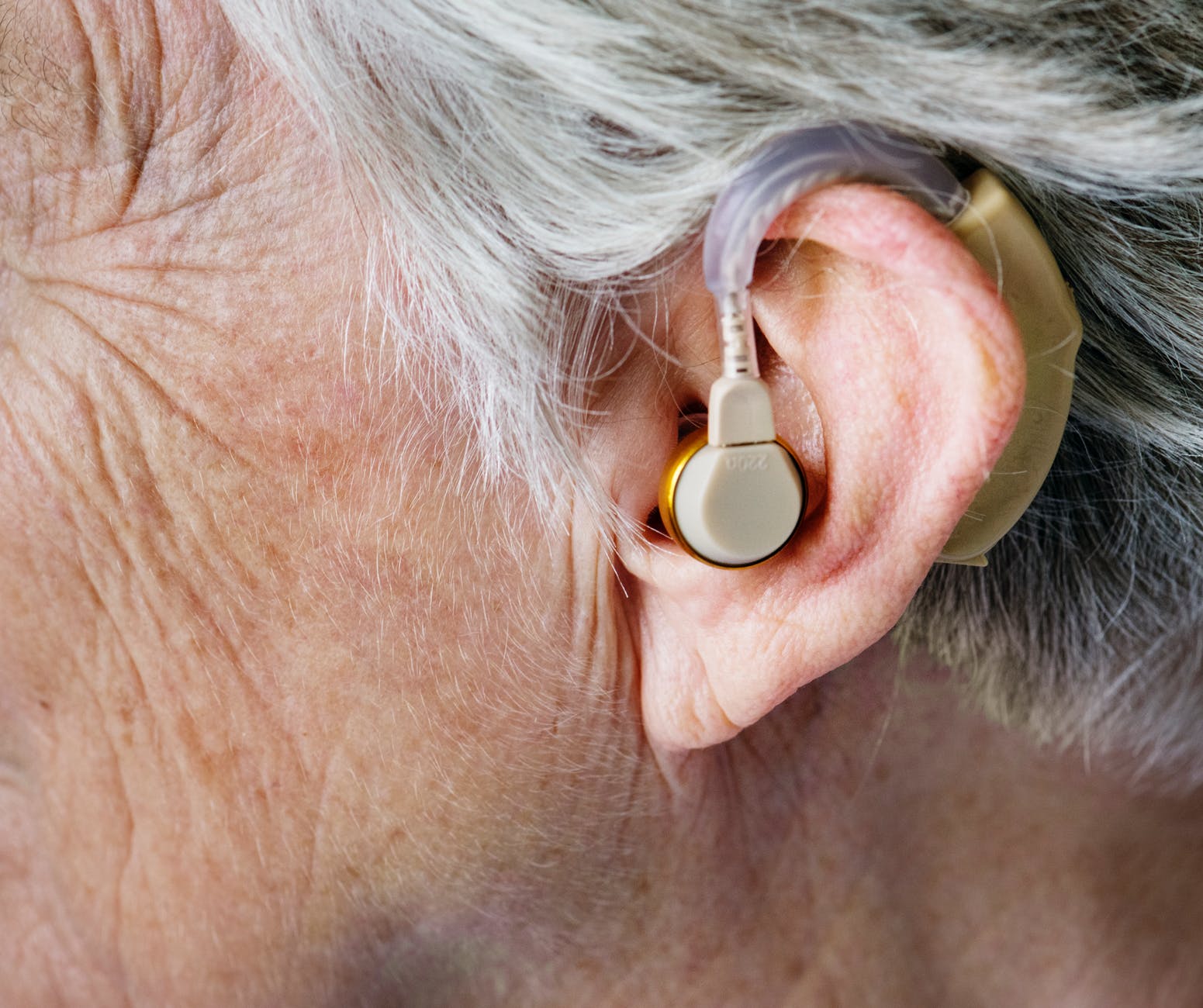
person wearing hearing aid
Photo by rawpixel.com on Pexels.com

Every single time that I  hear some older person calling young people “snowflakes” I go into a slow burning rage inside my head. It is an epithet invented to cast aspersions on the thinking of  teens and twenty somethings who hold progressive points of view. The idea is that the youngsters are so fragile that they simply can’t bear critiques or differing ideologies. The insinuation is that they are silly, close minded and of little substance.

While there may very well be some young folk who are a bit spoiled and unwilling or unable to accept philosophies that run counter to theirs, the truth is that there are also middle aged individuals of more conservative bent who have the same trouble. Some of them are actually in high political positions and they often tweet their discontent. For the most part, however, I find the current crop of young men and women to be exceedingly hard working, earnest and determined to make a very positive difference in the world. The fact that they are a bit more liberal than their more aged counterparts has little to do with their level of courage or good intent.

It has long been a trend for young adults to be on a kind of search for truth and meaning in their world. It is in their natures to question the status quo and seek changes that they deem to be fair and more just.


Socrates once said, “The children now love luxury. They have bad manners, contempt for authority: they show disrespect for elders and love chatter in places of exercise.” This of course was noted about four hundred years before Christ walked on the earth, and I find it remarkable how it might have been said last week by some pundit making observations about today’s kids. In fact there are many such quotes that are part of our discussions of the young versus the old in political matters. We’ve all heard the quote, “If you are not a liberal at twenty five, you have no heart. If you are not a conservative at thirty five you have no brain.” It is a bit audacious in its sweeping assumptions, but we laugh at it because it bears a grain of truth. Indeed we often become more cautious as we grow older, but that does not make us wiser or more righteous. Thus, I find it beneficial to show more respect to the thinking of our younger generation than we generally do.

In 1776, when our Founding Fathers signed the Declaration of Independence their average age was forty four. That being said more than a dozen of them were younger than thirty five and among those some were still teenagers. In fact, the American Revolution as with all such sweeping changes was much more of a young man’s cause than that of older men. James Madison was only twenty five when he penned his name on the Declaration of Independence and the current hero on Broadway, Alexander Hamilton, was a mere twenty one. Young adults are more often than not as passionately concerned about the world as those thought to be more mature.

I enjoy the conversations that I have with my former students and my grandchildren regarding the political conditions of the world today. I prefer listening to them and asking them questions rather than challenging their ideas. I find it enlightening and quite hopeful to hear just how much they have considered the various issues with which we continually grapple. They are far less likely to simply accept a particular way of thinking without considering many different possibilities. Their beliefs are mostly based on a great deal of thought and research. They are involved in internal debates as they search for the best ways of doing things. They have the audacity to think outside of the box and come up with ideas as radical as revolting against the most powerful government in the world to create a new nation conceived in liberty.

I find myself spending hours listening to young men and women who are more than ready to do their share of the heavy lifting in the world. Of course they differ somewhat from me because many of their experiences have been different from mine, but they are not unpatriotic or inconsiderate or lazy or spoiled. They simply look at the challenges that we all face from the vantage point of having an entire lifetime ahead of them rather than having walked through a lifetime. Their youthfulness does not make their thoughts any less valid than mine or any other older adults, but it does tend to make them more inclined to envision new and exciting possibilities. I find that when I listen respectfully the favor is returned when I speak. A rational and fruitful discussion ensues. It is when we disregard the fervor of a young person’s enthusiasm that we create an emotional impasse.

Each of us longs to be heard, to be understood. All we ask is that we be accorded an opportunity to speak our minds with impunity. All too often we create situations by dismissing certain forms of speech before they are even uttered, leaving us in a “them or us” kind of division. Hurling insults without thought only further inflames the situation.

During the height of the Vietnam war when so many of us were protesting what we believed to be a terrible mistake, far too many adults treated us as though we did not love our country. They did not seem to understand that it took great courage and much patriotism to speak out against what we saw as a wrong. There was a great divide that lead to unnecessary violence and clashes that might never have happened if only each group had been willing to sit quietly and consider each point of view. The frustrations came from all of the misunderstandings that came from assigning insulting labels to each cause, and pitting young people against their elders. Sadly we did not seem to learn from those mistakes.

The next time you find yourself wondering what a young person might possibly be thinking, instead of writing him/her off as a snowflake, try encouraging a true conversation with the intent of learning rather than judging. I believe that you will find that we are all seeking most of the same things, we simply have different ideas about how to achieve them.

Honor our young. They will one day be taking the reigns of leadership and helping us in our final days. I for one feel comfortable that we will be in very good hands.

Smart, Nice, Accomplished, Aware

photography of person using macbook
Photo by LinkedIn Sales Navigator on Pexels.com

Appraising an individual or a program has always been difficult. We are a nation of numbers and like to use hard cold facts to determine the worth or success of the people and things that we judge. Businesses consider profits, time spent without accidents or complaints. Schools look at the test scores of students and performance on a number of measurable factors such as attendance, quality of lesson plans. Universities look at grades, class rank, scores on exams, extra curricular activities and creativity of essays. Still we have yet to find a system for determining the worth of people in various situations that is a hundred percent accurate because in reality each of us is incredibly complex. We might form close approximations of the value of any one person, but we will invariably find flaws in the systems that we use unless we are very careful.

I use the world of education as an example because it is the environment that I know best. It might be thought that a teacher whose students score particularly high on a standardized test must surely be a better educator than someone whose results appear to be mediocre. The hidden flaw to this kind of thinking lies in knowing where these students ranked before the respective teachers worked with them. It might be that the youngsters whose outcomes appeared to be so spectacular had actually done better the previous school year while those with mediocre grades may have improved by a quantum leap. The question then becomes which teacher is actually the better of the two.

The same difficulties occur when attempting to compare students who are applying as undergraduates to universities. It has long been known that kids who attend high schools like Bellaire or Clear Lake in the Houston area have an exceedingly difficult time landing in the top ten percent of their graduating classes because so many of their classmates are making all A’s. These schools are not easy, quite the contrary, but the students are intensely dedicated and bright. On the other hand there are campuses with terrible reputations where a reasonably hard working pupil will easily earn a top standing in the class.

We also know that there are some individuals who panic over high stakes standardized tests. Their scores rarely align with the capabilities that they exhibit day in and day out. Others whose study habits may be marginal at best have a talent for blowing the lid off of the one and done assessments. Comparing the two very different types of students sometimes requires an unproven leap of faith.

The question becomes how to determine who is most deserving of a job or a slot in a particular program. How can we be fair and still come close to making the right decisions? What criteria are useful, and what may mislead us? It is a conundrum that plagues virtually every aspect of our society and we have yet to create a foolproof methodology that takes all of the necessary factors into account. Our attempts to be fair and objective invariably end up unwittingly relying a great deal of subjective reasoning.

Recently I was somewhat amused and befuddled to learn that the Tucks School of Business at Dartmouth University has made a few changes to its admissions requirements for the MBA program. In an effort to find well rounded and diverse individuals they have decided to search for four particular qualities in their applicants. They have proclaimed that they intend to find students who are smart, nice, accomplished and aware.

Being smart means that the prospective students must have good grades and test scores that reflect written and verbal communications skills along with a good sense of numbers. Nonetheless the school emphasizes that potential candidates should be humble as well, a profoundly important life skill, but one that is ridiculously difficult to determine either in an interview or through references. Who among us chooses references that we do not believe will be rock solid in our favor? How many of us assume a kind of persona during interviews that does not adequately demonstrate who we really are?

Accomplishments appear to be relatively easy to determine. It is unlikely that someone will continually advance in a workplace if they possess many negative habits and yet there is always a possibility that accolades may not be as well deserved as they may appear. Additionally a listing of different activities gives little insight into how well those things were actually done. We all know someone who joins a number of groups but has little dedication to any of them.

In looking for students who are aware Tuck notes that reflection is mandatory. They insist that students be able to think about their character, their past and their future. This is a noble goal indeed. Still I wonder if a well spoken individual gregarious enough to share inner thoughts is in actuality more aware than someone who is circumspect but a bit more reserved with regard to revealing personal insights. It seems that even with essays, reviews and a psychological assessment it may be difficult to know who is aware and who is not. I’ve seen many a person who is masterful at blowing smoke only to later be viewed as a fraud, and others who rose to challenges with a quiet strength that surprised everyone.

Finally there is the matter of being nice. Tuck states that this is the quintessential quality that they want their students to possess. By nice they mean someone who celebrates and supports the success of others, is willing to ask for help, shares and respects different opinions, is both strong and vulnerable. They want students who possess a set of moral principles to which they hold fast even as they are being challenged.

While I find the desire to find such nice people laudable I also wonder how in the world  it is even possible to determine such a thing. The word nice is perhaps one of the most subjective ideas that there may be. What does it actually mean to be nice? That definition varies greatly from person to person, situation to situation. Nice often means having to be very tough. Sometimes it requires being firm rather than flexible. It is an ever changing concept that is far too nebulous to use as a measurement for determining who earns a slot at in a prestigious graduate program.

The university insists that they possess sound methodologies for determining which prospective students possess each of the four aspects that they have outlined. With respect to niceness they appear to believe that student essays and reference instruments will reveal the presence of nice qualities. I beg to differ. The concept itself is far too ill defined to be worthy of such an important decision making process. It’s bound to result in exaggerations and even falsehoods from those seeking admission. It is on its face a very unreliable albeit worthy quality to use when assessing strangers.

I often think back to students that I have known, some of whom appeared to be fabulous on paper and others whose performances, accomplishments and character seemed lackluster at best. The lesser candidates often nonetheless possessed extraordinary capabilities that might never be noted in today’s world of electronic and highly  specific measurements. I think particularly of a remarkable student who by all appearances was almost subpar. When all of the measurements failed to note was that he was literally financially and emotionally responsible for his family from the time of middle school. He attended his classes during the day but worked long hours every single night, rarely having the time to complete homework assignments. He often missed days at school to drive his disabled brother to appointments with doctors. His time was filled with major responsibilities of which he never spoke. Somehow he still managed to pass all of his classes and complete all requirements for graduation from high school. By the time he walked across the stage he had been working forty hour weeks for years. He had no extra curricular activities to list nor did he seem to have completed any community service, and yet he was already operating as a very responsible adult while his classmates were still immature by his standards. Not even a carefully crafted and objective admissions packet would have indicated that he was a worthy candidate for a prestigious program and so he instead chose a college with open enrollment and with sheer will eventually earned a degree while still being the breadwinner for his family.

I wish the Tuck School of Business well, but something tells me that their admissions process is still as fraught with problems as most of our systems are. There are just so many variables about humans that we have yet to quantify.