Let It Go

12-_00168v

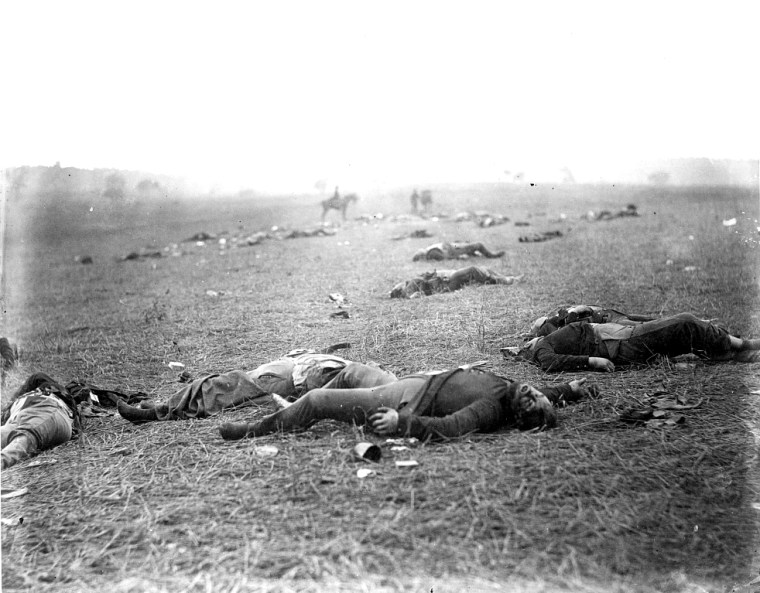
I grew up in Houston, Texas in the south. As a child I remember hearing Dixie being played and sung now and again. When I was young I actually believed that I had descended from Confederate Rebels and it was only later that I found out how wrong I had been. Of course my mom’s ancestors were busy chafing under the rule of Hungarians while the Civil War raged here. It was from my father’s side that I assumed that I had come from bonafide Johnny Reb stock. Imagine my shock, and maybe even a bit of relief, when my genealogical searches revealed that my great grandfather, John William Seth Smith, was a Lieutenant in the Kentucky Volunteers and that he fought for the Union. In fact, he participated in a number of crucial battles and was around to bury the dead at Shiloh. It ends up that the inclement weather and horror of that event badly affected his health in later years and after the war he seemed rather intent on putting his days of fighting behind him. I suppose that those of us who are still arguing over the aftermath of that terrible conflict might be wise to follow his lead.

I’ve always had a fascination for history and so I have read a number of biographies and historical texts. Robert E. Lee was someone about whom I wanted to know more. In so many ways he was an enigma. He graduated from West Point and for a time was one of the most highly respected generals in the Army of the United States. He sometimes questioned the morality of slavery, but nonetheless held the odd belief that it served a purpose in helping the enslaved humans to learn the necessary skills to be full fledged members of society. He loved his country but felt a higher allegiance to his state. He saw secession as treason, but agreed to join the Confederate cause nonetheless. In other words he was a highly conflicted man who wanted to be honorable but often demonstrated profound confusion about how one should live. In the end he actually felt that the long war should never have happened, and he spent much of his later years attempting to free his soul from guilt. 

The aftermath of most wars becomes a time for trying and punishing those guilty of crimes or treason, while the rest of the population goes on to live ordinary and quiet lives like my grandfather. The days after the Civil War were different. Both Abraham Lincoln and Ulysses S. Grant felt that no purpose would be served in meting out vengeance against their fellow countrymen who had gone astray. There were no trials in which Robert E. Lee and other Confederate leaders were held accountable or punished. Instead they were allowed to live with only their own self reflection to determine the final chronicle of what they had done. For Robert E. Lee it was a bitter pill to ruminate on the utter folly of the war and its impact on the entire country. He must have asked himself time and again why he had gone against his own beliefs that secession would be a fools errand.

Time has a way of glossing over the ugly realities of history. As the years passed people from the south often found ways to excuse the actions of their ancestors who had believed that destroying the country was actually the only way to deal with political conflicts. They saw the war as being noble and courageous, but the truth is that it was a horror that need never have happened. To celebrate those who led their fellowmen into the very jaws of hell seems to be a rather ridiculous idea, and yet that is what happened in cities and towns all across the south where monuments and statues were erected to honor men who in many ways had been fools. Perhaps it was a way of ignoring the truth of how incredibly wrong the entire conflict had been.

It would be one thing to mourn the lost souls who died in those terrible battles that pitted American brother against American brother, but it is quite another to glorify those who had took the common people so far astray. It would be akin to building monuments in honor of Adolf Hitler all over Germany. We would surely see the inappropriateness of such memorials, but somehow we fail to realize how ludicrous it is to honor men who literally performed treasonous acts against the United States when they chose to go to war against the government. Perhaps Robert E. Lee said it best. “I think it wiser not to keep open the sores of war, but to follow the example of nations who endeavored to obliterate the marks of civil strife and to commit to oblivion the feelings it engendered.”

We have harbored the feelings of separation and divisiveness far too long. Walking through the Shiloh battlefield I felt no glory, but only a deep sadness that people were unable to find ways to settle their differences through any means other than fighting and killing. There is no magnificence at Gettysburg, only despair that man’s anger overwhelmed his ability to find common solutions. War is always hell. Slavery was wrong. We all know in our hearts that these are truths. Why then do we continue to quibble over hunks of stone and metal that remind us of a past that was horrific by anyone’s standards? We can remember all of those who lost their lives with compassion, but we need not attempt to honor those who were responsible for the carnage. Taking down the troublesome statues does not erase the history, for we can never forget how terrible it was. Instead it focuses on understanding and a willingness to move on and let go of feelings that seem to have festered long after they should have been set aside.

I suspect that if Robert E. Lee were to hear of the battles that now ensue over the appropriateness of monuments to in his honor he would remind us of his own words and respectfully ask us to take the monoliths down. We should do so not out of a sense of political correctness, but because it is time for healing that will never fully happen until we are willing to admit to the wrongness of that terrible chapter of our history. We can place those images on battlefields or inside museums where the story of that time might be told, but it is no longer necessary to glorify the mistakes of our past. We must move ever forward and remember the words of another contemporary of Robert E. Lee.

As the war neared its end and President Abraham Lincoln delivered his second inaugural address his mood was melancholy and compassionate. He pointed to the horrific waste of the war but also its necessity in bringing justice to our land. Still he wanted all of us to come together as brothers “with malice toward none, with charity for all, with firmness in the right as God gives us to see the right, let us strive on to finish the work we are in, to bind up the nation’s wounds, to care for him who shall have born the battle and for his widow and his orphan, to do all which may achieve and cherish a just and lasting peace among ourselves and all nations.”

This is our challenge as the American people. In the name of all 600,000 men who lost their lives as well as those who were forever altered, it is time for us to heed the words of our great president who himself became a martyr to his noble dedication to the proposition that all men are created equal. It is far past time to stop the fighting and to let it go.


The Dragonfly

Dragonfly

I have a friend who lost her baby boy shortly after he was born. It was an incredibly sad and gut wrenching time for her and her family, but she somehow managed to find great courage and a noble spirit from deep inside her soul during the frightening time when her child fought to stay alive. Her acts of love in the little boy’s final moments were touching, inspirational and heart breaking to all of us who know her. In a beautiful act of remembrance this devoted mother has never forgotten her baby boy who would have been six years old had he lived, a child who might have been entering first grade and embarking on educational and athletic adventures. With each passing year the family holds a celebration of his brief life with a visit to his gravesite and a birthday cake marking the passing of time during which they have never forgotten the blessings that he brought them with his very condensed life. This year was no exception, and my darling friend recorded the tradition with photos on Facebook and a lovely story that seemed to make the occasion even more special than ever.

This woman is a school administrator, and this is a very busy time of year for her thus she had waited until the last minute to purchase a little birthday cake to commemorate her angel son. When she went to the bakery at the grocery store that she frequents the cake decorators had all gone home for the day. The only available cakes were generic and she wanted so much to have her little boy’s name written on the confection. When she told her story to the employees they went into action determined to grant her request, even though none of them had ever written with icing before. They scurried around until they had found the frosting and the tools that they needed, and practiced scribing before finally feeling confident enough to place the baby’s name on the cake of remembrance. It was a moment of shared love and respect between strangers who had come to understand one another all because of a little boy whose life, however brief, had somehow transformed his family and friends.

Life can be glorious if we open ourselves to it, and my friend has certainly done that. She understands perhaps a bit better than many of us that we have to embrace and experience every possible second of the beauty of our existence. She has turned her hurt and pain into a model of compassion for everyone that she encounters. Her caring spirit is so apparent that she impacts people wherever she goes. She has learned through tragedy how truly important people and relationships are. She cherishes each precious second of every day, and turns her world into a moveable feast of joy.

We humans sometimes have a tendency to lose faith and bathe ourselves in anger and jealousy. We compare our lot to others and often find ourselves lacking, so we brood over our desire for things that we believe that we too should have. Rather than finding ways to enjoy what is present, we seek more and more. Sometimes that quest actually binds us to a never ending search for satisfaction that makes us anxious and unfulfilled. We somehow never stop long enough to take stock of the most wondrous aspects of our lives, and so we fret and worry and become convinced that we have somehow been battered by unfairness.

Our real riches are always found in those profound moments when we are able to connect in an almost spiritual manner with the people around us. The Sunday afternoon visit of a grandchild delighting us with her uncomplicated curiosity and discovery is worth more than a bag of gold. Hearing her laugh and observing her openness to the world reminds us of how we too should live. We feel the innocence and love that she radiates so unconditionally and we know that there is still great hope for the world, even in the darkest hours.

I suspect that those employees who went out of their way to help a mom who had experienced one of the most difficult losses that anyone must endure left work on that day feeling as though they had been given a special gift. They understood that somehow they had made a difference to my friend and her family, and that kind of feeling is the stuff of which our greatest joys are made. At the end of any day each of us needs to know that we are part of something bigger than ourselves, so we should always be open to the possibilities that are always there. The way we choose to react from moment to moment provides us with the opportunity to truly embrace life and the people that we encounter. If we smile rather than frown, strive to help rather than hinder, love rather than hate we make the changes that will ultimately bring us the happiness that we seek.

My dear friend has taken great sadness and disappointment and turned it into an act of supreme love. She has shown us all how to value and remember even the briefest moments of joy. She might have been bitter and enraged over the loss of her beautiful child, but she has instead transformed her hurt and pain into a beautiful lesson for all of us. the dragon fly has become her personal symbol of her angel child. Like that graceful and delicate insect, little Jhett was not long for this world, but in his brief time on earth he gave so much joy to those who loved him. Because of the realizations that came to my friend as she held that tiny baby in her arms she has gone beyond the superficialities of life and understands its deeper meanings. With elegance and grace she dazzles all of us with the clarity with which she has learned to view life by living so fully in the moment and appreciating every second of every day. We might all learn from her and begin to treasure what has always been all around us without our ever noticing. 


Celebrating a Life

celebrate-life-header

Many years ago an acquaintance of mine asked me to watch her mother while she ran an errand. I was somewhat surprised by the request because up until that moment I had not realized that my friend was the sole caretaker of an invalid parent. Still I agreed to help her, and so I travelled the few short blocks to her house. There I found a home that had been reconfigured to meet the needs of a wheelchair bound individual. A homemade ramp led to the front door and much of the furniture inside had been moved to the perimeters of the rooms to allow enough space for the chair to move freely. There was a station that contained medical supplies at the ready and a bottle of oxygen stood in the corner of the living area. One of the bedrooms housed a hospital bed and the bathtub had been converted to a walk-in model with handrails and a permanent seat bolted to the floor.

I was stunned to see the extent to which my friend had redone her home to accommodate her mother’s needs. After sitting with ailing mother for a couple of hours I also realized just how much my neighbor’s role as a caretaker dominated her life. I realized that watching an invalid as ill as the old lady was akin to looking after a baby. I had not even a minute to myself, and I was exhausted and more than ready to leave by the time my friend returned.

I developed a new admiration for my friend on that day. She had been responsible for her mother for many years, but up until then I had not understood how isolated her duties had made her, nor how much time and patience she had devoted to her mom. I marveled at how upbeat and positive she was as well. Never once had I heard her complain about her responsibilities. In fact, she always indicated that she viewed her job as a privilege, an opportunity to repay her mother for a lifetime of sacrifices.

My friend’s mother died not long after I my brief time of watching her. It was then that I learned what a vibrant woman the elder woman had been in her prime. I suspected that she had passed down her energy and optimism to her daughter, a bright light in our circle who was known throughout the neighborhood for her generosity. I had to admit that I would not have been as willing to completely reconstruct my life the way that my buddy had done for her parent. I always stood in awe of her but never got around to voicing the deep respect that I had for her. Eventually our lives took us in different directions and I lost track of her, but she has been one of the most inspirational individuals that I have known to this very day.

I often wonder why we humans are so reluctant to voice our compliments for one another. We tend to get so caught up in our daily routines that we never quite get around to saying the things that we are thinking. Time passes. Things happen, and before we know it our opportunities are gone. It makes me wonder how many people never receive the praise that is due them simply because we humans tend not to prioritize expressing our feelings.

I remember once seeing a comedy in which friends of a dying cancer victim staged a surprise party in which they one by one expressed the thoughts that they might otherwise have reserved for comments at her funeral. I felt that it was a grand idea and have wondered why we don’t do such things more often. Perhaps we worry that it will seem macabre or that it will take away the hope of someone who is fighting to stay alive. Perhaps we are just a bit superstitious about doing such things. At any rate  we always seem to wait until the person who should be the object of our appreciation is no longer around.

My brothers and I decided to give our mother a surprise party on her eightieth birthday. One of my daughters had the idea of getting everyone write letters in which they told Mama how they felt about her. It was a glorious celebration and one that I’m so happy that we decided to do. While we had thought that our mom would live well into her nineties, she actually died fours years later. I have often reflected on how sad it would have been if she had never read all the accolades that people sent to her. She kept the letters in a beautiful album and she read them over and over again. It was a fitting tribute for a great woman that might not have occurred had we not been in a party mood and used her birthday as an excuse to celebrate.

We have roasts for celebrities and special events to honor the famous, but we rarely do the same for those unsung heroes who work so hard but rarely receive praise. We should take more time to bring a bit of joy and recognition to special people that we know. It doesn’t have to be extravagant. We might invite a few good friends or family members to a potluck dinner and then surprise the individual whom we are honoring. Think of how wonderful such events might be. I suspect that it would make everyone involved feel good.

One of my cousins recently died. The outpouring of love and respect for him at his funeral was amazing. I’m certain that he saw what was happening from his heavenly perch, but I also think of how much more wonderful it might have been if we had all gathered to tell him goodby and to make those same speeches while he lay dying. He had told us that his time was almost gone. We knew what his fate would be, and yet so many of us held back our stories and the true extent of our love for him until he was gone. While I suppose that our comments at his wake helped his family, I know that he would have enjoyed hearing them for himself. Who wouldn’t want to know how much people care?

We need not limit our praise parties for those who are ill, or dying, or old. We can just agree that someone that is quite special deserves to be an honoree. Our fetes might be large or intimate. It doesn’t matter how spectacular are efforts are as long as we get those feelings out in the open where they belong rather than hidden away in our hearts. So get busy now and begin the process of sharing your admiration and gratitude. Even if it is only a phone call, a note or a card your words of tribute need to be heard. Someone who is special to you is just waiting to learn what you have to say.

Unleashing Horror

tsar-bomba1I am a child of the Cold War. I grew up hearing an air raid siren every Friday at noon. I practiced crouching under my desk along with my classmates in readiness for a possible nuclear attack. I watched movies that featured apocalyptic scenarios and creatures that had grown out of proportion from exposure to radiation. I saw reports of individuals building bomb shelters and observed adults worrying about the Cuban Missile Crisis. The threat of attack from Russia seemed to be a fixture of my childhood and teen years. Somehow the danger was so insistent that I and most of my peers actually began to ignore it. Of greater importance to us were the young men being drafted to fight and sometimes die or be injured in Vietnam. Violence was featured on the nightly news programs that entered our living rooms each evening, but we never became immune to the horrific images that we saw. Instead we grew weary of the constant hints that one day our world might explode. More than a few of us became peaceniks ready to do whatever it took to keep our country and our young men and women out of harm’s way.

For a time things settled down into an illusory peace. It felt as though the whole world agreed that we all loved our children too much to keep fighting. Unfortunately the lull in the militarism was brief and once again we have a generation of young people who have literally spent their entire lives hearing of wars, terrorism and the threat of nuclear annihilation. It is a horrible place for them to be. It takes great mastery to shelter our kids from the worry of horrors. Even with our best efforts they will no doubt hear of the realities of the world just as I did, and it will worry them.

There is great saber rattling taking place between the United States and North Korea that is frankly far too reminiscent of the fear mongering that forced me and my classmates to endure those drills underneath our desks. The power of nuclear warfare that was unleashed at the end of World War II has been a specter that won’t quite go away. The arms race has placed dangerous weapons in the hands of tyrants capable of doing very unexpected things. This makes for great tension and requires great diplomacy and skill in reading the minds of those who would harm us. We are presently engaged in a nuclear chess game with potential consequences that are almost unbearable to consider.

It would have been impossible for my generation to spend all of our time concerned that one day our civilization as we know it might be wiped out with the push of a button. We had to believe that our leaders and the leaders of other nations would take their responsibilities for the safety of their people seriously. John Kennedy and the men and women that he had assembled in his cabinet proved to be more than worthy of the task. They averted what might have been a disaster of Biblical proportions. The true story of the thirteen days in October in which they stared down the Russians is one of courage and rationality. I think that after that particular occasion most of us continued to live our lives confident that we would never have to actually witness another nuclear attack like the one that was rained down on Japan. We grew more and more aware that with great power comes even more responsibility. Our leaders seemed up to the task.

I hate to admit this but many of my old childhood fears have come back to haunt me since President Trump has decided to take such a belligerent stance in reaction to learning that North Korea has the capability of attacking the United States. The game that he and Kim Jong Un are playing is high stakes, and we can only hope that it will remain in the realm of schoolyard taunting. The leader of North Korea is young and notoriously unstable. He may have little real appreciation for the consequences of launching a nuclear attack, but President Trump is of my generation and he should know full well that even thinking about such a thing is worrisome. His words may be designed to scare Kim Jong Un, but I wonder if they also might push the dictator to demonstrate that he is not afraid. Dealing with someone known for being unpredictable takes great finesse and I am not convinced that remarks about destroying a country are the best way to prevent the ultimate tragedy.

I find myself holding my breath just a bit but also trying to grasp why we humans would ever have put ourselves into such a precarious position. Surely we have evolved enough to realize that the horror of war never ends well for anyone, and yet here we are again dealing with evil in its worst forms, all so that a few may keep or seize power.

I would feel far more comfortable if the men and women that we have elected to lead us would show signs of coming together in such dangerous times. Now is not the moment to argue with one another, but rather a moment for uniting to find ways to keep the world safe. The idea that one individual is allowed to voice his opinions without counsel or a filter is appalling to me. Where are the profiles in courage that we so desperately need?

Innocents of Hiroshima and Nagasaki were killed and injured because their leaders boasted that they would never surrender if it meant losing every man, woman and child. Even when it was apparent that the war had been lost the Japanese kept fighting, and so the decision was made to put an end to the conflict in the most terrible possible way. I shudder each time I think of what happened. A door was opened to unspeakable horrors that have threatened mankind ever since. Our goal should be to insure by hook or crook that nobody ever again has to endure such terror. Instead we seem intent on building our own arsenals even as we dare others to invest in their own. We appear to be at a standoff which is good, but what happens if someone finally decides to test the fates?

In the past when we still remembered how truly terrible a nuclear strike can be we asked ourselves who we wanted as our protector in the event of a possible nuclear holocaust. We have tended to neglect such thoughts of late. Perhaps it is time that we assert ourselves once again and be certain that there will be a steady hand at the helm. If that person is indeed President Trump, then more power to him, but if it is not then I urge the members of Congress to speak up now. We are all depending on cool heads to prevail. Let us pray that this crisis too will pass. God help us all if anyone makes a mistake. God help us to find the kind of men and women who have brought us safely through danger in the past. I want to believe that we will rise to the challenge. Our children are depending on it.

A Nation of Knowledge

Portrait-608x730.jpg

There are many national treasures in the United States, a number of them gifts from nature. The Grand Canyon is a breathtaking spectacle. The mighty redwood forests are haunting. The Rocky Mountains are the marrow of the country. We sometimes forget our manmade creations that seem to pale in comparison to the ancient edifices and wonders that lie in other parts of the world, but one that stands out as a true gift is the system of Smithsonian museums in Washington D.C. that span so many facets of human enterprise. Surprisingly the beginnings of that incredible institution came from a man who had never even been to the United States.

James Smithson was a wealthy Brit who possessed an intense curiosity about science and the world. From a young age he dabbled in research and his studies and findings enabled him to accumulate a rather tidy sum of money for the time. When he died his will stipulated that his fortune would go to his nephew, but if that nephew died without heirs then it would revert to “the United States of America, to found at Washington, under the name of the Smithsonian Institution, an Establishment for the increase and diffusion of knowledge.”  As fate would have it Smithson’s nephew indeed died without children and so a plan was devised to send the five hundred thousand dollar estate to the U.S.

After a flurry of debate over how best to spend the windfall Congress decided to create “a museum, a library, and a program of research, publication, and collection in the sciences, arts, and history.” In August of 1846, President Polk signed the bill into law and of course the rest is history. Today there are nineteen different museums in the Smithsonian family and countless visitors from around the world enjoy the exhibits and benefit from the research that happens all because of the largesse of one man who never actually explained why he had chosen to donate his wealth to the fledgling country. This generous act has indeed increased and diffused knowledge to countless ordinary people over the ensuing decades and has become one of the most popular destinations in the world.

I suspect that during his time Mr. Smithson saw the United States as a rather wild place with little history of which it might boast. The country was still struggling to define itself and to keep afloat in the early nineteenth century. Much of the world sat back waiting for the whole experiment that had been unleashed by the Founding Fathers to implode. It was easy to see that there were still many problems that needed addressing when Mr. Smithson died in 1829. He must have been considered rather eccentric to even consider leaving his fortune to a nation that had yet to prove itself, but in retrospect it was a brilliant idea. What better way to insure progress than to promote education? It is indeed in opening our minds to the knowledge that has come before us and the ideas of the future that we as people become stronger. The foundation of success lies in learning and uncovering truths. The Smithsonian Institution has dedicated itself to being a repository of information that is open to all people.

We are presently engaged in heated discussions about how to move forward in a world that is very different than the one that James Smithson inhabited, and yet his essential understanding of the importance of knowledge holds the key to unlocking our full potential. If the Smithsonian Museums that grace Washington D. C. have taught us anything it is that the power of mankind is unleashed at its best when we work together as people to provide win/win situations for all parties.

What worries me most about the environment that I observe today is that people are taking sides and demanding that their points of view be accepted without quarter. In other words there is an atmosphere of extreme partisanship that virtually insures that half of the population will be angry one way or another. Little effort is being made to consider alternatives or to engage in healthy research and discussion of issues. Much of the population is ignoring the knowledge that we have accumulated over time that might help in unravelling the challenges that we face. I find that few people even possess a fundamental understanding of our Constitution and why it was created the way it was. Even our presidents are sometimes guilty of believing that they have powers that do not belong to that branch of government. We seem to promote freedom of speech only as long as it aligns with our way of thinking and the entire political spectrum is quite guilty of intellectual laziness.

The Smithsonian Institution and all for which it stands should be more than just a vacation destination for Americans. It is not Disneyland, but rather a treasure trove of information and ideas about which we should be eager to learn and discuss while eschewing our preconceived notions. Ours is supposed to be a nation of “we, the people” not “you people” and yet so often I hear taunts that divide us into camps as though there is no possibility of ever coming together.

Propaganda is bombarding us every minute of every day. It is up to each of us to take the time to unravel fact from fiction, lies from truth. It should not be them against us, but rather all of us searching together for the truths that are evident and that may be found in the unfolding history of mankind much of which is housed in the Smithsonian Institution. Our goals should not be to defeat those who think differently from ourselves but to find ways of managing our beautiful diversity so that everyone feels a sense of belonging and power. Our journey to such ideals should begin with educating ourselves and our children.

As we begin yet another school year we would be wise to be inspired by James Smithson’s generosity and wisdom. Somehow he understood that all nations need to learn from the knowledge that mankind has assembled over time. It is in using our rationality that we better the lives of everyone and those who have come before us have demonstrated time and again that struggles for power are not the answer. All of the lessons are right in front of our eyes. It’s time that we buckle down and take them to heart.