Lord Have Mercy

Great Plague of 1665

In 1665, a terrible plague began in London. By the end of the epidemic an estimated 100,000 of the 460,000 living there had died. Sadly the vast majority of them were the poor. The wealthier citizens like lawyers, businessmen and even doctors fled from the contagion into country homes much like King Charles II who left London for Hampton Court. Even Parliament suspended meetings within the city, choosing to only gather one time in Oxford.

Once an individual became sick all members of the family were quarantined by law in their home. The doors of such houses were marked with a foot long red cross with the words, “Lord, have mercy upon us” written above or below the marking. Armed watchmen then patrolled outside the home twenty four hours a day with orders to kill anyone who attempted to force his/her way either inside or outside. Burials in mass graves took place in the early morning and late afternoon hours as the disease raged through the late spring, summer and fall of 1665 and then burned itself out in the spring of 1666.

It is believed that the illness was carried by fleas on rats and dogs so efforts were made to eradicate any stray creatures. Unfortunately the crowded and unsanitary conditions in the poorer sections of town made the people in those areas more susceptible to becoming ill. The incubation period once an individual was infected was only a matter of days and the likelihood of it spreading to anyone who had been in close contact was great.

I have been reading accounts of this plague by Daniel Defoe who is better known for his story of Robinson Crusoe. In the flowery English of the era A Journal of the Plague Year provides a vivid account of the horror and fears of the people, the attempts to limit the spread of the illness by authorities, and the civil disruptions that occurred as more and more unfortunate souls became ill. In another time I might have found his memories to be quaintly interesting but given our present situation I instead find myself identifying with the concerns and confusion that the epidemic produced. It was as though the world of the citizens of London had been turned upside down as they watched death and privation overwhelm them.

I thought of my own grandfather’s accounts of a smallpox outbreak in his town at the end of the nineteenth century when he was in his teens. His father and stepmother both became ill and he was charged with their care. Guards patrolled the property to insure that nobody save the local doctor went inside the house or came out. The incident had such a profound effect on my grandfather that he told the story of his time in quarantine over and over again. In his usual style he added a bit of dark humor to his recitation that demonstrated his preferred way of coping with the isolation and concerns for his family.

Humankind has been here before. People have faced pandemics that were ultimately quite terrible and they did so without the resources that we enjoy. Nobody was driving for take out dinners but my grandfather did admit that he ordered some moonshine to be delivered for his dad. He figured that the poor man was going to die anyway so a bit of whiskey might make his father more comfortable. Other than that it was just a lonely time for my grandpa and one in which he might possibly have contracted the disease himself. Somehow that never happened but as my grandfather noted it did not mean that the contagion was not as bad as people thought.

We have a far better understanding of infectious diseases than ever before in history. We are able to unlock the DNA and RNA of the viruses and bacteria that live invisibly around us. We have modern hospitals and sanitation methods that we heretofore believed would protect us in ways that our ancestors did not have. I suppose that we have in many ways assumed that we might never be touched by the kinds of epidemics that have historically rocked civilizations We have had a kind of false pride in our modernity and accomplishments, believing that we were somehow immune from the kind of disruptions that have occurred in the past. Now we see that in many ways we were wrong.

Covid-19 has shown us the cracks in the foundations of our public health services, our economy and even our relationships with one another. If we are to find a positive take- away from this horrific situation we will need to learn from our mistakes. That will require a level of honesty that has been slowly eroding in our politically charged world. We don’t want to hide difficulties but rather find ways to expose and attack them.

We are better educated and more knowledgeable than the unfortunate souls who suffered in the past but if our hubris prevents us from taking the necessary steps to prevent pandemics from happening on such a scale again there will most definitely be consequences. The eventual outcomes should not be about who is best or first. This should not be a competition but a convening of the best minds and ideas from all over the world. We can’t afford to turn our backs like they did in the past and leave the most vulnerable alone to deal with the problems.
  

A Legacy From My Mother

clothes line

It’s a dreary rainy day as I write this. Nature has provided me with a platitudinous kind of feeling and an opening statement that is devoid of originality. The situation in which I find myself is confusing. I keep track of the time and the passage of each day by attempting to create a kind of routine that reminds me of my five year old self when my mother was a stay at home mom and my father was a young man with a promising future.

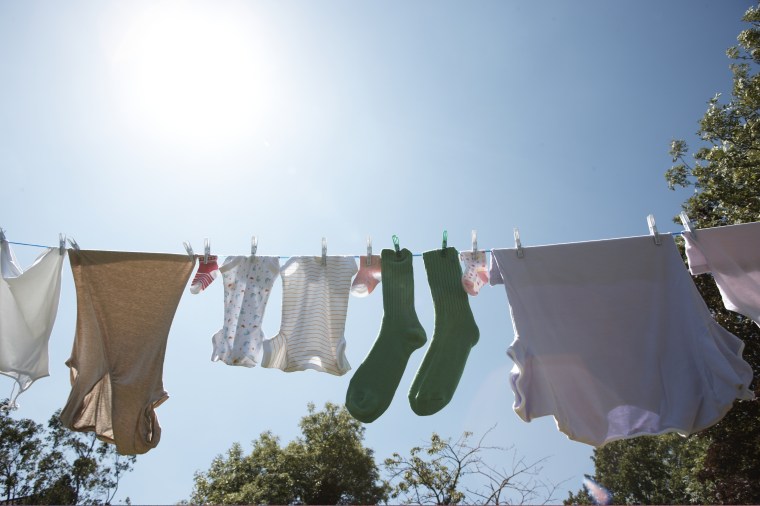
Back then my mama created a repetitive schedule for herself that I too used to mark the rising and setting of the sun. If I put on my “Monday” underwear in the morning I knew that my mother would be spending the day washing clothes and I would get to help her hang them on the clothesline to dry in the sun. When our things had been warmed by gentle breezes and solar rays we would take them from the wire lines and place them in a wicker basket. Then Mama would show me how to fold each of the clean pieces and together we would put all of them away save for those that required ironing. They were set aside for the Tuesday duties, a task that she demonstrated to me but never allowed me to undertake until I was many years older.

To this day I derive pleasure from a clean load of clothes and I use the methods of ironing that my mom taught me as I watched her deftly sprinkling water from a bottle and then using the heat to remove all of the wrinkles. Of course during this current time of pandemic neither I nor my husband wear clothing that needs to be ironed. We are more likely to don jeans and whichever t-shirts happen to catch our eyes. We don’t even worry about losing socks from the monsters inside the washing machine and dryer that eat such items. Our feet are mostly bare and as free as they were on summer days when we were children. Our freedom nonetheless is constrained by an invisible virus that keeps us at home and causes me to remember each day of my mother’s seemingly confining routine. 

After the laundry chores of Monday and Tuesday my mother allocated Wednesday to sewing and mending, a task that was more creative and interesting to her. She was quite clever with cloth and made most of the dresses that I wore along with those for herself. I always enjoyed accompanying her to choose the fabric and look at the pattern books from Simplicity and McCalls. Mama was quite meticulous with her measuring and if a seam was not perfect she would rip out the threads and begin again. Everything had to lie just so. Her finished products were worthy of the tailors on Savile Row and if I was lucky she would design lovely clothing for my dolls with the extra fabric.

My mom worked in the yard on Thursdays even in the winter. There was always a flowerbed to be weeded, a plant to be fed, or a tree to be trimmed. She was not quite as gifted with a green thumb as my Grandma Little, but her yard was always stunning. She liked climbing vines that flowered in spring and old fashioned shrubs like gardenias. She grew fig trees and pear trees and then used the fruit to make jams and other delights. I loved those Thursdays when we spent whole days outside putting our hands in dirt and delighting at the sounds of the birds.

Friday was house cleaning day, a time when Mama prepared for the weekend. She was as particular with cleaning a toilet as she was with her sewing. The process had to be done just right and as I watched she would demonstrate the proper manner of reaching every nook and cranny in which germs might lurk.

Fridays were quite busy because we changed the sheets, dusted the furniture, swept and mopped all of the floors. I had a job even though I was only five. I was very serious about dusting the wooden surfaces of everything in our home. I dared not miss a single inch because I felt so wonderful when my mother complimented my efforts.

Fridays also meant an evening at my Grandma Ulrich’s house. All of my aunts and uncles and cousins would gather there as well. We had a raucous time with the adults playing poker and the kids inventing games of every sort. I treasured those times then and to this day they remain one of the most wonderful aspects of my life.

On Saturday we would go shopping with my father. It was a day filled with fun and surprises. My father often wanted to buy new records for his collection and so we would visit a music store where they allowed us to preview the recordings before purchasing them. I so enjoyed putting on the headsets and listening to my father’s selections while sitting in between my mom and dad.

We’d always end our adventures with a visit to the grocery store that was filled with the aroma of baking bread and coffee being ground by machines. My father always convinced my mother to add some cookies or ice cream to the cart and he would smile knowingly at me as though we were co-conspirators in some plot.

Sunday somehow felt more like the end of the week to me than the beginning. We attended mass at St. Peter’s Church and then visited my father’s parents. My grandmother almost always took me and my mother on a tour of her yard which was as glorious as a photo spread in Southern Living magazine. Then Grandma would finish up cooking a spectacular meal while I had the privilege of setting the dining table with her china and silver. We’d end up sitting on the front porch talking of life and watching the neighbors parade down the sidewalk on their afternoon walks.

I suppose that I have kept my sanity during this time of isolation by emulating my mother’s habits. I keep track of each day by creating a kind of schedule. I give myself regular chores to do and routine tasks to perform. I make certain that I set aside a time for reading, and even more for writing. I have a washing day and a cleaning day, a lesson planning day and a teaching day. I insist on exercising and walking on my treadmill even though doing so only reminds me of the sameness of quarantine. I call people that I know each day to see how they are doing and to let them know that I am thinking of them. I have devised a sense of order out of a confusing and often chaotic time and it calms me.


These days I often find myself thinking of my mother who so happily and pleasantly performed her household chores while teaching me how to derive pleasure from simple tasks. I don’t recall her ever complaining that she was stuck at home doing jobs that might have seemed meaningless and unimportant had she not tackled them with so much joy and pride. How could I have known way back then that her example would sustain me in a time when I might otherwise have been filled with bitterness at the losses that we have all experienced? This woman who seemed so simple in those times would eventually become a warrior in my eyes as she battled untold tragedies and challenges always with that same gratitude for life that she conveyed to me on those routine days when I was still an adoring child of five.

I know I will endure this COViD-19 experience regardless of where it takes me. I’ve learned from the best how to take each day as it comes and make meaning out of even small endeavors. Regardless of where this all goes my mother’s legacy of  joy will guide me.

Gazing Into the Future

dt_150811_caduceus_computer_stethoscope_800x600

I spent my last years working full time as Dean of Faculty in a KIPP charter high school. One of our mathematics teachers was an extraordinary educator who was originally from Nigeria. He once told us a story of his youth and how he wanted to become an engineer from a rather young age. His village provided him with enough education to be rather literate but not enough to gain admittance to a university. For that he needed an advanced course in Calculus but there was only one person that he knew about with the credentials to help him, and that person lived in the next village over from his.

My colleague was determined to earn a spot at the university and so he visited the teacher who held the knowledge that he needed and offered to help him with his farm in exchange for Calculus lessons. For a year the determined young man walked several miles after the regular school day to meet with his teacher. Ultimately my friend indeed earned a degree in engineering.

I was reminded of the many people across the globe who do not have instant access to education when I attended a little seminar at Rice University last year. The special guest was Salmon Khan, who is best known for Khan Academy an online educational platform.  Khan spoke of the power of the internet in bringing instructional opportunities to individuals who might otherwise not have them. He told stories of young women in Afghanistan who have used distance learning to earn college degrees in fields that might otherwise have been closed to them. Today’s world is filled with ever more opportunities for advancement because of individuals like Khan who offer lessons in multiple subjects.

We’ve seen the power of online education in recent days as millions of children have learned their lessons in the safety of their bedrooms. We know of workers who are continuing to do their jobs from their dining room tables. As doctors and nurses are on the frontline of the battle against Covid-19 telemedicine is being used more and more.

My husband was supposed to have a follow up visit with his cardiologist later this month. It will still happen but this time it will take place via computer. When possible this method is being used more and more often during the pandemic and I suspect that it will become a commonplace way of providing general medical care in the future. I can see how it will be an important way of bringing world class medical care to rural areas and parts of the world experiencing a shortage of qualified doctors.

Of course this brave new world of computerized education, work life and medicine will require internet infrastructure but already internet cafes are cropping up all over the world. These are places where anyone may come and pay a fee to use networks for all sorts of reasons. Some cities like Tulsa, Oklahoma are actually leading the movement toward creating centers for online access. I can envision countries creating such places for the population just as we once built the interstate highway system after World War II. What a boon it would be to anyone living in a remote area to have a way to learn or work or get medical care or just to become more a part of the global community!

I remember watching a program about Arthur C. Clarke many decades ago. He was a futurist in every sense of the word. He lived on a Pacific island but was very much connected to the world. Of course he was wealthy enough to have satellites and computer power in an era when few people had access to such things. Nonetheless he predicted that it would one day be possible for anyone to live virtually anywhere and still experience modern conveniences. The computer era is proving him right on so many levels.

I suspect that as we move out of pandemic mode we may want to continue with some of the practices that we have been using and expand on them. While the economy may be battered I predict that new opportunities will arise as clever young people learn from observing what was essential and how we solved various problems during our time of isolation. We are experiencing lessons in supply chains, risk management, education, public health, computer power. Our teachers will be the geniuses among us who paved the road to linking the far corners of the world through online communication. We may be on the verge of a great civilizational shift much like the Renaissance or the Industrial Revolution. In fact it may have already started.

Sometimes great good comes from tragedy. Let us hope that the lessons we learn will lead us to ever brighter days ahead and a willingness to try new ways of doing things. I suspect that the greatest minds among us are already making plans.

Plan B

charity-report-pic

There is plenty to cause people to be afraid these days. We are bombarded twenty four hours a day with stories presented more to earn readers and viewers than to just present the news. The more titillating the piece the more likely it is to increase ratings, the holy grail of journalism in today’s super charged environment. Add to the mix hackers who foment terror with propaganda and it can sometimes be difficult to discern the difference between truth and fact. Rumors abound to add to the inflammatory atmosphere. Uncertainty provokes anxiety that grows faster than a pandemic.

Everyone has real personal concerns that are enough to keep them worrying. They may be financial or health related, social or physical. I can’t think of anyone who is not grappling with some private tragedy that saps energy and brings on insomnia. The added furor over issues that may or may not be as dire as they are presented only adds to the pressures of existence. Our natural instincts to react when signs of danger appear have been stressed again and again by predictions of terrorism, murder, pandemic, natural disasters. We don’t want to be ruled by panic or illogical thinking, but we also don’t want to get caught unprepared. We find ourselves wondering whether to just laugh and continue our routines or take warnings seriously and make changes to our lives. When the information that we gather becomes contradictory we don’t know who to believe and our concerns only grow.

I remember a long ago day in October when I arrived at school to find fewer of my fellow students in attendance. My teacher appeared to be unusually tense and ultimately she spoke to us about the Cuban missile crisis that was unfolding. It was honestly the first time that I had heard of such a thing. If my mother knew of it, she never mentioned it to me and my brothers. I remember being somewhat amused by my teacher’s concerns and advice for what we should do if an attack on our city occurred. Because my mother appeared to be so nonplussed by the event I took her cue and simply ignored the whole thing which ultimately turned out just fine. It would be years later before I realized the extent to which our country had been on the brink of nuclear disaster. When I learned the truth I was unable to decide if my ignorance had been best or if I should have been more serious and prepared for a dangerous eventuality.

I worry enough without additional input from muckrakers. I’m generally not so much fearful of what may happen to me but rather how to protect my loved ones from harm. My guess is that I take after my mother in that regard. When I lie awake at night it is never out of anxiety for myself but always from fear that one of my family members or friends my be in trouble. When I am frightened I try to take control of the situation. I become like a mama bird preparing and guarding her nest. I maintain an appearance of calm and quietly go about my days as routinely as possible while also gathering whatever I may need to overcome the demands of an emergency.

Fear is the most normal of human reactions and one that may actually help us to avoid danger. It also has the power of driving us inside our own minds, crippling our ability to lead normal productive lives. I watched mental illness turn my mother into a sad paranoid shell of herself. She hid behind heavy curtains in the darkness of her mind. Hers was a medical problem that righted itself only when she took medications designed to balance the chemicals of her brain. Most of us will never know the terror that her bipolar disorder created in her thoughts. Still if we let our anxieties overtake us we lose the joy that we need to get the most from each moment of our days.

I suppose that I have learned to keep my fears at bay by taking constructive actions that may or may not be of any consequence but nonetheless allow me to feel more optimistic. I insure my home against disaster knowing that I may not escape devastation but at least will have a means of rebuilding if the worst case scenario unfolds. I take care of myself with healthy habits of both body and mind understanding that there are no guarantees that I will not be struck with a difficult illness. I can only hope that my routines will at least provide me with a reservoir of strength in any eventuality. I avoid dangerous situations as I go about my business and drive with care knowing that none of my cautions are foolproof. I have a store of provisions in case of some unexpected disruption in the normal flow of the world. Like a Girl Scout I plan ahead just as I always have.

I suppose that the events of my lifetime have taught me to never say never. If someone had predicted my future when I was a child I would have scoffed at the very idea of things that ultimately happened. Perhaps I may have also been very afraid. Instead I went about my life being a bit cautious just in case. There have been times when my careful planning served me well but I have admittedly spent sleepless nights wondering and worrying needlessly. Life has taught me that dreams come true through hard work but nightmares sneak up on us when we least expect them. Having a Plan B and staying calm has helped me through such situations time again. 

Ask Alice

Alice-Looking-Down-the-Rabbit-Hole-in-Alice-in-Wonderland

I suppose it was inevitable that we would all go a bit stir crazy after being shut in for so long. Sadly my own time in lockdown continues as I allow the more anxious folks to test the waters of returning to a more routine way of life. As my hermit existence is extended I have moments when it feels as though I’ve been pulled down a deep and winding rabbit hole that is filled with a level of crazy that makes me want to batten the hatches and hunker down for an interminable time.

Each new day brings almost unbelievable news of folks not handling the pressure of all this too well, but I should not be that surprised because of my decades of working in churches and schools. As the first lay director of the religious education program at my church I was accused of being an agent of the devil simply for having the audacity to take on the task of working with the children of the parish without being a nun. As a teacher and school administrator I’ve been threatened more times than I am able to count and that is just taking the bad behavior of the parents into account. I have learned that while the vast majority of people are level headed and polite there are always outliers who grab the attention with their noise. Most of the time I able to simply ignore their shenanigans but for the moment my patience is wearing thin.

I suppose that I am a cautious individual by nature and I generally admire anyone who is willing to take a few risks but there are indeed moments when discretion is the better part of valor. I can’t think of a more appropriate time in history to demonstrate a bit of sacrifice for the greater good than now. For the most part people are being quite generous in that regard but my patience has worn thin with those who seem to want to make a stink just for the sake of garnering attention. Those people who crowd into the streets refusing to distance themselves or wear masks or follow safety guidelines are exhibiting highly selfish behaviors. I understand their anxieties regarding their need to get back to work, but what difference could it possibly make to wear a mask and stay six feet apart while doing so? They remind me of adolescent students who refuse to follow a school dress code.

I used to tell my pupils that most rules and their punishments are created when people take advantage and push the envelope to the limits. When the behavior gets too bizarre someone invariably stops it with a mandate that includes consequences strong enough to prevent the unwanted action. If people simply thought of why certain dictums come about they might be less inclined to go ballistic over them.

Those of us who are older or have health problems are essentially being urged to stay at home while the rest of the world goes back to work. I don’t mind doing that at all even for an extended period of time if it helps to safely get our economy back on track. On the other hand when I do have to go out and about I want to feel secure and for now that means keeping a distance and wearing masks. I can’t for the life of me understand why anyone would have a problem with that. If I am willing to do my part by secluding myself to get things running, then why can’t those who are out on the town demonstrate a bit of understanding of those of us in the more vulnerable groups? Just put on the masks and be done with it!

I also prefer honesty even if it hurts. My Uncle Bob is still one of my all time favorite people because when I saw him attaching his prosthesis to his amputated leg when I was quite young he told me exactly why his leg was gone and what his prognosis was. When he died when I was only six I understood what had happened and I loved him for telling me the truth rather than attempting to sugar coat the situation. He treated me with respect even though I was a child and to this day I prefer such honesty rather than attempts to make me feel better. Thus I am quite disturbed by those who try to downplay the pandemic and its future when nobody knows for sure what will happen. I would prefer hearing all of the possibilities so that I will be prepared for any eventuality. It’s a dangerous thing to give people false hope just to spare their feelings.

When the President of the United States floats promises of rainbow days and unicorns coming soon I am wary. He may be privy to more information that I am but I doubt that the long term outlook is as rosy as he sometimes paints it to be. He needs to encourage the nation to stay the course, make the sacrifices and work together. We’ve done this sort of thing before during the Great Depression and two world wars. He should be encouraging us to have the will to do whatever is needed in the moment, not to wear red caps and create difficulties for governors and mayors who are attempting to protect us. He needs to be honest and humble about how long this might take. We will be far more likely to survive with courage and determination if he models a leadership style that offers hope without unrealistic timelines and guarantees.

We are a nation of good and creative people. We do not need to boast or be selfish. This is a worldwide problem and it will be in working with all nations that the world finds its way back from the edge. It’s time we crawl out of the rabbit hole and back into the light of day, just ask Alice.