
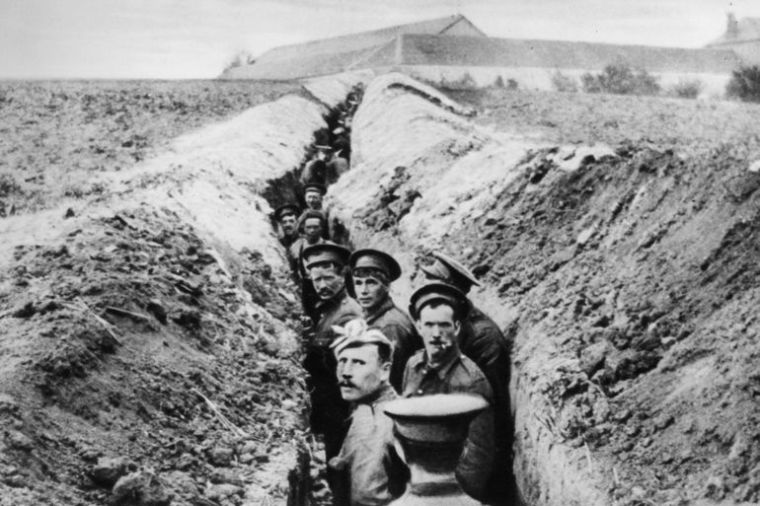
 It was a dark time in history. The world was engaged in a heinous war whose purpose seemed unclear to most who tried to understand why millions of young men were dying. The brutality of the battles was unimaginable. Modernity had changed the nature of fighting in truly horrific ways. Mankind had not yet outlawed the use of chemicals as weapons. Nothing, it seems, was taboo, and so young men were permanently mutilated by agents like bombs and sarin gas. Never before had there been such murderous activity in mankind’s seemingly relentless quest for power. World War I is a war that we often ignore when in reality its effects continue to plague us to this very day.
The United States initially watched events unfold from afar. It’s hard for us to believe but our nation was very much a kind of backwater region at the onset of the twentieth century. Most of the world powers still thought of our government as a fluke in the annals of history, hardly worth noticing when compared to the vast influence of Austria-Hungary, Germany or Great Britain. Militarily the United States was ranked number seventeen, just behind Serbia. Few paid much attention to our still very young country as they engaged in an epic struggle in Europe.
At the beginning of World War I the United States was in debt and still far more rural than urban, but it had incredible natural resources and manpower which became a lifeline for nations like Britain and France during the fighting. With so many of their young workers unable to farm or work in factories it fell to the United States to supply the food and material needed to survive. The USA became a beehive of activity all while insisting on a neutral stance regarding the war. Initially most Americans were disinclined to become involved in a dispute that seemed to be more of a disagreement between royal relatives than a meaningful cause. Instead they enjoyed the fruits of commerce that were occasioned by the war.
The war that was supposed to be resolved in a matter of weeks dragged on with horrible consequences for European nations. The citizens watched helplessly as their youth were killed or maimed in heretofore unseen numbers. After almost four years of fighting France was on the verge of capture and collapse. Britain was little better. Russia was boiling over with a revolution that would dramatically alter the course of that country for the next hundred years. It appeared that Germany would soon dominate Europe. The United States enjoyed its relative safety and newfound prosperity while Europe burned.
Germany believed that it might break the will of Britain and France, thereby winning the war, if only the United States were prevented from sending supplies, and so they boasted that ships traveling across the Atlantic toward Europe would no longer be safe. Their gamble backfired and resulted in a declaration of war from the United States. Within months hurriedly trained American soldiers and weapons, began arriving to bolster the Allies, breaking the stranglehold that Germany seemed to have on the continent. By turning the tide of the war and helping the Allies to win the United States earned the respect of all the world. Suddenly our country had become a superpower and a king maker. For better or worse we have played that role ever since.
A hundred years ago President Woodrow Wilson justified our country’s involvement in war as a way of spreading liberty and democracy. It is an idea that is bandied about to this very day, but then as now a sizable number of people question the arrogance of interfering in the affairs of other nations. Such thinking was again used successfully as a rationale for World War II but lost its luster during the engagement in Vietnam. Presently the world finds itself in a confusing quagmire in the Middle East, a part of the world many of whose problems began with the peace negotiations at the end of World War I. One hundred years later we are seeing the results of arbitrarily dividing the spoils by redrawing colonial maps in a manner meant to punish the losers rather than consider the needs of the people living in the areas once ruled by European monarchs. The roots of today’s problems were unwittingly planted by power brokers whose intent had little to do with spreading freedom.
The world changed dramatically a hundred years ago particularly for the United States. We took on a mantle of responsibility back then that has always had an aura of discomfort. By nature we want to be the good guys, the heroes, but tiny voices of caution echo inside our heads. Part of our nature wants to be left alone, just as our forefathers who fought for their independence from an ever invasive government. Another side of our personalities feels compelled to constantly fix whatever we see as being broken including other governments. The tension between these two points of view are as prevalent today as they were back then. Our divisions are in reality nothing new.
One hundred years ago even as we appeared to be saving the world conditions were ironically far from ideal in our own backyard. Women were still fighting to win the right to vote. Race riots broke out in cities across the country in the summer of our victory. Many of those who had spoken against going to war languished in prisons. We still had much to do at home before serving as advisors to the world. Hypocrisy quietly reigned much as it often does.
Everything old becomes new again. After a hundred years much of the idealistic thinking of those who supported World War I has been tarnished by reality. We find ourselves feeling anxious as the world smolders as though coals of discontent from our past have once again caught fire. We ask many of the same questions and silently worry that a truly peaceful world is a pipe dream, the stuff of fools. We wonder if our warlike natures will always and for all time inevitably take hold. We would sometimes like to wish ourselves back to a time when we were number seventeen in the world and nobody expected much from us, but we know that our ship has sailed and now we much pray for the wisdom to find answers that will do the least harm. As we do so we would do well to remember the lessons from history.
 At one of my grandsons’ recent track meets there was a fun race that featured beefy football players running against one another. Of course there was also a big twist to the competition. Each of the guys, who looked like defensive linemen, had to carry a tire as they circled the track. They had everyone laughing and having a good time, and I was reminded of a story that my grandfather loved to tell.
 I vividly remember having the measles. It seemed to be the final insult in a year that had brought me nothing but grief. My father had died only months earlier leaving me confused and bereft as our family struggled to find its footing. We had moved into a house that was nothing like the ones we had been considering at the time of his death, but it had brought us great comfort in the short time that we had lived there. We had gone full circle, returning to the neighborhood and the school that we had left only a year before. The people who lived near us and those who attended our church had been welcoming and we had been gradually settling in to a new way of life without Daddy.
 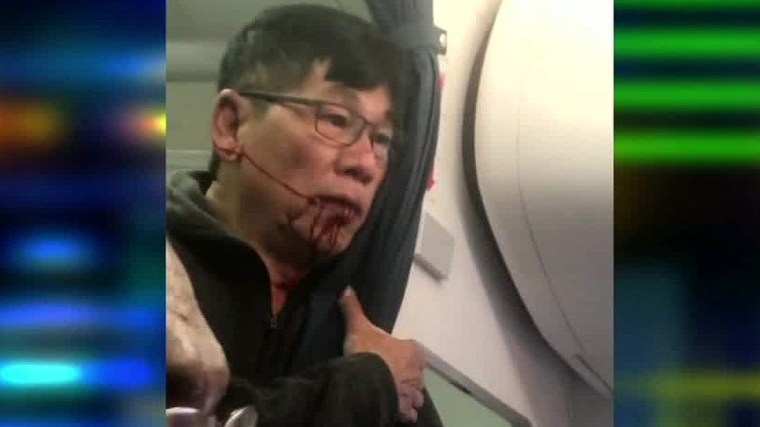 I actually love to fly but admit that there are certain aspects of the adventure that make me nervous. I’m always afraid of being late and more than once I have been in lines that were so long that I was certain that I would miss my flight. I’m not a fan of the TSA screening process either. I got a rather personal pat down in France several years ago that was so demeaning that I could feel the tears of anger gathering in my eyes. I had to breathe rather purposefully to keep from overreacting. On another occasion a great brouhaha occurred when agents discovered a New York skyline snow globe in my granddaughter’s carry on luggage. She didn’t want it to break in flight so she had carefully wrapped it in a jacket and lovingly lugged through the airport. It seems that it was just a bit too large to be allowed on the plane. After a great deal of discussion a very nice agent found a way to protect it from being broken while stowed in the baggage area of the plane. My granddaughter wondered why there was any worry over it and was told that it might contain explosive materials. She later whispered to me that if it was some kind of bomb the plane would blow up whether it was with the passengers or down below. I had to shush her and tell her to just be happy that they didn’t make her leave it behind.
 All It Takes Is A Little Love