Our Fathers

father-son11.jpgI read so many beautiful tributes to fathers yesterday. I looked at photos and videos of the men who tirelessly dedicate themselves to their families. I must admit that Father’s Day has been a bittersweet event for me ever since my own daddy was killed in a car crash back in 1957, so when I saw a post from a young woman whose father died only weeks ago I empathized with the grief that she is still feeling. I viscerally understood her sense of loss. It is something that never completely goes away. Fathers are an important part of who each of us is and who we eventually become.

After my father died our family struggled to determine how to celebrate Father’s Day. There was a huge void in our lives that my mother tried desperately to fill for us but which she never quite accomplished. We had other male role models like uncles and my grandfather who were wonderful in their own right and did their best to watch over us. From them we learned how good men behave. We felt secure because of them and our mom. We used to joke that our mama was both our mother and our father and we often gave her a little gift on Father’s Day. Still in the back of our minds was a sense of regret that we would never really know our father in an adult way. He would be forever young and we would only know him in an immature way.

I loved fairytales and I identified with characters who had lost their fathers. I suppose that I idealized my father. Over time I only remembered the most wonderful and remarkable things about him. I often fantasized about how different life would have been if he had never been killed. Mostly though my brothers and I adapted to the reality of our situation. We learned that growing up in a single parent home didn’t have to be sad and dreary. Our mother was wonderful and she kept memories of our father alive by telling stories about him and boasting of his brilliance and love.

When I became a teacher I encountered so many young people who like me had no fathers. Some of them were children of divorce who divided their time between their parents. Others had never known their dads. All of them longed to know more about the man who had helped to create their lives. It seems to be human nature to want knowledge of both our mothers and our fathers and their families as well.

I watched the new version of Roots that was shown on several channels a few weeks ago. Perhaps the strongest theme of that series was the importance of family. We cling to the lessons that our parents teach us and even when they are no longer with us we remember and appreciate what they have done for us. In the story of Kunta Kente we follow his life from the time that he is a young man living happily with his family in Africa to his capture and imprisonment as a slave when he was forced to adapt to a new world without freedom. He kept his dignity because he felt the spirit of his father inside his very soul. He passed those feelings down to his children even when they too were ripped from the people who most loved them. From one generation to the next the lessons that Kunta Kente had learned were a treasured part of the family lore.

All of us want and need the steadying hands of our parents. It is of course most ideal when we have both of them but many of us have to be content with only one parent. Some of us even have parents who did not birth us but who love us nonetheless. It is in the care and comfort that they provide that we grow into capable adults.

Fathers form the bedrock of our existences. President Barack Obama longed to understand his own father and journeyed around the world attempting to understand the man with whom his mother created a life. Like me he grew up with males who were surrogate role models. He loved them and appreciated the support that they gave him but he needed to learn the roots of who he was by reflecting on the life of his dad.

Mike and I spent Father’s Day with my father-in-law. Julio Gonzales who is as good a father as there ever was. He married Mike’s mom when Mike was five years old. He became the papa who was there for every milestone. He provided Mike with a home, food, an education. He taught him how to be a good and loving man. He is Mike’s real father in every sense of the word and the grandfather of our daughters. He is the patriarch of our family, the steadying force who stands at the center of our lives. He worries and frets over us just as he did when Mike was still a boy. He never stops being a dad.

The funeral for my son-in-law’s grandfather was held on Saturday. He was 101 years old and beloved by a huge extended family that will miss his storytelling, wit and wisdom. Like other fathers he spent a lifetime protecting and caring for his children, grandchildren and great grandchildren. They were all the focal point of his life. He worked hard and played hard with them. He was willing to sit down in the dirt with a child to play with a doodle bug. He enjoyed entertaining his family with legendary jokes and smiles.

There are many kinds of fathers and sometimes there are no fathers. We all seem to need them or at least a substitute for them. They teach us how to live and love and laugh.

I still remember my own father reading voraciously and loving sports and politics. I can see him fishing and laugh when I think of how he carried his pole in the trunk of his car just in case he found a body of water and a few minutes of leisure time. He was an historian, an artist and an engineer. He loved his friends and our mother and me and my brothers. He was a man of culture who played classical music and recited poetry. He was an adventurer who wanted to see the world. Even though he was only with me for eight years he taught me all that I needed to know. He showed me how to be my very best. He lives in me and my brothers to this very day.

I hope that all of the wonderful fathers that I know enjoyed themselves yesterday. I hope that they realize just how much they will always be loved by their children. We don’t always take the time to convey our feelings to our fathers and the men who substitute for our fathers but the thoughts are always there in our hearts.

A Noisy World

platform-in-a-noisy-worldSometimes I feel like being a turtle and hiding inside my shell. Thinking about the complexities of the world can be exhausting and trying to ignore all of the furor seems almost impossible given the 24/7 instantaneous and nonstop coverage of the news in all of its forms. We can’t even get away from politics when we attempt to escape by watching television or movies. The propaganda both extreme and subtle always appears to be ever present. It’s little wonder that we have gone a bit overboard in our reactions to differences of opinion, even to the point of violence in some cases. Perhaps the worst reaction is to suggest that some ideas are so horrible that they should be banned or even found to be illegal. I shudder to think that we are dancing so dangerously toward the idea of any kind of censorship and I am appalled that there are so many who would willingly end friendships over differing convictions. I have to wonder if we simply need to tone down the rhetoric and return to a less bombastic era.

I watched a stunning two part documentary about Afghanistan on Netflix last week. It was thought provoking to say the least. I found myself wondering why I had never heard much about this country before we invaded after 9/11. Its history is so rich and yet so tragic. I never really understood its true significance nor did I realize that it has been an embattled nation since the nineteenth century when the British sent troops there in the guise of supporting its people and its government. The reality was that Great Britain was concerned that Russia might use Afghanistan as a pathway to India and so in a series of ill conceived plans the Brits built fortifications and sent soldiers and their families to keep an eye on things. The maneuvers resulted in rebellions and the slaughter of thousands of British soldiers in some of the worst losses in history. Even back then it became apparent that the Afghan people neither appreciated nor tolerated interference from an outside nation. The same bitter defeats that plagued Great Britain would later become the fate of The Soviet Union in the nineteen seventies and eighties and the United States more recently. History demonstrates over and over that it is easy enough to get into Afghanistan but tragically difficult to get out.

I was stunned by all of the knowledge that I gained during the course of this documentary and determined to learn more. I realized that I was all too unaware of geopolitics and probably only thought that life in the eighties when I experienced the peak of my happiness was as perfect as it had seemed. It was my ignorance of terrible events that protected me from reality. While it was a nice state of mind to have I wonder whether it is better to be unaware of all of the tragedy and injustice or to be knowledgable and capable of rational dialogue. My innocence felt nice but was it the way I should have been?

Perhaps there is a happy medium. While I was raising my daughters, watching “The Golden Girls,” having fun with my friends, enjoying my job and living in what I thought to be the world’s greatest neighborhood I was in a kind of blissful bubble. It didn’t occur to me to think that trouble was brewing in parts of my own country and exotic locales in the world. I was fine and so I somewhat selfishly assumed that everyone else was as well. I had no interest in learning about the Middle East and only thought of its existence when Iran held some Americans hostage or I was only able to get gasoline on a certain day of the week. Perhaps instead I should have been more engaged with the slow progression of events that were moving toward the future that is now. History is always much easier to understand and to predict in the long view rather than the moment.

One of the things that I most appreciated about the documentary that I watched was that it was not particularly political in nature. It was filled with more facts than opinions, unlike most of what is supposed to be news today. The journalist did not insert himself into the discussions. The questions that he asked were more informative than challenging. He admitted to having a particular bias but generally left it to the viewers to draw their own conclusions. I don’t see much of that in the media today. Virtually every form of journalism seems to be slanted toward a particular philosophy, making it more difficult to determine the truth. I suspect that the anger that is so rampant in our society is a byproduct of the ratings game. We are more likely to watch a ninety second spot that is audacious and inflammatory than one that simply outlines information. We would rather see film of riots in the streets than hear outlines of legitimate concerns. We are baited by soundbites rather than encouraged to delve more deeply into research. I believe that these are the kinds of things that make us a bit crazy.

I remember a time when Walter Cronkite was the face of the nightly news. He showed us what was really happening and then left it to each of us to form our own opinions. Movie stars were just that, people who played roles in fictional stories. Television was a means of escaping the stresses of daily living. The stories were funny, inspirational, adventurous. The whole family could watch until a certain hour at night when the programming became a bit more adult. People often spent evenings sitting outside, enjoying the sounds of nature and their neighbors. Children played on lawns up and down the street. There were no video games to distract them from running and using their imaginations. People interacted and life in general was very informal, unplanned. We didn’t rush around the way people do today. We had time to linger over a nice meal, laugh at stories of the day’s happenings, pause to check on a person who was not doing so well. Perhaps we fooled ourselves into thinking that our little islands of bliss represented the rest of the world but it made for much more contentment and far fewer disagreements. Maybe the silence that we had in abundance back then was a very good thing. It may be that the old bard nailed it when he spoke of sound and fury signifying nothing.

We rushed into this complex state of instant and non-stop information and sensory overload without really knowing the consequences. I suspect that we are still experimenting with our brave new world. We don’t quite yet know what we should hear and what we should ignore. We have to learn how to balance what is good about our cyber universe and what only serves to make us weary. Just as with overindulging in food or drink we sometimes have a tendency to allow the commentaries and pundits to shape our thinking without unplugging long enough to reflect on what we have seen and heard. Most of all we each need to remember that we have erected systems, norms and customs that prevent our society from descending into anarchy. There are ways to address problems and concerns without violence and self righteous anger. I am optimistic that we will eventually adapt to the ever changing ways of receiving and reacting to information. Hopefully we will never forget to respect the freedoms that are the foundations of our society. It is better to learn how to quietly analyze conflicting voices than to try to silence them. It is in our diversity of thought and our pursuit of knowledge and truth that we are strong.

A Reincarnation of Greatness

13336082_10210337423138893_4040514413157681129_nFor all of my life my life my high school English teacher, Father Shane, has remained one of my favorite teachers. He inspired me and broadened my horizons at a time when I lived a rather isolated existence. It was Father Shane who introduced me to a world of new experiences. I fell in love with the English language under his guidance and learned how to write almost on demand. From him I developed a love of art, music, poetry and reading. For four years I counted his class as my favorite of each school day. It was not at all surprising that I majored in English in college, wanting to expand my knowledge and honor him. Imagine my surprise and excitement when years later I walked into a high school classroom to observe a teacher who reminded me so much of Father Shane that he might have been the reincarnation of the man who had so mesmerized me when I was young.

I was the Dean of Faculty at KIPP Houston High School and my duties included visiting classrooms and mentoring teachers. It was in that vein that I went to see Dickie Written, an English teacher that the principal had only recently hired. I sat in the back  of his classroom and almost immediately felt as though I had been transported back to my old high school days. Dickie had a way of teaching that was exciting and I noticed that students who had never before shown much interest in English were actively participating in the discussions that he led. There was a merriment to the lessons but also a serious exploration of the meaning of words, phrases, and descriptions of literary analysis. I had to contain myself to keep from raising my hand and becoming involved in the lively back and forth.

Each time I visited Dickie Written I became more and more convinced that his style and delivery was amazingly similar to Father Shane’s. I laughed on one occasion when he guided his students through a study of The Crucible by acting out parts from the play that he had memorized. I felt as though I was watching a grand Broadway production as he changed his voice and facial expressions to match the tenor of each line. I wasn’t the only one who was enchanted. It was obvious that the students were also hanging onto his every word.

I definitely knew that Dickie Written was an outstanding teacher when his students walked through the hallways of the school quoting lines from Beowulf and insisting that it was one of their favorite books ever. I recalled how much I had despised that classic and had to know how Mr. Written had managed to convince his charges that they were reading a spectacular saga. I found out that he had brought each of the characters alive in ways that made them seem modern and timeless. He did exactly the same thing with The Canterbury Tales another of those English class standards that I had only managed to slog through but Dickie had convinced his students to love. It seemed to me that Dickie Written was a kind of Pied Piper of English.

One of the aspects of Dickie’s teaching that I most admired was his insistence on teaching his students the rules of grammar and usage. In recent years directly teaching such things has been frowned upon in some circles. As someone who concentrated on Linguistics with my major, I had a difficult time understanding why this trend was so popular. I knew from my days with Father Shane that I understood the English language right down to its very foundations because of the daily grammar practice and diagramming. As a result of those exercises I became a better writer and communicator. The more current idea was that students should learn all of those rules tangentially. The prevailing belief was that going through boring drills and practice only stifles student creativity. Dickie Written disagreed and took the time to explain to his classes the correct ways of aligning words and building sentences. I really liked that about him and applauded his rebelliousness. I saw him as a visionary and so did his students, mostly for whom English was a second language.

Eventually I left KIPP Houston High School and so did Dickie Written. By happenstance I learned that an English teaching position was opening up at Cristo Rey Jesuit College Preparatory School where I was tutoring students in math. I contacted Dickie and he in turn applied for the job. He was an instant hit with everyone at the school. I developed a kind of fame by association when I  let it be known that he and I were friends. His students would speak of being a bit intimidated by him, for he is a remarkable disciplinarian, but they also loved him and his class. I could tell that he was using his exciting methods once again and I felt a certain magic in knowing that he was now in the same building where Father Shane had once transformed English class into an enjoyable journey for me and countless others.

Recently I met up with Dickie Written along with a number of friends from my days at KIPP Houston High School. I had not spoken with him in quite a while but I could tell as soon as he arrived that he was happy. He quickly announced that he had very good news. He told us with a huge smile that he had been honored by Cristo Rey with the President’s award for outstanding leadership in education. It didn’t surprise me at all. In fact, I have often wondered why it has taken so long for the powers that be to realize the genius of Dickie Written that his students and I have always known was there. It is about time that he be honored for his brilliance.

Dickie will also be spending time in Chicago this summer writing curriculum for the nationwide Cristo Rey network. Hopefully students in other locales will now enjoy his methods and ideas but the reality is that Dickie Written is one of a kind, not to be reproduced. He, like Father Shane, has a charisma and a love for English that transcends the ordinary. For now it appears that the students at Cristo Rey will be the lucky recipients of his amazing teaching skills.

It does my heart good to know that a new generation of students is being delighted by a very special teacher. Just as Father Shane so inspired me fifty years ago I imagine that Dickie Written is reaching the hearts and minds of his students today.

Father Shane died many years ago but his reputation and spirit live on. I actually felt it when I entered his old classroom when I first began tutoring at Cristo Rey. I suspect that Dickie Written will be legendary as well. Long after he is gone there will be adults who will think back to moments in his class with the same joy and a sense of nostalgia that I have for Father Shane. I have to congratulate Dickie for holding fast to his beliefs and for loving his work as much as he so obviously does. He is one of the best in the business and I was lucky enough to be able watch him demonstrate his amazing gift .   

Passion

birdWDF_1076070I’m a huge fan of the Google Doodles. I’ve learned some fairly interesting bits of trivia from those imaginative drawings and I get quite excited whenever I see one. A few days ago the featured story was about a woman named Phoebe Snetsinger. Like me, it is unlikely that most people would have known anything about this woman unless they were avid birdwatchers. It seems that Ms. Snetsinger was known as a “big lister” in the birding crowd because she had managed to sight more than 8400 different species of birds out of the ten thousand that are said to exist. Only a handful of individuals even come close to her feat. I wanted to learn more about this woman because my son-in-law and his father love to watch for birds wherever they travel and a teaching colleague of mine enjoys that hobby as well. What I learned about Phoebe was fascinating.
Phoebe Snetsinger seemingly led the good life. Her father had made a fortune as a brilliant advertising executive and she married a man who as a researcher at Purina also earned a hefty salary. She herself had always wanted to be a scientist but instead she settled into the routine of a 1950s suburban housewife. It wasn’t long before she was feeling quite bored but these were the days when women were expected to embrace traditional roles and for a time she did her duties. All of that changed when something extraordinary happened. Phoebe was diagnosed with melanoma and told that she likely had less than a year to live. Suddenly she knew exactly how she wanted to spend her last days on earth and she embarked on an adventurous plan to see as many birds as possible before she died.

Phoebe threw herself into birding with abandon, traveling all over the world in a quest to find even the most exotic species. She didn’t die from melanoma but she endangered herself over and over again while following her dream. She once broke her wrist and her knee while pursuing the rarest birds on earth. She even endured the horror of being raped by five men in New Guinea. Nothing seemed to stop her, not even the melanoma that eventually returned. On one occasion she visited Rwanda just before the warring genocide began and joked with friends that she had just barely made it out alive.

Her personality and determination were bigger than life. She shattered the conventions so often placed on women, shockingly missing both her mother’s funeral and her daughter’s wedding, no doubt causing tongues to wag. She was on a mission and the only thing able to deter her was ultimately her death, not from cancer, but from a car crash in Madagascar. Had she lived she would have been 85 years old this month.

Most people have neither the time, money nor inclination to follow such a fanatical path as Pheobe Snetsinger did but my guess is that those who share her love of birds might dream of being able to replicate her accomplishments. My son-in-law has a family and multiple responsibilities but I suspect that given the resources to do so he would hit the road tomorrow. My teacher friend is now retired and she and her husband spend most of their time seeking birds and photographing them. I for one look forward to viewing her lovely photos each day and imagine how much fun she is having now that she is no longer ruled by a clock everyday. She is just adventurous enough that she too might love having the means to expand her bird watching territory into more exotic places.

Passion is a grand motivator but sometimes we quell those stirrings inside our minds so that we might “do the right thing.” Literature is replete with stories of humans who embarked on grand adventures and those who slowly died performing the duties that were expected of them. It is the rare person who is able to unloose the chains that keep them ordinary and there is usually a high price to pay for doing so. Society tends to judge those who take extraordinary risks with a negative slant, particularly when they are women. Such it was for Phoebe Snetsinger who was generally only known in a world that most interested her, but within that circle she became a rockstar. Phoebe had the good luck of being wealthy. Having money to pursue one’s interests is always a plus. It’s difficult to travel the world and thumb one’s nose at the naysayers on a modest income. Being rich has always has its perks but it is not the only route to success and even the wealthy are not without their problems.

Phoebe Snetsinger was remarkable for her willingness to endure hardships and make real sacrifices while seeking some of the rarest birds in the world. Much like the most notable individuals of history she understood that greatness does not come from doing something halfway. Thomas Edison might never have invented the light bulb had he worked on his invention only in his spare time. Galileo was willing to give his very freedom in defense of his scientific theories. The very best among us whether they be scientists, athletes, writers, educators, business persons, mathematicians, doctors or artists are devoted to their craft. It is passion that propels them forward and keeps them focused even in difficult times.

I have counseled many students who were confused over how to plan their futures. Again and again I have urged them to think about what they really love to do and then craft a life around following their dreams. The happiest people that I have ever met are the ones who ultimately do what their hearts tell them to do. My brother who announced at the age of three that he wanted to be a mathematician is still joyfully doing his advanced calculations to navigate the International Space Station. Another brother who wanted to be a firefighter followed his instincts over the protests of adults who thought they knew better and he has had a glorious career. I can tell countless stories of individuals who found profound happiness simply by living out their passions. At the same time I know others who never quite found contentment because they allowed themselves to be misdirected from what they saw as their real places in life.

We should all be inspired by the story of Phoebe Snetsinger. She was a living example of someone who was a true warrior. She refused to allow a deadly diagnosis to keep her down. She ignored the customs of her time and instead followed her own instincts. She focused her time on what was important to her. She ultimately became one of the biggest of the birding big listers proving that it is never too late to fulfill the dreams that call to us. Each of us wants to leave a mark on the world. We want to be significant even if only in a small way. Listen to the voices that are telling you how to become the best version of yourself. Take the first steps and then don’t look back. Bring passion to your endeavors every day and never be afraid. Nobody knows your purpose better than you do. Follow your heart and it will surely lead you to the places that you were meant to be.   

An Anniversary

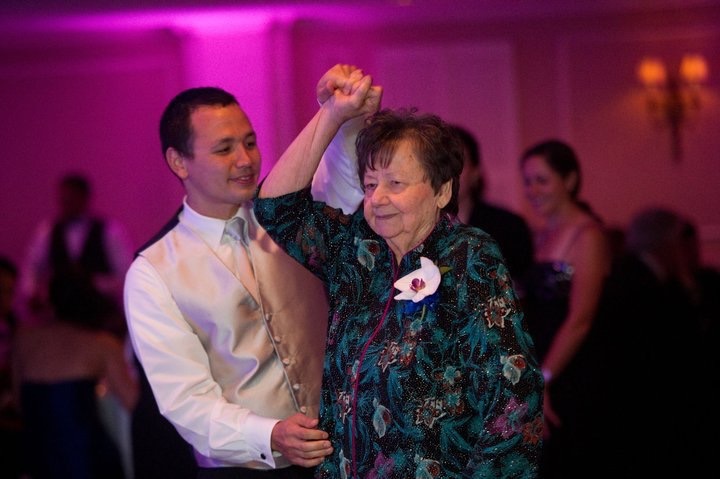
Ellen and DanielFive years ago my retirement and my mother’s death coincided. It wasn’t supposed to happen that way but life always seems to be full of surprises. Just when I thought that I would be free to give my mom more of my company and attention she left this earth. It was a shocking turn of events and it took me a great deal of time and reflection to finally accept that the timing had been just as it was meant to be. Hers was a faith-filled ending to a life well lived. She fully understood what was happening and was expectantly ready to meet her God.

I suspect that she was tired and worn out from shouldering so much responsibility for so long. At a very young age she had become both mother and father to me and my brothers. She taught me how to cook and sew and played catch with the boys. She had to be our nurse, our disciplinarian, our source of comfort and security. Somehow she found ways to stretch a budget that was so thin that most women would have felt defeated. Instead she teased that she had a secret money tree and we need not ever worry. She bragged that we never missed a meal and that was quite true, but we often ate beans for dinner and learned to enjoy them as much as a juicy steak. She worked during the day and went to college at night, often staying up so late that she existed on very little sleep.

Just when her world appeared to be settling into a normal routine she was stricken with the symptoms of bipolar disorder that would stalk her for the rest of her life. There were times when her illness made it impossible for her to even leave her home. Her emotional pain created physical illnesses that were as real as if she had come down with a disease. Somehow she always fought her way back and began anew. There was never anything easy about her existence and yet she never complained. Instead she counted her blessings with a kind of radiant joy and often spoke of how good God had always been to her. That optimism was with her on the day of her death. She seemed more concerned with comforting her family than dwelling on the end that she knew was certain to come. She pointed to heaven and smiled. She knew that she was going home.

I felt a void in my life for many months after her death. I suspect that I was no more ready to end my career as an educator than I was to accept that she was really gone. I needed something to do each day and I was unable to find anything satisfying. While I fought hard to entertain myself I actually found that having those quiet hours in my home were just the therapy that I needed. I was able to look back on my time with my mother and forgive myself for the things that I should have done for her but never did. I was able to reconcile my thoughts and begin to focus on the positive aspects of my relationship with her. With the help of friends and family I slowly began to heal and adjust to my new life. I found a rhythm that felt comfortable and thoughts of my mother became joyful rather than sad.

Eventually I began to do the things that made me happiest. I went camping with Mike, tutored students who were experiencing difficulties with mathematics and best of all I began to write. I found great solace in my new hobbies, particularly in the exercise of writing the story that my mother and brothers and I had shared. I realized that my mother never truly left us. Her spirit is present in us and our children and grandchildren. I see snatches of her in each person, even those who never got to meet her. I revel in the love that she created and nurtured for all of her life. I feel certain that she is still with us when we party and celebrate. I will always be convinced that she sent my sister-in-law Allison to us, and most especially to my brother Pat. I think of how excited she would have been to know that five more great grandchildren have been born since she left. She so adored babies and would have been delighted beyond measure to see those little tots. I think that she would celebrate in knowing that her grandson Daniel has found a loving partner with whom to spend the rest of his life.

I wonder sometimes if she ever realized how much people loved her. We humans have a bad habit of hiding our emotions when we should share them. It would be so grand if we were to let people know how much they mean to us. The accolades heaped upon her since her death five years ago are too numerous to list. I hope that she is hearing them from her heavenly perch.

My mother is greatly responsible for the person that I have become. She demonstrated how to live by example. She taught me what is most important in this world and it has never been money or power or privilege. People and God were always at the center of her universe and she treasured them every day of her life. If there really is such a thing as saints then my mom most assuredly is among their ranks.

I’m still unable to spend a day accomplishing nothing without feeling strong pangs of guilt. I believe that I should serve a higher purpose at least until my body or mind sideline me. Writing is my favorite pastime but whenever I have the opportunity to help a child with mathematics or any other aspect of academics I feel especially elated. I suspect that I was always meant to be a teacher. My mother was the first to show me how to touch hearts and minds. The natural abilities that I seem to possess came directly from her. Those talents have been the most rewarding gift that I might have ever received.

Time flies when I’m having fun but I suppose that I will never forget that day of five years ago when it became apparent that my mother was going to die. I have played her last hours inside my brain over and over again. With time and distance I have been able to exalt in the glory of her passing. Everyone should be as blessed as she and our family were on that day and every day since.

I expect to spend this day quietly. I’ve got a date to take my eldest grandson out to lunch and I’ll be preparing for an upcoming trip to Boston. Life goes on just as it did after my father died. We grieve and then adjust and learn how to carry on. It is the way of the world. My mother showed me how to walk through the world with grace and optimism. I still miss her from time to time but I feel her spirit in everything that I do.

(Note that the photo included with this essay was taken only one month before my mother died from lung cancer. She always loved to dance. She told me that she felt very dizzy when she danced with her grandson Daniel but he kept her steady and she was quite happy and proud that she had that final spin around the dance floor with him.)