Save the Children

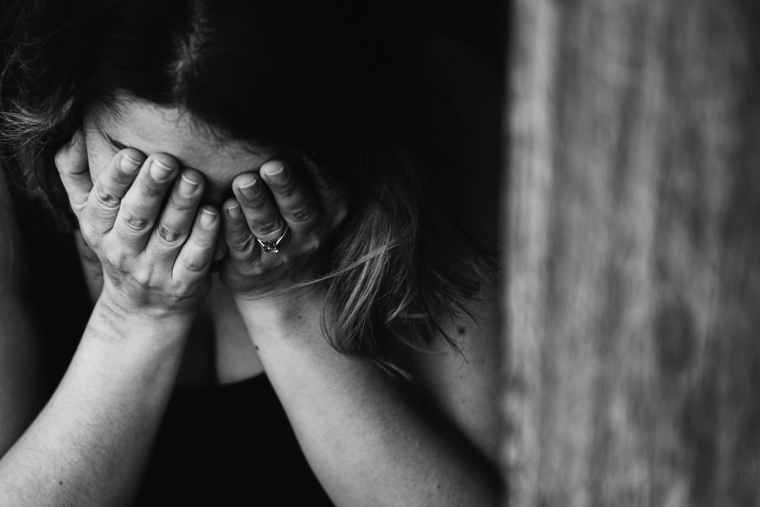
adult alone anxious black and white
Photo by Kat Jayne on Pexels.com

When my mother was only three or four years old her mother had a mental breakdown. The full details of the event are sketchy, but the certainty of what happened to my mom is very clear. The little tyke loved her mama and felt safe with her. When medical personal came to the house, restrained her mother, and then drove away in an ambulance the child that my mother was felt confused and betrayed. This event had a lasting impact on her that was so traumatic that it haunted her the rest of her life. She often spoke of the disdain that she felt for her father whom she held responsible for what she viewed as the imprisonment of her mom. She insisted that her mother had been a good woman who did not deserve the horrific treatment that befell her. Unlike her older siblings she was never able to accept that her mama had been very sick and in need of treatment. She had been so very young when she was torn from her mother’s loving care that it impacted the very essence of her thinking. The scars left by the separation never healed.

My youngest daughter endured a similar situation that was less dramatic but nonetheless frightening to her. When she was not yet three years old my husband contracted a fungal disease that required hospitalization and a long regimen of chemotherapy. Our family was thrown into a kind of chaotic state when we learned that the disease was often fatal. We spent months in a new routine of hospital visits and uncertainty. Years later my girl endured a bought with severe anxiety and depression. Her psychiatrist asked what had occurred at around the age of three that had seemingly caused the her to have an enduring sense of uncertainty and fear. He noted that something had so affected my daughter that she had buried deep seated emotions that were finally coming to the surface and causing her despondency. It was shocking to learn that something that had happened more than a decade earlier that was seemingly resolved had such a profound affect.

Young children see and hear and feel far more than we sometimes know. They are aware of what is happening around them to a larger extent than we imagine, but they do not always have the capacity to interpret the interchanges with their environment, particularly when the security represented by a parent is taken from them. They are unable to fully express the need for the warmth and love of a mother or father that is so essential to their healthy development. It is critical that they have all of their most basic needs addressed, and there is generally no better person to do that for them than a parent who genuinely cares for them. So much of the basic personality is formed during early childhood and every event plays an important role in development. As children we all cling to our parents and look to them to supply our most essential needs. When that relationship is suddenly severed children lose all sense of safety. Unless they are carefully counseled and loved the event will have a lifelong impact.

My father died when I was eight years old. People often marvel that my memories of the days following his death are so crystal clear. I am able to vividly recall people, conversations, the weather, and most of all my own jumbled feelings. I was far more aware of what was happening that the adults around me ever imagined. That being said, without the maturity of adulthood I am certain that I often misinterpreted my situation, and not in a good way. I became a fearful child, someone unwilling to take risks. I was afraid of people and life. It would take me twenty or more years to overcome the shock and awe of the sudden loss of someone that I so loved, and I became a somewhat neurotic and sad little girl. It was only through my study of childhood development and my association with truly caring people that I was able to eventually lay all of the demons that had so haunted me to rest.

For these reasons I am both appalled and concerned for the welfare of immigrant children who are currently being separated from their parents. I realize that we have laws, and the adults who come here illegally are breaking them. In that regard there are many needed discussions regarding the issues, but it seems certain to me that taking children away while their parents are being processed is deeply wrong. The consequences of such inhumane decisions will impact these little ones for decades. The trauma that our government is inflicting on them is morally untenable, as anyone familiar with children understands. In spite of efforts to provide food, beds, education, games and other such amenities to care for them the one thing that the little ones require is missing. They must have their parents to feel secure. What we are doing is so egregious that we simply cannot justify the actions with by quoting laws or even the Bible. We must know that we are bending the truth and God’s word when we attempt to do such things.

I love my country and believe in its innate goodness. It has of late been overtaken by an incivility that is toxic. There seems to be an attitude that winning is more important than being just. The good people in our midst are being pushed aside by bullies, and the ideals of honor and respect are all too often being eschewed by those who insist on all or nothing in their political dealings. As citizens we must join together in the common cause of decency, following the lead of heroes the world over who insist on standing for what is right rather than what will make them popular. We must end the ugliness by demonstrating our best natures. Now is the time for all good men and women to come to the aid of our country. We can no longer allow tactics that so scorch the earth. If we don’t save the children of the world regardless of the circumstances we are doomed to a dark future. Our best hope is in finding our natural goodness again and doing what we know to be right.

Take A Moment Today

art boy colors decoration
Photo by Jessica Lewis on Pexels.com

Let’s take a moment today to do something kind for 1. ourselves, 2. someone we know, 3. someone we have met, 4. someone we don’t know, 5. someone we need to build bridges with. Be and do well. —-Ryann Madden

I slept in just a bit this morning. The sounds of school children gathering for the early morning bus are gone for the summer and so that “alarm” did not alert me that it was time to rise. Things become slower at this time of year for more reasons than just the summer vacation for our little ones. It’s so hot outside that our bodies and brains are somehow programed to take it easier lest we overheat and dehydrate. We’ve become so accustomed to the glories of air conditioning that we become almost more insulated inside our homes and cars at this time of year than we do in the winter, at least here in Texas. It’s the season of relaxation and fun, especially for students and educators. Somehow the seasons of a school year have become so programmed into my brain that I still react to the summer the same way I did when I was working. I allow myself to be just a bit more inclined to take it easy.

I won’t be able to sustain my vacation mode for too long though because I am hardwired with all of the Type A Protestant ethics that push me to be productive and to measure my accomplishments each day. I am committed to making the most of my time and descend into guilt whenever my slacking begins to appear to be a regular life change. I am mentally and emotionally compelled to make good use of my life, even as I age. For that reason I was particularly taken by this post from Ryann Madden, a teacher friend. It spoke to me because I am on a mission to transform my use of my waking hours from concentration of unimportant things to truly making an effort to care for myself and others.

Ryann’s “to do” list seems rather easy on the surface, but in reality it is laden with challenges, particularly with regard to being kind to ourselves and building bridges with someone with whom we have broken our trust. All too often we put ourselves last in the division of a day’s labor, and never quite get around to the self care that we need. We also tend to avoid those situations and people with whom a breach has caused us to lose touch. Our neglect of both ourselves and people with whom we have differed can be toxic, and yet we all too often have an “I’ll think about that tomorrow” attitude about these very important parts of our lives.

A very dear friend who is a counselor posted a wonderful blog about self care recently. In it she detailed her own personal journey to health of body and mind. She spoke of living such a hurried and harried life that she was using food as a kind of medication and she justified her neglect of herself by noting how much she was doing for others. Ultimately she found herself in the middle of a health crisis at a very young age. She knew that she needed to do more than just pop another pill into her mouth and otherwise ignore her own needs. She began to slowly but surely make a complete lifestyle change that began with thirty minutes of aerobic exercise each day and a consultation with a nutritionist. Before long she was thriving and glowing with the radiance that comes from treating our bodies and minds with the same love that we offer to others. She had not forgotten the people around her, she had only taken the time to remember herself as well.

When my husband had a stroke last summer and the two of us embarked on our own journey to living our best lives I found it easy to care for him but much more difficult to remember myself. It was simple to rationalize lapses in my own habits and it took an aggressive demand from my primary care physician for me to realize that I needed to be kind to myself as well. My doctor insisted that I was mistreating my own body and ultimately would be of little use to anyone if I did not change my ways as well. He literally gave me a prescription for five days of exercise each week with no excuses for not meeting this goal. His insistence shocked me into doing what I should have done long ago, and now self care has become an integral part of each day.

Which leaves me to the building bridges aspect of Ryann’s suggestion. It requires a bit of eating crow, approaching someone who has very apparently felt the sting of neglect and lack of respect from me. That is a much tougher situation to face, but in my heart I know it must be done. The person of whom I am thinking is older than I am. She has been isolated by failing health and loss of loved ones. She has become more sensitive and worried. She has taken some of my comments and parsed them until she is certain that I have insulted her. I have been confused and sometimes angered by her reactions, and so I have generally chosen to ignore her. I suspect that instead it is time to reach out to her and plant the seeds of reconciliation. It will cost me nothing to do so, and it may heal a wound that doesn’t need to fester.

Today is a good day to follow Ryann’s sweet suggestions. In fact everyday is a wonderful time to weave care for self and others into our routines. Think of how great we will begin to feel if we do.

A Hero Indeed

administration american flag country daylight
Photo by Brett Sayles on Pexels.com

I grew up on a rather heavy diet of reading, and my first forays into the written word were fairytales followed by stories of the lives of the saints. I admittedly felt that perhaps those icons of religion were more superhuman than I thought possible, and so the ones like St. Theresa and St. Augustine who were flawed like I was became my favorites. Eventually I developed an addiction to biographies of famous people in which I learned of the human frailties of some of my heroes who nonetheless impressed me with their courage. In those critical moments when the world needed them to overcome their weaknesses, they rose to the occasion. Profiles In Courage was like a kind of historical Bible to me that outlined some of the finest stories of humans who were willing to risk everything to do what they believed was right. I suppose that I learned much about character from the many volumes that I devoured, and in the process I began to believe that there are special people among us who have the same imperfections that we all possess but also a moral foundation and strength that separates them from the pack.

The list of my heroes is long and eclectic but one of the traits that all of them shared was a willingness to admit to wrongs. They understood their own imperfections and fought internally to eliminate them, but in their humanness they sometimes lost those battles. Mostly though they were able to follow a path of righteousness no matter how difficult it sometimes became. People like Mother Theresa, Martin Luther King, Jr., Winston Churchill, Abraham Lincoln, and Gandhi have sometimes been picked apart by people who have concentrated more on their mistakes than on the totality of their dedication to justice and compassion. I prefer instead to view them from an assessment of their willingness to make difficult and even dangerous decisions in order to do what they believed to be right.

Sometimes it seems as though we have a dearth of heroes in today’s world. I admire Pope Francis for his loving candor and I think that Jimmy Carter is one of the kindest people on the planet, but in general there is far too much tribalism and anger. Those who apologize for their missteps are often deemed to be weak or wishy washy. Instead we seem to prefer people who barrel ahead with bravado even when it is obvious that they are wrong. We mistake anger for courage, bullying behaviors for strength. From out of the crowd of puppets and posers a true American hero has emerged, and his name is John McCain.

John McCain is an interesting fellow. He’s from a military family who expected him to serve his country, something that he initially did willingly but with little enthusiasm. It was not until he became a prisoner of war during the Vietnam War that he began to truly understand what it means to be a patriot. His injuries were so extensive that to this very day he is unable to lift his arms to comb his own hair. When offered the opportunity to be freed simply because he was the son of an important military figure, he insisted on following the tradition of going in proper order. After much torture he broke at one point, a fact that haunts him to this day, but on the whole he demonstrated a kind of bravery that few of us would have been able to muster.

Upon his return to a normal life after the war was ended he struggled to know what to do with his life. His marriage foundered, another flaw for which he takes full credit. When he finally found himself he knew that he wanted to be a public servant and began a decades long career as a Senator from Arizona. His military background led him to believe in the necessity of working with his colleagues rather than fighting them. He often disagreed with their ideas, but was willing to find ways to allow everyone to win for the sake of the country. He was admired by his fellow lawmakers regardless of party affiliation and created lasting friendships along the way. He was a principled man who believed that it was indeed possible to stand for certain ideals without ignoring differing points of view and finding common ground.

Twice John McCain decided to make a run for President of the United States. In 2000 he lost his party’s nomination to George W. Bush, but came out on top in 2008. He had wanted to choose Joe Lieberman as his running mate but was talked out of that idea by his handlers, a moment that he still regrets. His campaign never really got off of the ground because he lacked the charisma of his opponent Barrack Obama, and his own party viewed him as being weak, lacking the kind of fighting spirit for which they were searching. He instead gave them fairness even to the point of defending Obama against false accusations. The fact that he was a good man seemed to have little appeal to the electorate.

John McCain has continued to be his own person, even as his party has taken a direction so unlike him. He votes according to his conscience, a trait that is all but lost in the present political arena. He voices his beliefs even when they are unpopular. He refuses to be beholden to the pressures of a base or the leader of any party, and while I may not always agree with his ideas, I am in awe of his conviction. Now he is dying and in his last moments on this earth he continues to show us how we should live. He is truly among the greats in my estimation and I hope that other politicians are taking note of his character because men and women like him are all too lacking.

I would like to think that the madness that is present day Washington D.C. is temporary, and that one day we will come to our senses as a nation and insist that our country be run by men and women who understand the necessity of working together for the welfare of all of us. I would like to believe that collegiality and respect will return. John McCain has demonstrated how to do that throughout his lifetime. Notwithstanding comments from our current president, he is indeed a hero.

A Handshake and A Smile

adult child daylight enjoyment
Photo by Huy ProShoot on Pexels.com

I saw a video that featured kindergarten students giving each other a handshake and a smile each morning before the start of class. It made me happy to see them and also to think of how such small gestures have the power of making a very big difference in virtually any situation.

My husband and I recently began attending Sunday mass at Mary Queen Catholic Church. Mike decided that he wanted to go there because a group of ladies there made him a prayer quilt shortly after his stroke. They sent the lovely item with a promise to pray for him regularly even though they had never before met him. He was quite touched by their kindness and insisted that he wanted to be part of a place that demonstrated so much caring love. Thus we drive a rather good distance each week to be part of that community. Amazingly the inviting attitude is continually apparent there. From the moment that we walk through the door we are greeted by smiling parishioners and priests who open doors for us and make us feel very welcome. It is a form of thoughtfulness that warms our hearts and brings us back again and again. As humans we are as attracted to love as tiny creatures are to light.

The schools where I most enjoyed working emphasized the same kind of attention to people as those kindergartners and my church. Teachers were in the hallways during passing periods greeting students as they walked to class and saying hello to those entering their rooms. It set a positive tone that made virtually everyone feel as though they were part of something quite special, and it didn’t require any extra time or much more effort to do so. In fact it felt so good that it became something that brightened everyone’s days.

One of the principals with whom I worked asked the faculty to catch students doing something good. It was a different take on vigilance that allowed us to notice the wonderful things happening in our school. We complimented the students who were being extraordinarily kind and gave their names to the principal who mentioned them at the end of each day and called them to the office for congratulations. We soon found that there was far more of a spirit of generosity taking place inside our school than we had ever imagined. By focusing on what our students were doing right we changed everyone’s attitudes. Going to the office was not just for getting into trouble any longer, and being nice was as important as making good grades. The environment became happier and happier simply because we chose to hunt for the best rather than the worst.

Watching the news might lead us to believe that our society is doomed and that we are surrounded by hateful reprobates. In truth there are some people who for whatever reason are inconsiderate and even criminal, but time and again the evidence points to a society that is mostly composed of truly wonderful folks whose desire is to live peacefully and happily with one another. Perhaps all we need to make that wish more likely to come true is to make just a bit more of an effort.

I am shy by nature. I have to psyche myself whenever I enter a place where I know very few people. I’ve trained myself to make the first moves toward friendship when needed, but there is noting quite like having someone else offer a hand and a smile before I do. I instantly feel better about the situation, and I suppose that almost anyone would. I return to stores with friendly sales people and make note of those with surly employees. Who after all wants to feel as though they are unwanted?

Children often naturally form groups with those that make them feel the most comfortable. When a new person arrives they may or may not extend a hand of friendship unless they have seen that kind of behavior being modeled. Being the new kid at school can be traumatic if there is not a warm environment. I’ve been there before and it is a horrible feeling. I’ve also been the recipient of efforts to make me feel wanted, and each time that happens I feel a sense of relief. Sometimes it takes practice to teach people the art of inclusion.

I wonder how many acts of violence might be thwarted by a handshake and a smile? Is it possible to change the trajectory of an encounter if the atmosphere is open and welcoming? I suspect that in most cases friendliness is a magical healer.

To this very day I see the faces of people who made me feel good about myself in times when I was anxious. It took so very little for them to quell the fears that were welling in my heart. They turned difficult times into memorable ones and sometimes even led to long time friendships. I seen Zerin asking me to sit with her on my first day at a new school. I recall Flo’s beautiful smile on the occasion of our meeting. I think of Virginia who stilled the tears that were threatening to fall from my eyes because of my nerves. I still smile when I think of Johnny complimenting a birthday dress on my sixteenth birthday when I felt so gawky and unsure of myself. These sweet individuals probably had little idea how calming there actions were at a time when I was worried and feeling not quite myself.

I’d love to see all schools encouraging a routine of shaking hands, smiling and reaching out to everyone, especially anyone who appears to be clinging to the shadows. Kindness should be as much a part of each day as the lessons. If we began when our kids are very young and continue such expectations for all of their lives we might begin to see far less ugliness. It’s certainly worth a try.

No Excuses

black and white blackboard business chalkboard
Photo by Pixabay on Pexels.com

An old feature from CBS popped up on my Facebook page. It catalogued the most crime ridden cities in the United States and described what the infractions were. There were a few surprises on the list, but mostly they consisted of the usual suspects that are traditionally havens for criminals. What was more interesting was the commentary from readers that followed the article as people attempted to determine what actually causes deviant behavior and how we might find ways to curb it.

I’m not a sociologist or expert in criminology, but I spent my lifetime working to educate youngsters, and what I have found is that most of the kids who became lawbreakers shared certain commonalities that had little to do with their economic situation other than placing them in the line of temptation. In the vast majority of cases the kids were from broken homes that had become structureless, without guidance. Often they as well as their parental figures used addictive drugs and joined gangs as a way of belonging. Their lives were focused on getting from one moment to the next as easily as possible. They were not interested in school and no doubt would have simply dropped out were it not for truancy laws. Many of them were marking time until they reached the age of sixteen when they would no longer have to cope with rules that made it illegal for them to leave the world of education. They generally had few positive role models and they almost always laid the blame for their plight on society rather than themselves. They were angry and believed that they had the right to better lives, but were unwilling to do the hard work to take advantage of opportunities. It was heart breaking to watch them becoming more and more adrift and influenced by forces that would ultimately lead them into a very dark world.

As teachers we did our best to motivate them, but we were often uncertain as to how to most effectively help them to escape the bad habits that were bringing them down. We had only a few hours of influence each day and we knew with certainty that when they left us there was no telling how much trouble awaited them. There were many schools of thought as to what we needed to do.

I remember one administrator who felt that only by setting down clear rules and consequences for ignoring them would we ever rescue them. He actually encouraged us to give them after school detentions because at least in that way we would be keeping them safe just a bit longer as well as teaching them that some actions are unacceptable and will be punished by society. He often followed some of the teens home if he thought that they might get into trouble along the way. He indeed saved a large number of individuals, but others only rebelled even more. I began to realize that there was no one approach for everyone.

At the same school we had a coach who used to bring old cars and park them in front of the gym. At the end of the day he invited students to join him for lessons in repairing autos. He had quite a following and many of the youngsters who stayed might otherwise have been up to mischief. Instead they were inspired to learn a trade that would bring them the success that seemed to otherwise elude them. There were fine arts teachers and those who taught science who similarly engaged the interests of children who had once been without any kind of direction.

I also noticed that once some of our kids went to church they changed dramatically. Many of the priests and ministers in the area actively recruited our students with promises of food, fun and fellowship. When they learned Christian principles they began to think about their own lives and actions and even influenced the adults in their lives. The loving concern that they found in those churches felt even more powerful than the gangs and quite often wrought amazing changes in our students.

In my final years in education I worked with the KIPP Charter Schools and their many mantras emphasized hard work, good behavior, goal setting and a willingness to never offer excuses for bad choices. The aim of the schools was to offer students a positive pathway out of poverty and sometimes toxic lifestyles. The route to success was grounded in a focus on education and a belief that with effort anything is possible.

Every single day the students were challenged with rigorous academic work that did not allow them to fall behind. The long days kept them focused on learning with little time for frivolous or criminal pursuits. Those who broke the rules were punished quickly and according to the nature of their actions. Sometimes they were even expelled on a probationary basis until they were able to prove that they were willing to adhere to the standards.

Parents were as much a part of the design as teachers. The adults worked hand in hand to insure that the values of character and industry became an integral part of the youngsters’ lives. While not every individual made it, the majority did and overcame countless obstacles to earn degrees and certifications that lifted them out of poverty and danger.

Poverty alone is not the problem. My brothers and I grew up poor, but we had a mother who never allowed us to wallow in pity or anger. She insisted that we study and work hard. She modeled exemplary character and emphasized that with the will we might accomplish anything. She instilled optimism into our natures and taught us that lack of material wealth did not define us or make us less than even the wealthiest person that we might encounter. Mostly she showed us that sacrifice and honesty were noble qualities that would carry us far. She would have been horrified if we had become so jealous of others that we thought it was somehow our right to steal from them or harm them.

We certainly need to give the poor in our country a lift upward, but helping their children to become self sufficient producers cannot be accomplished with money alone. Instead it requires our efforts to demonstrate how they might survive in positive ways. We must show them the value of hard work and provide them with role models and inspiration. It is a daily task requiring a multitude of good people including their parents.

Dr. Ben Carson often speaks of his own troubled childhood in Detroit where he lived in the midst of temptations that might have lead him into dangerous behaviors. His mother was not willing to simply allow him to waste his life, and so she became a force that changed the trajectory of the person he would become. She pushed him to use the talents that he had by being adult enough to be in charge. She devoted her life to demonstrating to her sons that they had the power within them to become better and better versions of themselves.

I suspect that they key to reduction in crime is to be found in lovingly and firmly guiding children from the time that they are very young, never allowing them to become hopeless, protecting them from forces with evil intent, and slowly showing them how to focus on learning how to use their talents for good. This is a job for parents, teachers, religious groups, and mentors who are willing to demonstrate that the world is a good and inviting place that wants to embrace them. We have much work to do.