Strong

helping hand with the sky sunset background

Childhood is a kind of bubble of naiveté that protects us while we are learning about ourselves and the world around us. Some children like myself experience tragedy early in their lives and such events become cautionary tales for them. Hurt and loss changes little ones in varying ways. I suppose that in spite of the fears that lie at the bedrock of my personality I was somehow able to develop somewhat normally into a healthy adult who is perhaps a bit less adventurous than I might other wise have been. The shock of losing my father after a long journey to and then back from California left me quietly confused and desirous of clinging to any form of security that I might find.

I blanketed myself in the luxury of routine and a certain level of isolation from the realities of the world. I spent the remainder of my growing up years in relative ignorance of hurt and intrigue. I became resilient and once again confident by living a quiet and somewhat uneventful life inside the little neighborhood from which my family and I rarely needed to venture save to visit with my grandparents and my aunts, uncles and cousins.

I cared little about world affairs or intrigue of any sort. It was not until I was fifteen and in high school that I once again faced death when my beloved grandmother developed cancer and died. That was about the same time that President Kennedy was assassinated while he was visiting Dallas. I went into the same state of shock and grief that I had felt when my father died. I wanted to look away, to somehow pretend that such events were not really part of our human experience. I buried the fears that I inside my heart and pretended that I was stronger than I actually felt.

Like so many of us so often do I ignored my feelings and stoically moved forward, avoiding contact with negative thoughts or people or situations. I tried to make life a fairytale forgetting that the theme of all such stories revolves around triumph over hardship. It was not until I was twenty years old and I saw mental illness take hold of my mother that I realized there was no running away from the tragedies that each of us must face. I had to become fearless without warning or practice and it was painful.

For some time I hid my reality as though it were some ugly thing that defined me and my family. I did not share with others. Instead I dealt with the situation hoping that my mother would be cured and I would be able to move forward as though nothing had ever happened. Of course her chronic illness kept jerking me back into a dark world that was confusing and painful beyond measure. It was only when I freed myself from the constraints that I had placed on my willingness to face the truth that I began to see the world around me in all of its good and bad iterations.

By becoming honest with myself and with the people that I knew I developed more and more trust even in the face of seemingly hopeless situations. I saw that there is always someone willing to help if only I had the courage to ask. I found friendships and relationships that made me a better person each time that I reached out for understanding and assistance. By facing the toughness of life I actually began to see its true beauty more clearly.

There are patterns among human beings that repeat themselves over and over again through the centuries. How we deal with our longings and our sorrows may change ever so slightly as we learn from the mistakes of our ancestors but the basic feelings are in total harmony with every man and woman who has ever walked on this earth. We strive for happiness while enduring the inevitable sorrows. None of us will make it through life without scars, but if we are very lucky and willing to embrace those situations with wisdom and determination we will surely learn from them.

I know so many who are suffering at this very moment. It hurts me to see their pain and to know that in some cases there is so little that I might do to help them. I offer small bits of encouragement knowing that theirs is a season of sorrow through which they must walk. In other cases there are tangible things that I am able to do because of the resources that I am blessed to have. Mostly I simply demonstrate how much I care because I have learned that even the tiniest bit of generosity has the power of bringing joy to a broken or frightened heart.

We should never underestimate our power to say or do exactly what someone needs in a dark moment. Thoughtfulness and openness are like healing salves when administered at just the right moment. From my own experiences I know for certain that small gestures of love are never forgotten. It may be a neighbor lighting the pilot light of a heater on a cold winter’s day who brings hope or a pot of soup delivered by a friend that begins the process of healing.

I see the faces of those who took the time to comfort me when my father died and then my mother. I know exactly who extricated me from the darkest times of my life. I have never forgotten how impactful their kindnesses were. They remind me even when I am feeling low that I am not as alone as I might sometimes believe. I may stumble and skin my knees in this grand adventure called life but I will always find a hand reaching out to save me. I have learned time and again that there are very good people just waiting to be at my side and in that knowledge I have become very strong.

Our National Treasure

familyIn my years as an educator I learned that family is the true bedrock of society. When families are socially, emotionally, and economically healthy they not only survive, but they actually thrive. The description of a family as a unit comprised of a man, a woman and their children has morphed over time. There are many configurations of family life these days that are highly successful in spite of being different from the traditional norm. I’m living proof that offspring living without a single parent can and do survive and develop into well adjusted adults. In fact, I can point anecdotally to people who grew up in nontraditional environments who are quite happy and successful. The key to a healthy family is not tied to a single definition but rather to the efforts of all of the members to build a sense of stability, security, and safety. Love is a key ingredient, but other needs must also be met.

I often recount stories of my mother joking that our little fatherless family had a money tree in the backyard. Her tall tale came about because we were smart enough to realize that she was struggling financially and she did not want us to worry. Obviously we did stew over our economic situation in spite of her reassurances. She used the moments when we were most worried to teach us how to save, sacrifice and budget. She showed us that teamwork, ingenuity and hard work were ingredients for getting us through the bumps that life sent our way. We may not have had the newest car or the latest fashions but she kept up the payments on the house and used creative recipes to stretch the food budget. Our lights stayed on so that we might study and prepare for the future. She prioritized at every turn and encouraged us to focus on our blessings rather than stewing over our wants.

When the most basic needs of food and lodging are in jeopardy a great tension is placed on a family. I have known homeless students who suffered both physically and psychologically because they lived in a car or someone’s garage. It’s a daunting situation for a family to deal with the loss of control and it comes about for many reasons that are not always the fault of the adults who head the household. While there are certainly people who are poor because they are addicts or simply lazy there are also those who encounter a run of exceptionally bad luck that often ends in physical or mental illnesses that preclude them from holding jobs. The family unit struggles to survive in such situations. When the most basic needs are not being satisfied it is difficult for children to concentrate on schooling or even social interactions. They become troubled and troublesome. So many of the problems that teachers observe began in the collapse of family health. Unless such difficulties are addressed immediately there are often lifelong consequences.

We worry about so many different aspects of society but all too often do little to address and support the family unit. We tend to be judgmental rather than helpful. We suggest rather than creating mechanisms that insure a basic level of security for all families. We are afraid to intervene in the most toxic families before real tragedies ensue. We make it far too difficult for families in crisis to find the help that they actually need.

The strength of families lies in helping them to rise in the hierarchy of needs. Self actualization rarely occurs when the most basic human necessities are not being met. A hungry, sick, or frightened person has difficulty focusing on anything beyond the mundane human demand for security.

So many of the present ills of our nation can be easily traced back to broken families. We want to help but it sometimes feels hopeless. We are unsure where to begin and we differ on how much to give families in need of help versus insisting that they pull themselves up on their own. We worry that our morals have deteriorated and that so many have turned away from religious guidance. We grieve the loss of our national innocence and despise the materialism that is seemingly overwhelming us. The traditional crowd longs for the yesteryears when families seemed more sound while at the same time doing little to help those that are struggling to survive. The progressive crowd wants to provide more financial security to families but also encourages the destruction of unborn life.

As people we are confused about how to proceed and we spend far too much time fighting each other rather than getting down to the work of saving our most precious natural resource, our families. It is certainly a complex issue but not one that can’t be addressed. We need to determine how to combat the crisis of addiction that plagues the very fiber of far too many families. We must make people our priority by helping those who are troubled before their situations become dire. Healthcare is critical and it must address both physical and mental ailments equally. We must walk out our front doors and embrace our neighbors. It’s time we returned to a community mindset rather than being one issue voters. The future of our nation is in our families and we must strive to make all of them as healthy as possible.

We will soon be engaged in a national debate over who our next group of leaders will be. In my mind the most important topics should relate to the health of families. People are our national treasure and their stories begin inside families. It’s time to focus on making them strong.

A Tiny Grain of Sand

alex-wild-leaf-cutting-ant-carrying-a-sand-grain-atta-saltensis.jpg

A home is not a particular structure with objects inside. It is the sum total of the people who inhabit it. A neighborhood is likewise not just an address, a golf course or a community pool, but the essence of the many folks who live and work inside it. A school is so much more than just classrooms and desks and curriculum. It’s heartbeat is found in the students and teachers and parents who pour their hearts into it. A church is not the edifice or the clergy but the people who share a spiritual journey. A nation is far more than domed buildings, memorial statues, politicians and laws. It is the collective hope of the people.

We humans with all of our potential along with our imperfections are the true reason that any of the institutions that we have formed soar with the eagles or crash and burn in a state of destruction. Whether we realize it or not we have the power to set the tone wherever we decide to engage. When we see problems it is up to us to first look within ourselves and ask what we might have done to prevent the difficulties in the first place and what we plan to do to ensure that things improve. When we simply sit on the sidelines ignoring those who parade without clothes our troubles are sure to endure. More often than not making a difference means walking in the shoes of those who appear to have failed before we begin advocating far flung changes.

There are certainly enormously toxic situations in the world today that may worry us. Few people have the power to actually influence the entirety of society, so we have to conserve our energies by wisely choosing the battles that we are going to fight. Perhaps we should always keep in mind the old adage of putting our own house in order first. Love literally emanates from a home in which each person is loved and respected. Because we are all very human and prone to making mistakes, some of which are more grave than others, we must always be certain to include mercy in the daily workings of our households. An old adage suggests that we never allow the sun to set on our anger toward the people that we hold dear. In justice we may have to hold them accountable for bad behavior, but in mercy we should always forgive them once they have shown a willingness to atone.

Each of us have particular causes that resonate in our hearts. It may involve improving and providing excellence in education or reforming government systems. We can certainly vote to express our desires but the results often fall short of what we had hoped to accomplish with our trip to the polls. Keeping ourselves informed and taking the time to use all available avenues to express our ideas are ways that each of us can work toward the goals that linger in our hearts and minds. Sitting on the couch grumbling or shouting at those with opposing views does little to move the dial of any institution. Like the ants that almost silently move dirt to build a mound so too must we work with the people around us to quietly create a better world.

Each of us has a particular talent that will bring the kind of positive change that works for the betterment of the entire community. If we are respectful of what each person has to offer great things may happen. Teamwork is of the essence and we have to be aware that all groups and organizations follow a continuum of behavior that includes the process of forming and assigning tasks, periods of confusion and perhaps even disagreements, and eventually states of performing smoothly. Sometimes simply realizing that a situation is ignoring our human natures is all that is needed to grease the rails of success.

One of my heroes is Rosa Parks. She was a seamstress who lived in Montgomery, Alabama and worked at a popular department store. She altered the clothing of most of the well dressed white women in that city. She was liked by the customers of the store but her blackness reduced her to indignities that were untenable for such a refined and dignified woman. After work she rode home at the back of a city bus and on particularly crowded days she had to surrender her seat to any white person who wanted it.

We all know her legendary story by now. We marvel at her courage in refusing to participate in the demeaning injustice toward her people. Like the shot heard round the world, her simple act of refusing to leave her seat launched a movement that continues even today in the spirit of upholding the unalienable rights of all people. She demonstrated like so many have done that individuals begin the process of improving the world in which we live. All change happens one step at a time, one tiny pressure after another and its spirit lies in the willingness of humans to come together one by one.

All groups are complex. Creating a healthy family is no easy task. Guiding a school to caring for every individual inside its walls is daunting. Making a community or a city or a church or a nation a place noted for harmony is a balancing act of fully respecting each of the many beliefs of the participants. It requires great diplomacy and wisdom to keep all of our institutions working together. We can help by sending support to those who agree to work for a common good rather than a single idea. Doing so means that there will be many moving parts and numerous possibilities for disagreement, but it also provides a framework for the mutual respect needed for compromise. It is a system that works in the smallest and largest of relationships as long as all parties are willing to value and understand people.

There are no unicorns and always blue skies. There is no place like Atlantis. We can’t always have puppies and kittens making us happy. The reality is that it’s tough to make things work for each of us, but it is a worthy task. It’s only when we find ways to work together that great things begin to happen and sometimes such a relationship begins as quietly as that ant moving a tiny grain of sand.

Ridiculous Dreams

dreams

My grandchildren tell me that their high schools are crowded with thousands of students. I have a difficult time relating to that concept because there were probably fewer than six hundred students in the school from which I graduated and under five hundred kids in the high school from which I retired from my career in education. I enjoyed the benefit of personalization for young men and women navigating their way to college and careers in both my own youth and my work life. Keeping secondary schools small nurtures an atmosphere for truly getting to know and understand each and every person. It creates a caring environment that allows for crafting graduation plans that take into account the needs of individuals. It helps each person to feel loved and important.

It’s so easy for students and perhaps even teachers to get lost in mega high schools. With thousands of people in a system it is a constant battle just to keep a semblance of order. There are never enough counselors to get to know each student as a person. People fall through the cracks of a one size fits all kind of education. Generally only those specifically protected because of their special needs receive a more custom designed education. Classrooms and hallways are crowded and teachers are overwhelmed with duties. There is little time and almost no patience for those who feel lost or ignored by the system. The squeaky wheels often get punished and those who quietly just get by sometimes lose interest. A great deal of human capital is wasted simply because it is so difficult to reach everyone in a factory like atmosphere. From time to time the truly disturbed resort to violent outbursts to gain the attention that they seek and actually need.

I have long held that no high school should be bigger than around one thousand students and even that number is a bit large. Having around two hundred fifty kids in each grade is more than enough for teachers and counselors to handle. Classes need to be restricted to twenty five or less and there should be a team of both an academic, emotional and college/career counselor for each one hundred twenty five students. Nobody is a cipher in a school that has a team of grade level teachers, three grade level counselors and a grade level chairperson diligently watching over the unique needs of each individual. The school becomes a kind of family unit away from home. People have the time to really “see” each person.

Teens are experiencing an upheaval of hormones and emotions. They are frantically attempting to determine where their lives should lead. They are dealing with social issues, physical and psychological changes, and academic challenges all at the same time. Some seem to easily handle the process but the vast majority would benefit from guidance tailored to individual personalities and abilities. In the mega high schools this becomes a tall order if not an impossibility. Each adult’s workload is so expansive that there has to be a strict and unyielding  set of rules to keep operations running smoothly. It’s not that nobody cares. It’s a matter of having only so many hours in a day to get things done. The task of keeping tabs on every single student in a large school is almost insurmountable. There are inevitably those who fall through the cracks.

There are many arguments that creating a caring and hands on environment in high schools does not properly prepare students for the harshness of the adult world. Some feel that the best approach is to figuratively throw the kids into the water and hope that they swim rather than sink. The efforts to save them are reserved for those about to go under, believing that choking on a little water is no big deal. While there is some merit to the idea of toughening our youth before they meet the real world, a small school allows for doing so in carefully monitored increments in which students feel ultimately safe. They may make mistakes, but they have adults who continually help them to learn valuable lessons from them. They graduate well versed in knowledge but also in how to navigate to and through the rest of their lives.

One aspect of the KIPP Charter Schools that is exceptional is that there are teams of adults who continue to stay in touch with former students even after they have graduated from high school. These adults are literally on call to help graduates with any kind of problems that begin to impede their progress in becoming the very best of themselves. The responsibilities of the schools do not end when the students receive their diplomas. Representatives regularly travel to college campuses and hold gatherings where the young men and women are able to openly discuss the difficulties with which they are dealing. In other words there is an army of support that continues without limits.

I worked in a KIPP high school. Many of my former students have returned to the KIPP Charter schools to work as teachers, counselors and support personnel. They realize with gratitude that their own lives were dramatically improved by the efforts of an army of adults who viewed each of them as being worthy of a program individually designed. They are the products of a powerful statement of action that taught them that each and every life matters.

What I propose is both radical and expensive but wise individuals might find ways to make such visions become possible. If we do not dream then when can’t really expect our children to think out of the box either. The best ideas have almost always sounded ridiculous until the were not. 

In Search of Criminal Justice

Angola-prison-in-Louisian-002

People sometimes do very bad things, things so egregious that we do not feel safe having them live among us. We have to find them, try them for their crimes, and if found guilty sentence them to punishments that fit their actions. We have a criminal justice system for that which is struggling on many fronts. At this moment in the United States we have the largest prison population in the world both in actual numbers and percentages. We struggle with ethical questions of what we should do to prevent crimes and how to treat the perpetrators once they have been convicted. We can’t seem to decide whether our system should focus on punishment, rehabilitation, or some effective combination of both. We wonder what we might have done to prevent crimes in the first place thus eliminating the need for so many centers of incarceration.

I’m fascinated by the criminal mind. I have always wondered what drives an individual to the point of committing unlawful acts, especially those that are violent. I’ve been a reader of mysteries from childhood and my favorite television programs and movies have always been those that depict detective work, the law, and the frightening world of prison life. I suppose that I have always believed that if only we were able to unravel the threads of lives gone so bad we might learn as a society what causes them to reach a point of breaking the law. I suppose that such a dream has confounded humans since Cain murdered Abel.

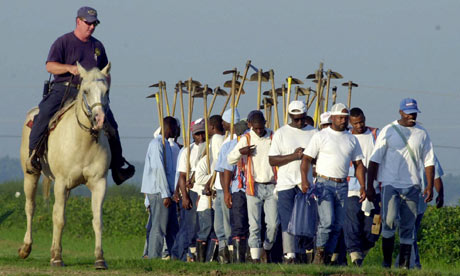
I am a frequent viewer of programs like Dateline, 20/20, and 48 Hours. I watch Oxygen and Investigation Discovery. Recently Dateline featured a hard look at the country’s criminal justice system by way of Angola Prison in Louisiana. The episode focused on the problems of housing large populations of prisoners for long periods of time and asked the burning question, “Should criminal justice focus on punishment or rehabilitation?”

One of the most pressing problems in our country’s prison systems resulted from the hard line of the war on drugs. Because of the no nonsense feature of our efforts to eliminate the drug trade by giving drug users harsh sentences the prison population swelled and many of those found guilty are serving excessively long terms. The medical community has learned through research that illegal drug usage and addiction is in truth a medical problem rather than a criminal one. What most drug addicts need is assistance in beating their habits. Instead we have all too often put them away in jails where they interact with murderers and other violent sorts. The money  that we are spending on warehousing them for decades might have better been spent on sending them to centers for rehabilitation.

Another concern has to do with another outdated trend to try minors accused of violent acts as adults. There are now individuals in their seventies who received life sentences when they were only sixteen or seventeen years old. They have spent their entire adult lives behind bars with no hope for parole until the Supreme Court recently ruled that minors must always be tried in an age appropriate manner and their sentences must reflect the extenuating circumstances of their ages. We now know that the human brain is not fully formed until around the age of twenty five, In particular the centers of the brain that control behaviors are often the last to form, Thus the kinds of risky and inappropriate acts in which teenagers are known to engage appear to be part of development. Courts have ruled that inmates who were convicted and sentenced as adults for crimes committed as minors have the right to parole hearings even when they were sentenced to life without any hope of reconsideration.

The optics of the Dateline program were disturbing. Many of the inmates at Angola work in fields cultivating crops day after day in harsh weather conditions. The vast majority of them are black, begging the question of why this is so. What is so wrong with our society that so many resort to criminal behavior and what might we do to change this trend before such individuals end up in the prison system? These are dire needs that we have yet to fully meet. We have to break the cycles that plague the poor, the undereducated, the hopeless.

President Trump recently signed a bill offering many reforms of the federal criminal justice system, but the vast majority of the prison population are governed by state laws that do not fall under the umbrella of the changes made by the president. There are also still many citizens who sincerely believe that the only correct answer to discourage criminal acts is to follow a hard line. The debate continues while the number of the incarcerated grows.

More and more criminologists are learning that people can and do change if given opportunities to redirect their lives. They know that removing all hope only creates even more violence. Prisons now use more women guards who have the effect of calming the prisoners. Conditions are improving as research teaches more and more about how to rehabilitate the fallen.

There are those whose acts were so horrendous that they should never again walk amongst us, but there are also people who have paid for their mistakes and truly changed. It’s time we consider humane and caring ways of helping them to become contributing members of society.  States should follow the president’s lead in enacting justice and prison reforms. We need programs that understand and support the unique needs of those who are attempting to reenter the world of freedom. We need to focus on education and counseling at the earliest possible ages. It’s not about letting monsters run lose but about providing purpose and direction for those who have genuinely changed. It’s about compassion and forgiveness for those deserving of our consideration. It’s a focus that should be a priority for all good minded people everywhere.