The Making Of A Genius

Photo by MART PRODUCTION on Pexels.com

Now and again I stumble upon a story that fascinates me because it involves an aspect of history that I have never before encountered. So it was when I read a little blurb about a man named William Sidis, a child prodigy who gained widespread fame as the youngest person to enter Harvard University during his times. 

William Sidis was born in 1898 to brilliant parents. His mother was a medical doctor and his father was a renowned psychologist. Both of his parents had fled political persecution in Russia. When their son William was born they both believed that focusing on early learning experiences would enhance their son’s intellect. They read to their infant and spoke to him in different languages. They exposed him to mathematics and topics often thought to be the realm of adults. William seemingly thrived while his parents wrote articles and books touting his genius and their child rearing methods. 

While there are no official records of William taking an IQ test, his parents claimed that he may have scored in the 200 to 250 range which would have made him among the most brilliant persons in history. As a matter of fact William was indeed versed in high level mathematics while he was still a very young child. He also spoke a number of languages and wrote poetry. He appeared to be exceptional in any subject that he studied. 

William’s parents decided to send their incredible son to Harvard University at the age of nine but the school wisely refused to accept someone so young. However two years later the school agreed to give William a try at the age of eleven. There William excelled in academics but struggled to adapt to the older students who sometimes made fun of him with his short knickers and high button shoes that marked him as a child among his trouser wearing classmates. 

It should have become apparent to everyone that William was struggling with his social development but instead he became a sensation partly due to his parents who continued to insist that they had uncovered methods for tapping into a child’s intellect without bounds. William was suffering under the scrutiny of being famous. When he graduated at the age of sixteen he noted that the perfect life would be one of solitude but his parent’s had other ideas. They acquired a teaching post for him at Rice Institute in Houston, Texas where he taught undergraduate mathematics classes. The then seventeen year old struggled to connect with the students who were older than he was and after only a year the school he was asked to leave. 

Things began to fall apart for William after that. He was arrested during a protest in which he attacked a police officer. He was found guilty of assault and sentenced to jail but his parents once again interceded on his behalf and agreed to send him to a sanitarium where his father worked. He received treatment there for a year and then went to another facility for an additional year. When he was finally released he essentially went under the radar for the remainder of his life taking low level jobs that did not require much education. He was careful to hide his true abilities lest he be hounded by the press once again. 

William moved from place to place in relative obscurity. He seemed to find a certain kind of happiness in being unknown. He wrote several books under pseudonyms that included topics on thermodynamics and a history of Native Americans in the United States. At one point a writer from The New Yorker tracked him down, befriended him and then wrote an article about him that painted a picture that was unflattering. William sued and won a nice settlement but died from a cerebral hemorrhage in the same year. He was only forty six years old. 

Today we hear of Tiger Moms who strictly guide the activities and directions of their children’s lives. We debate whether or not such close monitoring is good or bad. We talk about letting children be free range inventors of their own destinies versus products of the careful planning of their parents. Perhaps the story of William Sidis might give us pause in structuring the life of a child without consideration of all aspects of development.

A genius should indeed be challenged and offered opportunities to learn at a deep level but if we neglect their socio/emotional needs we run the risk of creating an adult who is unable or even unwilling to interact with society. The good parent understands the need to allow a child to explore and interact with all facets of being human. That means providing their offspring with moments to run and play and live in the world of children where we all learn how to adapt to the most human aspects of our personalities. 

As an educator I never met a William Sidis who was so obviously more brilliant than his peers, but I did encounter very bright youngsters who were chomping at the bit to move more quickly through the curriculum. In most cases the schools were able to accommodate their needs without pushing them into a situation for which they were not yet emotionally ready. I think that perhaps the story of William Sidis might serve as a warning to parents that nurturing a child’s talents has to include age appropriate advancements. 

We have seen so many times that pushing a highly talented athlete into adult situations too soon can destroy their futures. The same is true of child actors or musicians So many prodigies in any field of endeavor crash and burn because they never got to just be children. Fame enveloped them all too soon and they were psychologically unprepared to to cope. Furthermore those of us expecting great things from them only add to the pressures that they are not yet ready to endure.  

Being a child should be a joyful experience. With balance we can help our youth to find their talents and guide them into greatness while also allowing them to make the choices about who they one day wish to be. It isn’t about rocket science. It’s about love. Our children are not extensions of ourselves. Their glory is not ours. If we remember that very important aspect of parenting they will ultimately find their way into lives that fulfill their dreams and make them happy as well. 

We can learn from the story of William Sidis. Some say that when he finally broke free from the domination of his parents and a society that turned him into a person he did not want to be that he was actually a quite content person. The true fact is that geniuses are not made by brute force. They simply become. 
Great Movies Touch Our Hearts

Photo by Martin Lopez on Pexels.com

I love movies. They have always been part of my life. The first movie I recall seeing was Godzilla. I went with my mother and father before I was even old enough for school. I can’t recall the storyline of the film but I do remember being terrified and later hearing my parents discussing whether or not it had been appropriate to take me to see something so obviously scary. I suppose it did not have too much impact on my psyche because I enjoy thrilling and frightening movies to this very day. 

We often went to drive in movie theaters when my brothers and I were young. My mother especially liked the bargain nights when a whole carload of people cost only the price of one adult. She would bring sandwiches and a big brown paper bag filled with popcorn. We sipped on sodas that she stowed inside a cooler in the back seat. She always brought pillows as well in case any of us grew weary and ready to sleep before both of the double features were over. 

My father enjoyed the experience of a grand theater. One of the last movies I saw with him was in San Francisco where we watched The Mountain with Spencer Tracy in technicolor on a huge screen. Daddy enjoyed any movie with Spencer Tracy and this one was quite exciting. I admit that I can’t recall every detail of the story but I knew that it was mostly about the relationship of a father and son who were often at odds. 

After my father died and I was a bit older Mamma dropped me and my brothers off at the Fun Club at the Santa Rosa Theater on Saturday mornings. This was great fun for me and my siblings and gave my mother time to run errands without three children tagging along. It was a win-win for everyone for a for small cost. She gave each of us fifty cents which covered the price of admission and a snack or two depending on what we chose from the concession stand. The movies themselves were geared toward kids and in between the films we played games and competed for prizes. I still smile inside at the thought of those glorious times. 

My love of movies has been constant. Once I married I found myself watching films that I might not have chosen on my own. My husband liked serious topics and movies that had historical themes. He was also a fan of intrigue. I learned to enjoy those films as much as the comedies and rom coms and musicals that had been my choices before I partnered with him. I’d still go see my movies of choice with my mother or with girl friends and eventually with my own daughters. 

I suppose I missed going to the movie theater during the pandemic more than almost anything else. Home streaming experiences are almost as good as the viewing of old but can’t hold a candle to the majestic feel of the cinematography and sound that comes from sitting in a darkened theater. It was with great joy that I began enthusiastically attending movies again this past year even thought the cost of doing was was outrageously higher than that fifty cents that I used for the Saturday Fun Club in the long ago. 

I literally saw almost every movie that was mentioned at the Oscars ceremony this past Sunday, I was wowed by Oppenheimer and most particularly by the incredible acting of Cillian Murphy and Robert Downing Jr. I dressed in pink and joined the joyful viewing of Barbie which turned out to have a much more meaningful and serious message than I had expected. I was awed by Killers of the Flower Moon and actually thought it was one of the very best movies of the year. Lilly Goldstone gave a perfect subtle and understated performance which was a master class in developing a character. I actually thought that Leonardo DiCaprio gave one of his best ever performances and should have been acknowledged for his craft. The movie itself held a personal meaning for me because my grandfather had often told us how the white men had taken advantage of the Osage Indians when he was working there in the early part of the twentieth century.

Eventually I viewed Zone of Influence and felt that it was an artistically perfect film. I was stunned by the story and the performances in Anatomy of A Fall. In Maestro I realized the genius of Bradley Cooper. Poor Things was a modern day Frankenstein perfectly acted by the entire cast, but most especially Emma Stone. American Fiction was particularly fun for me because it was about a writer. Two of my favorite actors outdid themselves in the wonderful film which was far deeper than I had expected. As a teacher I especially enjoyed The Holdovers, a delightful film about the human connection. The documentary 20 Days in Mariupol was riveting and I am still not able to stop thinking about what I saw and how much more dire the situation has become for the people of Ukraine since those early days when Putin invaded the country and this film was made. 

All in all it was a glorious year for movies. It was as though the industry had been saving the very best that they had for a kind of celebration of cinema in twenty twenty three after four years of a worldwide pandemic punctuated by wars. The craftsmanship and artistry was stunning and I can’t imagine how difficult it was to select a single winner for an Oscar in any of the categories. I watched that annual ceremony with a sense of awe and gratitude for the countless men and women who brightened my life and caused me to think with their work. As far as I am concerned everyone was a winner this year. My only hope is that the coming season of movies will touch my heart as much as they did this past year. 

Tomorrow Will Be Another Day

Photo by Moose Photos on Pexels.com

Just a day or so ago I was rising from my slumbers before the sun rose over the horizon. I was filled with energy, accomplishing multiple tasks before anyone else in my home awoke from their slumbers. By way of Facebook I learned who were my fellow early morning compadres. We’d be communicating and planning out the course of our days with enthusiasm. All it took to deflate my work ethic was the semi-annual demand that we all artificially change our clocks by moving the time one hour ahead of where it might otherwise have been. In that one stroke of the clock I felt like a jet-lagged tourist attempting to get back into the swing of things after a glorious trip abroad. My brain was confused and so were the dogs I was watching when we arose in what the clocks announced was an hour later than usual. I was sluggish for the rest of the day and I resented losing that hour to some unknown corner of the universe. 

I’ve been grinching about the twice a year time change for as long as I can remember. It has never made sense to me to artificially disrupt our inner clocks over and over again. Statistics show that more people will be racing to emergency rooms on these days, often with heart attacks and other serious medical problems. There will be more wrecks and no doubt more misunderstandings between grouchy people whose bodies tell them that something is just not right. As a confirmed believer in routine adherence to daily practices I know that I will be out of sorts for several weeks before my body readjusts to the new timing of everything and I won’t be in peak condition until that happens. 

I suspect that if we had a national vote tomorrow the majority would want to pick one way of timing things and then staying there forevermore. Most seem to like Daylight Savings Time but I don’t care one way or another as long as I don’t have to shift gears again in the fall. Just choose one already and leave us all alone. This is a torture that is totally unnecessary. It was only invented during a time of war to provide more daylight for manufacturing. It does not give more sunshine for growing things. That is a matter of nature. There are the same hours of light and dark no matter which system we use, so I say that we should stop pretending that the rotation of timing is somehow imperative for our national good. 

I tend to prefer standard time for the sake of our children. I awaken in the fall and winter to the sound of the school bus arriving on the corner of my street. It comes at 6:30 just as the first light of day is illuminating the area. When we change to Daylight Savings Time the children are standing in the dark at 6:30 and it will be almost an hour before the sun begins to shine. I find it disturbing and unnatural to ask children to arise before dawn and then catch a bus in the dark. Some how the standard timing feels more conducive to meeting their needs, but it we must insist on having more sunshine at the end of the day rather than at the beginning then let’s go for it and get our bodies permanently in sync with it. Just stop the biannual insanity.

I know that I always whine about have to change all of my clocks back and forth. It is a task that annoys me because it should be unnecessary. I gripe due to my brain rebelling and making me cranky because it is unsure of why I am changing my habits. My heartburn surges on the days of time shifts and everything about me feels sluggish. I know that I am not alone because I hear the complaints of others and I see the dip in energy on the faces of the people that I encounter. At least schools have learned to schedule spring breaks to coincide with the changing of time. Otherwise teachers would be faced with classrooms full of listless students slumped on their desks trying to regain that stolen hour of sleep that comes each spring. 

I know that there are worse things to worry about. I should be chastised for spending time on an issue that doesn’t seem to matter as much as the real horrors in the world, but it seems to me that the very reason for ridding ourselves of this inane occurrence is that it does not make any kind of positive difference. If we simply decided to never change our clocks again I doubt that anyone would have cause to complain. Winter would have its shorter days and summer would bring us more sunshine regardless of what are clocks are telling us. We would all be perfectly adjusted to whatever became the standard for telling time and might even become more creative in tackling the real problems that face us all. 

I don’t know what we have to do to send a message to the powers that be that we don’t like this silly process of flipping and flopping between ways of telling time. Surely those who decide such things feel the same frustrations that we do. So why is this something that we keep alive even as most of us hate it? For some reason we humans have a tendency to try something out and then keep it forever even when it obviously does not work well for us. We simply need to admit that this practice has no reason to exist anymore and then dump it without regret. 

Spring is a busy time for me so I am hoping to find my mojo again before the end of this week. I wish everyone luck in adapting to the insanity of it all. As for me I’ll just allow myself a day or two of being a slug and hiding in my shell until my brain and the pups I am watching all figure out what time it really is. Tomorrow will be another day and hopefully it will feel more normal. 

Time

Photo by Andrey Grushnikov on Pexels.com

Time truly is relative and sometimes it moves both slowly and quickly in the same moment. We tend not to think much about time when we are young. It feels as though the possibilities of the world are at our calling and we will have decades to enjoy our lives in full measure. Then suddenly we are adults working to find ways of keeping ourselves alive and hoping that our choices are meaningful and exciting. If we are lucky our days will be measured with more joy than sorrow.

We tend to believe that we have a long way to go but that is not always the case. If we do survive the day will come when we leave our jobs to retire either because we no longer have the energy for our labors or we have planned for a time of slowing down and focusing on hobbies or travel or just rest. We never know how long the final sojourn will last. Some of us meet the endings of our lives rather quickly. Others continue on for decades. All along the way time is ticking and we are doing our very best to make the most of the hours and days and weeks and months and years that we have. None of us ever know what our share of time will be. 

I have always been a compulsive worker. I find it quite difficult to just be a slug, someone who goes from day to day without a plan for filling the hours with activities that make a difference in my life or the life of someone else. I need to feel that I am always learning something new, always contributing to the welfare of my family, my neighborhood, my world. I love vacations but view them as brief interludes between the times when I continue to be a productive person. I get anxious when I spend too much time not accomplishing tasks and goals. 

I have been generally blessed with good health. The times that I have been sick have been so few that I vividly remember them. I’ve only been to an emergency room once and my visits to a hospital don’t even account for all five of my fingers on a single hand. I have been fortunate in that regard because it has allowed me to feed my need to be constantly active. The choices that I make for filling each day with purpose have kept me busy and happy, but as the years go by I begin to worry that one day I will no longer feel relevant only because my body and my mind will fail me. So I rush and push to do as much as I can, even as I understand that at any moment everything might change regardless of my age. 

We all have to be ready to adapt and that is one of the greatest challenges of life. While I would prefer growing old like my Grandpa Little did, I also know that my ending years might not be as wonderful or as long as his were. He continued to be active in mind and body until the last few months of his one hundred eighth year. At the same time he wisely knew when to curtail certain activities like driving a car or living alone. He let go of the past and focused on the present and the future. He kept reading and learning and changing. He continued to use his skills to repair and remodel the home where he lived. He walked around his neighborhood and kept up with the progress of the world. He was able to do that because he had the good fortune of having incredible health. 

One of my aunts did not do as well. She lived to the age of one hundred but spent most of her last twenty years confined to a wheelchair while living in a nursing home. Her mind was a clear as ever but her body turned on her. The days became long and repetitive for her. There was very little stimulation that kept her sharp. She was unable to hear the people who came to visit her. She had to share a room with various people who sometimes died next to her. She often wondered out loud what purpose there was in enduring such a long life without the ability to find enjoyment in it. 

I don’t always dwell on the end of my time or that of anyone else but I now watch my father-in-law each day and panic at the thought of being his age and waking up each day to a sameness that seems to satisfy him but would drive me into a state of anxiety and sadness. I don’t want my final years to be like his or like those of my aunt. I find myself hoping that my genes have made me like my grandfather. I want to be productive and wise and independent and inspiring like he was. I suspect that we all wish to be that way. I wonder if Grandpa was an exception or if it is truly possible to grow older and older with joy and grace. 

My focus these days is on the young. I still enjoy being with them. I see how earnest they are in wanting to make the best of themselves. They are not the ignorant and selfish persons that some of my peers seem to believe they are. The keep me optimistic all of the time. I like being able to teach them mathematics and help them to move closer and closer to the adult world. I enjoy hearing their points of view and considering their ideas which may seem radical to anyone with a closed mind. They inspire me to smile at thoughts of the future. They keep time moving pleasantly for me. 

None of us have any way of predicting what will happen next in our lives. The clock of history just keeps ticking and we are part of it. The only thing we have the power to choose is how we will react to the times while our hearts still beat. We can fight and complain or learn to use each moment to be helpers however we are able. Whatever our condition we would do well to spread optimism about the future for surely it will continue on with or without us.  

Heroes

Photo by Gotta Be Worth It on Pexels.com

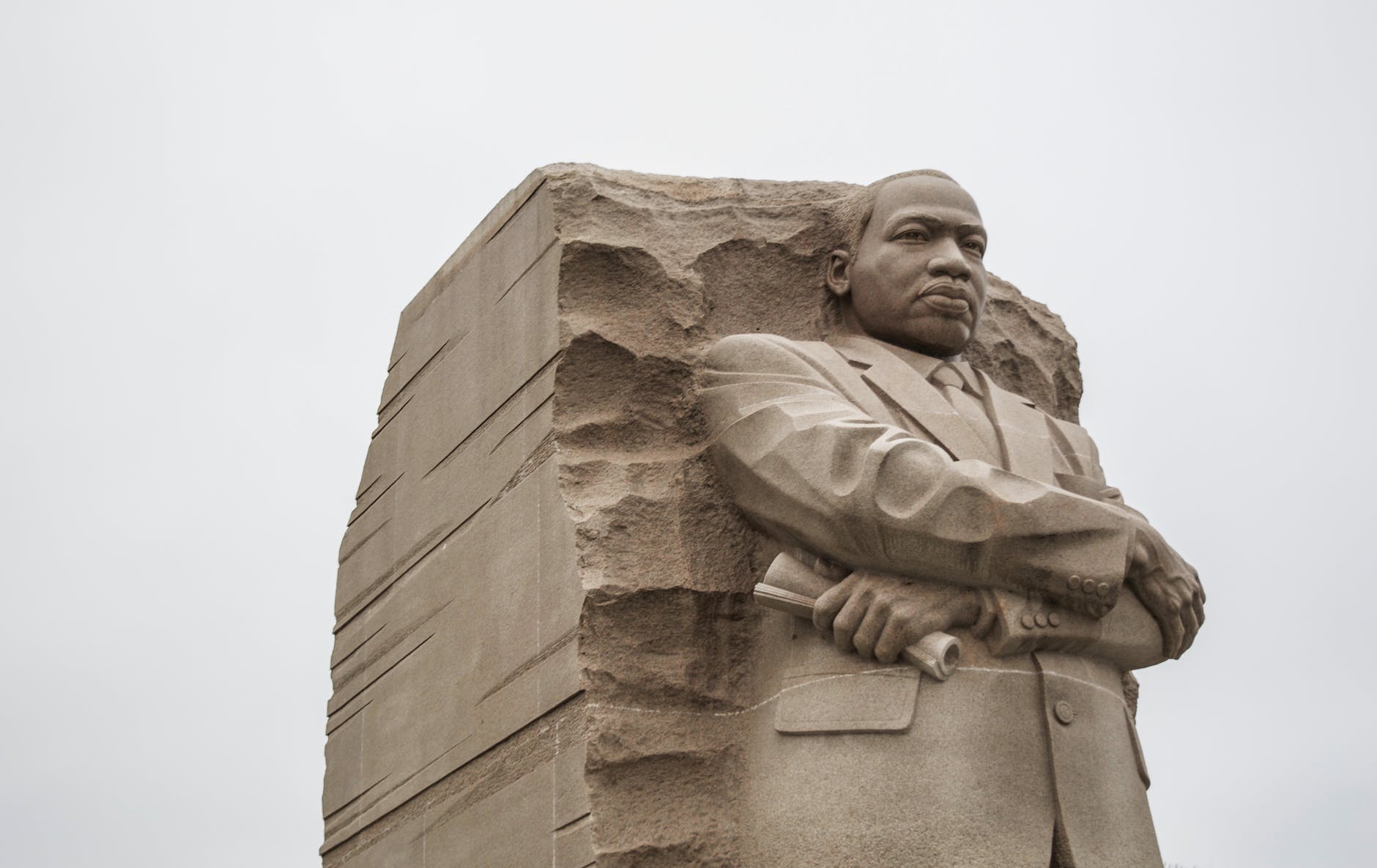
I generally write my blogs many weeks in advance. On the day that I wrote this essay it was the Martin Luther King, Jr. holiday and much of the United States was in a state of deep freeze. I can’t seem to think of anything or anyone on MLK day but the great man who became a powerful voice of the Civil Rights movement. He was and always will be a hero to me. I cry with the same emotions of remembrance and gratitude for him that I feel for Abraham Lincoln and more personally for my parents, family members and beloved friends who had such great influence in forming me as the person that I am. 

My heroes are not perfect. Even Jesus had his moments of anger and doubt. So too did Dr. King, but that is what makes his life even more incredible. It is in overcoming our shortcomings to achieve a personal goal or to live a meaningful life that the measure of our character is most visible. Dr. King had a gift for speaking on behalf of people whose suffering defines some of the darkest sins of our nation. He spoke with resolve with his mesmerizing voice and brilliantly chosen words. He was a spiritual man, a minister who somehow understood that each of us is called to use the talents that we have for the betterment of humankind. In spite of moments of doubt and even fear he persisted in reminding us over and over again of our duty to live in peace and love together.

I sometimes wonder what Martin Luther King and Abraham Lincoln would think of how we continue to quibble and fight with each other in today’s world. They both longed for harmony and peace on this earth but understood that there could be no equivocation or compromise when it came to defending the rights of each individual to live a life of dignity and freedom. Such insistence on being moral often lead critics to point out their flaw, using them as weapons to undermine their messages. So it often is with heroes who place their reputations and even their lives on the line in a quest to do what they believe is right. 

Because heroes are not gods even the ancient Greeks understood that they would at times fail miserably. The measure of courage and moral fortitude of any person should be taken in the most challenging moments when they choose to take the righteous path in spite of their own human failings. Such incredible individuals are the kind of people who rise to a momentous occasion just when they are needed. A true hero may be the principal of a high school who risks his life attempting to save his students during a school shooting. We might see incredible bravery from a young girl who stands up to her peers and challenges them to do the right thing in a scandalous situation. We always remember the neighbor who uses his fishing boat to rescue strangers from the rising waters of a flood. We honor the young man who loses his life defending a woman being beaten by her abusive partner. 

Heroes abound among us and in most cases they are as imperfect as any one of us, but in a critical moment they find the courage to face danger. Something inside of their very souls compels them to overcome their fears even if it means dodging both literal and figurative bullets. While others turn away or even hide, they step forward to remind us that greatness and goodness stills abounds among us. 

Heroes are not always understood or celebrated. They confront truths that we sometimes do not want to see or hear. They risk their reputations and their lives when they choose to step forward, especially if their actions or words are controversial. It is a quirk of our natures not to want to hear unpleasant truths. We would rather poke fun at the young girl who warns us about the perils of climate change. We accuse a young man advocating for gun control after a mass shooting in his school of being an out of touch coward. We tend to feel uncomfortable with people who note that “the emperor has no clothes.” We prefer instead to ignore or even defend faulty thinking that hurts vast swathes of people. 

The heroes of fairytales and fables were created as a way of teaching children how to be moral adults. The parables and teachings of Jesus were meant to show us how we should live with one another. Still, we have to be careful not to idolize false heroes who also lurk among us. If we watch them closely we will see and hear the evidence that their showboating is not for the purpose of helping anyone but themselves. Such fakers are also part of our history. They are the antithesis of a true hero because their causes are meant to limit rather than to expand the possibilities and freedoms of all people. They pretend to be heroes only to enrich themselves. 

So today as I write I am feeling quite pensive. i remember the words of Dr. Martin Luther King, Jr. and share his dream of a world in which we no longer draw conclusions about people based on shallow estimates of their worth. Each of us is wonderful and special and so much more than the color of our skin or the place where we were born. We can and should rise above our imperfections and find the spark of heroism that lies inside of our souls. The time will surely come when we need to use our courage for the true betterment of someone’s life. Each of us can become a hero as long as we answer the call in the moment when we are needed.