The Future Is Happening Now

Photo by fauxels on Pexels.com

My husband is a techie aficionado. He religiously fellows a number of experts online who constantly expand his knowledge of electric cars. computers, smart phones, watches and smart homes. He knows what’s in, what’s out and what is coming down the pike. He has our home and our truck humming with devices that automatically insure that we will have lighting, music, maps or whatever we may need right at our fingertips. He’s one of those guys who would have been trading in his horse and buggy for a new fangled machine called a car in times of old. 

I still laugh at the memory of him brining home a computer known as the TRS80 from Radio Shack back in the late nineteen seventies. It was the first home computer I had ever seen and I was a bit peeved that he had spent so much money on a device that seemed to be little more than a curiosity. Nonetheless I was loathe to nag and burst his bubble as he proudly set up the components and boasted that the strange looking contraption was going to change our lives. I was dubious about its worth but humored him with silence and a weak smile. 

He spent hours unlocking the power of that machine, which at the time was not particularly impressive to me. I mostly fretted over the expense of what I then considered to be little more than a toy, but with a tape deck drive and a great deal of patience he was discovering how to prompt it to do more and more until finally reaching the conclusion that he needed an upgrade which ended up being a shiny new Apple computer with a floppy disk drive. That machine cost even more than the “trash 80” that we had begun to lovingly call the first computer, but it was capable of far more functions. 

I soon learned that the Apple computer was quite useful in my educational work. I was able to create beautiful informational documents for my students and before long I was creating a monthly newsletter. Our daughter took a summer class offered by the school district and learned how to do a bit of programming as well. Suddenly I was willing to admit that computers were not really so bad at all. When Mike created an electronic grade book for me that automatically computed student averages I was sold on the importance of the machines that would indeed transform us. 

Along the way cell phones entered the picture and once again Mike was out front in purchasing one for each of us. We never had the originals that looked like bricks but we were using our second state model fairly early in the evolution of that technology. I particularly enjoyed the comfort of knowing that if I had an emergency while driving that phone would quickly get me help. I thought of a time when my mother’s car broke down while she and I were exploring the backroads. We had to walk several miles before finding a phone to contact my husband to come to our rescue. Armed with my new contraption I realized that I would never again be forced to walk for hours in order to be saved. It was an incredibly comforting feeling. 

Of course we all know about the explosion of ingenuity that burst forth from those early days. The laptop that I use to write my blogs is more powerful than the bank of computers used to put the first man on the moon. The new iPhone that I recently purchased not only allows me to instantly  call people all over the world, but it provides me with directions when I drive, access to news, music, texts from friends and family and even a means to teach my math lessons from afar. I can snap photos anywhere I go, keep shopping lists at my fingertips, store recipes and order virtually anything I may need from groceries to auto parts. It still amazes me how far we have come. I have yet to take the amazing technology for granted and I know as well as anyone how much it has changed my life. 

Now the appliances that whir around me would make George Jetson proud. I smile at the sound of my robotic vacuum cleaner tidying up my floors each day. I have access to hundreds of programs on the television that never flips and stutters like the old black and white screens that seemed so wondrous but imperfect in my youth. I can request recipes for my cooking with the sound of my voice. I learn about the latest news wherever I am. I feel ever more connected to the world at large. It used to take days or weeks or months to learn about events happening across the globe. Now I get alerts on the watch I wear on my wrist. I am instantly informed of roadblocks or impending weather emergencies. I’ve spent a time or two in the closet under the stairs after getting a warning that a tornado was nearby. I can text members of my family to quickly determine if they are okay when the streets are flooding in my city or to let them know about a loved one who is ill. 

Recently I read that all of these machines that have become so much a part of our lives require new forms of etiquette. Young people in particular are unlikely to answer a phone call without first screening it. Gone are the days of having to lift the receiver of a landline to determine who is on the other side. Today’s smart phones let the person on the other end decide if they want or need to pick up right away. New rules suggest that unless it is an emergency it is best to precede a phone call with a text to find out when it will be a good time to call. According to the article how well one follows the current trends depends greatly on age. Those of us who grew up in “the old days” are more likely to still call without warning while the young folk have no idea what it was like to have a phone that was like a black box unwilling to provide details about who was behind that ringing. 

According to my husband, who is still a technology guru, we have not even come close to the changes in technology that await us. His focus these days is on ways that we will make our human needs more in harmony with the natural world. He studies alternative forms of energy and the evolution of electric cars. He believes that we are nearing a tipping point in a revolution that will dramatically change the way we live from day to day. He expects to be one of the pioneers in that process but knows that he may not live to see the glorious changes that will one day come. He has great faith in the wheels of ingenuity and the brilliance of humans who are constantly pushing the envelope of innovation. I have embraced his optimism because I have seen the fruits of inventiveness first hand. The future is happening now and hopefully we will know how to embrace and use it for the benefit of all of mankind. 
The Amazing Harry Waldheim

I have been quite fortunate in meeting some exceptionally wonderful people as I journey from one rotation of the sun to another. One of the most joyful souls encountered in the last few years was Harry Waldheim, an interesting fellow for sure. Sadly he died on October 20, 2023 and will be remembered at a memorial service today. 

Harry was born into a Jewish family in Germany in 1931. Of course if you think about history you realize that Harry must have been a Holocaust survivor. In fact, his name is indeed engraved on a wall at the Houston Holocaust Museum, where he will forever be remembered and honored but Harry’s interesting story did not end there. In 1941, he escaped the horror of Germany and came to the United States where he eventually became a citizen, proudly serving in the military during the Korean War with honor and distinction. He was an American patriot through and through whose love for country became apparent in every conversation I ever had with him. 

As an adult Harry began to study Christianity and ultimately became a convert while still having great regard his Jewish tradition. As a Messianic Jew he believed that Jesus was the Messiah the Son of God. He was never without a gold chain around his neck that held a star of David overlayed with a cross. It told the story of his faith journey and the thoughtful faith filled man that he was. He was as genuinely loving in the spirit of Jesus as anyone I have ever known.  

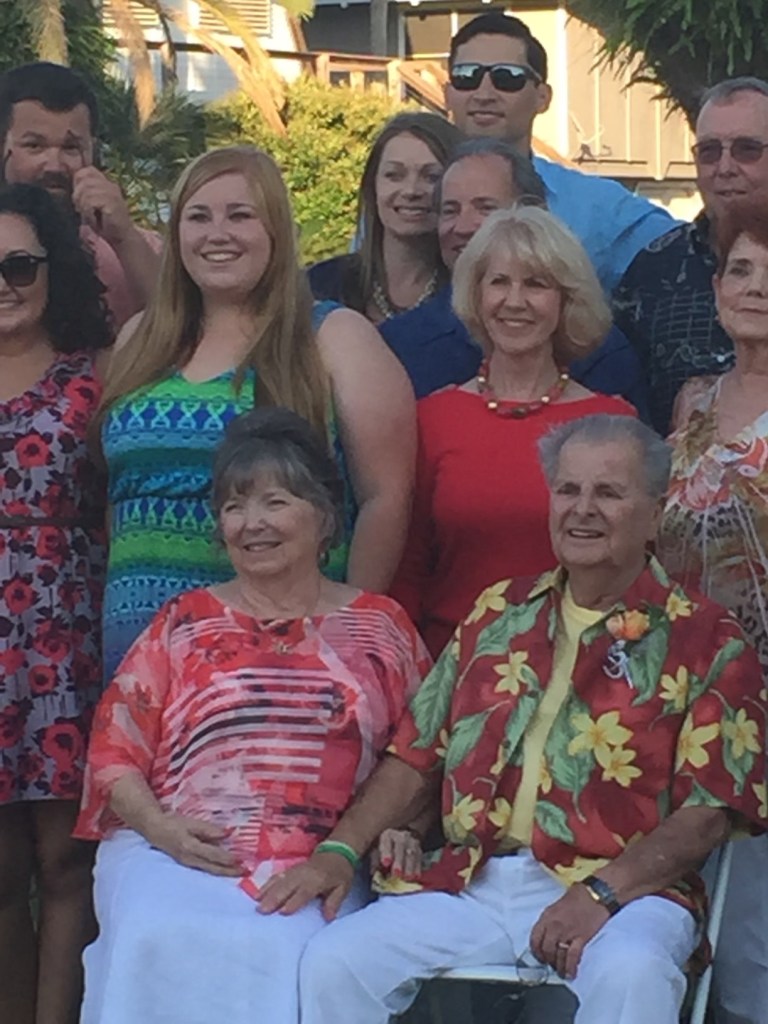
Harry Waldheim was a good man, a humble man who devoted himself to the people he loved and to his church. For years he was a regular member of Sagemont Baptist church where he met my sister-in-law’s mother, Barbara who became a dear friend of Harry’s first wife. When that wife became ill Harry faithfully cared for her through many weeks until she died. Not long after that, Barbara’s husband unexpectedly became ill and also died. Harry and Barbara found comfort in each other as the both grieved for the spouses they had lost. Eventually their friendship turned to love and while in their eighties they decided to marry in a beautiful ceremony in Galveston wearing Hawaiian gear and brilliant smiles, surrounded by their two families that would ultimately become one.

I was lucky to get to know Harry at family celebrations. He was always kind and pleasant and funny. He embraced life with every breath and made me and everyone around him feel so comfortable and loved. He brought an almost ethereal optimism to our gatherings and we all knew that we were in the presence of a very special person. 

Barbara and Harry never slowed down. They loved to travel, especially on cruises. One trip that they both had dreamed of making was a visit to the Holy Land in Israel. It was a spiritual time for both of them blending their histories and their love together in a culminating baptism in the Jordan River. It would become a kind of consecration of their beliefs in loving their fellow humans unconditionally and praising the glory of God. 

Harry loved a good joke and a good laugh almost as much as he loved family and friends. After he and Barbara moved from Houston to be closer to Galveston they joined Galveston County Church where they studied the Bible, attended services and volunteered whenever the community needed a helping hand. Harry found great solace with the members of that church and was in turn beloved. 

Harry was quite excited when he qualified for an Honor Flight to Washington D.C. to view the memorial for the Korean War. There he joined fellow servicemen to be honored for his service and sacrifice. That event was one of the highlights of his life. He was an American patriot through and through who showed his gratitude for his freedoms with a love of country that was exceptional.

In spite of some illnesses here and there Harry seemed to always find his way back to good health and his jovial ways. Not too long ago his doctor was proclaiming how fit he was for a ninety two year old man. He was already planning another cruise with Barbara and was the life of a recent party with his never ending sense of humor and appreciation for life.  He joked about his health but otherwise seemed to be feeling fit. His death took his family by surprise. Somehow they could not imagine a world without him. 

Harry Waldheim was a very good man who never allowed the suffering and sorrow of his life to alter his love, compassion or joy. He made people feel the generosity of his heart. He will be missed, but those of us who knew him realize that he is now rejoicing with God. We’ll don our Hawaiian shirts to honor and remember him today. Mostly we will celebrate the glory of his new home with the angels and saints and the God that he so loved. 

Make It Our New Frontier

Photo by MART PRODUCTION on Pexels.com

I can’t speak for every place in the nation or every incident when it comes to mental health, but I can tell my own story of a forty year challenge to find help for my mother’s bipolar disorder. We hear a great deal of talk about mental illness and now and again a legislative body tosses a few million dollars into the budget for care, but mostly very little real dedication to solving some of the problems ever takes place. I have known the enormous frustrations associated with keeping a loved one’s mind working properly. I can attest to the fact that it is more often than not a daunting task. 

My mother’s first frightening breakdown came when she was in her forties and I was twenty years old. Nothing had prepared me for the depression and paranoid ideation that she experienced. I had never before even heard of someone transforming from a healthy and happy person into one unable to grasp reality. The change in my mom came so quickly and unexpectedly. It seemed as though one moment we were going to see movies together and shopping at the annual Moonlight Madness sale at the mall and the next she was locked inside her home believing that forces were out to accuse and convict her of crimes she had not committed. 

I was thrown into the maelstrom associated with finding care for my mother without warning or any kind of knowledge of how broken the system actually was. I appealed to the adults that I knew to provide me with guidance but they were as confused about what to do as I was. I literally found myself diving headfirst into murky waters without a life jacket. With the suggestions of our family physician I procured a psychiatrist for my mother. Based solely on my description of her behavior he decided that Mama needed to be assessed in the hospital immediately. 

If not for the kindness of my mother’s best friend I’m not even sure how I would have convinced my mother to go the hospital. Instead the two of us convinced Mama to trust that we were doing the right thing for her. Somehow we managed to get her to sign herself into the hospital even as her eyes darted with fear and a sense that we had somehow betrayed her filled her mind. It would not turn out to be a good experience at all. In fact, it became a source of conflict between me and my mother for the rest of her days. Never again would she fully trust me. Sadly little did either of us understand at the time that her illness was chronic, not cured. The symptoms would return with stunning regularity again and again. 

The next time my mother became paranoid and psychotic I had mentally advanced in age and experience even thought I was still in my early twenties. I shopped around for doctors and found one who seemed to understand Mama’s unique needs far better than the first doctor. She would continually see him for many years but for the most part she tended to be noncompliant with his instructions for her care. Thus the worst of her symptoms would appear in an almost predictable cycle, with each new illness being more serious than the last. 

Much of the problem lay in the fact that my mother would deem herself well and stop visiting her psychiatrist or taking her medication. He had to glue her back together on an emergency basis again and again. Eventually as he grew older the frustration of her on again off again behavior became too time consuming and he told her that his practice was too full to allow her to come only when she was in a psychotic state. 

I had to once again search for a doctor and by this time my mother was a retired senior citizen with Medicare. I quickly learned that few doctors were willing to admit such a person into their practice. It literally took me two weeks of eight hour days talking to one psychiatrist after another and being rejected for one reason or another before I was successful. It was only when I finally broke down while talking with a kindly older doctor that I found the very best psychiatrist that she would ever have. He was a specialist in geriatric psychiatry and had built an impressive CV caring for elderly persons with mental illnesses. 

His scholarly and no nonsense approach set my mother on track with proper medications and a strict routine that seemed to help her long term, but just when I thought that we had finally found the keys to her treatment things changed. The doctor’s funding from the state of Texas was pulled and he was sent to work full time in a psychiatric hospital for criminals. He was as disappointed and angry as I was that the state thought so little of his remarkable work with senior citizens. 

The next years were tumultuous as Mama had to see one doctor after another, never really forming a trusting relationship with them. Ultimately she ended up back in a psychiatric hospital again that felt like a factory rather than a place of healing. It soon became apparent that she was not receiving the care she needed so when they released her after two weeks with no real change in her condition my brothers and I understood that we would have to monitor her daily going forward. She spent the next years alternating between year long stays with one and then another of us. We kept her from the worst aspects of her illness by monitoring her daily medication routine, a task that was often quite unpleasant. 

I learned over time that the resources for those with mental illness are stunningly limited. There are no months of the year when we all wear a certain color to support mental health. Funding for psychiatric care is ridiculously low and care tends to be based more on decisions made by insurance companies than by the doctors who know their patients. There is a shortage of virtually everything associated with mental illness and family members are often stymied by the system. People with psychiatric needs so often fall between the cracks. We lose them to their psychoses because our entire society seems to care so little about them. They and their families live in the shadows struggling to deal with the frightening diseases of the mind. 

Society speaks in platitudes when it comes to mental illness but rarely follows through with the care and understanding that mentally ill people need. We somehow lack the courage and determination to make them as well as we do with those who have diseases of the heart or cancer. We turn away from their frightening behaviors until they become incredibly sick. We seem to lack either the courage or the willingness to invest heavily in treatments and resources for those whose brains are sending them signals that are out of whack. We can talk all we want but until we make the investments in mental health we will continue to lose good people to toxic illnesses that turn their thinking inside out. Surely we see the problem, but somehow we are loathe to do what we need to do. Our understanding of mental illness is decades behind our ability to repair hearts, cure cancer, minister to infectious diseases. 

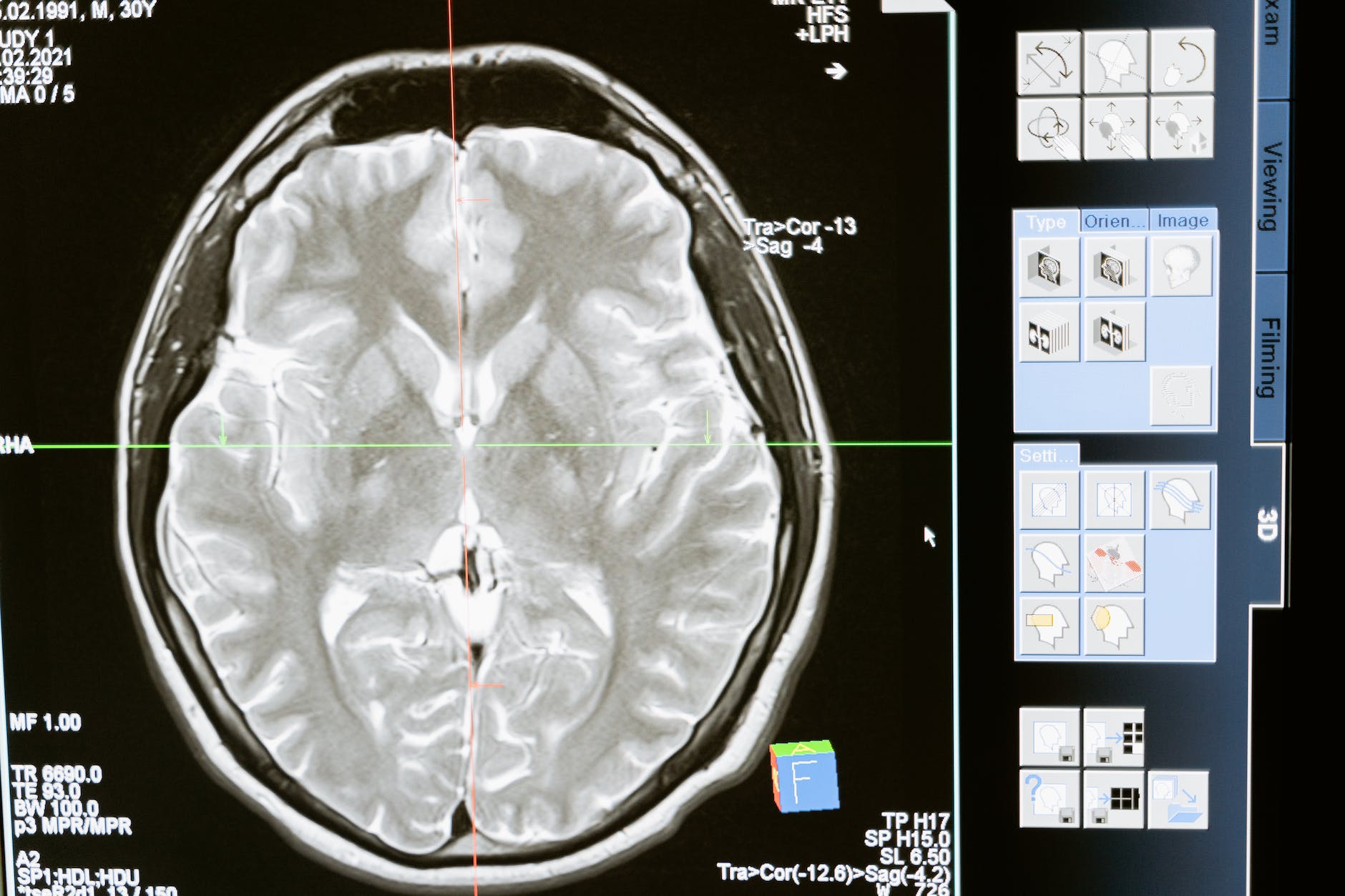
We must understand as a nation that studying and healing mental illnesses should become a top priority. The brain should be our new frontier. It’s long past time for dedicating time and funding to this critical branch of medicine. So many souls are longing for good mental health. Surely it will benefit us all to find ways of helping them to be healthy again.  

An Educational Travesty

Photo by Andrea Piacquadio on Pexels.com

I was a very good student. As long as nobody was pushing me to answer questions immediately I was always able to compose myself, reach into my store of knowledge and find the correct response. I was not good at contests in which I had to be the first to come up with an answer. My mind works wonderfully but its pace is slow and steady. If a clock is ticking I freeze. I won academic contests that allowed me to ponder over essays or prepare speeches in advance. I morph from being intelligent to stuttering as though I don’t have a brain when people put pressure on me to answer immediately. I was generally the last person to turn in a test, a fact that often annoyed my more quick witted classmates. I generally got high grades because I took the time to review and refine my responses. I suspect that many learners are like I am. There are those among us who can win Jeopardy. I am not among them. I will come up with the answer but not in the blazing timeframe needed to win a contest. 

I mention this because something is happening in the Houston Independent School District that troubles me greatly. After a state takeover of one of the largest districts in the United States a new superintendent is requiring some schools to use a pedagogic methodology that I believe will make learning more difficult for many students, especially those like me. From what I hear teachers are given scripted lessons with no time allowed for addressing individual learning needs. There is also a component that requires some segments of the lessons to be timed including moments when students are providing answers. From the standpoint of a long time educator I have a mountain of issues with what is happening.

First of all a script is far too impersonal for teaching much of anything. It ignores the reality that each group of students may require differing versions of the lesson depending upon their learning styles and how well they are comprehending the subject matter. It does not allow for reteaching with is critical to any good mathematics class. It also assumes that all students will respond positively to the exact same teaching method. Finally it forces students to race with a clock, an unfortunate situation for learners who need time to compile their thoughts before responding. 

I continue to teach mathematics even after officially retiring. Only the other day I had to backtrack with a group of students when I realized in grading their homework that most of them had struggled with a particular concept that I had presented in the previous class. It was important to clear up all of the misconceptions that I found before moving forward with the next topic. I new from experience that simply ignoring their trouble would only lead to bigger and bigger gaps in their understanding. Timed and scripted lessons would not have allowed me to have the luxury of reteaching and pointing out the common errors that I was seeing. The students were more attentive than ever because they had been stressed when they themselves realized that they had not quite mastered the concept. They were smiling by the time I had helped them to clear up their confusion.

A few years ago I was enjoying a wonderful opportunity to tutor underserved high school students after school. I had a working relationship with their mathematics teachers who sent samples of their work and alerted me to what kind of help they needed. It was gratifying to see the confidence grow among young people who were literally frightened by math. They beamed when their grades improved and their efforts made everyone happy. It was a truly gratifying time for me and then something terrible happened. 

The company that hired me to tutor in the school began issuing commands that I knew would not work with my high school students. They insisted that I never use the student textbooks or the teacher created work for the tutoring sessions. Instead they wanted me to give the kids a standardized test to determine what skills were weak. Then I was told to simply set them up with a computer program and monitor them as they worked independently. I did this one time and found that both students and teachers were upset because nothing matched what they were actually doing in class. When I told the company that I preferred to continue tutoring in the manner that had been so successful they threatened to make surprise visits and fire me if I was not using their pre-planned lessons on the computer. I beat them to the punch by resigning. 

It saddened me to abandon the students and teachers with whom I had built a strong and trusted relationship. I tried to explain how my hands were tied by people who seemed to have little idea how to work with high schoolers in mathematics. The ignorance of it all angered me. There were so many silly rules many of which were being made by individuals who had never taught mathematics or worked inside a high school. I was unable to reason with them because they were not really peddling a true tutoring service, but rather a computer package that had little or nothing to do with the realities of the situation. 

I find myself wondering of the prepackaged and strictly timed standardized lessons that are being echoed across classrooms are draining the joy and common sense out of the HISD schools required to use them. Students are first and foremost humans and by definition have different needs and ways of learning. I cannot help but believe that this system will fail and in the process put thousands of students behind in their knowledge and skills. Perhaps it will also have a very negative psychological impact on them. Somehow it does not seem as though true professional educators would design such a system. The system appears to be more of a product created by a business intent on selling its wares and using children to prove its worth. 

I hope that not too much damage is done to the young minds having to endure this experiment. I hope that the teachers do not become too discouraged. Mostly I hope that everyone will come to their senses sooner rather than later. What is happening is an educational travesty and needs to end as quickly as possible. There are many experts among teachers who know what to do. Someone needs to listen to them and to the students and their parents as well. 

Being Henry

Photo by Markus Spiske on Pexels.com

I should receive Henry Winkler’s autobiography Being Henry…The Fonz and Beyond from Amazon sometime today. I won’t have much time to read it because I have four hours of teaching to occupy me and this is Halloween. I’ll spend hours this evening enjoying the annual pilgrimage of little ones in costume seeking treats. Nonetheless I’m anxious to dig into Henry Winkler’s life story because I am a fan of his attempts to overcome the extreme difficulties of his childhood to become one of the most beloved actors and authors in the world. 

Like everyone, I first discovered Henry Winkler on the sitcom Happy Days. I loved the premise of the program and immediately fell in love with the character of the Fonz. Winkler played that role so well that it became an icon. At the time I was raising a family, teaching school, and doing my best to keep my mother mentally healthy so I was rather busy and often times a bit stressed. Laughing at the antics of Fonzie provided me with an outlet for my anxieties. Little did I know at the time that Henry Winkler had a whole lot of baggage of his own. 

After Happy Days had left the air and I was well into my career in education I enjoyed the pleasure of attending a National Convention that featured Henry Winkler as the guest speaker. I don’t remember much else about that gathering, but I will never forget how inspired I was with Henry who quite openly revealed the learning difficulties that had plagued him as a young man. It seems that he was severely dyslexic and as a result of that affliction reading was incredibly difficult for him. He viewed himself as a failure and the fact that most of the adults around him saw him in the same light only reinforced his feelings that something was innately wrong with him. 

It took great determination for Henry Winkler to progress in life, but somehow he had the grit that he needed to find a college that would accept him in spite of his dismal academic resume. He learned by listening and found out that he was quite capable as long as he did not have to read. He first created learning techniques for himself and much later learned why reading seemed almost impossible. With carefully designed aides he was able to memorize scripts and even write a number of books for children that focused on characters much like himself. 

I suppose I became more of a fan of Henry Winkler after hearing him speak than I had ever been. I realized that he was not just a shallow character, but a compassionate man who had overcome daunting challenges much like those I have witnessed in many of my students. I felt a kinship with Henry because I too have a tinge of dyslexia that rears its head now and again. It is why I sometimes switch letters and numbers. It is the reason that I drive people crazy with my daily rituals. Everything in my routines has to be linear or my brain begins to short circuit. If someone moves an item from the place where I expect it to be a kind of cyclone takes place in my mind leaving me in a fog of frustration. 

My opinion is that Henry Winkler is a great man. I know he loves to fish and he is always a champion of the underdog just as his character Fonzie was. He admits openly to his own insecurities and then worries that perhaps he will anger someone by being too honest. I suppose that anyone who publicly records his or her thoughts feels the same kind of worry that the true meaning of what they have said will be misunderstood. Still, Henry Winkler seems to understand that by sharing his story many others will be greatly inspired to overcome their own difficulties. He is a shining example that we do not have to be defined by our afflictions or our fears. 

Sometimes I feel as though we live in a world of shiny objects that deflect our attention from the challenges of living. Especially in a country like mine where there is so much freedom and plenty even for the most common among us it is easy to get lost in the mundane. I know that in spite of losses, privations and struggles I have enjoyed a very good life. I suppose that I was lucky to have a first grade teacher who saw the learning difficulties that I had. She showed me how to focus my eyes and create ways of learning that worked for me. She taught me not to panic when words on a page seemed to jump around. She assured me that taking my time was not an indication that my intelligence was less than those with quicker wits. 

I was not nearly as afflicted with learning difficulties as Henry Winkler was. I was also surrounded by adults who encouraged me when I faltered. My own difficulties helped me to become a patient educator. I emulated my first grade teacher and worked to bring out the brilliance in all of my students. Now Henry Winkler is putting his story on the line to reach an even wider audience. I have little doubt that his story will inspire souls all across the world. I can’t wait to start reading.