
Tea Time

Photo by Jill Wellington on Pexels.com

My mother made coffee every morning and I never drank it because I did not like the taste. My grandmother offered me a cup of coffee each time I visited and I sipped because I knew that she offered it out of love. I never got into the habit of consuming coffee which sometimes has made me wonder if I am a fully official adult. My mother-in-law made hot tea for me whenever we visited and I fell in love with the brew. I’ve been a morning tea drinker ever since and on some days I even enjoy afternoon tea time in the English tradition, but without biscuits or crumpets. 

The tea times with my mother-in-law on Sunday afternoons were extraordinary for me. She prepared the tasty drink the way her English mother and grandmother had taught her to do. It was a precise operation involving careful measurements of both tea leaves and water. She never skipped the critical step of warming the pot before inserting the tea. It steeped for just the right amount of time and then my she would pour it into delicate porcelain cups with a flourish of her beautiful hands. 

All the while she and I would talk in the ways that women do while the men removed themselves to watch sports or discuss the issues that were concerning them at the moment. I long for those glorious times with just me and my mother-in-law sitting quietly talking about life and great thoughts. She always had a way of bringing up topics that were so much deeper than just chit chat or gossip. I learned about great thinkers and spiritual philosophers from her. I heard about essays on socio-economic issues that she had read. She recounted tales of her family’s history. She encouraged me in my own life endeavors. It was just the two of us partaking of our tea while engaging in discussions worthy of intellectual soirees in drawing rooms filled with great minds. 

I always suspected that my mother-in-law enjoyed our time together as much as I did. We were both fully ourselves in those moments, two women sharing knowledge and viewpoints with each other without critique or efforts to sway each other’s minds. I suspect that we both grew from our tea times. I know that both of us were more genuine when it was just the two of us. We felt relaxed and safe enough to speak our minds without filters and without the constraints of roles that society had attempted to impose on us. We truly valued and understood each other in those moments.

There was something quite glorious in the simplicity and slow tempo of tea time, a deliberateness that signaled how cozy and safe we were to voice our ideas. There was nobody there to comment or rebut what we said. We simply took turns talking and listening intently. I for one always felt that my mother-in-law had truly heard me and I had heard her. I saw her genuine greatness and understood her brilliance finally unconstrained by societal norms. It was breathtaking to hear her ideas as were her words that lifted my spirits and increased my own confidence.

I think it was especially pleasing to my mother-in-law to have two granddaughters. She wanted me and them to know about the links between the women in her family who tended to be quiet and humble but particularly brave and strong. They were the glue that held things together, the strength that insured safe passage from one generation to the next. They were the ballast that kept the family upright. They brought the compassion and understanding that nurtured and healed the members who sometimes went astray. 

I see my mother-in-law’s influence on her son, my husband, over and over again. He is so like her. He learned from her and from her mother. The two women created a strong and compassionate man willing to share duties and power with the women in his life. He sees us as equals, not subservient creatures with less to offer than males. Given that my mother-in-law lived most of her life in a male dominated role due to the times, it amazes me that she found outlets for her own talents and intellect. She made her son aware that it was time for the male half of the world to move over just a bit to make room for the women even as she dutifully kept her place whenever the occasion demanded it. 

Now when I sip my tea I always think of the women who have had such a dramatic impact on me. I can see that I had role models who were extraordinary. Little wonder that I grew to be bold and willing to voice my ideas. I tried to pass down that knowledge to my daughters as well. I remind them of the long line of women from whom they have descended, their great grandmothers and grandmothers who sometimes endured almost unbearable challenges and still emerged triumphant again and again. 

There is a spirituality of family and a special kind of understanding between the women who hold them together. The ritual of tea time will forever remind me of what and who is most important. In many ways making and partaking of tea has become a lovely metaphor of life and each time I sip a cup I remember my mother-in-law and feel gratitude for our tea times together and the glory of what they meant to me.  
The Luck of the Draw

Photo by Pixabay on Pexels.com

My mother’s mental illness became a central concern for me and my brothers. We understood that there was no cure for the depression and mania that returned to her mind with great regularity. There were certainly medications that help to lessen the symptoms, but often they caused side effects that rendered them unsafe to use. Her treatment involved close monitoring and changes in tactics and prescriptions that annoyed her. She would mistake feeling better with being free from the bipolar disorder that would follow her to her death. She would stop seeing her psychiatrist, take her pills only when she felt like she needed them. Sadly this would cause her to descend into recurring bouts of deep depression followed by mania that prevented her from sleeping and often led to psychotic episodes of paranoia. In spite of all this she had long stretches of normalcy that allowed her to keep her job, pay for her house, be the delightful person that she truly was. 

Anyone who took the time to know my mother loved her. She was quirky for sure but her heart of gold was what people liked about her. She was generous to a fault, often cutting her food budget to donate to a worthy cause or give someone a gift. Amazingly she did not allow her mental illness to steal her happiness. She was the supreme optimist who found joy in the smallest of moments. She taught me and my brothers to be grateful even when times were hard. 

The love that my mother spread was not always returned to her. I suppose that her illness frightened or puzzled some people. Many people who had once been her friends abandoned her, but she never became angry with them for doing so. She would continue to speak of them with glowing compliments, ignoring their failure to stay by her in her times of need. 

I have done my best to be like my Mama but the truth is that I am far less patient with the world than she was. I become angry when I see injustice. I often bemoaned my own fate even as I understood that others were suffering far more than I ever have. Still, I did my best to love people just as they are without imposing my will on them. A student recently told me that this was the key to my teaching. He said that I somehow made each of my pupils feel confident and important. I’d like to think that was the case because it was something that I was always striving to do. I suppose I got that talent from my mother because that is exactly the way she was.

My mother believed in redemption. Her rule was to apologize to anyone that she had hurt during the day. She insisted that everyone should go to sleep at night knowing that they are loved. If that meant that she had to ask forgiveness or give the gift of forgiveness, she ready to do so. When her illness was not clouding her mind Mama lived in a state of perpetual delight.

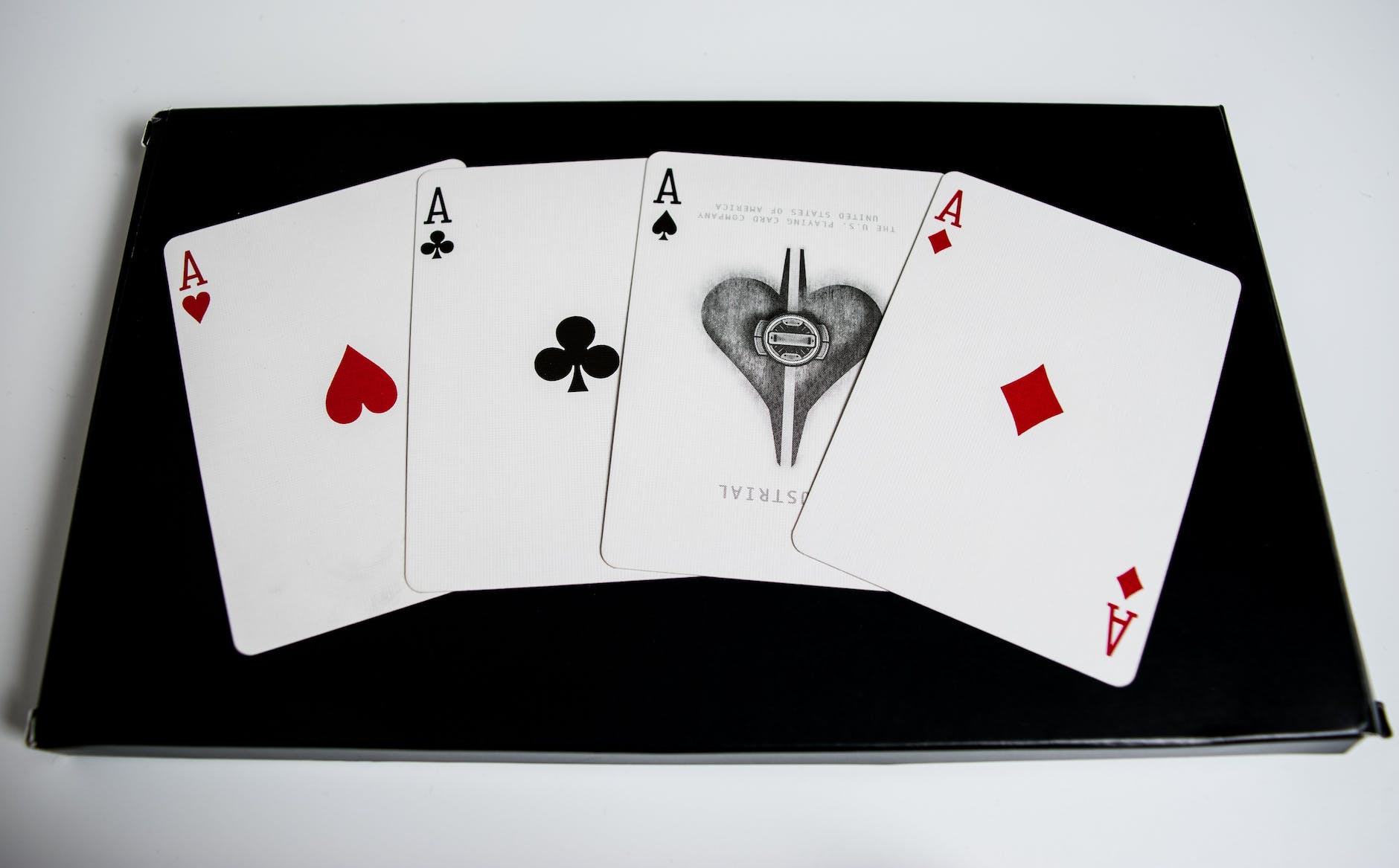
Of late I have been thinking of the moments that were the happiest for me and in truth they have all been quite simple. Driving along Trail Ridge Road in Rocky Mountain National Park with my family was a spiritual experience to which I have returned countless times. Hearing the laughter of children is the sweetest sound anyone might ever hear. It is mind blowing to realize how fortunate I have been because of the simple randomness of having the parents that I did. Living in the place where I was born has provided me with opportunities that I did not earn. I won them by the luck of the draw. 

I have been writing about my life and in the process I have seen that while some moments were incredibly traumatic, the overall cadence has been comfortable and filled with intangible gifts that are far more valuable that wealth or power. My mother showed me how to be passionate about life, to find beauty in simple places. For her every single glass was full, every person a wonder. I applied those lessons to my own life and what a difference it has made. 

It’s not to say that I never become frustrated or dissatisfied with the world as it is, but I learned how to fall down and then dust myself off and try again. I get quite angry at times, wondering why I had to lose my father so early in life and why my precious mother was afflicted with such a diabolical illness. I have been known to feel defeated by life and to wonder why evil exists so openly among us. I have wanted to walk away from overwhelming challenges, but then I would remember my mother and know what she would tell me to do. 

I have recounted the early years of my life before I truly found myself in my forties. There is more to come but somehow the tenor of my tale will be more mature, more inclined to be flexible. In the next phase of my life I practiced allowing myself to make mistakes. That was a triumph that was difficult to reach for a perfectionist like me. It’s something that I suppose I will be working on for the rest of my days. Luckily I had a great maestro to show me how it should be done.

An Enigmatic Woman

The first time I met my mother-in-law I was overwhelmed by how unlike she was from anyone I had ever before met. She was barely five feet tall but did not come across as a tiny woman. The long lovely fingers on her hands that she used much like a graceful dancer seemed to belong to someone taller, more statuesque. She spoke with a commanding confidence using her eyes to let people know that she was in command of the situation. She spent the duration of the dinner that we shared being kind, but also telegraphing to me that she was intent on getting to know if I was worthy of her son, her only child. 

Mary Isabel Fisk Gonzalez had grown up on a street filled with her relatives just north of downtown Houston. Her father’s family had been in the Republic of Texas before statehood. Her mother’s family had immigrated from Newcastle on Tyne, England. Like her son would be, she was the only child of doting parents and the apple of the eyes of her aunts and uncles and grandparents. She was a bright girl who would become an insightful woman, but it took her several tries to become the confident person that I met on that evening.

Mary graduated from high school at the age of seventeen and attended Rice University with the young girl dreams of majoring in languages and working in Washington D.C. with diplomats and lawmakers. Sadly she met an unexpected challenge with a required Calculus course, failing the exams along with the only other girl in the class. Crestfallen she left the university without knowing that the professor had a habit of failing the women the first time around, but pushing them through if they had the courage to return for another try. Both her days at Rice and her thoughts of an exciting career gave way to practicality. 

While she was attempting to come to grips about the future direction of her life she began dating an older man who worked at her family’s electric company as an electrician. In spite of the concerns of her father she soon married Robert Burnett and even began caring for his daughter from a previous marriage. She also became pregnant which sent a shockwave through her family because she had been born with a congenital heart defect that made carrying a baby to term a very dangerous prospect.

Her entire pregnancy would be intensely monitored by her doctors who worried that the stress on her heart might lead to her death. When she had carried her unborn child long enough she was put into a state of slumber and the child was removed by Caesarian section. While she remained sedated her very healthy boy, who would one day be my husband, brought great joy to the extended family. 

Sadly, Mary’s marriage to Robert did not last, but the love of her son would be enduring. She was still in her early twenties and feeling more and more confident that she had a future beyond the traditions of the nineteen fifties when it came to the roles of women. She enrolled at the University of Houston for a second effort to earn a college degree. She had sown her wild oats and seemed ready to get serious about life. That’s about the time when she met a man from Puerto Rico three years her junior while relaxing with friends in the university’s Cougar Den. 

The two of them had an instant attraction and continued talking long after everyone else had left, sometimes in English, sometimes in Spanish. Julio Gonzalez had only recently been fighting in Korea. He had found his way to the University of Houston by mistake. He had planned to meet a friend who was already attending college, but the buddy had only told him that he was at U of H. Thinking that Houston must be that place where he would find his friend Julio set his sights on a grand reunion only to find that his acquaintance was in Hawaii. 

The romance between Mary and Julio was a whirlwind that quickly led to marriage. Julio practiced improving his English and found a job with Hormel whose plant and offices were only ten minutes from the house where he and marry and five year old Mike lived. Mary’s parents were next door, a grandmother was across the street, cousins were all around her. When she needed to take her daily naps there was always someone to watch her young son, most often her mother. In fact, Mike would spend as much time with his grandmother as with his parents. 

Mary ultimately withdrew from college and worked for the family business which was housed in  a back room of her parents’ home. It was an ideal situation for her because she was able to leave during the day to rest and her mother would be watch over Mike much of the time. Meanwhile she channeled her curious intellect into reading. She became a master of differing philosophies as she explored the great thinkers of history. She also willingly assumed the traditional role of a housewife devoting herself to her husband. 

I would eventually get to know Mary quite well. She was definitely an enigmatic woman who pleasantly played her role as woman willing to set aside her own dreams for those of her husband. She adhered to the ways of her time, but deep inside her was an unquenchable thirst for knowledge. She knew that she was as capable and bright as any man and quietly revealed to me her longing for the formal education that I and my mother had achieved. She admired my refusal to be typecast as anything but an equal to her son. Over tea and cookies she would encourage me to be unafraid to assert myself and make my voice heard in the world. I loved that she recognized me as a strong woman and saw my mother as an icon of courage. We would have many conversations that only two women might understand. With her as a cheerleader I would find the determination to be myself in a time when many still insisted that females had a place that commanded a kind of submissiveness that I was unwilling to accept. Mary told me to go for it! 

Time Became Relative

Once I began working as a teacher my life thankfully settled into a tightly followed routine. Since none of us were morning people we’d scurry around at the beginning of the day getting everyone off to work and school. Luckily our girls only had to walk to the corner to catch a bus and Mike and I each had a car. I often left home before anyone else because I needed to be on campus early enough to look after the students as they arrived. 

After a wonderful first year of teaching at St. Christopher’s School I landed a job in the Pasadena Independent School District where I was in for culture shock beyond anything I had imagined. I had learned how to design lessons at St. Christophers and it was now time for me to learn how to manage the behavior of students. Luckily I had an extraordinary principal who coached me with wisdom and great kindness. I often think that I became a real educator under her tutelage. 

Many of my students were generally from low income families who often moved from one apartment complex to another just before being evicted for failure to pay rent. My grade book attested to the comings and goings of my changing roster of youngsters. While troubled children were not the norm, there was a more than a usual share of kids from difficult backgrounds. As I became familiar with my group of young people I would learn their individual stories and sometimes have to fight back tears. 

There was a young man whose mother had attempted to set him on fire when he was three years old. He was still dealing with the trauma of that incident and often dissolved into depression or rose up in anger. I had a child whose face had been disfigured by a fire, and a boy whose mother was a drug addict who often left him alone to watch his little sister when she went out at night in search of payment for sex. Twin brothers were like Cain and Abel with one of the pair abusing his quieter sibling. There was an unending drama of the like I had never before witnessed unfolding in front of me on an almost daily basis. 

Somehow I eventually learned how to keep my pupils focused and learning while balancing my own emotions to keep from carrying the heavy weight of their lives into my own. I did not want to bring that toxicity home to my family. I had to learn how to have a healthy balance between work and my life as a wife, mom and daughter. To say it kept me busy would be an understatement which I suppose is true of any working woman who has to run her schedule like a train yard. Every minute of the day was filled until I fell into bed exhausted but often unable to sleep as my mind filled with thoughts of what I needed to do for “my people.”

By this time my childhood neighborhood had changed. Most of the neighbors who had helped our family had moved. My mother found herself living among strangers whom she never really had time to meet because she was working and so were they. When her home was burglarized multiple times she quite rightly grew fearful of living there. My sweet brother, Pat, got a real estate license to help her sell her home and find a new place to live. Soon she was moving a bit closer to where I was living. Her house was lovely and her neighbors were sweet and welcoming. They would become advocates and guardians for her over time. 

So life rocked along and we began to take summertime vacations with our girls. We purchased a tent from Sears that was made of canvas and sported tan and green stripes. We bought sleeping bags and lanterns and a propane stove. We learned how to trek around the country with our gear, enjoying glorious adventures in the most beautiful places. We were a happy crew whether it was sunny or rainy, hot or cold. We adapted to the great outdoors and poured our hearts and souls into having fun. 

Mama became ill now and again and I would have to get her to her doctor and make certain she was taking her meds. Her neighbors and I formed an alliance that kept me informed if she was descending into a state of depression or mania. It was a quiet secret that we never shared with her. My brothers also began to shoulder some to responsibility of keeping her as healthy as possible. We were the three Littles giving back the love that our mother had always heaped on us. Everyone was willing to do whatever it took to make her life as smooth as possible and so we shared many happy gatherings together with our growing families and successes in the world. We met at every birthday and sometimes continued the old family tradition of meeting for a day at the beach or a park.  

Both Michael and Pat were rising through the ranks of their respective professions. I often thought of how proud my father would have been of them. We all knew that we were as healthy and happy as we were because of the Herculean efforts of our mother. Somehow as we muddled through our own adult lives as spouses and partners we admired her more and more. It was sometimes difficult to imagine how she had done so much all alone. 

As Einstein told the world time is relative and soon it was racing past us faster than the speed of light. We were on an exhilarating roller coaster ride that was going to take us places we had never imagined. 

A Worthy and Very Human Project

Photo by Pixabay on Pexels.com

I’ve been thinking about July 4, Independence Day, all month long now, just as I have been looking back on my life and what it has meant. I suppose that I see the Declaration of Independence as the same kind of ideal that by which I have always measured my own purpose in the world. I realize the countless mistakes that I have made, the time wasted when I might have been improving myself, I have also celebrated the glorious moments when I knew that I had succeeded in coming closer to being the person that I want to be. So it is with our nation, a country developed by imperfect humans who no doubt had different dreams and ideas as they signed that document so long ago.

Even a brief and narrow study of the history or the United States of America leads to so many contradictions. On the one hand it has been a place where freedom to express our views has been cherished, but not always given evenly to everyone. In the beginning it seems that the idea of equality was a gift enjoyed only by white men. Nevertheless, our freedoms grew in stages because there were indeed brave souls willing to point out the flaws with our government, just as the Founders had critiqued the authoritarianism of the King of England. There was a second Independence day for enslaved people almost one hundred years later when Abraham Lincoln declared that the barbaric practice of slavery could not longer be considered legal in a nation founded on the idea that all men are created equal. 

It took even more time to recognize the right of women to vote even though Abigail Adams had urged her husband John to “remember the ladies,” It was only incrementally that the United State of America grew in fairness and justice for all. At times it even regressed just as each of us has done at different times in our lives. The Jim Crow days of segregation and degradation was a horrific moment when our laws were twisted to excuse unfairly demeaning laws our Black citizens. 

The Civil Rights movement of the nineteen fifties and sixties seemed to finally create  a legal basis for striving toward equality for all. Sadly, we are still attempting to determine how to achieve a goal that is continually hampered by “isms” that rank people rather than accepting them as they are. We Americans know that we may be a nation of mostly good people, but there is still hate that we must root out and overcome. 

Yes, the United States of America is an imperfect union of many voices, many beliefs, many colors and cultures. It can be a glorious bastion of freedom or one that stubbornly judges certain of its citizens to be inferior. With over three hundred million people in our land it can be difficult to balance all of the conflicting ideas just as it must have been when there were far few men and women living in the original thirteen colonies. Nevertheless we have indeed mostly moved forward. We have been progressive in righting the wrongs of the past. We have welcomed people from all over the world longing to be free. Ours is a very human experience that is wrought with the kind of difficulties that we all experience in our own lives. 

I could dwell on my mistakes from the past and those that I am making in the present, but it is better to look at the bigger picture of my life. I know I have tried and sometimes failed to be the best version of myself So too it has been with the United States of America and it is okay to point that out. Being blind to our faults is not being patriotic. In fact, I believe that those who ask us to improve our nation demonstrate their love for the country and its citizens. Just like our parents corrected us when we behaved badly, so too do wise men and women point out the times when our country has been wrong. This is how humans and human institutions grow. 

My fourth of July was admittedly quite boring this year. Most of my friends and members of my family were out of town celebrating in grand places. I was home with my father-in-law who has lived here for one year now. I have not yet found a way to leave him long enough to take a trip. My husband spent the months of June and July with follow up doctors’ appointments after a near death experience with his heart. I’ve mostly been isolated and confined to my thoughts these days and it has not been a totally bad experience. Sometimes it’s actually quite good to take time to analyze one’s life and to honestly admit to the moments that might have been better if only we had been more courageous and honest with ourselves. To everything there is indeed a season and perhaps mine is supposed to focus on contemplation for now. Maybe all of us who are citizens of the United States would do well to spend some time thinking about our history and preparing for our future.

We will soon be celebrating another milestone. In 2026, the United States will be two hundred fifty years old, a feat that seemed impossible back in 1776. We have endured many challenges together and somehow managed to find ways to keep our system going. The USA may seem to be troubled right now and we may be feeling overwhelmed. Challenges are part of the human experience and we generally weather them best when we are willing to appreciate our differences rather that feuding like the Hatfields and McCoys. If our beloved country is to continue for another two hundred fifty years we will have to be willing to come together without rancor and work toward keeping a democracy that should continue to evolve with the times. I believe that we will do it. Somehow we always have. It is a worthy and very human project.