Life Was Good

I returned to Our Lady of Mt. Carmel Catholic school after Labor Day of 1957 just after my little brother, Pat, had turned three. I was in the fourth grade, a changed soul with a more serious outlook on life. I was grateful to be back with people that I knew and trusted, but I was still in a state of grief that would follow me throughout that year. My teacher was a strict nun who taught me well, but was far too demanding for a little girl whose world felt so unsettling. I would have to find solace in my fellow students, the wonderful neighbors on Belmark Street, my family and friends. I withdrew into myself under the unrelenting sternness of my teacher. Looking back I realize that when I later became an educator she became my model of how not to behave around the children that I taught. 

We settled nicely into a routine at home. Mama was devoted to her dual role as both mother and father to us. It seemed as though her every thought was focused on our well being. She became an icon of strength and wisdom in our neighborhood, with a continuous line of visitors arriving for coffee and conversation with her. One woman in particular became a regular seeker of solace from our mother. She was a quiet and nervous lady who whispered anxiously and quite often burst into tears. When I enquired about her, Mama simply smiled and said that the lady was having some difficult times and just needed to talk about them.

Other neighbors were more gregarious and helpful. They brought out Mama’s smiles and laughter. They encouraged her to get involved in the Mother’s Club at church and to join a bowling team to get out of the house. It always amazed me how quickly our mother made friends, how easily she talked with them, how generous she was with them. Before long she seemed to know everyone who lived around us and was encouraging us to follow her example in accepting our fate and moving forward even if we were scared. 

She created routines for us like cleaning our home on Saturday mornings with Daddy’s music playing on our Victrola while we worked. Once we finished Mama presented each of us with a quarter to save or spend on our Saturday afternoon shopping excursions.  Of course we went to see our Grandma Ulrich on Fridays and attended mass on Sundays at Our Lady of Mount Carmel Catholic Church. Sometimes we visited our aunts and uncles on Sunday afternoons. Our lives bumped along smoothly most of the time but now again we would feel the lurch of unexpected events like the murder of the sad lady who had often visited our home.

Late one evening we stood on our driveway watching the tragedy unfold along with most of our neighbors. We had all heard the screams and the shots of the gun. It was terrifying as we waited for the police to arrive because the woman’s children were standing in the front room window crying for help while the man raged in the background. It was our brave neighbor, Kathleen Bush, who charged across the street, pounded on the door, and demanded that the children be allowed to leave. I watched in awe of her courage as she stood her ground with the murderer. She threatened to force her way inside if necessary. Soon the front door opened and the terrified children ran into her arms. I suppose that Mrs. Bush became my idea of a hero from that time forward. 

Halloween came and Mama made costumes for us and then took us all around the neighborhood where everyone seemed to know who she was. We spent Thanksgiving at home and watched the annual gridiron grudge game between Texas A&M and the University of Texas. Mama sang the Aggie War Hymn and told us about the tradition of the Twelfth Man. We were totally indoctrinated into being proud little Aggies. 

In November, just before my birthday a cold front came to town. There was a chill over the house but Mama had no idea how to light the pilot of the gas heater. She mentioned her dilemma to our next door neighbor, Ethyl Sessums, who immediately insisted that she would send her husband, who was a plumber, to light up our furnace as soon as he came home from work. Surely enough he made short work of the task and before long our house was feeling warm and toasty. Somehow at that moment I felt that we were really going to be okay. I slept better than I had on any night since my father had died.

When Christmas came and we attended the annual Christmas Eve party at Grandma Ulrich’s house I became even more convinced that we were not alone. Uncle Andy gave me and my brothers teddy bears that were almost as big as we were. We would invent all kinds of games and adventures with those stuffed animals that brought lots of mischief and laughter to our home. When Santa actually found us on Christmas Day and left an array of gifts it felt as though the miracle of healing had begun. 

The New Year would bring Michael’s sixth birthday and a bought of measles to our home as well as an untypical snowy day. That was how it was, some ups and some downs but always the continuity of happy routines with our family and friends. Our mother would prove to be a mighty woman who tucked us into our beds each night with a reminder of how much she loved us. I would always miss my father, but I took my mother’s cue and began to allow myself to live again. Life was good. 

Becoming a Different Kind of Family

The days after my father’s death remain a blur, a kind of slow motion attempt to move forward while still believing that he would walk through the door at an moment to assure us that all of the furor over his passing was just a mistake. Eventually the aunts and uncles and friends busied themselves with their own lives and Mama, Michael, Pat and I were alone to grapple with our new reality. Nothing felt right in those first weeks, but soon our mother was busying herself with the tasks of living. She was determined to provide my brothers and me with a feeling of security, so she began the process of becoming the sole head of our household.

First, she needed a car since ours had been destroyed in the crash that took our father’s life. My Uncle Jack Ferguson, Aunt Polly’s husband, volunteered to accompany Mama to car dealerships in search of an automobile that she might afford. Daddy had always liked sporty cars with all of the bells and whistles of the time, but Uncle Jack was a Ford man with practical beliefs that the chief function of a family car was for transportation. Realizing that we only needed something that would reliably get us from one place to another, Uncle Jack bartered with salesmen to find Mama an automobile for the price of the insurance payout that she had received. What we got was a totally stripped down model with rubber floor mats, cloth seats, a standard transmission and no power steering. It was an ugly car for sure, but it drove well and was the right price. It would serve us for the next ten years of our journey without our father. 

The next phase of our new lifestyle was to find a permanent home. Mama knew how happy we had been when we lived in Overbrook so she thought it would be wise to return to the neighborhood where we already had so many friends. Once again Uncle Jack stepped up to help her find a house that was affordable. That meant moving to the small wooden spec homes rather than those like the custom brick place where we had once lived. Eventually our mother settled on a three bedroom, one bath property at 6411 Belmark Street. It was not even as nice as the home on Kingsbury but it was within walking distance of my old school and just down the street from our church. Best of all, after hearing of Mama’s plight, the owner of the house lowered his asking price enough to make her payments reasonable. 

Belmark Street was home to young families with children running and playing up and down the block. It was a friendly place where everyone rallied around our family from the start. Once our furniture and belongings were placed in the rooms it felt cozy and just right. Mama even purchased a bookcase that she placed in the hallway to hold our father’s books that had previously been in the packing boxes we had brought back to Texas from California. She played the records that he so enjoyed in the evenings just as he had done. We had a sense that somehow he was still with us if only in spirit. 

It took awhile for Mama to have the courage to open the anniversary gift that Daddy had left for her. She cried when she saw the iced tea spoons that he would never use. She quietly put them away in the wooden chest that held all of the knives and forks and serving pieces that our father had purchased for her in the eleven years of their marriage. Somehow that tiny treasure became symbolic of their love together which had been so short-lived. 

I had to be courageous when I told my mother about the lamps that Daddy had put in the layaway for her. i choked on my words as I described how happy he had been when he made me privy to the surprise that he had planned for her. We were unable to find any kind of receipt for the payments he had made, but I knew exactly where he had purchased them and I was able to described them in detail when Mama and I went to the store. As I told the salesperson my story she began to sob and assured us that she knew exactly where the gift was being stored. Mama made the final payment and we took the beautiful boudoir lamps home to place them on her dressing table just as Daddy had envisioned. 

The summer was a time for adjusting to our new reality. We met all of the other children on our long street and always had something to do on the sweltering hot days. I became friends with Candy Bush, Karen Janot and Jeannie Limb. To my delight I found that the bike ride to Lynda’s house was short and quick, so the two of us resurrected our friendship immediately. On Friday nights we religiously visited my Grandma Ulrich along with all of my aunts and uncles and cousins. Friends and family members were constantly dropping by our house to visit and to help Mama with any difficulties that she may have had. I learned how good people are and because of them I slowly began to feel safe even though my heart was still indescribably sad. 

After Labor Day I began my fourth year of school. I was eight years old, but I felt like I was forty. I hid the grief that I was feeling under a facade of quiet determination. Even with all of the outpouring of love for our family my anxieties were chronic but I had decided that my personal duty was to be the kind of person that my father had always told me that he believed I might be. I watched over my brothers and did my best not to cause any trouble for my mother. Somehow I fully understood the burdens that she would face. I decided that I never wanted to be another one for her. I was a child who had instantly morphed into an old soul. I knew that we had become a new kind of family and I had duties to fulfill.  

Jack Little

Santa Fe NM 09-1950

So who was this man named Jack Little, a man with no middle name, a man who left such a lasting impact on those who knew him, a man who died at the age of thirty-three inside his car on a dark road? Perhaps clues to his life will be found in his all too short story. 

Jack was born on September 2, 1923, in Skiatook, Oklahoma, a small town just outside of Tulsa. He was the son of William Mack Little and Minnie Bell Smith Little, a mid life child born to them in their late forties. Jack had two older sisters named Opal and Marion who adored him. Opal’s father was Ollie Thompson who died in 1919. When the widowed Minnie married William, Opal was already an adult and ready to settle into marriage with Harold LaRoche. Upon the day of Jack’s birth Opal had sons of her own making Jack an uncle from his infancy.

From the beginning Jack was bright and funny and the apple of his mother’s eye. He learned quickly and kept pace with his classmates in spite of often moving from town to town while William searched for construction work to support the family. It seems that Jack was a bit of traveler for all of his life and even as a boy he had set a goal to visit all of the states and then to go abroad. His love of reading seemed to come from Willam who had a lifelong habit of devouring newspapers, magazines and books as a way of relaxing after a long day at work. Jack often joined his father in reading sessions in the evenings, often followed by discussions of what they had encountered on the pages of their books.

William and Minnie Bell encouraged their son’s curiosity, supplying him with reading material and opportunities to learn. Minnie was especially proud of her boy because she herself had never learned either the art or the science of reading and writing. Both parents marveled at Jack’s abilities to grab life by the tail and adapt quickly to new places and new schools as they moved from one construction job to another. Regardless of where the winds might blew them Jack seemed to flourish. Eventually they found themselves in Corpus Christi, Texas where Jack met the two men who would most influence him, Robert Janosky and Lloyd Krebs. 

The three young men completed each other with their talents and their personalities. Robert, better known as Bob, was an adventurer in his own way following his interest in geology from one mountain to another. Lloyd was a quiet thinker yearning to learn about how things work. Together they plotted a journey to Texas A&M University where they would each earn degrees, Bob in geology, Lloyd in electrical engineering and Jack in mechanical engineering. While they were all dedicated to being lifelong learners they always found time for fun. 

Jack met Ellen when he was working as a summer draftsman at an engineering firm on Navigation Street near the Houston Ship Channel. He had mastered the skill of creating schematics by hand which provided him with better than average income doing the off seasons of school. It was Ellen who took the initiative and introduced herself to Jack. She had noticed him while working as a secretary at the company and boldly decided on day to suggest that they sit with each other on the bus that they rode to their respective homes each day. 

Ellen Ulrich was beautiful, vivacious, and intelligent, a combination that instantly appealed to Jack. Before long they were dating and talking seriously about starting a life together. They married at the Harris County Courthouse in March of 1946, so that Ellen might join Jack at Texas A&M College where he was still working on completing his education. Because Ellen was a devout Catholic she insisted that they also be married in a church ceremony at St. Mary’s Church in College Station. Their simple ceremony took place that June. It would become the official date that Ellen and Jack would use for their anniversary because she believed that their union must first be blessed by God. Jack showered her with love and acceptance by humoring her sometimes quirky demands.

Jack opened the world to possibilities for Ellen. He read to her from his books. He took her to places she had never been. The two of them began their married life living in an upstairs rented bedroom of a professor at Texas A&M. They had to be home before the prof’s family retired for the evening or risk being locked out. Jack soon noticed that they might use the large oak tree that grew next to their window as a mean of entering and exiting their room on late nights out. Soon they had mastered the art of deftly climbing up and down the “stairway” provided by nature. 

They had great fun in those early days enjoying football games and all of the student activities on campus. Ellen landed a job with one of the professors while Jack worked hard to complete his coursework. They were quite the team and it was obvious to anyone who knew them how madly in love they were.

Jack was indeed a renaissance man. His knowledge of history was uncanny. He was an encyclopedia of information about literature, sports, science, politics, humor, poetry, art, geography and all forms of trivia. He never met a stranger and slid easily into conversations about fishing and hunting and life in general. He was as charming as Ellen and the two of them together seemed poised to take on the world. 

Jack was a dreamer and a bit of a drifter from one interest to another much like all gifted individuals. He sometimes had a difficult time deciding what road in life he wanted to travel. Unlike his buddy, Bob, who set a straight course to a PhD in geology or his wise friend Lloyd who went to work at Shell and stayed there to the end of his career, Jack always seemed to be searching for the perfect fit for his many interests. He would devote himself to one thing and then become bored and move to something completely new with Ellen encouraging him to be adventurous. 

Jack passionately loved his family and his friends. When Bob died, so did a part of Jack’s heart. He was adrift, analyzing his life and attempting to find his place and his true happiness. He had learned to move and adapt in his boyhood and assumed that everyone would enjoy the excitement of such a lifestyle. He was always in search of something bigger and more exciting, taking risks to climb the mountains of his dreams. While his life was cut short he had managed to pack so much into his brief time on this earth. He had touched the lives and the hearts of everyone who ever knew him. Jack Little was no ordinary man.   

May 31, 1957

There are days in our lives that are profoundly and indelibly imprinted in our minds. We miss some of the details but vividly recall others that play over and over in our heads even as decades pass. May 31, 1957, was such a day. What should have been a glorious reunion with my aunts and uncles and cousins at Clear Lake became instead an unimaginable horror that continues to feel unreal even decades later. 

My mother had spent all of the previous day preparing for the Memorial Day celebration that would mark a summer of joyful times with the people we loved. She made one of her famous chocolate cakes with buttercream frosting and let us run our fingers through the bowl to retrieve the icing that stuck to the sides so that we might get a taste of the delightful topping. She boiled potatoes and chopped onions and celery to make potato salad. She mixed her “secret” ingredients to prepare the barbecue sauce that Daddy would use to grill hamburgers. She chilled soft drinks in the refrigerator and made baked beans. Our house was abuzz as my father worked downtown at his new job to finish a project before the holiday. There was joy in the air once again. 

My brothers and I went to bed before our father arrived home. My head was filled with so much anticipation that I struggled to fall asleep, but soon I was snoozing away. I awoke to the sound of my mother’s voice. She was in the hallway talking on the phone that back then was tethered to the wall with a cord. Her voice sounded funny as she appeared to be answering questions. It seemed odd for her to be having a conversation at such an early hour, but I was too excited about the promise of the day to stay in bed, so I went from my room to the kitchen in search of something to eat or drink. She seemed not to notice that I passed through the opposite end of the hall. She was intently occupied with her puzzling commentary. 

I began to worry that something was amiss when I found my Aunt Valeria puttering away in the kitchen. She looked nervous as she sweetly asked if I wanted her to prepare some breakfast for me. I must have looked like I was thinking that she had grown three heads because she was suddenly stuttering as if confused about what to say next. She walked across the room and told me to sit down at the table with her. Then as we got settled she had the look of someone fishing for words as she finally managed to utter, “God called your father home to heaven last night.”

Somehow I instantly understood what she was trying to tell me, but I needed confirmation of my fears so I acted confused. Then she sweetly, but matter of factly, explained that Daddy had been in a car accident and had died. At that moment my head seemed to explode. I don’t know if I responded or not. The next many hours I felt as though I was watching everything that happened from a faraway removed position. I was there, but I wasn’t. I wanted to talk about it, but I did not. I simply moved in slow motion unable or maybe even unwilling to believe that my father was gone, deceased, passed away, dead. 

I saw little of Mama that day. Our house was soon filled with friends and family talking quietly in our living room while Mama lay prostrate in her bedroom. My aunts told me and my brothers to go outside to play with our cousins. I suppose there were games taking place and I may have even participated in them, but my only thoughts were that I was still asleep and encased in a nightmare that kept playing over and over. I worried about my mother and my brothers and so I found ways to sneak back into the house to spy on the adult conversations. I needed more information, more explanations that would never satisfy my need to know how this had possibly happened.

I learned that Daddy had worked late, at least that was the story they were telling each other. It was a hot and steamy night so after he got home he was unable to sleep, He decided to go for a ride to get cool. He evidently drove toward Galveston on what we called the Gulf Freeway, later Interstate 45. The highway was in its infancy, still very much under construction. In the dark of night it was difficult to tell the difference between the freeway and the feeder road. According the the story my father was barreling down the feeder when it ended in a big ditch. There were no warning signs, no lights, nothing to alert him to the danger. When the car crashed forward his chest slammed into the steering wheel crushing his heart. With no seatbelts or collapsable steering or air bags he felt the cruel impact of steel and glass, dying immediately upon impact. 

Houston was not the metropolis that it is now. The story became front page news with journalists making asking questions and hinting that somehow Daddy died because he was careless while others demanded to know why there was no warning, no illumination to warn him that he was in danger. The tale of a thirty three year old man with a beautiful widow and three young children surviving him was the headline for the holiday. For me it felt like the cruelest blow possible, as though my own heart had been torn from my chest and stomped into a million pieces. 

That day one of the children in the neighborhood asked me if I even cared that my father was dead. She remarked that I looked as though I had no feelings for him. She expected me to be crying, but instead I was frozen in a state of stoic shock and disbelief. I kept myself from falling apart by believing that nothing was real. I watched over my brothers, Michael and Patrick, as though I had become their eight year old mom. I felt that Daddy would expect me to protect everyone. Happy, lighthearted me went deep inside and serious, sad me emerged. That me would use the tools that my father had taught me to survive until I was one day able to feel joy again. 

It was my Uncle William, my mother’s oldest brother, who would sweetly show me the compassion that I needed on that day. As I stood like a tin soldier guarding my brothers he came outside to see how we were doing. He noticed that my brother, Pat, who was two years old was wandering among the other children with baggy pants. He tenderly took Pat in his arms and looked at me saying, “Oh, honey, Pat is all wet. Can you show me where his clean clothes are?” 

Together we took my little brother inside to clean and change him. Then Uncle Wille carried Pat while we searched for Michael. He loaded the three of us in his car and took us to an ice cream parlor. I ordered butter pecan because I knew it was the flavor that my father most loved. We sat quietly licking our cones while Uncle Willie promised that he was going to take care of us and that we would be alright. Then he drove us home and gave each of us a fifty cent piece to use the next time we went to the store. He asked me to keep our treasure in a safe place and told me that I was the oldest like he was. I assured me that I would know how to always be certain that my brothers were safe. Even as a small child I understood that Uncle Willie was our family’s angel just as Aunt Valeria had been that morning. Their show of love would sustain me in my unbounded grief. 

When night fell and all but one of my aunts had gone home I finally crept into my mother’s bedroom to be with her. I lay next to her on the bed and she hugged me as we both cried. Neither of us said a word. I felt safe with her and understood how much we both loved and already missed Daddy. Somehow we would find a way to carry on.

A Period of Adjustment

There is a void between the time that my family left Los Angles and the day when we drove up to our new home in San Jose. The neighborhood was quiet. Nobody rushed over to welcome us. We moved ourselves and our belongings inside without fanfare. If there were children on our street, I never saw them. It felt as though we were all alone in a strange place. 

The house itself was fairly nondescript, but it had two features that were somewhat exciting. In the living room there was a fireplace, something I had never before seen in anyone’s home. The kitchen boasted a built in dishwasher, another aspect that was still uncommon in the houses in Houston in 1956. I suspected that Mama would enjoy having a machine take over some of her chores and surely enough she gushed with excitement when she saw the modern appliance. There was little else to boast about other than the oddity of a walnut tree in the front yard. Mama hoped that it would bear fruit and she might be able to gather its treasures for baking and snacking.

The first order of business would be for my father to report to work and then my parents would enroll me in school. It had been a couple of weeks since I had last reported to class and my mother and father were concerned that I might lose the continuity of my learning. Without even allowing me to figure out where I was or learn the lay of the land, Mama, Daddy and I went to the nearby elementary school to get me back into classes. It was not a happy experience. 

The principal of the school questioned my age and suggested that I repeat second grade in spite of my good grades. She maintained that Texas schools were often behind those in California and felt that I would be better served if I were to continue my education with students my age. My father was just as adamant as she was that I was more than capable of keeping pace in the third grade. After much haggling the principal agreed to place me with the eight year olds on a probationary basis. Without anymore ado she walked me to a classroom and left me to fend for myself. 

California was booming in 1956. So many people were traveling there that the schools were overrun with students. In order to accommodate us all the school day was broken down into half day shifts. I would attend classes from eight in the morning until noon, when another groups of kids would arrive for the afternoon. It meant that I would have to take all of my textbooks home each day and bring them back with me the following day. Since I lived within walking distance of the school I would be toting a rather heavy load of gear back and forth. 

I can’t recall what my teacher’s name was or if she had even introduced herself. She was a harried soul who seemed annoyed by the interruption of my arrival. She quickly found a seat for me in the already crowded room and just as quickly went back to cramming as much teaching as possible into the four hours that she would have with us each day. I was relieved to find that I was not behind as the principal had asserted would be. In fact, the work we were doing was all familiar to me. I adapted to the routine quickly and continued to do well.

It was the emotional aspect of school that was difficult. The students had already made friends with one another and since we were only together for four hours a day there was no free time for getting to know each other. I mostly just performed the tasks of learning while pining for all of my friends back in Texas. At one point the teacher finally thought it might be nice to give me an opportunity to tell the rest of the class about my former life in Texas. In a question and answer format I had to defend myself against all of the stereotyping that everyone seemed to have about my hometown. They were annoyed that I had never owned or ridden a horse and that I was almost as unfamiliar with oil wells as they were. My only defense was that my father had indeed worked for oil companies and he had sometimes taken me with him when he went to check pumping stations far from the city. Aside from that I felt like an oddity and wished more than ever that I still lived across the street from my best friend Lynda. Besides, it was so darn foggy there that I had literally walked right past the school more times than I might have wished. If they thought I was weird then I would have to admit that the feeling was mutual.

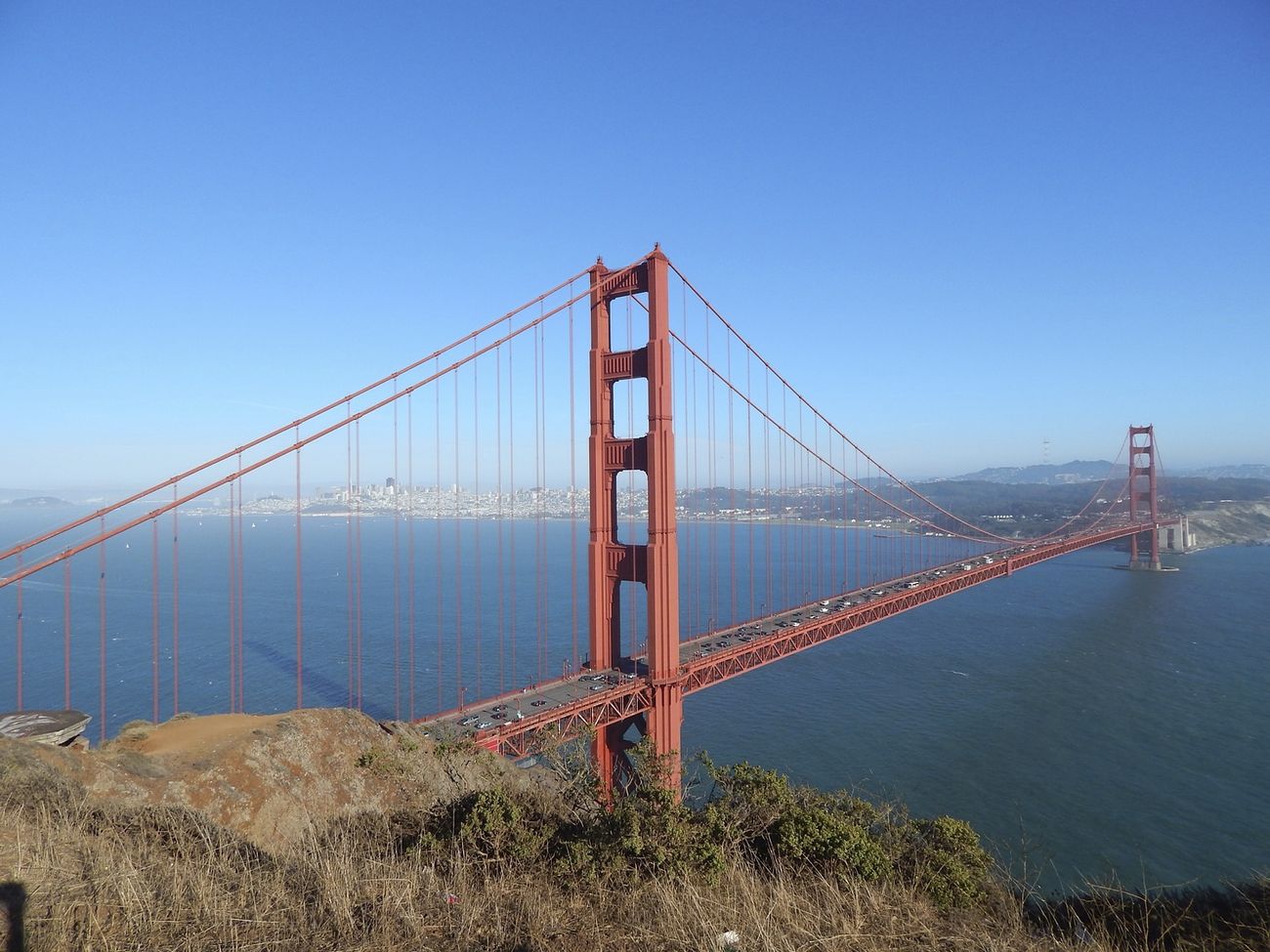
Ever the adventurer, my father turned every weekend into a mini-vacation in which we would acquaint ourselves to the area. We drove the short distance to San Francisco to see the Golden Gate Bridge and to drive on the steep streets. We ate seafood and went to elegant movie theaters. We drove along the coast and walked under the giant sequoias. Once we even went in search of an observatory but somehow we were not able to find it. 

I loved those weekends with my parents and my brothers. I had to admit that northern California was incredibly beautiful and interesting. I suppose that if I had found friends there I might have been happy, but my whole life revolved around those four hours of school and the tiny orbit of my family. I suppose I became closer to my brothers during those days because they were the only children that I encountered during my time away from school. The free range wildness of my old neighborhood in Houston was missing in that place in California and I never quite knew why. 

When the Christmas season came we went to a big party where my father worked. I never really understood what kind of job he had or what the name of his company was. It must have had something to do with the military because the place made tanks and we were allowed to ride inside them as part of the festivities. That was exciting, even as I realized what a rough and noisy ride it was. I was proud that my father was having fun with his work and doing something that seemed cool even if I was never quite sure of what that was. 

I became unbearably homesick when Christmas came. I knew that all of my aunts and uncles and cousins would be gathering on Christmas Eve at Grandma Ulrich’s house. I imagined them sitting on the chairs talking and laughing so loudly that the neighbors probably heard their joyful sounds. I could almost see my grandmother opening her gifts and passing around coffee. I imagined my cousins feasting on oranges and apples and a gigantic Whitman’s Sampler of chocolate candies. 

We had a lovely Christmas tree in our house and our walls were festooned with Christmas cards from everyone back home. Santa found us and left magical gifts but they did not make me as happy as I would have been in Houston. My grandparents called us long distance to wish us a Merry Christmas. It was good to hear their voices and know that they were thinking of us. My brothers and I danced and sang on the hearth of the fireplace and we did our best to make it feel merry, but nothing felt quite right. Perhaps in the New Year of 1957, we might finally adjust and find joy in California. In that moment it hardly seemed possible, but I had hope.