The Best of Intentions

Photo by Paris Lopez on Pexels.com

It was a lovely early morning. I was completing the Wordle puzzle of the day while the sun slowly began to rise. The house was quiet as my husband and father-in-law continued to sleep. Only the sound of our heater humming to keep us warm on a cold winter day echoed in softly in the background. I felt blissful as I sipped on my tea and enjoyed the slow start of a new day. 

Suddenly the annoying roar of a leaf blower assaulted my calm. The darkness had barely gone away and yet there was a horrible drone that made my stomach clench ruining the peacefulness that had only recently hovered over my early morning rituals. Nothing about the moment felt right at just past seven in the a.m. I arose from the comfort of my chair to see who and what was daring to destroy the calm. I saw a landscaper working just down the street happily doing his job unaware of the commotion he had created. 

Of course I understood that he no doubt had many lawns to manicure before the shortened winter day turned dark once again. He was no doubt a hardworking man eager to take advantage of the first light of day, but did he really have to wake the dead with his raucous noise before eight in the morning? Had he even thought about those who might still be trying to sleep? I’m guessing that he never even considered such things. He was awake, so he assumed everyone else was as well. Never mind that a slumbering baby might now be crying or that an old man would be startled awake sooner than usual. Does he even realize how the loud drone of his blower at such an early time sets a disturbing tempo for the start of the day?

I know I sound like a grumpy old woman. I used to roll my eyes when I read about townships that outlawed blowers entirely or crafted rules that only allowed them to be used during certain hours. I found such ideas to be invasive, the stuff of demanding people who were unable to adjust to the needs of workers whose livelihoods depend on being the early bird. Suddenly I too was grumbling and complaining about noise like a grouch. Had I become a curmudgeon without even realizing it? Was I really so tied to my morning routine that I would not even be willing to show compassion for someone with work to do while I reveled in my retirement?

Once I quelled my irritation I felt a bit of shame. The commotion of noise only lasted about fifteen minutes and then it was silent again. I was none the worse for the brief interruption. My heartbeat slowed again and my breathing became calm. Perhaps it was silly of me to overreact. Still, I wonder if maybe a compromise might be in order. Perhaps such noisy work should not begin until eight in the morning. Maybe we all need to bend a little the help each other. Perhaps neither my routine nor his have to be set in stone. 

Life is like my morning was on that day. Things often happen when we least expect them. We make our plans believing that they will be fulfilled only to be faced with the unforeseen. It jolts us, makes us anxious, but if we wait just a bit most of us adjust to whatever situation has come our way. We’ve had a lot of adapting to do in the last few years. Our world has seemed to be spinning out of control. We have been jolted. Our routines have been tested. We’ve disagreed on how to deal with the many issues that strain our patience. 

Our challenges have been way more significant that being annoyed by the sound of a loud blower early in the morning. Many of our issues have been a matter of life and death. We’re all reacting to the startling feelings that such things cause. We want to blame someone, become angry with someone, when we really need to first calm down, allow our hearts to beat slower, our breaths to come more easily. When we quell our anxieties we are much more likely to realize that we survive best on this earth when we are able to work together with all of the flexibility that such an idea implies. 

The simple truth is that our world has been pounded by a novel virus that did its best to overwhelm our hospitals and our medical communities. We had to react with so little knowledge. We had to make decisions quickly. There were bumps and misfires just as such situations always cause. Those leading had to move quickly with very little knowledge about what was right and what was wrong. Over time as they learned more and more about the virus they were able to change. Missteps were not nefarious. They were only the result of needing to respond to the emergency without hesitation and then adjust and readjust as new information became available. We all participated in the scientific method at its best.Now that we are moving into a quieter phase of the endemic version of the virus we can still our hearts, slow our breathing. Our goal should not be to punish anyone who attempted to help us, but to study the situation and craft plans for the future health crises that may come our way. Even as we do this, we need to understand that our best laid plans may often go awry.

I overcame my anger over the leaf blower. I eventually understood that the poor man doing his work had no ill intent even if he did create a furor. He eventually went his way to tackle the next job. In truth any harm he had done in so crassly awakening the neighborhood went away as quickly as the sound of his droning machine did. There was no need to accuse him of being inconsiderate because I don’t think that was his intent at all. I was fine once I thought things through. Everyone was fine. Our little cul-de-sac returned to it’s peaceful routine. Perhaps that is what we all need to do now that the biggest danger of the virus seems to be dwindling. Nobody intended to make things hard for us during the last few years. The intentions were to keep us safe. How can we complain about that? 

Thinking Out of the Box

Photo by Karolina Grabowska on Pexels.com

If only everything in life were simple. How wonderful that would seem to be! Having an easy answer for every situation we face would appear to make all of our decision making so much less stressful. Anxieties would melt away, or would they? 

If we’ve lived more than just a minute we’ve learned that life can be complex, difficult. There is rarely a single answer for anything other than adding two plus two. Thinking and then doing is an intricate process that often leads to disagreements and taking sides. How and what we choose to do or not to do, say or not say affects our lives in so many different ways. If we are wise we will realize that there is rarely one way of believing or doing things that works for everyone. Thus we tend to become more willing to accept our differences as a necessary given in life. 

Religion and politics often ask us to choose one or the other. Proponents of a particular set of values and beliefs want to think that they have found the one and only valid way to approach life. In truth the “facts” that they present to persuade us to accept their philosophies are often more likely to be only “opinions.” 

History is replete with individuals or groups insisting that their views are the only valid ones that we should consider. Humans have been divided and conquered from the beginning of time by arguments that favor one person, group or country over another. In spite of a multitude of religious beliefs we are encouraged to embrace only one as the truth. So it is also true of political, cultural and societal canons. Unraveling the tangled ball of human ideas is a lifetime project that never seems to have a clear conclusion. 

We appear to agree that it is wrong to kill another person, but even that concept becomes blurred when we excuse ourselves for ending lives in war or punishing a criminal by death. We say that we should not steal from others, but we have been known to take the freedoms of other humans and then find excuses for misappropriating their liberties. Looking away from our contradictions and pretending that they don’t matter can be more comforting than facing our complexities and asking, “Why?”

I have greatly enjoyed my work with young people because they are never afraid of pushing back, noticing contradictions, thinking about fairness. Sadly as adults we too often squelch their attempts to make sense of the world around them. We may hide controversies and insist that they accept a standard point of view in an effort to protect them from unpleasantries. Instead we may find that allowing them to question the status quo and respecting their thoughts as they proclaim them is a better way of helping them to begin the process of making their own decisions about how to take on the looming specter of adulthood that lies before them. 

A toddler will ask “why” a hundred times a day, but as children grow older they often learn that asking too many questions, seeking too many answers is not always admired by society. They begin to hide the true thoughts running through their minds and seek like minded people to reinforce their beliefs rather than feeling free to explore the many ideas of humankind. Their natural inclination to constantly seek real answers begins to shrivel up and fall victim to propaganda and even lies. 

As a teacher I encouraged my students to have the courage to ask questions, lots of questions. I often explained that authoritarians throughout history have attempted to deny people the freedom to think out of the box. We talked about the torture of Galileo for daring to claim that the sun is the center of the universe and not the earth. I told them about political regimes that first imprisoned the teachers and journalists and historians to quiet the sounds of their voices. I suggested that having a variety of books to read was one of their greatest freedoms because in many times and places what people might choose to read was constricted to conform to a particular set of beliefs. I even reminded them that slaves were often kept ignorant of learning to keep both their bodies and their minds in chains. 

I remember one of my students returning as an adult to tell me that he had seen such constrictions on the freedom to think when he served as a soldier in Iraq. He spoke of how he thought of my insistence that unbiased education should be one of our most cherished freedoms. He saw firsthand how outlawing openness of thought created violent governments rather than functioning democracies. He fully understood the importance of allowing the free flow of ideas.

In the present time we seem to be engaged in a dangerous culture war in which many among us want to encase prohibitions into law. Some worry about exposing our children to what they see as radical ideas. They view open dialog as being propaganda rather that the exercise of freedom. They want to “protect” the young from thinking that runs counter to their own, little realizing that a curious young person will always find a way to seek the truth. They do not seem to understand that discussions without condemnation lead to better answers than groping in the dark. 

I trust the young. I know them to have good hearts and excellent minds. They are more than willing and capable of learning not “what to think,” but “how to think.” That process often requires thinking out of the box and considering all of the many points of view. I believe in the long run they will be better able to make the difficult but informed decisions of adulthood when we have challenged them with a multitude of ideas rather than feeding them only what we want them to believe.   

Grey Gardens

Photo by Laura Maestri on Pexels.com

I’ve always had a thing for documentaries. I’m up for watching even the ones that don’t appear to be particularly exciting or interesting. I usually learn something new no matter what the topic might be. Some of the stories stick with me for days like a little worm moving around in my brain. After the viewing I find myself googling for more information, a deeper understanding of what I have seen. I think about the issues and the people long after I have watched the accounts so carefully crafted to command my attention in today’s world of twenty four hour news, podcasts, and human interest programming. So when my daughter told me about Grey Gardens, a film from an earlier time that had somehow eluded my attention, I had to find out for myself what had so fascinated her.

Way back in nineteen seventy five when I was a very young mom running after my pre-school aged children Grey Gardens premiered in New York City with great fanfare. It instantly became a cult classic as well as a model of filming for future documentarians. It focused on two women, an aunt and a first cousin of Jackie Bouvier Kennedy Onassis. The two had become the object of curiosity when the story of their downfall from high society broke the news mostly because of their connection to their famous relative. The once well known socialite ladies were living in squalor inside a twenty eight room mansion in East Hampton, an enclave for the rich and famous. 

A news story depicting their predicament and noting their relationship with the former first lady revealed that dozens of feral cats were roaming freely through the rooms. Holes in the roof and the walls attracted raccoons. There was no electricity or running water and every nook and cranny was piled high with refuse, empty cans of cat food, and feces. Paper and household items were strewn everywhere. The once lovely gardens had become like the briar patch in the fairytale of Sleeping Beauty. The mother and daughter had themselves become a conundrum given their backgrounds. It was difficult to know whether they had somehow become mentally ill or if they were simply and exceedingly quirky. They became fodder for gawkers. 

Eventually Jackie O and her sister Lee rescued their aunt and cousin by helping to restore the home to a somewhat sanitary state of its former self. Crews came to repair the roof, the plumbing and the wiring. They removed the animals and the trash. They patched the holes in the walls and painted the rooms. Both Jackie and Lee lovingly visited with their Aunt Edith and cousin Edie, known fondly as Big and Little Edie. Lee also contracted with a film crew to document the quirky duo as part of an effort to create an historical record of the Bouvier family. The result would be different from the initial plan as the brothers realized that in the footage of the interesting mother and daughter they had the makings of an astounding documentary. They called it Grey Gardens and it took on a life of itself, attracting the attention of artists like Andy Warhol  and Calvin Klein. It was an instant classic and model for documentaires to come.

Edith Bouvier Beale was a beautiful woman who married a wall street lawyer and lived a life of privilege and luxury. She had three children including her eldest daughter, Edith Beale, who attended finishing schools and came out at debutante balls. Both women were beautiful, but the younger Edith was particularly striking and is said to have been offered proposals of marriage from Joe Kennedy, Jr., J Paul Getty and Howard Hughes. She was a stunning blue eyed blonde haired beauty who longed to be an actress, much to her father’s sorrow. Her love of singing and dancing and acting seemed to come from her mother, Big Edie, who fancied herself a woman of great musical talent. 

Little Edie lived in New York City as a young woman while her mother stayed back at the elegant home in East Hampton. Eventually Big Edie received a telegram from her husband informing her that he was filing for a divorce. His settlement would be to leave her the house and a stipend of one hundred fifty dollars a month, which was actually rather generous given the times. Sadly Big Edie had no idea how to run a household on her own, especially one that was so large and eventually she enticed Little Edie to return to East Hampton to help her. The two women would spend the next many decades in obscurity and poverty becoming more and more isolated from the world. 

Their story is a mix of contradictions. They developed a love/hate kind of relationship in which Big Edie dominated Little Edie who longed to be independent of both her mother and the house. They quibbled constantly but also seemed to enjoy each other immensely. Little Edie lost her lovely golden locks of hair and out of necessity created coverings for her head out of whatever fabric she might find. As her figure changed she fashioned quirky clothing out of tablecloths and recycled and reconfigured skirts and dresses. She had a flair for fashion and even though she had aged somewhat prematurely, her beauty was still apparent as was her creative bent which had never been adequately satisfied. 

Big and Little Edie were women of their times and stations, trained from their youth to be beautiful extensions of wealthy men. They had grown up in a gilded age of servants and opulence. When all of that was suddenly gone, they struggled to survive on their own, but somehow managed even in terrible conditions. They both lived in a kind of time warp of fantasy punctuated by reality with Big Edie insisting that life had always been good and Little Edie longing for the freedom that she believed had been stolen from her. 

The story of these two women is so fascinating that I watched the documentary and also the television movie of the same name that featured Drew Barrymore as Little Edie and Jessica Lange as Big Edie. I found myself haunted by their story because it was so indicative of the fate of women in their era who had to fulfill their obligations as wives and caretakers first and foremost without allowances for their own dreams. They lived well or horrifically at the whims of the men in their lives. Remaining true to their own personalities was difficult given the dependency on men that most women of the times had to patiently endure. Both Big and Little Edie struggled to maintain their identities but never totally gave in to the demands that had been made of them. Along the way they became caricatures of themselves who seemed comical but were actually quite strong.

Big Edie died a year after the documentary premiered and Little Edie eventually realized her dream of entertaining by performing in a Greenwich Village cabaret. She finally sold the house known as Grey Gardens and toured the world. Later she settled in Florida where she lived well into her eighties celebrating her life her own way just as it should always have been. The house where the two Edies once lived has been beautifully restored by powerful women, artists who were allowed to be themselves and succeed. Somehow the circle of the lives of Edith Bouvier Beale, Edith Beale and Grey Gardens has been completed just as it should always have been.

The Axe

Photo by Simon Berger on Pexels.com

“A book should be an axe to chop open the frozen sea inside us.” —-Franz Kafka

I love to read. The most horrible thing that might ever happen to me would be to lose my sight. I can’t even imagine not being able to turn the pages of a book, or surf the Internet for stories and news. I would miss watching movies and televisions shows. I would long for the views into my backyard or from my car in my travels. I am a visual learner, a person who has to see in order to believe. I have found great joy inside the pages of books.

My favorites are the ones that teach me things that I did not know or with points of view so different from my own . I remember reading The Kite Runner and reconsidering all of the stereotypes that I had about Afghanistan and its people. The same was true of Things Fall Apart, a story with a different viewpoint toward colonialism. Both novels challenged me to reorganize my thoughts, to question my beliefs. They chopped open the frozen sea inside my mind and became two of my favorite works of fiction. 

Isaac’s Storm took me to a familiar place and a well known story, but it introduced me to the backstory of an event that I believed I knew quite well. Set in the days and hours before the nineteen hundred hurricane that ravaged Galveston, Texas it is a stunning look into humankind’s hubris and vulnerability. It tells of a time when Galveston, Texas was a sparkling city by the bay, a place of high finance and success. Seen through the story of Isaac, the local weather expert is unfolds into one of the greatest tragedies of all time. Since reading that true account I see Galveston in a very way than I once did. I feel the spirits of all the innocents who died each time I visit. I now have a kind of reverence for those who perished. 

Such books dare me to leave the isolation and privilege of my own life and to see worldviews very different from my own. One book leads me to another in my quest to learn even more about the places and ideas presented in the pages between the covers. Whether fact or fiction I prefer those that ask me to suspend my personal judgements and to place myself into another person’s shoes if only for a time.

It seems that the more I read, the more I change. i learn new words, new customs, new philosophies, new truths. Books awaken the sleeping corners of my mind and force me to become less inward and more inclined to appreciate differences. I become the citizen of the world that my high school English teacher challenged me to be. He introduced me to authors that I had not known like Albert Camus and Franz Kafka. Their works were metaphysical and strange to an innocent girl who had rarely ever left her hometown or even the street on which she lived. 

Reading The Lord of the Flies was exciting but sometimes confusing because I had never met people whom I thought might become so uncivilized in a situation when they should have been working together. Then I saw the rumblings of such behavior during the recent pandemic. I saw that those wild young men may not have been so out of character after all. 

Truth is often stranger that fiction, but a good tale captures the essence of the human story. It teaches us and asks us to consider that our ways of living are not the be all and end all that we may think. A well crafted character introduces us to people that we might otherwise never meet and opens our minds to the idea of crossing over the chasms between us. We learn that when all is said and done each of us longs for safety, kindness, autonomy, love. We are not so different after all.

I outgrew fairytales long ago I no longer want only happy endings or characters with magical lives. I expect authors to chop away at the still frozen parts of my mind. I grow with every such encounter and it is good.

Evolving

Photo by Kampus Production on Pexels.com

We sit around the table each evening talking with my father-in-law. I’ve learned more about him in the past eight months than I knew after more than fifty years of being around him. He’s a bit old fashioned about the relationships of men and women. Most of the time when my husband and I went to visit him the men would excuse themselves and leave the women to talk. My conversations with my father-in-law tended to be brief and of little substance. What knowledge I had about him came from the comments of his wives. Now I hear his stories and opinions every single day for an hour or two before, during and after dinner. 

I’m from the Baby Boomer generation and we were just as defiant in our quest to be more forward thinking than our Greatest generation parents as today’s young folk are. We rebelled much as all young adults tend to do. We thought we knew more than our parents because we often enjoyed the gift of being more educated than they were. They grew up in a different kind of era and it showed. 

Now we Baby Boomers are gray in the hair and long in the tooth, two generations removed from our grandchildren. Some among us even have great grandchildren. The young folk protest that we do not understand what it is like to be coming of age in today’s world and I suspect that they are correct. We are at the end of our lifelong journey while they a just beginning theirs. Our worldviews are by definition tinged with differing events that influenced the ways in which we think. 

Those conversations with my almost ninety four year old father-in-law have amused me because of the stark differences in the way he and I see the world. While I am still just young enough to celebrate change, he is stuck in days of long ago. He prefers to watch old movies, listen to old music, and go back to a time that felt easier and safer to him. He is not interested in politics or the fate of other people or nations. He’s tired and simply wants to enjoy however many days he has left without any concerns outside of himself. 

I suppose that is the way we humans always are. We reach an age of simply wanting to stop the clock as we reach back in time for our most precious memories. We become too tired to be open to new ways of doing things, new ways of thinking. It’s both amazing and concerning to me that I too may one day settle into a phase of not even wanting to hear what is happening outside of my tiny little world, and yet I worry that one day it will happen to me as well.

I recently had a wellness visit with my physician. He wanted to know how my life was going. When I told him that I was helping to care for my father-in-law he rolled his eyes and commented that I was “an old person caring for an old person.” I laughed because I have yet to think of myself as being old. I’m quite energetic and I read profusely to learn as much about current events, discoveries and ways of doing things as possible. I still interact regularly with my young students and gain knowledge from them as well. I like the new music and discuss the difficulties of today’s young adults with my grandchildren. I want to believe that I am keeping myself current and young at heart but I see differences now and again that speak to the evolution of each generation that has been taking place since the beginning of time. I realize that I seem “old” to people who only peripherally know me. 

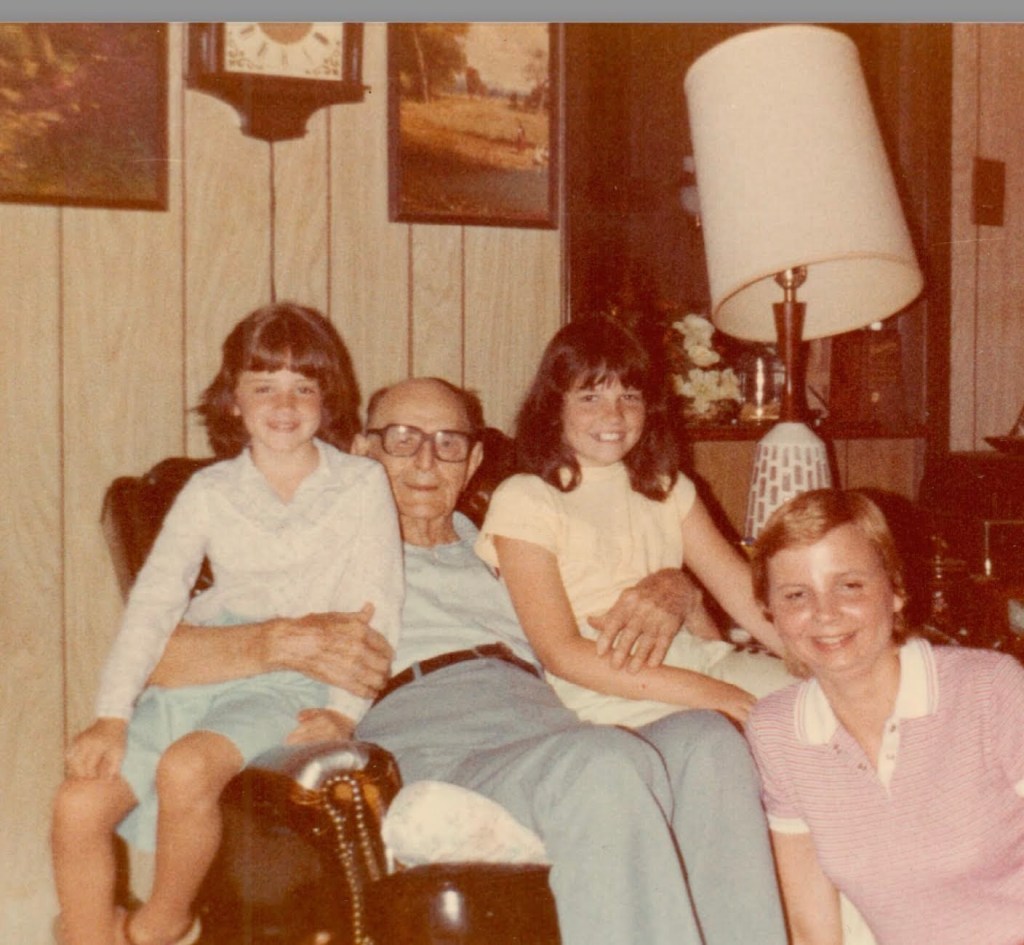
I suppose that I too will one day become more set in my ways but I secretly hope that I will live out my life like my Grandpa Little did. He somehow remained young at heart throughout his one hundred eight years. He was a forward thinking man who appreciated progress. He mused on his life and boasted that he would never want to fall backward in time. Perhaps his outlook is what helped him to thrive for so many years. He was as current as a twenty year old until the last few months of his life when his body began to turn on him.

Like Grandpa I see the future and hear the voices of the young with their yearning to have the opportunity to try their hands at leading the world. They are more open to exciting new ways of doing things than we are. They are ready to build a better world than the one that they have inherited. They have ideas that they are anxious to convey. We would do well to hear them out before judging them. 

I think that every generation has difficulty understand those that come after them. They are wary of turning over the reins of power because they cling to old ideas, outdated ways of doing things. Because we live longer and longer lives the adults behind us have to wait longer and longer to get opportunities to be in charge. We would be wise to step aside to give them the respect that they deserve. 

I used to seek out my Grandpa Little for wisdom because he was truly an elder statesman. He moved with the times but also saw the whole picture of his life. He was willing to tell us about the mistakes of the past as well as the glories. He taught me to learn from truth rather than to hide from things that made me uneasy. I hope I can follow his example because the fact of life is that I will become less and less relevant if I am unwilling to accept that there is a constant evolution in the way we humans do things. My goal is to grow old in body but never in mind.