Trapped

Photo by Martin Pu00e9chy on Pexels.com

I remember being frightened to enter an elevator when I was a child. I held on tightly to my mother’s hand as I jumped over what seemed to be a massive gap between the main building and the tiny enclosure that moved up and down. I suppose that I thought that I might fall through that tiny opening in the floor and fall to my death. I was also concerned that the doors might suddenly close and crush me if I were still in the way. 

My mother always assured me that there were mechanisms designed to make elevators as safe as can be. When years later a man literally got crushed by elevator doors that unexpectedly shut on his body I wondered what other things my mother had told me had actually been a bit inaccurate. Hearing the constant admonition to “mind the gap” when exiting elevators in London also made me realize that I may not have been so silly at all with my childhood anxiety about that little space that always seemed larger than if actually was. 

One thing that never really concerned me was the idea of being trapped in an elevator. I simply assumed that the little box would move up and down as planned, but indeed there have been occasions when people found themselves stuck between floors when the power in a building suddenly went out. Since I tend to become anxious in closed spaces I don’t think I would do well if such an occasion were to arise. I suppose that I would rather use stairs or escalators when possible to make certain that I will never find myself in a situation that would no doubt cause my heart to beat a bit too fast. On the whole I need to have a way to escape on my own power rather than relying on an electric mechanism that keeps things operating as they should. 

If such an event did indeed occur I suppose that I would have to breathe deeply and attempt to divert my thoughts for however long I was trapped. Even though I would generally prefer to be alone with my fears, this would be one occasion when companionship with other humans would actually be helpful, but not too many. If I were squeezed into a tiny space I’m afraid that I would freak out and hyperventilate. Having enough room to move around and maybe even sit down for a time would make it at least a tiny bit bearable. 

I suppose when I think of such possibilities of entrapment my mind drifts to thoughts of slaves packed in the bottom of a ship, chained up as though they were property rather than humans. I imagine those cattle cars on trains filled with souls headed to concentration camps. I associate tight spaces with cruelty and hatred.

We humans have some very bad tendencies to rank other people as though some types are superior and other are inferior. I’m not sure what causes us to do such things, but it is fact that has happened for centuries. It’s why the Israelites were enslaved by the Egyptians and people are trafficked for profit even in modern times. I sometimes wonder if my aversion to being confined comes from my empathy with those who have been degraded, trapped and confined by other human beings throughout the course of history. 

It has always been difficult for me to understand why people ever thought it was proper to steal land from people native to a certain region or to classify persons of a certain description as being inferior and yet it is a fact of history that these things have happened over and over again. Even my Slovakian immigrant grandparents and their children were taunted and ridiculed as being dirty and somehow subpar to the people around whom they lived only because they were from a certain part of the Europe that was thought to be inferior. I think of my grandparents traveling across the ocean in search of freedom in the tightly packed steerage of a ship only to be unwelcomed when they arrived. I feel suffocated by the mere thought of what they patiently endured without complaint just to earn a place in America. 

So if I were trapped inside an elevator I would hope that I would be able to get control of my claustrophobia and be calm and pleasant with whoever was in the situation with me. I’d want to work together to free ourselves from the confinement and maybe make a joke about our situation or tell each other stories about who we are and why we happen to be in the same place at the same time. It would be the only way that I would be able to endure my fate without overreacting and thinking about what imprisonment of any kind must be like. I’d remind myself that people before me have endured far worse. 

The odds that I will ever find myself stranded inside an elevator are slim to none so it’s unlikely that my courage will be tested inside such an enclosed area. I’m more likely to come unglued in a closely packed moving crowd. Mosh pits and I will never come together, nor will I put myself in the middle of hundreds of people moving together at the end of an event. Thankfully I have total control over the situations in which I place myself unlike refugees so desperate to flee from oppressive governments that they will squeeze into the back of a windowless van to die from heat and suffocation. Still I wonder why some humans are still so cruel. Surely history has taught us to be better.
A Brief Encounter

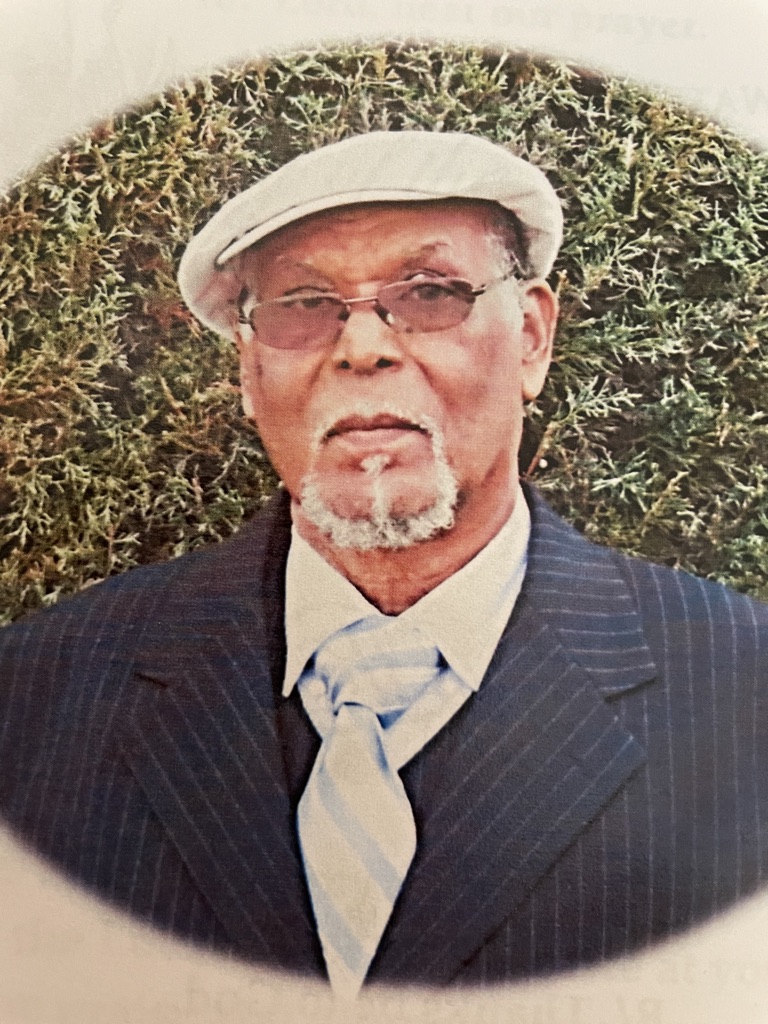
A few years ago a new family moved onto our cul-de-sac. They were a friendly bunch who fit right into our neighborly traditions. On New Year’s Eve 2019, they hosted a party that was filled with dancing to music from each decade starting with the 1940s. It was lots of fun and the best part was that we finally got to meet the patriarch of the family who did not get out much because of his bad health. Augustus Barnabas Cabrera may have sat through the festivities, but his feet were tapping away to the music the whole time while a smile lit up his face showing his delight at seeing every enjoying the evening. 

Mr. Cabrera was born in Trinidad where he spent most of his adult life working for Texaco/Trintoc and raising a large family. He was a union man who quietly worked for good working conditions for his fellow employees and he was also a faith-filled man who put God first in everything that he did. He loved his Catholic Church and served on the Parish Council as faithfully as he did his work for Texaco. His children speak of the many sacrifices that he made for them as he guided them to be productive and compassionate adults. 

I did not see much of Mr. Cabrera after that New Year’s Eve party. The Covid pandemic hit with full force and he mostly stayed inside his home where his daughter, Christine, faithfully cared for him. His health began to further decline during those long days of isolation and he became mostly bed bound. We often witnessed ambulances arriving to take him to the hospital for emergency procedures, and on one occasion his parish priest came to administer the last rites. Somehow he rallied again and again.

Once Covid was not as worrisome as it had once been, a home healthcare worker would push his wheelchair around the neighborhood so that he might enjoy some sunshine and the well wishes of the neighbors. He always had a beautiful smile for anyone that he encountered. It was truly a delight to see him once again, but his time on this earth would not be for much longer. He died at the end of August this year. 

There was something special about Mr. Cabrera that I can’t quite explain. I mostly only knew of him, not about him. I was taken by his smile and the love that his family had for him. I only interacted with him a few times, and yet I felt that he was someone quite special and that I had been fortunate to spend those brief moments with him. When I went to his funeral mass at St. Luke the Evangelist Catholic Church I had a remarkable spiritual experience as though I had somehow been in the presence of a saint. 

I learned that Mr. Cabrera had been a determined advocate for justice and fairness. I heard that his faithfulness to his family and to God was exceptional. I realized that the frail old man with whom I had felt so comfortable had led an extraordinary life that was filled with hard work and great joy. His foot tapping at the New Year’s Eve party was no accident for he had always been a fan of Calypso music and dance. He had a balance in his life that kept him focused on the good of others. Somehow I felt his story calming me and urging me to keep following my own pathway in life. 

It’s funny how the small moments in our lives often turn out to be life changing. As I sang the hymns and prayed with Mr. Cabrera’s family I felt as though in his story I had found the true meaning of life. He was a quiet and unassuming man when I met him and yet I had realized that he was far from ordinary. Even in his pain and the slow dying of his body he was focused on being a light for the people around him. I know that he brightened my day whenever I had the privilege of seeing him.

Mr. Cabrera loved working the soil in his native Trinidad. He enjoying doing organic farming on his land, growing tropical fruits and vegetables. He raised ducks and chickens all the while entertaining his family with his endless sense of humor. He devoted his life to his wife and children and at the end of his own life his children and grandchildren were devoted to him. 

Mr. Cabrera truly lived. His legacy will be remembered not just by his family members but by the oil workers for whose rights he battled, and by the neighbors like me that he so impressed. Surely he was a man of God in every sense of that idea, a kind and compassionate soul who understood how to sacrifice for others and how to love. 

I feel fortunate to have had my brief encounter with Mr. Cabrera. He was a reminder to me of the goodness in humanity that is sometimes hidden by those whose ugliness steals the headlines. It is in the quiet but determined souls like Mr. Cabrera that our world moves forward towards fairness and love. Knowing that there are people like Mr. Cabrera calms the fears of my soul. May he rest now with the angels in the heavenly home that he most assuredly earned.  

Water Is Life

Photo by Steve Johnson on Pexels.com

I chose my home because of the kitchen. It is bright and airy with windows overlooking my backyard garden. I have appliances that my grandmother never imagined and tools that make cooking a breeze, but if I had to name the one thing in my kitchen that I appreciate the most it would be the clean water that runs readily from my faucet. It’s something that we tend to take for granted until we no longer have it. Of late I often find myself staring at it in wonder and feeling so grateful that I live in a place where it is so readily available. 

Water really is life in some parts of the world and even our own country it is becoming a valuable commodity indeed. I’ve watched all summer while places in the southwest have become parched, revealing dry beds where rivers once flowed. Here in Texas two areas have been particularly stressed by drought with wells running dry and rivers that usually provide tubing fun for tourists looking like dusty trails. It has made me wonder when and even if such places will find relief. 

Then there is the situation in Jackson Mississippi where citizens have been without safe water for drinking or bathing or even flushing toilets for weeks because flooding caused the old infrastructures to collapse. I can’t imagine having to endure such conditions, but it seems that we never really know when we will face a situation that threatens the availability of water in our homes. 

This summer I took a carload of water to my daughter who lives in the Texas hill country because she was having difficulty finding it in stores and she was worried that the wells that provide water for her neighborhood might become dry. As it happened there was rain upon my arrival and stores also received new deliveries of bottled water, so she is fine for now, but still under restrictions that do not allow her to water outside more than once every two weeks for less than one hour. There are strict fines for those who ignore the directive. 

I’ve been through a few hurricanes here in the Houston area and one of the first rules of preparation is to set aside water in case the system stops working due to damage of the systems from flooding like in Mississippi. I learned to fill my bathtubs and all of my pots and pans with water before leaving for safer, higher ground when a storm is threatening. When I return I always bring bottled water and cleaning supplies with me that I purchased just in case there is a run on them in the stores. I try to be prepared for any eventuality and I always breathe a sigh of relief when the only damage is the loss of a few shingles on my roof. 

We humans are overbuilding in places that have very limited sources of water or where there is likely to be flooding during a heavy rain. We seem to be ignoring the importance of water, but our ancestors never did. They knew not to build near bayous or on river bottoms. They allowed rivers like the Mississippi to flow the way nature intended rather than attempting to arrogantly engineering changes that created problems for people whose homes were once safe. We build without considering whether or not aquifers will be able to quench expanding populations. We waste precious water on the greening of lawns rather than creating gardens of rock. We act as though our supply of water is limitless until it is not. 

So when I see that lovely water running into my glass from my faucet I smile and say a little prayer of gratitude. There is nothing else in my kitchen that is more wonderful or valuable as that miraculous chemical reaction that connects two hydrogen atoms to one of oxygen. It’s all rather amazing when we really stop to think about it. Then there are the pipes that bring it to our homes after it has been treated in plants that make it pure enough to drink. 

I remember my father talking excitedly about an engineering project that he was working on way back in the early nineteen fifties. it was an attempt to make potable water out of salt water from the sea. He got a glimmer in his eyes at the very thought of being able to do something that might change the fate of the world. Desalination on a grand scale was still a dream in the United States when my father died in 1957, but now it is being used more and more around the world to create fresh water. The Saudi Arabians first perfected the technique in 1938. In the 1960s it became more and more common when John F. Kennedy encouraged the perfection of desalination projects to increase the amount of clean water in our country.

Today only one percent of usable water comes from desalination and most of that is still in the Middle East. As droughts due to climate change endanger our water sources perhaps this process will become more popular even though it is an expensive process that requires a great deal of energy. We certainly need to acknowledge that clean drinking water is a requirement for life, not a luxury and make changes to the way we live to ensure that it will be around when we need it. 

I enjoy my ice maker, my microwave, my stove, my refrigerator and all of the tools for my cooking, but it is beautiful clean water that I most love. I’ve learned that it is not something that any of us should take for granted. Our world is growing and we all need places to live and water to drink to take care of our needs. Water should be one of our top priorities. We should not wait until a disaster to acknowledge how much we depend on it. It is truly a source of life that each of us must have.

Inspiring Greatness

Photo by Pixabay on Pexels.com

I have a brother who wrote the program for the navigational system of the International Space Station. To say that it was quite an accomplishment is an understatement. Needless to say, I puff out with pride when I think of his incredible contribution to the world. I also have an uncle who is now retired, but was once one of the premier cardiologists in the world. Kings and presidents came from around the globe for his expertise. My daughters often comment that it was somewhat difficult to grow up in a family where so many people were so bright and accomplished. On the other hand they felt honored to be in the presence of greatness. 

I used to tell my children that some lives that may seem small at first glance are in reality incredibly important in the grand scheme of things. My brother grew up under the guidance of a child of immigrants who spent most of her life in a state of hardship. In spite of the difficulties that plagued her, she had the ability to see the potential of her son and to inspire him to literally reach for the stars. Her contribution to our world was in many ways as remarkable as his.

I have always enjoyed reading biographies and autobiographies. I suppose that I am intrigued by the backgrounds of famous people and whose influences loomed large in their lives. A common theme that leads to greatness is having a parent or grandparent who nurtures the curiosity and intellect of a child to the point of inspiring them to live extraordinary lives. 

One of my favorite books was about the physicist, Richard Feynman. Dr. Feynman described how his father explained to him how things work from the time that he was a small child. Feynman remembered his father placing a ball inside a wagon and then jerking the wagon forward quickly. The father asked his son what he had seen happen which of course was that as the wagon lurched forward the ball moved backward. This demonstrated one of the elemental laws of physics and inspired the young Richard to spend his lifetime studying and teaching physics. 

You may remember Dr. Feynman as the man who demonstrated what happened to the Challenger rocket that blew up killing all of the astronauts inside. On a panel taxed with determining what had happened, Dr. Feynman took an O ring similar to the ones used on the rocket and quietly placed it in a glass of ice water. As he swirled it around the ring became distorted, losing the shape that would have sealed the fuel had everything gone well. In other words the cold of launch day had created a doomsday scenario only because of a tiny ring had lost its shape and no longer worked as it was supposed to do. 

The influence of parents, family members, teachers and even neighbors looms large in the life of a child. If the people around that tiny human nurture the talents and instill confidence greatness often results. We saw it with Dr. Martin Luther King, Jr. whose grandmother often predicted that he was destined to do something big. When Martin did not die after falling from a second story window as a boy, his grandmother proclaimed that God had an important job for him to do. Amazingly, it seems that she was right. 

When we interact with the young people around us we never quite know what our impact will be. Hopefully we will not harm them in such a way that they become damaged. In truth, most of the violence and sorrow that we see in the world comes from individuals who personalities have been somehow warped, either by genetic disorders or interactions with people who did not treat them properly. Just as my brother, Dr. Feynman and Dr. King became great men through the interactions with members of their families, some sad souls only see neglect and abuse as children. Their lives are filled with misery rather than inspiration. Their world view sees only sorrow, not possibilities. Unfortunately, such people all too often treat their own offspring as badly as they were treated and the vicious cycle of neglect continues unabated unless someone intercedes.

Behind every important person there is always someone who guided them to greatness. We don’t often hear about the silent souls who devote time helping a child to fulfill the talents that he or she has. They remain mostly unknown and yet their contribution to society is as great as the person who invents something new or the individual who lead the world to peace. We never know what our personal impact on the world will be, but we can be sure that helping young people to fulfill their destinies is always an admirable task. 

My brother inspired my grandson to follow in his footsteps, but it was my grandson’s mother who spent eighteen years helping him to develop his talents in mathematics and physics. It was my sister-in-law who took the time to explain to him how to adjust a telescope to gaze at the stars who convinced him that there would be many other teachers who would guide his way to a career of navigating those stars. It was his great grandmother who told him that he was brilliant and meant to be a leader in the world. These people gave him the confidence to move forward in pursuit of his goals. In doing so, they have been as great as he most surely will become.

A Hopeless Romantic

Photo by Alejandro Avila on Pexels.com

I am a hopeless romantic. I always have been. My favorite movies are epic love stories like Wuthering Heights or Titanic. I truly believe that it is possible to find a soulmate because I have done that. Sometimes I wonder how I got so lucky to stumble upon my husband on an evening when I actually wanted to be someplace other than where I met him. It was surely a serendipitous encounter that lead me to a lifetime of happiness and fulfillment. 

We did not need a dating service to analyze our likes and dislikes, or our interests and views on life to determine that we were and still are a very good match. It was happenstance and nature that brought us together and an instant kinship that has kept us that way for over fifty years. When all is said and done it was pure luck prompted by the occasion of a cousin’s birthdays that so unexpectedly helped us to find each other. We proved to have an uncanny sense of kinship from the very start. 

That is not to say that we are alike in every way, nor do we agree on everything. He can watch sports programs all day long, while I lose interest in under fifteen minutes. While we enjoy watching television programs together, we still have personal preferences in viewing that do not overlap. I find myself catching up on episodes of shows that he would never watch. The same is true of all kinds of things. It’s not so much in how we are alike that our romance blooms, but in how we treat people, especially each other. 

I am admittedly an exceedingly independent woman. I grew up in a home without a man as head of the household. I know how to take care of myself. I am a rather driven individual with goals that I am still in the process of achieving. My husband has been exceedingly supportive of my aims regardless of the cost or amount of time I have needed to fulfill them. He also encourages me to express myself honestly. He does not mind when we differ in beliefs. We’ve had some lively discussions about politics and life in general. His total respect for me has been empowering and the greatest sign of his love. 

I think I would have suffocated in a relationship that required me to always be in tandem with my husband. Instead I have always felt free to be me. I know that I will love him and he will love me without one or the other of us being forced into a more subservient role. I would have run from such a relationship before even walking down the aisle. 

My husband was very good to my mother even when she railed at him while in the throes of a manic episode. He welcomed her into our home with love. Now it is my turn to return his kindness by embracing his father as a member of our household. It has taught me how difficult it might have sometimes been for him to share our home with my mama for almost two years. Having one of our parents with us puts a strain on our privacy and limits our time alone. My husband handled such a situation with so much remarkable kindness and understanding that I am still in awe of how wonderful and patient as he was. 

My father-in-law is a very sweet man. He is the consummate old fashioned gentleman. He was taught to care for women, to hold open doors, to have serious conversations with other men in another room so as not to worry the females. For many he would represent the best of a romantic man, but while I greatly admire his loving ways, I prefer to be more of an equal in my relationship with my husband. I realize how incredibly lucky I have been to be wedded to a man who is quite modern in his thinking about the roles of the different sexes. It makes me treasure my husband more than I ever have, because I have witnessed the difference between how men of the past valued women and how the more modern men like my husband demonstrate the same kind of devotion. 

I have come to realize that for me true romance has been my husband supporting me in every possible way as I furthered my education and pursued my career. He has honored me by listening to my philosophies and encouraging me to live according to what works best for me. Together we raised two girls to become strong women who are unafraid to speak their minds. We are truly equal partners in life.

I spent much time with my husband’s mother before she died. We often sat together talking about being women. She was a brilliant soul who at one time had hoped to be a translator in a diplomatic setting. She saw herself at the United Nations or the Hague. Her life took a different turn and she ended up working as a bookkeeper for a family business and then at a church. She was happy with the way things turned out and was not one to regret, but she liked that women were becoming freer to be career oriented. She told me that she had purposely taught her son to value women just as they are and to support them in becoming whatever they wanted to be. She was proud that he had walked alongside me rather than in front. She loved that he had encouraged me to fulfill my educational and career goals. She liked the mutual respect that we had for each other. She had tutored her son to be the ultimate romantic, a man who has never been threatened by my independence and success. 

I used to read fairytales and I adored them. Now I prefer a story of mutual love that allows each partner to become their best selves. I have enjoyed such a romance, and for that I am eternally grateful. I am thankful every day of my life that I met this man. I am a hopeless romantic of a different kind.