God Is Not A Coke Machine

girl-praying-hands-eyelashes-41942.jpeg

I begin each morning with prayer and then have little talks with God all throughout the day until I end with a kind of good night affirmation of gratitude. My prayer life is rather ordinary and flawed. I know people who are inspiringly spiritual whose devotionals are profound, but mine are more akin to the kind that people utter from the bottom of foxholes as bullets are flying over their heads. I say a few thank you phrases acknowledging the Lord’s presence in my life, but all too often follow up with requests for this person or that. Of late my list of those in need has grown to the point that I sometimes can’t quite recall all of the names and causes. I simply suggest that God must indeed remember all of the situations and I ask that He care for each of them. I try to include some praises of His glory, but admittedly I often sound like a child begging a parent for goodies as I reel off my hopes and dreams in a rush of impatience. I sadly all too often grow anxious that the answers I seek are taking too long to materialize. I know, and so does God, that I still have a long way to go in my prayer life.

I’ve often laughed at how we humans pray. I’ve seen students silently pleading for a good grade as I am walking through the classroom returning the results of tests. Of course, by then it is a bit late to change the scores. The real intersessions should have come earlier and might have centered around guidance during the studying phase. By the time that the marks are being returned only an impossible miracle is going to change the number that I have already made on each person’s paper.

I suppose that many of us use prayer in ways that don’t make a great deal of sense. Instead of asking for strength to deal with the human challenges that we must all face, we all too often ask God to for very specific outcomes that would force Him to choose one person over another. We beg for a win in an athletic endeavor as if the Lord is wearing the same jersey as ours. We have a tendency to place time limits on our requests and wobble in our faith when the answers that we seek are slow in coming.

The best prayer warriors that I know have a completely different style of communicating with God that is based on trust. They do not presume to question the challenges that they face, but rather seek the courage and peace that they need to deal with realities. Instead of entreating a higher power to grant them favors they ask instead for the kind of character that they will need to withstand the buffeting winds of life’s difficult moments. They focus on becoming an instrument of peace, justice and love. They ask what they must do rather than imploring for gifts. It is definitely a better way, and the sign of a deep and abiding understanding of God.

Of course there are also those who think that the very idea of some all powerful force watching over us and guiding our way is absurd. To them prayer is a wasted effort that might better be served with action and effort. They cannot imagine that otherwise sensible people believe in some nebulous and unproven concept like God, or miracles. They see religion as a kind of fantastical crutch that we humans use to explain away our own frailties.

I have several friends who meditate daily. They read the Bible or find comfort in the writings of those who have somehow found wonderful ways of explaining how best to form a meaningful relationship with God. They emphasize the need for patience as our individual purposes unfold. They urge us to quiet our minds so that we might actually begin to understand what we must do to find contentment. Theirs is a beautiful spirituality that is elevated from the kind of babble that I seem to utter in my own haste to get on with the duties of the day. I suspect that I am not unlike many of my fellow humans in that that regard.

I was humbled during the recent floods in my city by a comment from a friend whose home had been inundated. She noted all of the people who were thanking God for not sending those waters into their own houses. She suggested that comments speaking of God’s goodness in saving them implied that those whose abodes were devastated were somehow not chosen for blessings as though they may not have had enough faith or goodness to deserve salvation. She suggested instead that those who were high and dry simply be thankful that they were lucky.

A priest once explained to me that God is not like a coke machine. We can’t just insert a coin of prayer and expect a certain outcome. He insisted that the object of prayer should be to praise the Lord and seek His guidance in navigating the arduous journey that is life. We become disappointed when our only goal is to achieve very specific outcomes. “He doesn’t work like that.” When we focus on wanting rather than asking what we must do we run the risk of losing faith and questioning the very existence of God if things don’t work out the way we had hoped. If we do it properly prayer can be a very beautiful thing with the power to bring us comfort. It helps us to find answers to the questions that concern us.

My mother lead a prayerful life. She never questioned the hardships that came her way. Instead she thanked God for living inside her heart and keeping her optimism alive. She saw the dawn of a new day as a great gift from her God. At the time of her death she almost appeared to wear a halo around her head as her eyes shone brightly with the confidence that she was heaven bound. There was no doubt in her mind that she was about to receive the only reward that really mattered. She had been a faithful servant her entire life. She had always understood how to pray.

I try to improve. I watch people like my mom and others whom I greatly admire. They teach me what I must do and tell me that it is okay to have feet of clay. I just have to keep trying to get it right. God knows that I try. 
Igniting the Fire

pexels-photo-750225.jpeg

We all know someone who appears to have walked straight down a pathway to the unfettered fulfillment of dreams and goals. From the outside looking in it may even seem as though certain groups of people have more access to lives uncomplicated by roadblocks and disappointments than the rest of us. In truth those whom we believe glide effortlessly through life are the exception rather than the rule. Most of us mere mortals are faced with multiple challenges that change the courses of our journeys or sometimes even create almost intractable roadblocks. It is in how we choose to face down the limitations and difficulties that beset us that determines our mettle as human beings.

I am quite naturally drawn to interesting stories that speak of determination. I’m fascinated by the extent to which some humans will work to be their best selves regardless of the discouragement that they may encounter. Their unwillingness to resign themselves to bitterness or self defeating behaviors serve as inspiration, but all too often we neglect to truly analyze just how much courage and effort it may have actually taken for them to succeed.

It was most unlikely that Abraham Lincoln would one day become one of the most admired and best loved presidents of all time. He was born in the backwoods of Kentucky and had the bad luck of being poor and not particularly attractive. There was little of great merit to recommend him as a leader, and besides he suffered greatly from recurring depression and thoughts of suicide. Nonetheless it was his moral code of honesty and compassion, along with his gift of speaking that slowly propelled him into history. His life was continually beset with tragedy and his melancholy produced tremendous suffering for him, but his sense of responsibility somehow overcame all of the adversities that befell him. It was as though he understood that he had a destiny to follow, so he soldiered forward even as he considered and feared his ultimate fate.

I heard a writer speaking of Franklin Delano Roosevelt recently. I had always thought FDR to be a brilliant, confident and almost aristocratic man who altruistically devoted his talents to the betterment of the country. In fact his had been a rather unsure and disappointing beginning. As a young man his appearance was somewhat awkward and his academic record was rather average. Even though he was admitted to Harvard he struggled to fit in there. He was not as wealthy or intellectual or talented as his peers. In the early days of his political career he lived in the shadow of that other Roosevelt who had been a charismatic adventurer and president. When he was diagnosed with polio it appeared that his career and possibly even his life was over, and yet it was at that watershed moment that he found an aspect of himself that would ultimately define him as one of the greats in the pantheon of history. He turned one of the biggest disappointments of his life into a lesson in humility, courage and empathy. He willed himself from the depths of despair and used both his strengths and his weaknesses to lead a nation through one of its darkest moments.

The annals are replete with story after story of individuals who seemed doomed to lives of soul crushing tragedy and lack of fulfillment who through sheer persistence found their better selves. Such was a post on Facebook about a little girl with Down’s Syndrome who told her mother that she wanted to become a model. In spite of having all of the odds stacked against her, she never gave up on her dream. She worked out and practiced her walk and sent her photographs to hundreds of places hoping that someone might provide her with a moment  to demonstrate what she believed she had to offer. Her grit eventually paid off. She has been featured on runways across the globe and in multiple fashion magazines. She has shown the world a new definition of beauty and grace. Mostly though she has demonstrated that not one of us has to wait for opportunity. Sometimes we have to go out and create it.   

J.J. Watt was just named the Man of the Year by the NFL for the good deeds that he continuously performs when he is not working as one of the premier defensive players in professional football. A fan wanted to know what J.J. had been doing at the age of nineteen, and was stunned by the answer. J.J. noted that his first run with college had not worked out well. He found himself at home again with his parents, taking classes at a community college and working at a nondescript job at night. Nonetheless, he was not done. He worked out and trained so that he might try out for a walk on spot as a player at the University of Wisconsin. Even at a young age J.J. was demonstrating the characteristics that would ultimately make him a superstar as a player and a human being.

Our society can be harsh and ugly at times. We often hear the word “No” more than we receive encouragement. We are ranked and categorized from the time that we are very young. Test scores and economic measures often serve as arbiters of our future. People with small minds tell us all of the reasons why we should not be able to accomplish certain things. Our system sometimes seems designed to push us down rather than lift us up. We are told that our qualifications are inferior, our physical appearance is wrong, our talents are mediocre, our profile doesn’t fit the norm. It is easier at times to just accept the judgements and settle into an uncomfortable rut. Then we hear of people who  have constructed their own destinies by building the roads they need or following winding and adventurous paths. They show us that there is always a way and that it is never too late to be who we want to be.

We may not be famous or even find riches as we inch forward, but we will experience the happiness and sense of well being that comes from finding the spark inside our souls that ignites the joy that comes from a sense accomplishment. Each of us has the capacity to make the most of our lives. We only need begin.                                                                                                                                                                                                                    

The Virtue In The Body Of The People

pexels-photo-296881.jpeg

“The general Government…can never be in danger of degenerating into a monarchy, an Oligarchy, an Aristocracy, or any despotic or oppressive form; so long as there is any virtue in the body of the people.” George Washington

People that I love are afraid. People that I love are deeply saddened. People that I love are angry. People that I love have grown cynical. My daughter worries that her beautiful sons may become targets for a crazed gunman at their schools. A former colleague in education just wants to cry as he hears his students asking what they should do if a shooter comes to their classroom. A principal fields the concerns of his teachers who now see every backpack brought into their classrooms as potential trouble. A former student struggles to recover from the trauma of being in the recent shooting incident in Las Vegas, and even as she makes progress news of more tragedy shakes her confidence. She attends a movie to help alleviate her stress and overhears children discussing what to do if an attacker brings havoc to the theater. As a nation we are deeply troubled and we want to do something, but all we hear are the same knee jerk reactions from our President and Congress and little desire to do anything other than say prayers or blame everything on guns. We already think we know that this will end with nothing being done almost ensuring that there will be yet another mass shooting sometime and somewhere in the future.

Washington D.C. has lost it’s resolve and worries most about invoking the ire of the various and sundry bases. Instead of representing all of the people our leaders now see themselves as only being beholden to a narrow group of people who finance their campaigns and mold their political philosophies. They don’t seem to realize or care that vast numbers of citizens need them to work for them as well. This should not be a nation of laws built only on the voices of about thirty percent of the electorate at any given time. Our lawmakers and executive should be attuned to the concerns and desires of the nation as a whole. While each elected official certainly has a foundation of devoted supporters, most elections are won with the votes of independent thinkers who choose sides based on a multitude of reasons. They need to be heard and their opinions heeded. All ideas both pro and con must be considered without knee jerk reactions. Taken together answers to the problems that face our nation will be found, but if our leaders continue to voice the same tired platitudes nothing will be done. It is up to the virtuous citizens of our country to demand a sincere effort to curb the murderous trends.

Gun violence is a plague on our nation. We have all heard that most of the shooters in such incidents would not have been subject to many of the proposed laws. The thinking appears to be that since none of the suggestions for solving this dilemma would be a hundred percent effective then it is best to do nothing at all. On the other hand there are those so focused on gun control issues that they continue to miss the point that law abiding gun owners fear that their rights will ultimately be curtailed. Both of these groups need to set aside their prejudices regarding this issue and open their minds and hearts to the myriad suggestions that are circulating among the people of this country.

One of my former students noted that this is a heart issue. He was of course alluding to the social, emotional and mental health aspects at the core of many of the shooters’ motivations. While there are exceptions, in general most of the killers have displayed signs of gravely deviant behavior long before embarking on their murderous sprees. All too often they live in isolation, growing more and more dark while those who know them either throw up their hands in frustration or turn away entirely. We have to create avenues and programs for helping them even if ultimately that means committing them to psychiatric care facilities. It will be difficult but the process of dealing with those whose minds have become sick is almost always a long journey. We should not leave the individuals or their families to travel alone.

A former principal posted an article about a teacher who uses a simple exercise to find the students in her class who are feeling alone or being bullied. Each Friday before they leave her room she tells her pupils to name four people with whom they would like to sit in the next week. She prompts them to tell her whom they most admire in the class as well as the names of students about whom they are worried. She spends hours over the weekend studying the responses so that she might identify the loners, the unloved, and then she makes certain to reach out to those children and their parents. This same teacher insists that parents attend tutoring sessions with their children. She wants the adults to understand what their children are learning, but mostly she wants to create a bond between the school and the families.

We need far more of this type of involvement from our teachers and our schools if we are to identify troubled souls long before they are so sick and enraged that they are killing others. Dividing large schools into smaller, caring groups can often solve the problem of having students fall through the cracks. In one of my former jobs each teacher belonged to a team that consisted of educators representing each of the core subjects. All of the the team members taught the same students and met several times each week to stay apprised of any brewing troubles whether they be academic, behavioral or both. They discussed ways to support one another and their students. Part of their discussions always included making note of pupils who had become withdrawn or who appeared to have few or no friends. Such a team approach needs to be implemented in all schools so that no child will become a cipher.

I recall a teacher with whom I worked talking about the community efforts to help children when we were growing up. She noted that if one of the neighborhood kids did something vile his/her actions were immediately reported to the parents. The youngsters understood that they were being watched and protected. They realized that there were many people who cared about them. I loved such stories because they reminded me of my own situation. My father had died when my brothers and I were very young. The people of our neighborhood quietly took on the job of helping us. There were wonderful men who encouraged my brothers to join sporting teams and taught them how to build things. All of us were included in the family circles of so many of our nearby friends People took the time to let us know that we were not alone and should not be afraid. We turned out well through the efforts of my mother, but also because of a vast support system from the people who lived near us. Thus it worries me that we have so little interaction in many of our local communities these days.

Of course there is also the issue of controlling the use of guns in our nation, even knowing that there will no doubt always be an illegal underground just as there always is in such instances. There are many common sense things that we can try that will have no effect on law abiding gun owners. The old Brady Bill from the Bill Clinton era had some notable ideas. Perhaps we should revisit that law and then find ways to improve it. It makes sense to strengthen the kind of background checks that we presently have to fill in the cracks that exist. We can take another look at tightening the ages at which individuals can purchase and own guns to mirror the laws for alcohol. We have to ask ourselves what type of guns and ammunition need to be prohibited. The average gun owner doesn’t require an arsenal for protection, so instituting such changes will hardly affect most people but it may help to reduce the availability of weapons for those contemplating mass murder.

We can tighten security at schools with architectural changes and the use of technology. We don’t need to arm our teachers. That will only create a whole new set of problems. If we want to hire well trained guards, we need to understand that they will not provide a complete answer. It will only be by admitting to the complex nature of overhauling the many problems that lead to such tragedies that we may begin to reduce the violence.

When I was as young as many of the victims of the horrific massacre in Florida movements to end the egregious war in Vietnam and to provide basic civil rights to all Americans began on high school and college campuses. It was when students across the country joined the efforts of adults who were already working to foment change that more attention was drawn to these issues. A revolution not unlike that of the founders of our country began to unfold and it continued until all of the collective voices exerted enough pressure that they were finally heard.

In this present time there are plans for young people to mount a campaign to bring about changes to make our schools and our movie theaters and our music venues safe again. I applaud them in advance and urge them to remain patient and willing to stay the course. I believe that this is a watershed moment in our country being lead by the virtue in the body of the people. I suspect that George Washington would approve.


The Suit

William Mack Little - Suit

My husband used to have to wear a suit to work every day. Each morning he would don a newly laundered and starched shirt, arrange one of his ties from his vast collection around the collar, and select one of the suits that served as his uniform. When he retired he stored the suits in the back of the closet and rarely pulled one on save for funerals and the like. Eventually he noted that those symbols of his forty years of daily toil were probably at least fifteen or more years old and looking a bit threadbare. Besides he had recently lost fifty pounds and they hung on him like a tent. It was time to purchase a new suit.

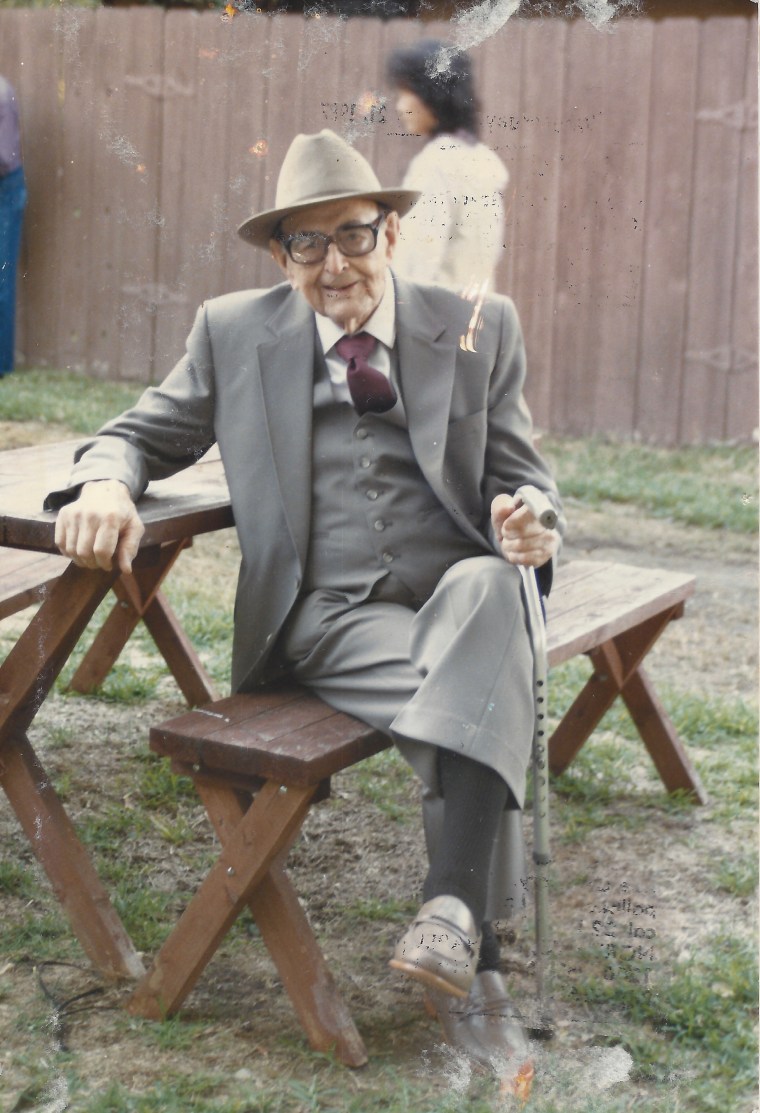
I accompanied my man to the store for consultation and while he was being measured by the tailor I found myself laughing at a memory of my grandfather. Grandpa had purchased a brand new gray suit for his ninetieth birthday party. He sat regally among his family members wearing the trappings of a sharp dressed man including a hat that shielded his bald head from the burning rays of the sun. Someone took a photograph of him on that day that became a treasure for those of us who so loved him. It would always remind us of how gentlemanly he always carried himself and how handsome he was. He hardly looked his age in the image, nor did his countenance betray the hardships that he had endured over ninety decades. I vividly recall that he had joked that he had purchased the clothing both as a birthday suit and the outfit that he planned to wear to his own funeral. Ironically he lived to the grand old age of one hundred eight and as he neared his last days he would note that his suit was all worn out.

Doctors said that my grandfather’s longevity was due mostly to having good genes. Nonetheless I always believed it was because he had the spirit of a survivor. Somehow he managed to use the tragedies of his life to grow stronger rather than to brood over his sorrows. He never knew his mother who died twenty days after he was born and by his own admission his father was a heavy drinking reprobate who did not amount to much. He was essentially abandoned to the care of his grandmother, a widow, who left a very positive impression on him. They lived a somewhat isolated existence in the backwoods of Virginia and his stories of their time together brought a mischievous twinkle to his eyes. Sadly his grandmother died when he was only thirteen and he became a ward of the court until the judge appointed one of his uncles as his guardian. Around that time his birth father who was still very much alive contracted small pox and Grandpa went to care for him. Some of his best tales centered around that time and the primitive nature of medicine back then. His father miraculously survived the disease and my grandfather amazingly never contracted the illness in spite of its highly contagious nature.

My grandfather grew up quickly as so many young men did in that era. He was on his own well before he had left his teenage years. His education was minimal but he was a quick learner with a willingness to adapt to any situation. He began traveling around the country picking up work wherever he went. It was a tough and lonely life but not that different from the norm of that era. He found solace in drinking which lead him to follow in his father’s alcoholic footsteps. After one evening of heavy imbibing he felt particularly repulsed with himself and vowed to mend his ways. He never again touched even a drop of liquor demonstrating the strength of character that we all saw in him.

Grandpa was forty before he met my grandmother and married. She was the center of his life and whenever he spoke of her his face lit up with pure joy. He often called her his buddy and talked of how much fun they had even long after she had died. Together they had two children, one of whom was my father. They were quite proud of my dad. He was a brilliant man who was the first in his family to graduate from high school and then earn a college degree. They always referred to my daddy as a good boy, so it was quite devastating to both of them when he died when he was only thirty three years old.

My grandmother was never quite the same after her beloved son died. Grandpa did his best to make her happy and the two of them enjoyed tending to their farm in Arkansas but seven years after my father died my grandmother was diagnosed with terminal cancer. Grandpa moved her to Houston so that she would be nearer the medical care that she would need. He tended to her with loving care, watching his savings dwindle to nothing because of the huge expenses associated with her treatment. He was eighty eight years old when she died. His pockets were empty and he had to sell his home to pay all of the medical bills. He found a room to rent and the strength to carry on.

By the time that my grandfather was ninety years old and wearing his new suit in his birthday photo his worldly goods consisted of what he was wearing, a few other changes of clothing, some favorite books and magazines, and the pipe that he smoked as he sat in his favorite recliner reading or enchanting his many visitors with his tales of a time so different from the modern era. His mind was sharp as a tack and his sense of humor never wavered. Only now and again would he speak of feeling tired, and that mostly occurred when someone that he loved had died which was happening with greater greater frequency as the years continued.

Grandpa took great pride in being independent. He admired courageous people. He took care of himself, proudly living within his limited means. He was perennially optimistic even when times became tough. He would tell us of the Panic of 1893, which in his words was a depression even more horrific than the so called Great Depression of the twentieth century. He had seen the world convulsing through the Spanish American War, World War I, World War II, the Korean War and the war in Vietnam. He had witnessed the world at its best and its worst over and over again. He understood that there really is a circle of life that repeats itself at intervals. He believed in the brilliance and goodness of mankind because he had seen the changes again and again that set the world aright even as it sometimes teetered into chaos. He had learned that there is always a way to carry on even in the most horrific of times.

We sometimes act as though our present situation is somehow unique in the annals of history. We behave as if the end of times is somehow near. We complain that daily life is more terrible than it has ever been. We wish for quieter times and complain about how difficult things have become. If my grandfather were still here with us he would calmly suggest that the world is actually unfolding in ways that make it just a tiny bit better with each passing day. Every generation has had is share of troubles and woes, but ours occur against a backdrop of plenty that was not even dreamed of in earlier times. Our advances in medicine, education, science, technology and even social programs were astounding to my grandfather and made him feel hopeful even when things became quite difficult. My grandfather was certain that we were headed in the right direction even when we felt lost or had to take a circuitous route to get back on track. He was a patient man who in the end taught those of us who knew him how to remain strong and positive and most of all loving. When I think of him in his dapper suit and I take a deep breath and carry on.

Not Yet Down and Out

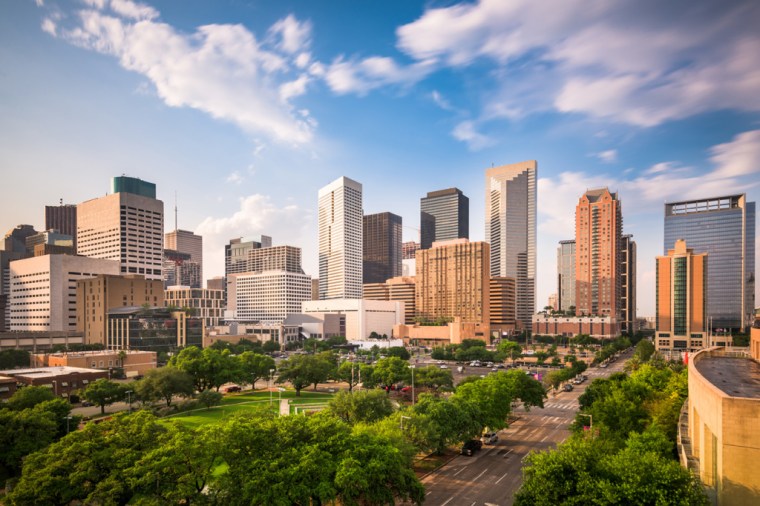
shutterstock_441927634-1024x683.jpgIt was a sunny day in Houston, Texas on a January afternoon. The streets and highways were filled with people enjoying the break in the cold weather. It somehow seemed impossible that only five or six months ago those same roads were filled with flood water from hurricane Harvey, creating unbelievable images of devastation. Everything appeared to be so normal, and it felt as though the recovery and healing of our scarred city had gone smoothly and far more quickly than anyone might have ever imagined. We had even begun to believe that we might have a good chance of winning the big Amazon prize that would bring thousands of jobs to our area along with millions of dollars to boost our economy. Perhaps it is in our Houston DNA to be upbeat and unwilling to be counted out. We’d done the impossible so many times before that those of us native to this flat featureless plain see our city with different eyes than those of outsiders.

This is a town built on land encircled by bayous that is otherwise landlocked, and yet we have one of the busiest ports in the country, dug from the Gulf of Mexico to a site in the shadow of the place where Texas gained its independence. Somehow our town took a field that had once been home to grazing cattle and transformed it into the center of the worldwide space race. A wealthy academic from the east coast imagined a Harvard of the south and founded the prestigious and renowned Rice University. A doctor imagined a home for cutting edge medicine and convinced benefactors to build a medical center that would one day be a leader in research and talent. We have done the impossible time and again with the help of visionaries who saw beyond the limitations of our geography, and on any give day it feels as though we have miraculously moved beyond the horrors that beset our beloved Houston on those three days in August when the sky rained its fury on all of us.

We all know that things are not always what they seem to be. Those whose homes were filled with brackish water that rushed in through the weep holes inundating their rooms and their peace of mind are mostly still working to get back to normal. The piles of debris that represented the destruction are generally gone misleading observers to believe that all is well. Inside the repair work continues at various stages. The mucking out of water and dirt is done. The walls of water soaked sheetrock have been removed leaving frameworks of studs marking load bearing structures and outlines of rooms. In some cases fresh new sheetrock and paint now brighten the areas. In others the skeletal frames await the resolution of claims that may one day bring the funds for repairs. Carpet and flooring is difficult to find even when there is money to purchase it. Cold concrete has become a way of life for many Houstonians who celebrated Halloween, Thanksgiving, Christmas and the new year with their homes torn apart, and still wait for normalcy to return. They sit on lawn furniture and sleep on air mattresses attempting to stay calm and carry on when in truth they are exhausted and broken hearted.

On that sunny day when all seemed so normal, of course it was not. I drove through a neighborhood that had been heavily impacted by the storms and at least a third of the homes still had huge dumpsters parked in the driveways. Trailers and RVs dotted the landscape and told a tale of homeowners still camping out while their homes recovered very slowly. Daily life has become a marathon for them as they cope with realities and fears that sometimes feel overwhelming. They walk through their days attempting to be as positive as possible even as they worry about the impact this all has had on their psyches and savings.

It has been estimated that eighty percent of those affected by hurricane Harvey did not carry flood insurance. They have had to rely on FEMA for funds to repair their houses and many of them still wait for that money to be forthcoming. Generally the most that they might receive is only slightly more than $30,000, and in the majority of cases it will be far less than that. FEMA does not replace their household goods, so many people are creating massive debts just to begin again. Those who did have flood insurance are all too often waiting even longer for the relief that they need to put their homes back into working order. Supplies are scarce, and the great deals that merchants offered in the early days after the disaster are mostly long gone. Nobody thought that there would still be people in need this long after the catastrophic event.

Our city is wounded and our spirit is being sorely tested. Naysayers warn us that we will never again be the same. Our luster feels somehow diminished as investors and dreamers grow wary of locating here. Amazon passed us over, choosing Austin and Dallas as more worthy possibilities for their center. People from outside our area view our town as an ugly humid place more suited for mosquitoes than humans. They underestimate our determination to overcome the odds that have often appeared to be stacked against us. Houston has always been a city that should never have been, and yet here we are winners of the World Series even as we limp through the worst days of our history. It seems that Amazon missed the essence of who we are as people and may have ignored the very qualities that would have made their venture truly great. They did not understand that the images of courage and community that they witnessed when nature had battered us mercilessly were not aberrations, but rather an unvarnished revelation of who we really are. The secret of Houston is that we are willing to take on any challenge and rise from the muck and the mud to triumph over adversity. This is a hard working city with dirt under its finger nails and visions of a better future in its soul. 

Think of us now and again. We are still here even though we have not yet totally healed. There remains much to do, but you will rarely hear us complain. We don’t want to be pitied or thought to be beyond hope for we still believe that our city has a great future. Don’t pass over us or assume that we are out of the game. This city called Houston is a miracle built on unstoppable dreams. Plan to keep hearing from us. We’re not yet ready to be down and out.