For the Love

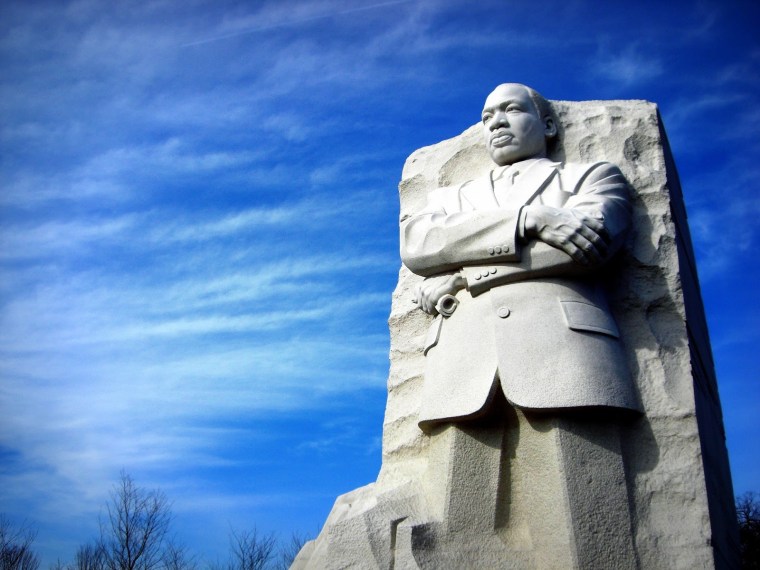
mlk8We hear a great deal about patriotism these days but what is it really? Is it only about displaying outward signs of allegiance to this great nation of ours, or is it something deeper, more visceral? I happen to believe that it is all about loving the United States of America so much that one is always concerned about it’s welfare. Sometimes that means having to do difficult things to ensure that democracy remains robust and available for each of us. That might mean serving in the military to protect freedoms, one of the noblest sacrifices that a citizen may make. It may also mean that an individual has to take a stand for what is right and just that is uncomfortable and maybe even misunderstood. Both of these behaviors are necessary at times in order for our country to sustain the principles upon which it was founded, and those which needed to be part of the compact made for the people of this land but were unfortunately omitted from the original declaration of rights. It is not only those who sing anthems and place their hands on their hearts who demonstrate patriotism, but also those who urge us to consider problems that need to be addressed to create an ever more perfect union.

I love this country in a very emotional way. I am filled with gratitude that I may call this glorious land my home, but I am not so prideful to believe that we are without our problems. We all know that there are certain difficulties that have plagued us from the very beginnings of our most remarkable government. It surely must give us pause to realize that we began this great democratic journey with slavery legitimized by law. How can we read the documents that counted enslaved people as two thirds of a person without feeling sorrow? Certainly we eventually had the moral courage to do what was right, but it should never have taken as long as it did. It is the main reason that I sob each time I stand inside the Lincoln Memorial and think upon the courage and patriotism that Abraham Lincoln possessed even to the point of being murdered for his beliefs. Thank God that he so loved this country that he was willing to endure great sorrow and the slings and arrows of criticism to finally set it on the right course. That was patriotism at its very best.

Most of our black neighbors are the descendants of slaves, people who came to this country in chains. A visit to an historic plantation is a painful experience. Walking through the splendor of the antebellum homes of slave owners and then seeing the horrific conditions in which their slaves lived is humbling and causes me to experience great sorrow. It doesn’t take much imagination upon seeing the implements by which the slaves were kept in line to realize how horrible their existence was. It is a blot on our history which we will only eliminate when we are all willing to accept that what happened to those who were treated as property was very wrong.

If we had simply moved forward once slavery was outlawed perhaps we would now be living as brothers and sisters. Instead we spent another hundred years segregating the blacks from our lives. I vividly remember what that looked like and it was ugly. Blacks lived in neighborhoods far from the rest of us. Their children were often housed in inferior schools, although there were incredible efforts made by their own people to overcome all of the educational handicaps that were thrown at them that even included barring black children from libraries. I remember the signs that kept our black neighbors from using our water fountains or bathrooms. We so cavalierly embarrassed our fellow citizens again and again. Sometimes there were even those who terrorized them with fiery crosses. I shudder when I think of a symbol of Jesus Himself being used in such a hateful way.

I could go on and on about what I witnessed, inhumane treatment that seemed unfair even to the child that I was. It was with great elation that I saw heroes like Dr. Martin Luther King, Jr. challenge our country to correct the inequalities that were legitimized with laws that were unjust. Without violence he led a movement that would eventually overturn many of the inequities, but not until he and his cause had endured great strife and violence. He is to this very day another of my heroes, equal in stature to Abraham Lincoln. Dr. King is in my mind one of the great patriots of American history who raised our consciousness and challenged us make our country a better place.

Many seem to believe that the equitable evolution of the United States of America is finished. Sadly there is still work to be done, questions to be considered. As long as we still have situations in which certain classes of people are considered less eligible for our God given rights and freedoms, we must continue to insist that we have the moral fortitude to continue the discussions and take the needed measures to perfect our system of government. Those who wish to make America better are the true patriots, and it up to all of us to acknowledge rather than condemn their efforts.

We tend to view violence and riots as nonproductive ways of fighting for rights. We don’t really listen to people who would burn and destroy. It somehow seems counter to their arguments for justice. So we should be open to hearing the grievances of those who choose more peaceful means of highlighting their causes. What are people to do when we reject both methods? What are they to think? How frustrated they must be when we turn out backs without attempting to understand their frustrations. Thus it is with our current situation. Our history with the people whose ancestors we treated with so much disrespect are merely asking that we try harder to show them that we no longer view them as somehow being lesser citizens than we are. We insult them when we only react to their pleas with anger or when we ignore them altogether and wrap ourselves in our flags of patriotism as if we are somehow better Americans. One who truly loves this country would want to pause long enough to consider why people would subject themselves to our ire. If things felt okay and wonderful to them surely they would not risk so much to stand up for what they believe to be right and just. Why then can we not at least take the time to listen and dialogue rather than indicting them and accusing them of being unAmerican? Isn’t that a dramatic step backward? Can’t we see the irony in suggesting that they go away if they don’t like what is happening to them?

My heart is filled with nothing but love and appreciation for this country, but I also understand that it is not yet perfect and maybe never will be, but I am enough of a patriot to want it to be. I truly believe the the greatest patriots that this nation has known have been those who stood for something so important and so real that they were literally willing to make every imaginable sacrifice for the good of their fellow citizens. I stand with Abraham Lincoln, Dr. Martin Luther King, Jr, and the men and women who fight for all of our freedoms in foreign lands. I also stand with those who have an important message for us to really hear. I will still get goosebumps when I hear the national anthem. I will feel a sense of relief when I return to my country from foreign soul. I will pledge my allegiance with all of my heart, but I will never turn my back on anyone who simply wants to improve this great land. Like a parent who guides a child and builds his/her character, so too are those who alert us to the things that we are doing imperfectly the true patriots among us. 
 

In the Course of Human Events

bm

Back when I was teaching in South Houston I had unusually large numbers of students who were Seventh Day Adventists. They were particularly sweet, hardworking and respectful pupils who made my job so much easier. I always appreciated that their parents had taught them values that included being thoughtful and compliant with regard to my classroom rules and routines. Mixed in with them were a number of hardcore gang members who seemed ready by their very natures to challenge me and thus divert my time and attention from the task of conveying and facilitating knowledge to all of my young charges. The gang members stood out with their swagger and their stealth ways of showing their allegiances. The children devoted to their particular religious tenets made themselves known in another way that we teachers accepted not as defiance but as their right with regard to certain features of the Bill of Rights. Namely, they sat quietly in their seats each morning while the rest of us stood to recite the Pledge of Allegiance.

It was a given that their unobtrusive gesture of belief was something to be respected and perhaps even admired, and so nobody ever questioned their right or even their intent. There were no discussions, nor judgements. Instead we simply did our thing each morning and they did theirs. For me there was something quite beautiful about the freedom of it all, and the fact that we honored their freedom without making a big deal out of it. None of those kids had to have any form of proof of their religious belief on file. They might just as well have simply been frauds who took advantage of our largesse. We understood that it was really none of our business to question their views one way or another. It simply was what it was and it all passed quickly and without incident every single morning.

Over time I worked in many different schools and there was always the accepted actuality that we would not force our own religious or political or social beliefs on our students. We were to be respectful of individual thinking one way or another, and for the most part all of my colleagues defended the freedoms of the students, mostly without fanfare or drawing embarrassing attention to students who required special dispensations. We understood the importance of being fair and impartial.

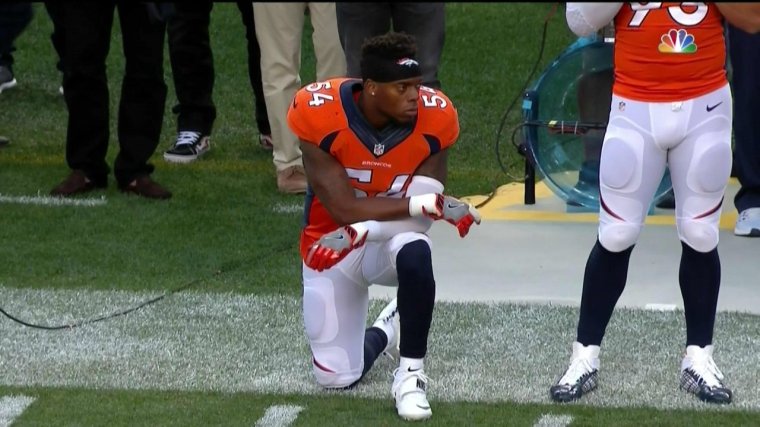
Now a huge brouhaha has been dusted up over some rather inappropriate comments from the President of the United States of all people regarding players in the NFL and other sports who choose to take a knee rather than stand for the National Anthem. It is unfortunate that our leader appears to have neglected to thoroughly read and understand the full contents of the Bill of Rights, for it is rather clear that those athletes have as much right to make a political point by refusing to stand as my students did. The President may not agree with them or even like what they are doing, but to call them “sons of bitches” and suggest that they be fired is way out of line, and all Americans should call him out for doing so, regardless of their feelings about the players’ methods or intent. The fact is that the athletes have a right as Americans to express their discontent, and instead of mocking them our leaders should be proud that the Constitution with its Bill of Rights is still working as it was intended to do.

Of course the owners of the teams also retain the ability to employ whomever they wish. Players are regularly sent packing for a host of reasons, most of which deal with their abilities to perform their duties well. In truth if one of the owners wished to require their employees to stand during the opening ceremonies of each game he/she would be well within the guidelines of employment, but they need not respond to the whims of the President in making such determinations. It was wrong of President Trump to intimidate the owners with his remarks and his tweets which were undoubtedly made to garner political capital.

The question of how best to define patriotism has been argued since the very beginnings of the United States of America. There are those whose ideas are more narrow and confining. They insist that we will work best as a republic if we all agree to always honor our country and our leaders. Others feel that what is best about America is the ability to voice concerns without retribution. They see symbolic resistance as the highest form of patriotism, for it harks back to the Founding Father’s insistence that no authoritarian government has the right to tread on the rights of the individual. Our country began with revolution against a tyrannical government. The writers of the Constitution were determined to make certain that no one individual or group would have the power to insist that we think in lockstep. In this regard President Trump has overstepped his bounds. While he too has the right to disagree with the athletes who are mounting a protest, he surely is wrong when he disparages them for exercising their rights as citizens. Furthermore, his bullying tactics with regard to the team owners are both embarrassing and questionable. He would do well to retake a Civics course before mouthing off so publicly. He might also consider reacting the way we did when I was teaching whenever we encountered individuals whose beliefs were different from ours. We always understood that it was their right to question conventional thinking, and that our duty was to provide them with a safe space for doing so.

We will each react a bit differently to the protests among our professional athletes. The Constitution provides us with the protections to do so. We may turn off the games if we feel strongly enough. We may join them in taking a knee. We may even just choose to quietly ignore the whole incident and celebrate the wondrous idea that we have the power to make our own choices regarding such things in this country. It does not defile our national honor whenever any citizen exercises his or her rights. In fact it dramatically demonstrates that we are a truly free people.

Our military has fought for liberty from the time that those first shots were fired at Lexington and Concorde. We haven’t always created a perfect form of government, but we have worked hard to make it better. We haven’t always chosen the right sides, but we have somehow been able to recover from our mistakes and improve our ways of doing things. We will never reach the goals of a more perfect union if we are unwilling to pause now and again to question the way we do things and to discuss methods for being certain that every man, woman and child has a voice and a sense of security.

Our Founding Fathers were radicals in the world in which they lived. Their ideas were audacious for the time. I suspect that if they were around to comment they would insist that the players be allowed to have their moment to shed a light on issues that worry them. They would also encourage President Trump to be less domineering and pejorative, and far more willing to stop his tirades long enough to find out why these men feel so strongly about their concerns that they are willing to endure the wrath of their fans and the leader of the nation. It’s time for all Americans to insist that our president work for the good of all, not just the few that form his base of voters. That is what our founders intended, and that is the way it should work.

Frankly I am weary and I know that most of my fellow Americans are as well. I agree with Senator John McCain that it is well past time to dispense with all of the quibbling and attempt to remember what this country is supposed to be about. It’s a watershed moment in which we must set aside our hatefulness and invective and begin again to consider the diversity of needs that we have. Most of all it should be the duty of all to protect our First Amendment rights regardless of our own beliefs, for they are far more important than pledges or anthems or routines. Sometimes in the course of human events it becomes necessary to speak out.


Bearing the Sins of Our Fathers

140618093314-08-iconic-vietnam-war-restricted-horizontal-large-gallery

I’m a bonafide Baby Boomer. I was born at the beginning of the Baby Boomer years. People in my age group were affected, and maybe even traumatized, by certain events that defined a great deal of how we see the world. Many of us were raised according to the recommendations of Dr. Spock. I know that I was. My mother often mentioned how he would suggest dealing with particular situations. We all remember crouching under our desks every Friday at noon in a drill designed to keep us safe in the event of a nuclear attack by the Russians. We remember Nikita Khrushchev taking off his shoe and banging it on a table at the United Nations and promising to destroy our country from within. The way we learned in school was reimagined after the Russians launched Sputnik. We are all able to vividly recall exactly where we were and what we were doing when John Kennedy was assassinated. The sound of the cadence of the drums at his funeral march still ring eerily in our heads. We saw the Civil Rights movement changing our country for the better and wished that we had been old enough to travel to Alabama to take part in marches of civil disobedience. Perhaps more than any other event, however, we were forever marked by the Vietnam War, a conflict that somehow both defines and divides us to this very day.

My generation paid little attention to what was happening in Southeast Asia up until I was in high school. We had been much more enthralled with the space program and the progress that we were making in journeying from our planet into the universe. Suddenly, in spite of our former ignorance, we began to hear more about a civil war in a faraway land and a supposed fight against Communism. We learned about the Domino Theory, a belief that if one country in Asia fell under the domination of communism others would follow and the boogie man of communism would be banging on our own doors. None of it had particular meaning for us until President Johnson began increasing our involvement in that conflict, and because there was a draft system all of the young men my age had to register for the possibility of involuntary involvement in the military.

By the time I was a senior in high school there were hundreds of thousands of US troops fighting in Vietnam. Some of the members of classes ahead of mine had already gone to war and a few of them had died. It was as though the world had suddenly blown up and anti-war fervor began to overtake the land. Some saw those who did everything possible to avoid the war as traitors and instigators. Others called soldiers who served in Vietnam baby killers. The evening news brought scenes of violence and bloodshed into our homes each evening. It was impossible not to have an opinion regarding the volatile political situation, and it was my generation that was caught in the big middle of a war being run by old men using young boys as canon fodder.

Of course that war did not end well. The United States eventually had to leave Vietnam without victory, an outcome that the French and British had predicted, possibly because they had endured similar situations in the past. North Vietnam took over the governing of the entire country. Dominoes did not begin to fall all over Asia. The world eventually settled down and forgot most of what had happened back then, but those of us who were intimately part of that history have never forgotten. We were all changed in one way or another by the Vietnam debacle. We have been unfairly judged on both sides of the debate by our elders and our children. We were teenagers and young twenty somethings who were asked to sacrifice for a cause that we now know even the Secretary of Defense did not believe would end well.

We began as advisors to the government of South Vietnam, a political machine that was at best riddled with problems and at worst was filled with graft. The conflict was a civil war among people attempting to decide their own fate. Our interference was never taken well and the anger over our involvement only grew when we appeared to be invading the country rather than just offering suggestions. The United States was so fearful of Communism that it allowed itself to become more and more entrenched until it ultimately appeared to be an actual war between North Vietnam and the United States. The truth was that the more we bombed and threw napalm, the greater became the distrust and dislike of our country. Sadly, the young soldiers who were the same age as I was became victims not just of the horrors of war, but also a backlash against them from their own fellow citizens. They were caught in a controversial middle ground that was quite unfair.

At the same time those who protested the war were accused of being disrespectful and traitorous, but in truth they were not unpatriotic. In fact they demonstrated love for their country in voicing their concerns, most of which have been shown to have been correct in retrospect. Private correspondence between Secretary of Defense Robert McNamara and President Lyndon Johnson has revealed that there was indeed great worry that the war was being fought in vain and that our youth were being wasted on the battlefield. How awful to think that so many died when they needn’t have. How terrible to realize that the divisions that tore open a national wound should never have happened. It is detestable that the war continued mostly because nobody wanted to admit that they had been so wrong.

I was recently listening to an elder statesman who participated in both World War II and Vietnam. He felt that the most unfair outcome of Vietnam was the idea that the generation that fought against Germany and Japan was somehow more noble than those who went to Vietnam or their counterparts who stayed home and mounted resistance. He noted that we attempted to fight the two wars in the same manner when it was obvious that they required different tactics. He also defended the soldiers of Vietnam in noting that they were as good and courageous as their forebears had ever been. The only difference was that the leaders of World War II set up plans that worked, while the leaders of the Vietnam War made one mistake after another. He insisted that it is totally unfair to look upon the Baby Boomers as somehow less patriotic than their parents were because the circumstances were so very different.

We Baby Boomers were never the same after that war. It defined us in uncomplimentary ways. It was used to turn us against one another. We were pawns who have never quite been understood by either our elders or our children. It was run by a man who had been a systems analyst and who believed that it would be possible to create battle plans based on data such as tallying the numbers of those who died on each side. He neglected to take into account aspects of human nature until it was far too late. The entire rationale was built upon a false premise that left our country damaged. We are still attempting to reconcile the differences that tore us apart back then. As for the Baby Boomers, we have become symbols of failure and lack of character when we were not the ones in charge. We were simply the group that was used so that politicians would not lose face or power.

If there is one dream that I have it is not so much that we Baby Boomers will one day be vindicated, but that no other generation will be put through such a horrible introduction to adulthood ever again. Those who wield authority must always be conscious of the human cost of their decisions, and have enough moral character to be certain that no group will be so badly abused. If we are one day able to admit openly to past mistakes and reflect on how to avoid them in the future, then the sacrifices of so many Baby Boomers will not have been totally in vain.

Embracing Grief

01-mother-and-child

I have a memory of being very young and quite frightened as I sit on my mother’s lap. We are on a boat of some kind and I can feel the rocking of the craft on the waves. My mother comforts me as I cling ever closer to her chest. There are many people around and all of them are chattering and unwittingly making me feel quite nervous. The sea breeze is brisk and I don’t like the way that it stings my face, so I bury my head in my mother’s gentle caress. Suddenly everyone is moving toward the railing of the ship, even my mother who appears to be happy and excited as she carries me toward the crowd that is cheering and pointing at something that is confusing to me. Whatever it is seems gigantic and I don’t want to look at it, but my mother’s soothing voice convinces me that I am safe. I quickly glance just long enough to see a huge object seemingly floating in the water. Then the imagery of that long ago recollection instantly stops in my mind.

I have often wondered where I might have been on that day. My mother seemed to think that we were on a vacation trip to New York City. My vague description of my recurring vision led her to believe that I had somehow remembered going out into the harbor to view the Statue of Liberty. Still she had her doubts because I was well under two years old when we took that trip together, so she often mused that perhaps I was recreating an image from a movie that I had seen and attributing it to my own life. Somehow I believe that the incident was absolutely real and so scary to me that I was able to relive the scene even decades after it had occurred. Mostly my thoughts of that day are reminders of how safe and protected I felt in my mother’s arms, a feeling that never changed in all of the years that I have journeyed in this world.

Mothers have been on my mind of late. Three of my friends have recently lost their moms. Another is agonizing over the anniversary of her mother’s death a year ago. Her grief was renewed as the date that her mother left this world approached. In her honesty about her sadness and her descriptions of the wonderful things that she and her mother shared, I have found myself realizing that a mother’s love is unique in its intensity. A mom is eternally connected to her children in a spiritual way that transcends even death. I know that I have felt my mother’s enduring presence in my heart again and again in the six years since she has been gone. I find that I actually understand her more in her absence than I ever did when I was rushing around and taking her for granted. It is not difficult at all for me to identify with the men and women that I know who are filled with a mixture of sadness and joy as they are reminded of the unconditional love that their moms showered on them.

It’s funny how we find ourselves thinking of small moments that meant so much to us whenever we begin to think back on the influence that our mothers had on our lives. I always return to a cold February when I was nine years old and bedridden with a high fever and a measles induced rash. I felt weak and my head pounded incessantly. My mother kept me warm under quilts that my grandmother had made. She constantly checked on me and brought me cool drinks and homemade soup to keep me sustained at a time when I had no desire for anything other than sleep. Best of all she hugged and caressed me and softly assured me that I would soon be well again. Even in the middle of the night as I tossed and turned uncomfortably she was there watching over me. I needed her so, and she was my guardian angel.

Thinking back I realize that this happened only months after my father had died. Mama had somehow managed to create a safe environment for me and my brothers in such a short time. She had set aside her own tears and worries, at least on the surface, so that we might feel confident that all would be well. She must have felt overwhelmed by the responsibilities that had so suddenly fallen upon her, and yet she never let on that she was even remotely concerned. She threw herself into the task of parenting all alone, never even hinting that it might be quite difficult. All I knew back then is how much I loved her and how good she always made me feel.

Mothers can be such imperfect beings but somehow those of us who are their children ultimately see only the perfection of their love. They are our mentors, our muses, our cheerleaders, our rocks, our security. No matter how many mistakes that we make their love endures. They see us without the criticisms that others may heap upon us. They believe in us and want all that is best for us, but mostly they just want us to know that they will never leave us, so I always understand the profound sense of loss that occurs when someone’s mother dies.

Sometimes it is the other way around. A mother loses a child, an unnatural event that is capable of tearing a woman’s heart from her soul. I often think of my grandmother Minnie when my father died and the startling pain that remained etched on her face from that day forward. I thought of her when my friend Tien lost her baby boy Jhett. I sense that there are few greater tragedies than the untimely death of a child, and even though I have witnessed the great courage of those who have endured such misfortune, I also have seen their quiet desperation and undying love for the children who might have been.

It is important that we acknowledge the feelings of children who have lost their mothers, or mom’s who have lost their children. The mother/child relationship never really dies and so the emotions that surround the memories are raw and real. Our role as friends is to simply be supportive and willing to embrace the feelings that they have, no matter how deeply sad they may seem to be. In many ways the person who is willing to admit to their overwhelming emotions is actually just being honest. Our society tends to look away from grief and want people to pretend that they are stronger than they really are. Being able to admit to feeling crushed by loss is actually a healthy way of dealing with reality.

My mother was always the stoic, the person who gave the impression that all was well. I suspect that she did this to shield me and my brothers from the many worries that stalked her. When her mother died she finally decided to let all of the world see her true state of mind. She sobbed openly and spoke of her mom incessantly, so much so that one of her brothers cautioned her to get a grip on herself. By that time in her life she had been treated for bipolar disorder for many years. She went to her psychiatrist concerned about the intensity of her grief. He assured her that she was finally reacting in an incredibly healthy and normal manner and he congratulated her for learning how to deal realistically with the feelings that are so much a part of being human.

Yes, our mothers are such special people. They are our first teachers and the people who like us just the way we are. It is indeed perfectly natural for us to miss them when they are gone and to want to remember them, sometimes even with tears in our eyes. Be kind to those who have those moments of remembering how much they miss that relationship. It is something to honor and embrace. Be the person who allows them to express themselves. Be the person who understands. Help them to embrace their grief.

A Wedding, Two Funerals, and A Hurricane

Heaven-newearth_333_250_90

This summer has left me forever changed in ways more dramatic than I might ever have imagined. It began innocently enough with a visit to New Orleans with grandson Ian. He saw my favorite city with a new set of eyes that were innocent and inquisitive. It was the history of the place that fascinated him more than even the food and entertainment. He was particularly entranced with the World War II Museum which filled him with wonder and so many questions. I suppose that in many ways the day that we spent reliving the drama and importance of that era when was the beginning of a circle of life that left me profoundly different by the end of my journey through the warm lazy days that have heretofore represented fun and frolic to me, but would no longer be so simple to consider.

After our sojourn in New Orleans we travelled to Cancun for the wedding of two of our favorite friends, Tim and Dickie. We learned just how powerful love can be and that how it cannot be narrowly defined. We also went on a journey back in history to study the Mayan people and their glorious civilization that had been quite advanced in its time. It humbled us to learn of the ingenuity of mankind, but also to understand that the upheavals of life and how we humans react to them have the power to take down or raise up even nations.

We had scheduled so many more amazing travels for July and August when our world was shaken to its very foundation. My husband Mike had a stroke on July 3, and it was as though the earth itself had stood still. Nothing really mattered to me other than Mike’s health and I was thankful that he was still alive and that I would have more time to convey my feelings for him. I suppose that from that exact moment forward I quit taking anything for granted. I became more attuned to the colors and sounds and people all around me. I rejoiced each day when both Mike and I arose. I reveled in even the smallest bits of joy that came our way. Somehow I found myself caring little for things and greatly appreciative of relationships and love.

Mike and I shared a viewing of a partial eclipse of the sun rather than than the total one that we had planned to witness. I suppose that I should have been disappointed that we were not able to travel to Wyoming for the event, but having the pleasure of sitting with Mike in a park watching the little piece of wonder that we were given was more than ample for me. I felt that our day together was truly glorious just because we had the gift of being together. Whenever I thought of what might have been, I felt frightened but mostly grateful for my blessings. Each new day was glorious, but I had little idea that an even greater test of my endurance lay ahead.

As the summer drew to a close my two eldest grandsons readied to go off to college. We celebrated at our favorite Cuban restaurant, El Meson, in the Village area of Houston near Rice University and the Medical Center. It was a beautiful night in which we enjoyed knowing what fine young men our Andrew and Jack had become. It was yet another reason to be thankful and our hearts were filled with joy.

Later we had the privilege of having our twin grandsons Ben and Eli at our home while their parents helped their older brother to check into his dorm at Texas A&M. I was charged with helping the two boys to complete a project for their English class and we worked quite hard for an entire Saturday. I woke them up early on Sunday so that we might finish and still have time for some fun before their parents returned. Just as I had hoped we found ourselves with enough free hours that we were able to go bowling at the Main Event. Later that evening we played a rousing game of Scrabble with no holds barred, and Eli literally blew us all away with a remarkable score. We laughed and felt so good that I once again found myself silently saying prayers of thanks for such precious moments.

Then came the threat of hurricane Harvey. It seemed that because the eye of the storm would be so far away we would be in little danger. There were predictions of massive rainfall but somehow that didn’t seem to be much of a problem, and so we decided to stay in our home. On the first day after the hurricane made landfall we spoke of the hysteria of the forecasters because their promises of floods appeared to have been premature. We were much more saddened by images of the devastation in Rockport, Texas, one of our all time favorite camping spots. It was not until the evening that the rains began and kept going and going and going for three solid days leaving forty three inches in our neighborhood alone.

We began to hear dire reports of friends and family members whose homes were taking on water. The television stations showed us live pictures of familiar places that looked like ocean front property. More and more people that we knew were evacuating, sometimes in the middle of the night. Suddenly I became fearful because it was apparent that if my husband had another stroke there would be little that we might do to get the help that he would need. Those three days became a kind of terror for me. I watched the rain and the street in front and the yard in the back, ever vigilant and unable to sleep lest I might need to get Mike to a medical facility. I cared not about any of the things in my home, but only about my husband and his safety. I realized that I was going to do whatever it took to get him through.

When the rain finally stopped and moved away from our city after dumping fifty one inches across a one hundred mile wide area I was emotionally drained and filled with conflicting emotions. I cried for all of the souls whose worlds had been turned upside down. I sobbed for those who had lost their lives and their homes. I felt lucky that Mike had made it through the days and nights in good condition. I laughed that we had stayed home from camping trips and the eclipse lest he be in a situation in which he might not be able to receive immediate medical care, and ironically for three days we had essentially been trapped on a kind of island with so much happening all around us that we were actually quite alone. I had to praise God for caring for us and for giving me the strength and the calm that I had needed to weather the storm.

Last week our city began to attempt a return to normalcy in earnest. Children returned to school. Adults went back to work. There were actually days that felt so much like the glorious beginning of fall that has always made Houston a kind of Chamber of Commerce postcard. Only rides around town reminded us of the horror of what had happened. Still we had to be happy that we were able to meet with great friends for a brunch on Sunday. We were grateful that we got to visit Mike’s father on Monday and see that he was doing well. Then our week was punctuated with the sorrow and celebration of the lives of two incredible women who had died. I think that perhaps more than any other event their funerals impacted me with a realization of what is truly most important as we live out our days.

Both of these beautiful souls had lived through those harrowing events of World War II that we had studied in New Orleans with Ian. One of them had resided in England. She met her soulmate during that conflict, an American GI. The two of them fell in love and he took her back to his home in Texas where they had seven children that they raised in a home filled with love and goodness and faith in God. The other woman had been born in Italy but eventually immigrated to New Orleans where she too met the love of her life. They also wound up in Houston in the same neighborhood where I grew up. They had four children who would become dear friends of mine. Both women were devoted to their families and required very little in the way of possessions or wealth to be happy. They sacrificed for family and felt honored to do so. In the end they were in turn loved and adored by their children and their friends.

When I attended the two funerals I was accompanied by people that I had known since I was quite young. We had each accumulated a lifetime of stories and memories, but somehow we knew that those women had demonstrated to us how to truly get the most out of life. I felt a sense of peace and a feeling of understanding that has all too often eluded me as I have fought to accomplish rather than to relate. I saw that these women had always realized that titles and bank accounts and possessions were not the things that define a life well lived, but rather the moments when we touch hearts. Somehow I understood that in spite of the topsy turvy nature of this summer, it had been magnificent because it had opened my eyes to how I need to embrace each moment that I have. Somehow I am all the better for what I have learned from that wedding, the hurricane and those two funerals.