
An Education

free-spirits-ii-13891She was unlike anyone that I had ever known, a free spirit who seemed to float blissfully above the rules of society. She walked through life as though she owned the world, but in reality had few possessions of any merit. More often than not she kept her feet bare, unfettered, even at formal occasions. She was from the north but boasted that once she had found the south there was no turning back. She was an artist, an intellectual, a high school dropout. I could hear her coming in the battered and ancient pick up truck that was her pride and joy. It allowed her to haul items that might one day come in handy for one of her many projects that were rarely fully completed. Her mind skipped merrily from one idea to another with grand bursts of genius. Such it was with our friendship, glorious kinship until she was drawn like a moth to other places.

When she left we both pledged our fealty and promised that we would make great efforts to stay in touch. I even drove a rather long distance to her new home once, a littered slot in a trailer park that was made merry by a colorful garden that she had planted in an old wooden box. She greeted me warmly and we spent an afternoon sipping on herbal teas and laughing at her stories while her children ran like free range chickens in old fashioned play. She never owned a television and didn’t want one. She preferred entertainment from imagination and it was all she really needed because hers was so vibrant. She reminded me of a gypsy princess, exotically beautiful with a fiery personality. I had seen her face down the devil himself and walk away with her head thrown back in haughty victory.

Her husband was a car mechanic and she was madly in love with him, so much so that she had run away with him on the back of his motorcycle. It broke her parents’ hearts and even her relationship with them for a time. Eventually they came around when they saw how deliriously happy she was. She had left the mundaneness of her upstate New York upbringing for adventures that few of us ever experience. She purposely kept few possessions feeling that they held her back whenever wanderlust took hold. Her family was free to go wherever and whenever the winds blew. There were cars to be repaired by her husband everywhere, and her art was as easily created in a small unknown town as in a large urban area.

Eventually she was gone again, too far away this time to pursue. She was not one for exchanging phone numbers or addresses and our acquaintance was in a time before cell phones, email and social media. Our friendship became only a wonderful memory of time spent with a truly ephemeral spirit. Somehow I had known all along that it would not be a permanent thing. I simply enjoyed the moment, knowing that some people cannot set down roots. They must always be on the go, discovering parts of the world that most of us never see.

I still think of her and so many others who have passed through the parade of people I have known. I wonder if any of them ever realized how much I learned from them, how important they were in shaping me into the person that I am today. Each of us encounter individuals who find their way into our hearts, and while their stay is only temporary their influence is forever. There is something about them that we never quite forget no matter how many years and decades pass. Now and again we think of them and hope that they are doing well.

I gravitated toward strong-willed women at a time when I was shy and weak. I observed their behaviors and learned from them. It was an education without walls, so real and meaningful. I surrounded myself with ladies who had known grief, abuse and hard times. They had emerged with dignity and an unwavering sense of themselves. I was their intern, someone longing to learn from them. Like a sponge I soaked up their spirit and determination to face down whatever challenges arose. They did not have degrees or certifications but they were perhaps the smartest people I had ever known. I encountered them when I was struggling to find myself and they showed me how to be what I wanted to be, not what others wanted for me. They taught me how to respect even the most humble and broken among us, treating them with the dignity that everyone deserves.

I suppose I might attempt to find some of them like Diane or Rosie or Debbie. It isn’t that difficult a task with the Internet and all of its resources. Somehow though, I don’t think that it would be wise to do so. I believe that I was only supposed to know them for a certain time during which they would help me to emerge from my awkward cocoon. Their spirits have remained in my heart and they have been there again and again smiling and guiding me.

They would be old ladies now with middle aged children and perhaps a number of grandchildren. We might not even recognize one another even if we were to pass in a crowd. We went our separate ways long ago. Our personal demands overtook us leaving little time for the idle chit chat that we enjoyed when our babies toddled under our watchful eyes. We each found new homes, new jobs, new adventures that moved us farther and farther apart until one day we had lost each other, but never the memories.

We are the sum total of all of the events and people that we have ever known. Their influence lives inside of us and is even passed down to our children long after our acquaintances are done. We find the individuals that we most need at exactly the right times. It is almost magical the way that happens. There are so many who gave me so much of themselves along my journey who are now strangers. I would so like for them to know how much they helped me and how grateful I am that I once knew them. I’d like to think that things turned out as well for them as they did for me.

Why We Gotta Be So Mean?

troubled-teens-bully.jpgI truly believe that we humans are mostly good. Still I see far more signs of bullying and ugliness these days than ever before. A friend confided that her son was being mistreated by the girls in his class. He is a very sweet, almost naive soul who can’t quite understand what he may have done to deserve their ire. An acquaintance who is generally a very kind and sensitive person recently took the bait of societal anger and posted an article poking fun at a female political figure. It was quite negative in tone, and unnecessarily so. It’s only purpose was to be cruel and so it stunned me to see this normally good hearted individual becoming part of the negative crowd. It seems as though just living in the world today can quickly devolve into a blood sport.
There is a certain anonymity that comes with the impersonal nature of social media. Being part of a group that initiates callousness feels safe and without consequence. Bandying about words seems a harmless joke given the old saw that sticks and stones can break our bones, but words will never hurt us. Besides, don’t some of our leaders get by with verbal attacks with impunity? What does it really matter to vent our feelings? Shouldn’t people be mature enough to handle our truths?

Thus we find posts on Facebook that create confrontations and tweets on Twitter that seem to revel in their use of cleverly noxious words. There are those among us who have lost their sense of propriety and are even celebrated for their ability to get a rise from some unsuspecting soul. When such attacks occur frequently enough the inflicted pain can become unbearable and then depression and fear follow quite naturally.

We have tried to instruct our children in how to handle the barbs that may come their way. We teach youngsters to curb any tendencies to be bullies and to help those who are victims. Somehow none of our efforts ever completely take hold. No matter how hard we try the ugliness persists and at times even appears to grow, making life quite difficult for those who are the butt of mean spirited behaviors.

There are celebrities like Lady Gaga who pour themselves into the task of helping to reduce bullying. She has created a brigade of young folks who are trained to encourage and celebrate acts of kindness. The hope is that focusing on the positive natures of humans just might mitigate the more negative aspects of the way we treat one another. It’s a glorious idea and bears watching. God knows that we have nothing to lose by actively trying to improve the ways that we interact. Those who demonstrate concern should become our winners, our heroes, not those whose overbearing remarks and actions wound and leave scars.

I read about a school where the students are encouraged to look for anyone who is seemingly alone and welcome that person into a warm and friendly circle. The young people who have adopted this attitude are finding that they are learning as much about themselves as they are about their classmates. They report that everyone feels safer and better understood.

A little boy in a small town heard about a police officer who was killed in the line of duty. The newscasters spoke of how devastated the fellow officers were, so the child decided to donate his Wii to the station. He remarked that playing the games usually made him feel better even when he was sad and he hoped that the bereaved men and women would find solace in the activities that they would be able to share together.

There are good people everywhere who do the most remarkable things without ever expecting credit or even thanks for their efforts. I still recall a young woman who helped me to feel welcome on my first day of teaching in a new school. I can envision her beautiful smile and hear her encouraging words. Somehow she sensed my nervousness and did her best to assuage my fears. Her thoughtfulness made a discernible difference.

I can only imagine how much more wonderful the world would become if we all tried very hard to turn our temptations to be angry or insulting into opportunities to be caring. It takes so little to be nice but it really does turn the tables. Instead of answering anger with anger we might try showing patience and understanding. Love should always trump hate or as someone has said, “When they go low, we go high.”

I suppose that the most difficult situations are those in which we find ourselves facing someone who is blatantly obnoxious. We might simply ignore that person, especially if we sense that attempting to change him/her is impossible. Walking away is not cowardice. Sometimes it’s the bravest thing we might do.

We should also consider answering unpleasantness with warmth. Sometimes it is possible to disarm the negativity by countering it with understanding. I was involved in an incident in which a parent was loudly upbraiding a colleague at one of my schools. When I asked her to calm down she cursed me and told me to mind my own business. I quietly left the scene and came back with cold drinks, snacks and an invitation to come to the comfort of my office. The lady seemed stunned by my calmness and my small gesture of hospitality. Her demeanor became more relaxed as I told her that as a mother I understood her passionate concern for her child. I suggested that together we might be able to devise a plan that would help. Before long we were all partners in an effort to set things right. The ill feeling had disappeared on all sides.

It is doubtful that we will ever eliminate all of the cruelty that exists but we can make focused efforts to do our own parts to approach our daily lives with a sensitivity to the needs of those with whom we interact. We should strive to consciously compliment rather than criticize, smile rather than frown, find common ground rather than dwell on differences. We really don’t have to be so mean. We can change someone’s state of mind simply by remembering to be kind.   

Murder and Adventure

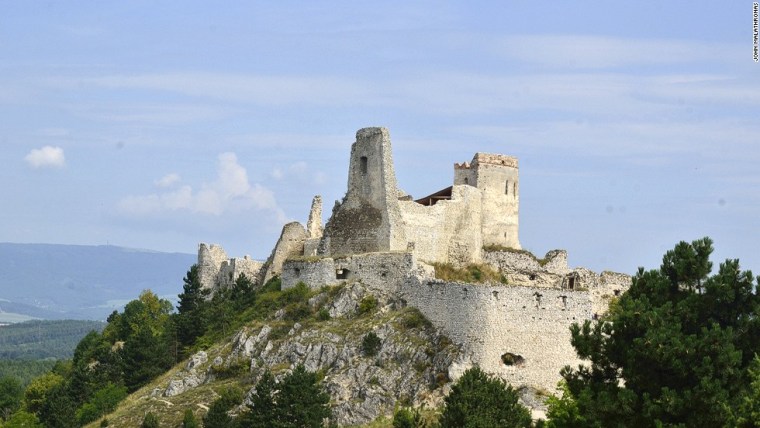
140812163037-blood-countess-slovakia-castle-horizontal-large-galleryMy grandson Jack is quite active in theater arts in high school, so much so that his senior superlative award deemed him the most likely to win an Academy Award. Ironically his life plan is to become a computer specialist and his intent is to put his acting days to rest while attending Texas A&M University, so the probability that he will fulfill the prediction regarding his thespian abilities appears to be slim to none, unless he uses his computer skills at Pixar one day.

Jack’s final role will be in an original one act play written by his teacher about a Slovakian, Countess Elizabeth Bathory, believed to have been one of the most prolific serial killers in history. In a twist of irony she lived in the very town, Cachtice Slovakia, where my grandfather, Pavel Uhrik, was born. As was common in that part of the world well into the twentieth century, the ruling class held sway over the peasants to such an extent that the common folk lived in dire want and virtual obscurity. If a woman living in a castle hired one of them to work for her and then that laborer disappeared few would have thought much of the incident, especially in medieval days. Life for the vast majority of Slovakians was a dreary affair with the quest for work and food always the main concern well into the twentieth century. Little wonder that my grandfather Pavel Uhrik ultimately chose to immigrate to America just before the outbreak of World War I.

When I study the history of Slovakia I begin to better understand Pavel and why he chose to live his life the way he did. He came from a highly stratified political culture in which landowners held sway over the majority of the population. While the wealthy owned vast areas of land, their workers were tenants subject to the whims of their masters who all but owned them. They often lived in small cramped huts without running water or electricity. Hunger stalked them like a marauder. Few had the time or the means to pursue education beyond the fifth grade so among them there was an exceedingly high rate of illiteracy. The very conditions that made their lives so miserable also made them targets of prejudice. Without opportunities for change they either resigned themselves to the hopelessness of their lives, or found a way to leave their dreary situations behind by becoming immigrants to places like the United States.

I never met my grandfather but I heard countless conflicting stories about him. He was proud to be Slovakian but even prouder to be an American. His children knew little about his past life because he tended to be secretive which is true of many immigrants. In retrospect it seems likely that his former life had been so harsh that he found little to boast about. He was a practical man who believed in moving forward rather than looking back. He would have had little reason to speak of a time when he lived in miserable and perhaps even humiliating conditions.

Pavel was also an exceedingly stoic man. He worked hard everyday to provide for his family and almost furiously rejected even acts of charity. Perhaps accepting gifts or money that he had not earned made him feel too much like owing something to another and he fiercely insisted on maintaining the freedom that he had secured in his new country. He paid cash for every item that he purchased and carefully saved from his small salary so that he might build a home for his family. He purchased land and livestock and boasted that in America he was a man of substance, something that might have been impossible to achieve in his old country.   

He filled his home with books, a grand luxury and sign of his personal success. He insisted that his children take full advantage of the educational opportunities that were afforded them. On Sundays he often read to them from the many volumes that he collected. He insisted that their futures were to be found in learning and hard work. He noted that he was the master of his own destiny as they were as well, and that nobody makes it anywhere without effort.

He was not always treated well by his fellow Americans nor were his children. They endured taunts and were victimized by misunderstandings caused by their cultural and physical differences. He counseled his children to ignore the slights and to prove themselves with positive accomplishments. There would be no whining or self pity allowed in his home. They were to hold their heads high and be satisfied that they had a safe, if very small home, and food on the table every single day. While he never alluded to want in his native land, there was an understanding among his children that they were quite fortunate in the grand scheme of things.

All of the aspects of having made it that most probably had been missing in Pavel’s early life were found in his great adventure in America. He was eternally grateful to the country that had made his existence and that of his children so much better, even when its treatment of him lacked hospitality. He knew all too well how horrible the alternative would have been and so he counted his blessings rather than focusing on the imperfections. His children would follow his lead in this regard, urging all of us from the third generation of Americans to appreciate our good fortune and to abstain from comparing ourselves to others.

Our own children and grandchildren are now so distant from the realities of Pavel Uhrik that they are hardly able to imagine their great great grandparent’s worldview. The extended family has become so successful and so Americanized that few would think that a little over a hundred years ago the founder had sailed away from a life without prospects to one with ill defined but exciting promise. He had moved from a town in which a wealthy woman was free to murder almost six hundred innocent souls simply because nobody had enough energy to check on the nameless peasants whose lives had so little value that they easily faded into obscurity.

Now Pavel’s great great grandson Jack will play the part of a man determined to change the fate of the unwashed souls who were being so horrifically tossed aside in his ancestor’s old land, someone who stood up to a system that was so unfair. Because Pavel took a courageous risk, Jack is well on his way to fulfilling his own dreams. He has both benefited from and taken advantage of the opportunities that were a gift handed down through the generations from Pavel. In a twist of fate the circle of life begun so long ago has returned to it’s beginning and provided an opportunity for all the sons and daughters of Pavel to give thanks that we are exactly where he might have dreamed that we would one day be.

Purpose

puzzleI recently heard a woman from the Hoover Institute at Stanford University speak about the elusiveness of happiness in today’s world. It seems that we humans are seeking peace and joy for ourselves more than ever and somehow our searches are leaving us empty handed. In a time when we should be feeling more comfortable and joyful than ever, we are ironically filled with anxiety and guilt. Instead of groping aimlessly for answers, we should realize that true contentment is generally found in leading a purposeful life, but what is that actually, and how do we find it?
Purpose has as its object the finding of meaning or a grand design in life. It is going to be different for each of us. Unfortunately we are surrounded by many so called experts who seem intent on undermining our individual efforts to define what is most important, complicating our attempts to find ourselves in a world that can be quite cruel if it thinks that we have chosen unwisely. We are encouraged to use our talents well and often doing so involves being all things to many different people. We have many unique responsibilities, possibilities and characteristics that make us tick. The process of determining how to live can be quite overwhelming unless we are strong enough to follow our own hearts rather than the dictates of others.

I myself have been utterly confused from time to time as I mapped out a pathway for my personal existence. I wanted to be a writer but was told again and again by well meaning adults that thinking of myself as a word smith was a frivolous and self centered activity that would never amount to much. I decided to become a teacher but was often reminded that I might have been a doctor or a lawyer and made more of an impact on the world. I also felt a compelling sense of responsibility to my family which I believed should always come first. It was difficult and confusing to balance all of my personal desires with the needs and ideas of everyone else. It was only when I found out what gave me a real sense of purpose that I found the contentment that I sought.

I prefer the immaterial rewards of teaching to those that are monetary. I am altruistic by nature and need to feel a strong sense of meaning in my work. I have felt the most comfortable with myself in knowing that I have attempted to do my best to care for my loved ones and friends. I have learned how to carve out time to fulfill my desire to write alongside my life’s work. In other words I have found purpose along many different avenues and that has brought me much joy. Being myself has been a process of trial and error, satisfaction and disappointment. I have learned much about myself along the way and that self knowledge has helped me to know what I must do.

Because something works for one person does not necessarily mean that it will work for another. One need not seek careers in service to others to find happiness, nor is joy  necessarily found in the more creative ventures. Sometimes the mundane is a font of delight for some folks.

My grandmother was the epitome of contentment and yet her life was built around an unchanging routine of cooking, sewing and gardening. She found true elation in rolling biscuits with the precision of a master chef. She marveled at the gifts of nature when she strode through the rows of vegetables that she had planted, wearing her sunbonnet and overalls like Paris fashions. She created quilts and crocheted tablecloths worthy of kings with little more than feed sacks and her imagination as her tools of the trade. She always wore a smile of satisfaction on her face.

My sister-in-law spent a lifetime working as an engineer in a world that was dominated by men when she first dared to enter it. By the time she retired she had done wondrous things and pioneered the role of women in a field that had once been hostile to her. She reveled in the challenges, determined to prove that women can be leaders in unconventional careers while still successfully raising a family. She fulfilled all of her desires in a very different way from me and my grandmother.

I have found that the key for anyone is to do what makes him/her excited about getting started each day. When that sense of expectation is missing, so will the joy be absent. Far too many people feel like drones in a beehive, working for the man rather than for themselves. They fear admitting their discontent and making the changes that they need to find relevance in the way they spend their days. It takes great courage to face down the devil of misery but the rewards for doing so are immeasurable, even when the whole world may see the move as being irresponsible or ridiculous.

I was only eight when my father died, but old enough to notice that he didn’t appear to like his work. He was a mechanical engineer who often switched jobs and who spoke longingly of other fields that he might have entered. He was the bread winner for our family and he had spent years getting his degree. I suppose that he felt honor bound to continue in his work even though it was seemingly joyless for him. He was a man of so many talents and perhaps he simply needed to try something a bit different but he never got or created the opportunity to do so.

I know a man who was also an engineer who left that career path to become a teacher. He is an extraordinarily talented educator who found his true vocation in a classroom. He has won awards for his ability to motivate youngsters and best of all he has discovered his niche, his purpose. He walks through life with a huge grin on his face. There were those who thought that he had lost his mind when he first announced his intention to change professions but his transformation from misery to elation has convinced even his biggest detractors of the reasoning behind his move.

Each of us has a special role to fulfill in this world. If we manage to find a perfect match for our talents and our interests our lives will be transformed. We all need to encourage those who are seeking satisfying destinies, not by insisting that they follow traditional routes but by supporting them as they try the things that make them feel most alive. Happiness is indeed found in purpose, in finding the justification for our existence. We must explore as we seek answers for not just how to live, but why. When we unravel that glorious personal puzzle we experience a sense of happiness that is indescribable. Everyone should enjoy such a discovery. 

Finding Marion

shamrocksThere is a theory that most people will be completely forgotten within three generations. After that time nobody still living will have heard the sound of their voices or felt the impact of their personalities. They may leave behind photographs or documents attesting to their presence on this earth but essentially they are defined not by memories but by images. Of course the modern era is rectifying this with digital footprints that might include recordings and moving pictures. Such used to be the purview of only the wealthy but now even common folk have access to technology. This is not the case for most of those who came before us and so they are slowly but surely being forgotten.

I have a great grandmother who is a mystery. I think that her name was Marion Rourke but of that I am not certain. She was the mother of my grandfather, William Mack Little. He told us that she died three days after he was born. There is no record of any of this. In spite of my relentless searches, Marion remains a cipher, as though she never even existed.

Of course there has to have been such a person because William was not just found in a cabbage patch. He had a father named James Mack who took him to live with a woman that he called his grandmother known as Sarah Reynolds. Sadly I have been unable to find any records for these individuals. They walked on this earth as though they were ghosts, phantoms of my grandfather’s imagination.

William never knew Marion but he thought enough of her to name his first born daughter after her. It was his touching way of honoring her. I suspect that he always wondered who Marion was and what she was like, just as I do. It saddens me to think that she died at what should have been one of the happiest moments of her life. She had a good strong son who would ironically live to be one hundred eight years old. He was a very kind and intelligent man who treated women with the highest regard. He no doubt would have been a dutiful son to the woman who brought him into the world.

Marion’s last name indicates a connection of some kind with Ireland. My grandfather always claimed to be half Scottish and half Irish and I have verified such roots with a DNA test that I once took. I wonder if she was born in the Emerald Isle or if she was a descendent of someone who originally came from there. She had a beautiful name and was someone’s daughter, but who might that have been? She was obviously quite poor according to what little my grandfather knew of her. He was her first child and I wonder what happened that made her so ill that she died.

When I had my first daughter my labor was long and hard. There were complications and my doctor later told me that in the old days I might have lost the baby or even died myself. I wonder if I somehow inherited the same genetic disposition for difficult birthing that Marion had. Do I have an idea of what she might have endured? Was she alone and frightened as things went awry? Did she realize that she would not live long enough to see her son grow into a man? Such thoughts haunt me as I attempt to remember her without any facts to steer me in the right direction.

I try not to forget Marion. Someone has to think of her. Each St. Patrick’s Day I celebrate the Irish in me and attempt to imagine my great grandmother. I cook corned beef and cabbage and celebrate my own life that would not exist were it not for the sacrifice of her own. I so want to know her and probably never really will.

My grandfather is not quite sure where he was born nor where he spent his childhood. It was somewhere in Virginia where he was able to see hills in the distance. By the age of thirteen he was orphaned again when his grandmother died and he became a ward of the state. He chose John Little as his guardian because he was an honorable man, a graduate of West Point. Grandpa took “Little” as his last name in honor of the individual who helped him to complete his journey into adulthood. Sadly John Little died of typhus when he was in his early thirties leaving my grandfather all alone again. Grandpa had to fight hard to find reasons to to stay alive, and somehow he always did. He had an optimism that was inspiring. I wonder if he inherited that trait from Marion? Would she have been proud to see him overcoming one challenge after another?

I feel a kinship with Marion both as a woman and as her great granddaughter. I know that she lives somewhere in me. I would love to know where she was born, what she did as a child, how she met James and where she was finally buried. It has been a kind of holy grail for me to find out who she really was and I am not yet ready to give up even though I have spent years searching for someone who seems not to have even existed. She deserves to be known and loved and treasured.

On St. Patrick’s Day I will once again prepare my traditional meal and think of her. It is possible that I will be the last person to do so. She will one day become forgotten just as the countless individuals who came before her. I am determined to tell her story even if I have to fill in the blanks to describe the details. I know from the scant information regarding her untimely death that she had been loved enough by James to bring forth a child and that hers was a difficult existence devoid of the medical help that might have insured her survival.  I know that her son was a strong, bright and healthy man who would have been a joy to her. I know enough about genetics to realize that she must have been an intelligent woman. Her DNA has helped to produce some quite outstanding descendants.

Marion is a name said to have derived from the Hebrew “Miryam” which means “sea of sorrow.” I hope that this is not an accurate description of hurt and pain that my great grandmother may have endured. I would like to believe that she found peace and that somehow she knows how well things turned out for her son and his son and finally for me.