A Good Dog

20106475_10213628315602894_3653417267467797884_nA good dog is more than just a pet. He is a member of the family, a true and loyal friend. A good dog asks for very little, a bowl of water, a bit of food, a hug or a belly scratch, and every once in awhile an “Atta boy!” A good dog loves unconditionally, dotes on having its people around and waits patiently for their return when they are gone. A good dog is a protector and a comforter. There is nothing quite like a good dog, but sadly good dogs have much shorter life spans than we do, so once we have a good dog it is more than likely that we will one day have to say goodbye. It is always a very difficult thing to do.

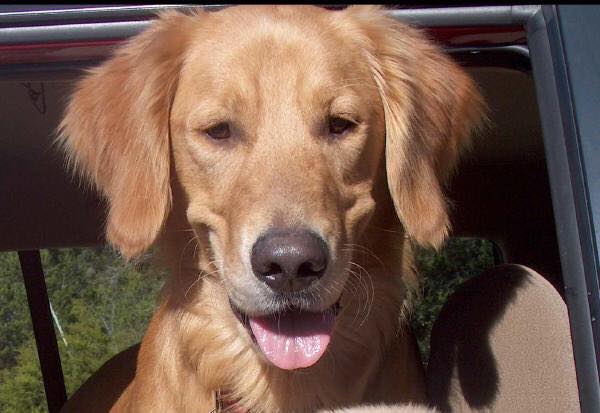
Shane, my grand dog, was a very good dog, a quite handsome golden retriever. He was found wandering the streets of San Antonio, homeless and confused. The people at the shelter gave him his name because they imagined his owners calling for him and begging him to come back home just as the little boy did when his friend left at the end of a classic western movie. Sadly Shane was hopelessly lost and nobody ever stepped forward to claim him. Happily his world changed when a family of four little boys fell in love with him and decided to adopt him. For the next eleven years he would be hugged and wrestled and and adored by his people. He became a beloved member of the family and he was very happy indeed.

Eventually Shane got a little brother, a pal, who was a pug named Cooper. He was content to share his home with the silly little tyke for there was more than enough love and affection for everyone. He showed Cooper the ropes and the two of them developed a routine that rarely varied. He was a great big brother, smart and kind and sharing. Cooper loved him as much as the family did. They got along quite well and became a kind of Mutt and Jeff twosome with Shane always being a patient teacher.

The years went by and Shane watched the little boys grow into fine young men, but they never became too old to play with him. They bought him toys and made sure that he was part of all of their celebrations. He stood by them when they were sick and made them feel good when all they really wanted to do was to cry. He gave them whatever they needed from him because he understood that that is what a good dog does. He was patient, vigilant and trustworthy. When little babies came to visit the family he showed them that a big dog can be gentle. He let them pull on his fur and grab him with delight. He never harmed them even when their enthusiasm hurt just a bit. He was ever a good dog.

Shane grew old. His muzzle began to turn white. His energy waned but his love never did. He was the first to announce that visitors had arrived. He greeted the them at the door with his tail wagging a friendly “hello.” If a stranger came he sent a notice that they better not harm his people. His bark and his growl told them that he meant business. He knew all too well that a good dog has a duty to protect his family from danger.

Shane sometimes came to spend vacation time with me and my husband Mike. He was always so polite, so clean, so unassuming. He did his best to have a good time with us, but he always missed those boys of his. He’d run to the front window every time he heard a car passing by. He’d watch the street wondering when they would return. At night he liked to sleep in our bedroom and he did his best not to disturb us while we slumbered.

I liked talking with him and reassuring him that he would soon be back home again. He loved lying on the couch next to Mike getting his rump scratched. When I let him outside he always announced to the neighbors’ dogs that he was the king of our domain. He wanted those other critters to know that he was going to take care of us just as well as he did his family back home. I loved having him over because he was always such a good dog. I missed him when he left but he never forgot me. He was always so happy to see me when I came to visit at his house.

The last time I saw Shane he was quite lethargic. He didn’t seem to have enough energy to move from his post outside one of his boy’s room. When I called him over to where I was sitting he slowly complied and shuffled over to get my hug and strokes on his back. He seemed exhausted but still determined to be a good dog. When his buddy Cooper barked for food he followed their routine because he knew that Cooper wouldn’t eat without him, but it seemed to take great effort for him to be a big brother. He was very ill but none of us realized it. We thought that maybe he was just a bit sad and worried because some of his boys were away from home.

A few days after my visit Shane seemed to have given up. He soiled himself, something that would have normally been abhorrent to him. His family noticed that he was almost listless. His oldest boy felt that something was terribly wrong so he took Shane to see the veterinarian. The news was very bad. Shane was in great pain. He was dying.

The boy called his mother and one of his brothers. They all went to sit with Shane until his suffering was no more. They sobbed with grief. Their good dog was gone and they could not imagine how they would be able to live without him. That is the way it is with good dogs. They burrow into the hearts of the people whose home they share. We want them to live forever. It is heartbreaking when their time comes to an end.

I went to see my grandsons and their mother on the evening of Shane’s death. It was my daughter’s birthday but she was not ready to celebrate. We were all so sad. Shane’s little friend Cooper seemed worried and lost. He sensed that something was terribly wrong. We couldn’t explain what had happened, we could only try to comfort him and each other.

A good dog is a very special gift. A good dog steals our hearts. A good dog takes care of us even more than we take care of him. Shane was a very good dog, the best of the best. He earned his angel wings in the finest tradition. We will miss him. We hope that he always knew how much he was loved.
When Children Lose Hope

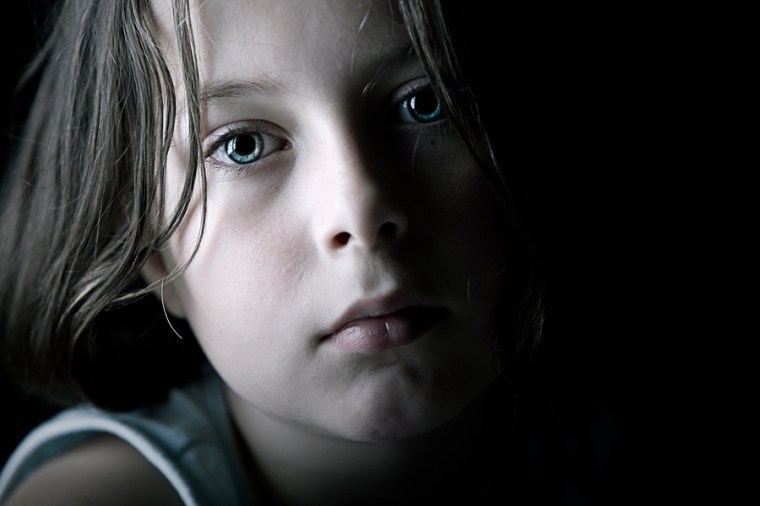
Sad ChildA recent study reported that for the first time ever more middle school students are dying from suicide than from car crashes. Not only that, but the number of suicides among children as young as eight, nine or ten years old is also increasing. Researchers are only guessing as to why so many of our children and teenagers are ending their lives in such record numbers. The trend has become an epidemic that is rarely mentioned and far too many parents are unaware of the signs that there is trouble.

There are a number of possibilities suggested as to why suicide has become such a problem. Young people today increasingly see the world as being a dangerous and violent place. News stories often make them feel as though they are living under constant threat of harm. In addition there has been a breakdown of healthy relationships in many families leading children to feel insecure and sometimes even unloved. Ours is a fast paced world that stresses hard work and excellence. Some kids feel unrelenting pressures to excel in every aspect of their lives. Television and movies all too often depict suicide as a good way to end problems. Of course there is also the specter of social media which sometimes serves as a catalyst for bullying and the creation of unrealistic expectations of beauty, luxury and unending happiness. There is also a problem with adults, particularly parents failing to acknowledge the signs of depression and its power to lead their children to suicide.

There have always been young people who decided to take their lives, but never in the numbers that are being recorded today. When I was young virtually everyone sat down together with members of the family to share dinner. We took that opportunity to talk about the days’ events and to reinforce the idea that we cared for one another. All too often today the tradition of gathering around the table has been replaced with meals quickly consumed in front of the television or on the go. Members of the family are often moving in so many different directions that opportunities to actually talk with one another are brief or rare, especially once children become teenagers.

Latch key kids are abundant and they spend their afternoons unsupervised. They may become isolated by hours of playing video games or may even find inappropriate television programs to watch. They spend hours texting friends with their parents rarely being privy to what kind of messages are being exchanged. They may be engaged in dangerous situations for which they do not have the maturity to react in a healthy manner. In a sense they often lead secret and disturbing lives apart from their parents without anyone knowing the extent of the treacherous paths down which they are travelling.

There are ways that adults should more closely monitor their children rather than just assuming that all is well. When my own daughters were teenagers a very good friend advised me to find out as much about what they were doing as possible. I did so in both overt and covert ways. I talked with my girls constantly and observed their behaviors, watching for even subtle changes. I also listened to their friends and the parents of their friends to find out more information about their habits. I enlisted the help of an army of caring people to make sure that all was well. Even then I missed cues now and again.

My youngest daughter suffers from depression just as my mother did. She began to exhibit more and more isolated behavior and seemed to be in a continual state of tears when she was in high school. I remember the night when I found her sitting in the dark in her bedroom rocking back and forth while crying. I sat on the floor with her and held her in my arms as though she was a toddler, coaxing her to tell me about her feelings and what was driving them until she finally admitted that she felt lost and confused. I made an appointment for her to see a doctor the next day and began to engage in more and more frank conversations with her. She made it past that valley of despair, but she often told me that ultimately it was her profound belief in God and the sanctity of life that had prevented her from harming herself. Ironically my mother had often told me the same thing about her own moments of mental distress. Needless to say I rejoiced in knowing that by providing my child with a religious foundation I may have saved her life.

If parents see dramatic changes in their children it is dangerous to simply assume that the new behaviors are hormonal or typical. Warning signs come in the form of falling grades, difficulties sleeping, headaches or other physical manifestations. Children who lose interest in hobbies or friends are sending signals that something is very wrong. Changes in personality are another clue. Frequent tears, outbursts of anger, long periods of isolation inside a darkened room may all be pointing to problems that must be addressed. While teenagers are infamous for their constant texting, if this habit also appears to be associated with aggression or a lack of self esteem there may be a need for getting to the bottom of what kind of information is being exchanged.

We’ve always had bullies but never to the twenty four seven extent that some kids now endure. Social media all too often becomes a minefield for attacking youngsters. Sometimes those participating in the emotional assaults don’t even know the people that they are intimidating. For them it is just a sick game, but for the teenager who is the butt of their commentaries it can become unbearable. There is nowhere to hide, no way to stop the misery. They all too often hide what is happening out of a feeling of shame. Being so alone bears heavily on them. They need help but don’t know how to find it. It is up to adults to be conscious of such situations and work to assist the victims in retrieving their sense of security and self respect.

It’s become popular for some adults to refer to youth who struggle to adjust to the many challenges that they face as “snowflakes” as though they are simply so delicate that they cannot adjust to the realities of life. This is akin to the people who would urge my mother to get control of herself when she was in the midst of a psychotic episode as part of her bipolar disorder. At the time the chemistry of her brain was so askew that she did not possess the power to stop the madness that engulfed her. She needed the help of caring family members, friends and medical professionals to get her life back on track. The lack of understanding that she continually faced made her challenges even more difficult than they needed to be. Such it is for youngsters who are in crisis. Shaming them for falling victim to depression so debilitating that they have suicidal thoughts is not an answer. Instead we all must be vigilant in assisting anyone whose ideation becomes dark and worrisome.

Teachers are often the first to notice problems with a young person. Instead of ignoring such concerns it is paramount that they contact the school counselor, the nurse, the parents or all of the above. Sometimes kids are so good at hiding their pain that their families are the last to know that there are difficulties. Honest conversations have to take place, always punctuated with love and concern. At the same time we should teach our kids to be good friends who are willing to let us know if someone is struggling more than normal. We must then either contact the school or the parents to alert them to what is happening. Those are difficult conversations, but they may save lives. 

Rescuing our children from thoughts of suicide should be of paramount concern to all of us. We need to spend more time talking with them and helping them to feel safe in confessing their problems. We need to watch for the warning signs and take aggressive and loving action before the worst happens. It is up to all of us to bring down the distressing suicide statistics among the youngest in our society. We need to begin some difficult discussions with ourselves, each other and our children. Nothing else that we do is more important. 

Woke Up This Morning

sunrise-sky-blue-sunlight-67832I woke up this morning. Isn’t that grand? I know that it sounds rather ordinary but there is a certain mystery and beauty about the act of sleeping and then rising at the end of our dreams. It demonstrates a total sense of trust because in truth we are very vulnerable when we are snoozing, and yet in my country we mostly have the privilege of following the rhythm of life for all of our days without worry or harm.
Some of us have insomnia from time to time. Mine comes and goes often with the seasons, the stresses in my life or the amount of caffeine that I have consumed during the course of a day. I’ve learned certain tricks to keep the sleepless nights from becoming habitual, but in truth I simply don’t doze as much as I once did. My days grow longer as a result, and I always find ways to enjoy them like watching the hummingbird in my backyard flit from one plant to another. He’s a cute little thing who’s so quick that you have to really concentrate to catch him performing his antics. He’s mostly around when the bigger birds are busy with whatever it is that they do in the middle of the day. When they return to dominate, my hummingbird takes shelter in some hidden corner of the garden.

When an EMT was rushing my husband to the hospital recently he spoke of the sleep disturbances that firefighters continuously endure. He noted that he had been out on four different runs the night before. He explained that the body begins to react to the constant interruptions of slumber. He reasoned that he would one day need a desk job so that he would be able to enjoy more regular habits. He asserted that fighting fires and driving ambulances is a young man’s game that becomes more and more difficult over time.

I’ve often heard that doctors who are continuously awakened by emergency phone calls from patients generally live a bit less longer than the rest of us. They indeed learn early in their training to exist on far less sleep than everyone else, but it has a negative effect on their overall health. We don’t often stop to think about that when we make those middle of the night requests for their services. I understand that much of the time now patients are told to go to an emergency room or a group of doctors work together to create schedules that only require nighttime vigilance now and again to prevent those constant interruptions. I suppose that they have finally quite wisely decided to do something about the dangers of getting too little sleep.

We humans have been wary of the dark since the beginning of time. Things go bump in the night. Surrendering ourselves to a state of oblivion is necessary for our health but can also be frightening. There are indeed times when we sense the danger in doing so.

I once spoke with a young man whose family was trapped by the high waters that resulted from the collapse of the levees in New Orleans and surrounding areas in the wake of hurricane Katrina. He and his parents somehow managed to get to the top of a freeway overpass. He said that other people were there as well. They took turns sleeping because gators were lurking around not to mention other people with devious intent. He recounted how difficult it was to relax enough to finally reach a state of slumber. He said that he was exhausted but unable to surrender for fear of what might happen when he became unconscious. In many ways falling asleep is the ultimate show of confidence because we just don’t know what will occur while we are out.

I am reminded over and over again of the shock that I felt upon learning that a friend’s husband had died in his sleep. When he failed to get up long after his usual time for rising, she went to check on him and realized that he was not breathing. There had been no signs that something was wrong, no warning of the impending tragedy. While it was definitely a very peaceful way of going, it actually haunted me for a quite some time and reminded me of something that my mother had always done.

She had made a habit of telling me and my brothers how much she loved us before she went to sleep each night. If we had exchanged cross words during the day she apologized whether it had been her fault or not. She insisted that loving words should be the last ones we ever heard, and she followed that way of doing things until the end of her own life. I suspect that she sometimes wished that she had been able to tell my father just how she loved him before he died in his terrible car crash. She learned from that horrible time that we can’t take anything for granted, not even that we will see each other when the sun rises at the start of a new day.

Since my husband’s stroke the happiest part of my mornings comes when he opens his eyes and walks downstairs with a big smile and a greeting. My heart literally fluters with gratitude that both of us are still here and my prayer is that we will be for many days to come. Still I’ve made it a habit of late to do as my mom taught me and express the gratitude and affection that I feel for the people who walk with me in this life.

Our rest revitalizes us and prepares us for the work to come. It should also be a time when we close our eyes confident that we love and are loved, that we forgive and are forgiven. We should celebrate the miracle of each new day that we are allowed to see. There is so much beauty in the people and the world around us. All we need do is open our eyes and soak it all in.

They Dance Alone

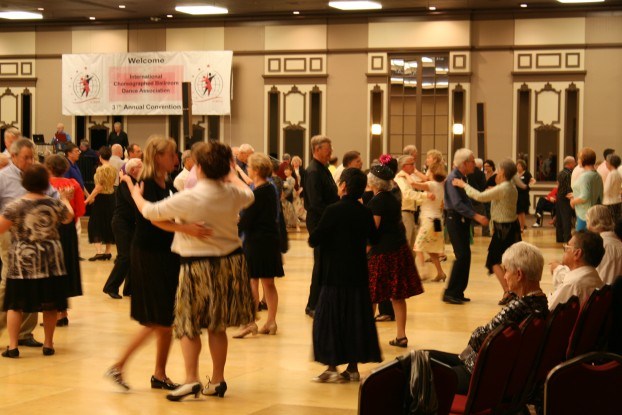
IMG_1914-e1373088974248For days now They Dance Alone, a song from Sting, has been playing in my head. It begins with the words, Why are these women dancing on their own? Why is there sadness in their eyes? It refers to those who were widowed by the war of revolution, but it might apply to anyone who has lost a spouse.
I’ve always imagined that I have enough empathy to truly understand what it is like to lose that person who has been one’s best friend, soulmate, lover. I thought I had the concept down pat until my own husband had a stroke. Just seeing him become so vulnerable nearly brought me to my knees, and even though he is still with me I find myself constantly looking for him and listening to him breathe at night. Having him gone forever is unimaginable. I now know that I did not ever truly understand what it has been like for friends and relatives whose spouses or partners are already gone. I now feel the raggedness of the hole that punctures the heart. I think of those who dance alone constantly.

I remember the devastation that my mother endured after my father died. Only now do I think that I am moving closer to understanding the extent of her emotional breakdown. I find myself wondering how she found the strength to pull herself together. I suspect that it was only her love for her children that pushed her to rise up from the despair that she must surely have felt.

Not long ago I attended the funeral of a young man who once lived next door to me. I still think of him as a cute and friendly teenager who was always eager to help. He was far too young to die and his widow was bereft. I have since followed her on Facebook and she struggles every single day to continue without him. Now more than ever I somewhat comprehend what she is experiencing.

And so it goes. There is the young widow whose husband left on a business trip and never returned, the neighbor whose husband was sick for years but somehow overcame each challenge to his health, our dear friend whose wife died of cancer. There is my cousin whose husband passed just before Thanksgiving after years of fighting to survive heart failure, the colleague whose spouse finally fell victim to heart disease. I suddenly have a far deeper kinship with them. I feel the visceral attack that such an incident engenders.

I’ve also been thinking of the people that I know who are caring for spouses who are very very sick. A long time friend literally devotes every hour of every day to her husband who had a major stroke that left him unable to do anything for himself and attacked his brain so violently that he suffers from early onset of dementia. I have been watching the courage and grace of my son-in-law’s mom who has spent months visiting one doctor after another with her husband. Her life has been upended and yet she keeps a smile on her face and demonstrates a level of optimism that inspires everyone. Still another friend has been caring for a husband with Alzheimer’s for many years now. She literally has to plan for someone to be with him each time she leaves home. I also have a cousin who has been watching over her husband who has Parkinson’s disease for longer than I can remember. These women are so remarkable and before now I underestimated the love and devotion that they so generously share with their husbands.  It’s so difficult to think of the fear that they have somehow managed to subdue as they watch their loved ones suffer through their illnesses.

The old saw that we sometimes see our lives flash in front of us is all too real. During the days since my husband’s stroke I have literally thought back on the first time that I met him when he was so handsome and enchanting and I got that tingle of love each time I saw him. I’ve had flashbacks of him holding our girls when they were babies. I’ve remembered the times when he helped me hold it together when my mother was very sick. I’ve relived every single trip that we ever took. It is as though the chronicles of our time together have played in my mind like a biographical movie. In my heart I have laughed and cried and always in the end I worry, which is sadly so much a part of my nature. I once again have been feeling that little tingle of unadulterated love just at the sight of him. I also find myself thinking of all of those people who dance alone.

I just attended a wedding in Cancun where two people began their lives together. They celebrated their love and I thought even then of how happy I was to be there with the love of my life. In just a little over a year we will have been married for fifty years. He has been the most important person in my world for so long now that it feels impossible to ever be without him.

I have great faith that his stroke was only a warning of what might be if we are not more careful. We will change our ways and do everything possible to help him to heal and become stronger. It will be a partnership as we work our way back to a healthy lifestyle. Our friends and family will be with us. Of this I am certain. We are surrounded by prayers and positive thoughts and love. Still I feel guilty that I never fully appreciated the gravity of loss until this moment. I was cavalier in believing that I was somehow so sensitive that I might comprehend what they were feeling. Now I know that I wasn’t even close. I need to send lots of love to the people whose hearts have been rent in two. I have to congratulate them on being so strong, often without the level of compassion that they really needed. Now I know why there has been sadness in their eyes. I feel how awful it must be to dance alone. I promise to remember them.

Words As Weapons

words-are-weapons“The tongue has no bones but is strong enough to break a heart. So be careful with your words.”

How often do we hear of words “killing” someone’s soul? Jesus tells us that gossip is like letting a bag of feathers loose in the wind. No matter how hard we try we are never able to get them all back. What we say has repercussions that are sometimes irretrievable. We know this and yet time and again cruel sentences leave our lips or end up floating in the ether on Twitter or Facebook. Sometimes this happens in a moment of anger but other moments are the result our intent to brutally harm someone with our most ugly thoughts. We say that sticks and stones can break our bones and words can never hurt us, but we know that this really isn’t true.

Sadly we read again and again of young people who are so harassed by their peers that they are driven to killing themselves. I suspect that none of the individuals who poke at someone and make them feel weak actually intend for harm to happen but all too often it does. I recently watched a program about a young woman who was recently found guilty of manslaughter for taunting a depressed friend into committing suicide. Texts on his phone showed that he was reluctant to take his own life, but eventually went through with it at the urging of this young lady who assured him that his family might grieve briefly, but would quickly get over their loss. When he admitted to her that he was scared to follow through on his plan she insinuated that he needed to man up. Eventually he did the deed. The jury felt that without the woman was complicit in his death because he was trying to back out, and she pushed him to follow through on what he had started.

While this is an extreme example of how words have the power of being lethal there are so many examples of youngsters whose confidence is ravaged by the horrific comments of their peers. It’s all well and good to teach our children how to ignore such behaviors, but we also must implore them never to be part of such destructive actions. We’ve all witnessed individuals who become the butt of jokes and sometimes we do so little to help them. It’s very difficult to stand up to kids who are popular or powerful, and yet we need to show our kids how to draw upon the courage to always do the right thing. We cannot sit back and watch the suffering of another even if it means losing our own place in the pecking order. Our children need to understand that they will ultimately be much happier if their own character is strong and just.

Most of the time none of us become involved in such extreme examples of using words as weapons, but we do sometimes say things to the people with whom we are the closest in the heat of a moment. We know their weaknesses and we charge ahead ready to hurt them with a little sting. We have to be very careful in such situations because once our barbs have landed we can’t really take them back. We would all do well to think before we speak and to consider the damage that our words may cause.

We seem to believe that we have a certain level of anonymity whenever we post comments on social media. We believe that out of the millions of words being slung around each moment there is little reason to think that ours will be noticed, but time and again people have lost jobs, tested relationships and angered friends over a snarky response, when the truth is that the only result that is likely to happen in such instances is to upset someone. We rarely change anyone’s opinion with our insulting remarks, so why would we take the risk of speaking out and possibly hurting feelings?  I have literally cringed over the words that I have heard people express or seen them write.

We have almost unlimited freedom of expression in this country, but it is up to each of us to know when saying certain things goes beyond the pale. A joke about assassinating the president isn’t funny. Racist comments about those who are different from ourselves have no place in the public forum. While we cannot and should not restrict speech, it is up to each of us to monitor our own utterances and to consider the effects of what we say. Perhaps it is time to instruct our young in such things as well.

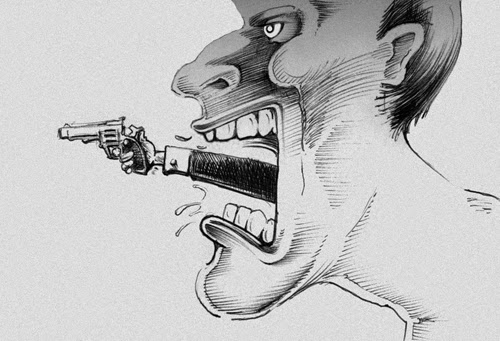
Words can be as sharp as any sword. They can mortally wound a soul. We really do need to watch what we say. Gossiping, lying, bullying, threatening, hurting should all be anathema to us. We would not point a gun at another human being, so why do we so blithely allow our words to sting? Whether we shout them or whisper them or write them down they should always be intended for the betterment of the people that we encounter, but never to tear them down.