Wise Fools

64-yearbookThe school year of 1963-1964 began typically enough for the Class of 1966. We were sophomores, the “wise fools” as the strict Latin translation proclaims. We entered our second year of study with confidence, perhaps not fully understanding how much we did not yet know. It was a year of change and those of us from the female side of the student body were excited about the new uniforms that appeared to be a tiny bit more fashionable than the dull brown pencil skirts that we had worn as freshmen. We arrived all decked out in our brown and white plaid pleated skirts, white blouses, and dark brown blazers. At least for a time we were glad for the opportunity to wear something different.

The Carmelite Fathers were celebrating their one hundredth year of service in America and it seemed fitting that we would rechristen our yearbook with the name, Zelo, alluding to the motto of the Order of Carmelites, Zelo zelatus sum pro Domino Deo exercituum, “With Zeal I have been zealous.” We returned for our second year believing that we had the whole high school experience figured out. Gone were the fears that we might be unable to meet the demands of our teachers. We had formed strong friendships and alliances with one another and we felt ready for anything that might come our way.

We were admittedly a bit less interested in academics than in the social aspects of school but that is rather typical of sophomores. Our teenage years were in full bloom with many preparing to earn driver’s licenses and make the grand leap into more independent lifestyles. We tackled the logic and proofs of Geometry with Mr. Maroney and became ever more proficient in Latin with Sister Wanda. Father Donald led us through the fundamentals of Biology and taught us how to dissect a living breathing frog and keep its heart beating even as we opened its body for observations. I have long suspected that my ultimate reluctance to pursue a career in medicine began inside the Biology lab when I was certain that I was going to faint from the stench of formaldehyde and the sight of that tiny heart fighting for a survival that was doomed.

Once again I had an English class with Father Shane and just as with the previous year it would be the highlight of my day. My biggest surprise came from Speech and Debate. I was then as timid as a little mouse but I somehow discovered the bold nature of my personality when Mrs. Lamping taught us how to use not just our words, but also our voices to communicate with strength and determination. I soared under her direction and soon found myself competing in debates with my partner, Claudia. We would never find the momentum to have a consistently winning season but I would learn so much about people and my interests would begin to take form.

Our handsome and beloved President Kennedy was proving his own mettle in national affairs and becoming ever more popular. He had faced down the Soviets in the Cuban Missile Crisis and gained the respect of even his detractors. He was coming to Texas in the fall of our sophomore year with a short stop in Houston before traveling to Dallas. It was November and I had turned fifteen years old only days before. I remember sitting in English class when Sister Margit came to the door to announce that President Kennedy had been shot. She was always such a jokester that I at first thought that she had gone a bit too far with one of her impish pranks but the look on her ashen face told me that she was not attempting to fool us. Along with my classmates I felt as though someone had just punched me in the stomach. I remember sitting silently for hours waiting for the school day to end and wondering if the world as I had known it would ever be the same. This terrible day would become the defining moment of our sophomore year of high school, a turning point when everything that we had ever known seemed to suddenly change. I suppose that we all grew up just a bit on that day and lost the unfettered innocence that had once been ours.

We eventually carried on just as the country did. We relied on the rituals and routines of school to occupy our minds and our time. The newspaper and yearbook staffs preserved our memories, the sports teams represented us in combats with rival schools. I kept my membership in the Medical Careers Club even though I was beginning to doubt that I was suited for a life in medicine. I religiously attended the Saturday night dances where I enjoyed meeting up with my friends and watching the couples sway on the dance floor. My teachers and my classmates were feeling more and more like family and I found great comfort in being with them day after day.

It officially snowed in February and our teachers allowed us to run outdoors to catch snowflakes on our tongues. It was a rather pathetic but typical version of Houston snowfall but it got us temporarily out of our classes. Our basketball team celebrated its one hundredth victory that same month and I learned that the round ball was my favorite sport. There were spiritual retreats and Bunny Hops and more and more of my classmates driving to school for the very first time.

In the spring we had our annual fundraising drive. Each of us had to sell a case of World’s Finest Chocolate, a feat that was rather difficult given that most of the people in the neighborhood had children with their own cases of candy to sell. This meant that we had to use our salesmanship skills with strangers. My cousin, Ingrid, and I became a team, traveling with our moms to any place where we thought that potential customers might lurk. Our favorite spots were bowling alleys, ice houses, and trailer parks. We were thrown out of many establishments in our quest to sell our wares but usually not before we had managed to deplete our inventory just a bit more. Somehow we always managed to meet our quotas but it was difficult work. Mostly though it taught me that people are generous souls who are inclined to help even when they have little to give.

We ended our sophomore year far more knowledgeable and ready to become role models as upperclassmen. Many of us had moved up in the ranks of the various organizations and had made names for ourselves in academics and sports. We were halfway through our journey through high school but were yet to realize just how quickly time flies. We were anxious to move on and to be at the top of the pecking order. We had earned our places as school leaders and we felt more than ready to conquer the world.

Kit Cat

kitcatclock-black-white-bgIt was an ordinary night when I walked into my kitchen to find a most disturbing scene. There strewn on the floor were eyeballs, a little black tail, and the broken body of my Kit Cat clock. My little treasure had somehow fallen from its place on the wall. I was so upset that I called for my husband to clean up the debris that lay from one end of the room to another. It was apparent from the number of pieces that my beloved little clock was forever gone. Even though the time piece was only an object made of plastic and a few carefully placed wires I was filled with great sadness.

To be honest I truly understand that there are far graver events unfolding in the world than the destruction of a silly little clock. I see the images of suffering, war and injustice on a daily basis and it most definitely bothers me. I know of family members and friends who are enduring frightening and painful illnesses or even the tragedy of loss of a loved one. A battered clock is hardly in the same league as these very real kinds of problems but that clock represented far more to me than might at first glance be evident.

Around the time that I was four or five years old my father went to Rochester, New York on a business trip. It was a rather lengthy affair and I recall feeling a bit lost without his presence around our home. My mom seemed distracted and lonely while he was gone. Somehow our lives were off kilter without him. Then as suddenly as he had left he reappeared bringing sunshine back to our days, along with a few gifts that he had carefully chosen for us. Among them was a delightful clock that made us laugh. It was one of the original Kit Cat clocks, a humorous black cat with a grin as impish as the one that my daddy so often wore.

My father proudly mounted the smiling creature on the kitchen wall where it kept up with the time and smiled at us with those great big cat eyes scanning one side of the room and then the other. A long black tail swung in unison with the tempo of the tick tock of time, telling us that life was going to continue merrily on now that our dad was back home. It was the perfect gift from our perfect dad and I so loved that cat who was as unique and funny as my father.

Our Kit Cat clock traveled with us wherever we moved. It was part of our family. It went all the way to California and back with us and maintained its vigil on the wall through births and illnesses and seasons. It was ticking away on the morning that I learned of my father’s death. It reminded me so of him that I found comfort in watching it continue with its duties even as I wondered why the whole world didn’t stop to share the pain that I was feeling.

The clock soldiered on with us and as I grew I found it to be less and less enchanting until the time came when I hardly noticed it anymore. At some point it must have finally quit operating properly because it disappeared from the wall. I never thought to ask my mother what had happened to the clock. It was just a silly old thing that could never have lasted forever. Besides, I would always have the memory of my dad grinning like a Cheshire cat as he so proudly presented his find to our family so many long years before. That was really all that I would ever need.

Just as we always do I went on with living, rarely thinking of the clock until one day I walked into a store and there on the wall was a display of Kit Cat clocks being as silly as ever. I think that my husband was a bit mystified at the sheer pleasure that I derived from seeing those happy little timekeepers. When I told him the story of the clock that had once lived in the memories of my childhood he listened with his usual respect for my quirks. Somehow he managed to realize that the clock had been a link to my father in a time when I most needed to remember how much delight my daddy had always brought to our family.

When Christmas came later that year I excitedly opened my gifts to find among them a brand new Kit Cat clock to hang on my wall. I was overjoyed and touched that my sensitive spouse had understood the significance that the little cat held for me. We began a new tradition with our clock that extended through the marriages of my daughters, the births of my grandchildren, and the years of change and growth in our family.

The clock kept perfect time but over the years the eyes and tail only moved sporadically, sometimes standing still for months and other times suddenly swinging back and forth as steadily as a pendulum. It still brought me the kind of joy that I had felt as a child. When I looked at that grinning little face I thought of how lucky I have been to be loved by a father that I hardly had time to know and a husband who has been at my side for over four decades. The clock was part of my history, a treasure that meant more to me than I might ever explain. When I saw it shattered into pieces the other night I felt a genuine sense of devastation. It was as though a part of me had suddenly been destroyed. I had to call my husband to dispose of the debris because I was unable to face that grisly task.

If I have learned anything in my life it’s that distressing things happen and we somehow find ways to carry on with our journeys. After briefly grieving that my clock was gone I came to my senses and logged in to Amazon where I found a replacement to order. My new Kit Cat clock will arrive sometime next week to bring a new generation of joy and laughter into our lives. It will watch over our celebrations and comfort us in times of sorrow. It will stand as a sentinel and a reminder that sometimes all we have to do is smile and be a little silly to get from one moment to the next.

An Awakening

deadbigfootwoundedkneeThe ultimate beauty of being retired is that life is no longer ruled by a calendar. Week days are generally no different than weekends. Responsibilities are minor. It is acceptable to run away on a whim. Thus it was on that summer day as we left Drake, Colorado intending to return home. Having no pressing obligations, at the junction that would have led us south we instead chose to head north in search of Mount Rushmore, a national treasure that we had never before seen. It was only three hundred miles out of our way, a mere five hour journey.
We drove quickly across the northern planes and into the wide open spaces of South Dakota. Our plan was to visit the monument in the afternoon, catch the nighttime presentation there, sleep in a local hotel and then make the return trip home. Of course as is often the case our best laid plans indeed went awry. A sudden storm brought a driving rain, hail, and threats of tornadoes, dashing our hopes of a quick side trip. Instead we decided to spend two nights and another day in the area, learning about a part of our country that we had never before explored.

The imprint of the native Americans who once roamed freely across the land is everywhere in South Dakota. It takes little imagination to visualize the great Sioux tribes following the buffalo and taming the wild expanses in the ways of their ancestors. The geography seems ill suited for modernity. It is wild and unpredictable, best left to those who understand its whimsy. It is also strangely beautiful and even spiritual. With the very small footprint that I left I at times felt like a trespasser. It somehow didn’t seem right to be gawking at the places that were once ruled by great chiefs like Sitting Bull.

We visited a refuge for the animals that had been the mainstay of life for the people who lived in South Dakota long before settlers came in search of new homes. We enjoyed viewing the Sitting Bull monument that is still a work in progress. Our time at Mount Rushmore was more breathtaking than I had imagined. Still something about our presence seemed wrong and I understood my nagging feelings when we drove through the Pine Ridge Indian Reservation and found ourselves at the site of Wounded Knee.

Following the American Civil War there was a great push to move the nation ever westward. Our military became engaged in what would eventually become known as the Indian Wars. Soldiers were sent to outposts far from Washington D.C. to insure that the ever growing numbers of citizens and immigrants moving west would be protected from tribes of native peoples who became increasingly concerned about the encroachment on land that had once been theirs to roam freely. The influx of people and the tragic encounters led to horrific misunderstandings and battles, particularly in places like South Dakota.

After the Battle of Little Big Horn efforts were made to broker peace with the native people. They were promised a huge reservation in South Dakota in exchange for acceptance of certain conditions. Many of the leaders were weary of the fighting and agreed to the terms but Sitting Bull refused to abide and instead moved further north with his people. Sadly when gold was discovered in the Black Hills the American government reneged on the contract, drastically reducing the available land for the tribes.

After a difficult winter in which his people suffered the ravages of hunger and disease Sitting Bull was forced to return to the land that had been his home and submit to the terms of the Americans. He was informed that he must accept a Biblical name, learn English, wear westernized clothing and farm the land on which he lived. The agents and teachers who worked in the area sincerely believed that it was only in assimilating to modern ways that the native Americans would ultimately be successful in transitioning to a new kind of life. It was a demeaning defeat for a once great warrior.

There was great tension in the area as Congress attempted to strike a final deal with the members of the tribes. They offered each man one hundred sixty acres of land and a paltry sum of money for the area around the Black Hills that had been so egregiously taken away. Sitting Bull wisely noted that as families grew the amount of land would not be enough to sustain life and refused to sign the agreement.

In the meantime a shaman had a vision that the Sioux tribes would rise to power once again. He told the people that if they performed the ghost dance in their traditional regalia their ancestors would make them immune to the bullets of the white men. Feeling desperate and with nothing to lose they began the rituals which frightened and angered one of the Indian agents who called for military reinforcements in the region. When the same man decided to arrest Sitting Bull for inciting insurrection one of the great tragedies of our nation ensued.

The inexperienced and frightened soldiers tasked with procuring Sitting Bull shot and killed the great chief and members of his families. When word spread many of the already angry members of the tribe rebelled and the troops reacted with heavy fire. Even women and children fleeing from the melee were mowed down as they attempted to escape by crossing the Wounded Knee River. The encounter marked the end of the Indian Wars and served as a black stain on American history as both sides argued as to whether it had been a battle or a massacre. Much later the United States Supreme Court would rule that the entire affair was one of the most horrific examples of greed and outright theft in the history of our nation.

I was stunned when I saw the simple painted wooden sign marking the site of Wounded Knee. Somehow I had thought that it would have had a beautiful monument designating the site of such an important moment of history. Perhaps the lack of pretense in marking this place was intentional because it struck me far more deeply in its humble reality. The land was as wild as it had been over a hundred years ago. It was rocky and dry, hardly the kind of place amenable to growing enough crops to keep a family alive. It exuded a poverty of spirit. I understood as I looked at that bleak area just how our government had murdered a whole way of life.

I was overwhelmed with sadness and a sense of guilt after visiting Wounded Knee in the Pine Ridge Reservation. The area was dotted with alcohol and drug rehabilitation centers. The signs of poverty were unmistakable. I wondered at what our ancestors had done.

We stopped for gasoline before beginning our journey back home. I stood in line to purchase a few snacks for the road. The mostly native American people who surrounded me were affable but there seemed to be so many who were not working on a day when they should have had jobs. They wore defeated expressions as they languished at tables attempting to fill the hours. I wanted to announce my apologies but knew that I would seem crazy in doing so. I simply paid for my wares and drove away forever touched by the knowledge of the unfairness with which their ancestors had been treated. I left a piece of my own heart at Wounded Knee.   

Brave Courageous and Bold

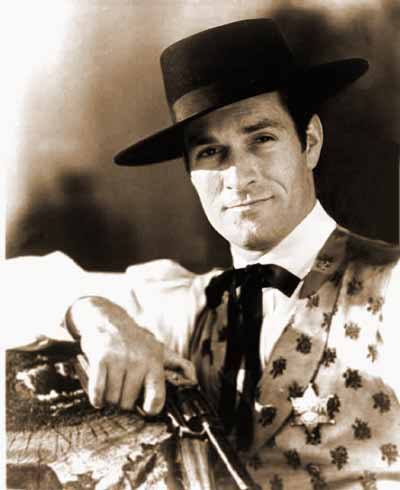
wyatt-earpI wasn’t allowed to watch much television when I was a child. My mother thought it prudent to limit the amount of time that I spent sitting in front of the box with its black and white images. She much preferred that I play outside or read. As the popularity of this new invention grew she began to relent just a bit but still insisted that she be the one to chose the programming that I was allowed to see. Being a woman she wasn’t particularly inclined to select westerns but for me those were far and away the best of the offerings.

The first adult western offered during primetime viewing hours was The Life and Legend of Wyatt Earp starring Hugh O’Brian, a dashingly handsome man who supposedly was chosen for the role because he resembled an early photograph of the real Wyatt Earp. The show premiered in September of 1955 and ran until 1961. Four weeks after Wyatt Earp came on the air Gunsmoke joined its ranks. At one point in time there were more than twenty different western themed series being offered by the three big networks, many of them inspired by the success of Wyatt Earp.

I loved visiting my uncles Jack and Louie. They were western fanatics and while my mother was being otherwise entertained I was able to get my fill of those remarkable programs while sitting next to them in the dark. The lead characters became my heroes and I learned the theme songs for my favorite shows by heart. I’d ride around the neighborhood on my bicycle bellowing, “Wyatt Earp, Wyatt Earp, brave courageous and bold. Long live his fame and long live his glory and long may his story be told.” It gave me a bit of credibility with my friends to be so well versed in the more important aspects of kid life.

I had little idea that there had actually been a real man named Wyatt Earp whose story was a bit less impressive than the television counterpart. I only knew that he and the other cowboys who lit up the screen were always good looking, brave, honest and loyal men who fought for what was right. They were role models for all time. Little did I understand that in reality the men and women of the wild west hardly resembled their Hollywood posers. I innocently dreamed of their exploits and heroics and sometimes imagined that my two uncles might have made fine lawmen had they happened to live in the era portrayed on the screens each evening.

Westerns were popular at the movies as well as on television. Gene Autry was a singing cowboy and Alan Ladd was a brooding cowboy but the best of the lot was John Wayne. I loved every one of his movies and luckily so did my mom. Most people choose True Grit as his best role but I was a huge fan of Stagecoach and The Searchers. Somehow I imagined that every place west of San Antonio was filled with horse riding, gun toting heroes as amiable and charismatic as John Wayne.

Perhaps television and film producers alike created a few too many westerns back then much like the reality programming of today and the public grew weary of the sameness of the shows. Slowly but surely the old westerns were replaced with other fan favorites. Now cowboy shows are a rarity which is a shame because some of them really were quite good. Maybe we just outgrew them and began to realize that the image of the great hero of the old west was little more than a myth. We may have just become too cool for those guys with their ten gallon hats and boots.

I remembered how much I had enjoyed those stories when actor Hugh O’Brien recently died at the age of ninety one. I hadn’t really thought about him for years and I was actually surprised that he had grown so old. In my mind he was still a young lion in his early thirties with that steely eyed expression that told outlaws that he meant business. He seemed to be the perfect man to keep a town safe. Watching him in action always made me feel a bit more secure even in the real world. Hearing of his passing was like acknowledging the end of an era.

They say that what goes around comes around and I often wish that there might be a revival of the old westerns. I’ve heard that Longmire is a somewhat reasonable facsimile of those old shows so I may have to check it out soon. I still think that the viewing public might appreciate a well crafted western. Perhaps once we the audience have had our fill of present day offerings someone will think to create a really good story about the characters who roamed in the days when the western expanses of our country were wild and unpredictable.

We seem to be a bit down on cowboys and ranchers these days. I suppose that some of those of old did things that were of questionable morals but someone with a very creative mind should be able to create a character who is real and not just a cardboard caricature. It might be a compelling program that explores the complexities of that era with an imperfect but somewhat noble hero. I tend to think that Darrell of The Walking Dead is cut very much from the old western cloth. It shouldn’t be that difficult to build a story around such a man.

We’ve lost most of the actors who made those roles come to life and brought little kids like me so much delight. I for one think it’s time again to “Head ’em up, move ’em on.” We’re ready for another Rawhide.

Terror

ground-zeroIt only took a split second on that September day for everything to change. The sky was blue. It was one of those seemingly perfect mornings when we all went about our business with a little more spring in our steps. Who could be unhappy with the sun shining so magnificently and the weather showing the promise of cooler days ahead? When we saw that plane heading toward a building in the middle of New York City it didn’t make sense. We wondered if the pilot was lost, sick, having a heart attack. Once the plane hit without any attempt to adjust course a sickening feeling of horror began to slowly overtake us. By the time a second plane flew straight through the other tower, a third slammed into the Pentagon, and a fourth crashed into a field in Pennsylvania our national innocence had been shattered. While we have been attempting to deal with the aftermath of what happened fifteen years ago an entire generation of children has grown up under the specter of terror. September 11, 2001, was a purposeful attack on our psyches and the years have not yet healed us.

I used to live near Hobby Airport in Houston, Texas. I grew to love the sound of the airplanes moving over my home as they traveled to and fro. I liked to imagine where the people were going and what fun lay ahead for them. My girls and I often walked over to watch the planes taking off and landing. There were no barriers to our movements. We were free to stroll unencumbered into the departure areas and press our noses against the glass walls to watch the activities playing out on the tarmac. We often met our out of town guests as they exited the aircraft or sat talking with them until they departed. We didn’t pass through metal detectors or take off our shoes. We didn’t have tickets and we still moved in and out of the airport as though we owned it. After September 11, we would never again enjoy the luxury of using the airport as an adventurous destination on our leisurely walks. I would never be able to show my grandchildren the fun that their mothers and I had so often enjoyed.

I remember the silence that ensued for days after the attack. The sounds of the plane engines that had become so much a part of my routine were gone. It was eerie not to hear them and when they finally returned they were suddenly frightening. Air travel became a source of anxiety for me rather than a joyful experience. I became wary and watchful and admittedly nervous. Just getting through the long lines, the guards, the scanners became a distasteful chore. Understanding why such measures had to be taken added a hint of danger to what had before been so delightful. Post 9/11 children would take the inconveniences for granted, not knowing how free and easy travel had once been.

Our country would react to that horrific morning by engaging in a war that now seems never ending. We believed back then that we would slap a couple of terrorist hands and then resume our happy lives. Instead we are still fighting an elusive and shadowy enemy. We take down one group of terrorists and another is spawned. We are unsure of how to defeat those who would harm us so that we might return our world to a sense of normalcy. In fact we secretly wonder what normal is. For the young it is the reality of living under a constant threat and still managing to carry on as though nothing has happened. For those of us who witnessed those terrible events that will never fade in our memories it is a longing for a sense of peace and security that may never have actually been as concrete as we believed that it was.

The years have taken their toll on the world. Governments have toppled. Societies are warring. Here in our own country the wreckage of 9/11 revealed scars and disagreements that have been festering for decades. We want someone to care for us and maybe even make it all go away but we cannot seem to find solutions that are satisfactory to all of us. We argue over the effectiveness of policies and attempt to place blame. Where once we were rather naive and happy go lucky, now we are cynical and argumentative. The psychology of terror has slowly but surely done the work that it set out to do. We no longer feel as safe and strong and noble as we once did. Instead of concentrating on the root of our problems we now verbally attack one another.

A generation of children has grown up in this atmosphere. They are now in the early years of their adult lives, attending college, studying in high school or middle school. Social networking is as natural to them as making a phone call was to us. They get their news on the Internet. Cell phones are their libraries and means of communicating with their friends at one and the same time. They are subjected to a barrage of information and temptations all day long. The forces of terror and extremism attempt to radicalize them by playing on the confusion that young people so often experience. They can visit websites and watch videos that extol the virtues of jihadists and political fringe groups. They have easy access to dark ideas that continued to grow even after our best efforts to stop the terror that we witnessed on September 11.

Today we mostly go about our business trying not to think too much about what happened fifteen years ago. We remind ourselves that more people are killed in car accidents than by terrorists but each time we have to pass through metal detectors and open our purses for inspection just to watch a baseball game we are reminded of the dangers that might strike at any time. We tell ourselves that we won’t be bowed down by evil but we know that we have changed. We are less trusting and more cynical than we once were. We felt so innocent on that beautiful September morning only seconds before that plane did the unthinkable. Just like that our comfortable cocoons came crashing down and none of us would be quite the same.

I believe that the malaise that so many of us feel in this election season can be traced all the way back to that terrible day. We continue to search both for someone to blame and someone to be our hero. Thus far we can’t seem to agree on who is who. That is the crux of our terror. Osama bin Laden would smile to see us warring with one another. It is what he hoped to accomplish. He often said as much in his hateful videos.

We took away the debris from the September 11 disaster. We honored and buried the dead. We built memorials lest we forget. Now it is time to heal our souls and show our children and the world that the terrorists have always been wrong. They can never take away our freedom and our strength.