Last Chance U

lastchanceu_unit_0357_r_crop
Last Chance U

It seems as though I have been watching a bit more television lately than I probably should. I suspect that it is because the daily rains have made me a bit more homebound or perhaps because I spent most of July on the road and now I prefer to hibernate at home for a time. Soon I will be traveling again to Colorado and then will resume my math tutoring at two different schools. I’m slacking off before getting back into a daily routine.

Last night I watched three episodes of the Netflix documentary Last Chance U. I’m not particularly enthralled by football as a topic but this series is really a kind of psychological and sociological study which of course fascinates me. It focuses on the football team of East Mississippi Community College, a school that won the Junior College National Football Championship the year before the story was filmed. It is a place where misfit athletes come for one last shot at a spot on a powerhouse university team or a job with the National Football League.

Most of the players have talent but for one reason or another have been relegated to the football ash heap. Some were once highly recruited high school players who got into trouble at the universities that gave them scholarships. They skipped classes, made failing grades, missed practices, ignored curfews or broke the law. Some did all of the above. All were summarily dismissed. Others demonstrated amazing athletic skills in high school but were unable to muster high enough grades or test scores to win admission to a major or even minor university. These young men came to East Mississippi hoping to get one more more opportunity to reach the big time. The coach there is well known for resurrecting hopes and dreams.

The stories of each of the players resonate loudly with me. I have seen so many young people with similar baggage. I have learned how difficult it is for some kids to succeed athletically when they have pronounced academic deficiencies. I often wonder where I would be today if I had been required to meet certain sporting requirements in addition to mastering the knowledge and skills of my profession. I suspect that I would still be working at a low level job without hope of ever earning a degree. Somehow it doesn’t seem right that a gifted athlete must also carry a certain average to remain eligible to play a particular sport. I understand the idea that a university is first and foremost a center for learning but what about those who truly struggle to learn but who have a very special talent to share with the world?

I once had a student who was a star in every sporting arena. Regardless of what he tried athletically he was a standout. It might be said that he was the athletic valedictorian of the school. Unfortunately he was a special education student with multiple learning difficulties. He struggled with reading and was never quite able to pass his senior year Exit exams. With great assistance he managed to earn a high school diploma but nothing about his academic credentials enticed a university to risk offering him a scholarship. He set his dreams of playing professionally aside and learned a trade after graduating. He has done well and I am quite proud of his efforts but I often wonder where he would be today if our society had a more realistic attitude about young people like him. What if someone had offered him the opportunity to do what he does so well without expecting him to demonstrate mastery of the things that baffle him?

Oddly I often saw this young man as being much like me. We both had enormous gifts and talents. Mine happened to be academic. His were athletic. We also had disabilities. I tripped over my own feet and he struggled to read. The difference was that I was allowed to follow my dreams without having to prove my physical prowess but he was barred from doing so simply because he lacked certain academic skills. There is an unfairness in that.

At East Mississippi Community College the coaches, teachers and an academic advisor work with the young men to help them through the challenges that have heretofore blocked their way forward. It is a place of redemption as long as the players are willing to put in some effort. They must attend all of their classes, complete assignments and ask for help when they need it. Four year colleges and pro teams scout them. Many of the former players at the school have found the success that had at one time seemed to be so elusive. The adults guiding them use a combination of tough love and encouragement to keep them motivated. Some of the young men make it and some burn out.

I wish that we had more adults to help struggling students to achieve their goals whatever they may be. Far too many of our youth come from environments that do little to encourage them. For example one of the players featured in the program witnessed his father killing his mother and then turning the gun on himself. He was only five years old when he endured this trauma and it is all too apparent that he continues to harbor abandonment issues that make it difficult for him to trust anyone. Another young man flunked out at his previous university. He is married and has a child. He wants to do the right things but he often becomes stressed and worried that he is wasting time when he might do better if he were to simply quit and get a regular job to support his family. Too many of the players come from high schools where the expectations were so low that they graduated without really learning much of anything. Their academic advisor definitely has her hands full but she is doing a yeoman’s job, something that we need more of in all of our schools.

Ultimately all of the players have to man up. Only they have the final power to make the efforts needed to change the directions of their lives. In the end their story is about salvation and whether or not they have enough drive to make their final chance count. The stakes are high and I find myself rooting for them not just on the field but as they navigate the world as well. It’s been said that a mind is a terrible thing to waste but then so too is it a tragedy to fritter away any kind of talent. In Last Chance U we watch young men from broken homes and economic uncertainty as they struggle to piece together the fragments of their lives. It is a high stakes game and one which I desperately hope that each of them will win.

Remains of the Days

Mission_Concepcion_San_AntonioSan Antonio is a well known tourist destination. It attracts visitors from around the country and the world with the Riverwalk, Six Flags, Fiesta Texas, Seaworld, friendly citizens and a dedication to showing guests a good time. Virtually everyone who comes to the city takes an inspiring walk through the premier Texas shrine, the Alamo, but far too few realize that this sacred battleground was once part of a network of five missions that were built along the San Antonio River in the early eighteenth century. All of them remain standing even to this day and are easily found just south of downtown. They are a treasure that all too often goes unnoticed but one rife with history.

The missions were the work of Franciscan priests who travelled from the centers of power and commerce in Mexico to the northern reaches of the country to spread the Catholic faith and secure the land for Spain. The missions resembled Spanish villages in Europe, centering life around the church. The priests encouraged the local native people, who had traditionally been hunters and gatherers, to settle down with the offer of food and lodging. Because living off of the land was wrought with difficulties not the least of which were attacks from other tribes, many were attracted to the seeming generosity of the padres.

Of course the real intent of the priests was to convert and change the people. They considered it God’s work to baptize those who were willing to accept their religious beliefs, learn the Spanish language, and be trained to perform various jobs. Much of the labor that built the churches, buildings and walls around the missions was done by the local people whose culture quickly changed under the tutelage of the priests. They learned how to plant and grow crops. They helped to create aqueducts that directed water from the river to the village. They herded cattle and sheep and even became experts at making cloth. They became stonemasons and artisans. In fact the people of each mission were generally so self sufficient that they even had excess supplies of food that they often traded for goods from Mexico City.

Mission Concepcion is perhaps the best preserved of all of the San Antonio historical landmarks and is the closest to the present day center of downtown. Its church is much like it was back when it was an active center of daily living. Even the wall decorations are just as they were back then. The church boasts the Moorish influence seen in many Spanish edifices. It sits along an intersection of busy streets where passersby are moving so quickly that they seem not to even notice this jewel that shares its space with a seemingly forgotten neighborhood. At one time the St. John’s Seminary was next door to the mission but it was abandoned at the end of the twentieth century and is now a spooky mix of rotting buildings scarred with graffiti and neglect. Somehow the entire area is a mix of incongruous contrasts but Mission Concepcion remains gloriously beautiful in spite of the brutal passage of time.

Further down the mission road, which is actually Roosevelt Boulevard, is Mission San Jose which is a massive property that includes the official Visitor Center for all of the missions. It provides a glimpse into what the daily routine might have been for the priests, nuns, military and native people who once lived there. The remains of the wall that surrounded it as well as many of the original buildings are still intact. The church is active to this very day with priests living at the site and providing daily masses and other services for the parishioners.

Next is Mission San Juan located near a present day airport but still somewhat hidden from the view of modernity. It is a quiet place where the spirit of what happened in the long ago feels much more real. It is easy to imagine the gathering of people carrying out their routines of salvation and existence. The work must have been hard and relentless under the hot San Antonio sun. Everyone including the children had jobs to do. Sometimes there were raids on the food supplies and livestock from the Comanche who refused to join the white men who came to the land wearing strange robes and preaching of a God so unlike their own. Here there is a graveyard where many of the people were buried when they lost their lives to disease, violence and old age. It is a sacred place that lies quietly under trees that might have once shaded the very same people when they were alive.

The most rural of the missions is Mission Espada. It stands in a more remote field than any of the others. It was the farthest outpost and the only one that features bricks in its architecture. Like the other missions its purpose was to bring a measure of spiritual and political civilization to an untamed area of Mexico. The efforts were supported by both the government in Mexico and the king in Spain. As the European world colonized north and south America the Spanish government had claimed more land than any other country and missionaries were always part of the efforts to bring the Spanish culture and beliefs to the native people in what was then known as New Spain.

Texas eventually saw an influx of settlers who had come with the promise of a new start in life. When they believed that the Mexican government had reneged on those guarantees they fought for and gained independence from Mexico. The missions lost their importance and faded into history. Somehow in spite of progress all around them they remained as reminders of a forgotten time. They were saved from total destruction by the National Park Service which now serves as the protector of this amazing collection of history. 

It takes most of a day to explore all five of the San Antonio missions but it is time well spent. They provide a glimpse into an era long before there was a Texas or a United States of America. They are monuments that remind us both of our human strengths as well as our failings. Visiting them is much like going on a spiritual journey back through time. They should be at the top of the “things to see” list for anyone who chooses to travel to San Antonio.

We learn much about ourselves by studying history. Discovering how those who came before us did things reveals mankind’s mistakes and complexities. The Spanish missions were part religious, part political, part business much as most things are today. We might debate whether they helped the native people or hurt them. Perhaps it is impossible to ever really know the full ramifications of what happened so long ago. The only reality is that the missionaries came and we are lucky enough to be able to view the remains of their days in places like San Antonio. It is a gift to us to be able to glimpse the past, a destination that we all should seek.

When We Would Rather Cry Than Smile

EmotionsMost of us go about our business each day quietly bearing burdens that we rarely mention. We tend to downplay our worries and sorrows, instead displaying a stiff upper lip and carrying on as if nothing has happened. When things become too much for us and we feel broken, we may find ourselves unable to keep it together. We experience a moment when we confide our woes or shed tears without the usual filters that we place on our feelings. Then there are those among us who always manage to keep a public face of strength and optimism even when they feel as though they are dying inside. We each have our unique ways of dealing with death, disappointment and hurt.
In today’s world there are so many avenues for venting our feelings, sometimes anonymously. We may adopt a pseudonym and comment on Disqus without anyone ever knowing who we are. We write in our diaries and journals and then lock them away for nobody’s eyes but our own. It is when we take our thoughts to the places of public discourse that we open ourselves to the slings and arrows of misunderstanding and criticism. Casually written words lack the meaning and nuances of a one on one conversation. Our ideas become twisted into the perceptions of someone who doesn’t really understand us. There are no intonations or facial expressions to bring subtlety to the discussion. It becomes difficult to clarify our intent after the fact or to exclaim, “That’s not what I meant at all.” Once we have to defend ourselves the true effect of what we had hoped to say is lost. Others have decided who we are.

Most people use public discourse to simply keep in touch with the outside world. They maintain a lighthearted front and may even be just naturally happy and optimistic. Their posts show us the wonderfulness of their lives. They stay away from political commentaries or any subject that might be misconstrued. They have learned how to be wary of revealing too many of their private thoughts. We sometimes wonder if their worlds are as truly perfect as they seem to be.

Braver souls continually allow us inside their heads. They have learned that this may be a dangerous thing to do but don’t appear to worry about what others may think. If they voice their beliefs they are likely to anger those whose thoughts are different. If they open their hearts and let us see their pain and suffering some will turn away in discomfort. It is risky to be honest about how we really feel, especially when the emotion that is ruling us in a particular moment is anger. Many among us prefer not to see the fears and uncertainties that are a part of each and every one of us and yet it should not be so. The truth is that no matter how hard we try to create perfect images of ourselves, the time comes in all lives when we only want to cry or scream or lock ourselves away in the dark. We feel a profound need for human compassion and understanding at the very times when we feel the most uncertain that it will be available to us. Sadly, we are sometimes ignored, spurned and even judged by how we react to life’s horrors.

Mike and I watched a documentary on Friday called The Flat. It was an innocuous title for a moving film. It all began when a young man’s grandmother died in Tel Aviv. He and members of his family gathered at the apartment where his grandmother had lived to help with the task of culling through her possessions to determine what was worth keeping and what needed to go. It soon became apparent that the home was a treasure trove of memories and history that opened up many questions about who the deceased woman had really been. The young man, a filmmaker, began an emotional journey along with his mother that would take them back to Germany.

The story itself was intriguing but I was even more fascinated by the way that the people dealt with their emotions. The young man became intensely curious about his grandparents’ past that had always been mysteriously left unmentioned. His mother insisted that what had happened to her mother and father before coming to Tel Aviv was in reality none of their business. She insisted that her parents only wanted to move forward in life and that she had respected their wishes, never probing to find the missing pieces of their stories.

As the tale unfolded the young man was visibly moved at every turn. He was upset that his grandmother’s prize book collection seemed to be worthless to everyone save himself. He grieved to learn that his great grandmother had perished in a concentration camp. He wondered aloud how his own mother might be so cavalier about all of their discoveries. She in turn continued to act as though she had been unaffected by the revelations that had been so surprising to her son. Sadly not even the more emotive son appeared to notice that his mother’s eyes told a story far different from the one that she tried so hard to portray. They displayed a deep and enduring sadness that was impossible to hide.

Grandmother, mother and son each approached the world in differing manners. The elder woman lived as though her life had never been touched by unspeakable tragedy. Her daughter respected those wishes, never asking painful questions. She simply played along with the pretense out of respect. The grandson was from a different generation. He needed to know the truth and to grieve for a family that he had never truly known. Thus it is with all of humanity. We choose different ways of reacting to life.

I am not an expert in the psychology of emotions. I’m not certain what kind of behavior is best. I suspect that it must be very difficult to maintain a steadying composure even in the face of tragedy. A stiff upper lip may serve well at work but to also maintain it in private must be truly painful. Likewise respecting another’s choices is something that we all must do from time to time but denying the way that we really feel is no small task. I suspect that allowing the natural God given feelings that we all have to come to the surface is the healthiest way to live. Admitting that we are feeling despair or anger in a given situation is akin to accepting that we are human. It does not seem necessary or even healthy to always be strong.

It really is okay to sometimes admit that we feel lost or even unappreciated. There are things that happen that make no sense, that seem so unfair. We can’t be expected to accept every aspect of our fates with smiles. It is appropriate that we “rage against the dying of the light.” It makes sense that we admit to how much we miss someone who is gone. Our feelings are very real and if we embrace them when they are appropriate, they will help us to overcome the most difficult moments of our lives.

My mother’s psychiatrist once told her that the sadness and depression that she felt after her mother died had nothing to do with the depression that was part of her bipolar disorder. He encouraged her to cry over the loss of her mother, noting that in doing so she was demonstrating just how normal she was.

We should not fear our emotions. Each of them was given to us for a valid reason. We simply need to learn how to embrace them appropriately. Nobody is immune from experiencing the entire range of feelings during a lifetime. We should celebrate those who are courageous enough to free themselves from the artificial constraints that our society sometimes imposes on us. There is no dishonor in letting the world know that, at least for the moment, we would rather cry than smile.

Our Brother’s Keeper

i282600889617910776._szw1280h1280_Knowing my interest in such things, my daughter recommended a documentary to me last week. I was doing a bit of cleaning and decided to watch it while I did my work. I rarely just sit when a program is playing. Call it attention deficit disorder or obsessive compulsive behavior, I can’t seem to quell my energy long enough to just stay in one spot unless I am writing or working on a tutoring project. This particular program, however, was so compelling that it captured my attention totally and I was soon in a chair taking copious mental notes about its content. I also found myself sobbing, the reasons for which will become clear as I discuss the remarkable film, Brother’s Keeper.

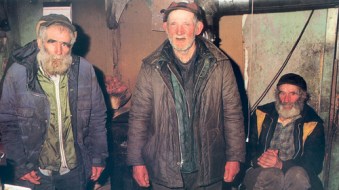
The documentary was produced in the early nineteen nineties by fledgling film makers who took out a bank loan to purchase the equipment that they needed. They had been transfixed by the story of the Ward brothers who lived in rural Munnsville, New York. Bill, Delbert, Roscoe, and Lyman had grown up on a dairy farm and when their father died while they were still young boys they dropped out of school and did all of the work to keep the family business going for their mother. Sadly she died in nineteen sixty five when they were all still quite young men. After her death the brothers became reclusive, only going into town to eat breakfast and carry out matters related to running the dairy farm. 

The Ward boys were outcasts because they lived in a way that few in the modern world would comprehend. They never bathed nor washed their clothes. They simply threw their garments away when they became too worn to wear. They lost their teeth early and grew unruly beards. Their tiny house was filthy and so small that they had to share beds just as they had done as young boys. None of them ever married. Instead they relied on one another for companionship. Their days were relentlessly uneventful as they cared for their cows and other animals. They lived in poverty and squalor seemingly without realizing how dire their social and economic situation actually was. 

On a morning in nineteen ninety one of the brothers ran to a neighbor’s farm to ask for help. Brother Bill was in very bad shape and possibly even deceased. When police and medical personnel arrived they found the man dead in his bed. It initially appeared to be just another old person dying from the effects of age, nothing to be concerned about. When the Medical Examiner checked the body, however, he found some spots of blood that lead him to be suspicious that the cause of death was more sinister. Therefore the police returned to question the three remaining brothers. 

The lawmakers took all three of the Wards to police headquarters and after hours of interrogation Delbert signed a statement confessing to suffocating his brother, asserting that the deceased had been complaining of pain for some weeks. He would later claim that the police had demonstrated to him how he had murdered his brother and that he had only agreed to sign the document because he thought he would be able to go home if he did. Because he had only a third grade education and an IQ of about 63 it is doubtful that he was able to either read or understand what he the information contained in the written confession. Furthermore he did not have his glasses with him and would not have been able to see the words even if he were able to read. When he was charged with murder the people in the small town became enraged and joined together to help him in his defense. 

While the citizens of Munnsville had generally avoided the Ward boys, they nonetheless knew them to be good if ignorant men who minded their own business and worked hard to eke out a subsistence living. They were appalled that anyone would accuse any of the men of a crime as violent as murder. They raised Delbert’s bail money and even held events in his honor. For the first time the Ward boys felt that they were part of a loving community.

The film follows the story all the way through Delbert’s trial and the final verdict. With a disturbing poignancy it shows the effects of low intelligence, lack of education, mental difficulties, social isolation, and poverty. The Ward brothers were throw backs to another era in our history. The modernity of the world had all but passed them by save for an ancient refrigerator and a small television that were the most precious of their possessions. They had no heat in their home even though winter temperatures were often brutal. There was no running water either. They had long ago given up on cleanliness so that decades of filth lay all around them. They had been left to themselves and their own resources as long as they didn’t bother anyone. People simply thought them odd but did little to help them until they were finally in dire trouble. 

Watching the story of the Ward boys was heart breaking and I cried multiple times. It was difficult to view but something that I felt I compelled to do. As Mike and I have traveled in our trailer we have often driven into areas so different from our urban environment as to make us uncomfortable. The abject poverty of some people is all too apparent. The opportunities in some places are so few. We see evidence of social rot on virtually every trip that we take. There are thousands and thousands of Ward boys in our country that we rarely take the time to consider. Through combinations of ignorance and illness they have to fight just to stay alive. They often become hopeless. They are part of a great American tragedy that we don’t always see up close. 

The interesting thing about the Ward brothers is that they were actually quite hard working men. They did not simply sit around waiting for welfare checks. They arose early each day and cared for their livestock even when snow covered the ground. They lived much like our ancestors would have. They never owned a car and their needs were quite simple. They often ate soup for dinner and virtually never enjoyed the kind of entertainment that most of us take for granted. They didn’t feel sorry for themselves either. They were rather stoic and taciturn individuals. They had figured out a way to survive from one day to the next that seemingly worked for them. 

As an educator I often wondered and worried about some of my students who struggled so mightily to learn. They too lived in poverty and were part of an unbroken cycle of one generation after another barely scraping by. Sometimes I became angry that we had so few answers and options for them. Our educational systems all too often fail the very people who most need the knowledge and the skills necessary to do better than just living forever on the edge. We can’t all go to college nor would we want to. Instead of only celebrating those who earn degrees we should also individualize our efforts for our students to include training and certifications for becoming electricians, mechanics, welders, plumbers and other skilled craftsmen. 

Simply throwing money at our economic problems isn’t enough. Even today coal mininers in Kentucky and West Virginia are unemployed and unsure how to proceed in a rapidly changing environment. Rather than just giving them compensation we must also be aware of the need to retrain them and to bring alternative job opportunities into their communities. It’s easy to pass environmental legislation that seemingly helps us all but more difficult to take into account those who will lose their livelihood. We can’t just ignore the plight of those among us who have become chronically poor. Education is our main weapon for combating such situations but we can’t simply create a one size fits all curriculum and think that we have done our best. If we are honest we will admit that we have let down so many of our children just as the town of Munnsville forgot the Ward boys. 

We are all our brother’s keepers. We can’t turn our heads away when we see horrific situations. The problems will not go away if we ignore them. We need the seriousness and the willingness to tackle them honestly and as a community. Hats off to those who are battling in the trenches as educators, doctors, and counselors. The work that they do will bring change to one person at a time.