Life Is Good

contentment

The aroma of banana bread is baking in the oven. Songs from Sting are playing in the great room. The washer and dryer are working to clean today’s laundry while Mike irons his dress shirts. We’ve just returned from Sprouts where we purchased a week’s worth of fresh vegetables and I am boiling eggs for future breakfasts. My niece will be coming soon for afternoon tea and my level of contentment is soaring.  It would be difficult to feel any better than I do right now.

I suppose that my satisfaction is a sign of my age. It doesn’t take much these days to feel blessed. I’ve learned over time what is most important in life and it certainly isn’t things. It’s a sense of security, enough healthy food to feed my energy, and great moments with family and friends. I enjoy good music and the opportunity of another day whether it be sunny with blues skies or cold, wet and grey.

I spent the morning planning for a Pre Calculus study session with my grandsons. It’s nice to know that my brain is still working, probably better than my knees. I also created lessons for some young men who are learning Algebra I, a couple of youngsters who are mastering middle school math, and two little tikes who are learning how to tell time, read a calendar, and add numbers. Having a purpose each day is priceless and does much to boost my optimism. I see young people working very hard to learn and to move toward their own futures. They give me faith that the world will ultimately be just fine.

We humans are rather amazing. We don’t just hunt and grow food. We turn it into delicacies. We don’t just talk to communicate. We turn our voices into musical instruments with our singing. We use our words to paint lovely pictures. There is something quite miraculous about the things that we do. Our creativity and curiosity have led us to great heights throughout history and I can’t help but believe that we will continue to use our magnificent intellects to solve the world’s problems. We have always ultimately risen to every occasion and I don’t see why we won’t continue to do that.

A young man who was once my student is looking for a job. He earned a degree in petroleum engineering, a rather incredible accomplishment, but he is not from a world filled with contacts. The great thing is that with only a few strokes of the keyboard of my computer I was able to put him in touch with generous people who work in the world of oil and gas. They are eager to help, just as people usually are.

It would be easy to only see the really bad aspects of the world, but I choose not to do so. Dwelling on evil only invites depression. Instead I have always found that the key is to find the good people who are so much in the majority. I was happy to hear one of my grandsons following that same path. He recently boasted with great joy that he feels confident about the future. I suspect that he will be very much part of the new generation that tackles difficulties and I can’t think of any way better to do that than with a sense that all will be well with just a bit of work.

Of course it is important to share what I have with those who are less fortunate. Not everyone lives in the kind of luxury that I enjoy. They may have dangerous living conditions and worry about where they will find food for the next meal. They have serious problems that threaten to overwhelm them. It’s up to those of us who “have” to help those who “have not” both with tangible offerings and educational opportunities. The old saw about teaching someone how to fish rather than just giving them a fish is only half right. Sometimes they also need that initial fish just to have enough energy and ambition to learn.

At my age one never knows how much time is left. That can be a depressing thought or it can be an impetus to make the most of every single day. We just don’t know when we will hear our last song or eat our last meal, so why not savor every second to the utmost? Taking joy out of even the smallest of experience is good for the soul and helps to make the heart healthy.

It’s also important to have a willingness to learn and change. It’s never too late to take that class in geology or to tackle a new language. Keeping the mind alive and alert seems to gush lots of happy serotonin through the brain. It makes each moment feel a bit more adventurous.

The school bus will soon bring the children from the neighborhood back home. Hearing those lovely little voices never fails to bring a smile to may face. On this day of contentment it will be the cherry on top of my glorious mood. Life is good.

Our National Treasure

familyIn my years as an educator I learned that family is the true bedrock of society. When families are socially, emotionally, and economically healthy they not only survive, but they actually thrive. The description of a family as a unit comprised of a man, a woman and their children has morphed over time. There are many configurations of family life these days that are highly successful in spite of being different from the traditional norm. I’m living proof that offspring living without a single parent can and do survive and develop into well adjusted adults. In fact, I can point anecdotally to people who grew up in nontraditional environments who are quite happy and successful. The key to a healthy family is not tied to a single definition but rather to the efforts of all of the members to build a sense of stability, security, and safety. Love is a key ingredient, but other needs must also be met.
I often recount stories of my mother joking that our little fatherless family had a money tree in the backyard. Her tall tale came about because we were smart enough to realize that she was struggling financially and she did not want us to worry. Obviously we did stew over our economic situation in spite of her reassurances. She used the moments when we were most worried to teach us how to save, sacrifice and budget. She showed us that teamwork, ingenuity and hard work were ingredients for getting us through the bumps that life sent our way. We may not have had the newest car or the latest fashions but she kept up the payments on the house and used creative recipes to stretch the food budget. Our lights stayed on so that we might study and prepare for the future. She prioritized at every turn and encouraged us to focus on our blessings rather than stewing over our wants.

When the most basic needs of food and lodging are in jeopardy a great tension is placed on a family. I have known homeless students who suffered both physically and psychologically because they lived in a car or someone’s garage. It’s a daunting situation for a family to deal with the loss of control and it comes about for many reasons that are not always the fault of the adults who head the household. While there are certainly people who are poor because they are addicts or simply lazy there are also those who encounter a run of exceptionally bad luck that often ends in physical or mental illnesses that preclude them from holding jobs. The family unit struggles to survive in such situations. When the most basic needs are not being satisfied it is difficult for children to concentrate on schooling or even social interactions. They become troubled and troublesome. So many of the problems that teachers observe began in the collapse of family health. Unless such difficulties are addressed immediately there are often lifelong consequences.

We worry about so many different aspects of society but all too often do little to address and support the family unit. We tend to be judgmental rather than helpful. We suggest rather than creating mechanisms that insure a basic level of security for all families. We are afraid to intervene in the most toxic families before real tragedies ensue. We make it far too difficult for families in crisis to find the help that they actually need.

The strength of families lies in helping them to rise in the hierarchy of needs. Self actualization rarely occurs when the most basic human necessities are not being met. A hungry, sick, or frightened person has difficulty focusing on anything beyond the mundane human demand for security.

So many of the present ills of our nation can be easily traced back to broken families. We want to help but it sometimes feels hopeless. We are unsure where to begin and we differ on how much to give families in need of help versus insisting that they pull themselves up on their own. We worry that our morals have deteriorated and that so many have turned away from religious guidance. We grieve the loss of our national innocence and despise the materialism that is seemingly overwhelming us. The traditional crowd longs for the yesteryears when families seemed more sound while at the same time doing little to help those that are struggling to survive. The progressive crowd wants to provide more financial security to families but also encourages the destruction of unborn life.

As people we are confused about how to proceed and we spend far too much time fighting each other rather than getting down to the work of saving our most precious natural resource, our families. It is certainly a complex issue but not one that can’t be addressed. We need to determine how to combat the crisis of addiction that plagues the very fiber of far too many families. We must make people our priority by helping those who are troubled before their situations become dire. Healthcare is critical and it must address both physical and mental ailments equally. We must walk out our front doors and embrace our neighbors. It’s time we returned to a community mindset rather than being one issue voters. The future of our nation is in our families and we must strive to make all of them as healthy as possible.

We will soon be engaged in a national debate over who our next group of leaders will be. In my mind the most important topics should relate to the health of families. People are our national treasure and their stories begin inside families. It’s time to focus on making them strong.

Ridiculous Dreams

dreams

My grandchildren tell me that their high schools are crowded with thousands of students. I have a difficult time relating to that concept because there were probably fewer than six hundred students in the school from which I graduated and under five hundred kids in the high school from which I retired from my career in education. I enjoyed the benefit of personalization for young men and women navigating their way to college and careers in both my own youth and my work life. Keeping secondary schools small nurtures an atmosphere for truly getting to know and understand each and every person. It creates a caring environment that allows for crafting graduation plans that take into account the needs of individuals. It helps each person to feel loved and important.

It’s so easy for students and perhaps even teachers to get lost in mega high schools. With thousands of people in a system it is a constant battle just to keep a semblance of order. There are never enough counselors to get to know each student as a person. People fall through the cracks of a one size fits all kind of education. Generally only those specifically protected because of their special needs receive a more custom designed education. Classrooms and hallways are crowded and teachers are overwhelmed with duties. There is little time and almost no patience for those who feel lost or ignored by the system. The squeaky wheels often get punished and those who quietly just get by sometimes lose interest. A great deal of human capital is wasted simply because it is so difficult to reach everyone in a factory like atmosphere. From time to time the truly disturbed resort to violent outbursts to gain the attention that they seek and actually need.

I have long held that no high school should be bigger than around one thousand students and even that number is a bit large. Having around two hundred fifty kids in each grade is more than enough for teachers and counselors to handle. Classes need to be restricted to twenty five or less and there should be a team of both an academic, emotional and college/career counselor for each one hundred twenty five students. Nobody is a cipher in a school that has a team of grade level teachers, three grade level counselors and a grade level chairperson diligently watching over the unique needs of each individual. The school becomes a kind of family unit away from home. People have the time to really “see” each person.

Teens are experiencing an upheaval of hormones and emotions. They are frantically attempting to determine where their lives should lead. They are dealing with social issues, physical and psychological changes, and academic challenges all at the same time. Some seem to easily handle the process but the vast majority would benefit from guidance tailored to individual personalities and abilities. In the mega high schools this becomes a tall order if not an impossibility. Each adult’s workload is so expansive that there has to be a strict and unyielding  set of rules to keep operations running smoothly. It’s not that nobody cares. It’s a matter of having only so many hours in a day to get things done. The task of keeping tabs on every single student in a large school is almost insurmountable. There are inevitably those who fall through the cracks.

There are many arguments that creating a caring and hands on environment in high schools does not properly prepare students for the harshness of the adult world. Some feel that the best approach is to figuratively throw the kids into the water and hope that they swim rather than sink. The efforts to save them are reserved for those about to go under, believing that choking on a little water is no big deal. While there is some merit to the idea of toughening our youth before they meet the real world, a small school allows for doing so in carefully monitored increments in which students feel ultimately safe. They may make mistakes, but they have adults who continually help them to learn valuable lessons from them. They graduate well versed in knowledge but also in how to navigate to and through the rest of their lives.

One aspect of the KIPP Charter Schools that is exceptional is that there are teams of adults who continue to stay in touch with former students even after they have graduated from high school. These adults are literally on call to help graduates with any kind of problems that begin to impede their progress in becoming the very best of themselves. The responsibilities of the schools do not end when the students receive their diplomas. Representatives regularly travel to college campuses and hold gatherings where the young men and women are able to openly discuss the difficulties with which they are dealing. In other words there is an army of support that continues without limits.

I worked in a KIPP high school. Many of my former students have returned to the KIPP Charter schools to work as teachers, counselors and support personnel. They realize with gratitude that their own lives were dramatically improved by the efforts of an army of adults who viewed each of them as being worthy of a program individually designed. They are the products of a powerful statement of action that taught them that each and every life matters.

What I propose is both radical and expensive but wise individuals might find ways to make such visions become possible. If we do not dream then when can’t really expect our children to think out of the box either. The best ideas have almost always sounded ridiculous until the were not. 

The Frogs

lucky frogMy grandchildren are becoming all grown up. They are all either teens or young adults in their twenties. The days of hearing the seven of them tearing through my house playing chase or hide and seek are gone. Now they are more likely to play quiet sedentary games or engage in conversations with us older folk. They have hundreds of questions about history and enjoy discovering the movies and music that are classics from the sixties, seventies and eighties. It’s rather wonderful spending time with them because our interactions are more and more adult and they become sweeter as they age, as unafraid to admit their love as they were when they were toddlers. They no longer hide with embarrassment when they see us approaching them while they are in the company of their friends. They quite openly smile at us, squeeze us with great hugs, and express their feelings with honesty. They even solicit advice and listen to our stories with keen attention.
It’s nice to know that they are going to be the kind of adults who will do a grand job of moving our world into the future. I have to give a nod of approval to my daughters and sons-in-law for parenting jobs well done. There’s still some minor work to be completed before they are fully launched into adulthood but things are looking quite promising.

I’m quite proud of the next generation but sometimes I miss the little ones with their innocent joyfulness and laughter that used to echo through the rooms of our home whenever they came to visit. When I see grandparents with babies and toddlers I remember how much fun it was to escape into a wonderland of joyful abandon when my own grandchildren hung on my every word and laughed at even the lamest of jokes.

These days I enjoy entertaining the children of my nephews and nieces who are still in the fanciful stage of development. They wander through my house giggling and asking delightfully silly questions about the most unexpected things. They notice items that I have on display that I sometimes forget that I even have. Among their favorites are my frogs, a trio of amphibians associated with my teaching days that remind me of dear friends that I now rarely see. They are whimsical and as adorable as the children who are invariably fascinated by them, the source of smiles and maybe even a story or two.

The oldest of my frog family lives upstairs in what I fondly call “the children’s room.” She is a rather lovely creature who sits atop a shelf filled with books, games, photos of former students and mementoes from my long career as a teacher. She was a birthday gift from a counselor at South Houston Intermediate, a quite beautiful woman with an impish sense of humor. The frog, not the lady, has green leathery skin and incredibly long and skinny legs that seem almost incongruent with her plump midsection. I hate to admit that her figure now resembles my own rather closely but like me she hides her flaws under a carefully selected outfit. Her gingham dress is bright and cheery and the little apron that protects it also serves as a way to keep her fat belly from being noticeable. She has lovely eyes that protrude with a kind of happiness that matches her grin. She holds a little net for catching flies and she used to boast a cute wide brimmed straw hat but it somehow got lost over the years. She is as cute as can be and nary a child fails to notice her. In fact I do believe that she might give Miss Piggy a run for her money in attracting Kermit the frog if given the chance.

The next frog that game to live with me is from Chinatown in New York City. I bought him at the suggestion of an art teacher who had invited me to join her for an award ceremony at Carnegie Hall where one of our students was to be honored. She showed me the frog in a crowded shop and convinced me that I needed to take hime home.

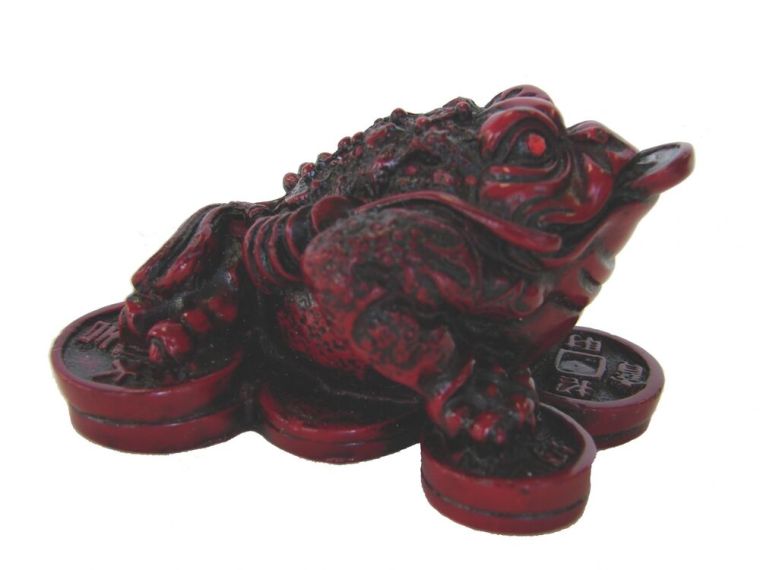
He’s a fierce looking but friendly character who stands guard by my front door. He is like a soldier on duty with his immovable bearing and elegant red coat. He perennially holds a quarter in his mouth which is supposed to be a sign that we will never find ourselves without the funds we need to survive. His fabled story insists that he is a bearer of luck, a creature who represents good fortune, tranquility and harmony. He is also the one object inside my house who totally fascinates every child who enters. They are never sure whether to love him or fear him until he gently allows them to take his quarter without harm. Then they seem to understand that he may look gruff but he is indeed a kind fellow whose only job is to be steadfast in his duties.

The youngest of my frog family was yet another gift from a colleague at work. He is lustrous and elegant, well toned and athletic. His sleek body and strong legs give him the appearance of an Olympic god. He proudly poses as though he is modeling his lovely attributes. His skin is a combination of jade mottled with ebony and tiny flecks of gold. He is a muscular creature who might join the ranks of the Avengers and fit right in with the superheroes. He is worthy of belonging to a king or a queen even though his actual monetary value is not great. There is just something remarkable about him that nobody fails to notice, especially youngsters who view him with a kind of reverence. They want to know who he is and why he is in my house. I always tell them that he is a treasure that reminds me of the glory of my teaching days and the dear friends who once worked with me.

I love all three of my frogs. Until I googled the word frog I had little idea of their storied history. They are the stuff of literary metaphor. No wonder they make me and my visitors smile. Mostly they remind me of other times in my life that I shared with people who brought me the good fortune that only comes from treasured friendships. Frogs are a sign of a peaceful and accomplished life and in my own case they are reminders that I did something meaningful for young people along with so many devoted people who worked alongside me. How wonderful is that!   

The Journey to the Future

pioneers-usa-02

I’m beginning to understand my paternal grandfather more without gaining any concrete knowledge about his life before he met my grandmother. I’ve been researching the hints that he gave me about his heritage and in the process my understanding of what life may have been like for him has become clearer. At the same time I’ve learned more about life in the United States in the part of the world where he grew up as a boy. By following the tiny red thread of comments that he left I see a picture of the influences that touched him both as a boy and a young man.

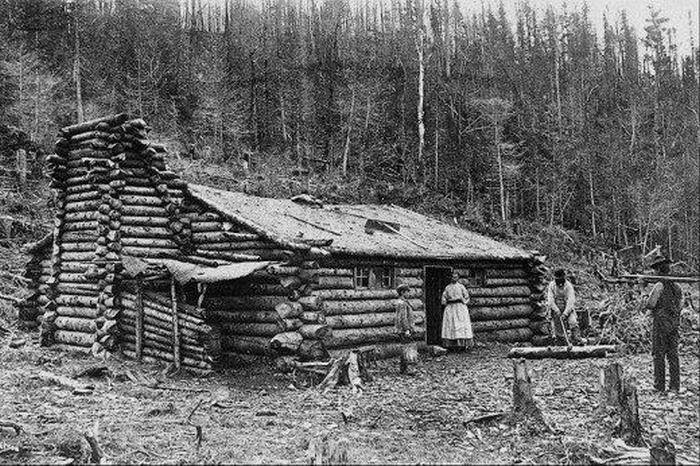
He always insisted that he was Scotch Irish which always seemed to be an oxymoron until I learned about the people from southeastern Scotland who journeyed on a odyssey that took them first to Ireland and eventually to the hills of Virginia and Kentucky in search of a home where they might be free to live and think without rancor. In the woods and secluded areas of what we now call Appalachia they found a way to be left alone, at least for a time. Just as my grandfather described they lived far from towns and cities in isolation among the forests and in the shadow of the mountains. They mostly farmed and kept to themselves often retaining the distinctive accents that they had brought from across the ocean.

The Civil War changed things for the entire country and the people in western Virginia were particularly affected by the strive and divisions that were literally tearing the nation and whole families apart. In choosing sides brother sometimes turned against brother and hard feelings, combined with the violence of war, left a lasting impact on the people who had always wanted little more than to live their lives without interference. With the end of the war the feuding that had disrupted routines often continued and as shown in a recent episode of American Experience on PBS it sometimes reached epic proportions as in the violent rivalry between the Hatfields and McCoys.

By the waning years of the nineteenth century the Industrial Revolution was changing the face of the United States and few were entirely immune to its effects. In the parts of Virginia, West Virginia and Kentucky near where my grandfather spent his boyhood businesses from the northeast came in search of coal to drive the industries that depended on that black substance from the earth. The land on which my grandfather lived was filled with it. In fact he told vivid stories of his grandmother owning a small coal mine on her property.

With the mines came railroads and strangers whose interests had little to do with the people in their way. The once pastoral land was stripped of trees and filled instead with mining operations including barracks style housing for the workers. Sometimes the labor of digging into the earth imposed itself on the land of the farmers. Where people and animals had once roamed free there were now restrictions on where passage was afforded.

Those with enough gumption to leave generally did better than those who decided to keep their families intact by staying. Once my grandfather lost the woman who had raised him (his grandmother) he had little reason to remain on the land. He was barely thirteen at the time and mostly on his own although he stuck around long enough to help out his father for a time. As soon as he was able, however, he struck a blow for freedom traveling in search of an acceptable way of life just as his Scotch Irish ancestors had done before him. He only returned to his boyhood home once and learned that there was nothing to keep him there.

My grandfather often spoke of the hardships of his youth and the intelligence of his grandmother in keeping both of them fed and safe. She was a rather amazing woman, living alone with a child and commanding respect from the community. She was light years ahead of the general customs of the time with her independent spirit and folksy knowledge of medicine. She owned rights to a coal mine on her property and kept her farm going without the aid of any man other than a boy. From what I can tell she was somewhat like the other hardscrabble women in that part of the country where shrinking violets never made it very well.

Grandpa entered the twentieth century ready to be part of the great move of progress that defined the United States throughout that era. He was part of the building boom that created iconic structures from sea to shining sea. He was on the move not so much to hide away but to experience the modernization of the country. He was proud of the work he did and the inventiveness of the United States. He saw his life from the promise of the windshield and not from the nostalgia of the rearview mirror. His philosophy was to embrace progress and to build a better future. I suppose that’s why he said little about his world back in the hills of Virginia. The past didn’t matter to him as much as the present and what was still to come. Perhaps he understood that standing still and looking back leads to stagnation and stagnation leaves one without hope.

The world is ever changing and my grandfather taught me not to be afraid of letting go of the past. He believed that the good old days are always ahead of us, not behind. We can treasure our history but it would be foolish to be mired in it. Progress marches on and the wise know when its time to join the future.