The Old West

virginia-city-940x624

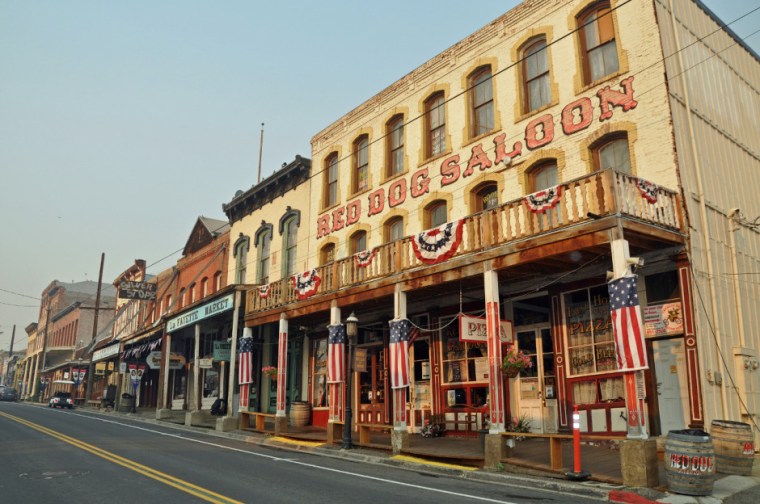
I grew up watching westerns with my Uncle Jack. I loved all of those shows about the old west but perhaps my favorite was Bonanza with its stories about the Cartwright family. Hoss and Adam and Little Joe were heroes to me and I loved the tales of their adventures. On many an episode they wandered into Virginia City to take care of business or meet up with friends. I was fascinated by the lifestyle of those long ago towns where folks endured hardship in search of gold or silver or some better way of life. Imagine my delight when our recent travels took us to the real historic Virginia City in Nevada just outside of that state’s capitol, Carson City.

This was once the site of a booming gold rush town. The decaying remnants of the old mines still litter the hillsides in a haunting way. They serve as a reminder of the ebb and flow of booms and busts in the story of mankind. Once they were alive with frantic activity designed to pull riches out of the earth. Now there is little more left than worthless mine trailings and rusty tin walls.

The road into Virginia City climbs through the hills along a paved highway that was no doubt a muddy dirt trail that people from across the globe traveled in the latter half of the nineteenth century in search of opportunity. Most of the buildings in the town date back to the glory days after the 1849 discovery of gold. An old school house tells of the families that came and a saloon is evidence of a different way to create wealth through a more insidious form of entertainment. The buildings are alive with history and seem to be whispering that if one only tarry for a time the secrets that are buried there might be revealed.

As we drove along the main street of Virginia City I found myself feeling the spirit of its settlers of old, people hoping against all hope of finding the mother lode or earning enough to survive by providing services of one kind or another. “Who were the folks who traveled here?” I wondered. What motivated them to leave everything they had ever known to travel to this desert like place where there were no guarantees that their efforts might be rewarded? What dangers lurked? How many if them left broke or forever changed?

We like to romanticize the old west but it was truly a harsh existence. There were many dangers not the least of which was being broken by the challenges. Somehow the folks who came here never thought that perhaps the land they were invading might already belong to Native Americans whose roots were hundreds of years old. They somehow assumed that they had a right to make claims of ownership without compensating those that they displaced. I truly wonder how they could not have known that there was something a bit wrong with their thinking, but then I wasn’t there. Humankind’s journey has been fraught with battles between opposing groups claiming ownership of land since the beginning of time.

Virginia City is a place where time seems to have stopped. It is a tangible piece of history that tells us a story of folks desperate to make something more of their lives. Fortunes were made and lost there. Lives were treated to elation and great disappointment. We have romanticized those tales and made them part of the tradition of the hero’s journey when perhaps they were little more than ordinary efforts to survive. Maybe back then it took great courage just to eke out a living from one day to the next, but there was probably very little glamor in any corner of places like Virginia City.

My paternal ancestors never ventured very far from the land east of the Mississippi River. It was my maternal grandparents eventually found their way to Houston, Texas from Austria Hungary. They had heard stories of a new kind of black gold, oil. While they never engaged in the search for the goo that gushed from the earth they understood that other kinds of services might be needed and they were willing to work long hours cleaning other people’s messes to provide a decent living for themselves. I suspect that their story is mirrored in the lives of those who set out to tackle the old west. Many never became rich but they found ways to work and enjoy a better lifestyle than they might otherwise have had. I suppose this is what people everywhere have always done.

We now debate whether or not this decision or that choice of our ancestors was right and just without ever knowing what peoples’ real motivations were. It is in reality a kind of self righteous judgement on our parts for we will never be able to truly understand what life was like or how the thinking of the past influenced people. Until we are able to walk in a person’s shoes we are only conjecturing as to their thinking and there is something rather presumptuous about that.

I am fascinated by the old west and all of history. Our human imperfections are in full view in the chronicles of the human story. The people who came before us made mistakes just as each of us does even now no matter how well intentioned we might be. We can never judge the actions of others without demonstrating some of our own imperfections. Perhaps it is best just to learn from them and to change our own ways rather than judging whether are not they were worthy of our respect. What happened happened in a world far different from our own. For now it’s just fun to visit the places where people once did their best to make life just a bit better for themselves and their families. It’s really cool to see vestiges of how they lived and to realize the scope of human efforts through the evolution of time.
I Needed This Reminder

MLK_500x500

One of the best aspects of being retired is that I now have time to ponder more than I did when work required me to adhere to a strict schedule. I am able to read more and even to indulge in moments of sitting in silence with my thoughts for long stretches of time. I still serve my many grandchildren with my educational expertise whenever they require a bit of guidance or encouragement with their studies. Each summer I read the same books that they are assigned for their pre-advanced placement and advanced placement classes, so that I might help them to analyze and discuss the works when they return to school in August.

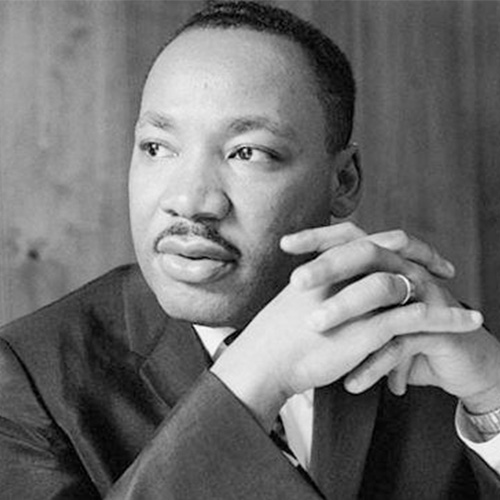
One of my grandsons is reading Martin Luther King Jr. I Have A Dream: Writings & Speeches That Changed the World edited by James M. Washington. When my daughter requested that I familiarize myself with the text so that my grandson and I might talk about its implications I was more than eager to delve into the heart of the essays. I have long considered Dr. King to be one of the greatest orators and most influential leaders of the twentieth century and indeed the entirety of history. He is a hero of mine, one of the people I would love to meet when I eventually make it to heaven.

I grew up in the era during which Martin Luther King Jr. did his incredible work. In the year I was born Dr. King was ordained a minister following in the footsteps of both his father and grandfather. He had been a child during the Great Depression, growing up in Atlanta, Georgia when segregation was still very much a fact of life for blacks just as it still was for most of my own youth. In 1954, when the Supreme Court ruled in Brown v. Board of Education that racial segregation was unconstitutional Dr. King was the pastor of the Dexter Avenue Church in Montgomery, Alabama and I was about to head to the first grade.

A year later, in 1955, Rosa Parks famously refused to surrender her seat on a Montgomery bus to a white man, an act for which she was arrested. Her brave action led to a boycott and Martin Luther King Jr. was elected president and voice of the efforts to integrate the buses in Montgomery. By then I was joining droves of Baby Boomer children in second grade classrooms that were still mostly segregated in spite of the earlier Supreme Court ruling. I would overhear rumblings of discussions from my father and grandfather who believed in those days that children should be sent from the room when politics were the subject of conversations. I was a nosy child who would hide behind a wall listening to their voices as they spoke of the coming changes.

In 1957, President Eisenhower federalized the Arkansas National Guard to allow nine black children to enter a previously all white school in Little Rock. I did not watch or witness the historic moment on television back then, but I vividly recall the many times that my dad and granddad talked about it when we visited my grandparents’ farm in Arkansas. That year Martin Luther King Jr. was elected as president of the Southern Christian Leadership Conference and  the reach of his crusade for justice widened. I would enter the third grade at the same time that those little children so bravely struck a blow for freedom in Arkansas. I was not totally unaware of the importance of that school year in the struggle to end segregation but I would not be affected by it in the little bubble that was my neighborhood.

The work to break the hold of Jim Crow laws and segregational policies continued throughout my elementary and middle school years. By the time I entered high school the Civil Rights movement was in full force and Dr. King had become one of its most admired voices. The concept of non-violent passive resistance was being used to integrate restaurants and universities and to expand the voting power of black citizens. Just before I entered my second year of high school the famous march on Washington D.C. captured my attention and I listened to Martin Luther King’s I Have a Dream speech with rapt admiration. I was hooked by its message and forevermore there would be no turning back to the ugliness and injustice of segregation for me. I was a devoted disciple of Dr. King and would hang on his every word and action. His influence over me would be enormous.

Just before I entered my senior year of high school President Lyndon Johnson signed the 1965 Voting Rights Act. Sadly the arc of justice was still far from complete. In college I would become more and more passionate about causes of equality and fairness. My generation was literally taking to the streets to protest all signs of legally condoned injustice. The laws of separate but equal were no more, but the seeds of racism still grew like weeds and I was eager to pluck them wherever they grew.

In the spring of 1968, I was planning my wedding when I heard the news that Martin Luther King Jr. had been assassinated in Memphis, Tennessee. I had been washing dishes when the word came and I remember slumping onto the floor in front of the sink where I sobbed uncontrollably. I was devastated beyond words and wondered how our country would be without the conscience and profound thoughts of this great man. His insights stay with me and guide me for the next fifty years of my life.

I am a seventy year old woman now. Martin Luther King Jr.’s words and influence have been a defining force for me even to this day. Reading his speeches and essays once again has brought me to tears and helped me to consider both the progress and the difficulties that remain in the long fight for justice. We have yet to achieve his dream, and of late we seem even to have slid back into a kind of ugliness that he had hoped to one day eradicate.

If Dr. King were still alive today he would be a very old man. I wonder what he might say about the state of our union. There are certainly things of which to be proud, but the work is not done. Would we be farther along in our progress if we still had his voice of reason and love, or would he be discouraged that we still have remnants of violence and hate? Whatever the case, reading his words has enlivened my own spirit and told me that the road to making his dream a reality is a worthy albeit difficult pathway.

As I write this I am gratified in knowing that my grandson is unfamiliar with concepts of segregation. I love that he innocently sees no color in his friends. The fact that I have to explain the evils that Dr. Martin Luther King Jr. spoke of indicates to me that we have indeed moved the arc of history ever closer to the ideals of agape which Martin Luther King so eloquently explained as “an overflowing love which seeks nothing in return…when we rise to love on the agape level we love men not because we like them, not because their attitudes and ways appeal to us, but because God loves us. Here we rise to the position of loving the person who does the evil deed while hating the deed that the person does. With this type of love and understanding good will we will be able to stand amid the radiant glow of the new age with dignity and discipline. Yes, the new age is coming”      (Dr. Martin Luther King, Jr. Facing the Challenge of a New Age, 1957)

I needed this reminder!

When Just Enough Is Just Enough

close up of human hand
Photo by Pixabay on Pexels.com

I suppose that I have always been a perfectionist. At times my compulsion has served me well. On the whole, however, it has often lead to more stress than I actually needed to have. I not sure where or when or how I picked up such tendencies, but they seem to have been part of my nature for as long as I can recall. My mother never really pushed me, but she was certainly proud when I did my best. Nonetheless I can’t say that she was responsible for my obsessive need to strive for the ideal. I sometimes wonder if my tendency to continually refine the quality of all that I do is simply a quirk of nature rather than the result of nurture.

When I was still in my early twenties I worked as a teacher in a pre-school program where I had a student who reminded me quite a bit of myself. She was never satisfied with a simple fulfillment of my requests to the students. Instead she endeavored to continuously do just a bit better. She was quite pleasant about her self motivation, but always unwilling to accept anything less than perfection. I eventually asked her mother how she had raised the child to be such a model of hard work and devotion to being her best. The lady, who had five other children, just laughed and shrugged that her little girl was an anomaly who seemed to have been born that way. She noted that her house was home to chaos and a “live and let live” attitude that hardly lent itself to teaching someone to always strive for more. She was not sure at all where her child’s drive originated, but felt that it had certainly not come from any guidance at home.

In my years as an educator I heard many such stories again and again. The family whose son was accepted to Rice University and later became a doctor had no idea from whence his intellect and his perfectionist proclivities had come.  They seemed to believe that he was an outlier whose genes somehow came together in a manner unique to the rest of the clan. They saw his proclivities as not less than a freakish combination of all of the best possible traits in the family’s genetic code.

Being a perfectionist certainly has brought a great deal of positive attention to me both as a student and in my career, but it has also been a kind of demon that makes me all too often dissatisfied with myself even when I know I have done my very best. Like most type A personalities I am my own judge and jury, and sadly I often fall short of the demands I make on myself. It can be exhausting being me, even on a seemingly uneventful day. I have had to retrain my brain over time to make allowance for just being ordinary or even subpar, two very normal human conditions. Of late I have been striving to accept that just enough is just enough. It is a state that is both terrifying and freeing at the same time.

I have learned that being perfect all of the time is totally impossible and actually unnecessary. Each of us must pick and choose our battles so to speak. It’s important to differentiate between times when a bit of perfection is in order and those when slacking is a healthier choice. I suppose that I have been greatly inspired by one of my grandsons who appears to have that concept down pat.

He has both the intellect and the will to be the best of the best at whatever he does, but he doesn’t use his talents and skills at every single turn. In high school he considered exactly how much he needed to achieve to reach his goals for acceptance into college. He did that much and then thoroughly enjoyed his teenage years, building memories that will always sustain him while also doing just enough to graduate with honors and gain acceptance to a prestigious program at a good university. Now he is focusing with laser sharp precision on earning the respect of his professors and keeping a GPA that will help him to gain access to the kind of job that he hopes to one have. While he’s working quite hard, he still manages to find ways of balancing perfection with just enough. He’s a really healthy and happy individual because he has already mastered incredible self awareness and an ability to chill when needed.

An engineer designing the navigational system of a space craft must insist on precision, just as a surgeon cannot allow anything less than perfection in the operating room. Doing just enough in less important areas is not only acceptable, but no doubt necessary. None of us is one hundred percent perfect, and attempting to always be so can become destructive.

I’ve known individuals who are so intent on appearing perfect that they rarely invite people into their homes. They continually insist that “when things get settled at the house” they will send out invitations. Others laugh, kick the clothes and toys strewn on the floor out of the way, and brew a cup of coffee for anyone who drops by. They are welcoming and willing to be seen as questionable house keepers because enjoying time with a friend is more important to them than keeping up perfectionist appearances. They have learned, like my grandson, how to walk the fine line between demonstrating pride in important work and knowing when just enough is the right approach.

Perhaps if we are to be truly insightful parents and teachers we will show our children how to achieve such remarkable balance in their lives. Demonstrating how to differentiate our efforts depending on the situation is an invaluable lesson. Letting them know that mistakes are an inevitable part of existence is an attitude that is more important than always being the best. Life is a series of up and downs, praise and criticism, winning and losing. The best adjusted among us know when just enough is just enough, and when giving it all that they’ve got is the ticket. They achieve the joy factor of life, and in truth nothing is quite as wonderful. 

That’s Not What I Meant At All

toys letters pay play
Photo by Pixabay on Pexels.com

Words matter. The words we use and how we choose them matters. Even when we are careful the things that we say may appear to be offensive. Communication can be like walking through a minefield. One misstep in how we express ourselves may lead to irreparable misunderstandings. Even the tenor of our voice might be misconstrued. When we write things down the potential for imprecise interpretations of our thoughts becomes even more likely. For that reason it’s generally a good idea to really think before speaking or writing lest the nuances of our communication become twisted into something that we never intended.

The Love Song of J. Alfred Prufrock has always been one of my favorite poems because it encapsulates so much of our fragile humanity succinctly in some of the most clever lines ever written. For some reason I have often thought of the words of the protagonist of that work when he stammers, “That’s not what I meant at all.” Each of us has found ourselves in situations in which we meant one thing, but were thought to have said something completely different. Crawling out of such a hole is both difficult and dangerous because as we attempt to set things rights we often find ourselves falling deeper and deeper into trouble. This is particularly true whenever we speak without much forethought or in the heat of an argument. Our words become muddled, distorted and capable of taking on new life in a manner that we never intended. In the world of education we refer to such situations as having unintended consequences.

I was once participating in an exceedingly heated discussion of school policy that turned nasty when one of the members of the committee verbally attacked another member. Thinking that the moment called for a bit of diplomacy I attempted to forestall the ugly comments by reminding the speaker, who was a black man, of the kinder methods of Dr. Martin Luther King, Jr. The combative nature of the meeting cooled down and we ultimately found solutions without insulting one another, or at least that’s what I thought was happening. I later learned that many members of the faculty who had not even been at the gathering were intensely angry with me for what I had said to the man who was verbally attacking another member of our group. I was befuddled because my intent had only been to find a way to cool the heat of the arguments in a non combative way. I did not see that I had done anything wrong and wondered why the argumentative man was seen as the good guy while I was being viewed as he villain.

I immediately went to the man who had been so outspoken in his criticism of the other faculty member to find out how and why what I had said had been so insulting that it had created a frenzy of anger and mistrust aimed at me. He was not shy about insisting that my mistake had been in using the words of the great Dr. King against a black man when I was a white woman who had no way of truly understanding what they had meant to an entire people who still struggled for their rights. I was so shocked and taken aback that I burst into tears in front of him, something that I rarely do. He was stunned by my stammering, “But I love Dr. King too! He is my hero. I was honoring him, not insulting you.” With my admission our mutual understanding of one another was suddenly complete and we hugged by way of apology.

I’ve thought about that incident for years. I did not understand in the moment in which I chastised the man who was haranguing another that I might as well have stabbed him in the heart. He heard my words as just another attempt by a white person to cut him down. The insult was compounded by my use of the words of someone who, like him, had suffered the indignities of racism. I thought that I was simply defending a colleague, but what actually happened was steeped in a long history of struggle. I had embarrassed this man publicly and in the worst possible way without ever realizing what I had done. Luckily the evidence of my sorrow as witnessed in my tears demonstrated to him that I had not meant to hurt him at all.

My mother repeated the old saw about taking care with how we communicate over and over during my childhood., “If you can’t say something nice. Don’t say anything at all.” We might do well to make that a national goal for a time much like the campaigns against smoking or drugs or drunk driving. We take our freedom of speech so for granted that we have pushed it to a new level of insult and hurtfulness. We bandy about words and phrases without really thinking about how they may sound. It’s just way too easy to tap our fingers on a keyboard and post our grievances in the space of seconds. We react without considering who may be hurt by what we say. Even when we believe that we are protecting some person or some group we may inadvertently be inflaming another. We think ourselves immune from the consequences of our utterances because we have grown to honor the most outspoken among us and thought of those who measure their words out of respect as wimps. Little word bombs go off all around us and we have grown immune to the dangers. Friendships erode. The tension rises.

There is nothing good about verbally attacking someone. We should all agree on this, but it is also wrong to be unwilling to admit and clarify unintended mistakes or misunderstandings. We are not less of a person when we make amends for hurtfulness that we did not expect to happen. It is a sign of courage to be willing to hear and understand differing points of view and to attempt to come together as people with the common goal of bettering the world. The bravest among us think before they speak, and strive to unite rather than to tear apart. Maybe we’d all be in a better place if we were more circumspect when we speak. Words are powerful and we must bear that in mind each time we choose to utter them. 

A Most Extraordinary Life

books notebook macbook table
Photo by Caio Resende on Pexels.com

My cousin and I were having one of those silly conversations in which we asked each other what our favorites are in different categories. I realized as I answered each query that it is truly difficult to narrow down my preferences to just one or even two things. Let’s take the category of best book, for example. I’ve read so many from differing genres that choosing only one is literally impossible. I’ve always loved classics like Jane Eyre, but then more recent picks might be Things Fall Apart or The Kite Runner. I’m a huge fan of nonfiction as well. Isaac’s Storm kept me on the edge of my seat with anticipation, but reading about Czar Nicholas, Queen Victoria, or John Adams was as interesting as it gets. In other words, I so love to read that I’m often taken by whatever I have read most recently which would include The Nightingale and The Tenth Muse.

Choosing a favorite movie is just as impossible. There are some that I consider to be works of art like The Godfather ( both I and II), Apocalypse Now, The Lord of the Rings, and The Mission. Others are just fun and appealing. Those might include Titanic, Christmas Vacation, or Love Actually. I’m such a movie fan that it would literally take pages and pages to list all of the flicks that I have loved. To me there is nothing more satisfying that spending a rainy day watching old Alfred Hitchcock films and munching on junk food, even though these days I try to be good and stick to fruit and vegetables. Just tell me that someone is featuring a movie marathon of some sort and I am in!

The same is true of television shows. How is it even possible to list all of the programs to which I have been addicted over the years. Breaking Bad was epic, but Better Call Saul is pretty great as well. Unlike most people I was totally satisfied with the totality of Game of Thrones including the ending. In fact my recent trip to London with its study of the reigns of kings tells me that the violence and madness portrayed in the series was maybe a bit tame compared to real life. I’m a sucker for any kind of mystery or crime series, but I love to laugh as well and while it’s difficult to beat Seinfeld, there have been many contenders over the years. The glory days of Saturday Night Live with John Belushi and others was magnificent, but that venerable program has lost its magic over time.

I’ve traveled to many places both in the United States and abroad and there are some that I enjoyed so much that I have returned multiple times and never grown weary of seeing them. I’d go back to New York City any time, but it’s not a place that I would ever want to live. Chicago, on the other hand is a city that I not only like to visit, but I would be willing to set down roots there if I had to move for some reason. I love San Francisco and San Diego, but despise Los Angeles. Boston is a wonderful place that I never tire of seeing and also one where I would be willing to live. I visit New Orleans again and again. A piece of my heart lives there, but I would be afraid to settle down in that region because of the continual threat of hurricanes. I suppose that I truly feel the happiest in Colorado with so many cities and towns that I adore. If I were able to go there many times each year I would do so. I fell madly in love with London on my recent trip there, but I’m a die hard American, a Yank who loves my English speaking cousins but can’t imagine living outside of the USA.

It’s quite interesting to speak of favorites. I enjoy hearing what other people like and dislike. It demonstrates aspects of living that we share as well as those that make us unique. The world is filled with so much variety which makes it possible for there to be something for everyone, particularly in this day and age. So much has changed from the times when I was young and most people lived in a narrowly defined area with few opportunities for seeing the rest of the world. Back then books were the best source for expanding horizons and libraries were the places where we found the volumes that most intrigued us. Television was in its infancy featuring only three or four stations with rather predictable programing. Movies were often a treat that not everyone could afford, and travel was mostly by car.

I am thankful each and every day for the magnificent advances that allow me to be ever more part of the world. I have so much from which to choose that life is never a dull moment. I seriously thank the good Lord for my blessings at the beginning and end of each day. I have seen more of the world that almost all of my ancestors put together. I have more education than they even dreamed of having. Movies and television programs and books are literally at my fingertips. It’s difficult to even consider complaining when I think upon the advances in quality of life that I enjoy compared to either of my grandmothers. Neither of them were able to read or write and their daily activities were labor intensive. They rarely ventured too far beyond the confines of their homes and I’m not sure if they ever went to a movie theater. While they seemed happy enough, it boggles my mind to think of all that they were never able to experience that has so enriched my own life.

I chastise myself when I grow sad or dissatisfied with my lot in life. I have read so many books, seen so many movies and traveled to so many places that I cannot choose a favorite. The only thing that I should be doing more of is counting my good fortune and expressing my gratitude for a most extraordinary life.