I Am the Median

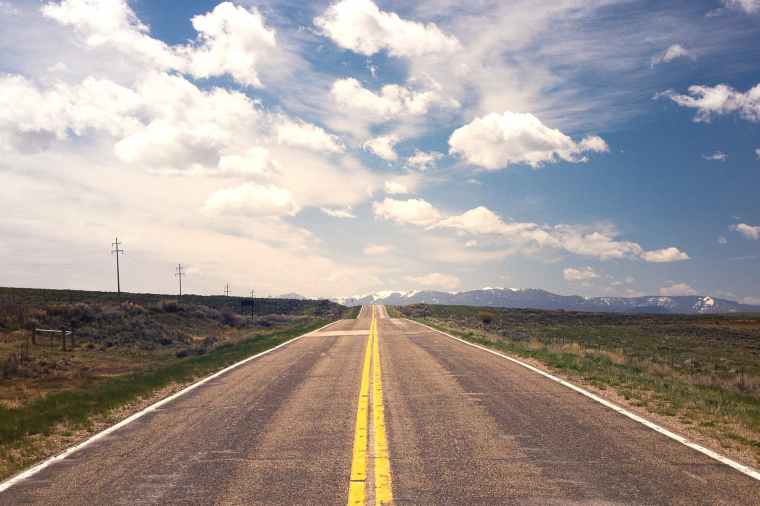
road sky clouds cloudy
Photo by Gratisography on Pexels.com

From a statistical point of view my life has hovered around the median. I represent continuity and moderation and a mix of conservative and progressive points of view. While my life was tragically made a bit unusual for the times in which I lived by my father’s early death, that anomaly was mediated by the environment in which I grew into an adult. I am a product of a small and insular neighborhood in a time when my native city of Houston was still more of a town than a city. My life was guided by routines and traditions that rarely varied. There was an entire village of people both familial and unrelated by blood who watched over me. I grew strong and happy and so loved that I was ready to tackle any challenges that came my way. As an adult I was so busy attempting to reconstruct my own sweet world for my children that I barely noticed how much the times were actually changing.

When I was seven years old I was uprooted from everything and everyone that I had ever known to accompany my family on a journey west where a quiet revolution of opportunity and change was overtaking people like a fever. My days there were painful because I had lost the anchor of extended family and friends that always made me feel so secure. I was among people who were so busy building dreams that they had little time to welcome us. I went to school each day feeling nameless and misunderstood. Ironically my father felt the same way at his work. None of us ever fit in to the race for something unknown that so dominated life in the part of California that would one day be the epicenter of Silicon Valley. Before long we all just wanted to be back home in Texas.

With little more than a wing and a prayer we slowly made our way back to what we had known. Along the way my father searched for a job. His efforts to find work lead us all the way back to Houston, and for the very first time in a long time I recall feeling quite relieved even though we had not yet settled into a permanent home. My father’s deadly car accident left my mother bereft and scrambling to create a sense of continuity for all of us. Luckily we had returned to the people for whom we had longed when we were far away and they gathered in unison to help us every step of the way. Oh, how I loved them and still do!

My mother wisely returned us to the very neighborhood from whence we had moved only months before. We were welcomed like the Prodigal Son. Our life began its constant revolution around church, school, family and friendships. There was a lovely sense of calm about the way we lived. We stayed in the same house until all of us were grown and on our own. We had the same neighbors for years. It was rare for anyone to move away back then. When we went to church each Sunday we saw the familiar faces of people who smiled and greeted us by name. We attended the same school with the same kids who are friends with us even fifty years later. Each Friday evening we visited my maternal grandmother in a gathering that included all of my aunts and uncles and cousins. In the summer we traveled to visit with my paternal grandparents on their farm.

We constantly heard stories from our elders about the history of who we were that carried little nuggets of expectation without being overbearing. At church we learned about the comfort that is always available from God and the ways of compassion and love that Jesus taught the world. Our teachers and our parents spoke openly to us about both the greatness and the imperfections of our country, urging us to always remember our responsibility to maintain a healthy democracy.

We were always a bit behind the fads and movements along the two coasts of the country. We were more inclined to study how things went there before jumping into the idea of adopting radical change without much thought. Our lives were slow and steady like the tortoise. We knew that we would eventually get to our desired destinations, but we did not want to lose sight of more important things like family and friends along the way.

Suddenly it seemed as though both the innovations and the cautions that were brewing along the two poles of our nation roared up around us, forcing us to see the world through different eyes. The titans of media and advertisement from the east coast were burrowing into our brains with television. The movie moguls influenced us with films. Finally the masters of Silicon Valley invaded our lives with computers and smart phones and a burgeoning social media. People began moving around and moving up. Extended families had less and less time for each other and friends were often on the go. We woke up one morning and the city of Houston had become the fourth largest metropolitan area in the country.

Some of what happened while we were sleeping was very good. There were breakthroughs in civil rights that were imperfect, but steps in the direction of equality. Women were provided more opportunities than ever and their voices began to be heard. We acknowledged that love is love regardless of whether the people who express it for one another are man and woman or man and man, woman and woman. Medicine and science made our lives easier and our affluence grew.

At the same time we have lost many things as well. Our neighborhoods flux and flow to the point that the relationships that we form there are constantly changing as people move from one place to another. Our extended families are in far flung places and gathering our relations together becomes more and more complex. Our churches and our beliefs are continually challenged. We fear for our children to play outside alone. We argue and rankle with one another and wonder if how far we change is enough or too much. We feel as though we are being ruled by extremes, either far too cautious or far too willing to upend all that we have known. We have lost our sense of history and our willingness to accept that none of us, not even ourselves, are free from the taint of bad decisions or hurtful behaviors. We judge and decry those who do not share our own philosophies. We honor those who boast and demean while turning our backs on the people who live with quiet dignity and respect. It feels as though we are somehow being manipulated by some unseen hand as though we are merely robots. None of it feels good, and some of us long for the good old days not because we are unaware of the problems that some people faced while we were comfortable, but because we need to bring the village of diverse people who loved us back together once more. We need to feel that sense of chest bursting pride in our families and friendships and churches and cities and states and our country that might have once brought us to a sense of belonging to something special.

We have many folks attempting to understand our thinking and our motivations and I suspect that they are getting us all wrong. They tend to make assumptions about us based on their own backgrounds rather than ours. Suddenly I find myself feeling untethered much as I did when I was seven years old in an environment so different from what I had always known. I understand how it must have been to be my father daring to dream, but realizing that he did not quite fit into a way of life so unlike his own. I am the median, an average person with a big heart and a dream of embracing the people to both the right and the left of me in a hug that says,  “You might want to know how folks like me really feel rather than foisting your ideas on everyone. Your constituency reaches from sea to shining sea and there is a great deal in the middle that you are yet to understand. Maybe it’s time for you to learn.”

When Our Days Were Magic

pexels-photo-1148998.jpeg
Photo by Sharon McCutcheon on Pexels.com


It sometimes seems to me that we spend far too much time planning ahead, and far too little time just enjoying the moment. I see evidence of that tendency in all of my daily travels. For example, it’s barely the beginning of July and already the stores are filling with school supplies, uniforms, and fall clothing. It’s bad enough that we push our children back into the classroom before Labor Day, but now we begin eagerly preparing for that moment six weeks in advance. Why can’t we just give our children a break and allow them to enjoy unadulterated fun for a time rather than loading them down with mathematics packets, required summer reading, long essays to complete? We hardly ever give our youngsters time to think for themselves, to decide how to spend their hours. We seem determined to fill every waking hour with activities that we think will help them to achieve more in the future.

Many young folk don’t know the joys of waking up on a warm July day with no plans and no place to go. They have not had the wonderful experience of using their own creativity to make life more adventurous. I rarely see the children in my neighborhood gathering by themselves to play. There are no sounds of games or fort building or any of the many activities that filled my vacations as a child.

I can still feel the exhileration of waking up on those summer morns with the knowledge that we kids had total freedom to face down the day. I can’t recall ever feeling bored, but rather torn between so many ideas for having fun. We often spent the earliest hours of the day in outdoor pursuits because it was still a bit cooler then. We’d ride our bicycles pretending to perform stunts by standing up on the seats or letting go of the handlebars for a few seconds. We travelled to the woods down by the bayou and explored the area with the determination of Lewis and Clark. We’d listen for the calls of the birds and watch for specimens of nature that we’d claim for the cigar box collections that we prized.

Once the sun had climbed high into the sky, and the temperature soared we’d shift gears and begin playing board and card games. There was always at least one mom like mine who gladly offered the kitchen table for a gathering place. We’d have tournaments that lasted for days and pitted us good-naturedly against each other. There was nothing grander than using our skills and a bit of luck to become champions.

We dabbled in the creative as well. We produced plays, performed musicals, and wrote neighborhood newspapers. I remember reading a biography of Truman Capote that told of how he and his neighborhood friend, Harper Lee, used an old typewriter to compose stories about the people that they knew. We did that as well where I lived. None of us ever became famous, but I am certain that my love of writing began way back then.

Sometimes we’d ask our mom to take us to the library, or instead we would ride our bikes to the mobile library that stood by Garden Villas Park. We’d load up with as many titles as allowed, and lie in front of the open windows with the fan blowing on us, enraptured by the stories inside those pages. I was into mysteries back then. I could not seem to get enough of them, and it always thrilled me to unravel the twists and turns of the plots before the big reveal at the end.

Of course there was swimming at one of the city parks. Back then we had an hour to bask in the cool water and then we had to leave for the next group of kids waiting in along line for their turn to enjoy the pool. We’d walk through showers before we were allowed to get into the water and then we’d play Marco Polo and stand on our hands so that our bodies were under the cooling blue waves. It’s remarkable how quickly the time went by, so we celebrated if the life guard decided that the crowd was small enough to allow us an extra hour.

I don’t ever recall our television being on during the day either in the summer or when school was in session. We simply didn’t waste our time on such activities. We had way too many other ideas for amusement. It seemed that there was never enough time to fit our bounty of ideas into those lovely three months when we were our own masters.

It saddens me a bit that so few children today are able to enjoy the kind of childhood that was so commonplace in my youth. I realize that times are a bit more dangerous than those years when we slept with our windows open and rarely locked our doors during the daytime hours. Parents have to be more watchful than our moms and dads were back then. I also understand that taking classes or participating in sports can be meaningful life lessons, but sometimes it’s just as important to provide children with time to figure out things on their own. I suppose that I learned how to think critically, problem solve, and work in cooperative groups during those days of hanging with the kids from the neighborhood without parents organizing us. My free time prepared me for the future in immeasurable ways.

I wish that our children today might know the joy that we did. It was in the summer that I learned to cook or how to earn a little money by doing odd jobs or selling lemonade. I honed my negotiation skills toe to toe with my peers. It was a glorious time, when being a kid meant learning how to navigate and explore. Nothing was rushed. It was summer and each day was magic.

They Live On

York Minister is a glorious example of medieval craftsmanship and mankind’s efforts to glorify the religious experience through great feats of art and engineering. It is also one of the most remarkable repositories of stained glass windows which tell stories of the past and provide a look into the humorous nature of humans. Located in the city of York north of London it is a grand architectural marvel that is alive with the tales of the people who built it. In its pillars, massive windows and fanned ceilings are quirky little jewels of commentary about the way things once were. It has withstood wars, fires and the erosion of time, but still stands as a voice of determination to overcome life’s setbacks and vagaries.

Our tour of York Minster was hosted by a lovely woman who had once been a teacher but is now retired and spending her time as a volunteer in the church where she worships. She was as interesting a character as the building itself with her distinctive northern England accent and her teacher like attention to interesting details. She delighted us with insights into what York Minster meant to the people who built it and the parishioners who worship there today.

York Minster is even more massive than Westminster Abbey. Over time one section after another was added to the original plan creating a space filled with chapels and archways beyond the main worship area. The medieval workers left their own quirky messages to the future in the shape of monkeys, political jokes, dragons and other features that speak of a different time.

The church began as a Catholic edifice that included statues and homages to the Virgin Mary that were later destroyed by protestants who believed such icons to be sacrilegious. Only one small image of Mary remains, somehow left unnoticed by those intent on removing any signs of such reverence. It has the typical structure of such churches with a high altar separated from the area for worshipers by the choir section that was being renovated at the time of our visit. Much of the stained glass has been taken apart, cleaned and reinforced with modern methods that alleviate the dark black lead that distracts from the lightness of the colored glass. The cost of such projects runs into the hundreds of millions of dollars and the upkeep of the grand building is a constant effort to insure that the ravages of time do not cause the building to deteriorate.

York Minster has had a number of devastating fires and the caretakers of the building have a keen understanding of how to rebuild after such disasters. At the present time they are offering their expertise on such matters to those charged with repairing Notre Dame Cathedral in Paris. Our guide assured us that it will indeed be possible to rebuild the damaged areas of Notre Dame, but she is convinced that it will take far longer than the four years that has been set as a goal for the project. She noted that the process of renovating an historical treasure must by its very nature be painstakingly careful and slow to insure that everything is done properly.

York Minster has only one saint that pilgrims of old came to see. His is an interesting story born from a need to attract visitors and with them monetary offerings to take care of the expense of keeping up the grand structure. Way back in time there was a bridge over a nearby river that collapsed sending a crowd of people in the water. When it was discovered that none of the victims of the disaster died the incident was deemed a miracle and the thinking was that a local cleric was surely the reason for this wonderful outcome and so he was declared a saint. Thus York Minster had its own patron saint and the pilgrims began to come. Other than that the crypt in the basement is the eternal resting place of the remains of mostly local dignitaries and heroes who were not familiar to me.

Perhaps the most touching moment of the tour of York Minster came when my husband Mike revealed that he had recorded the voice of our guide because she sounded so much like his Granny. I had never met the woman who held such a special place in his heart. She had died while he was still in high school. Nonetheless I had heard so much about her bubbly personality and her kindness to everyone who was acquainted with her. I had learned of her journey to Texas from Newcastle England when she was only eight years old. I knew that she had been proud of her English roots and had never again seen her homeland. She enjoyed afternoon tea and prepared roast beef and Yorkshire pudding on Sundays. She was a devout Episcopalian who wore lovely dresses, stockings, hats and gloves for her weekly shopping trips to downtown Houston. Mike adored her as did all of her many friends and family members. Her legacy lived long after she had died at a rather young age. What I had never realized is that she had retained her English accent even after years of living in Texas. It was a special treat to now have a better idea of how she sounded when she spoke and to truly understand how important her English roots had been.

For Mike the trip to England was a kind of pilgrimage in its own right. He felt his Granny’s spirit everywhere that we traveled and he liked to think that she was smiling down on him as he thought, “Granny here I am at last!” Now I too have a better idea of who this remarkable woman had been and of the history of people from my own background as well. I sensed their struggles and their determination throughout the passage of time and into the present. I know that their sacrifices and hard work have led to my own good fortune, and I somehow hear the voices of all of the people who came before me. I have a better feel for the hopes and dreams that are so present in the things that they built and the customs that they developed. Now I believe that they live on and always will.

A Town by a River

Kings College Chapel

Some time back when I was teaching in South Houston I mentioned to my students that Duke University would be an excellent choice for college. A young man laughed hilariously and corrected me as though he thought I was showing great ignorance, “Mrs. Burnett, Duke isn’t a college! It’s a basketball team!”

Of course I was stunned by his lack of knowledge, but I suppose that each of us sometimes demonstrates ignorance about certain things. I got my own comeuppance when visiting the town of Cambridge, England. For most of my life I had thought that the place known as Cambridge was just the land where a prestigious university stood, rather than a center of work and home for regular people. I had little idea that there was a Cam river across which a bridge was built that may have given the place its name. It wasn’t until I was watching Granchester on PBS that I realized how little I actually knew about the city of Cambridge, England.

On the second day of our great road trip adventures we headed to Cambridge. It’s quaintness and the friendliness of its citizens struck us almost immediately as we attempted to operate a parking meter. A kindly meter man approached and showed us how we might get a refund on the money we had already put into the machine. Instead he suggested that we go closer to the center of town where we would have unlimited time to park without having to worry about feeding the meter again and again. It ends up that he was originally from Poland but had chosen Cambridge as his home many years earlier when he had become a huge fan of the place and a source of great information.

With his advice in mind we set out in search of the city center noting the rolling green parks, the quaint homes, and the general neatness of Cambridge. As we walked down the main street we had a real sense of the people who lived and worked there, as well as the pride they had for their town. Soon we were in the heart of the university itself with its many colleges and buildings dating from medieval times. The architecture was striking, but we wanted more than anything to see Kings College with its chapel built during the reign of Henry VII with its distinctive architecture known as Tudor Vertical.

We had first heard about this remarkable creation from the Rice University professor who lead our class on the Tudor kings and queens this past spring. He had shown us images of the kinds of cathedrals that were typical during the time and then flashed a photo of the Kings College Chapel with a comment that the people who first saw it must have been awed by the light afforded by the long tall windows. Somehow we knew from that moment that we would have to see the place with our own eyes.

For the time being, however, we were hungry because it was long past lunchtime so we found a place that offered a wonderful luncheon menu at a remarkable price. I suppose that we are more accustomed to living in the fourth largest city in the United States than in a small town like Cambridge. We assumed that everything would be open at least until dark but soon learned how wrong we were when we attempted to gain entry to the Kings College Chapel. Our way was blocked by a woman who insisted that it was closed to tourists for the remainder of the afternoon to prepare for Evensong at 5:00. Not to be deterred from seeing this wonder, I inquired as to whether or not we might be allowed to participate in Evensong and to my delight learned that it was open to the public.

We spent the next couple of hours wandering through quaint shops, perusing the open market stalls, sampling fudge, and walking along the Cam River. Guides were using long poles to move boats along the tree lined water as people lounged on pillows while enjoying the view. We saw the Mathematics Bridge, a marvel of both art and science as well as many other chapels and interesting buildings. By five we were first in line for Evensong and waited expectantly for our chance to enter Kings College Chapel.

In the interim we met a wonderful man who explained that many of the places were closed to the public that week because students were busy taking exams. He also mentioned that if we wanted to just view the chapel without participating in the full Evensong gathering we would be able to sit in the back and leave quietly whenever we were done.

Kings College

Soon we were witnessing the magnificent chapel that was even more awe inspiring in person than in pictures. We had been cautioned not to take photographs and to respect the prayerful intent of the occasion but we nonetheless snuck a shot or two without bringing notice to our infractions.

The ceremony itself was outstanding. The choir was composed of students and the inclusion of female voices added a resonance to the singing that head been missing in the music of Westminster Abbey and St. Paul’s Cathedral. It was a quite lovely experience that provided a moment to meditate on both the constancy of tradition and the inevitable changes of life.

I thought of the incredible people who had lived and worked at Cambridge University, giants like Isaac Newton and Stephen Hawking. I wondered at the history of the college and the town itself. I felt a sense of ease and peace, closing my eyes to feel the flow of the river that had seen so much genius and so many instances of humanity. Once again the voices of history entered my head and blended with the sonorousness of the choir. It was glorious.

It was dark by the time we had returned to London. We were much calmer about my brother Pat’s driving and we felt quite content. We had walked in the shadow of giants and now also knew that Cambridge was more than we had ever thought it to be. In life there are both constants and variables and we had seen them both.

Punting on the Cam

All the World’s a Stage

The Globe

I was one of those young college students who struggled to decide what path to follow in preparing for a career. I began with an unspecified arts and sciences major and changed directions multiple times. I even dropped out for a time because I was so confused about what I really wanted to do with my life. In the end I graduated with many more hours than usual, ultimately majoring in English and Education with a heavy dose of mathematics courses for good measure. By that time I saw myself as a purveyor of literature, and I dreamed of inspiring students to love Shakespeare as much as I do. I carried visions of my favorite high school teacher, Father Shane, in my head and hoped that I might inspire a new generation of young people to appreciate the beauty of the the written word as much as he had impacted me.

To my surprise my first job was as a mathematics teacher, something I viewed as a temporary status wrought by a dwindling market for newly graduated educators. I assumed that within in year or so the economy would right itself and I would soon enough be dramatically quoting lines from Othello and demonstrating the art of writing. Somehow I instead became branded as someone capable of instructing students in the algorithms and formulas of algebra, geometry, probability and statistics. It became an unbreakable trend, and soon enough my preferred mode of work. Still, there hovered in the back of my mind an undying love for literature, grammar, linguistics and composition. The artistic side of my nature needed to be unleashed, but would have to learn how to express itself in unique lessons for teaching proportion and the wonders of circles.

Once I retired from my career I returned to my roots, writing almost daily, reading and rereading some of my favorite authors, and immersing myself in the beauty of language. I even enjoyed tutoring a student or two in the ways of interpreting literature and then writing about metaphors and other tools of language. If found great joy and relaxation in having the time to devote myself to explorations of the ideas that I have always so loved.

Still there remained a longing to visit the land where so many of my favorite authors had once lived and to experience the history and culture that had so molded them. The number one entry on my bucket list was to travel to London and its countryside, and I was determined to one day make it happen. It was with great expectations that I recently crossed “the pond” and had the opportunity to walk in the shadow of some of the greatest authors of all time, not the least of which is my favorite, William Shakespeare.

The original Globe Theater where Shakespeare’s plays were performed was destroyed long ago, but a replica now stands along the Thames River offering seasonal productions for those desiring to get a feel for how the Elizabethan world might have been. It is an outdoor venue with a large open area for the “groundlings” who must stand during the presentation with three levels of seating on the same type of narrow wooden seating that the more prosperous patrons of old might have enjoyed. The only nod to comfort in the arena are the small cushions that may be procured for an extra fee to soften the harshness of sitting on a hard surface for three hours.

My traveling companions and I went to see The Merry Wives of Windsor, a comedy that might not have been my first choice but was nonetheless the offering for the season. It was a greatly modernized version of the rollicking farce featuring the crowd pleasing character, Falstaff. The members of the company played well to the audience just as the actors of old most surely had done. Their light hearted banter kept all of us laughing and enjoying the ridiculousness of the story.

When intermission came I learned that the members of my family had little idea what was happening. They had not taken entire courses on the works of Shakespeare as I had. Only my sister-in-law Becky was somewhat attuned because I had gifted her with a translated version of the play since she was worried that her English might not be up to speed enough to understand the nuances of a Shakespearean production. I hastily describe the premise of the play and each character’s role in the tale. After that there were more laughs and enjoyment coming from my family, and I felt a small sense of satisfaction in being a purveyor of understanding for them.

I was literally floating on air as we emerged from the Globe Theater at the end of a riotously fun evening. The night sky was clear and illuminated by a million points of light from the city of London. I walked across the Millennium Bridge in high spirits as I marveled at my good fortune, and considered that the course of my life had gone full circle, returning me to the passion of my youth. I thought of Father Shane and gave him a silent nod of gratitude for instilling me with a love of all things literary. I felt quite complete as I considered how well the course of my life had gone. There was something very Shakespearean about the way that I was feeling and the contentment that filled my heart.

As if to remind me that life is filled with comedies and well as tragedies, in the midst of my elation my brother Michael ran into a low barricade, did a complete somersault, and banged his head on the pavement in view of St. Paul’s Cathedral. His glasses were broken, his body was bruised, and we worried that his injuries were severe. With the usual aplomb he brushed away our fears, but the bubble of perfection in which I had been floating returned to reality. It felt as though Shakespeare himself was reminding me of the vagaries of life that are the stuff of both tragedy and comedy.

I shall never forget my evening at the Globe Theater. I have seen better plays and more superior acting at the Alley Theater in Houston, but those entertainments did not feel as sacred as my pilgrimage to the place where the undyingly prescient words of the Bard still deliver their universal messages. More than ever I knew that “all the world’s a stage,” and I have been a player in its never ending plot.