
Anyone Can Do It!

black and grey casio scientific calculator showing formula
Photo by Pixabay on Pexels.com

In all of my years of teaching mathematics the refrain that heard most often was, “I’m no good at math.” My job became to convince my students that anybody has the ability to learn the algorithms and fundamentals of math given a willingness to invest time and effort.

We all know someone who has a natural ability with all things mathematical. In my own case it wasn’t me. It was my brother. I had to go home from school each evening with my math book and my notes and work through problems until a light bulb lit up inside my brain. Sometimes that took just a few minutes and other times it took a couple of hours, but in the end I mastered one concept after another.

Most of my students have insisted that it is impossible to study for a math test. They are accustomed to memorizing facts for their liberal arts classes and they tell me that one will never know what problems will be on the quiz. Therefore they assume that working sample problems is fruitless, but I insist that it really helps. Just as doing reps in the various sports generally brings about improvement in muscle memory, so too does practicing mathematical ideas help imprint problem solving methods on the mind.

It took me several years before I understood the value of homework in math. I used to grudgingly do the problems as quickly as possible and I was unwilling to ask questions about things that I did not comprehend lest I be regarded as being not so bright. I was literally in college before I understood the value of asking my professors for help. I not only became more enlightened, but I also became known by them which was a big plus in my large university. I encourage anyone who is struggling with anything, particularly mathematics, to take full advantage of tutoring opportunities with teachers. It is one of the keys to mastering skills that may at first seem far too difficult.

I like to think that my own struggles with mathematics in my early years led me to being a better and more understanding teacher. I know how it feels to read a word problem and draw a complete blank. I recall tearful sessions with my mother after school when I would insist that I was never going to be good at solving problems. She taught me how to first work with the words, taking them apart enough to discover what I was being asked, and then applying the knowledge that I had learned. With pictures, highlighters and diagrams I now find that I am able to tackle any challenge, but it wasn’t so until I followed my mom’s advice.

I have a granddaughter who used to think of herself as being a bit slow on the uptake when it came to math. It bothered her that her brother never seems to have a problem to immediately understand even the most difficult concepts. She and I talked for a long while about my own struggles when I was her age, and she took my advice regarding the value of hard work in mastering her math lessons. Last year she was anxious about the end of course Algebra I exam that she would have to take. She spent hours studying definitions, processes and different types of problems. Whenever she came up with an incorrect answer she found out why and then worked dozens more until she was consistently getting the correct answers. In the end she received one of the highest scores in her class, but more importantly she learned that it is not only possible to study mathematics, but preferable indeed.

Confidence is usually the element that is missing whenever a student who is bright in every other way does poorly in math. At some point in time he/she has become convinced that it is useless to even try. Such students truly believe that they are missing some gene that would allow them to do better. They take tests feeling defeated before they have even lifted their pencils. It’s up to their parents and teachers to help them to find the good feelings that they need to do well with mathematics, and to show them how to work hard to get there. That means eschewing a temptation to tell the young ones that they come by their dread of mathematics naturally because difficulty with math runs in the family. There is little worse than instilling such fear.

We have to be certain not to create self fulfilling prophecies in our young. It is possible to master mathematics slowly but surely and often with a great deal of work. It is no different than practicing a butterfly stroke or learning a new techniques for drawing. It takes patience and determination in some cases, but it can be done. I have watched hundreds of my students become adept in a subject that had previously been terrifying for them. My job was not to trick them, but to show them the way.

The best mathematics teachers that I have known all rejoice when someone who has struggled finds the light. There is no better feeling. If I were able to accomplish one thing in my lifetime it would be to replace comments like “This is too hard. I can’t do it. I’ve always been terrible in math.” with ideas that speak to the value of practice, asking questions and being positive. One day I hope to hear more of “I don’t get it now, but I know I will. I know that anyone can do it.”   

I Found My Purpose

42678886_10217646777023389_6852434799655649280_nI recently had dinner with a group of former students and a teaching colleague. It was incredibly rewarding to see how well the young ladies who were once my pupils have done. One of them, Jennifer, is a teacher who recently earned an advanced degree in educational leadership. Another, Christine, works in the development department of the KIPP Charter Schools and she was recently rewarded with a promotion. The third, Joana, is working on a post graduate degree in Social Work. All three are articulate, hard working and filled with compassion. They have literally become more like peers than pupils. Our gathering was like a reunion of old friends and it was quite exciting to hear their stories of life and work.
While its tempting to take some credit for how well they have turned out, I know that they are fully responsible for their amazing accomplishments that came only with extraordinary dedication and much sacrifice. Talking with them tells me that they continue to work toward exciting goals and that they have fully become exemplary adults of whom I am so very proud.

I also learned at this meeting that my friend, Ann, is still working to educate high school students. She’s a phenomenal educator whose expertise has helped to launch the careers of a host of exceptional people. It’s reassuring to know that someone like her is still out there making a difference in people’s lives. That’s perhaps the most important aspect of being an educator and she is among the best.

There are times when I forget the real rewards of being a teacher. We rarely get paid as much as we should, and our retirement programs are far from being sufficient. I would have done far better financially if I’d had a pathway in business or even if I’d worked for the federal government which offers some of the best pension plans that there are. If I’d held office in Congress for even one term I’d be set for life. With all that said, when I talk with the individuals that I once taught and realize how remarkable they are, I know in my heart that I was actually blessed by being a teacher. There are very few professions that provide such satisfaction.

The frustrations of teachers are legend, but in the cacophony of complaining we sometimes forget to boast of the wonders of being an educator. Much like being a parent we can get caught up in the day to day routines and problems that sometime blind us from seeing the pure joys. It takes a bit of stepping back to gain the perspective that reveals our sense of purpose and meaning.

I know that I did not reach every heart and mind that I attempted to touch. There are probably even those who disliked me for one reason or another. As with anything I have fans and I have detractors, but on the whole I believe that I made some kind of difference in making this world of ours a bit better place to be. The value of that is priceless to me, and I would not be willing to give up even one day of my many years as a teacher for monetary profit.

Each kind of job and each person has value for our society. We really do need everyone and to rank the importance of work would be silly, but an argument might be made that teachers make it possible for the remarkable diversity of skills and talents that bring progress and innovation into our lives. We build the foundations from which all else springs. It is a breathtaking responsibility to consider.

I worry that we are somehow diminishing the importance of teaching these days. All too often I hear people arguing that they would never encourage a bright young individual to participate in such a terrible profession. I hear parents shudder when one of their children expresses an interest in being an educator. They worry that talents will be wasted in a job that lacks respect and a salary commensurate with intellect. They attempt to steer their sons and daughters into more prosperous and promising professions.

It saddens me that I so often find myself defending the occupation to which I devoted so much of my life. I am questioned as to why I didn’t pursue more stimulating and lucrative fields. I sense that some see my choice as a kind of failure to use my talents to their fullest.

Then I go out to dinner with a colleague and three phenomenal young women whom I once taught and I remember again how glorious it felt to go to work each and every day. I know in my heart that mine was a true vocation and that those of us lucky enough to find our true reason for  existence have something that no amount of money or even regard will ever buy. I am and always will be a teacher. I bear that designation proudly and without regret. 

My Hybrid Feminism

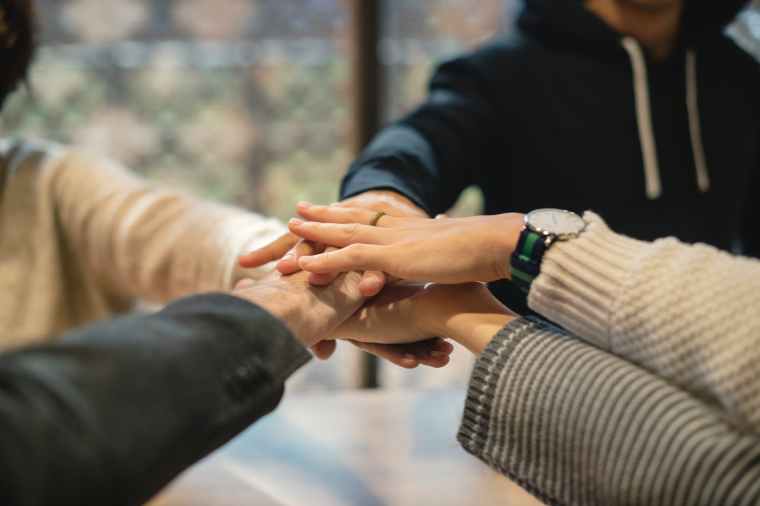
shallow focus photography of five people holding each other hands
Photo by rawpixel.com on Pexels.com

If there is one thing of which I am certain it is that politics have become toxic, and there is no such thing in most cases of a rational conversation about beliefs. While there are multiple points of few, most of them are immoveable. The idea of possibly changing someone’s way of thinking is ridiculous for the most part, and yet so many continue to try. Their posts and rants litter the commentaries of social media essentially for naught other than allowing the world to see where they stand. Those who agree with them rally in support and those who are at odds often condemn them for their ignorance and even ugliness. For those of us caught in the middle it can become a kind of irrational nightmare as we too struggle to enforce a bit of diplomacy which never quite gains traction. Instead we are accused of being without moral compass, cafeteria citizens who pick and choose what we support. We independents are seen as the worst form of persons because we don’t appear to be guided by a philosophy that might describe from whence we form our opinions.

I’m a combination of many different political persuasions. As a woman I am a hybrid feminist, part progressive and part conservative. I grew up in a world when most women stayed home to care for their families. My mother was somewhat unique in our neighborhood in being a single parent due to our father’s death. She was the child of a woman who was unable to either read or write. Mama’s high school diploma was considered a great achievement, and she might have been content with stopping her education there had she not suddenly found herself responsible for supporting a family. She worked hard to hold down a job and earn a college degree, but at the same time she urged me to always put my husband and children first because she believed that nothing was more important.

I grew up surrounded by friends with large families because birth control was still somewhat unreliable. My mother cautioned me to be “ladylike” and to save myself for someone who loved and cherished me. While she emphasized the power of education and urged me to go to college, she also maintained that all of that was secondary to building a strong foundation for the family that I would one day have. Once I was married, she urged me to be respectful of my husband, and sometimes criticized the amount of time that I spent on my job when I would become involved in projects that kept me away from my family far into the night.

I rallied around the feminist movements of the sixties and seventies. I planned my family by carefully using birth control. I earned two degrees and moved up the ranks in my profession. All the while my always enlightened husband supported every single idea that I had for living my life both in conjunction with his, and independently at times. I fulfilled my own wishes while also somehow balancing the many duties of family life. To this day, my husband and I see each other as equal partners, and we confer with one another in all of our decisions. He is as proud of my accomplishments as I am of his. As a woman I have enjoyed the freedom to be the person that I want to be.

Sadly, for the most progressive women, my brand of feminism is not enough to satisfy them. When I note that I struggle with the concept of abortion because in my heart I believe that it is a form of murder, they maintain that I am ignorant and that I obviously don’t care about the plight of women. When I mention that I did not work full time during my daughters’ early years so that I might build a strong foundation for them, I am told that my thinking is old fashioned and quaint. If I suggest that all women should allow each other to form their own opinions, I hear that there is only one way on  “ the right side of history.” If I complain that the rhetoric about men is often too generalized and damning, I am met with derision and disbelief. I am often made to feel that I am not a feminist at all, but an ancient throw back to a time when women were degraded and made to be prisoners of a male dominated society.

I’m not an angry woman. Perhaps I have been lucky in my interactions with men and the world of work. I have found boorish “male chauvinist pigs” to be the exception rather than the rule. I have been supported again and again by amazing people both male and female. I have enjoyed a freedom of mind and action that might have amazed my female ancestors. I don’t want to have to walk in tandem or be dominated by any form of group think. I take each issue individually and after study and contemplation form my own personal opinions. I firmly believe that this is the way feminism is supposed to be. I support my sisters by allowing them to think however they wish, but ask them to respect my philosophies as well. We need not argue because I know that we react to the world based on a lifetime of experiences. We form our conclusions depending on who we are and who we have been.

I suppose that many women are still trying to determine what their places in society should be. To attempt to create a one size fits all way of doing things is ridiculous. Neither do we need to destroy the men who live beside us with insults and slurs that demean them. Ours is not so much a fight as a process of discovery. Each girl child should be encouraged to approach life in a way that feels right. She should understand that men need not be her enemies. There is good and there is bad in both sexes. We must teach our daughters and granddaughters how to discern who is who, and that it is always okay to have personal beliefs and preferences, even when they diverge.

I like being a hybrid. I like being independent. I have had a very happy experience as a woman because the people closest to me have allowed me to be the person that I choose to be. In turn I hope to always honor the choices that my “sisters” decide are best for them. True feminism demands that we understand that there is no one pathway, and our quest is doomed if we demand that it be so. Our journey has to include a wide range of views and the other half of the human race known as men. Our power will come only when we see ourselves as individuals with all of the rights that such and idea implies.

A Wallet, A Thief, A Story

brown leather crossbody bag with white framed sunglasses
Photo by Lum3n.com on Pexels.com

Many years ago I was working at a school in southeast Houston that served a community populated by a number of gangs. Many of my students were known members of such groups, but for the most part they confined their onerous activities to after school hours when they were off campus. Nonetheless there was often an air of tension between the members of the various affiliations, and the faculty was well aware that we needed to be watchful lest some sort of violence erupt.

For whatever reason the real toughs actually like me. I used a bit of reverse psychology with them by referring to them with salutations like “Mr. Soto.” I told them that they were my prep school students and that we would treat one another with polite regard. I remember one day when the young men all showed up wearing dress shirts and ties because they wanted to look like boys from an exclusive school. I suppose the key to my success was that I valued them as much as I did the young men that I had taught in a private school that really was a renowned college preparatory institution.

On one occasion I was going to travel to Austin for a conference right after the school day ended. My suitcase was in my classroom and I had visited an ATM machine that morning to get money for the trip. Just before the group’s departure after the students had left for the day a fellow teacher called me to her classroom for some advice. I was only gone from my own room for a few minutes, but when I returned I decided to go to the faculty lounge to purchase some snacks for the drive. When I reached into my purse for some change, I realized that my wallet was missing. Since my handbag had been locked in a cabinet all day long save for the short time that I left my classroom unattended I knew that it must have been taken very quickly.

It was sickening to think that one of the students had probably stolen my wallet. Aside from the inconvenience of having no money and no credit cards when I was on my way out of town, it saddened me to think that perhaps one of my pupils had done this. The whole time that I was at the conference I thought only of who might have been audacious or desperate enough to steal from me. When I returned I was determined to find the thief.

The school was like a small community so both teachers and students were buzzing about potential candidates. The talk in the hallways had begun to focus on one particular young girl who had previously been caught taking small items here and there. Before long the sound of her accusers had risen to a loud roar. So many claimed to have seen her lurking near my room that the principal even called her to his office and invited me to attend the questioning.

The young lady protested her innocence, very quietly at first and then more and more indignantly as it became apparent to her that the principal believed that she was guilty. She insisted that she had been outside waiting to board the bus that would take her to her apartment project several miles down the road, and that she would not have had a way home if she had lingered inside long enough to sneak into my classroom. She was adamant that while she may have lied and even engaged in thievery in the past, this time she was innocent.

The principal dismissed the student and asked me what I wanted to do. He was willing to punish her because so many had indicated that they thought that the girl was guilty. I decided to err on the side of finding proof beyond a reasonable doubt and asked the principal to let the student go free. He felt that I was making a mistake, but he agreed to back off pending the emergence of more evidence.

The furor over the presumption of the young lady’s guilt grew so loud that I had to talk with each of my classes. I told my students that I was not willing to convict the girl based only on her prior reputation and hearsay. In truth nobody had actually seen her inside my classroom rummaging through my things, nor was anyone able to say with certainty that they had even seen her nearby. All of the stories had been peppered with words like “I’m pretty sure” or “I think I saw her.”

Before long everyone forgot about the incident. I eventually left the school, and my only regret about the whole thing was that it had been so inconvenient to get new identification. Also the wallet had been custom made in Estes Park, Colorado and it was one of my favorite possessions.

Maybe six or seven years later I received a call from the City of South Houston informing me that one of the workers had found my wallet inside the drainage system. When I retrieved it the leather was damp and moldy from sitting in years of runoff and sewage, but every item including my driver’s license and my credit cards were still inside. There were even photos of my children that were spotted with mildew. Only the money was gone.

I asked where exactly the wallet was found. I was told that it was in a drain about ten blocks away. When I told them the story of the theft, the city officials conjectured that one of the kids who lived in the neighborhood must have taken it and then ditched the evidence after pocketing the money. I agreed with that assessment but also swelled with a sense of righteousness when I thought of the young girl who had been accused of being the thief. At that moment I had the proof that she could not have been the one, because she would have been on a bus heading many miles away in a very different direction from the place where the wallet was dumped. She had been telling the truth and the other theories had been only emotional innuendo.

I’ve often remembered that incident even when serving on juries and I have tried to have the same kind of detachment in my search for the truth on those occasions. Each of us deserves the benefit of doubt, otherwise our fates will be determined by thoughts and beliefs rather than facts. I figure that if I am wrong in being that way, the final reckoning will set things right.

Listening to the Stories

adult african american woman business businessmen
Photo by rawpixel.com on Pexels.com

My grandson recently wrote a paper for his Pre-AP English class and asked me to critique it before he turned it in to his teacher. He discussed stereotyping and the human tendency to form biases based on the limitations of personal experiences and perceptions. In his piece he quoted author, Chimamanda Adichie, and her comments from a TED talk which she called The Danger of a Single Story. Ms. Adichie noted that as she was growing up she was an avid reader of British novels which she enjoyed even though she had always lived in Nigeria and was often unable to even imagine some of the cultural aspects about which she read. When she attempted to begin her own writing career she often mimicked the style from the novels she had so loved, but because she had never actually experienced such things her writing was artificial. It was only after she discovered African authors that she realized that there was indeed a place and a need for the thoughts of an African woman.

Ms. Adichie understood not only that in limiting her own story she had not been real, but also that others continue to see people of Africa from stereotypical perspectives just as her college roommate did. When Ms. Adichie arrived at an American university the young woman with whom she would share living quarters was shocked that Ms. Adichie spoke perfect English and was already so well educated. In fact, Ms. Adichie’s father was a college professor and her family lived an affluent middle class lifestyle in Nigeria complete with servants. In an interesting twist, Ms. Adichie admitted to her own prejudices by telling of a young man who worked for her family whom she thought of as being poor and somewhat ignorant. Over time she learned that while his family had very little in terms of wealth or possessions, they nonetheless had amazing artistic abilities.

It seems that each of us is sometimes guilty of seeing other people with whom we are unfamiliar through the lens of a single story. For example, we may watch a war torn nation in the Middle East and think of all such places as being chaotic and violent. We may make the mistake of presuming that the people who live there have the same characteristics, and we place them into a kind of caricature of who they really are. If we think that a particular place is dangerous, then we may be suspicious anyone who lives there. It is a kind of protective mechanism that we assume, but it also leads to thinking that puts whole groups of people into unfair categories that are mostly incorrect.

I found myself really thinking about this and wondering how many of the world’s problems are actually caused by this idea of clinging to a single story based on our own beliefs and feelings rather than attempting to truly understand how and why other people are reaching different conclusions form our own. I was reminded of my teaching days when I found success in reaching the hearts and minds of my students whenever I was willing to truly understand them. That meant suspending all of my preconceived notions and then helping them to surrender theirs as well. Once we met each other from the perspective of truly respecting our differences we made progress in building  meaningful and mutually satisfying relationships.

I think of so many problems in our current divisive political climate that will never be fully resolved until we are ready and willing to get the whole story from every side without insisting that we already know who is right and who is wrong. We have to be willing to read and listen and learn. When someone has a point of view that bothers us, our question should not be, “How can you be that way?” but rather “Tell me why you feel that way? I truly want to understand.” It is critical to the health of the world that we do our best to see the whys and wherefores of different cultures and then allow and celebrate the diversity of thoughts and customs. The only reason for demonstrating disdain for another person should be when it becomes clear that he/she is dangerous and evil. Otherwise it would behoove us to learn as much about the people and places that puzzle us as possible. Most of the time there are very good reasons why each individual is the way he/she is.

As humans we have certain ways of coping that are somewhat universal. We tend to ally ourselves with groups and people who appear to be much like ourselves, and often fear those whom we do not understand. We can break down barriers only if we are willing to suspend judgement and see through the other person’s eyes. Doing so make life better for everyone.

As my grandson noted in his essay each of us is different and special in many ways. Until we take full advantage of every opportunity to broaden our experiences by opening our minds and our hearts most especially to people that we can’t quite understand, the specter of the many “isms” that plague societies will continue to fester. So, the next time you find yourself feeling uncomfortable about anyone, take a moment to find out more about them. Try to truly understand how they came to adopt a certain point of view. Listen not to reply or argue, but only to learn. Really hear the stories. They are as exciting and enlightening as a great book.